

Solar company in Simi Valley — roofs first, then the array
Yes — Cali Energy installs solar panels, battery storage, roofing and electrical upgrades across Simi Valley, California. We work here regularly, in 93063 and 93065, on barrel tile, S-tile and shingle — and we also replace roofs here as a job in its own right. Some of that work is shown below, with our photos from each. Simi Valley sits on Clean Power Alliance’s Lean Power tier by default — the cheapest of the three generation options — while Southern California Edison delivers the power and sends the bill. That combination changes how a solar system should be sized here. Cali Energy is a licensed California contractor (CSLB #1032379) with a 4.9★ Google rating and in-house crews.
Get a Simi Valley estimate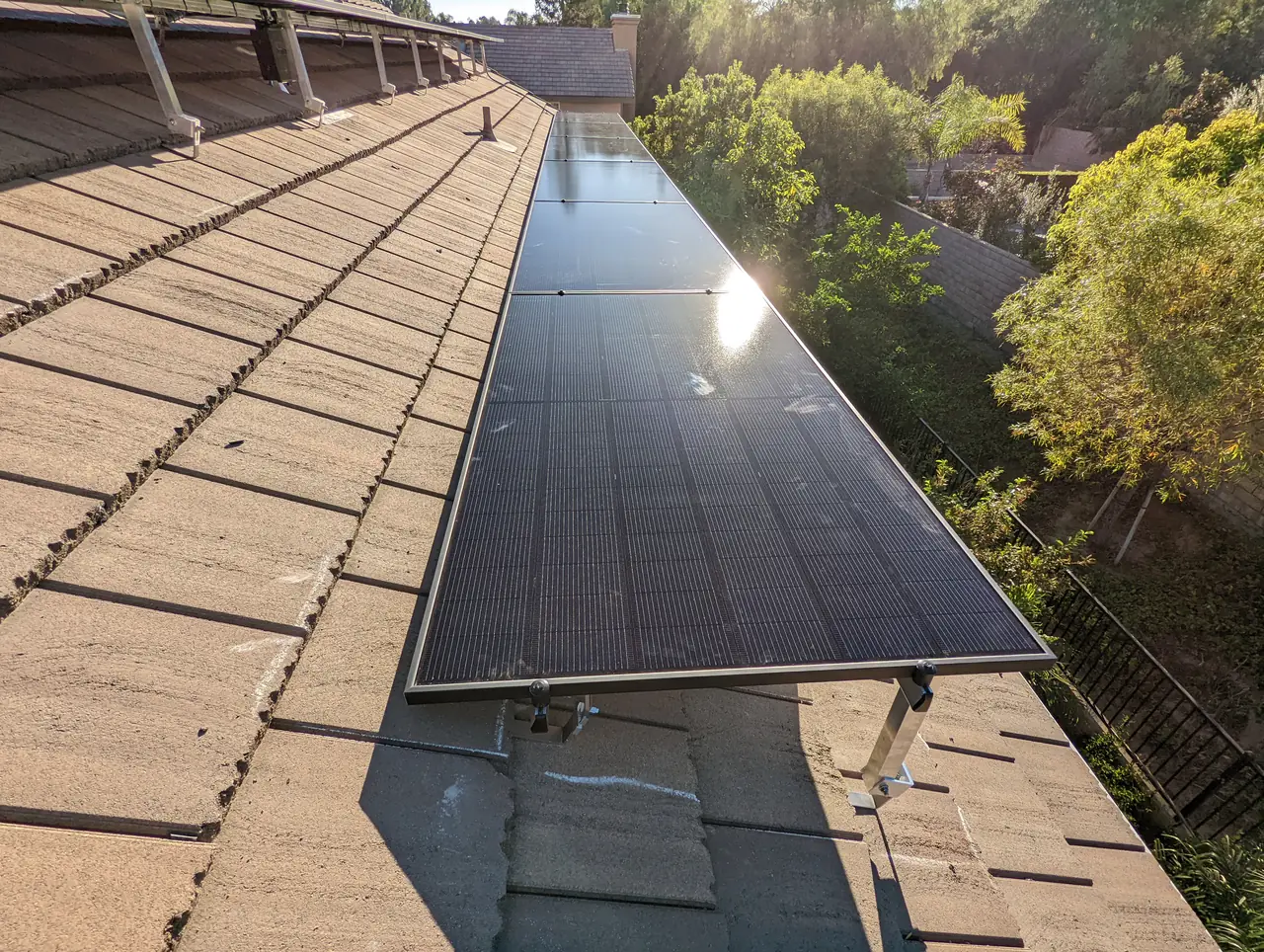
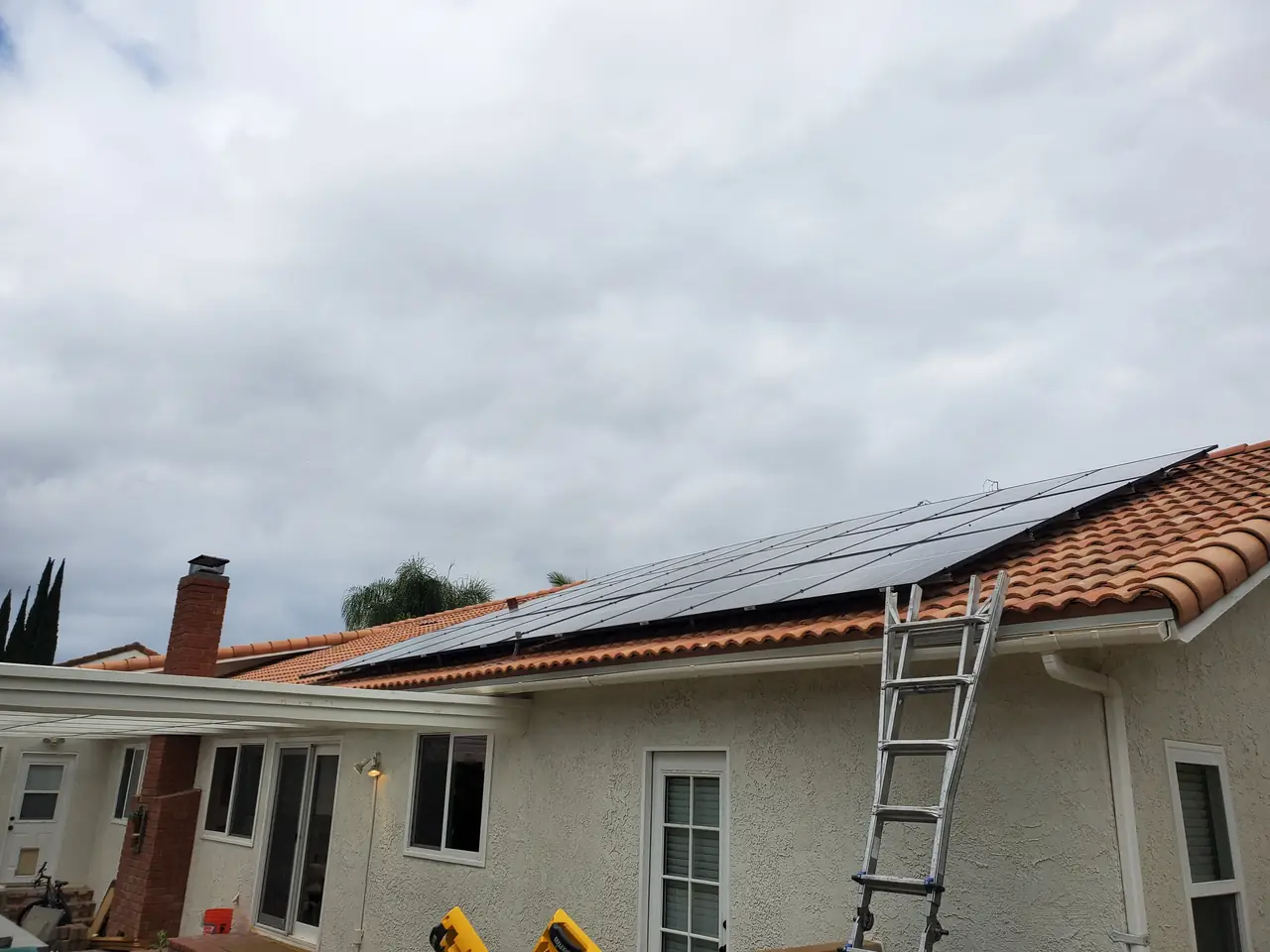
Simi Valley 93065 · 12.8 kW DC · thirty-two REC 400 W modules on Enphase IQ8Plus microinverters, with a 225-amp main-panel upgrade and the north-facing section tilted back toward the sun.
Cali Energy in Simi Valley, at a glance
The short answers before considering a contractor.
| Question | Answer |
|---|---|
| What has Cali Energy installed here? | Rooftop solar on barrel tile, S-tile and shingle; solar with battery backup; main-panel upgrades; full roof replacements with no solar involved; and lifting an existing array so a roof could be replaced beneath it. |
| Google rating | 4.9★ on Google. See them on Google |
| Who supplies the electricity? | Clean Power Alliance supplies the generation — Simi Valley’s default is the Lean Power tier — and Southern California Edison delivers it and sends the single bill. |
| Who permits the work? | The City of Simi Valley. Qualifying residential rooftop solar can be approved through the automated SolarAPP+ path. |
| Battery storage | Installed and interconnected here, including a SolarEdge system with a gateway and a 40-amp protected-loads circuit. |
| Roofing | A standalone service under our C-39 licence — including a full tear-off and a new synthetic slate tile roof over fresh underlayment. |
| License | CSLB #1032379 (B, C-10, C-39), in-house crews, operating since 2017. Verify with the CSLB |
Simi Valley is on the cheapest green tier — and that changes the sizing
Twenty minutes from here, the same agency enrols households in the most expensive one. The difference matters more than most quotes admit.
Clean Power Alliance buys electricity for more than thirty communities across Los Angeles and Ventura counties while Southern California Edison delivers it and issues the bill. CPA offers three residential tiers — Lean Power, Clean Power at 50% renewable and 100% Green Power — and each member city decides which one its residents are enrolled in automatically. Simi Valley chose Lean Power, the base tier and the cheapest of the three. Over the hill, Thousand Oaks chose 100% Green Power, the most expensive.
For a solar homeowner that is not trivia. The value of a self-consumed kilowatt-hour equals the price of the one you did not buy — and here that price starts from the lowest generation tier available. Meanwhile exports follow Edison’s Solar Billing Plan, where energy sent back earns an hourly avoided-cost value rather than the retail rate. Both ends of the equation push the same way: size the array to what the house actually uses across the day, and put serious thought into storage before adding panels you will end up exporting cheaply. An oversized system on the Lean tier is the easiest way to overpay in this city.
Bigger is not automatically better
Panels whose output leaves the house at midday earn avoided-cost, not retail. We size against your consumption pattern rather than filling the roof.
You can move tiers
The city default is automatic, not compulsory. A household can move up CPA’s tiers or opt out to Edison generation entirely, and none of it touches the solar interconnection.
Storage carries the evening
Under the Solar Billing Plan the evening kilowatt-hour is the valuable one. Storage moves production there instead of selling it at noon.
Read both credit lines
CPA credits generation, Edison credits delivery. They sit on one bill and only make sense read separately.
Sources: Clean Power Alliance — residential rates (three tiers; CPA supplies, SCE delivers and bills) · CPUC — Net Energy Metering (Solar Billing Plan for SCE customers from April 15, 2023). Default tiers and rates change; confirm what your own account is on.
Solar and roofing work in Simi Valley
A few of the jobs we have done here. Street numbers stay off the page out of respect for the owners. The full photo set for every Simi Valley job lives in the Simi Valley project gallery.
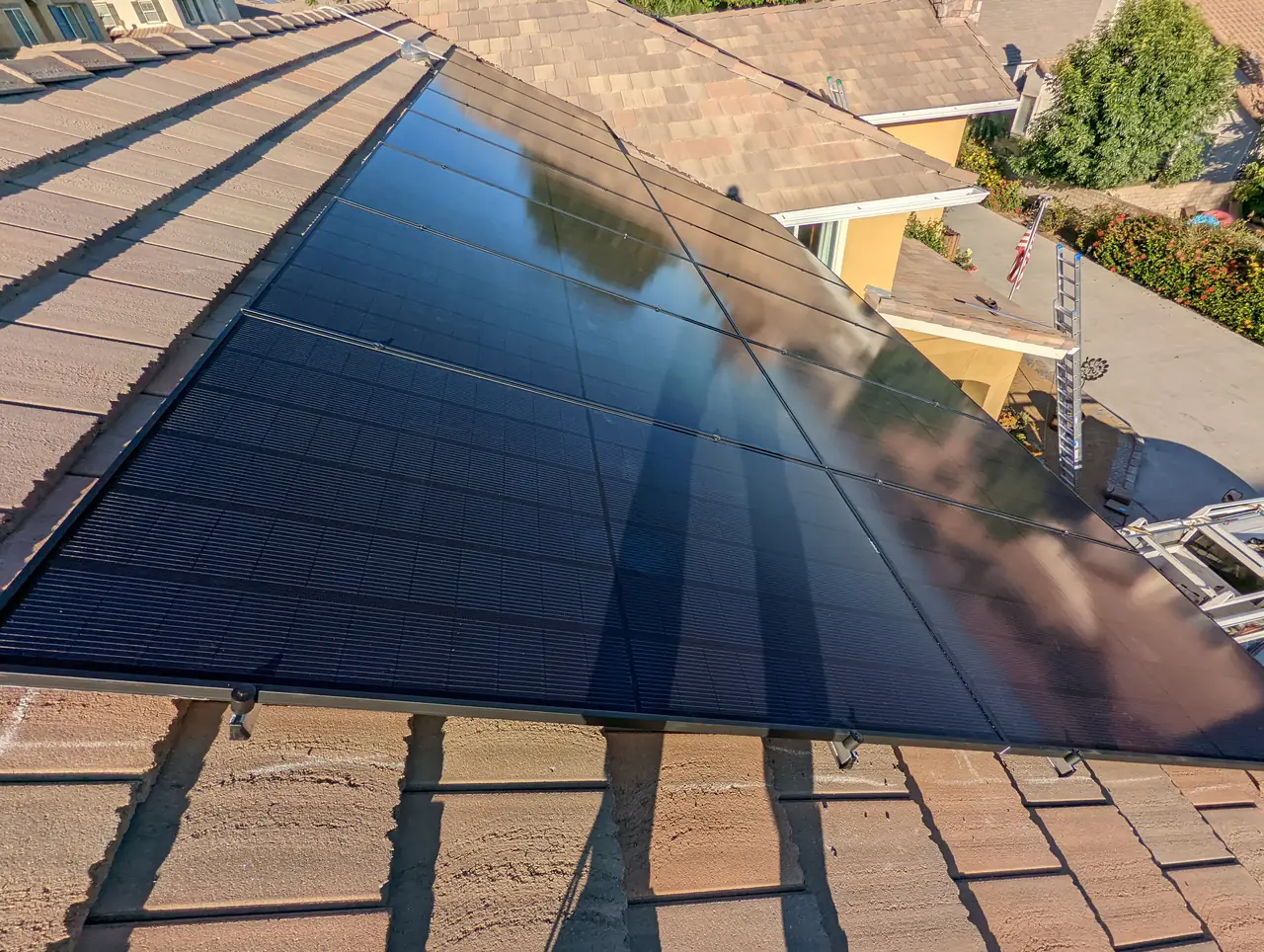
12.8 kW with a panel upgrade
Thirty-two REC 400 W modules on Enphase IQ8Plus microinverters, a 225-amp main-panel upgrade, and the north-facing section set on tilted racking so it earns its place.
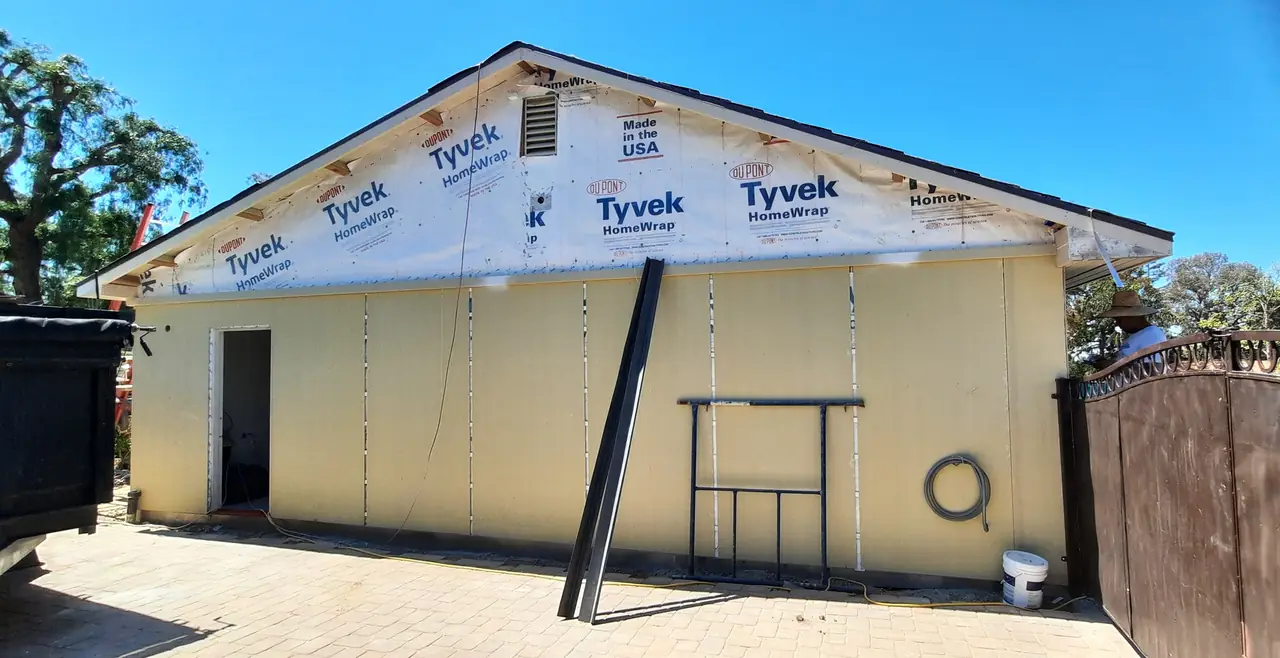
A roof, with no solar at all
Full tear-off and a new DaVinci Bellaforte synthetic slate tile roof over fresh underlayment — roofing as its own trade, under our C-39.
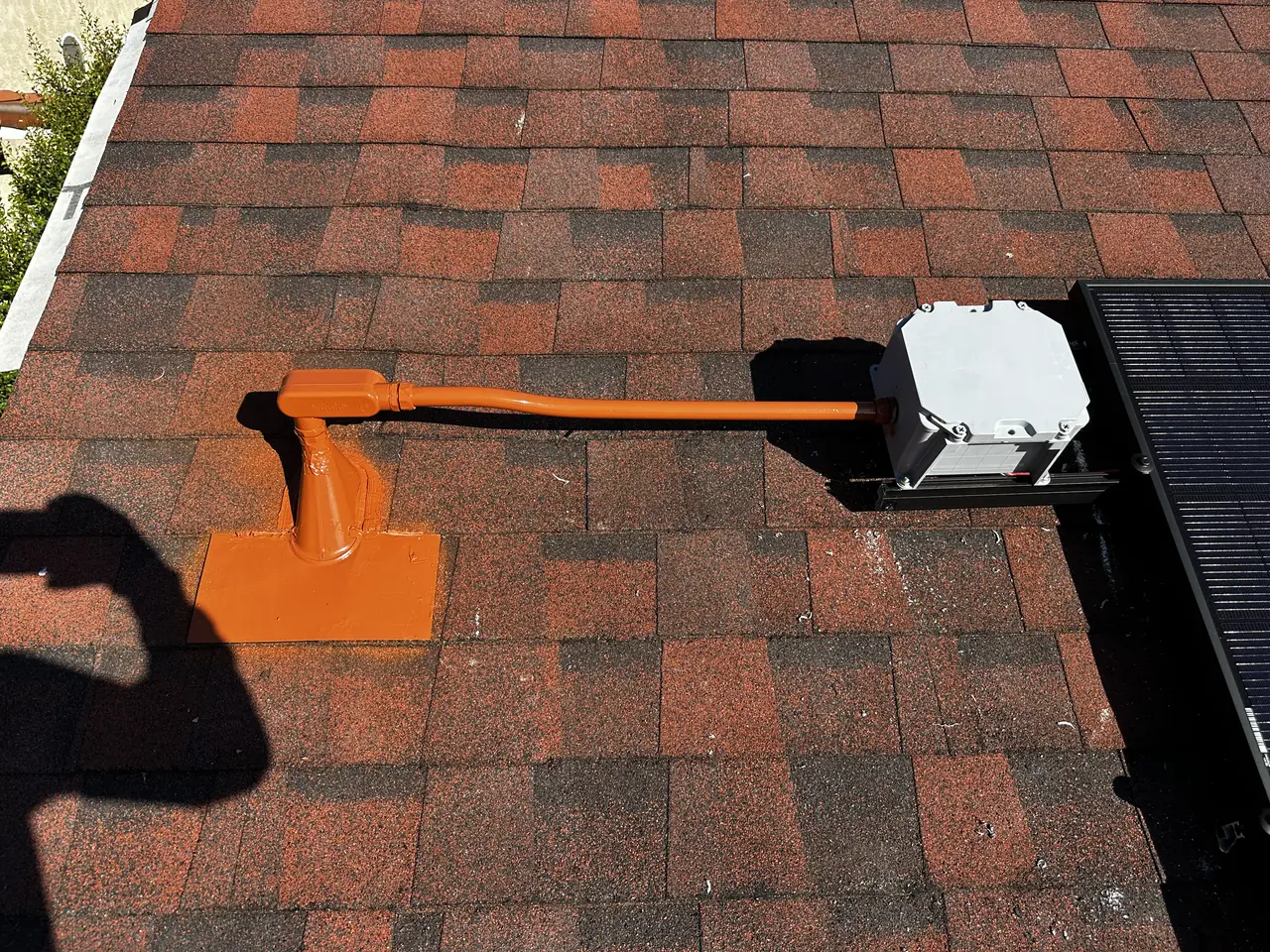
Solar with protected loads
A SolarEdge system with battery backup through a gateway and a 40-amp protected-loads circuit — the essentials stay powered when the grid drops.
Barrel tile, panel-level output
REC 370 W modules on Enphase IQ7A microinverters across a barrel-tile roof, where each module reports and produces on its own.
Photos are ours, taken on site. Where a system size is stated it is given on the basis it was recorded on — DC nameplate or CEC-AC — because the two are not interchangeable.
A closer look at the Simi Valley jobs
What this work has in common, and where it differs.
| Detail | ||
|---|---|---|
| Jobs shown here | A selection | Some of our Simi Valley work, with our photos from each — what we have done in the city goes well beyond them |
| ZIP codes | 93063 & 93065 | Work spread across both sides of the city |
| Roof types | Tile and shingle, evenly | Barrel tile, S-tile, dimensional and architectural shingle — and a synthetic slate tile roof we installed ourselves |
| Largest array here | 12.8 kW DC | Thirty-two REC 400 W modules with Enphase IQ8Plus microinverters |
| Utility arrangement | CPA + SCE | Clean Power Alliance supplying on the Lean Power default, Southern California Edison delivering |
| Battery storage | Included | SolarEdge with a gateway and a 40-amp protected-loads circuit |
| Electrical scope | Panel upgrades | A 225-amp main-panel upgrade alongside the largest array here |
| Equipment we have used | REC, Enphase, SolarEdge | REC 370 W and 400 W modules; Enphase IQ7A, IQ7Plus and IQ8Plus microinverters; SolarEdge with optimisers |
| Beyond the array | Roofing · detach & reset | Standalone re-roofs, solar mounted onto brand-new roofs, and an existing array lifted for a re-roof and reinstated |
| Years of work | 2021–2025 | Steady Simi Valley work across those years |
Here we are the roofer too
The order of operations that decides whether you pay for the same roof twice.
Most solar companies stop at the array. In Simi Valley our work includes roofs with no panels involved at all — one job here was a full tear-off followed by a new DaVinci Bellaforte synthetic slate tile roof laid over fresh underlayment. That matters to a solar customer for a simple reason: the company assessing whether your roof can carry an array for twenty-five years is the same company that would have to replace it, so there is no incentive to wave the question through.
Three sequences come up constantly, and each has a right answer. If the roof is near the end of its life, replace it first, then mount — we have installed onto a brand-new composition roof here, twelve modules on SolarEdge with optimisers, and the array went onto a covering with its full service life ahead of it. If the roof is sound, mount now and the flashing details protect it. And if panels are already up on a roof that has run out of time, the job is a detach and reset: the array comes off, the roof is replaced, the system goes back and is re-energised — we have done that here too, permitted with the city.
Assessed by the trade that owns it
Roof condition is judged by our own roofing side, not guessed at by a salesperson holding a solar quote.
New roof, then array
Mounting onto a fresh covering is the cheapest long-run sequence when the old one is close to done.
Tile is handled as tile
Barrel and S-tile get profile-specific hardware and replacement tiles on site, because a few will break on any older roof.
Detach and reset
An existing array can be lifted, the roof replaced underneath, and the system reinstated and recommissioned as one permitted project.
When the good roof faces the wrong way
A Simi Valley house does not always come with a south-facing plane, and that is a design problem rather than a dead end.
On the largest array on this page the usable roof included a north-facing section. Left flat, north-facing modules give up a serious share of their annual output. The answer was tilted racking on that section, pitching the modules back toward the south so they perform like a properly oriented array while the rest of the system sits flush on the planes that already face the right way.
Tilt is not free and not always right. Raised modules catch wind, so the racking and its attachments have to be engineered for uplift; rows need spacing so they do not shade each other in winter; and the visual result is more prominent from the street than a flush array. Whether it pays comes down to how much roof you have, what the alternative planes offer, and what you are trying to power. What it should never be is improvised on the day — a tilted section is designed, engineered and permitted like the rest of the system.
Wind before angle
A tilted array is a sail. Attachment count, ballast and rail spans are worked out for uplift, not copied from the flush detail.
Row spacing
Winter sun is low. Rows get spaced so the front one does not shade the one behind it in December.
Module-level electronics
Mixed orientations and split planes are exactly where microinverters and optimisers earn their cost, because each module works independently.
Panel capacity
Bigger arrays run into what the main panel can take. On this job that meant a 225-amp main-panel upgrade, priced with the work.
Which rules apply to you depends on when your system was approved
A point most pages flatten into “everyone is on the new plan” — which is only true for systems connected recently.
Clean Power Alliance did not move every solar home onto the new terms at once. Because generation is credited by CPA and delivery by Edison, an older system can sit on two different regimes at the same time — and which ones depend on the date Edison approved the interconnection, not on the city or on when the panels were bought.
| When the system was approved | Generation side (CPA) | Delivery side (Edison) |
|---|---|---|
| On or before April 14, 2023 | Stays on CPA’s Net Energy Metering for the rest of its 20-year legacy period | Stays on Edison’s Net Energy Metering — nothing changes |
| April 15 – August 31, 2023 | Stays on CPA’s existing NEM program for the rest of its 20-year eligibility period | Moves to Edison’s Solar Billing Plan |
| Applied after August 31, 2023 | CPA Solar Billing Plan | Edison Solar Billing Plan |
Clean Power Alliance pays toward a home battery
A rebate of its own, separate from anything the state or federal government offers.
CPA runs a Sun Storage Rebate of up to $2,250 toward an eligible home battery. The base incentive is $750 and is open to all CPA customers. A home inside an area frequently affected by Public Safety Power Shutoffs can add $1,250 more — the single largest component, and one that matters in the hillside and fire-hazard parts of this region. A further $250 is available to households on the Medical Baseline allowance, or to those on CARE or FERA bill assistance; those two cannot be combined. Funding is limited and awarded first come, first served.
Sources: Clean Power Alliance — solar and net energy metering (regimes by approval date: on or before April 14, 2023; April 15 – August 31, 2023; applications after August 31, 2023) · Clean Power Alliance — Sun Storage Rebate (base $750, PSPS-area Reliability+ $1,250, Medical Baseline or income-qualified $250, up to $2,250; limited funding, first come first served). Program terms change; confirm current rules and funding for your own account.
What solar costs and how long it takes in Simi Valley
No honest flat citywide price — but published ranges and an automated permit path.
Two published price bases frame the range, both before incentives: $2.49 per watt at competitive marketplace rates (EnergySage, August 2026) and $3.5 per watt, the 2024 national median for cash purchases (Lawrence Berkeley National Laboratory). A 6–12 kW system therefore lands somewhere between roughly $15,000 and $42,000 depending on installer, financing and scope. Tile work, tilted racking, storage, roofing and any panel upgrade are priced into the job rather than added afterwards.
| Item | Figure | Basis |
|---|---|---|
| Solar at marketplace rates | $2.49/W → 6 kW ≈ $14,900 · 10 kW ≈ $24,900 · 12 kW ≈ $29,900 | Market estimate — EnergySage |
| Solar at typical installer rates | $3.5/W (2024 national cash median) → 6 kW ≈ $21,000 · 12 kW ≈ $42,000 | Market estimate — LBNL 2025 Data Update |
| Battery storage (~13 kWh) | $11,864–$16,052 before incentives (average $13,958) | Market estimate — EnergySage California |
| Tile roof and tilted racking | Priced per job: profile-specific hardware, engineering for uplift, slower install | Scope-dependent |
| Roof replacement | Priced per job: material, tear-off, underlayment and roof geometry | Scope-dependent |
| Federal tax credit | Homeowner (25D) credit ended Dec 31, 2025 — $0 on a 2026 cash or loan purchase; leased and PPA systems can still capture the 30% credit through the system owner | Official source — IRS FAQs on P.L. 119-21 |
| Time on the roof | Most residential installs: 1–3 working days; tile, tilt and re-roof scopes run longer | Cali Energy company figure |
| City permit | Qualifying residential rooftop solar can be approved through the automated SolarAPP+ path | Official — City of Simi Valley |
| Utility step | Edison interconnection is separate and must complete before the system may operate | Official — SCE |
Sources: EnergySage — solar cost · EnergySage — storage cost · LBNL — 2025 Data Update · City of Simi Valley — Building and Safety · IRS — Section 25D FAQs. Planning context, not a quote.
What Cali Energy installs in Simi Valley
One licence covering the whole job, so the scopes do not get handed between companies.
Rooftop solar
Flush layouts on tile and shingle, tilted sections where a plane faces the wrong way, and module-level electronics on split roofs.
Battery storage
Backup through a gateway and a protected-loads circuit, so the essentials keep running without paying to back up the whole house.
Roofing, with or without solar
Full tear-offs and new roofs as a standalone service under our C-39 — including synthetic slate tile — plus detach-and-reset under existing arrays.
Electrical and EV charging
Main-panel upgrades such as the 225-amp service on this page, subpanels and EV circuits.
Our services in Simi Valley
A page for each service: our Simi Valley projects, the permit and the utility.
Exact coverage: Simi Valley and its edges
A Ventura County city with the county line on one side and open land on the other.
| Attribute | Fact |
|---|---|
| Status | Incorporated city in south-eastern Ventura County, in the Simi Valley proper |
| ZIP codes we work in | 93063 and 93065 |
| Electricity | Clean Power Alliance generation on the Lean Power default, delivered and billed by Southern California Edison |
| Permitting authority | City of Simi Valley; qualifying residential rooftop solar can go through the automated SolarAPP+ path |
| Unincorporated neighbours | Santa Susana Knolls and the Box Canyon area sit outside the city limits and are permitted by Ventura County |
| The county line | Chatsworth and the west San Fernando Valley are over the pass in Los Angeles County — and on LADWP rather than Edison |
| Terrain | Hillside parcels along the Santa Susana range and the valley’s edges carry fire-hazard designations, and the pass is a well-known wind corridor |
| Adjacent areas | Moorpark west, Thousand Oaks south over the grade, Chatsworth east through the pass |
Map of Cali Energy projects in Simi Valley
Simi Valley homes we have worked on — a selection of them, shown on this page.
Marker positions are deliberately offset. Each point is shifted 120–260 meters from the real address so the map shows where we work in Simi Valley without identifying anyone’s home. Base map © OpenStreetMap contributors © CARTO; ZIP boundaries from the U.S. Census ZCTA file.
Reviews and verifiable trust
A public rating, a public license record and named, quotable reviews.
“I shopped around extensively before choosing Cali Energy — they weren’t the cheapest, but every question got a straight answer.”
“Cali Energy was our general contractor and they handled a ton of work for us. They built an ADU, did the electrical and the solar.”
“Great company, they handled everything professionally. I’ve wanted solar panels for a long time, and after I got the quote it was an easy decision.”
Read the reviews on Cali Energy’s Google profile · verify the contractor license with the California CSLB.
Fast answers about hiring Cali Energy in Simi Valley
Each answer starts with the conclusion.
Does Cali Energy install solar in Simi Valley?
Yes. Simi Valley is an active Cali Energy service area and we work here regularly, across ZIP codes 93063 and 93065, on barrel tile, S-tile and shingle roofs. The jobs on this page are some of that work, including solar with battery backup, a 12.8 kW array with a main-panel upgrade, and roofing done on its own.
Who supplies my electricity in Simi Valley?
Clean Power Alliance supplies the generation and Southern California Edison delivers it and sends the single bill. Simi Valley enrolled its residents in CPA’s Lean Power tier by default — the base and cheapest of three options, below Clean Power at 50% renewable and 100% Green Power.
Does the Lean Power default change how big my system should be?
Yes. The value of a kilowatt-hour you generate and use equals the price of the one you avoid buying, and here that starts from the cheapest generation tier. Exports, meanwhile, earn an hourly avoided-cost value under Edison’s Solar Billing Plan rather than the retail rate. Both point the same way: size the array to your actual daily use and consider storage before adding panels whose output would simply be exported cheaply.
Can I change my CPA tier or leave CPA?
Yes. The tier your city chose is automatic, not compulsory — a household can move up to Clean Power or 100% Green Power, or opt out to Edison generation entirely. It changes the generation line on your bill and has no effect on the solar interconnection or equipment.
Do you do roofing in Simi Valley, or only solar?
Both, and roofing stands on its own. We hold a C-39 roofing licence and have done a full tear-off here followed by a new DaVinci Bellaforte synthetic slate tile roof over fresh underlayment, with no solar involved. For a solar customer that matters: the company judging whether your roof will carry an array for twenty-five years is the one that would have to replace it.
Should I replace the roof before installing solar?
If the covering has roughly ten years or less of life left, yes — replacing it first costs less than paying later to lift the array, redo the roof and reinstate the system. We have mounted onto brand-new roofs here, and we have also done the reverse: lifting an existing array, replacing the roof beneath it, and reinstating the system as a permitted detach and reset.
My roof faces north. Is solar still worth it?
Often yes, with the right design. On the largest array on this page the north-facing section was set on tilted racking so the modules pitch back toward the sun instead of giving up output. Tilt has to be engineered for wind uplift and spaced so rows do not shade each other in winter, and it is more visible from the street — but it turns an unusable plane into a productive one.
Do I need a battery in Simi Valley?
It is worth pricing. Under the Solar Billing Plan the evening kilowatt-hour is worth far more than the midday export, so storage moves production to where it counts. It also covers outages — hillside parcels here sit in fire-hazard terrain and the pass is a known wind corridor. We have installed storage in Simi Valley with a SolarEdge gateway and a 40-amp protected-loads circuit.
Will I need a main-panel upgrade?
Sometimes, and it should be in the original quote rather than discovered later. Solar and storage feed the same busbar as the utility supply, and the code caps how much combined supply a panel may take. The 12.8 kW system on this page came with a 225-amp main-panel upgrade as part of the scope.
How does the Simi Valley permit work?
The City of Simi Valley permits the work, and qualifying residential rooftop solar can be approved through the automated SolarAPP+ path rather than a manual plan-check queue. Addresses outside the city limits — Santa Susana Knolls and the Box Canyon area, for example — are permitted by Ventura County instead. Either way Edison’s interconnection is a separate step that must complete before the system may run.
What does solar cost in Simi Valley?
There is no honest flat citywide price, but published rates frame it: $2.49 per watt at marketplace rates and $3.5 per watt as the 2024 national cash median, putting a 6–12 kW system at roughly $15,000–$42,000 before incentives. A ~13 kWh battery adds about $11,900–$16,100. Tile, tilt, roofing and panel upgrades are priced with the job. The federal 25D homeowner credit ended December 31, 2025, so a 2026 cash or loan purchase gets no federal credit. The estimate for your own home is free.
How do I check that Cali Energy is legitimate?
Compare four things rather than ad claims: (1) an active CSLB license with electrical and roofing classifications, (2) completed work in your specific area, with photos, (3) whether the company uses its own crews or subcontracts, and (4) the review pattern. Our answers: CSLB #1032379 (B, C-10, C-39); Simi Valley homes with our photos; in-house crews; a 4.9★ Google rating. Our office is at 19201 Parthenia St Unit E, Northridge, CA 91324, over the pass. We do not claim a Simi Valley storefront; what this page shows is completed work in the city and active service coverage.
Sources
Where this page states a rule, a tariff or a tier, the official source is linked below.
| What it supports | Source |
|---|---|
| CPA supplies generation and SCE delivers; three residential tiers | Clean Power Alliance — residential rates |
| Member communities and their default tiers | Clean Power Alliance — communities and default options |
| Solar Billing Plan applies to new SCE solar customers from April 15, 2023 | CPUC — Net Energy Metering |
| Interconnection requirements for customer generation | SCE — generating your own power |
| City permitting and the automated solar path | City of Simi Valley — Building and Safety |
| Permitting for unincorporated areas outside the city | Ventura County — Building and Safety |
| Fire hazard severity designation for a specific parcel | CAL FIRE — fire hazard severity zones |
| Installed price ranges for solar and storage | EnergySage · LBNL 2025 Data Update |
| Federal tax credit status for 2026 | IRS — Section 25D FAQs |
| Contractor licence and classifications | CSLB — license #1032379 |
Nearby service areas
Other cities where Cali Energy works.
Related reading
Planning solar for a Simi Valley home
Send the service address and a recent Edison bill — the generation line tells us which CPA tier you are on. We will confirm the roof covering and its remaining life, the usable planes, the jurisdiction and the electrical scope before preparing an address-specific proposal.
Request a free estimatePublished August 2026. Details refer to those specific jobs, not to every Simi Valley property. Rates, tiers, incentives, code editions and permit requirements change; utility, jurisdiction, equipment, pricing and schedule must be confirmed for the specific address. See our Content Disclaimer. Cali Energy · 19201 Parthenia St Unit E, Northridge, CA 91324 · CSLB #1032379 (B, C-10, C-39)