

Solar company in Lakewood — a town of near-identical roofs, and what that makes predictable
Yes — Cali Energy installs solar panels, battery storage, roofing and electrical upgrades in Lakewood, California. We work here regularly across 90712, 90713 and 90715, and most of that work happened in a single recent year. Some of those homes are shown below, with our photos from each. Lakewood was built almost all at once — roughly 17,500 houses between 1950 and 1953, from thirteen base plans — and that shows up in the work: every Lakewood roof we have installed on is composition shingle. Similar houses make a project more predictable than in most cities, though what has happened to each roof and service in seventy-five years still differs. Every address here is served by Southern California Edison. Cali Energy is a licensed California contractor (CSLB #1032379) with a 4.9★ Google rating and in-house crews.
Get a Lakewood estimate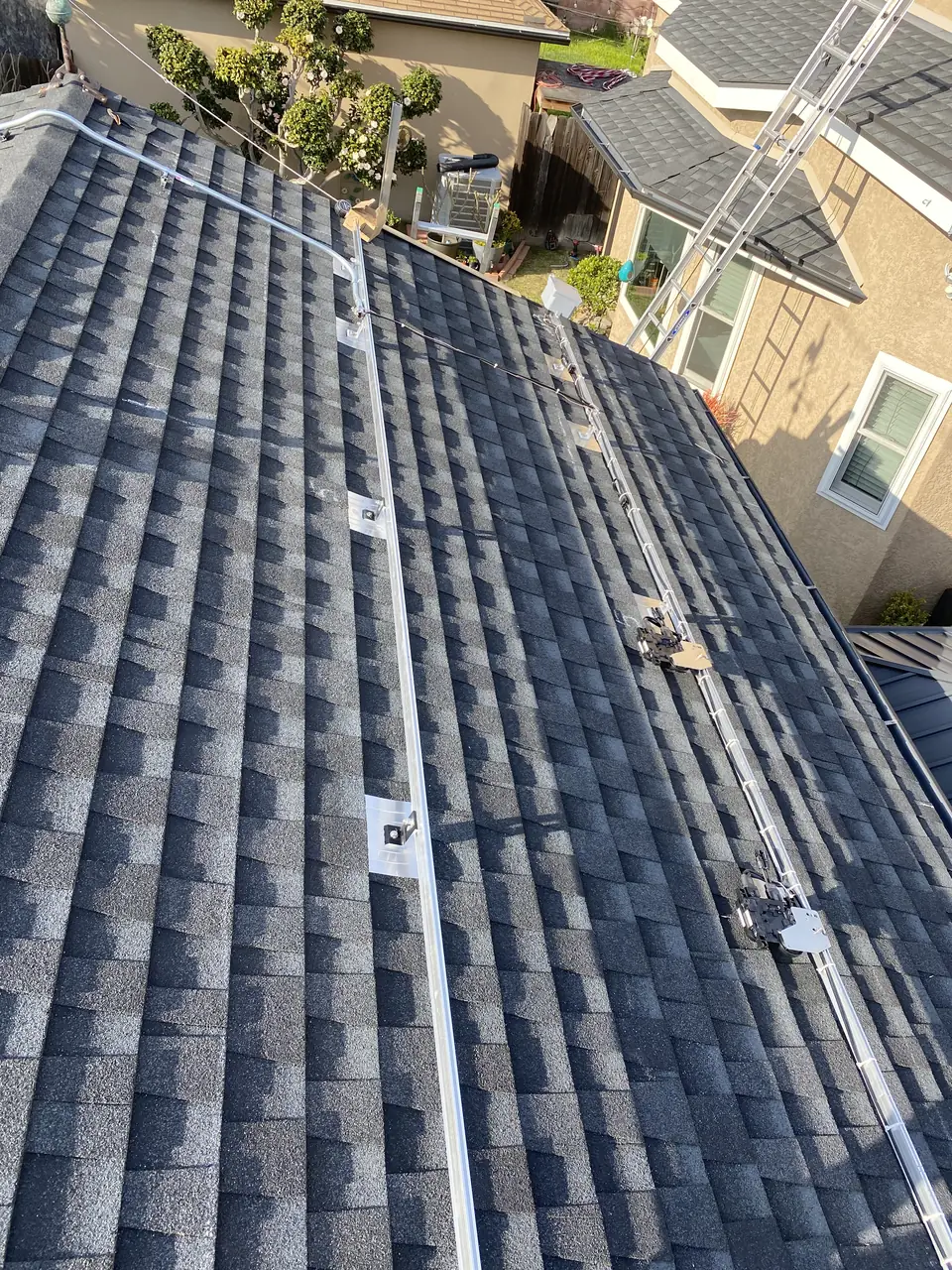
Lakewood 90712 · 8.8 kW · chosen over smaller options to cover the home’s full usage plus a future electric car — and it fitted the existing service without a panel upgrade.
Cali Energy in Lakewood, at a glance
The short answers before considering a contractor.
| Question | Answer |
|---|---|
| What has Cali Energy installed here? | Rooftop solar on composition shingle from 3.2 kW upward, including an 8.8 kW system sized for a future electric car, an array mounted straight after a roof replacement, and a solar-plus-battery project we completed and commissioned. |
| Google rating | 4.9★ on Google. See them on Google |
| Who supplies the electricity? | Southern California Edison. Lakewood is not part of a community choice program, so Edison both supplies and delivers. |
| Who permits the work? | The City of Lakewood, plus a separate Edison interconnection process. |
| Does the housing stock help? | Yes. The city was built from a small number of base plans in the early 1950s, so roof geometry and layout repeat — which makes design and installation more predictable than in a mixed neighborhood. |
| Does that mean every quote is the same? | No. Seventy-five years of re-roofing, additions and electrical work mean the covering age and service capacity differ house to house. |
| License | CSLB #1032379 (B, C-10, C-39), in-house crews, operating since 2017. Verify with the CSLB |
A city built in thirty-three months
Lakewood’s history is not trivia here — it is why the roofs look alike and why that helps.
Between 1950 and 1953, developers turned roughly 3,500 acres of bean fields into about 17,500 houses — at the peak, a completed home every seven and a half minutes. It was the largest and fastest-built planned suburb of the post-war era, ahead even of Levittown. The first phase used thirteen base floor plans with four exterior variations each, on 5,000-square-foot lots, with houses averaging around 950 to 1,200 square feet.
Three consequences follow for solar, and they are practical rather than sentimental. Roof geometry repeats: the same handful of shapes, pitches and orientations recur street after street, so a layout that works on one house usually informs the next. Roof area is modest: a compact single-storey house limits how many modules fit, which is why sizing here is a conversation about what the roof can carry rather than an open budget question. And the original electrical service was designed for a 1950s household, long before an electric car or a heat pump — so service capacity is checked before anything is drawn.
What does not follow is that every Lakewood quote is interchangeable. Seventy-five years have brought re-roofs at different dates, additions, converted garages and upgraded panels. The pattern of the neighborhood is a strong starting point; the specific house is still what gets surveyed.
Repeating geometry
A small set of base plans means familiar roof shapes and pitches, which makes layout and racking planning faster and more reliable.
Modest roof area
Compact houses cap how much array fits. Sizing starts from usable area rather than from an ambitious kilowatt figure.
1950s services
The original panel was never meant to carry solar plus an EV. Service capacity is assessed before the design.
Seventy-five years of changes
Re-roofs, additions and panel upgrades vary house to house, so the survey still happens on your property.
Sources: PBS SoCal — the Lakewood Plan · LA County Library — Lakewood local history (roughly 17,500 houses built 1950–53 on about 3,500 acres; thirteen base plans with four variations each; 5,000 sq ft lots). Historical context, not a statement about any specific property.
Solar work in Lakewood
A few of the homes we have done here. Street numbers stay off the page out of respect for the owners. The full photo set for every Lakewood job lives in the Lakewood project gallery.
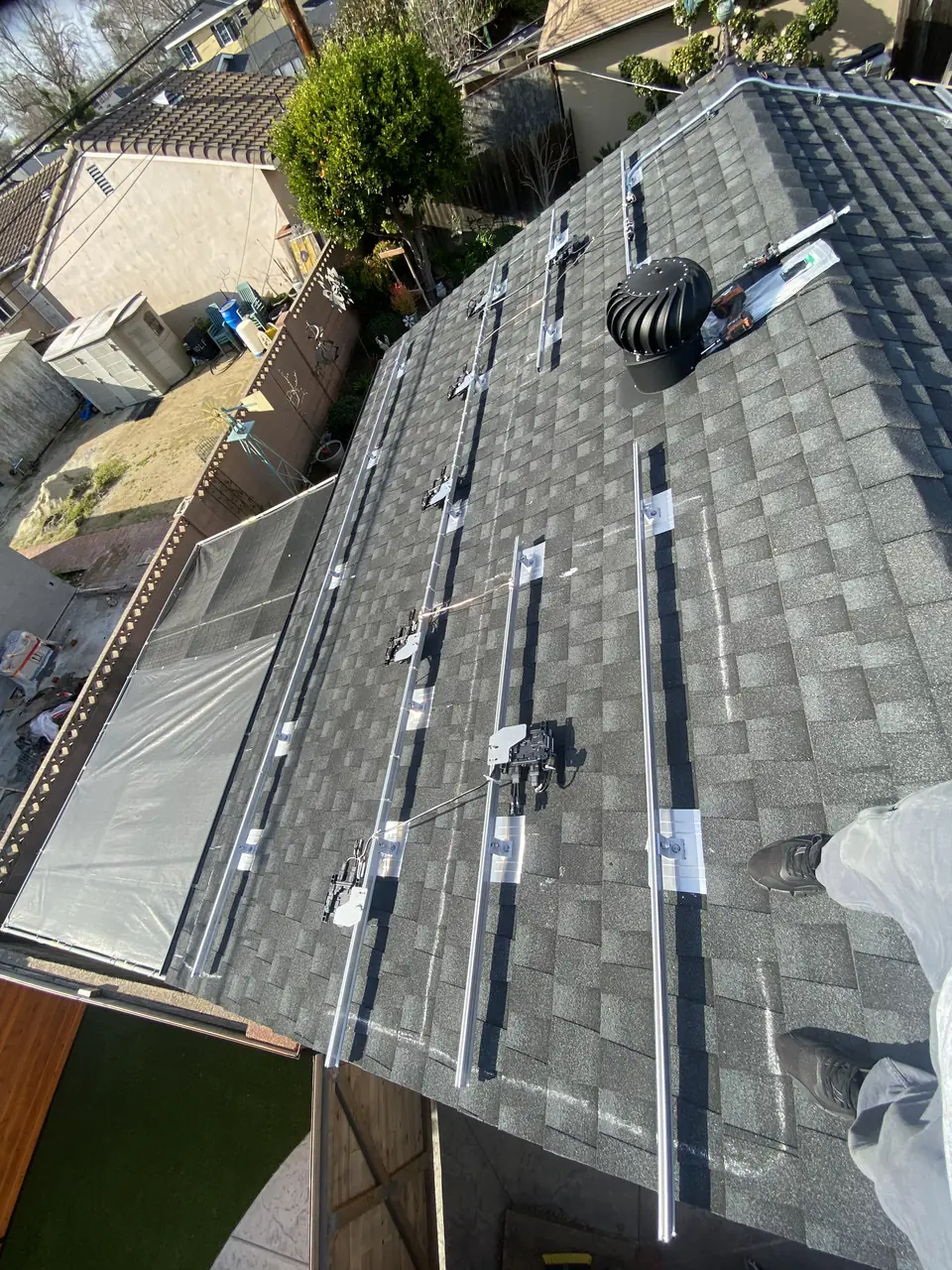
8.8 kW, sized for a future EV
The homeowner chose 8.8 kW over smaller 4.8 and 7.2 kW options to cover full household use plus an electric car not yet bought — and it fitted the existing service without a panel upgrade.
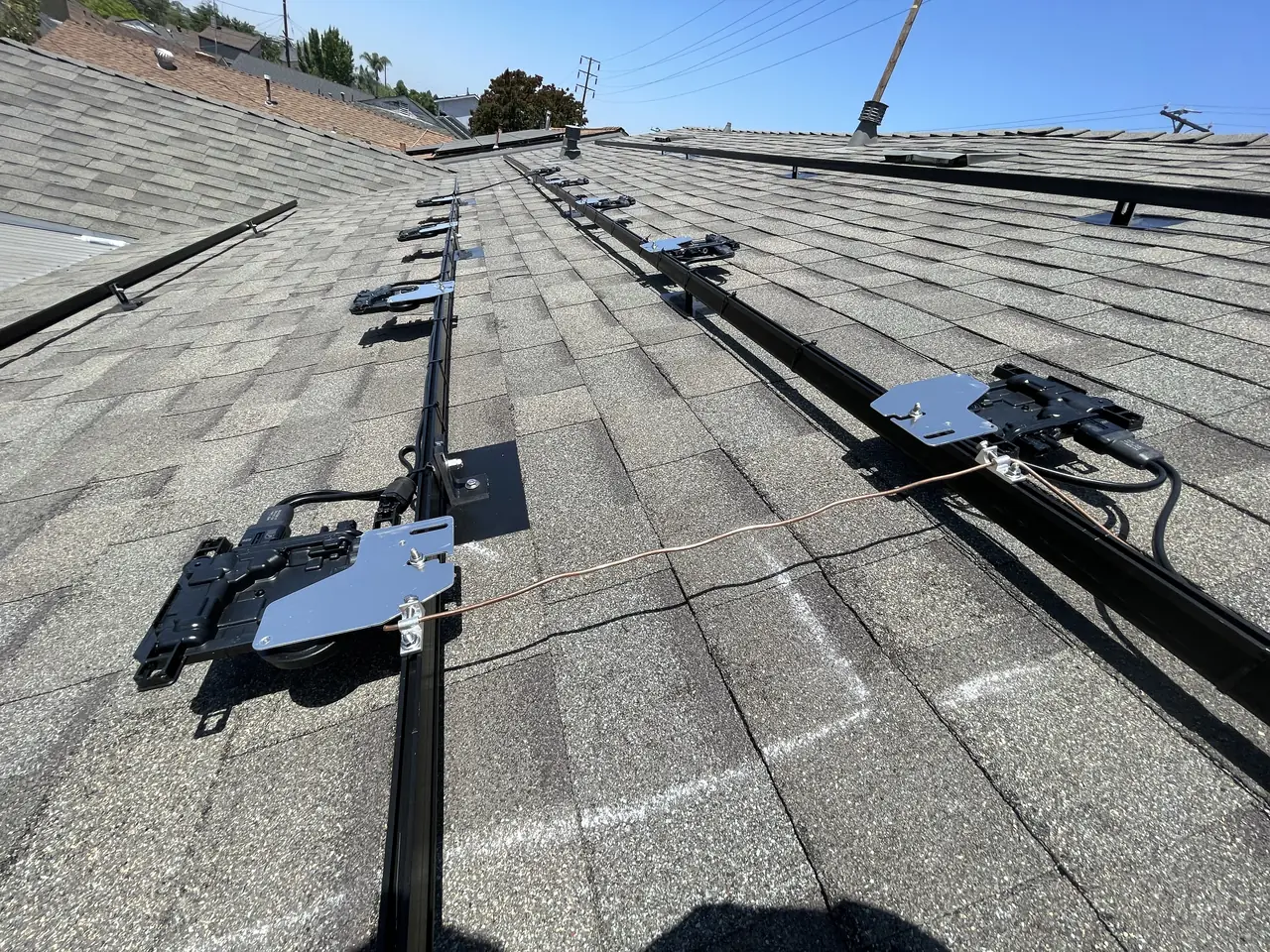
New roof, then 4.29 kW
Eleven Canadian Solar 390 W modules on Enphase IQ8+ microinverters, installed right after a roof replacement — the covering gets its full life under the array.
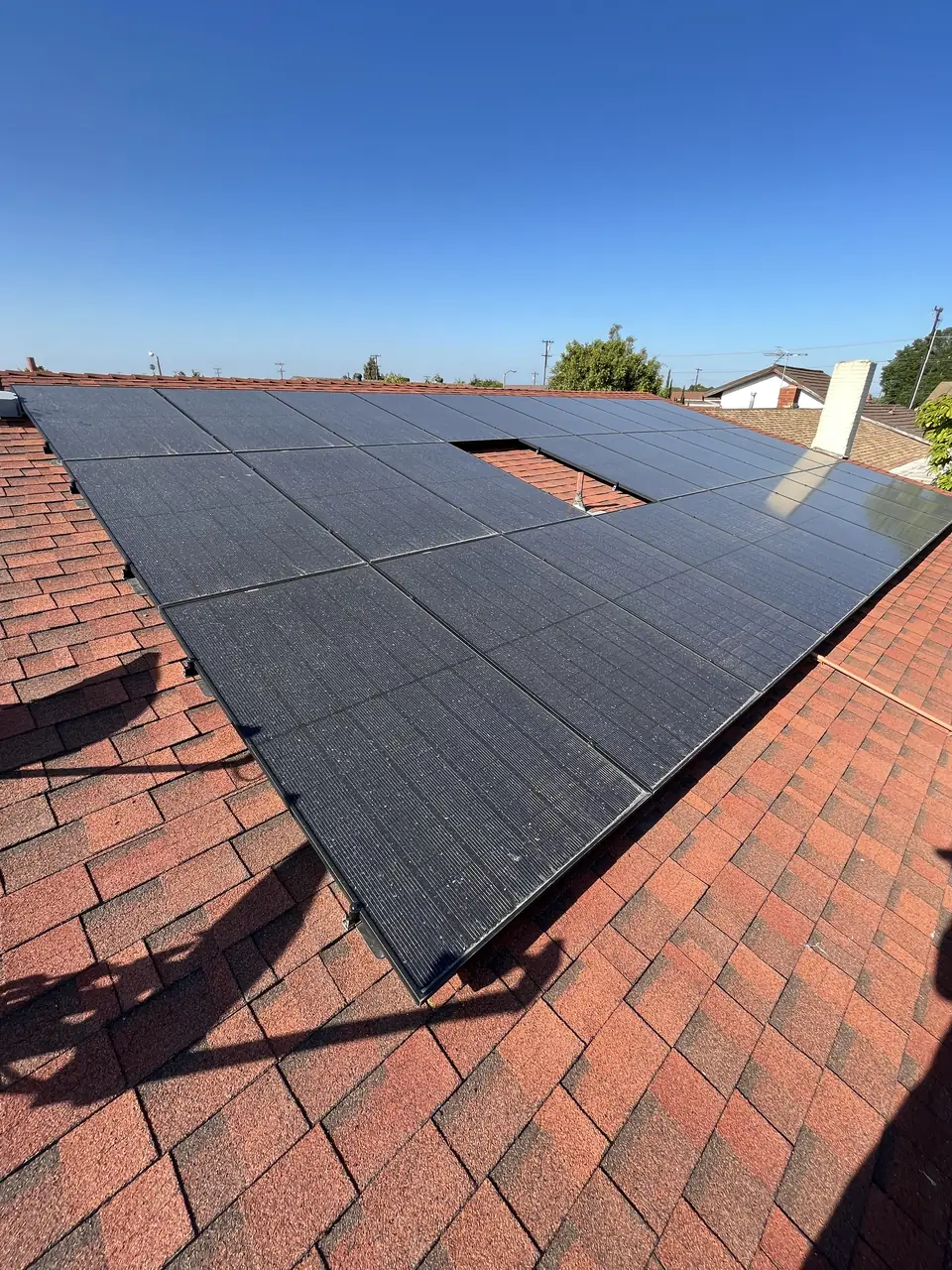
Solar and battery, finished by us
A solar-plus-battery project our crew completed and commissioned, through final inspection — the kind of job that starts with someone else’s unfinished work.
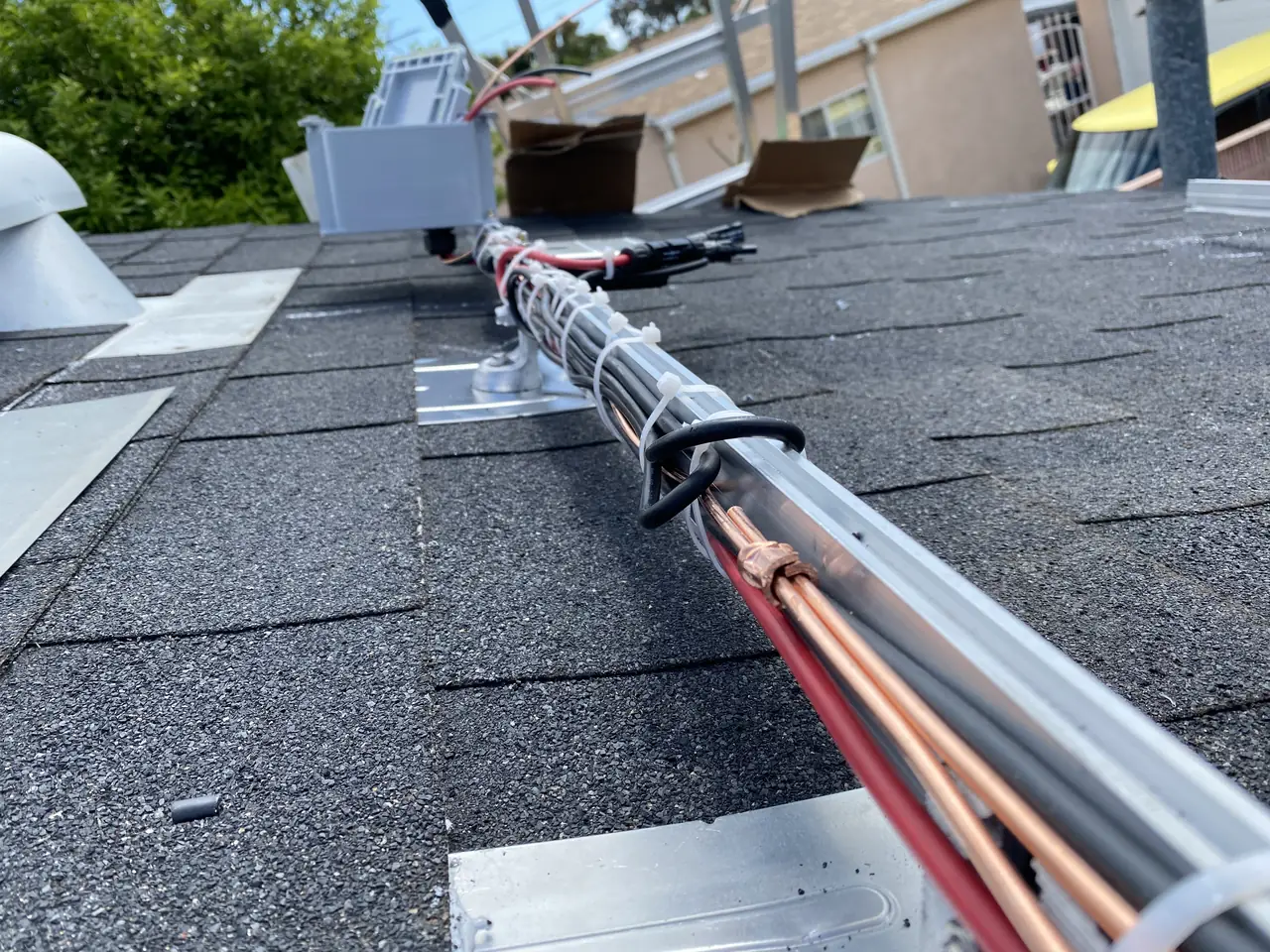
3.2 kW, passed first time
A compact rooftop system that passed its final city inspection on the first attempt — unremarkable when it happens, expensive in delays when it does not.
Photos are ours, taken on site. Where a system size is stated it is given on the basis it was recorded on — DC nameplate or CEC-AC — because the two are not interchangeable.
A closer look at the Lakewood jobs
What this work has in common, and where it differs.
| Detail | Value | Notes |
|---|---|---|
| Homes shown here | A selection | Some of our Lakewood jobs, with our photos from each — our work in the city goes well beyond them |
| ZIP codes | 90712 · 90713 · 90715 | Most of this work sits in 90712 |
| Roof covering | Composition shingle | Every Lakewood roof we have installed on — a direct consequence of how the city was built |
| System sizes | From 3.2 kW upward | Including a 4.29 kW DC eleven-module array and an 8.8 kW system sized for future EV charging |
| Utility | SCE | Southern California Edison supplies and delivers; new systems are on the Solar Billing Plan |
| Equipment we have used | Canadian Solar, Enphase | Canadian Solar 390 W modules with Enphase IQ8+ microinverters |
| Beyond the array | Roofing & completions | An array mounted straight after a roof replacement, and a solar-plus-battery project finished and commissioned by our crew |
| Recent work | Concentrated in 2023 | Most of the Lakewood jobs shown here were installed and inspected that year |
Choosing between 4.8, 7.2 and 8.8 kW
A real Lakewood decision, and a useful illustration of how system size should actually be picked.
On one job here the homeowner was given three options — 4.8, 7.2 and 8.8 kW — and chose the largest. Not because bigger is better, but for a specific reason: it covered the household’s full current usage and an electric car that had not been bought yet. Checked against the service equipment, the larger array still fitted without a main-panel upgrade, so the extra capacity cost only the extra panels.
That is the right shape for the decision. A system sized purely to today’s bill can look efficient and then fall short the moment a car, a heat pump or an added unit arrives — and adding capacity later means a second design, a second permit and a second interconnection. A system sized well beyond any plausible use is money spent on production the house will export at a low rate. The question worth asking is not “how big can it be” but what is coming in the next few years, and does the service carry it.
Plan for the car
An EV can add thousands of kilowatt-hours a year. Cheaper to include in the first design than to add later.
Check the service first
Whether the larger option needs a panel upgrade changes the price and the timeline. That answer comes before the choice.
Options, not a single number
Being shown two or three sizes with what each covers is how the decision stays yours.
Roof area is the ceiling
On a compact Lakewood house the usable roof caps the options long before the budget does.
Edison sets the export rules
What a new Lakewood system is actually paid for the energy it sends back.
Solar Billing Plan since April 2023
New solar customers in Edison territory are on the tariff commonly called NEM 3.0, where exports earn an hourly avoided-cost value rather than the retail rate.
Self-consumption first
The array is worth most when the house uses what it makes, which is why load matters more than roof area in the sizing conversation.
Storage holds the evening
A battery moves midday production into the hours the tariff values most — and covers outages. We have installed solar-plus-battery here.
Older systems differ
Systems approved before April 15, 2023 stay on the earlier net metering terms for the rest of their eligibility period — worth confirming on a resale home.
Sources: CPUC — Net Energy Metering and the Net Billing Tariff · SCE — generating your own power. Program terms change; confirm current rules for your own account.
What solar costs and how long it takes in Lakewood
No honest flat citywide price — but published ranges and a compact-roof reality.
Two published price bases frame the budget, both before incentives: $2.49 per watt at competitive marketplace rates (EnergySage, August 2026) and $3.5 per watt, the 2024 national median for cash purchases (Lawrence Berkeley National Laboratory). Because Lakewood houses are compact, most systems here sit in the 4–9 kW range, which lands somewhere between roughly $10,000 and $31,500 depending on installer, financing and scope.
| Item | Figure | Basis |
|---|---|---|
| Typical range on these roofs | 4 – 9 kW | Our installations |
| Solar at marketplace rates | $2.49/W → 4 kW ≈ $10,000 · 6 kW ≈ $14,900 · 9 kW ≈ $22,400 | Market estimate — EnergySage |
| Solar at typical installer rates | $3.5/W (2024 national cash median) → 4 kW ≈ $14,000 · 9 kW ≈ $31,500 | Market estimate — LBNL 2025 Data Update |
| Battery storage (~13 kWh) | $11,864–$16,052 before incentives (average $13,958) | Market estimate — EnergySage California |
| Main-panel upgrade | Priced per job — and not always needed: the 8.8 kW system here fitted the existing service | Scope-dependent |
| Roof replacement before solar | Priced per job: covering, tear-off and roof geometry, quoted with the array | Scope-dependent |
| Federal tax credit | Homeowner (25D) credit ended Dec 31, 2025 — $0 on a 2026 cash or loan purchase; leased and PPA systems can still capture the 30% credit through the system owner | Official source — IRS FAQs on P.L. 119-21 |
| Time on the roof | Most residential installs: 1–3 working days | Cali Energy company figure |
| Permit | City of Lakewood | Official — City of Lakewood |
| Utility step | Edison interconnection is separate and must complete before the system may operate | Official — SCE |
Sources: EnergySage — solar cost · EnergySage — storage cost · LBNL — 2025 Data Update · IRS — Section 25D FAQs. Planning context, not a quote.
What Cali Energy installs in Lakewood
One licence covering the whole job, so the scopes do not get handed between companies.
Rooftop solar
Composition-shingle layouts sized to compact roofs, with microinverters so each module works independently.
Battery storage
Storage that holds the evening under the Solar Billing Plan and carries the house through an outage.
Roofing with solar
Roof replacement under our own C-39 ahead of the array — done on a Lakewood home here.
Finishing other people’s work
Completing and commissioning a system someone else left unfinished, through to final inspection.
Exact coverage: Lakewood and its edges
A compact city with Long Beach on one side and county land on the other.
| Attribute | Fact |
|---|---|
| Status | Incorporated city in southern Los Angeles County, incorporated in 1954 shortly after it was built |
| ZIP codes we work in | 90712, 90713 and 90715 |
| Electricity | Southern California Edison — Solar Billing Plan for new systems |
| Permitting authority | City of Lakewood |
| Housing stock | Overwhelmingly early-1950s tract housing from a small set of base plans, on 5,000 sq ft lots |
| Roof covering | Composition shingle throughout the work we have done here |
| Adjacent cities | Long Beach to the south and west, Bellflower and Cerritos to the north and east, Hawaiian Gardens to the east |
| Neighbours on a different arrangement | Hawaiian Gardens and several nearby cities buy generation through Clean Power Alliance while Edison delivers; Lakewood does not |
Map of Cali Energy projects in Lakewood
Lakewood homes we have worked on — a selection of them, shown on this page.
Marker positions are deliberately offset. Each point is shifted 120–260 meters from the real address so the map shows where we work in Lakewood without identifying anyone’s home. Base map © OpenStreetMap contributors © CARTO; ZIP boundaries from the U.S. Census ZCTA file.
Reviews and verifiable trust
A public rating, a public license record and named, quotable reviews.
“Cali Energy delivered exactly when they said they would. The crew showed up on schedule, finished the installation without any surprises, and everything worked from day one.”
“I spoke with several companies before choosing this one, and they were by far the most fair and honest. They didn’t try to oversell me on a bigger system than I needed.”
“Just got my roof replaced and couldn’t be happier. The work was professional and better than I expected.”
Read the full reviews on Cali Energy’s Google profile · verify the contractor license with the California CSLB.
Fast answers about hiring Cali Energy in Lakewood
Each answer starts with the conclusion.
Does Cali Energy install solar in Lakewood?
Yes. Lakewood is an active Cali Energy service area and we work here regularly across 90712, 90713 and 90715, with most of the work on this page installed and inspected in 2023. Every Lakewood roof we have installed on is composition shingle.
Who is my electricity provider in Lakewood?
Southern California Edison. Lakewood is not part of Clean Power Alliance or another community choice program, so Edison both supplies the generation and delivers it — a simpler arrangement than in several neighboring cities.
Does NEM 3.0 apply in Lakewood?
Yes. New solar customers in Edison territory are on the Solar Billing Plan, in effect since April 15, 2023, where exports earn an hourly avoided-cost value rather than the retail rate. Systems approved before that date stay on the earlier terms for the rest of their eligibility period.
My house is a 1950s tract home. Does that limit solar?
It shapes it rather than limits it. The base plans give familiar roof geometry, which makes layout planning quicker and more reliable, but the houses are compact, so usable roof area caps the system before the budget does. The original electrical service was also designed for a 1950s household, so capacity is checked before the design — though it does not always need upgrading.
What size system should I get?
Enough for what the house uses now and what is coming. On a Lakewood job here the homeowner chose 8.8 kW over 4.8 and 7.2 kW options, sized for full household usage plus an electric car not yet purchased — and it fitted the existing service without a panel upgrade. Adding capacity later means a second design, permit and interconnection, so it is worth deciding once.
Will I need a main-panel upgrade?
Not always. Solar feeds the same busbar as the utility supply and the code caps the combined supply, so the service is assessed before the array is designed. On the 8.8 kW system here no upgrade was needed. Where one is required, it goes in the original proposal rather than appearing at inspection.
Should the roof be replaced first?
If the covering has roughly ten years or less left, yes. On a Lakewood home here the array went up right after a roof replacement, so the new covering has its full life under the panels. Roofing is in-house under our C-39, so both scopes are quoted and scheduled together rather than split between companies.
Can you finish a system another company started?
Yes. One project here was a solar-plus-battery system our crew completed and commissioned, taken through final inspection. It means checking what is physically installed against what was approved, correcting anything that will not pass, and carrying the paperwork through to the end.
Do I need a battery in Lakewood?
It is worth pricing. Under the Solar Billing Plan the evening kilowatt-hour you avoid buying is worth considerably more than the midday one you export, and storage moves production into that window. It also covers outages. We have installed solar-plus-battery here.
How long does a Lakewood solar project take?
The roof work itself is usually 1–3 working days. Around it sit the city permit and inspection — one system here passed its final inspection on the first attempt — and Edison’s interconnection, which runs separately and must complete before the system may operate.
What does solar cost in Lakewood?
Because the houses are compact, most systems here fall in the 4–9 kW range. Published rates frame the budget: $2.49 per watt at marketplace rates and $3.5 per watt as the 2024 national cash median, putting that range at roughly $10,000–$31,500 before incentives. The federal 25D homeowner credit ended December 31, 2025, so a 2026 cash or loan purchase gets no federal credit. The estimate for your own home is free.
How do I check that Cali Energy is legitimate?
Compare four things rather than ad claims: (1) an active CSLB license with electrical and roofing classifications, (2) completed work in your specific area, with photos, (3) whether the company uses its own crews or subcontracts, and (4) the review pattern. Our answers: CSLB #1032379 (B, C-10, C-39); Lakewood homes with our photos; in-house crews; a 4.9★ Google rating. Our office is at 19201 Parthenia St Unit E, Northridge, CA 91324. We do not claim a Lakewood storefront; what this page shows is completed work in the city and active service coverage.
Sources
Where this page states a rule, a tariff or a historical figure, the source is linked below.
| What it supports | Source |
|---|---|
| Roughly 17,500 houses built 1950–53 from thirteen base plans on 5,000 sq ft lots | PBS SoCal — the Lakewood Plan · LA County Library — Lakewood local history |
| Solar Billing Plan applies to new SCE solar customers from April 15, 2023 | CPUC — Net Energy Metering |
| Which cities buy generation through a community choice program — Lakewood is not among them | SCE — community choice aggregation partners |
| Interconnection requirements for customer generation | SCE — generating your own power |
| City permitting | City of Lakewood — Building and Safety |
| Installed price ranges for solar and storage | EnergySage · LBNL 2025 Data Update |
| Federal tax credit status for 2026 | IRS — Section 25D FAQs |
| Contractor licence and classifications | CSLB — license #1032379 |
Nearby service areas
Other cities where Cali Energy works.
Related reading
Planning solar for a Lakewood home
Send the service address and a recent Edison bill. We will check the roof covering and its remaining life, the usable area and the service capacity — then show you two or three sizes and what each actually covers, including anything you plan to add.
Request a free estimatePublished August 2026. Details refer to those specific homes, not to every Lakewood property. Historical figures describe the city’s development, not any individual house. Rates, incentives, code editions and permit requirements change; utility, jurisdiction, equipment, pricing and schedule must be confirmed for the specific address. See our Content Disclaimer. Cali Energy · 19201 Parthenia St Unit E, Northridge, CA 91324 · CSLB #1032379 (B, C-10, C-39)