

Solar company in Tarzana — a meter set here every year, year after year
Yes — Cali Energy installs solar panels, battery storage, roofing and electrical upgrades in Tarzana, Los Angeles. The record speaks in dates: LADWP set new net meters on our Tarzana systems in January 2022, March 2023, April 2024 and July 2025 — year after year, without a gap. Some of those homes are shown below, with our photos from each. The sizes run from a compact 2.61 kW to 13.3 kW CEC-AC, one of the largest residential systems we have interconnected with LADWP anywhere. Every address here is on the municipal utility, which still credits exports at the retail rate. Cali Energy is a licensed California contractor (CSLB #1032379) with a 4.9★ Google rating and in-house crews.
Get a Tarzana estimate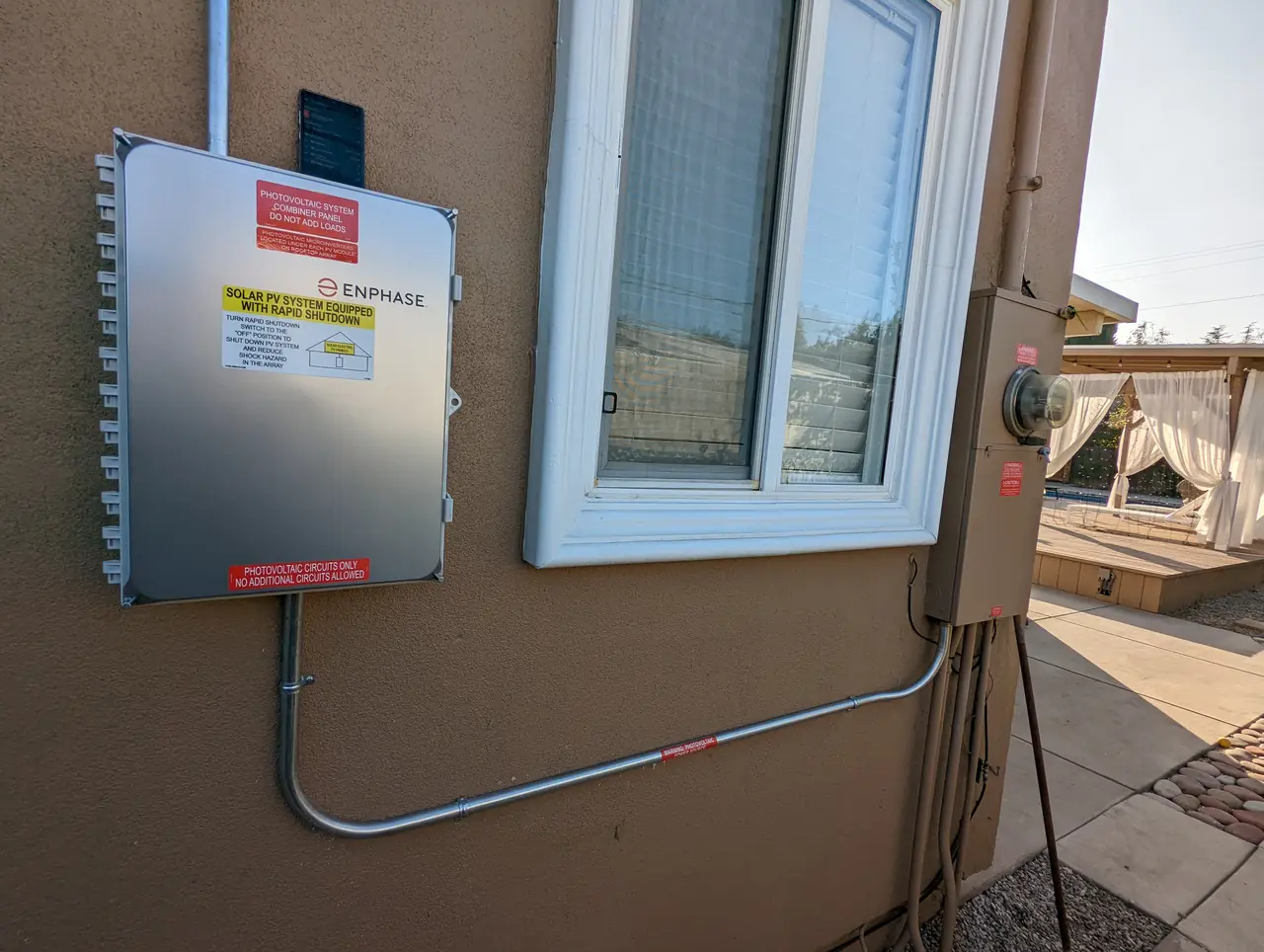
Tarzana 91356 · 13.3 kW CEC-AC on Enphase microinverters — one of our largest LADWP residential interconnections, net meter set January 2022.
Cali Energy in Tarzana, at a glance
The short answers before considering a contractor.
| Question | Answer |
|---|---|
| What has Cali Energy installed here? | Rooftop solar from 2.61 kW to 13.3 kW CEC-AC on shingle and S-profile concrete tile; a system installed with a utility meter panel upgrade; SolarEdge HD-Wave and Enphase microinverter platforms. |
| Google rating | 4.9★ on Google. See them on Google |
| Who supplies the electricity? | The Los Angeles Department of Water and Power — a municipal utility outside CPUC jurisdiction, still crediting exports at the retail rate. |
| Who permits the work? | The Los Angeles Department of Building and Safety (LADBS), plus a separate LADWP interconnection process. |
| How consistent is the work here? | A Tarzana net meter was set in 2022, 2023, 2024 and 2025 — consecutive years, with fresh installs continuing in 2025. |
| Where are you based? | Northridge, straight up Reseda Boulevard — not a call center in another county. |
| License | CSLB #1032379 (B, C-10, C-39), in-house crews, operating since 2017. Verify with the CSLB |
What a continuous track record actually looks like
Anyone can claim to “serve Tarzana”. Dates are harder to fake — so here are ours.
Utility milestones are third-party facts: LADWP sets the net meter and issues permission to operate, and those events carry dates the installer does not control. Ours in Tarzana line up like this: a 13.3 kW system metered in January 2022; an 8.9 kW system metered in March 2023 — with permission to operate granted the next day; a 9.75 kW system through to PTO in April 2024; a 2.61 kW system metered in July 2025; and further installs on Tarzana roofs in mid-2025. Add the 2021-era job with its meter panel upgrade and the run covers every year since.
Why belabour the calendar? Because continuity is the thing a homeowner actually needs from an installer, and the industry’s biggest failure mode is the company that vanishes between the sale and the service call. A contractor with an unbroken local record — verifiable through the utility’s own paperwork — is one that answered its phone last year and will answer it next year. It also means the crews have already met every roof type, panel vintage and inspector preference this neighborhood has to offer.
Third-party dates
Meter sets and PTOs are the utility’s records, not our marketing. They anchor every claim on this page.
No gap years
Consecutive-year activity means the company you hire is the company that will still be here at the warranty call.
Every size, same care
The record spans 2.61 to 13.3 kW — the small system got the same process as the flagship.
Speed when it counts
PTO the day after the meter set is what a clean application looks like from the utility’s side.
Solar work in Tarzana
A few of the homes we have done here. Street numbers stay off the page out of respect for the owners. The full photo set for every Tarzana job lives in the Tarzana project gallery.
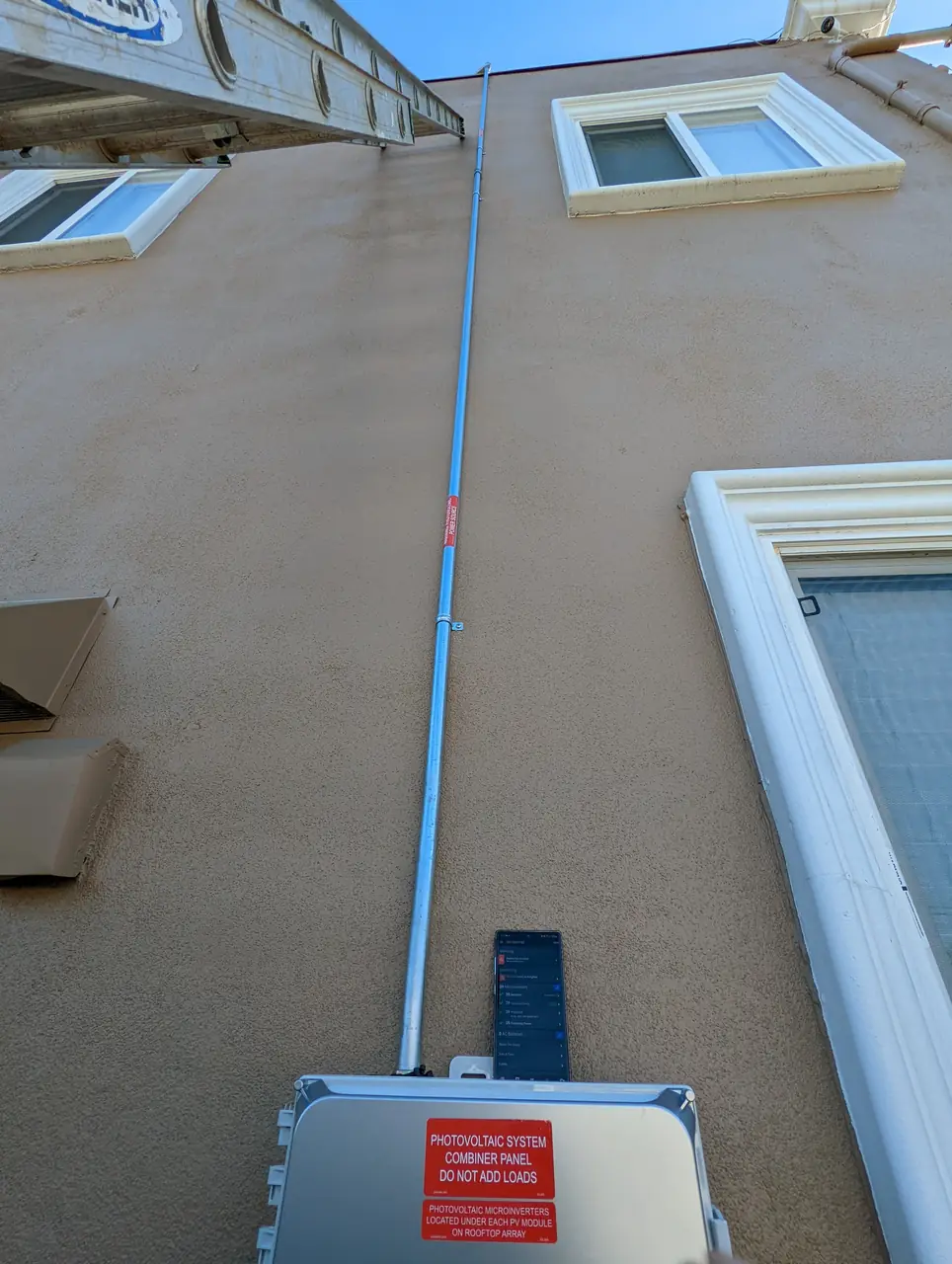
13.3 kW on Enphase
One of our largest LADWP residential interconnections anywhere — 13.3 kW CEC-AC on Enphase microinverters, net meter set January 2022, well above the fast-track line and through the standard path.
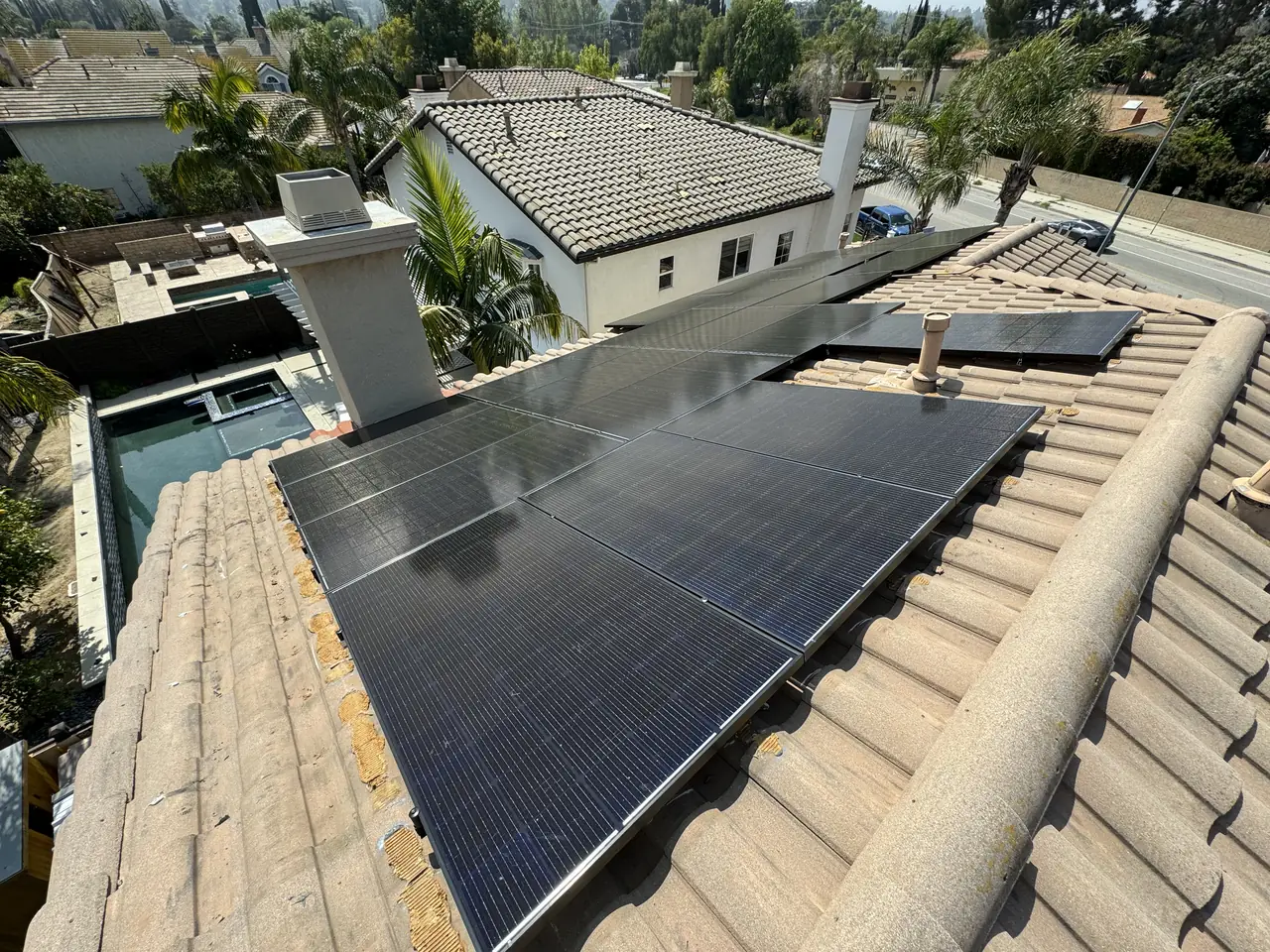
9.75 kW, just under the line
A system sized a whisker under LADWP’s 10 kW threshold — through to permission to operate and a new net meter in April 2024.
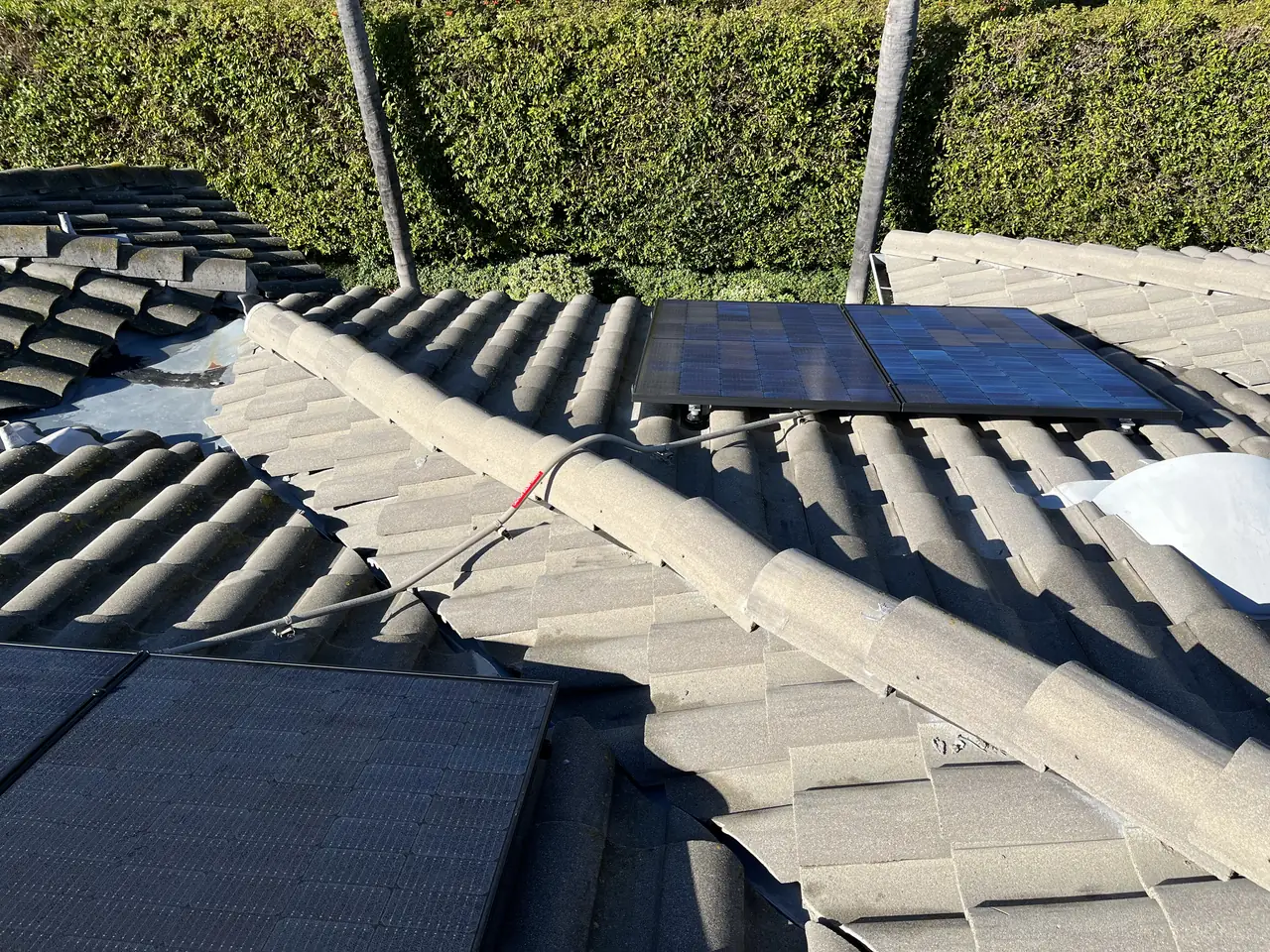
S-tile, handled as tile
An array set into S-profile concrete tile — profile-specific hardware, layout following the course, spare tiles on site.
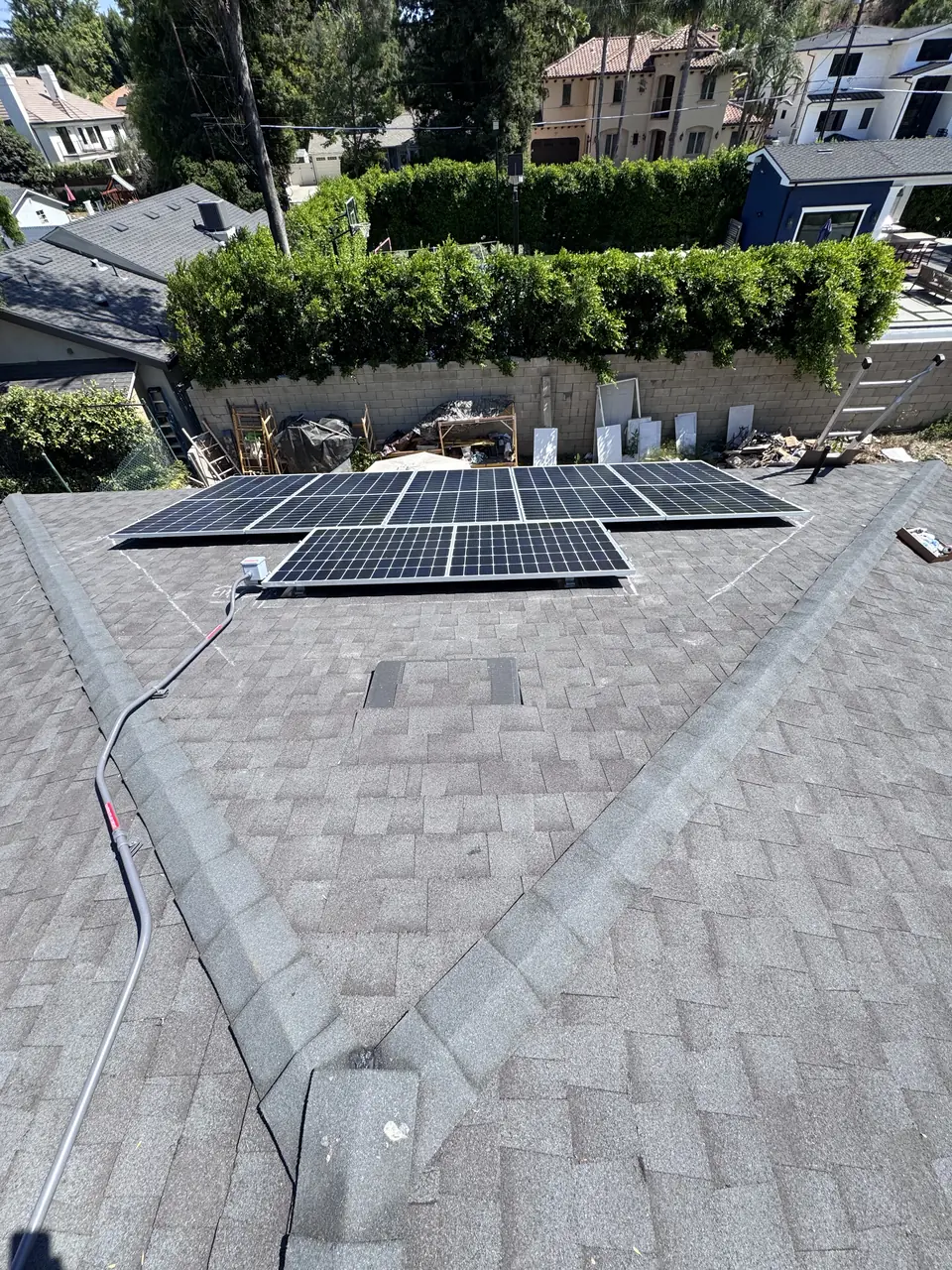
Fresh 2025 install
Panels up in June 2025 — the record continuing into its latest year, on the same streets as the first.
Photos are ours, taken on site. Sizes are stated in CEC-AC, the basis LADWP works in, and are not interchangeable with DC nameplate figures.
A closer look at the Tarzana jobs
What this work has in common, and where it differs.
| Detail | Value | Notes |
|---|---|---|
| Homes shown here | A selection | Some of our Tarzana jobs, with our photos from each — our work in the district goes well beyond them |
| ZIP codes | 91356, plus the 91335 edge | Most of this work sits in 91356; one job crosses the Reseda-side boundary |
| System sizes | 2.61–13.3 kW CEC-AC | Both sides of LADWP’s 10 kW line — a 9.75 kW design just under it, the 13.3 kW flagship above it |
| Utility | LADWP | Retail-rate net metering on every one, with meters set in consecutive years from 2022 through 2025 |
| Roof types | Shingle and tile, evenly | Composition shingle and S-profile concrete tile in roughly equal measure |
| Equipment we have used | Enphase, SolarEdge | Enphase microinverters on the flagship; a SolarEdge HD-Wave inverter on the meter-upgrade job |
| Electrical scope | Meter panel upgrade | One installation required a new utility meter panel, built in the existing location |
| Fastest utility turn | Next-day PTO | March 2023: net meter set on the 7th, permission to operate granted on the 8th |
Two Tarzanas: the flats and the hills
Ventura Boulevard splits this district the same way it splits its neighbours — and the split changes the work.
North of the boulevard, Tarzana is classic Valley grid: post-war lots, straightforward access, shingle and tile in even measure — where most of the systems on this page sit. South of it, the district climbs into the Santa Monica Mountains on the same terms as neighboring Encino: larger parcels, steeper driveways, roofs broken into more planes, longer runs from the service equipment, and fire-hazard designations on the upper streets. None of it stops a system; all of it goes into the plan — conductor sizing for the long runs, module-level electronics for the split planes, and access worked out before the crew is scheduled rather than on the morning of.
The district’s name, incidentally, is the neighborhood’s own footnote: it comes from Edgar Rice Burroughs’ ranch, named for Tarzan. The sunshine his ranch enjoyed is the same resource on these roofs today.
The flats
Grid streets, even lots, easy staging — the everyday case, and the fast one.
The hills
Slope, access and fire-hazard designations on the south side change the plan, not the feasibility.
Split planes
Hillside rooflines break into faces — exactly where microinverters like the flagship’s earn their cost.
Checked per parcel
Designations and access vary lot by lot. We confirm both before design, not at inspection.
Source: CAL FIRE — fire hazard severity zones · City of Los Angeles ZIMAS for the designation on a specific parcel.
LADWP: retail-rate credit and the 10 kW line
Two rules that shape a Tarzana project more than the equipment does — and this page has systems on both sides of the line.
NEM 3.0 does not apply
LADWP is municipal, so the CPUC’s Net Billing Tariff does not govern it. Exports here are still credited against the retail rate rather than an hourly avoided-cost value.
Both sides of 10 kW
The 9.75 kW design took the fast track; the 13.3 kW flagship took the standard path with its engineering site visit. Which side you land on is a decision, not an accident.
Meter work changes the path
The job that needed a new utility meter panel carried that scope through the longer route — known and priced from day one.
Two approvals
LADBS signs off the installation; LADWP sets the net meter and issues the permission-to-operate email. On one Tarzana job those two utility steps landed a day apart.
Sources: LADWP — net energy metering rates · LADWP — solar programs (Guide to Electric Service, p. 22, for the stage timings) · CPUC — Net Energy Metering. Program terms change; confirm current rules for your own account.
What solar costs and how long it takes in Tarzana
No honest flat price for a district — but published ranges and a dated local record on the utility side.
The systems we have installed here run from 2.61 to 13.3 kW CEC-AC. Two published price bases frame the budget, both before incentives: $2.49 per watt at competitive marketplace rates (EnergySage, August 2026) and $3.5 per watt, the 2024 national median for cash purchases (Lawrence Berkeley National Laboratory). A 6–13 kW spread lands between roughly $15,000 and $46,000 depending on installer, financing and scope, with any meter or panel work priced alongside.
| Item | Figure | Basis |
|---|---|---|
| System sizes we have installed here | 2.61 – 13.3 kW CEC-AC | Our installations |
| Solar at marketplace rates | $2.49/W → 6 kW ≈ $14,900 · 10 kW ≈ $24,900 · 13 kW ≈ $32,400 | Market estimate — EnergySage |
| Solar at typical installer rates | $3.5/W (2024 national cash median) → 6 kW ≈ $21,000 · 13 kW ≈ $45,500 | Market estimate — LBNL 2025 Data Update |
| Battery storage (~13 kWh) | $11,864–$16,052 before incentives (average $13,958) | Market estimate — EnergySage California |
| Meter or main panel work | Priced per job; one Tarzana install required a new utility meter panel in the existing location | Scope-dependent |
| Federal tax credit | Homeowner (25D) credit ended Dec 31, 2025 — $0 on a 2026 cash or loan purchase; leased and PPA systems can still capture the 30% credit through the system owner | Official source — IRS FAQs on P.L. 119-21 |
| Time on the roof | Most residential installs: 1–3 working days; tile and hillside scopes run longer | Cali Energy company figure |
| LADBS permit | Express e-permit for qualifying systems: issued online, often same day | Official process — LADBS |
| LADWP, our fastest here | Net meter set 7 March 2023, permission to operate the next day | Our own dated milestones on that job |
| LADWP published stages | Fast track: approval 2–5 days, meter set 1–2 weeks. Standard path adds an engineering site visit of 1–3 weeks | Official — LADWP Guide to Electric Service, p. 22 |
Sources: EnergySage — solar cost · EnergySage — storage cost · LBNL — 2025 Data Update · IRS — Section 25D FAQs. Planning context, not a quote; one project’s schedule is not a promise for another.
What Cali Energy installs in Tarzana
One licence covering the whole job, so the scopes do not get handed between companies.
Rooftop solar
From compact systems to a 13.3 kW flagship, on shingle and S-profile tile, flats and hillside alike.
Battery storage
Backup sized to the circuits worth keeping alive — planned knowing storage moves the project onto LADWP’s longer path.
Roofing with solar
Roof condition assessed under our own C-39, and replaced first when it will not outlast the array.
Electrical and meter work
Meter panel replacements, main panel upgrades and EV circuits under our C-10, priced with the array.
Our services in Tarzana
A page for each service: our Tarzana projects, the permit and the utility.
Exact coverage: Tarzana and its edges
The south-central Valley, from the boulevard into the hills.
| Attribute | Fact |
|---|---|
| Status | Neighborhood of the City of Los Angeles, in the southern San Fernando Valley |
| ZIP codes | 91356, with the 91335 boundary on the Reseda side |
| Electricity | LADWP for every address — retail-rate net metering, no CPUC net billing |
| Permitting authority | Los Angeles Department of Building and Safety (LADBS) |
| Terrain | Valley grid north of Ventura Boulevard; hillside parcels with fire-hazard designations to the south |
| Adjacent — same utility | Encino, Reseda, Woodland Hills and Winnetka are all City of LA addresses on LADWP |
| Name, for the record | From Edgar Rice Burroughs’ ranch, named for Tarzan — the sunniest literary legacy in the Valley |
| What we check first | The bill, the roof covering, the hillside factors and the service equipment |
Map of Cali Energy projects in Tarzana
Tarzana homes we have worked on — a selection of them, shown on this page.
Marker positions are deliberately offset. Each point is shifted 120–260 meters from the real address so the map shows where we work in Tarzana without identifying anyone’s home. Base map © OpenStreetMap contributors © CARTO; ZIP boundaries from the U.S. Census ZCTA file.
Reviews and verifiable trust
A public rating, a public license record and named, quotable reviews.
“Cali Energy did a great job from their proposal through installation and in the years since with follow up monitoring of our system. We have saved 1000s while contributing to lower carbon emissions.”
“The recommendation they gave us on the type of solar panels to purchase was perfect — the panels have been extremely efficient, and because of that we have not had an electricity bill in the last three years.”
“I like that they are a local solar installation company based here in Northridge, not a sales office somewhere else.”
Read the full reviews on Cali Energy’s Google profile · verify the contractor license with the California CSLB.
Fast answers about hiring Cali Energy in Tarzana
Each answer starts with the conclusion.
Does Cali Energy install solar in Tarzana?
Yes — and the record shows it in dates: LADWP set new net meters on our Tarzana systems in January 2022, March 2023, April 2024 and July 2025, with fresh installs continuing in mid-2025. Systems run from 2.61 to 13.3 kW CEC-AC. Our office is in Northridge, straight up the boulevard.
Why does a year-by-year record matter?
Because the industry’s biggest failure mode is the installer that vanishes between the sale and the first service call. Utility milestones — meter sets, permission-to-operate letters — are third-party dated records we do not control, and an unbroken run of them in one neighborhood is the closest thing to proof that the company answering your call this year will answer it next year too.
Who is my electricity provider in Tarzana?
The Los Angeles Department of Water and Power. Tarzana is inside the City of Los Angeles, so every address here is served by LADWP rather than Southern California Edison — which changes how solar is credited.
Does NEM 3.0 apply in Tarzana?
No. NEM 3.0 — properly the Net Billing Tariff — is a CPUC rule for investor-owned utilities such as Edison and PG&E. LADWP is municipal and is not governed by it, so exported energy here is still credited against the retail rate.
How large can a Tarzana system be?
As large as the roof, the load and the service allow — our flagship here is 13.3 kW CEC-AC on Enphase microinverters, among the largest residential systems we have interconnected with LADWP anywhere. Above 10 kW CEC-AC the utility’s standard path applies, with an engineering site visit; the 9.75 kW design on this page deliberately stayed just under that line.
How fast can LADWP connect a system here?
The published fast track runs approval in 2–5 days with the meter set 1–2 weeks later. Our fastest Tarzana sequence beat expectations: net meter set on 7 March 2023, permission to operate granted the next day. One project’s schedule is not a promise for another, but it shows what a clean application looks like from the utility’s side.
Does the hillside side of Tarzana change the project?
It changes the planning, not the feasibility. South of Ventura Boulevard the parcels climb, driveways steepen, rooflines split into faces and fire-hazard designations apply on the upper streets — the same pattern as neighboring Encino. Conductor runs are sized for the distances, microinverters handle the split planes, and access is worked out before scheduling.
What about tile roofs?
S-profile concrete tile is common in Tarzana and we mount on it regularly — profile-specific hardware, a layout that follows the tile course, and spare tiles on site because a few always crack on an older roof. Shingle and tile appear in roughly equal measure in our work here.
Will I need meter or panel work?
Sometimes. One Tarzana installation required a new utility meter panel, built in the existing location, alongside its SolarEdge system. Meter and main-panel work moves a project onto LADWP’s longer path, so we assess the service first and price any upgrade with the array rather than discovering it at inspection.
Do I need a battery in Tarzana?
Not for tariff reasons — LADWP still credits exports at the retail rate, so storage is not needed to rescue export value. It is worth pricing for backup power, particularly on the hillside streets. Note that adding it moves the project onto the longer approval path regardless of array size.
What does solar cost in Tarzana?
There is no honest flat district price, but published rates frame it: $2.49 per watt at marketplace rates and $3.5 per watt as the 2024 national cash median, putting a 6–13 kW spread at roughly $15,000–$46,000 before incentives. Meter or panel work is priced with the job. The federal 25D homeowner credit ended December 31, 2025, so a 2026 cash or loan purchase gets no federal credit. The estimate for your own home is free.
How do I check that Cali Energy is legitimate?
Compare four things rather than ad claims: (1) an active CSLB license with electrical and roofing classifications, (2) completed work in your specific area, with photos, (3) whether the company uses its own crews or subcontracts, and (4) the review pattern. Our answers: CSLB #1032379 (B, C-10, C-39); Tarzana homes with our photos and utility meter dates spanning consecutive years; in-house crews; a 4.9★ Google rating. Our office is at 19201 Parthenia St Unit E, Northridge, CA 91324.
Sources
Where this page states a rule, a threshold or a timeline, the official source is linked below.
| What it supports | Source |
|---|---|
| LADWP net energy metering and rate treatment | LADWP — EV / NEM / REO rates |
| Fast-track and standard interconnection paths and their published stage timings | LADWP — solar programs (Guide to Electric Service, p. 22) |
| Meter-set and permission-to-operate dates quoted above | Our own dated milestones on those Tarzana jobs |
| The Net Billing Tariff (NEM 3.0) applies to investor-owned utilities, not municipals | CPUC — Net Energy Metering |
| City solar permitting for Los Angeles addresses | LADBS — solar permits |
| Fire hazard designation for a specific parcel | CAL FIRE — fire hazard severity zones · ZIMAS |
| Installed price ranges for solar and storage | EnergySage · LBNL 2025 Data Update |
| Federal tax credit status for 2026 | IRS — Section 25D FAQs |
| Contractor licence and classifications | CSLB — license #1032379 |
Nearby service areas
Other parts of the Valley where Cali Energy works.
Related reading
Planning solar for a Tarzana home
Send the service address and a recent LADWP bill. We will check the roof, the service equipment and the hillside factors if they apply — then price the actual system and add another dated milestone to the Tarzana record.
Request a free estimatePublished August 2026. Dates and details refer to those specific projects and are not a promise of schedule for another address. Rates, incentives, code editions and permit requirements change; utility, jurisdiction, equipment, pricing and schedule must be confirmed for the specific address. See our Content Disclaimer. Cali Energy · 19201 Parthenia St Unit E, Northridge, CA 91324 · CSLB #1032379 (B, C-10, C-39)