

Solar company in Pacoima — where crossing one street changes what your solar is worth
Yes — Cali Energy installs solar panels, battery storage, roofing and electrical upgrades in Pacoima, Los Angeles. We work here regularly across 91331, on shingle, tile and flat roofs alike. Some of those homes are shown below, with our photos from each. Pacoima has a boundary quirk almost nobody explains: it wraps around the independent City of San Fernando, which is served by Southern California Edison — while Pacoima itself is on LADWP, which still credits exports at the retail rate. Cross one street and the entire economics of a solar system change. Cali Energy is a licensed California contractor (CSLB #1032379) with a 4.9★ Google rating and in-house crews, based a few minutes away in Northridge.
Get a Pacoima estimate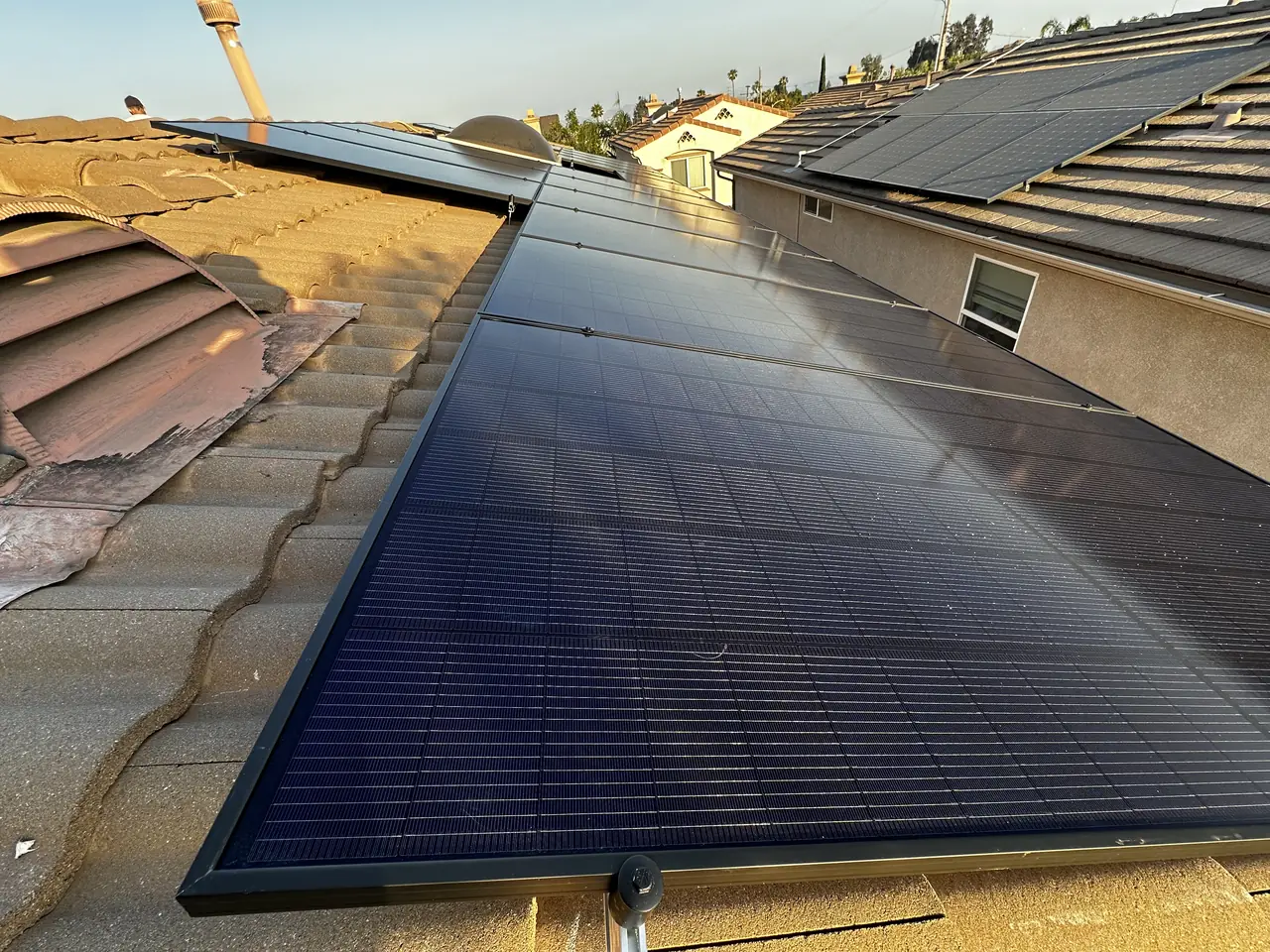
Pacoima 91331 · sixteen REC 405 W modules on Enphase IQ8A — 6.48 kW DC, 5.58 kW CEC-AC — permission to operate June 2024.
Cali Energy in Pacoima, at a glance
The short answers before considering a contractor.
| Question | Answer |
|---|---|
| What has Cali Energy installed here? | Rooftop solar on composition shingle, concrete S-tile and flat roofs; a sixteen-module REC system on Enphase IQ8A; and a 9.3 kW CEC-AC array tilt-mounted on a flat built-up roof. |
| Google rating | 4.9★ on Google. See them on Google |
| Who supplies the electricity? | The Los Angeles Department of Water and Power — a municipal utility outside CPUC jurisdiction, still crediting exports at the retail rate. |
| Who permits the work? | The Los Angeles Department of Building and Safety (LADBS), plus a separate LADWP interconnection process. |
| What about the San Fernando border? | The independent City of San Fernando sits inside Pacoima’s boundary and is on Edison, with its own city permits. We verify the account before designing, because the postal address does not tell you. |
| Where are you based? | Northridge, a few minutes down the road — not a call center in another county. |
| License | CSLB #1032379 (B, C-10, C-39), in-house crews, operating since 2017. Verify with the CSLB |
Pacoima wraps around a different utility
The map fact that decides which rules your solar lives under — and it is not written on the mail.
The City of San Fernando is its own municipality — a small independent city surrounded on nearly all sides by Los Angeles neighborhoods, Pacoima chief among them. And the two sit on different utilities: San Fernando is served by Southern California Edison, while every Pacoima address is on LADWP.
That is not a paperwork detail; it is the whole economics. On the Pacoima side, exports are still credited at the retail rate, because LADWP is municipal and the CPUC’s Net Billing Tariff does not reach it. On the San Fernando side, a new system falls under Edison’s Solar Billing Plan, where exports earn an hourly avoided-cost value — typically a fraction of retail. Same sunshine, same roof types, same street grid; materially different payback arithmetic and a different permit counter too, since San Fernando issues its own building permits while Pacoima goes through LADBS.
The practical rule: the utility account decides, not the postal address. We verify which side of the line a parcel actually sits on before designing anything — and both sides are places we work.
Retail credit in Pacoima
LADWP still credits exports against the retail rate — the friendlier arrangement, and the one most national advice ignores.
Net billing in San Fernando
One street over, Edison’s Solar Billing Plan values exports at hourly avoided cost — which pushes design toward self-consumption and storage.
Different permit counters
Pacoima permits through LADBS; the City of San Fernando issues its own. The boundary decides which queue you stand in.
We check the account
Postal addresses blur the line. The utility bill is the document that settles it, and it is the first thing we look at.
Sources: Southern California Edison (service territory including the City of San Fernando) · LADWP (sole electric provider for the City of Los Angeles) · CPUC — Net Energy Metering. Confirm the utility for your own parcel from the bill.
Solar work in Pacoima
A few of the homes we have done here. Street numbers stay off the page out of respect for the owners. The full photo set for every Pacoima job lives in the Pacoima project gallery.
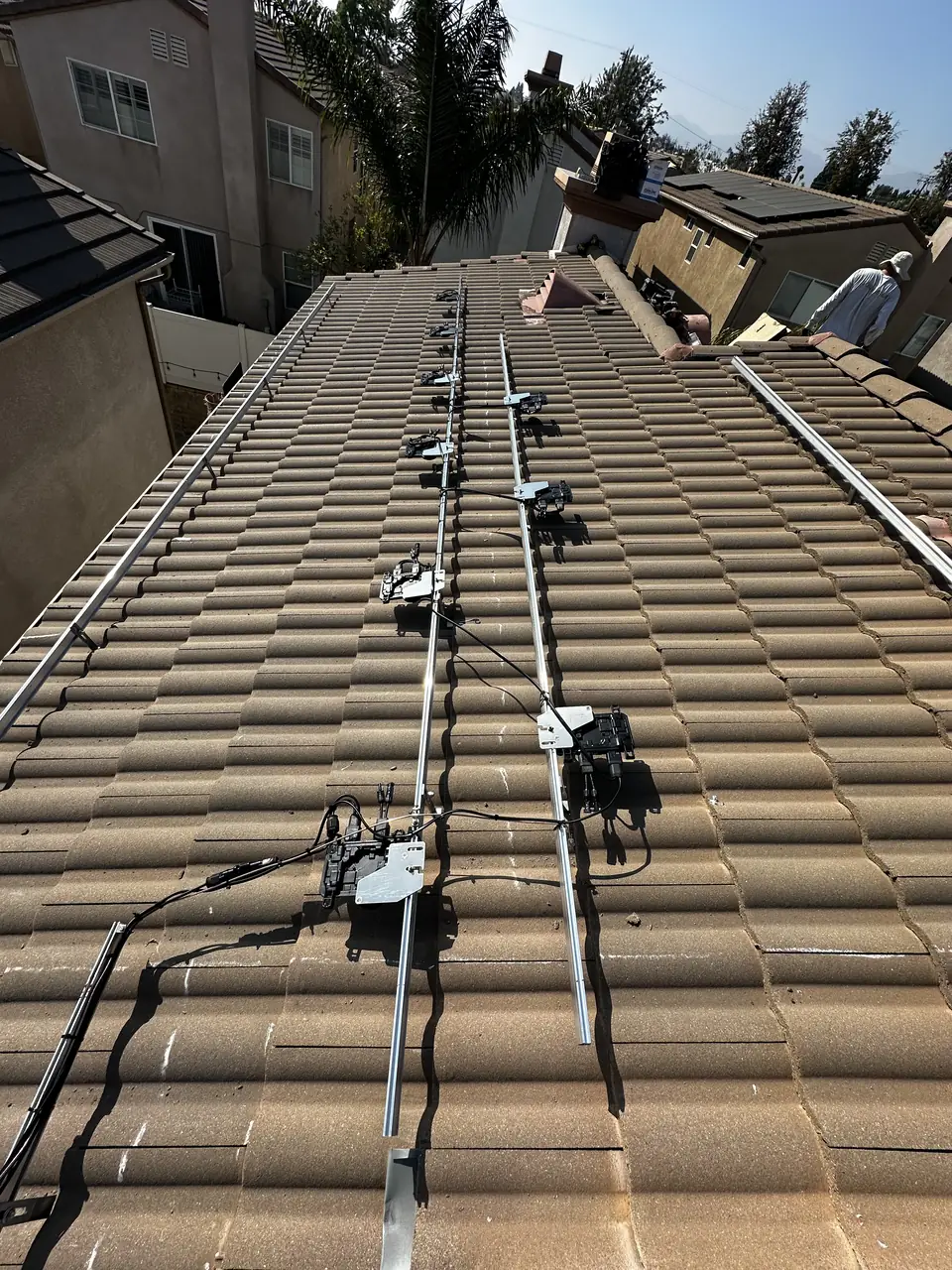
6.48 kW DC — 5.58 kW CEC-AC
Sixteen REC 405 W modules on Enphase IQ8A microinverters on a tile roof. Both figures are stated because both are true — and LADWP reads the second one.
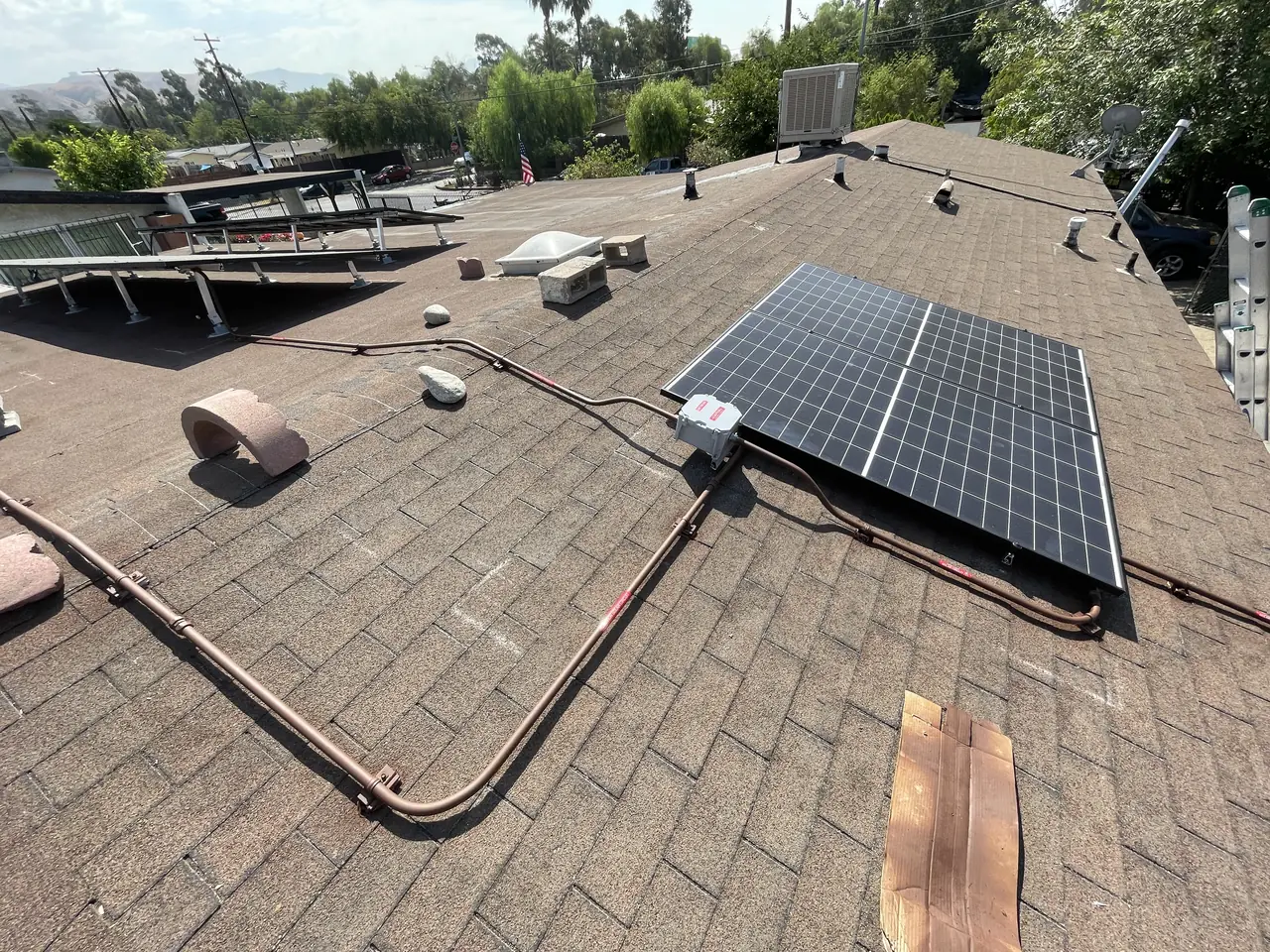
9.3 kW on tilt legs
A 9.3 kW CEC-AC grid-tied system on tilt-leg racking over a flat built-up roof — raised to a working angle, and still inside LADWP’s fast-track threshold.
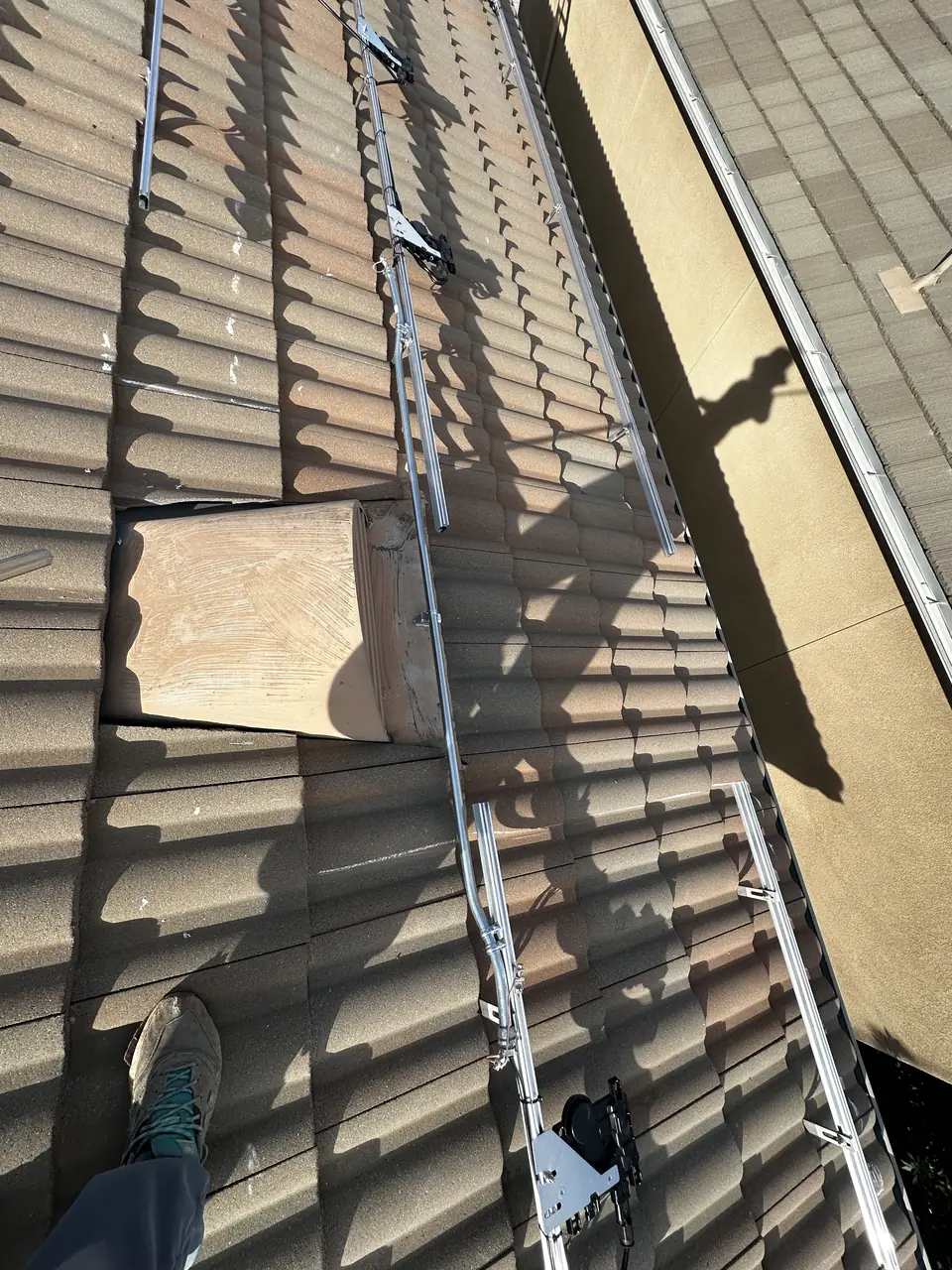
Concrete S-tile, multiple sections
Panels set across several sections of a concrete S-tile roof — profile-specific hardware, layout following the tile course, spare tiles on site.
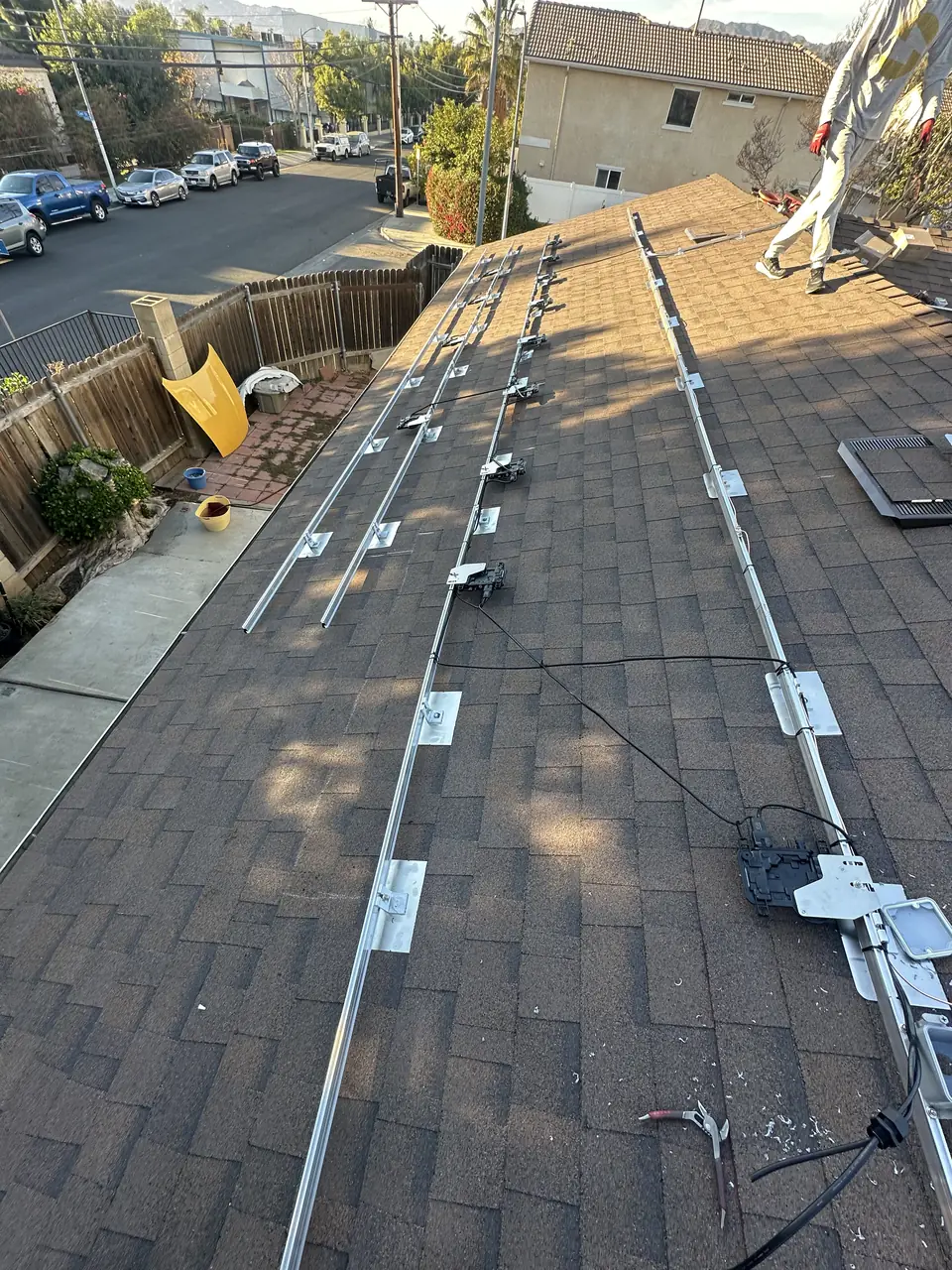
All-black on a long run
An all-black array along a long pitched shingle plane — the everyday Pacoima case, clean and unbroken.
Photos are ours, taken on site. Sizes are stated on the basis they were recorded on — DC nameplate or CEC-AC — because the two are not interchangeable.
A closer look at the Pacoima jobs
What this work has in common, and where it differs.
| Detail | Value | Notes |
|---|---|---|
| Homes shown here | A selection | Some of our Pacoima jobs, with our photos from each — our work in the neighborhood goes well beyond them |
| ZIP code | 91331 | The single index covering Pacoima |
| Utility | LADWP | Retail-rate net metering on every one, with permission-to-operate dates from 2021 through 2026 |
| Roof types | Shingle, tile and flat — evenly | Unusually balanced for the Valley: concrete S-tile, gray and dark shingle, and flat built-up roofs each appear repeatedly |
| Mounting | Flush and tilt-leg | Flush on pitched planes; tilt-leg racking lifting a 9.3 kW array off a flat built-up roof |
| Equipment we have used | REC, Enphase | REC 405 W modules with Enphase IQ8A microinverters where the equipment is visible |
| Rating bases | Both stated | One system here is 6.48 kW DC and 5.58 kW CEC-AC — the same array on two scales |
| Years of work | 2021–2026 | Steady north-Valley work across those years |
Three roof types in one neighborhood
Pacoima’s housing is more varied than its reputation suggests, and the covering decides the method.
Our Pacoima work splits almost evenly between composition shingle, concrete S-tile and flat built-up roofs — an unusually even mix for a single Valley neighborhood. Shingle takes flush mounting with flashed penetrations, the fastest of the three. Tile needs profile-specific hardware and a layout that follows the course, with spare tiles on site because some crack on any older roof. Flat built-up roofs get tilt-leg racking — the 9.3 kW system on this page sits on exactly that, raised to a working angle and engineered for wind uplift.
The common denominator underneath is age: much of Pacoima’s housing dates to the post-war decades, which means services and panels that predate modern loads. The service equipment gets assessed before the array is designed, and where an upgrade is needed it goes into the original proposal — not discovered at inspection.
Shingle
Flush mounting with flashed penetrations — the everyday case and the quickest install.
Concrete S-tile
Profile-specific feet and flashing, layout from the tile course, replacement tiles carried as standard.
Flat built-up
Tilt-leg racking to a working angle, engineered for uplift, rows spaced against winter shading.
Older services
Post-war panels were never sized for solar plus an EV. Capacity is checked first, and any upgrade is priced with the job.
LADWP: retail-rate credit and the 10 kW line
Two rules that shape a Pacoima project more than the equipment does.
NEM 3.0 does not apply
LADWP is municipal, so the CPUC’s Net Billing Tariff does not govern it. Exports here are still credited against the retail rate rather than an hourly avoided-cost value.
The fast track ends at 10 kW
Under 10 kW CEC-AC with no battery and no panel upgrade, approval runs roughly 2–5 days with the meter set 1–2 weeks later — every system on this page qualified.
CEC-AC, not DC
The threshold is read in CEC-AC watts. The tile-roof system here is 6.48 kW DC but 5.58 kW CEC-AC — the second number is the one the utility uses.
Two approvals
LADBS signs off the installation; LADWP sets the net meter and issues the permission-to-operate email. A finished system may not run until the second arrives.
Sources: LADWP — net energy metering rates · LADWP — solar programs (Guide to Electric Service, p. 22, for the stage timings) · CPUC — Net Energy Metering. Program terms change; confirm current rules for your own account.
What solar costs and how long it takes in Pacoima
No honest flat price for a neighborhood — but published ranges and a quick utility path.
Two published price bases frame the budget, both before incentives: $2.49 per watt at competitive marketplace rates (EnergySage, August 2026) and $3.5 per watt, the 2024 national median for cash purchases (Lawrence Berkeley National Laboratory). A 5–10 kW system — the range our Pacoima work sits in — lands somewhere between roughly $12,500 and $35,000 depending on installer, financing and scope, with tile or tilt-leg work priced into the job.
| Item | Figure | Basis |
|---|---|---|
| System range on this page | 5.58 – 9.3 kW CEC-AC | Our installations |
| Solar at marketplace rates | $2.49/W → 5 kW ≈ $12,500 · 7 kW ≈ $17,400 · 10 kW ≈ $24,900 | Market estimate — EnergySage |
| Solar at typical installer rates | $3.5/W (2024 national cash median) → 5 kW ≈ $17,500 · 10 kW ≈ $35,000 | Market estimate — LBNL 2025 Data Update |
| Battery storage (~13 kWh) | $11,864–$16,052 before incentives (average $13,958) | Market estimate — EnergySage California |
| Tile or tilt-leg scope | Priced per job: profile hardware or uplift engineering, slower install | Scope-dependent |
| Federal tax credit | Homeowner (25D) credit ended Dec 31, 2025 — $0 on a 2026 cash or loan purchase; leased and PPA systems can still capture the 30% credit through the system owner | Official source — IRS FAQs on P.L. 119-21 |
| Time on the roof | Most residential installs: 1–3 working days | Cali Energy company figure |
| LADBS permit | Express e-permit for qualifying systems: issued online, often same day | Official process — LADBS |
| LADWP path | Under 10 kW CEC-AC without battery or panel upgrade: approval 2–5 days, meter set 1–2 weeks. Otherwise add an engineering site visit of 1–3 weeks | Official — LADWP Guide to Electric Service, p. 22 |
Sources: EnergySage — solar cost · EnergySage — storage cost · LBNL — 2025 Data Update · IRS — Section 25D FAQs. Planning context, not a quote.
What Cali Energy installs in Pacoima
One licence covering the whole job, so the scopes do not get handed between companies.
Rooftop solar
Flush on shingle and S-tile, tilt-leg racking on flat built-up roofs, with microinverters where planes split.
Battery storage
Backup sized to the circuits worth keeping alive — planned knowing storage moves the project onto LADWP’s longer path.
Roofing with solar
Roof condition assessed by our own roofing side under a C-39, and replaced first when it will not outlast the array.
Electrical and EV charging
Main-panel upgrades on post-war services, subpanels and EV charger circuits, quoted with the array.
Exact coverage: Pacoima and its edges
The northeast Valley, with an independent city embedded in the middle of it.
| Attribute | Fact |
|---|---|
| Status | Neighborhood of the City of Los Angeles, in the northeast San Fernando Valley |
| ZIP code | 91331 |
| Electricity | LADWP for every Pacoima address — retail-rate net metering, no CPUC net billing |
| Permitting authority | Los Angeles Department of Building and Safety (LADBS) |
| The border inside | The independent City of San Fernando sits within Pacoima’s boundary — on Edison, with its own city permits |
| Adjacent — same utility | Arleta, Sylmar, Sun Valley, Mission Hills and Lake View Terrace are all City of LA addresses on LADWP |
| Airport | Whiteman Airport sits within Pacoima; federal glare policy concerns airport and large ground-mounted projects, not household rooftops — see our Van Nuys page for the full answer |
| What we check first | Which utility serves the parcel, the roof covering, and the service equipment |
Map of Cali Energy projects in Pacoima
Pacoima homes we have worked on — a selection of them, shown on this page.
Marker positions are deliberately offset. Each point is shifted 120–260 meters from the real address so the map shows where we work in Pacoima without identifying anyone’s home. Base map © OpenStreetMap contributors © CARTO; ZIP boundaries from the U.S. Census ZCTA file.
Reviews and verifiable trust
A public rating, a public license record and named, quotable reviews.
“I spoke with several companies before choosing this one, and they were by far the most fair and honest. They didn’t try to oversell me on a bigger system than I needed.”
“Cali Energy delivered exactly when they said they would. The crew showed up on schedule, finished the installation without any surprises, and everything worked from day one.”
“I like that they are a local solar installation company based here in Northridge, not a sales office somewhere else.”
Read the full reviews on Cali Energy’s Google profile · verify the contractor license with the California CSLB.
Fast answers about hiring Cali Energy in Pacoima
Each answer starts with the conclusion.
Does Cali Energy install solar in Pacoima?
Yes. Pacoima is an active Cali Energy service area and we work here regularly across 91331 — on shingle, concrete S-tile and flat roofs alike, with permission-to-operate dates from 2021 through 2026. Our office is in Northridge, a few minutes away.
Who is my electricity provider in Pacoima?
The Los Angeles Department of Water and Power — for every Pacoima address. But note the border: the independent City of San Fernando, embedded within Pacoima’s boundary, is served by Southern California Edison instead. The utility bill, not the postal address, is what settles it.
Why does the San Fernando border matter for solar?
Because the two utilities pay for exports completely differently. On the Pacoima side, LADWP still credits exports at the retail rate. On the San Fernando side, Edison’s Solar Billing Plan values them at an hourly avoided-cost rate — typically far less. The permit counter changes too: LADBS for Pacoima, the City of San Fernando for its own parcels. Same street grid, different arithmetic. We work on both sides.
Does NEM 3.0 apply in Pacoima?
No. NEM 3.0 — properly the Net Billing Tariff — is a CPUC rule for investor-owned utilities such as Edison and PG&E. LADWP is municipal and is not governed by it, so exported energy in Pacoima is still credited against the retail rate.
Can solar go on a flat roof here?
Yes — the largest system on this page is a 9.3 kW CEC-AC array on tilt-leg racking over a flat built-up roof, switched on in 2021. The racking lifts the modules to a working angle and is engineered for wind uplift, with rows spaced so they do not shade each other in winter.
What about tile roofs?
Concrete S-tile is common in Pacoima and we mount on it regularly — the sixteen-module REC system on this page is one example. Tile takes profile-specific hardware, a layout that follows the tile course, and spare tiles on site, because a few always crack on an older roof.
Why does my quote show two different kilowatt numbers?
Because both are true. The tile-roof system on this page is 6.48 kW DC nameplate and 5.58 kW CEC-AC — the same sixteen panels measured two ways. LADWP works in CEC-AC, so that is the number that decides your approval path. When comparing bids, put them on the same basis first.
Will I need a main-panel upgrade?
Possibly. Much of Pacoima’s housing dates to the post-war decades, when services were sized for a very different household. Solar feeds the same busbar as the utility supply and the code caps the combined total, so we assess the panel before designing — and any upgrade goes into the original proposal, not the inspection punch list.
Do I need a battery in Pacoima?
Not for tariff reasons — LADWP still credits exports at the retail rate, so storage is not needed to rescue export value. It is worth pricing for backup power. Note that adding it moves the project onto LADWP’s longer approval path regardless of array size.
Does Whiteman Airport affect my project?
Not for a household rooftop. Federal glare policy applies to solar built on airports and to large ground-mounted arrays, not to panels on a house — we cover the full answer on our Van Nuys page, which sits by the Valley’s bigger airfield.
How long does a Pacoima solar project take?
The roof work itself is usually 1–3 working days. LADBS issues qualifying residential permits online, often the same day. On the utility side every system on this page fitted LADWP’s fast track: approval in roughly 2–5 days, meter set 1–2 weeks later.
What does solar cost in Pacoima?
There is no honest flat neighborhood price, but published rates frame it: $2.49 per watt at marketplace rates and $3.5 per watt as the 2024 national cash median, putting a 5–10 kW system at roughly $12,500–$35,000 before incentives. Tile and tilt-leg scopes are priced with the job. The federal 25D homeowner credit ended December 31, 2025, so a 2026 cash or loan purchase gets no federal credit. The estimate for your own home is free.
How do I check that Cali Energy is legitimate?
Compare four things rather than ad claims: (1) an active CSLB license with electrical and roofing classifications, (2) completed work in your specific area, with photos, (3) whether the company uses its own crews or subcontracts, and (4) the review pattern. Our answers: CSLB #1032379 (B, C-10, C-39); Pacoima homes with our photos; in-house crews; a 4.9★ Google rating. Our office is at 19201 Parthenia St Unit E, Northridge, CA 91324, a few minutes away.
Sources
Where this page states a rule, a threshold or a timeline, the official source is linked below.
| What it supports | Source |
|---|---|
| LADWP net energy metering and rate treatment | LADWP — EV / NEM / REO rates |
| Fast-track and standard interconnection paths and their stage timings | LADWP — solar programs (Guide to Electric Service, p. 22) |
| The Net Billing Tariff (NEM 3.0) applies to investor-owned utilities, not municipals | CPUC — Net Energy Metering |
| Edison service territory, including the City of San Fernando | Southern California Edison |
| City solar permitting for Los Angeles addresses | LADBS — solar permits |
| Installed price ranges for solar and storage | EnergySage · LBNL 2025 Data Update |
| Federal tax credit status for 2026 | IRS — Section 25D FAQs |
| Contractor licence and classifications | CSLB — license #1032379 |
Nearby service areas
Other parts of the Valley where Cali Energy works.
Related reading
Planning solar for a Pacoima home
Send the service address and a recent utility bill — the bill tells us which side of the San Fernando border the parcel actually sits on. We will confirm the roof covering, the service equipment and the approval path before preparing an address-specific proposal.
Request a free estimatePublished August 2026. Details refer to those specific homes, not to every Pacoima property. Rates, incentives, code editions and permit requirements change; utility, jurisdiction, equipment, pricing and schedule must be confirmed for the specific address. See our Content Disclaimer. Cali Energy · 19201 Parthenia St Unit E, Northridge, CA 91324 · CSLB #1032379 (B, C-10, C-39)