

San Fernando, CA · July 2025 · Southern California Edison / City of San Fernando
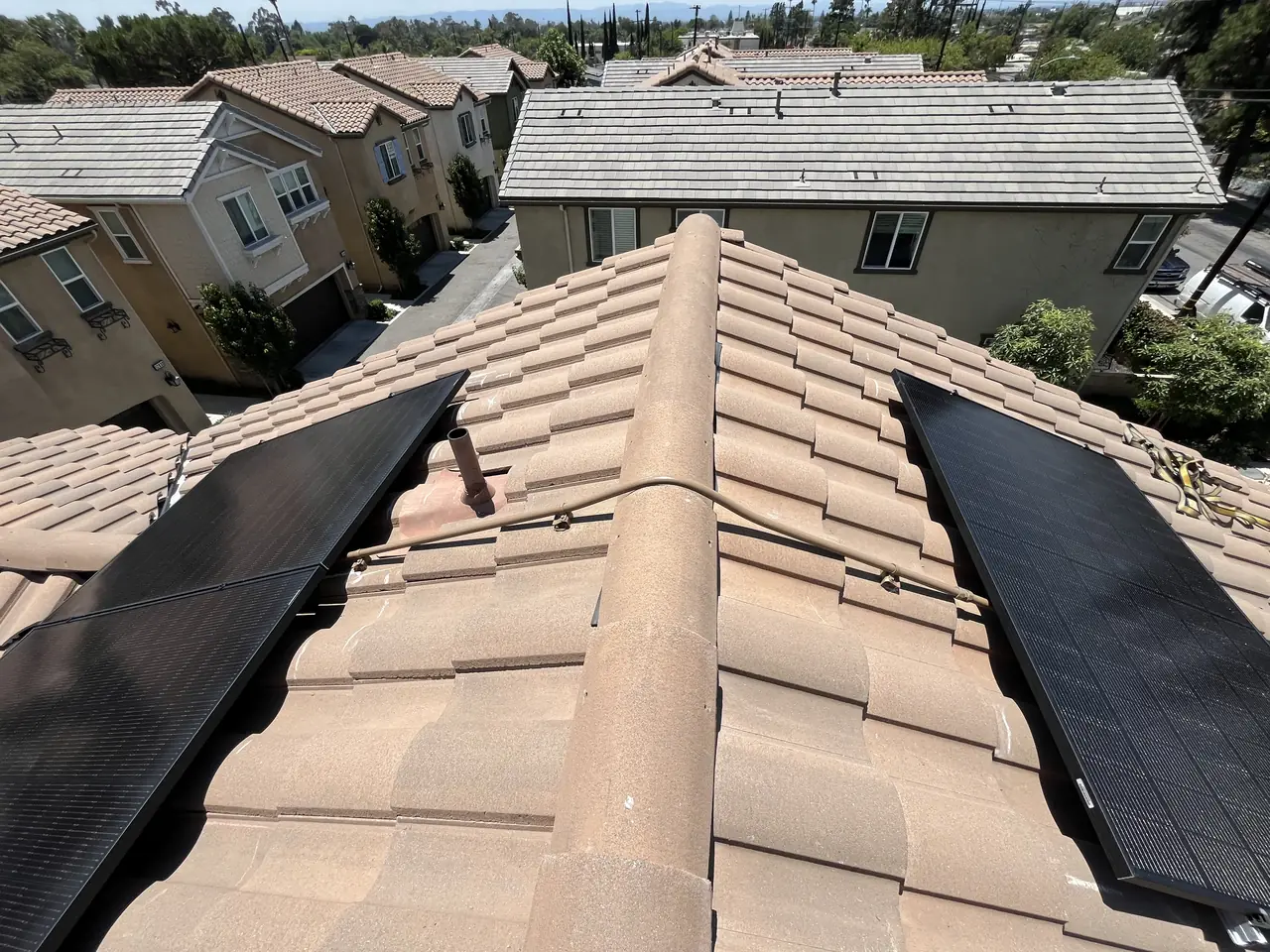
Two arrays on clay tile, both faces of one ridge, one conduit over it
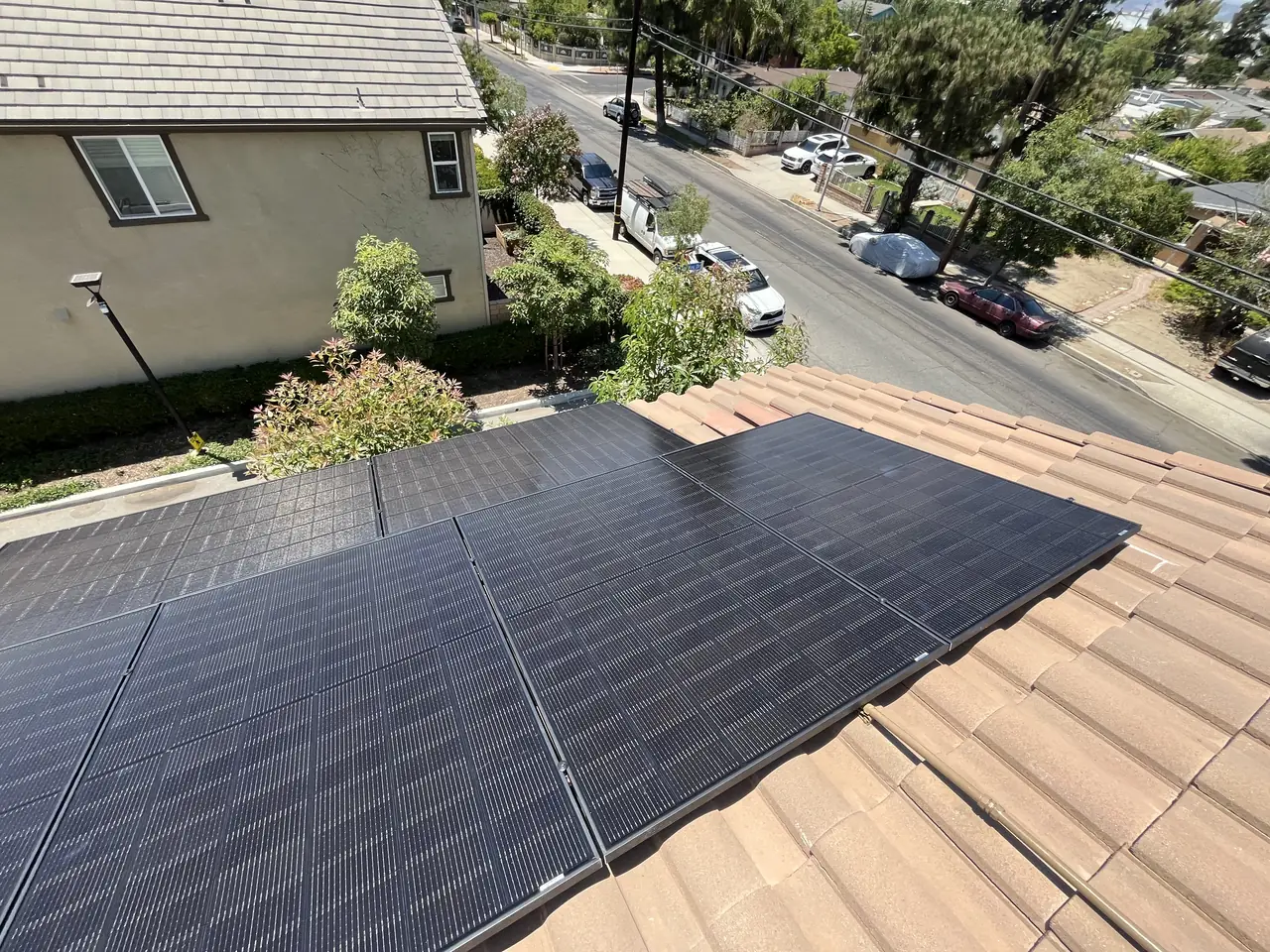
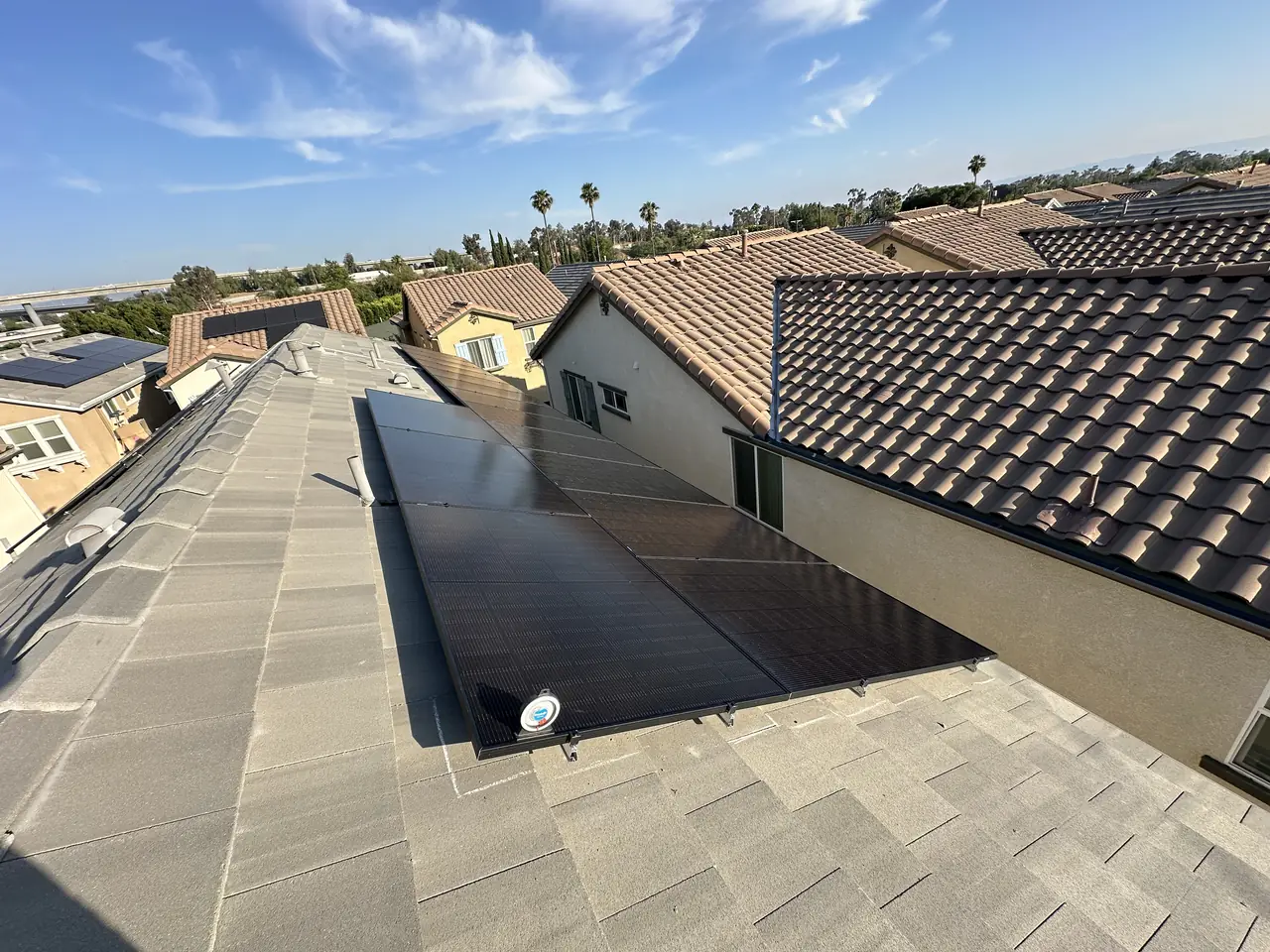
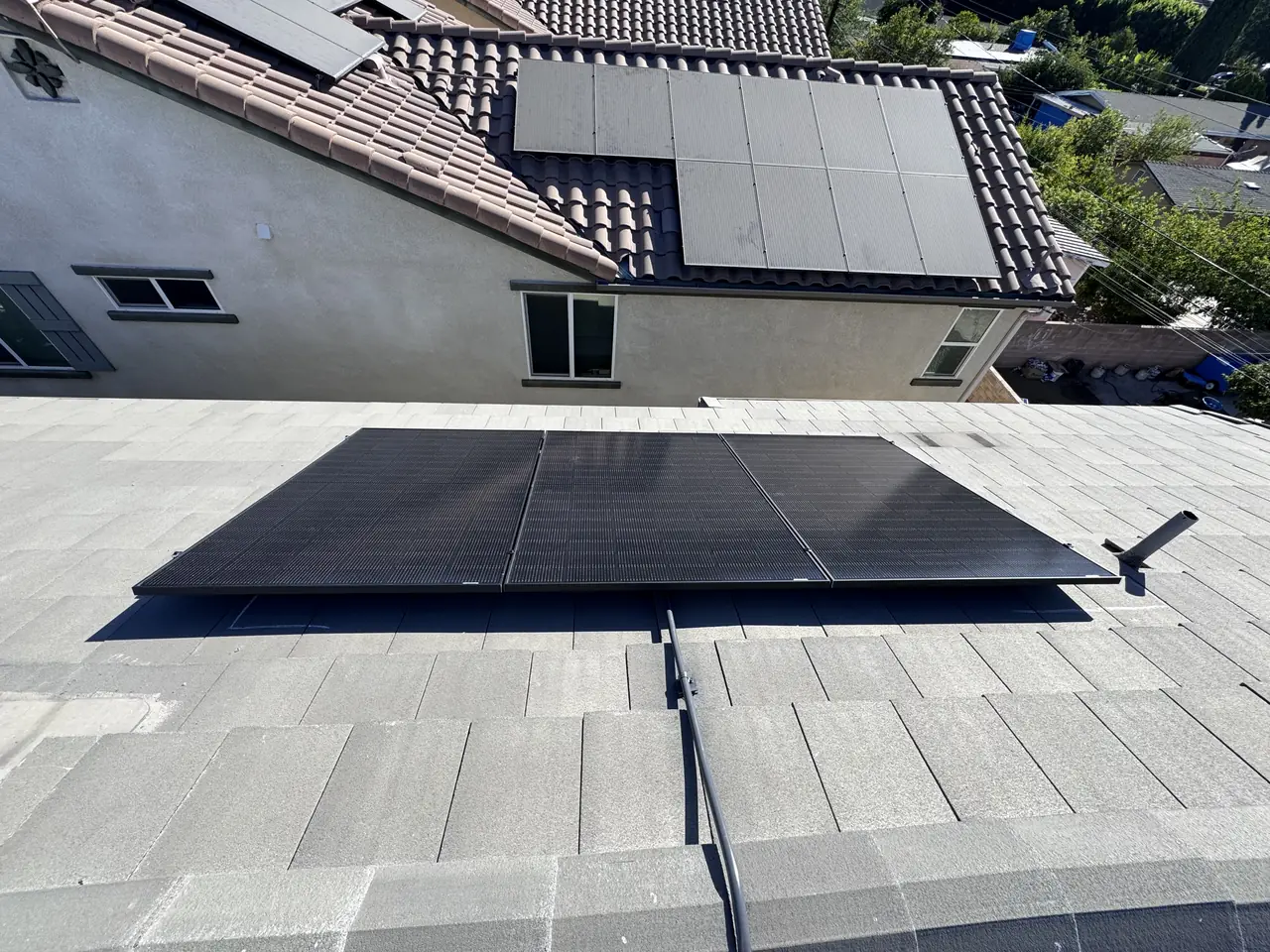
A two-story house with a clay S-tile roof, and modules on both sides of the same ridge. One conduit carries the circuit from one side over the top to the other.
This San Fernando installation has two arrays on a clay S-tile roof, one on each face of the same ridge, with Enphase microinverters under the modules. Cali Energy mounted on hooks under the tile, flashed the roof penetration and bedded it in sealant, and joined the two arrays with a single conduit run over the ridge. Work started on 24 July 2025 and the array was complete by 26 July, when the tilt of each array was checked with an inclinometer.
At a glance
- Arrays
- Two, on opposite faces of one ridge
- Microinverters
- Enphase, one per module
- Roof
- Clay S-tile, two-story house
- Mounts
- Hooks under the tile, rails above
- Between the arrays
- One conduit run over the ridge
- Work
- 24–26 July 2025
The story
A clay S-tile roof is the curved, two-humped tile common on Spanish-style houses. It is beautiful, it is fragile, and its shape means nothing sits flat on it. On this two-story house the usable roof was on both sides of the same ridge, so the system became two arrays facing away from each other.
As with any solar on clay tile, each mount goes under the tile. The tile over the mount position comes up, a hook is fixed to the rafter through the underlayment, and the tile goes back with the hook arm rising through the gap between the curves. On S-tile the rails then sit well above the humps.
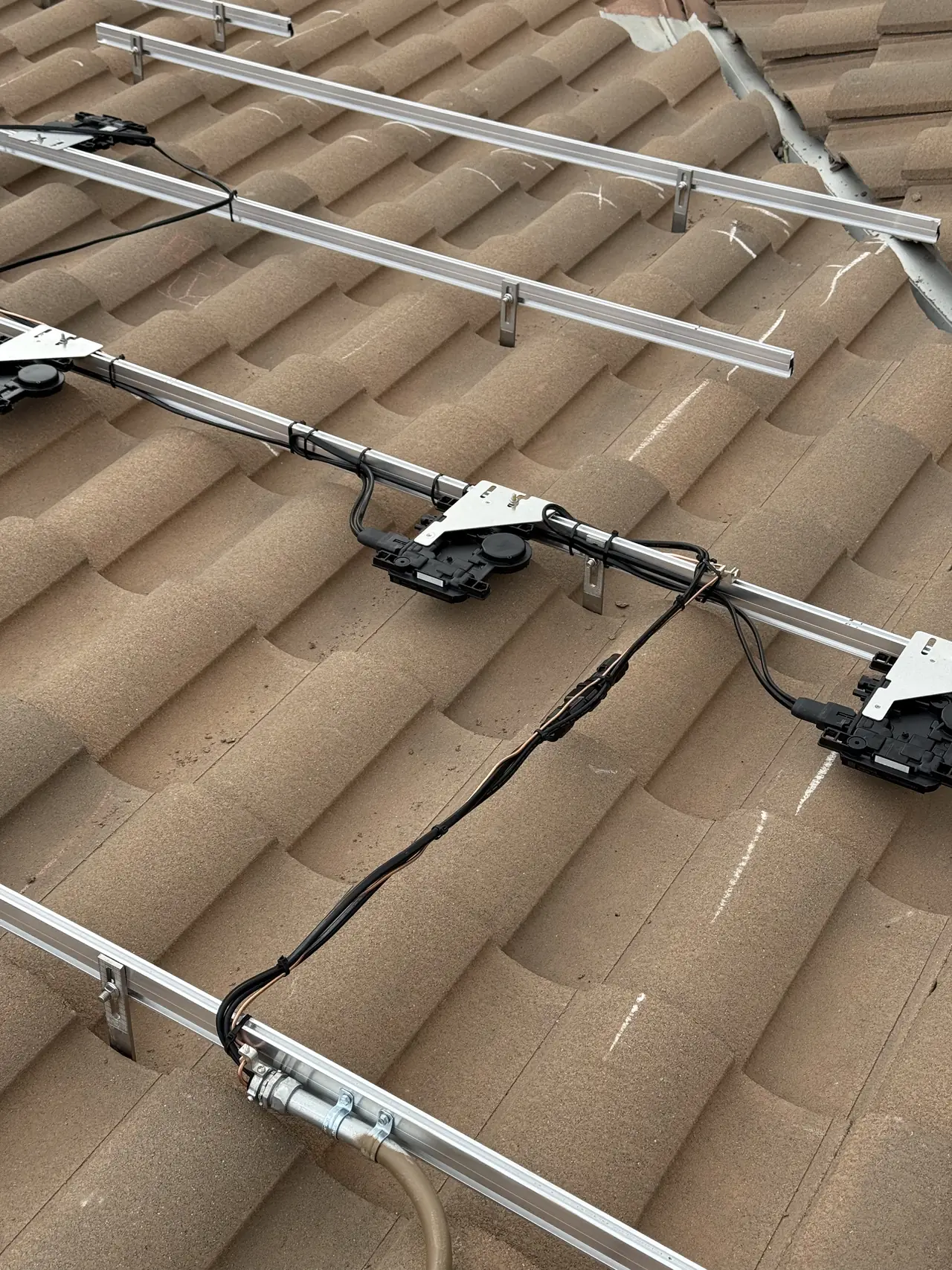
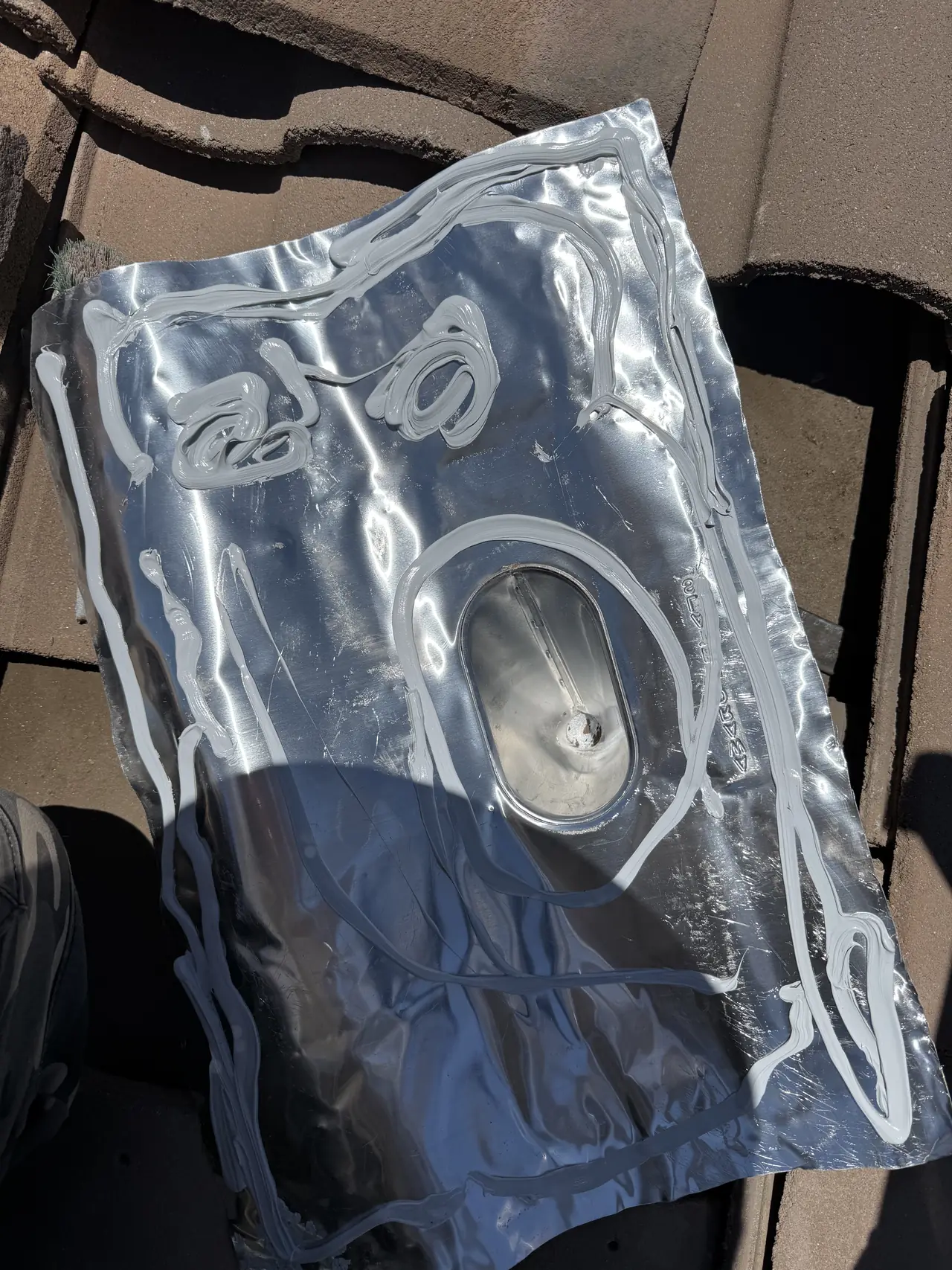
The roof penetration for the conduit needed its own answer. A flat flashing does not lie on S-tile, so the flashing used here is soft enough to be formed over the curves, and it was bedded in sealant around its edges and around the pipe.
Two arrays on opposite faces still make one system. Rather than two separate runs down the house, a single conduit carries the circuit from one array across the tile and over the ridge to the other, and from there down to the Enphase combiner and the AC disconnect on the wall.
On 26 July, with the modules on, the crew set an inclinometer on the modules at several points on both sides of the ridge. The two faces are measured separately because a production estimate treats them separately: opposite directions, different hours of sun.
How it ran
| 24 July 2025 | Tile lifted at the mount positions; hooks and penetration flashing in |
|---|---|
| 24–26 July | Rails, microinverters and modules on both faces |
| 26 July 2025 | Tilt checked on both arrays; conduit over the ridge; array complete |
Two arrays, one ridge, three days.
What we did
- Mounted on hooks under the clay S-tile, fixed to the rafters.
- Formed a flashing over the curved tile for the conduit penetration and bedded it in sealant.
- Installed two arrays on opposite faces of the same ridge.
- Joined them with one conduit run over the ridge.
- Checked the tilt of each array with an inclinometer.
- Mounted the combiner and AC disconnect on the wall.
System specifications
| Arrays | Two, on opposite faces of one ridge |
|---|---|
| Microinverters | Enphase, one per module |
| Mounting | Hooks under the S-tile, rails above |
| Roof penetration | Flashing shaped to the tile, bedded in sealant |
| Combiner / disconnect | Enphase combiner and AC disconnect on the wall |
| Utility / AHJ | Southern California Edison / City of San Fernando |
Is your project like this one?
- You have a clay S-tile or Spanish-style tile roof.
- Your usable roof is on both sides of the same ridge.
- You want to know how a penetration is sealed on curved tile.
- Your house is a two-story in a newer subdivision.
Cali Energy in San Fernando
San Fernando is its own city, not a Los Angeles neighborhood: permits run through the City of San Fernando Building and Safety Division, interconnection through Southern California Edison.
On some San Fernando streets the houses stand close together, two stories high, with roofs of concrete or clay tile. On the same street, one house can have flat concrete tile and the next one clay S-tile, and the mounting changes with it.
- License and classifications: CSLB #1032379
- Official reference for this process: City of San Fernando — Building and Safety Division
Frequently asked questions
Can solar go on a clay S-tile roof?
Yes, with mounts under the tile. Each tile over a mount position is lifted, a hook is fixed to the rafter through the underlayment, and the tile is replaced with the hook arm passing between the curves. Clay is more fragile than concrete, so the work is slower and the crew walks the tile carefully, but the result is a roof that looks the same from the street.
Is it worth putting panels on both sides of a ridge?
It can be, when one face alone is not enough. The two faces get sun at different hours, so each produces less at its peak than a single best face, but together they spread production across the day. With a microinverter under each module, the two arrays do not hold each other back.
How is a roof penetration sealed on curved tile?
With a flashing that can be formed to the shape of the tile, rather than a flat plate. It is shaped over the curves, bedded in sealant around its edges and around the pipe, and the tile is set back over it. A flat flashing on S-tile would leave gaps under the curves.
Does Cali Energy install solar on Spanish tile in San Fernando?
Yes. Some San Fernando neighborhoods have clay S-tile or concrete tile roofs, and Cali Energy mounts under the tile, flashes every penetration to the shape of the roof, and runs conduit to keep two arrays on one system. Interconnection is with Southern California Edison. License CSLB #1032379.
What this would look like on your roof
Planning solar in San Fernando? Tell us your utility, your roof and what your bill looks like now, and we will model what a system like this would do on your house before you commit to anything.
Or call +1 (323) 844-7777 · Cali Energy, Northridge · CSLB #1032379 (B, C-10, C-39) — design, permits, install and electrical under one licensed contractor.
Related
This timeline reflects this property and this permitting path. Updated October 2026.