

Glendale, CA · December 2025 – January 2026 · Glendale Water & Power / City of Glendale
Clay tile everywhere except under the modules.
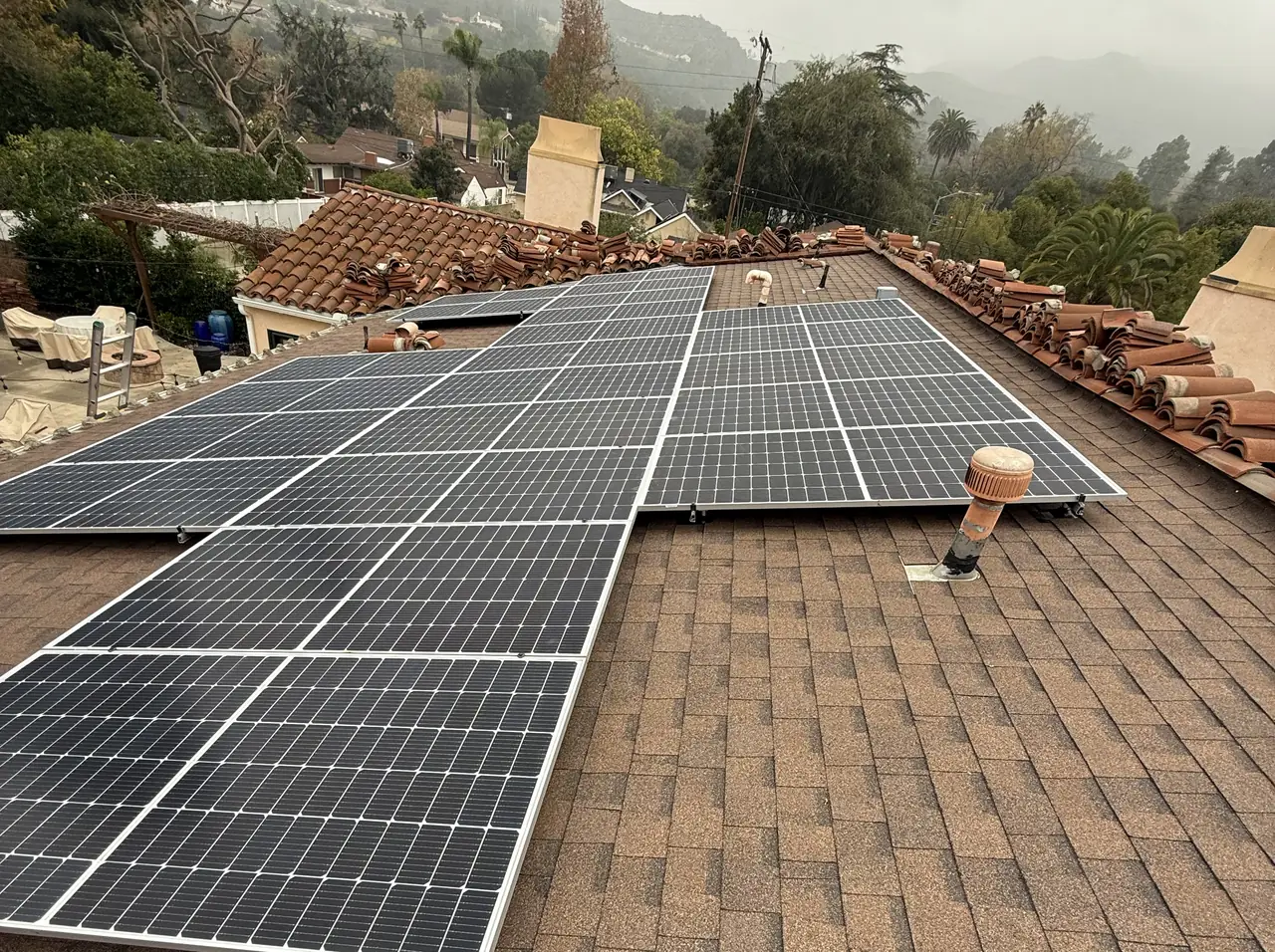
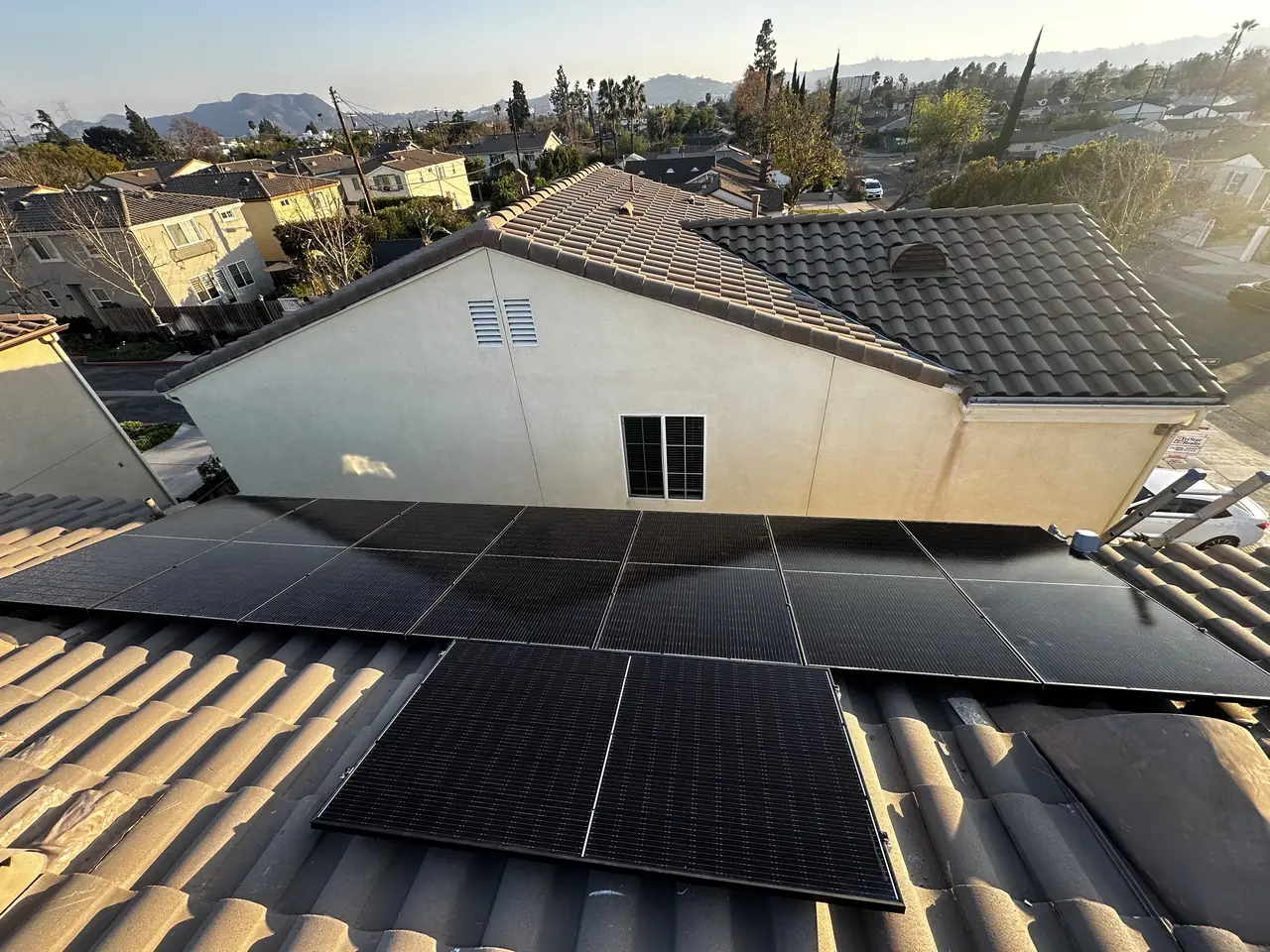
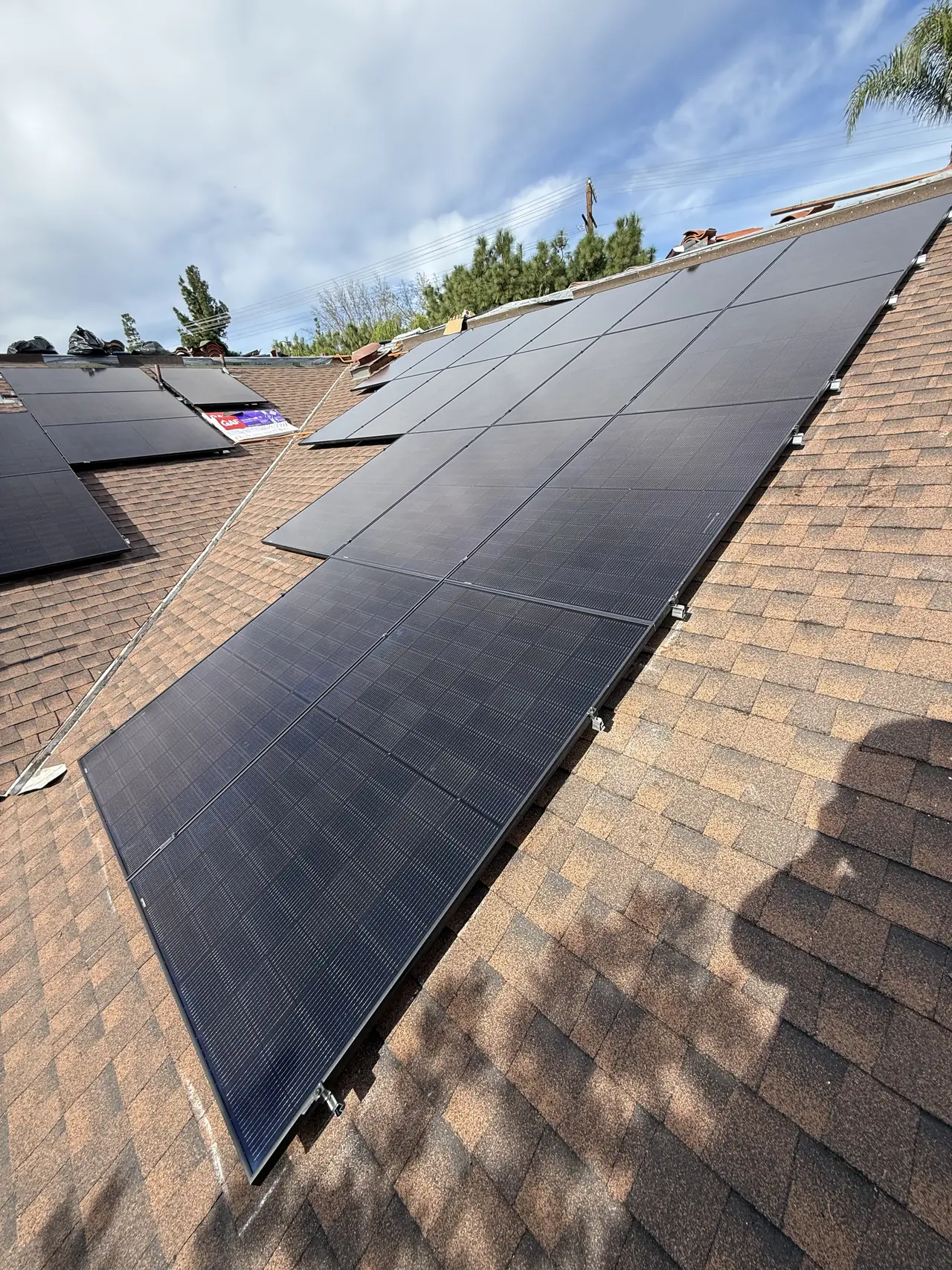
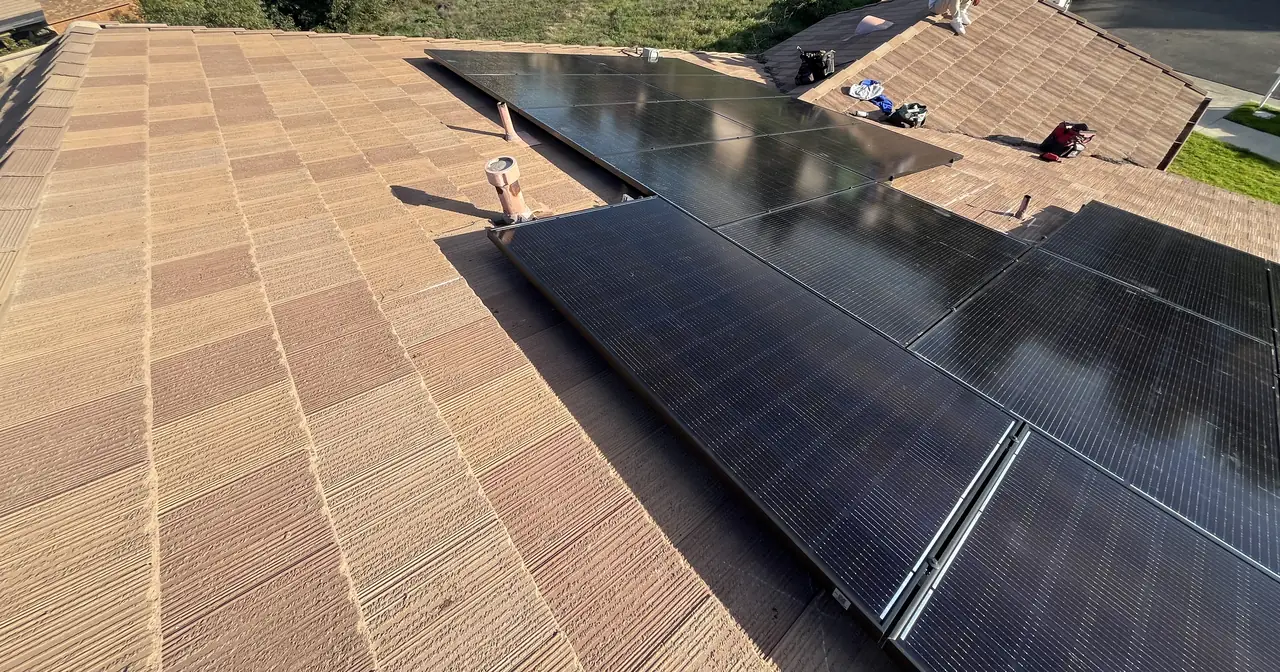
A Glendale hillside house under Spanish clay tile. Rather than drill through the tile, the roofing in the array area was replaced with composition shingle and the tile was kept around it, so the array sits on a surface built for racking and the house keeps its roofline. Permission to operate came on the sixth of January.
Clay tile breaks under foot traffic and cracks around mounting feet, and every cracked tile is a future leak. Two ways around it: lift the tile, mount to the deck and reset it, or strip the tile from the array footprint, re-roof that area in composition shingle and mount to that. Here the second option was chosen. The array footprint became a shingle field with the tile left intact on every slope and edge around it, and the modules went on standard flashed feet.
At a glance
- Roof
- Spanish clay tile; array area re-roofed in composition shingle
- Inverter
- SolarEdge, with an optimizer on each module
- Mounting
- Flashed feet on the shingle field, rails, modules
- Roof to permission
- About a month
- Utility / AHJ
- Glendale Water & Power / City of Glendale
The story
The house sits on a Glendale hillside under Spanish clay tile — the barrel kind, laid in courses, with the ridges and hips capped in the same material. The plan set placed the array on the main slope, and the first practical question was what the modules would actually be fastened to.
The homeowner believed there was a torch-down membrane under the tile, which would have meant one kind of job. Nobody could be sure until the tile came up, so two roofing estimates were prepared: one to lift the tile, mount to the deck and reset it around the feet, and one to strip the tile from the array footprint and re-roof that area in composition shingle. The second is what happened.
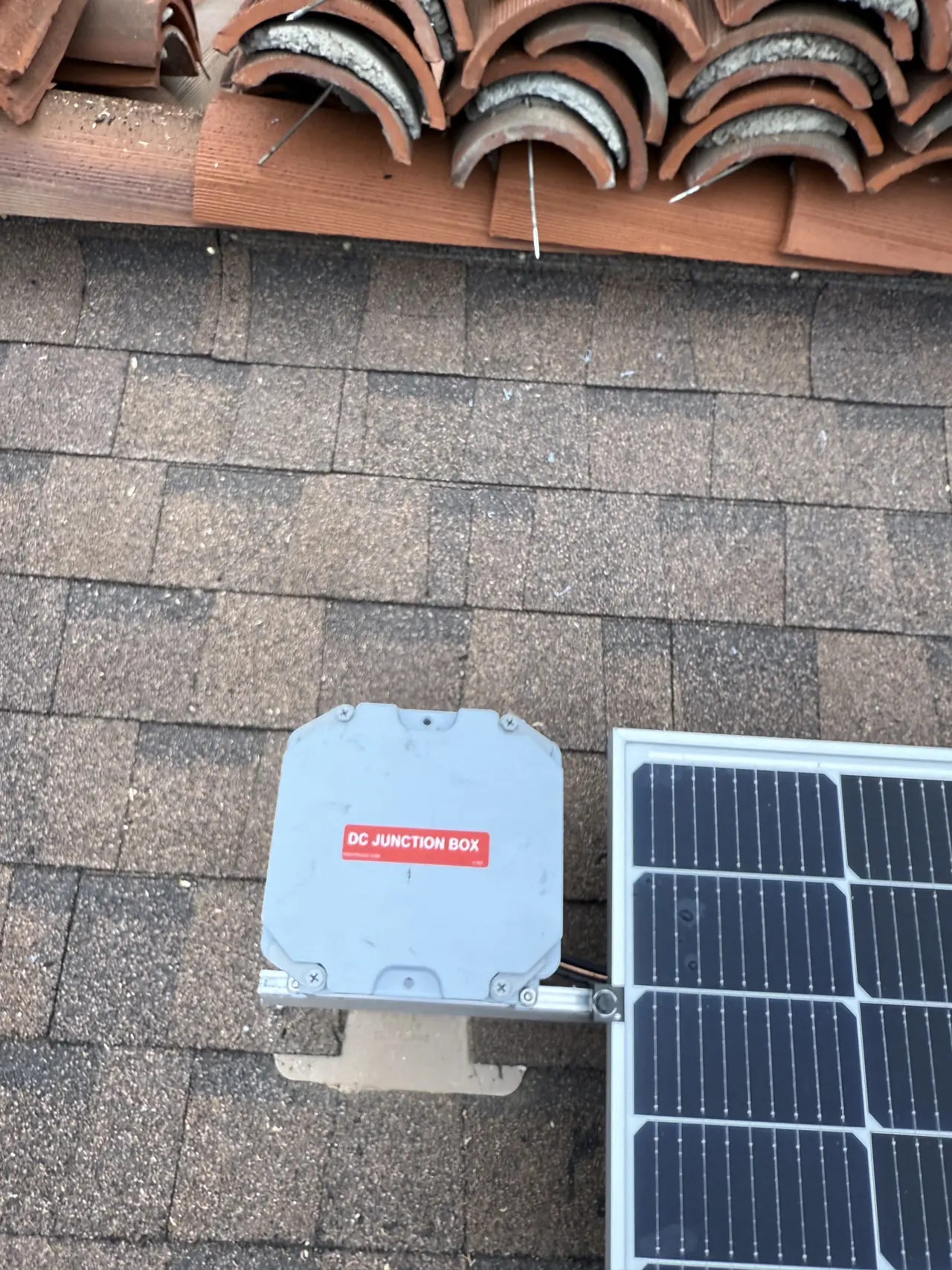
The reasons are the ones every tile roof has. Clay tile cracks under boots and under the point loads of mounting feet, and each cracked tile is a leak waiting for a wet winter. Resetting tile around dozens of feet is slow, and it leaves the array on a surface that was never meant to carry hardware. A shingle field under the array puts standard flashed feet on standard roofing, and it does it without changing what the house looks like from the street: the tile stays on every slope, edge and ridge that is visible.
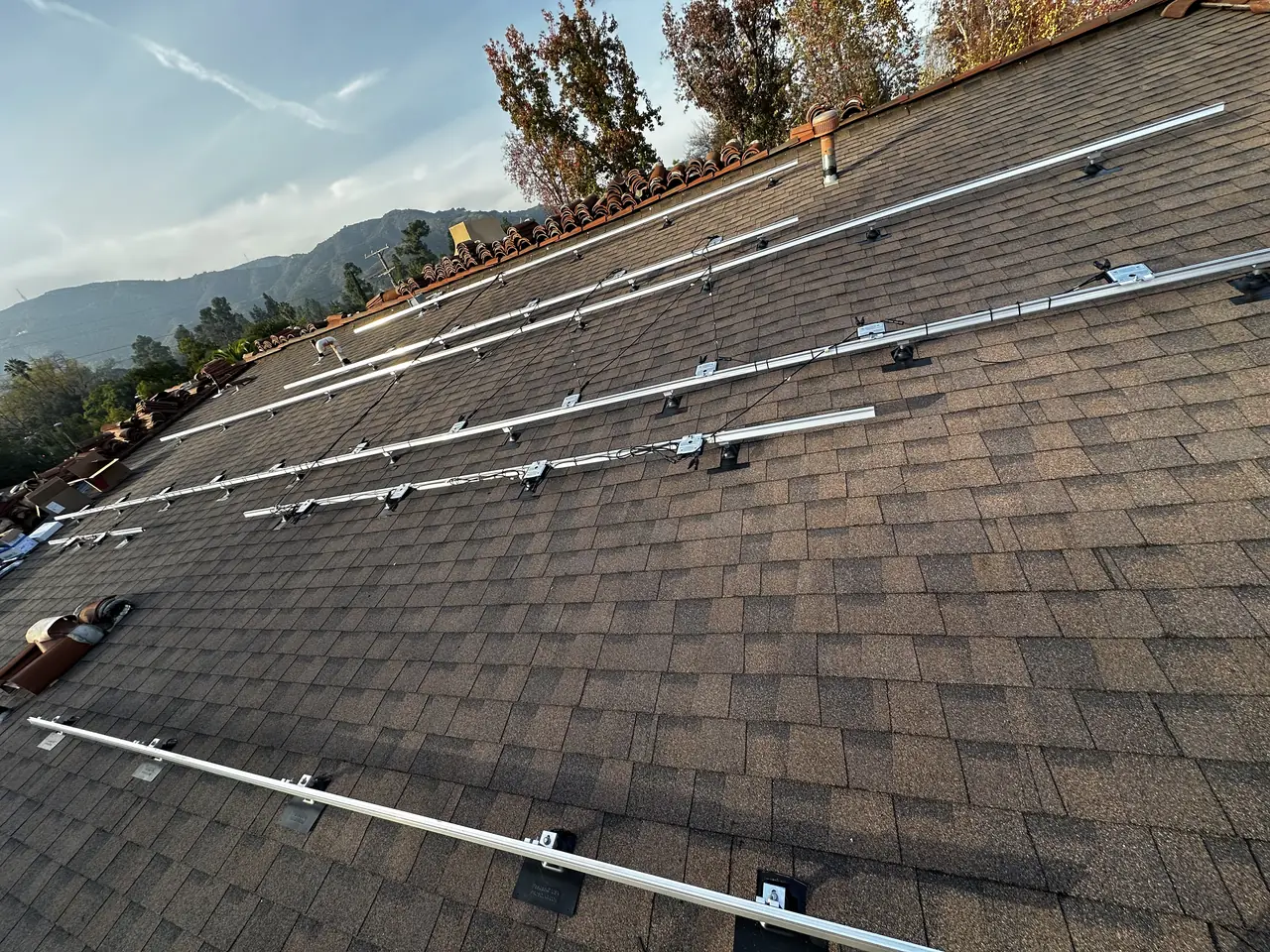
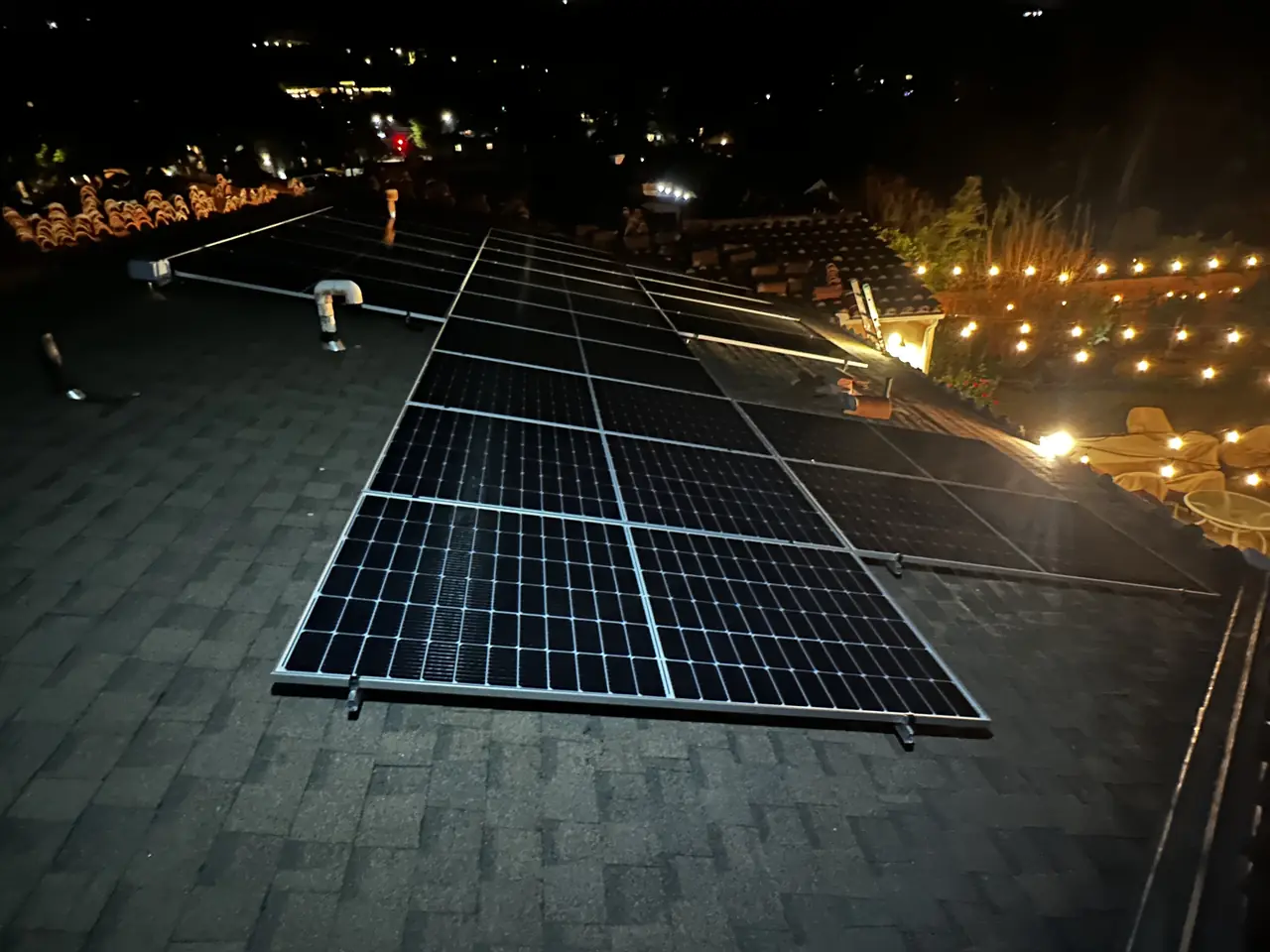
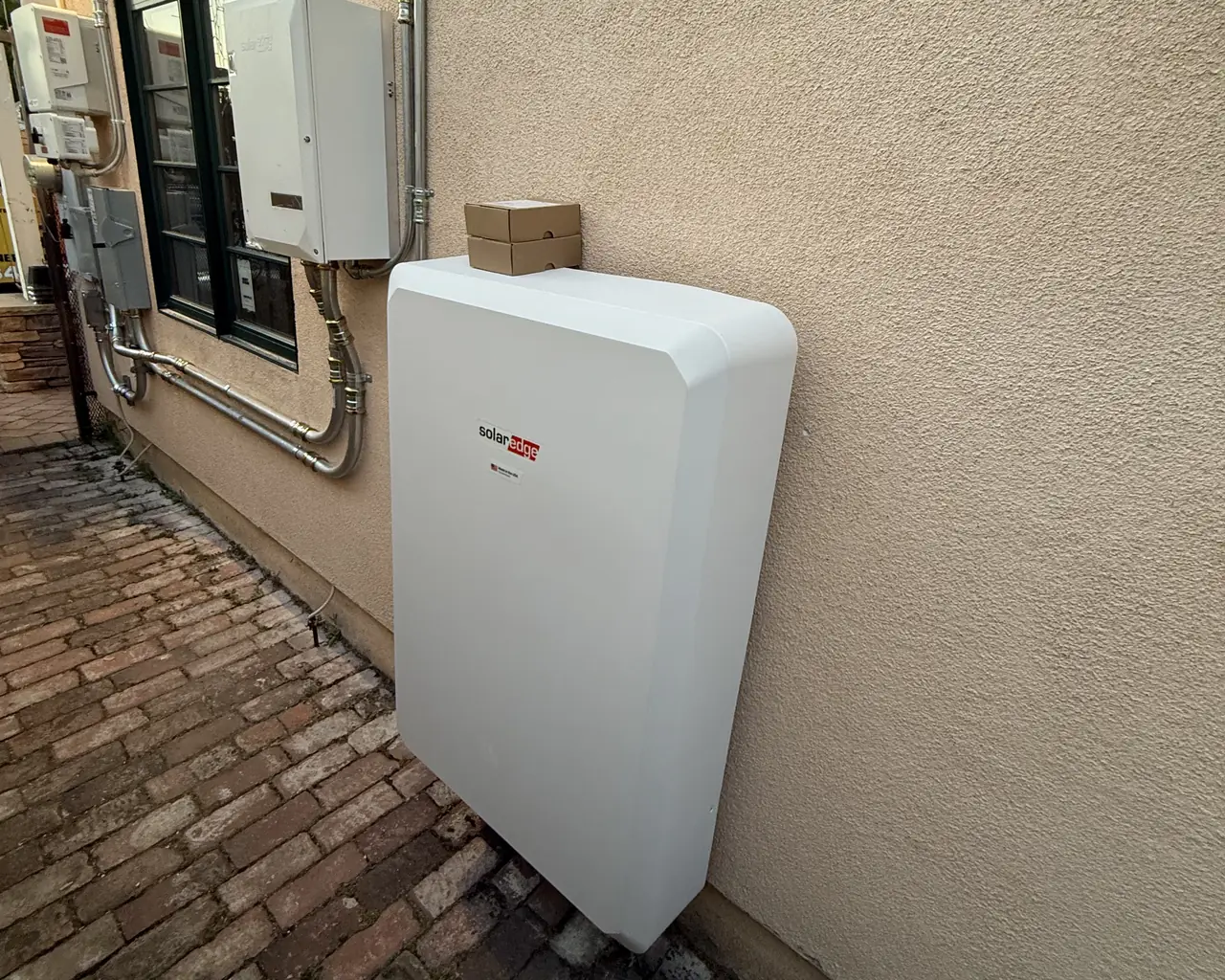
The modules were scheduled for the week before Christmas, and the roof was ready before they arrived. Rails went onto flashed feet across the new shingle, and the modules went on with an optimizer under each one, feeding a SolarEdge inverter on the side wall. The crew finished after dark under the neighbors' string lights.
The city's final was requested for the day after Christmas, rescheduled, and passed on the thirtieth. Glendale Water & Power reprogrammed the meter on the sixth of January and issued permission to operate the same day. Five months later the same wall took a battery, which is the subject of the companion page on adding storage after the solar.
The trade is that this is a roofing job as well as a solar job. Stripping tile and re-roofing the footprint costs more than bolting through shingle on a house that already has it, and it fixes the array to that footprint: extending it later means extending the shingle field too. Set against that, the tile that stays is tile nobody has walked on, and the tile that went is tile nobody will have to walk on again.
If your roof is clay tile, the question for your installer is not whether solar can go on it. It is what the feet will be fastened to, and what happens to the tile around them.
How it ran
| December 2025 | Plan set in hand; roofing options priced for the tile |
|---|---|
| Mid-December 2025 | Tile stripped from the array footprint; composition shingle installed |
| 22 December 2025 | Modules delivered |
| 22–23 December 2025 | Rails, optimizers, modules and inverter installed |
| 26 December 2025 | First inspection date; rescheduled |
| 30 December 2025 | Final inspection passed |
| 6 January 2026 | Meter reprogrammed — permission to operate |
Roof ready before the modules arrived; two weeks from installation to permission, one of them the holidays.
What we did
- Priced both approaches to the tile and recommended re-roofing the array footprint in shingle.
- Installed rails on flashed feet across the new shingle field with the tile kept at every edge (C-39, C-10).
- Installed the modules with an optimizer on each and the SolarEdge inverter on the side wall.
- Carried the project through the city's final inspection at the end of December.
- Handed over a system the utility released within a week of the final.
System specifications
| Original roof | Spanish clay barrel tile |
|---|---|
| Array area | Composition shingle over the deck, tile removed |
| Mounting | Flashed feet and rails on the shingle field |
| Inverter | SolarEdge string inverter, wall-mounted |
| Optimizers | One per module |
| Utility / AHJ | Glendale Water & Power / City of Glendale |
Is your project like this one?
- Your roof is Spanish or mission clay tile and you have been quoted a tile lift-and-reset.
- You want the street-facing tile untouched.
- You are on Glendale Water & Power and want to know the timeline after the final.
- You want an optimizer on every module for a roof with more than one slope.
- You are planning a battery and want the solar done first.
Cali Energy in Glendale
Glendale is its own city with its own municipal utility: permits run through City of Glendale Building & Safety, interconnection through Glendale Water & Power.
Glendale's hillside neighborhoods are full of Spanish clay tile, and clay tile and solar racking do not like each other. The choice is between lifting and resetting tile around every foot, or replacing the roofing under the array with something the feet can bolt to.
This installation is on the Glendale projects page alongside the others, and what the work covers is set out on the Glendale service area page.
- License and classifications: CSLB #1032379
- Official reference for this process: Glendale Water & Power — PV interconnection and NEM guide for residential systems under 15 kW CEC-AC
- Official reference for this process: City of Glendale Building & Safety — photovoltaic plan guidelines for single-family dwellings and duplexes
Frequently asked questions
Can you install solar on a clay tile roof without breaking tiles?
Not by walking on it and drilling through it. The two workable approaches are to lift the tile, mount to the deck and reset the tile around the feet, or to remove the tile from the array footprint and re-roof that area in composition shingle. On this house the footprint was re-roofed in shingle and the tile was left everywhere else, so the array sits on standard flashed feet.
Does the shingle section show from the street?
On this house, no. The array covers the shingle field, and the tile is kept on the ridges, hips, edges and every other slope. From the ground the roof reads as tile with an array on it. The trade-off is that extending the array later means extending the shingle field as well.
How is the shingle field sealed where it meets the tile?
The shingle is laid over the deck with its own underlayment and flashed at the line where it meets the tile courses, so water coming off the tile runs onto the shingle and away rather than behind it. The tile immediately above that line is reset by hand. It is the same detail a roofer uses where two materials meet on any roof, and it is the part of a tile-and-shingle job worth asking to see photographed before the modules cover it.
How long after the final did Glendale Water & Power switch it on?
Seven days. The final passed on 30 December and the utility reprogrammed the meter and issued permission to operate on 6 January. In Glendale that meter step is the permission; there is no separate approval to wait for once the meter has been released.
What this would look like on your roof
Planning solar in Glendale? Tell us your utility, your roof and what your bill looks like now, and we will model what a system like this would do on your house before you commit to anything.
Or call +1 (323) 844-7777 · Cali Energy, Northridge · CSLB #1032379 (B, C-10, C-39) — design, permits, install and electrical under one licensed contractor.
Related
This timeline reflects this property and this permitting path. Updated September 2026.