

San Fernando, CA · August 2025 · Southern California Edison / City of San Fernando
The cracked tiles were photographed first, before the first hook went in
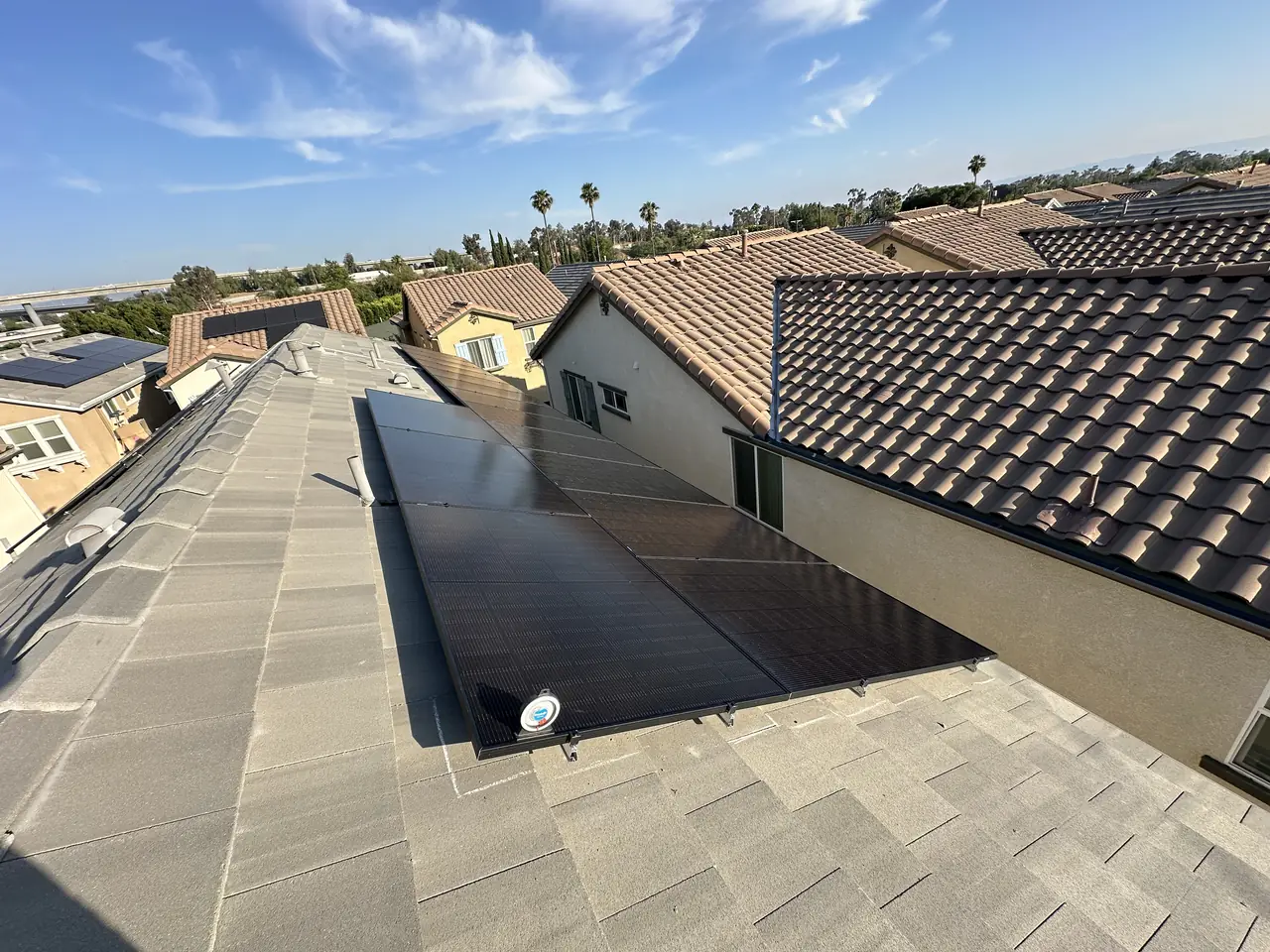
A flat concrete tile roof with cracked and broken tiles already on it. The first thing the crew did on the roof was take pictures of every one, before anyone lifted a tile.
Before any work started on this San Fernando flat concrete tile roof, the crew photographed the cracked and broken tiles already on it — the first task on the morning of 15 August 2025 — and the first tile hooks went in about two hours later. Cali Energy installed 15 modules in two groups of 7 and 8 with Enphase IQ8MC microinverters, sealed a cracked tile before the end of that first day, and had the array complete by 19 August.
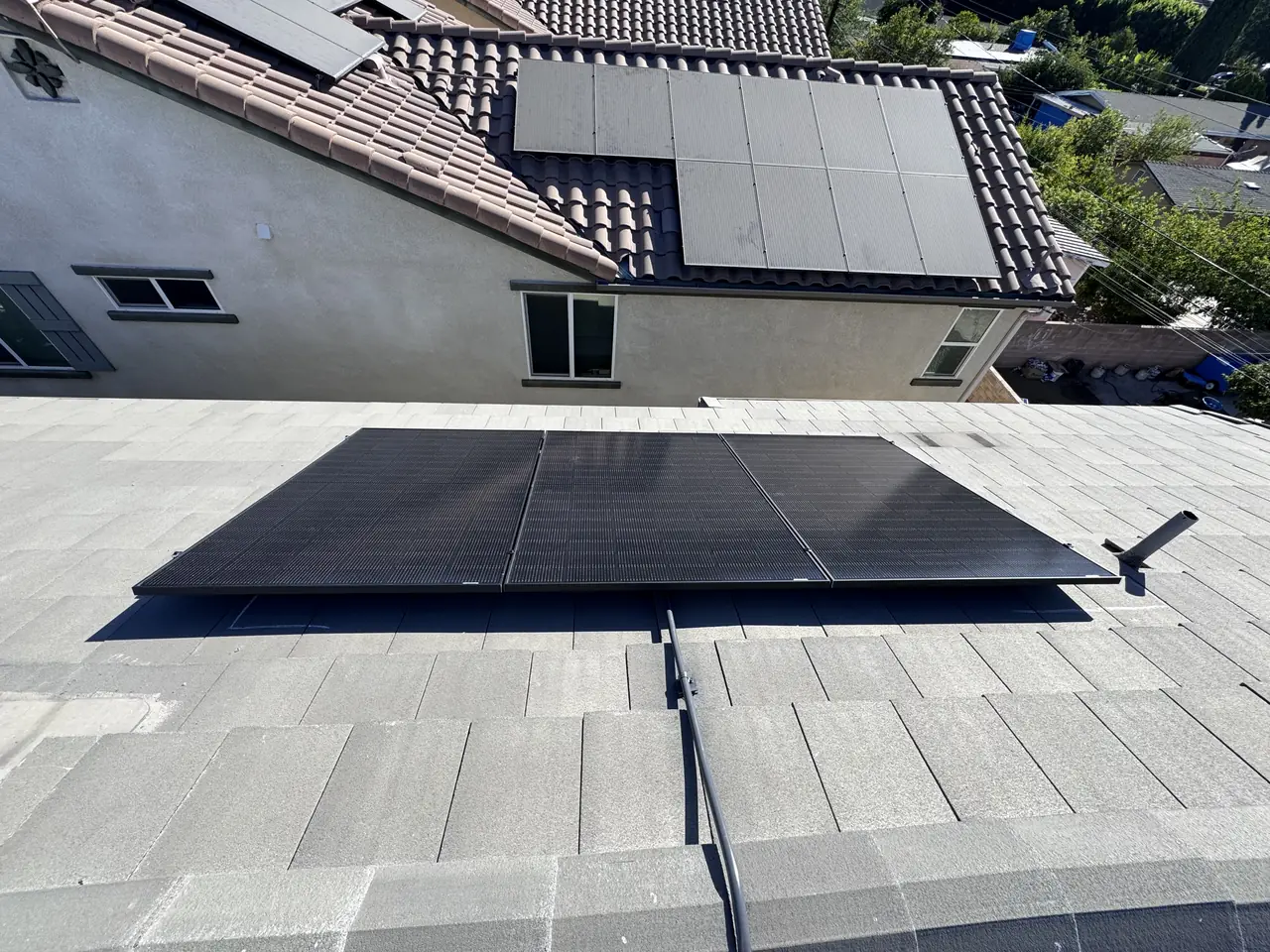
At a glance
- Array
- 15 modules, groups of 7 and 8
- Microinverters
- Enphase IQ8MC, one per module
- Roof
- Flat concrete tile, two-story house
- Roof condition
- Cracked tiles photographed before work began
- First photographs
- 15 August 2025, morning
- First hooks
- About two hours later
- Array complete
- 19 August 2025
The story
Concrete tile cracks. It can crack when it is walked on in the wrong place, when something heavy is set on it, or as a house settles. Older tile roofs may already contain cracked or displaced tiles that are difficult to see from the ground.
That matters on a solar job, because once the array is installed, half the roof is under it and a crack is easy to blame on the last people who were up there. A pre-installation photo record is one of the clearest ways to document the condition of the roof before the work starts.
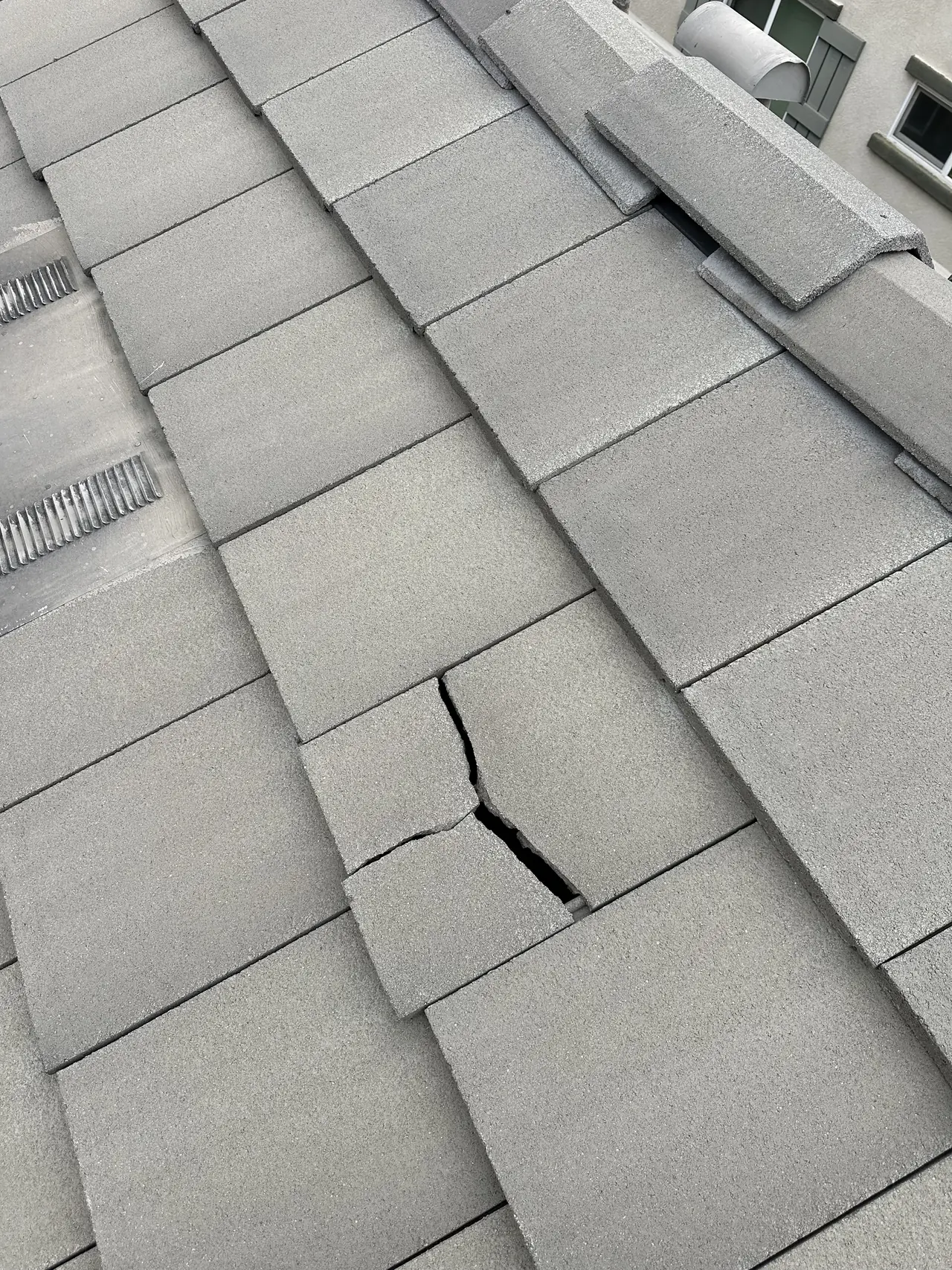
So the first thing the crew recorded was not equipment but the roof itself: a tile split across its face, a broken corner at the rake edge, a crack running between two courses, each photographed where it was before anyone stepped near it.
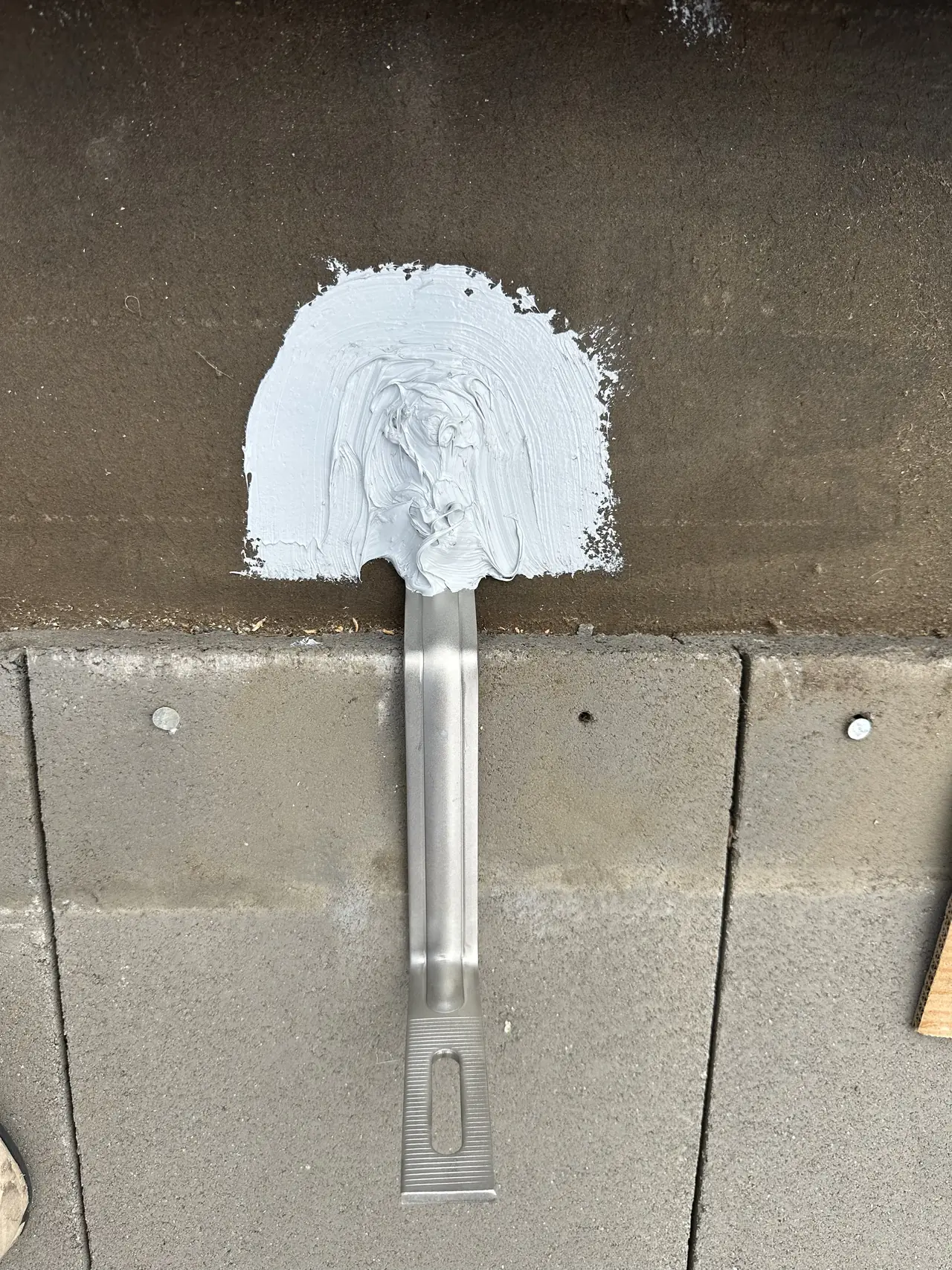
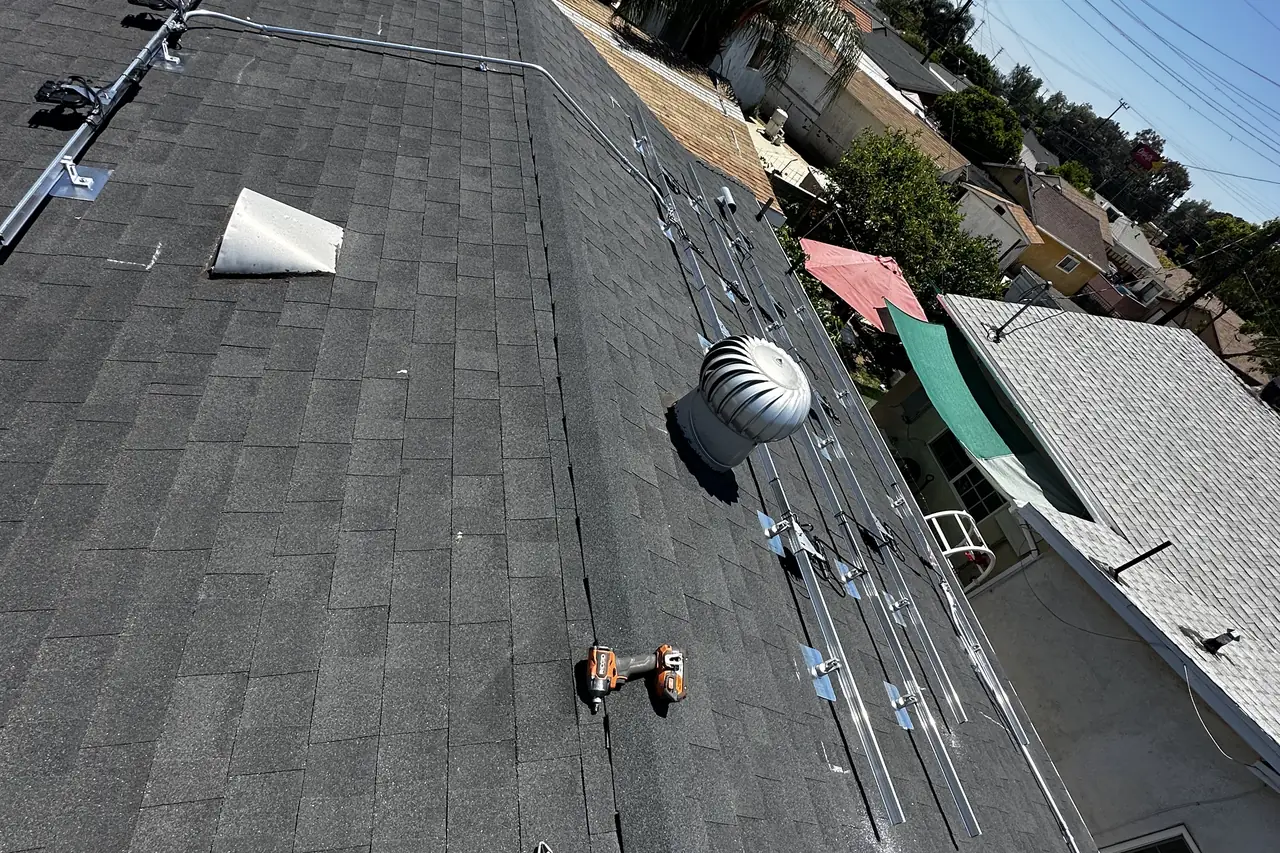
The work proper started after that. At about eleven the first tile hooks were going in, each one on the underlayment under a lifted tile, fixed to the rafter and sealed at the fastener, with the tile set back over it.
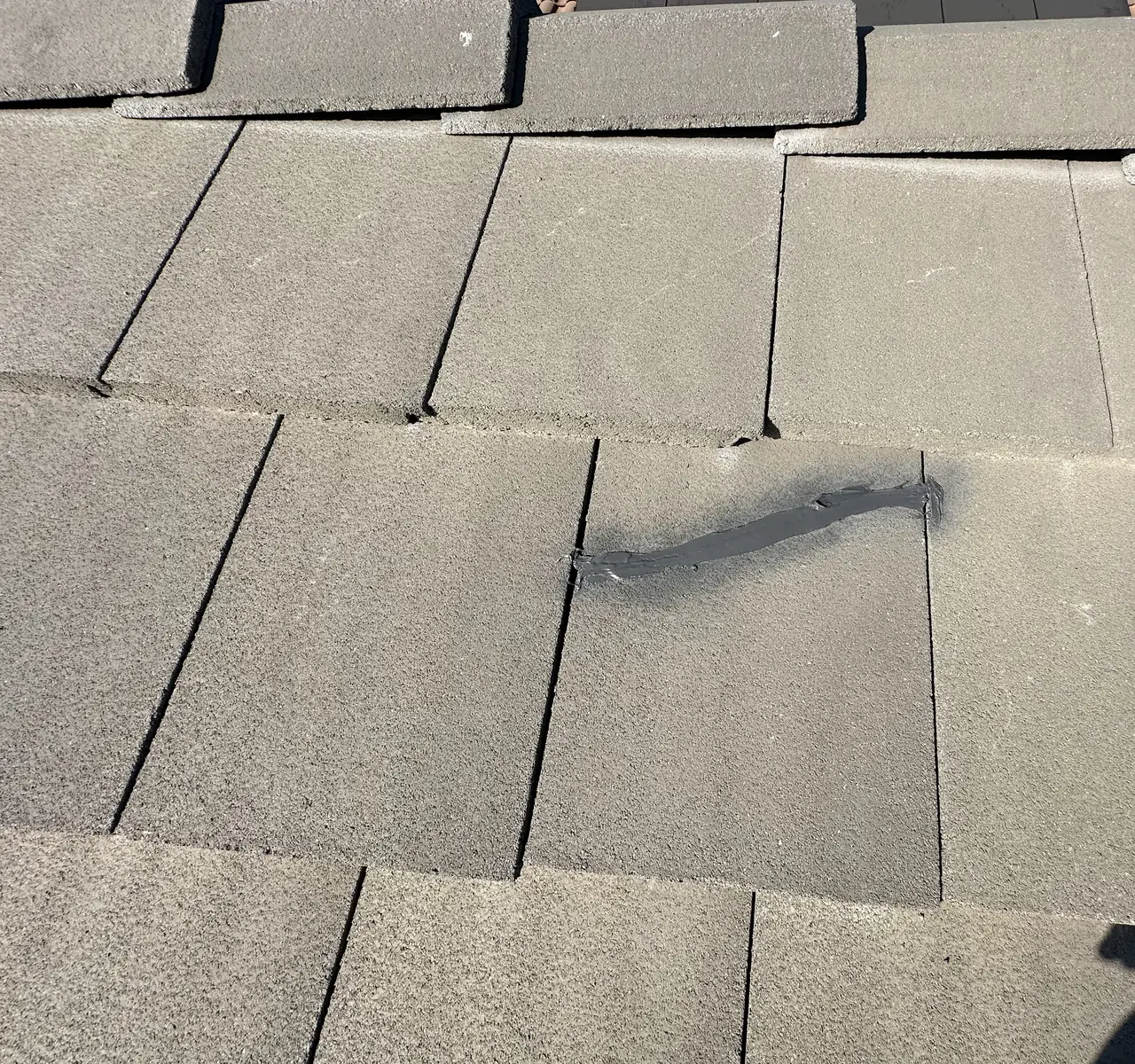
By the end of that first day one of the cracks had been sealed along its length, so the tile keeps shedding water instead of letting it through to the underlayment.
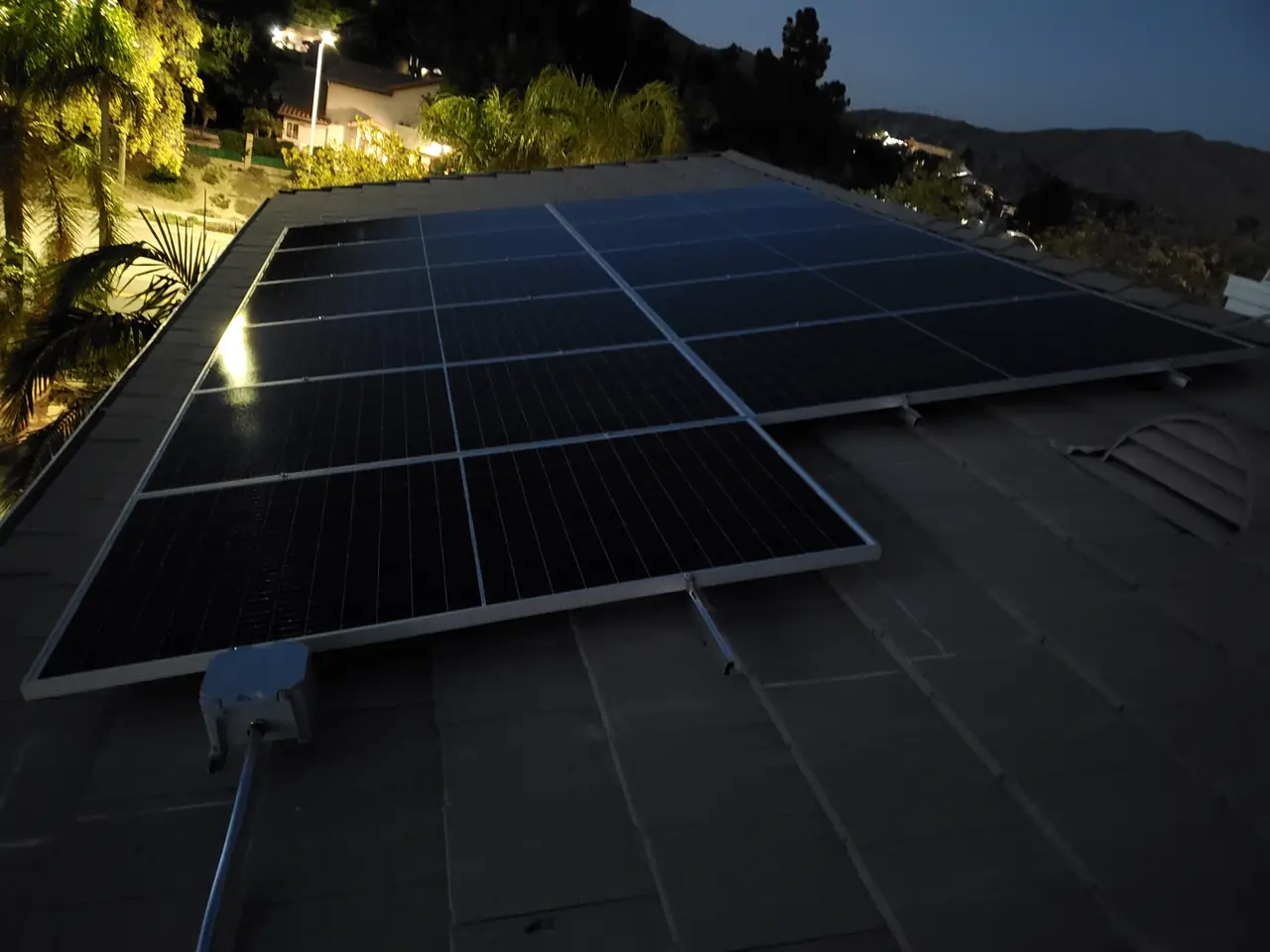
The rails, the Enphase IQ8MC microinverters and the 15 modules followed, in two groups of 7 and 8. On the morning of 19 August the array was complete, and the record of the job starts, as it should on a tile roof, with what was there before.
How it ran
| 15 August 2025, morning | Cracked and broken tiles photographed, before any work |
|---|---|
| About 11 am | First tile hooks fixed under lifted tiles |
| 15 August, end of day | A cracked tile sealed along its length |
| 19 August 2025, morning | Array complete: 15 modules in two groups |
The roof's condition recorded before the first tile came up.
What we did
- Photographed every cracked and broken tile before any work began.
- Lifted the tile at each mount position and fixed hooks to the rafters.
- Sealed each hook at its fastener on the underlayment.
- Sealed a cracked tile along its length.
- Installed rails, Enphase IQ8MC microinverters and 15 modules in two groups.
- Mounted the combiner and AC disconnect on the wall.
System specifications
| Modules | 15, groups of 7 and 8 |
|---|---|
| Microinverters | Enphase IQ8MC, one per module |
| Mounting | Tile hooks to the rafters, sealed at the fastener |
| Roof | Flat concrete tile over underlayment |
| Combiner / disconnect | Enphase combiner and AC disconnect on the wall |
| Utility / AHJ | Southern California Edison / City of San Fernando |
Is your project like this one?
- You have a concrete tile roof that has been up for years.
- You worry about who will be blamed for cracked tiles.
- You want to know what a crew should do before it starts on a tile roof.
- You have cracked tiles where the array will go.
Cali Energy in San Fernando
San Fernando is its own city, not a Los Angeles neighborhood: permits run through the City of San Fernando Building and Safety Division, interconnection through Southern California Edison.
Concrete tile roofs are common on some San Fernando streets, and concrete tile cracks: under foot traffic, from settling, from age. On a tile roof the condition of the tile is part of the job, not something to discover afterwards.
- License and classifications: CSLB #1032379
- Official reference for this process: City of San Fernando — Building and Safety Division
Frequently asked questions
Why photograph a tile roof before installing solar?
Because concrete tile cracks for many reasons, and once the array is on, much of the roof is out of sight. Photographing the existing cracked and broken tiles before any work starts records the roof's condition, protects both the homeowner and the installer, and shows which tiles need attention before they end up under the modules.
What happens to cracked tiles under a solar array?
They should be dealt with before the array covers them, because afterwards reaching them means taking modules off. A cracked tile can be replaced, or a crack can be sealed so the tile keeps shedding water. On this roof a cracked tile was sealed along its length at the end of the first day.
Do solar installers crack roof tiles?
They can, if they walk or drill carelessly, which is why mounts go under the tile on hooks rather than through it, and why the crew steps on the lower part of each tile where it is supported. But an older roof may already have already has cracks, and recording them before work begins keeps the two apart.
Does Cali Energy work on concrete tile roofs in San Fernando?
Yes. Cali Energy mounts under the tile with hooks to the rafters, records the condition of the roof before starting, and deals with cracked tiles before the modules cover them. San Fernando permits run through the City of San Fernando Building and Safety Division. License CSLB #1032379.
What this would look like on your roof
Planning solar in San Fernando? Tell us your utility, your roof and what your bill looks like now, and we will model what a system like this would do on your house before you commit to anything.
Or call +1 (323) 844-7777 · Cali Energy, Northridge · CSLB #1032379 (B, C-10, C-39) — design, permits, install and electrical under one licensed contractor.
Related
This timeline reflects this property and this permitting path. Updated October 2026.