

San Fernando, CA · June 2025 · Southern California Edison / City of San Fernando
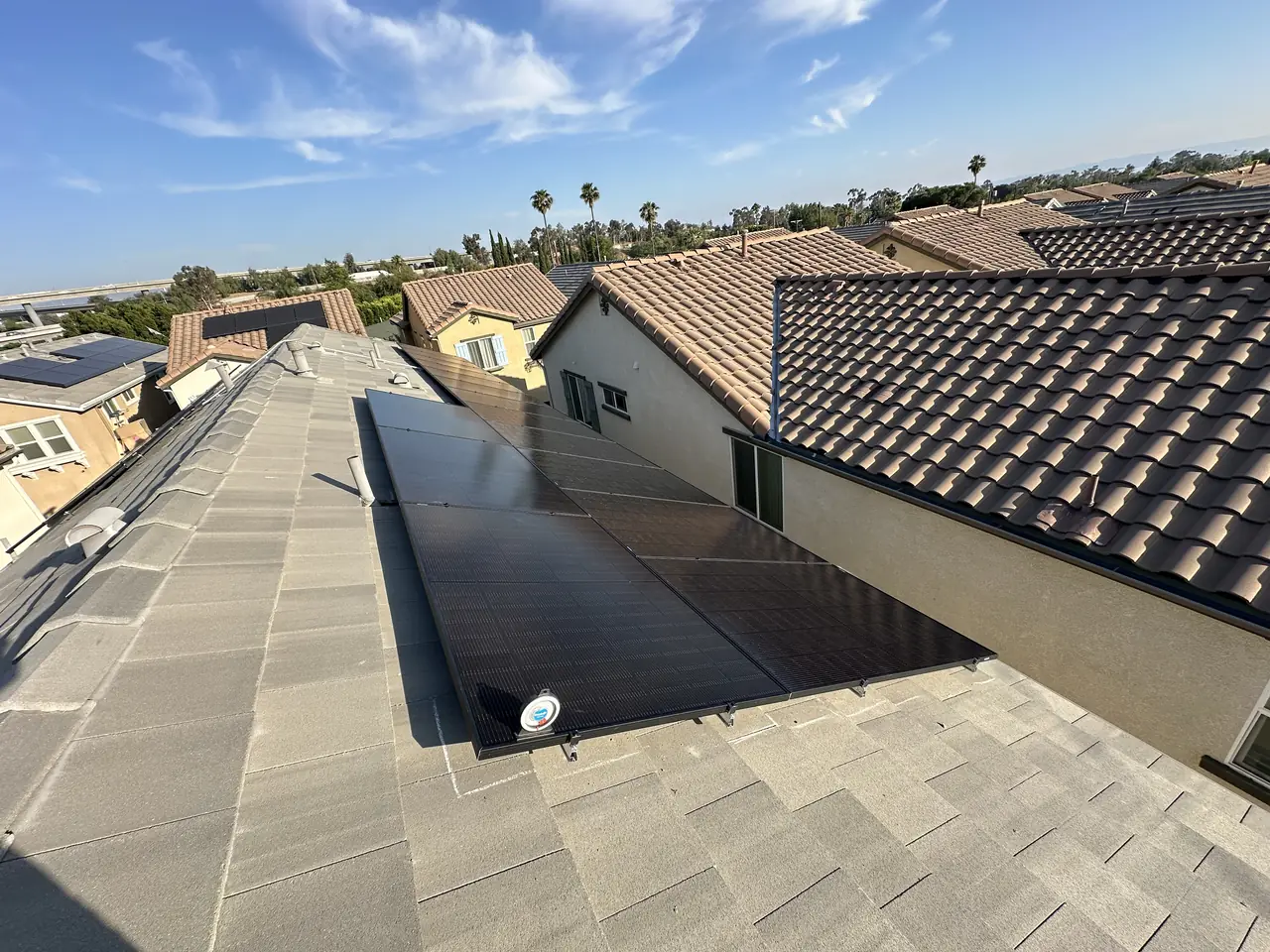
21 modules on flat concrete tile. Every hook sits under a tile
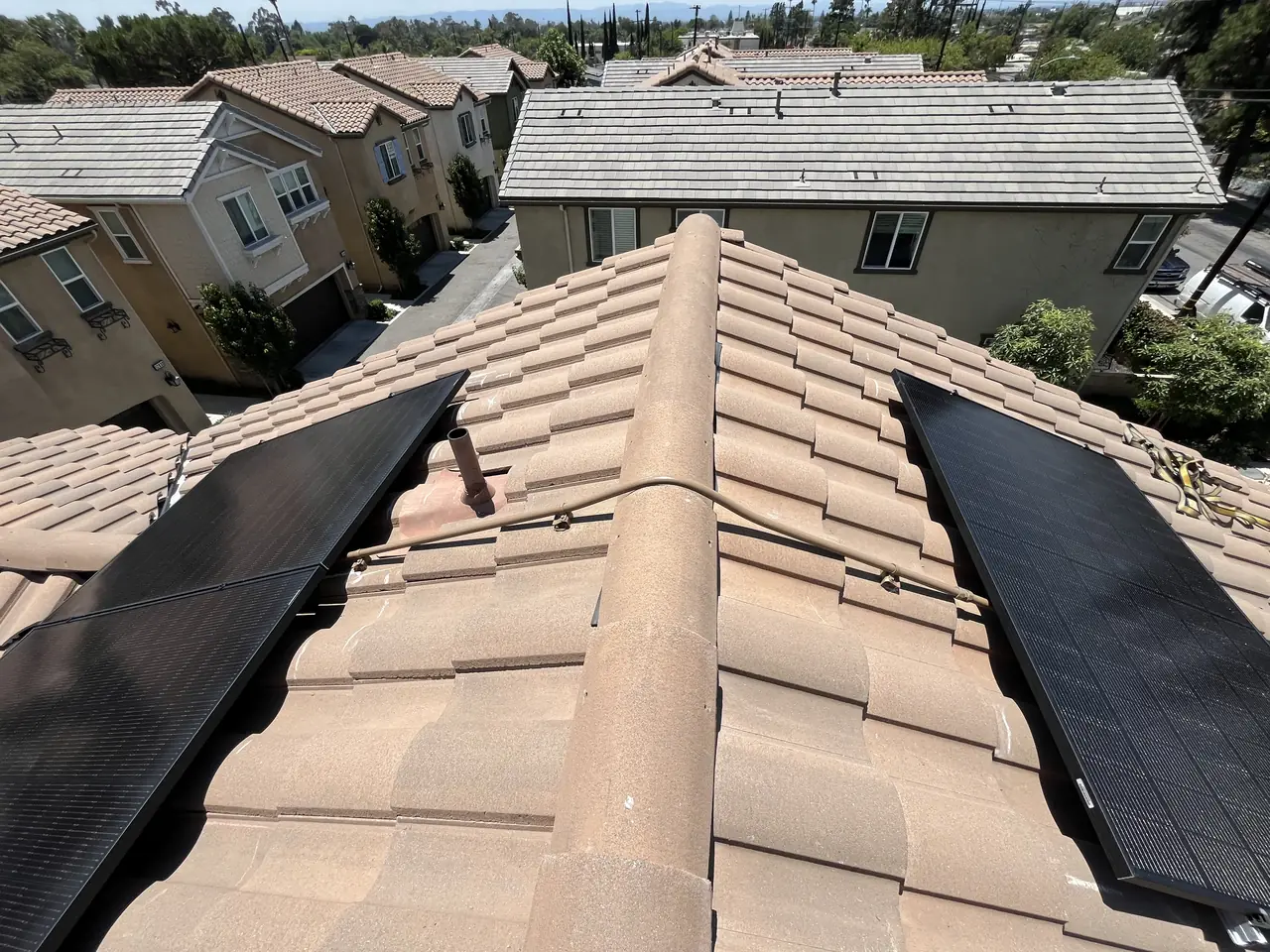
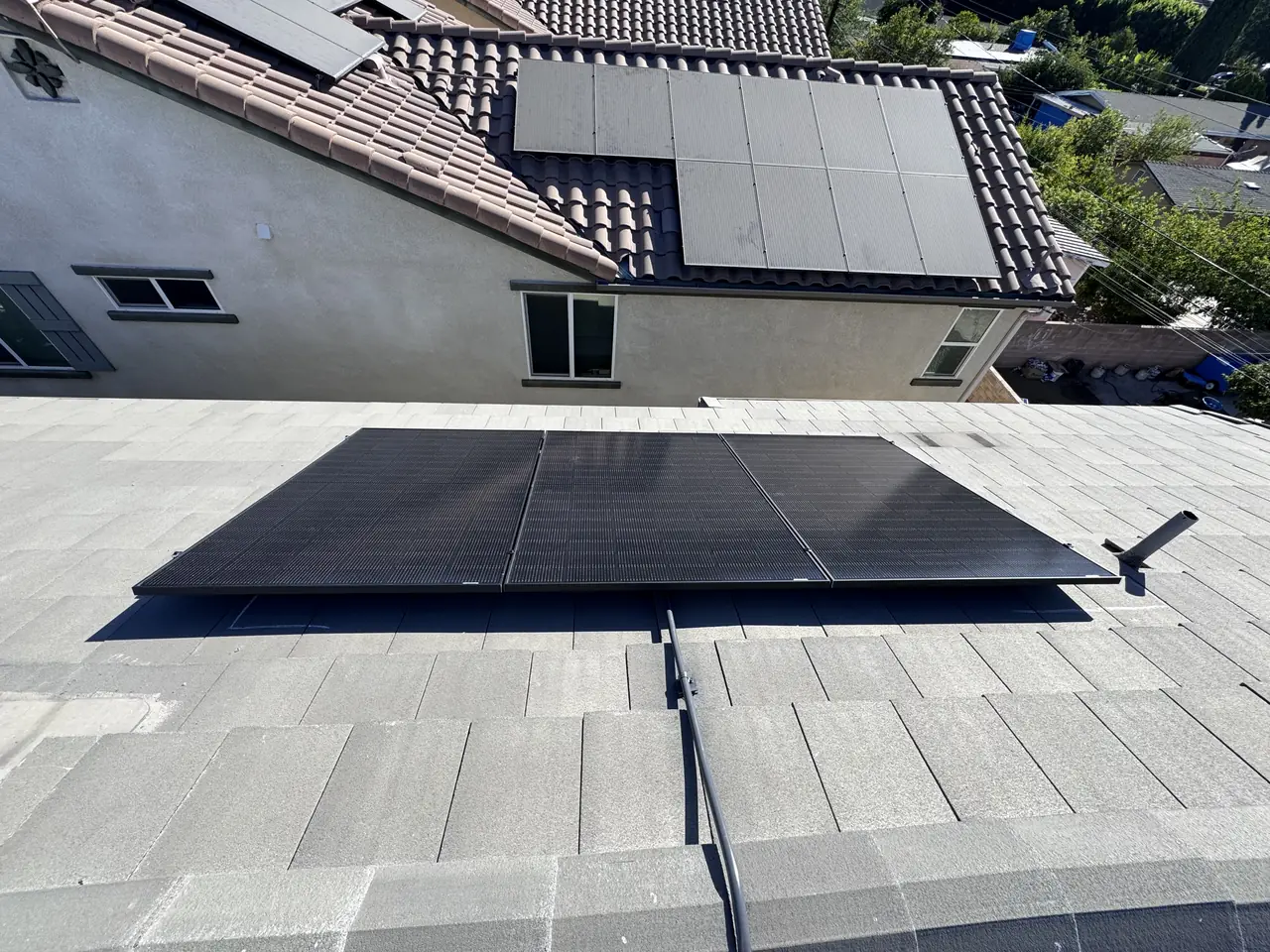
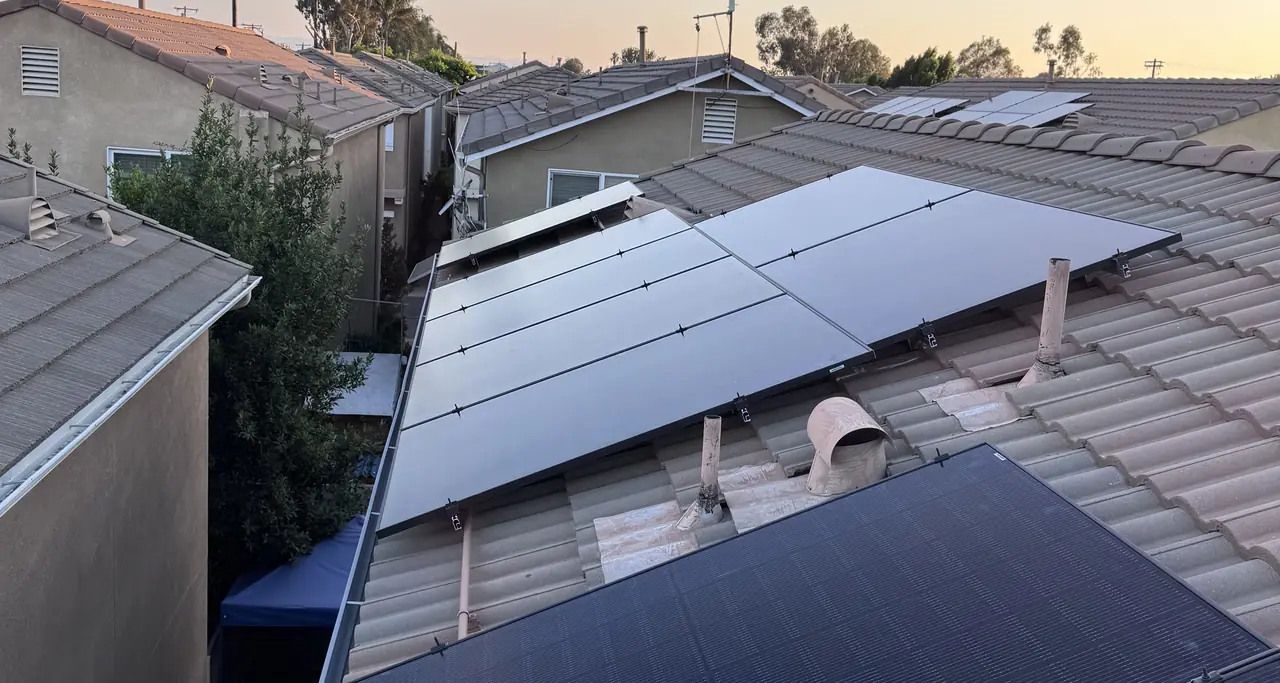
A two-story house with a flat concrete tile roof, in a row of two-story neighbors with tile roofs. The tiles came up, the hooks went onto the underlayment, and the tiles went back over them.
This San Fernando installation is 21 modules on a flat concrete tile roof, in two groups of 11 and 10, with an Enphase IQ8MC microinverter under each module, completed by Cali Energy in one day on 13 June 2025. On tile the mount cannot sit on top of the roof: each tile over a mount position came up, a hook was fixed through the underlayment into the rafter with sealant at the fastener, and the tile went back over it with the hook passing through the joint.
At a glance
- Array
- 21 modules, groups of 11 and 10
- Microinverters
- Enphase IQ8MC, one per module
- Roof
- Flat concrete tile, two-story house
- Mounts
- Tile hooks on the underlayment, sealed at the fastener
- Roof penetration
- Flashed and bedded in sealant
- Installed
- 13 June 2025, in one day
The story
Concrete tile is a good roof and an awkward one for solar. The tiles are heavy, they are brittle under a point load, and they are not what keeps the water out: the underlayment beneath them is. A mount bolted through the top of a tile would crack it and open a hole in the layer that matters.
So on tile the mount goes underneath. At each mount position the tile is lifted out of the course, exposing the underlayment and the batten. A tile hook, a bent steel arm, is fixed through the underlayment into the rafter, and sealant goes over the fastener where it passes through.
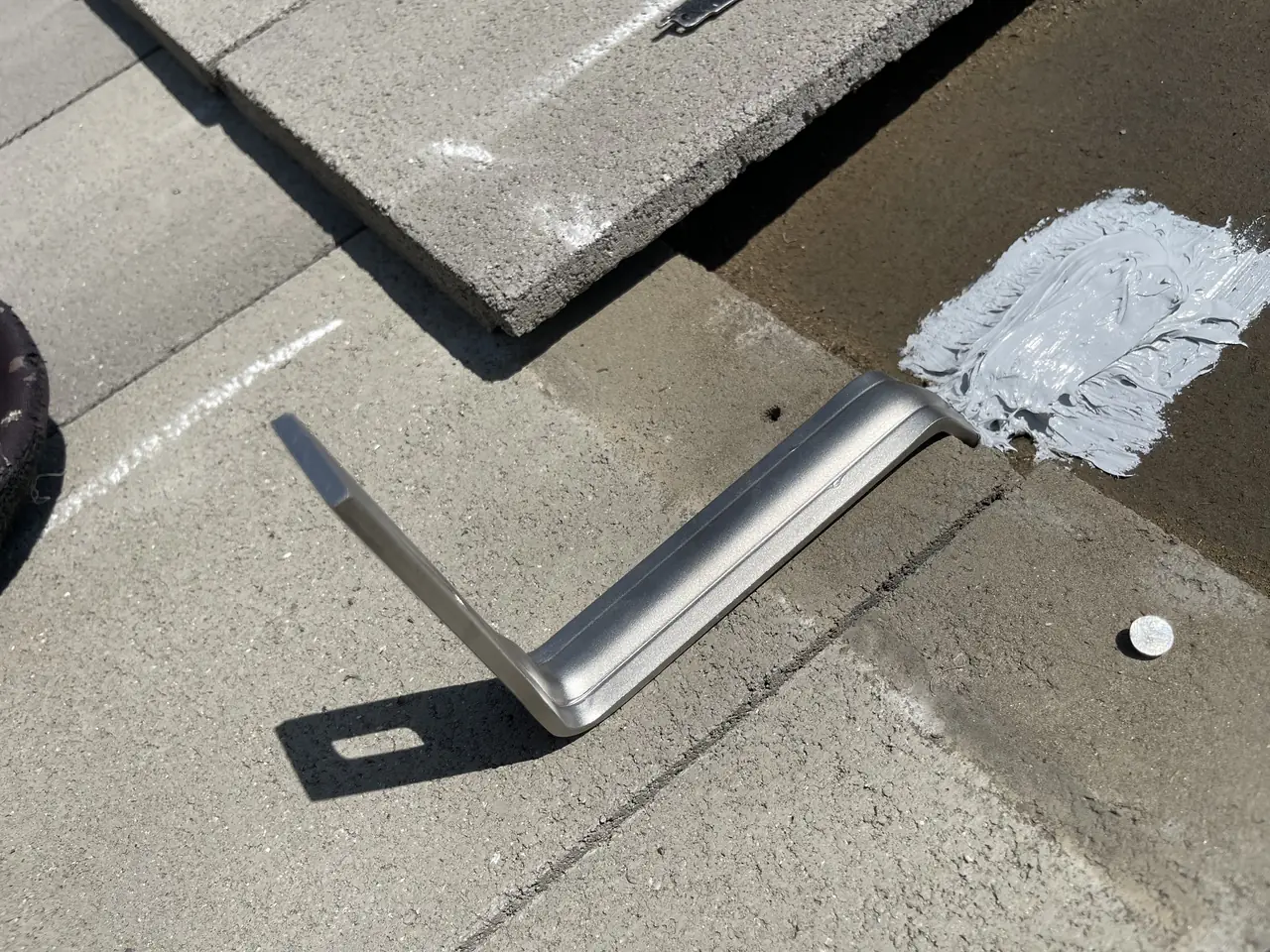
The tile then goes back into its place with the arm of the hook coming out through the joint between tiles, and the rail is bolted to the arm above the roof surface. The array's weight goes to the rafters through the hooks, not onto the tile.
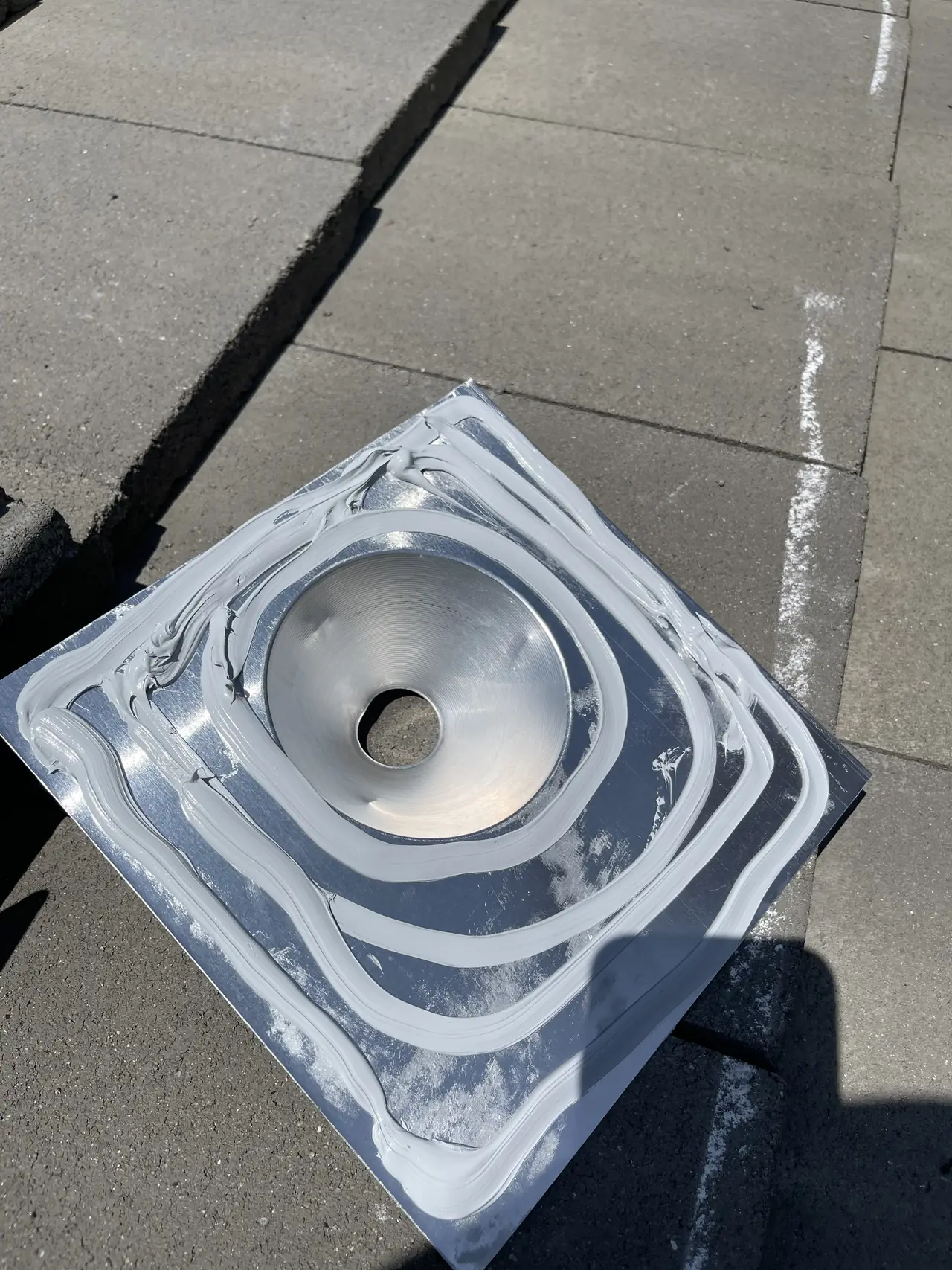
One penetration on this roof was not a mount: the conduit from the array had to pass down through it. That one got a proper flashing, bedded into a wide pattern of sealant so the plate sits tight on the roof all the way around.
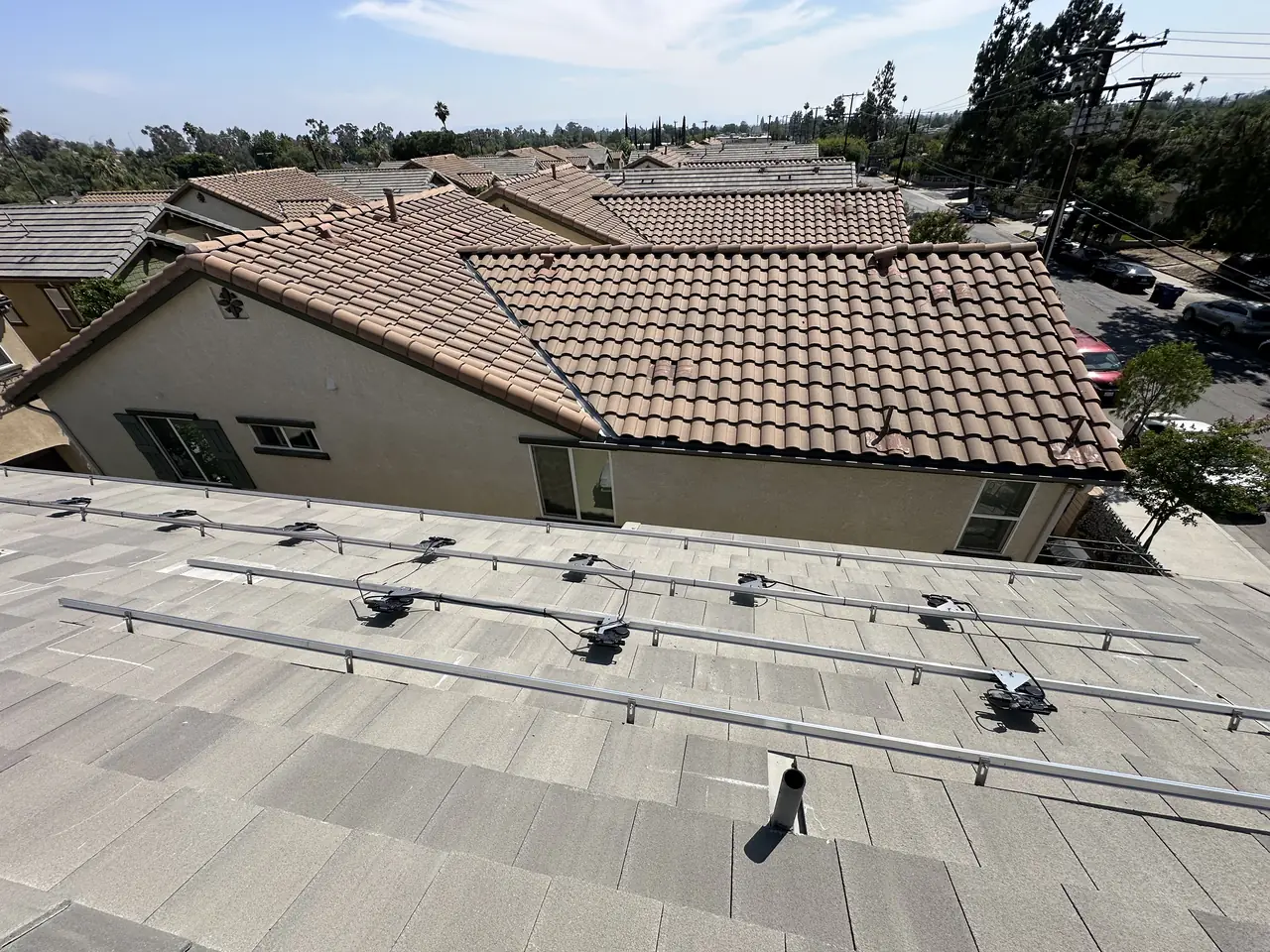
With the hooks in, rails went on and the microinverters onto the rails, Enphase IQ8MC units, one per module, in two groups of 11 and 10. Then the 21 modules.
Work started at about a quarter past eight and ran into the early evening. By then the array was on the roof, the Enphase combiner and an AC disconnect were on the wall, and the tile around the array lay as it had in the morning.
How it ran
| 13 June 2025, morning | Tiles lifted at the mount positions; hooks fixed and sealed |
|---|---|
| Midday | Conduit penetration flashed; rails and microinverters set |
| Afternoon | 21 modules installed in groups of 11 and 10 |
| Evening | Combiner and AC disconnect on the wall; array complete |
Tile up, hook in, tile back, twenty-odd times, in one day.
What we did
- Lifted the tile at each mount position instead of drilling through it.
- Fixed tile hooks through the underlayment into the rafters, sealed at the fastener.
- Replaced each tile with the hook passing through the joint.
- Flashed the conduit penetration and bedded it in sealant.
- Installed rails, Enphase IQ8MC microinverters and 21 modules.
- Mounted the combiner and an AC disconnect on the wall.
System specifications
| Modules | 21, groups of 11 and 10 |
|---|---|
| Microinverters | Enphase IQ8MC, one per module |
| Mounting | Tile hooks to the rafters, rails above the tile |
| Roof | Flat concrete tile over underlayment |
| Combiner / disconnect | Enphase combiner and AC disconnect on the wall |
| Utility / AHJ | Southern California Edison / City of San Fernando |
Is your project like this one?
- You have a flat concrete tile roof.
- You are worried that solar will crack your tile.
- Your house is in a newer subdivision with tile roofs.
- You want about twenty modules with a microinverter under each.
Cali Energy in San Fernando
San Fernando is its own city, not a Los Angeles neighborhood: permits run through the City of San Fernando Building and Safety Division, interconnection through Southern California Edison.
Some San Fernando streets are lined with newer two-story stucco houses with concrete and clay tile roofs, a different job from the older shingle houses nearby. On tile, the mount has to get under the tile to reach the rafter.
- License and classifications: CSLB #1032379
- Official reference for this process: City of San Fernando — Building and Safety Division
Frequently asked questions
How is solar mounted on a concrete tile roof?
Under the tile, not through it. The tile at each mount position is lifted, a tile hook is fixed through the underlayment into the rafter with sealant at the fastener, and the tile is set back with the hook's arm passing through the joint. The rails attach above the tile, so the tile carries none of the array's weight.
Will installing solar crack my concrete tiles?
Concrete tile is brittle under a point load, so tiles can crack if they are walked on carelessly or drilled. Working under the tile instead of through it avoids the main cause. Tiles that do crack during the work, or were already cracked, should be dealt with before the array covers them, because afterwards they are hard to reach.
What keeps the water out on a tile roof?
The underlayment beneath the tiles. Tile sheds most of the water, but the waterproof layer is underneath, which is why a mount has to be sealed where it passes through the underlayment, and why any roof penetration needs its own flashing bedded properly on the roof.
Does Cali Energy install solar on tile roofs in San Fernando?
Yes. Some San Fernando neighborhoods have concrete or clay tile. Cali Energy mounts under the tile with hooks to the rafters, flashes every penetration, and keeps the combiner and disconnect on the wall. Permits run through the City of San Fernando Building and Safety Division. License CSLB #1032379.
What this would look like on your roof
Planning solar in San Fernando? Tell us your utility, your roof and what your bill looks like now, and we will model what a system like this would do on your house before you commit to anything.
Or call +1 (323) 844-7777 · Cali Energy, Northridge · CSLB #1032379 (B, C-10, C-39) — design, permits, install and electrical under one licensed contractor.
Related
This timeline reflects this property and this permitting path. Updated October 2026.