

Roof Damage After a Nearby Wildfire: Smoke, Ash, Heat
Yes. A wildfire threatens a house in three ways, direct flames, radiant heat from nearby burning objects and flying embers, and CAL FIRE notes that embers can ignite homes up to a mile away, so a house that didn't burn can still have a damaged roof. Once officials say it's safe to return, check the roof, eaves and vents from the ground first, look for smoldering embers on the roof and in gutters and downspouts, check the attic and vents for ash or embers, photograph everything for your insurer, and have a roofer inspect before the first rain. For smoke damage claims from January 1, 2027, a new California law presumes that smoke, ash or soot in a surviving home in the fire's ZIP codes came from that fire, makes the insurer pay for the testing needed to restore the home, and requires an insurer that inspects to do it within 30 days. This page isn't legal advice about a particular claim.
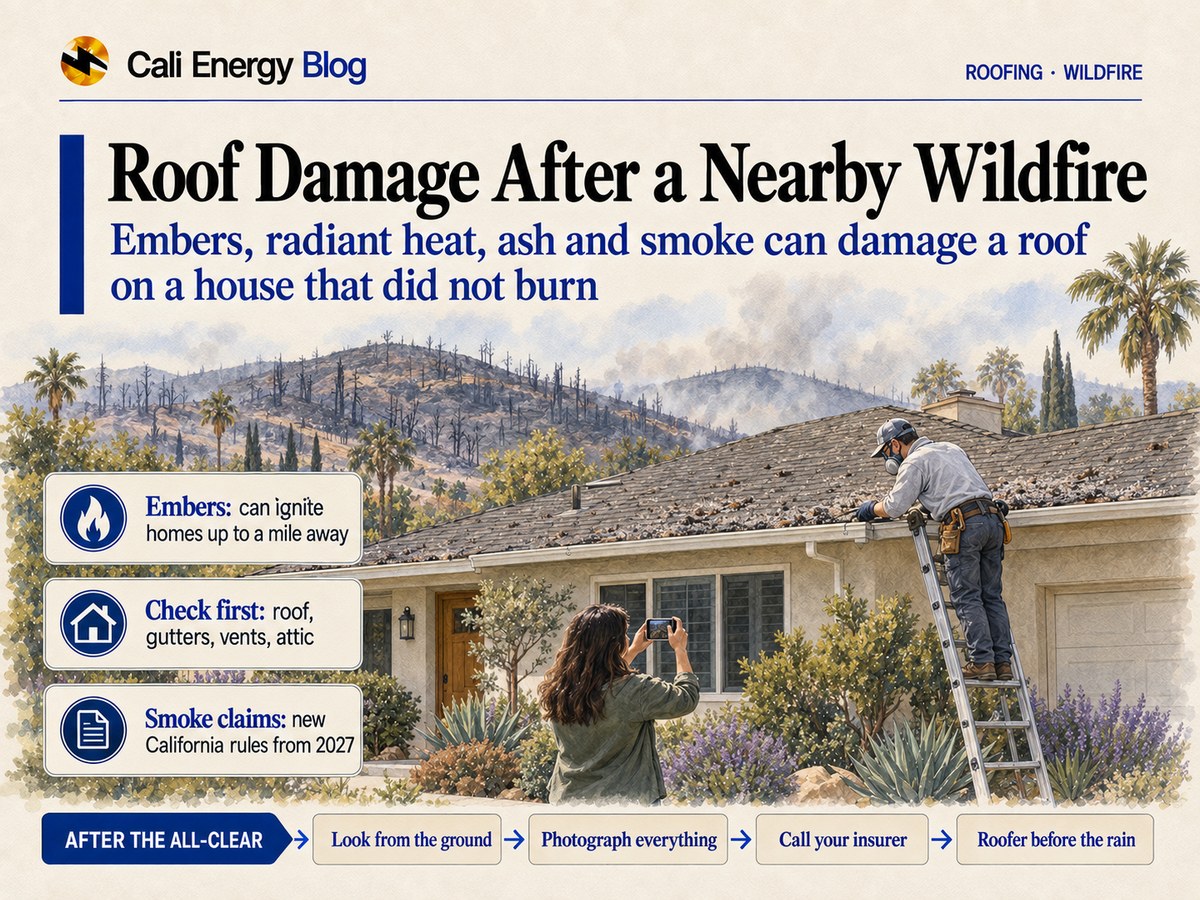
Where a nearby fire leaves its mark on a roof
A roof takes embers from above and heat from the side, and what to check follows from that. Most of these can only be judged up close, so the walk-through belongs to a roofer, not a homeowner on a ladder.
| Where | What to look for |
|---|---|
| Roof surface | Smoldering embers, burn marks, scorched or softened spots, especially on the side that faced the fire |
| Gutters, valleys and downspouts | Embers and burned debris; CAL FIRE lists gutters and downspouts among the first places to check |
| Vents and eaves | Embers or ash that got in; damaged screens |
| Skylights, vent caps and other plastic parts | Warping or melting from heat |
| Flashings and sealants | Heat damage where metal meets the roof covering |
| Attic | Ash or embers that came in through vents, and smoke odor or soot |
Ash and soot on the roof are part of the evidence; leave cleanup decisions until the damage has been photographed and your insurer has been told.
What to do, in order
1. Wait for the all-clear. CAL FIRE's checklist starts with confirming that fire officials say it's safe to return.
- Inspect the outside first, with a flashlight: the roof, eaves and vents.
- Look for smoldering embers on the roof, in gutters and downspouts, on decks and overhangs, and in wood and debris piles.
- Check the attic, crawl space and vents for ash or embers before settling back in.
- Photograph the damage for your insurer before anything is cleaned or moved.
- Call your insurer and keep a record of every contact; how a claim runs, and its deadlines, is in how to file a roof insurance claim in California.
- Have a roofer inspect before the first rain. If the roof is open, it needs temporary protection; what to do when water is already coming in is in emergency roof leak in a storm.
Smoke damage claims and the new law
After the January 2025 fires in Los Angeles County, California's Insurance Commissioner convened a Smoke Damage Claims and Remediation Task Force, and its report led to AB 1795, the Smoke Damage Recovery Act, signed on September 15, 2026 as Chapter 240 of the Statutes of 2026. It takes effect January 1, 2027. For smoke damage claims on homes in the area the fire affected, which the law draws as every ZIP code within or partly within the fire perimeter, it:
- Presumes the cause. If wildfire smoke, ash, soot, char or combustion byproducts are present in a surviving home in that area after the fire, the smoke damage is presumed to be the result of that fire. The presumption can be rebutted.
- Pays for testing. The insurer is responsible for the sampling and testing needed to restore the home to its pre-loss condition and have it cleared for occupancy.
- Sets the inspection clock. An insurer that chooses to inspect has to do it as soon as practicable, and no later than 30 calendar days after notice of the claim or after access to the property is granted.
- Keeps living expenses going. The insurer can't end additional living expenses on these claims until the home is restored and cleared for occupancy, subject to the policy limit. Existing law already makes that coverage last at least 24 months for a covered loss tied to a state of emergency.
Whether a policy covers a given roof repair is a separate question from the smoke rules; how coverage works for roofs is in does insurance cover a roof replacement?.
Repairs in a fire hazard zone
A repair still has to meet the fire rules where the house is. In a Fire Hazard Severity Zone or wildland-urban interface area, any roof covering put on in a repair has to be at least Class A, and a covering replaced, or 50 percent or more replaced within 12 months, has to meet the rules for new construction (California Wildland-Urban Interface Code 2025, 507.1). What those rules require of a roof is in California WUI roof requirements, and how to check whether your address is in a zone is in checking a home's fire hazard zone. For a house that did burn, the rules for rebuilding are in rebuilding a roof after the Eaton or Palisades fire.
Frequently asked
Can a wildfire damage my roof if the flames never reached my house?
What should I check first when I get home?
Does insurance pay for smoke damage to my home?
How soon will the insurer inspect?
Do roof repairs after a fire have to be Class A?
Related reading
Sources & methodology
Code sections, rules and figures on this page come from the primary sources below. Codes, local requirements and product terms change; each was verified October 8, 2026.
- CAL FIRE, Ready for Wildfire: Returning Home Checklist
- CAL FIRE, Ready for Wildfire: Hardening Your Home
- California Department of Insurance, Smoke Claims and Remediation Task Force Report
- AB 1795 (Gipson), Smoke Damage Recovery Act, Chapter 240, Statutes of 2026: bill text
- AB 1795, bill status (approved September 15, 2026; non-urgency)
- California Wildland-Urban Interface Code 2025 (Title 24, Part 7), Chapter 5, 507.1 (UpCodes)
We inspect the roof and attic after a nearby fire
Call (323) 844-7777. We inspect the roof, gutters, vents and attic, photograph what the fire left, and write up what needs repair before the first rain, in a form you can give your insurer. Have ready the address and the date you were allowed back.
Prepared by Cali Energy, October 8, 2026. This article is for general educational purposes only and is not legal, tax, financial, engineering, or utility advice. Rates, incentives, codes, permit requirements, equipment specifications, prices, and program terms may change; figures and timelines are estimates, not guarantees. Confirm current requirements with the applicable utility, AHJ, program administrator, manufacturer, or a licensed professional. See our Content Disclaimer. Cali Energy · 19201 Parthenia St, Unit E, Northridge, CA 91324 · CSLB #1032379 (B, C-10, C-39)