

Hidden Costs in a Roofing Quote: What to Check
The costs that surprise people after signing are rarely hidden on purpose. They're the parts of a re-roof that a quote leaves unpriced or vague: tearing off and hauling away the old roof, repairing the deck under it, new flashings and edge metal, ventilation, the permit and its inspections, the fascia and gutters, and anything on the roof that another trade has to take off first, such as solar panels. On a tile roof, add the underlayment, battens and bird stops, and who pays for broken tiles. California law requires a home improvement contract to describe the project and the significant materials, and makes extra work enforceable only through a written change order that states its price. So the fix is the same for every line: get it priced, or written down as excluded, before you sign.

This page is a checklist for reading one quote; why two quotes for the same roof can differ so much is in why roofing quotes differ. The four lines every scope should name, tear-off or overlay, underlayment, flashing and ventilation, are explained in how to choose a roofing contractor in California; what happens when rotted decking turns up mid-job is in rotted roof decking and the change order.
The lines to look for
Most of these lines can't be priced exactly until the old roof is off, or they belong to another trade, so a quote can leave them out without being wrong. The question is whether it says so.
| Line | Why it's often missing or vague | What the quote should say |
|---|---|---|
| Tear-off and disposal | A price for the new roof alone; the number of old layers and the haul-away decide the cost | How many layers come off, and that debris removal and disposal are included |
| Deck repair | Rot under the covering can't be seen until the covering is off | How much repair is included, and the price per board or sheet beyond it |
| Underlayment | "Underlayment" alone can mean any grade | The product by name, and where the self-adhered membrane goes |
| Edge metal and flashings | Old flashing can be reused or left out | New drip edge, valley metal, pipe flashings, wall and chimney flashing, item by item |
| Ventilation | Vents can be roofed over rather than changed | Which vents are added, replaced or kept |
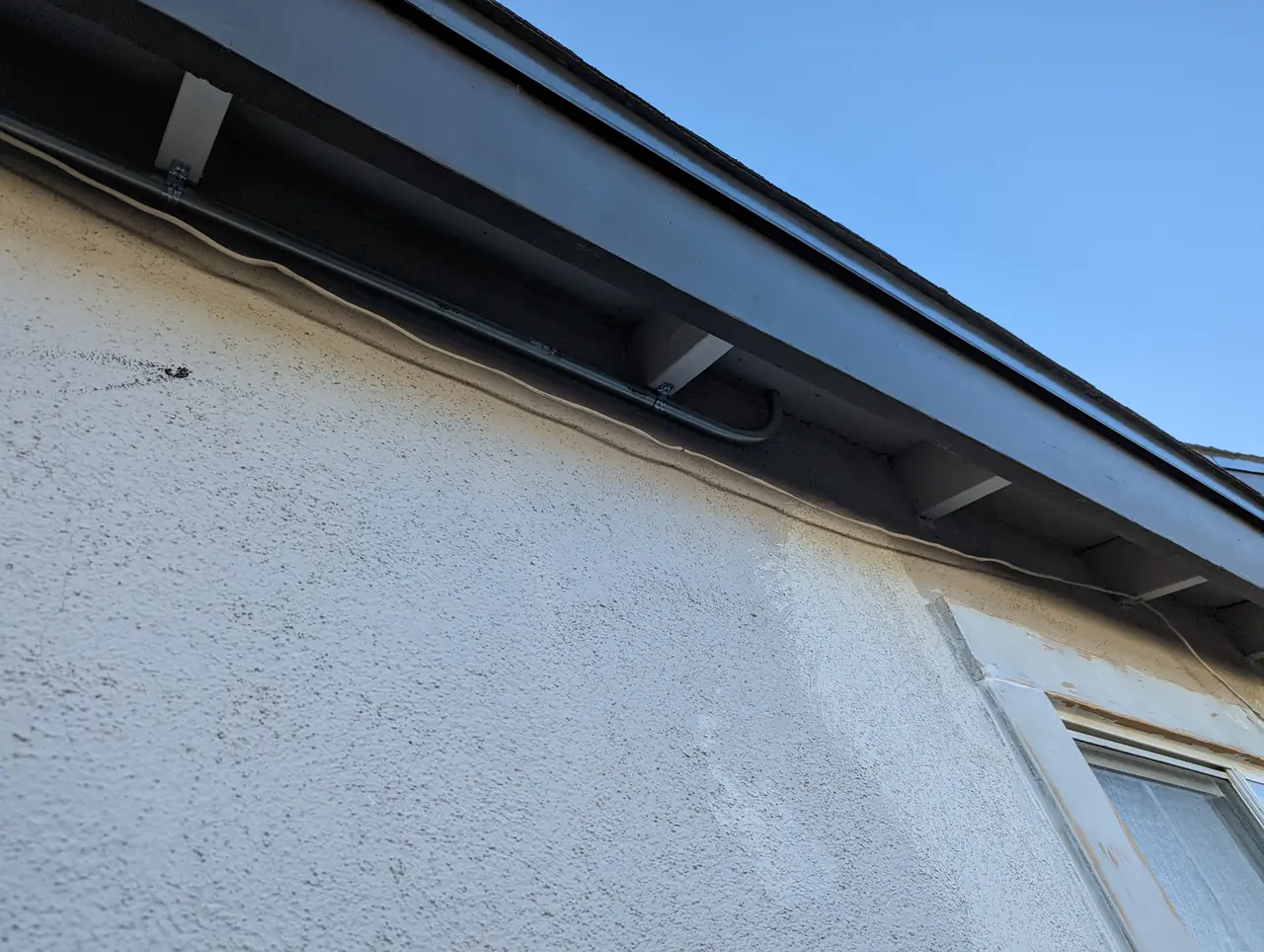
| Fascia and gutters | Damaged fascia shows up at the edge; gutters may have to come off | Fascia repair and its price per foot; gutters removed and reset, replaced or excluded |
| Permit and inspections | Who pulls the permit and pays the fees is easy to leave unsaid | That the permit and inspections are included, and who schedules them |
| Code items the permit brings | Rules that ride on the permit, not the roofing | Cool-roof product where the rule applies; a fire-rated assembly in a fire zone |
| Solar panels and other equipment | A different trade takes them off and puts them back | Who removes and reinstalls panels, dishes and lines, or that it's excluded |
| Tile details | Old tile is reused, and some breaks | Battens and bird stops, how tile is fastened back, and who pays for broken tiles |
| Low-slope drainage | Standing water needs reshaping, drains or crickets | The drainage work spelled out, not only the membrane |
A few of these come with the permit rather than the roof. Replacing more than half of a roof can trigger California's cool-roof requirement, depending on the climate zone (the cool-roof rule on a re-roof). Where the wildfire code applies, the roof has to be a Class A assembly, and vents and gutters that are replaced have to meet it too (WUI roofing requirements). In the City of Los Angeles, the owner also signs and notarizes the Department of Building and Safety's Owner Statement before the final, which for a permit valued over $1,000 covers smoke alarms, carbon monoxide alarms where required, and water-saving showerheads and toilets, and for a house with a permit valued at $10,000 or more adds safety glass or film in sliding glass doors and a seismic gas shut-off where there's gas piping: work outside the roofing scope (roof permit in Los Angeles). And if panels sit on the roof, they come off before the re-roof and go back after (solar removal and reinstall for a re-roof).
What our own estimates spell out
These are lines from our written roofing estimates in 2025 and 2026, with prices left out. Other contractors write theirs differently; the point is that each one is either in the scope or excluded on paper.
- Deck repair: replacement of up to 10% of damaged decking included, and anything beyond it billed at a stated price per linear foot of plank decking or per square foot of plywood.
- Permits: all city permits and inspections the job requires included in the total.
- Underlayment: the brand and model written in, not just "underlayment."
- Tile: tiles broken before the work starts not included; tiles broken by our crew replaced free of charge; tile reinstalled with screws.
- Fascia: replacement, including painting, priced for the measured length.
- Gutters: written as not included in the labor price when they weren't.
- Fire rating: on a flat roof, a note that a fire-rated system may be required, to be confirmed.
- Solar panels: removal and reinstallation by a qualified solar contractor, not part of the roofing scope.
The questions one homeowner sent back
In 2026 a homeowner comparing several proposals for new underlayment under part of a tile roof wrote back before signing with seven things to confirm in writing:
- A diagram of which roof slopes, valleys and transitions are in the scope.
- That all the old underlayment comes off, down to clean wood deck.
- That the named underlayment goes directly on the prepared deck, to the maker's instructions.
- Which new metal is included: valley metal, drip edge, pipe flashings, wall flashing and tile pans.
- That the tile goes back with corrosion-resistant screws, and whether exposed edges get clips for wind.
- That damaged battens are replaced, and that old solar penetrations are found, photographed and sealed.
- What flat-roof work, if any, is included: area, product and warranty.
Every answer went into the revised scope. Two of the items didn't apply to that roof, which had no battens and no flat section in the work area, and the answers said so in writing, which is what the homeowner was after: a scope clear enough to compare. How to put several quotes side by side is in how to compare roofing quotes line by line.
What California law requires of the contract
- A description of the work and materials. A home improvement contract over $500 has to include a section headed "Description of the Project and Description of the Significant Materials to be Used and Equipment to be Installed" (Business and Professions Code 7159(d)(7)). A one-line "re-roof, 25 squares" doesn't describe much; everything else the contract has to state is in California roofing contracts: what the law requires.
- Changes in writing, before the work. A change order becomes part of the contract only if it's in writing and signed before the work it covers starts (7159(c)(5)), and it isn't enforceable against the owner unless it states the scope, the amount added or subtracted, and the effect on the payments or the completion date (7159.6). A contractor who skips the change order can still seek payment for work actually done under other legal remedies (7159.6(c)), so the paperwork protects both sides.
- Payments and the down payment. The cap on the down payment and the rule that payments can't run ahead of the work are covered in how to choose a roofing contractor; paying with a loan or a PACE assessment brings its own rules, covered in roof financing in California.
Frequently asked
Is removing the old roof usually included in a roofing quote?
Who pays if rotted decking is found during the tear-off?
Does a roofing quote include the permit?
Will the roofer take my solar panels off?
What should a tile roof quote say about broken tiles?
Related reading
Sources & methodology
Code sections, rules and figures on this page come from the primary sources below. Codes, local requirements and product terms change; each was verified October 9, 2026.
We'll write the scope line by line, with what's excluded
Call (323) 844-7777. We inspect the roof and write the scope item by item: what comes off, what goes on by product name, how deck repair is priced, and what isn't included. Have ready the address, the roof type, and any quotes you already have, so we can answer the same questions.
Prepared by Cali Energy, October 9, 2026. This article is for general educational purposes only and is not legal, tax, financial, engineering, or utility advice. Rates, incentives, codes, permit requirements, equipment specifications, prices, and program terms may change; figures and timelines are estimates, not guarantees. Confirm current requirements with the applicable utility, AHJ, program administrator, manufacturer, or a licensed professional. See our Content Disclaimer. Cali Energy · 19201 Parthenia St, Unit E, Northridge, CA 91324 · CSLB #1032379 (B, C-10, C-39)