

San Fernando, CA · August 2025 · Southern California Edison / City of San Fernando
A Powerwall on the wall, 22 modules on four sections of roof
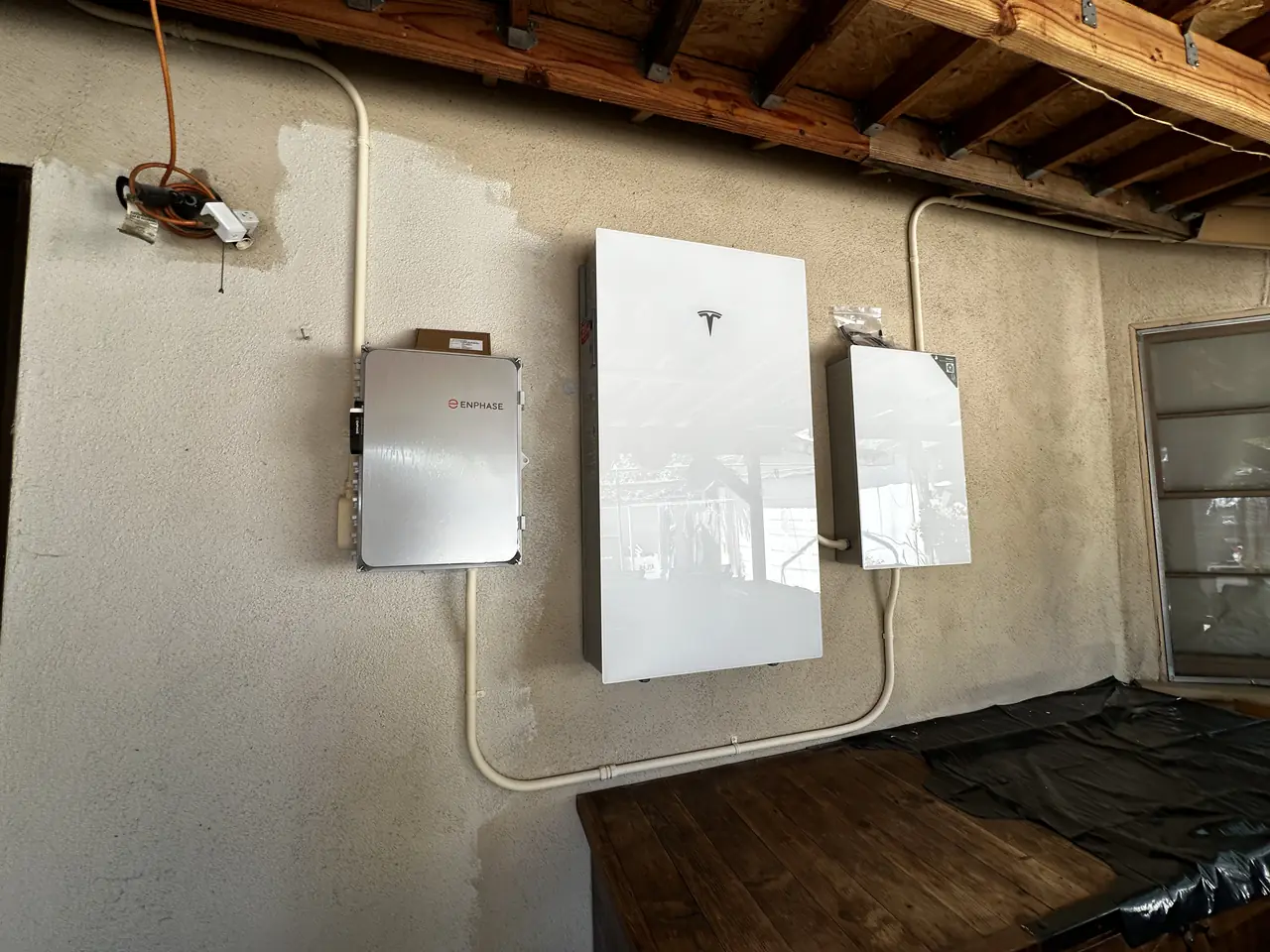
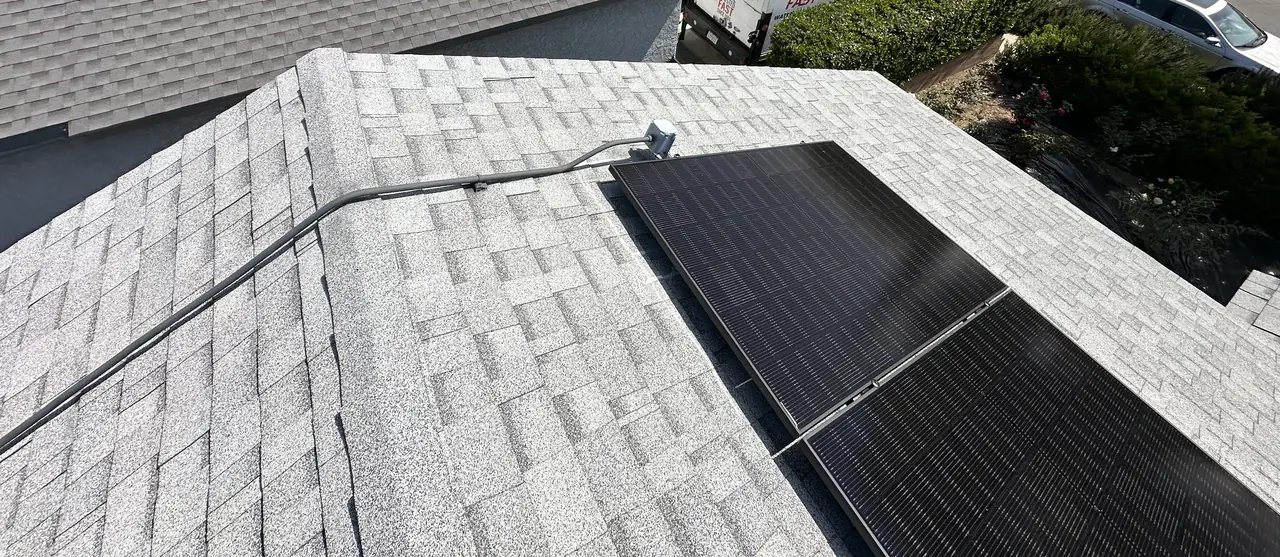
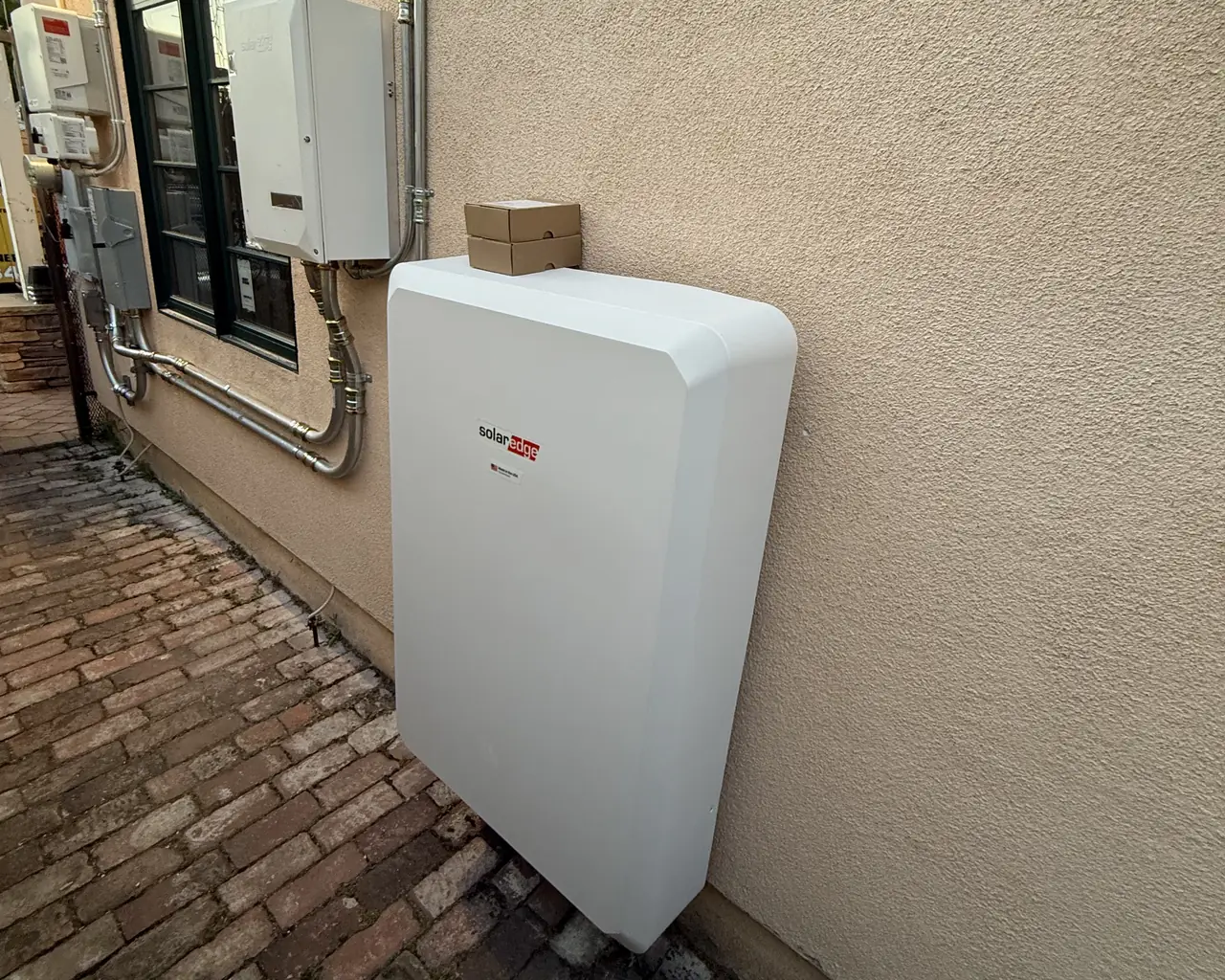
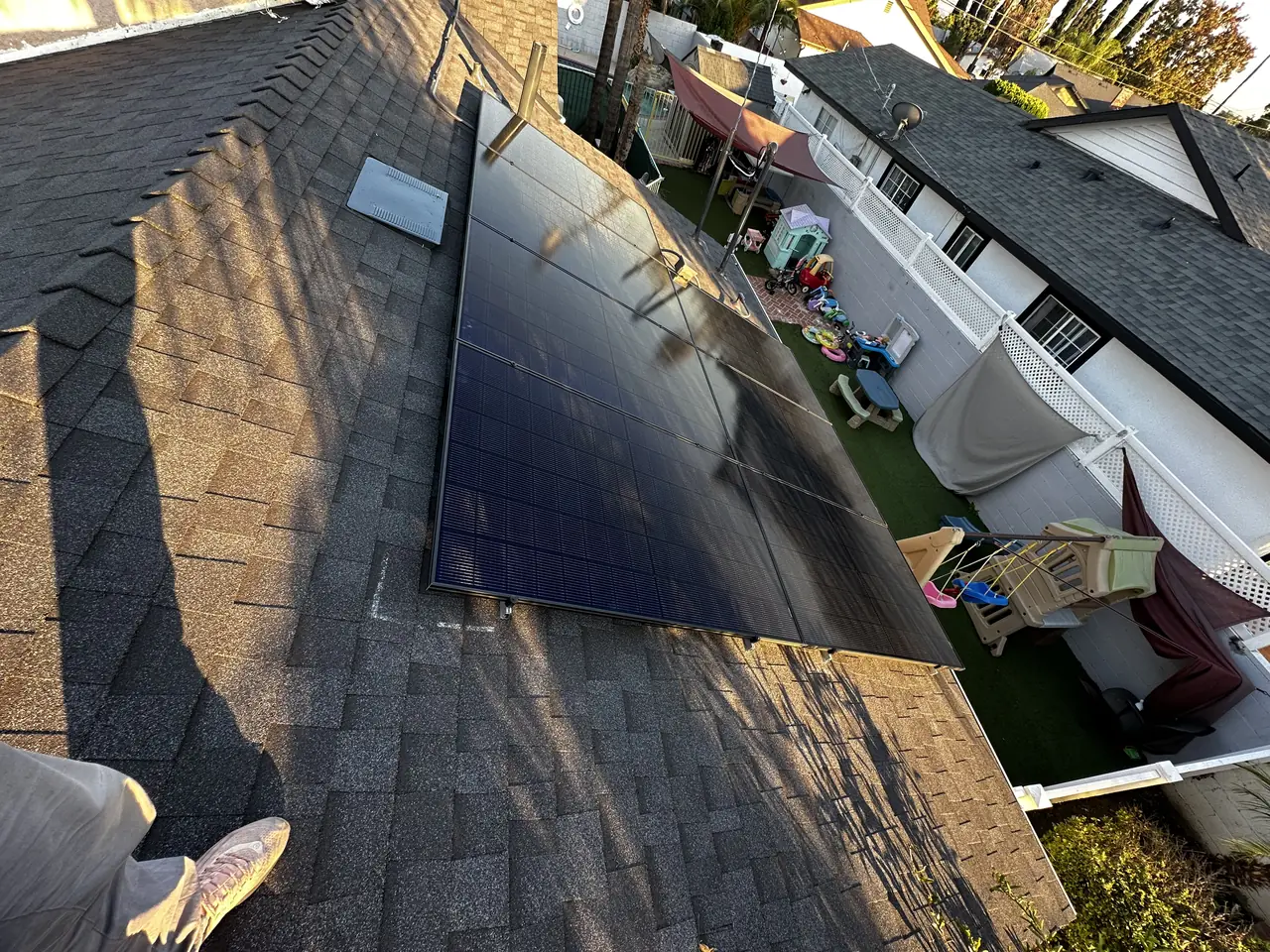
A house whose roof breaks into several small faces, so the array was split into four groups. On the wall under the patio roof, an Enphase combiner and a Tesla Powerwall side by side.
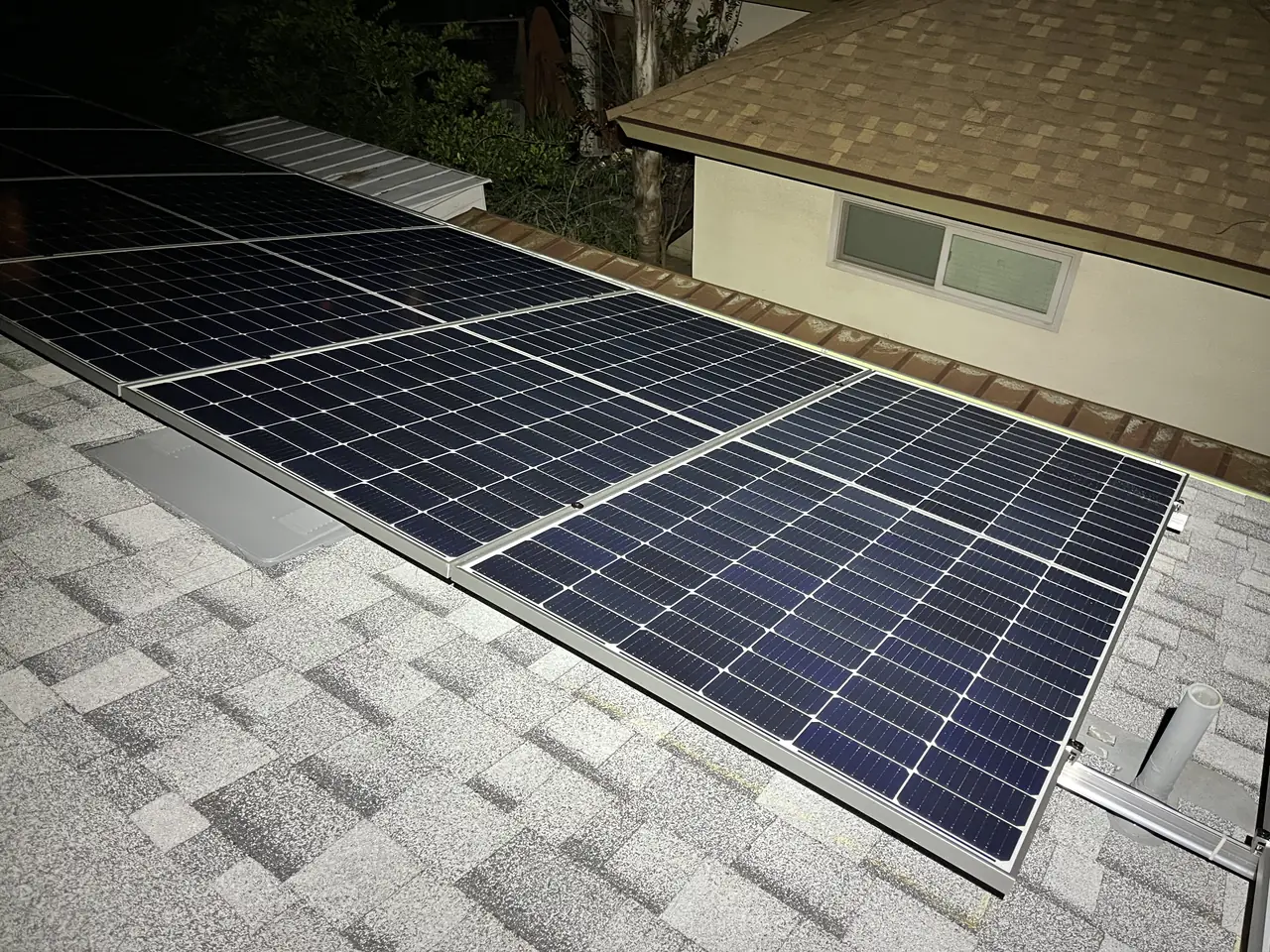
This San Fernando installation is 22 modules split into four sections across a shingle roof with several faces, each module with an Enphase microinverter, plus a Tesla Powerwall mounted on a covered patio wall next to the Enphase combiner. Cali Energy put the battery bracket on the wall first thing on 7 August 2025 and had the array and battery in place by the next morning. Because microinverters already turn the array's output into AC at the roof, the battery joins the system on the AC side.
At a glance
- Array
- 22 modules in four sections
- Microinverters
- Enphase, one per module
- Battery
- Tesla Powerwall, wall-mounted
- Roof
- Composition shingle, several faces
- Equipment location
- Covered patio wall
- Installed
- 7–8 August 2025
The story
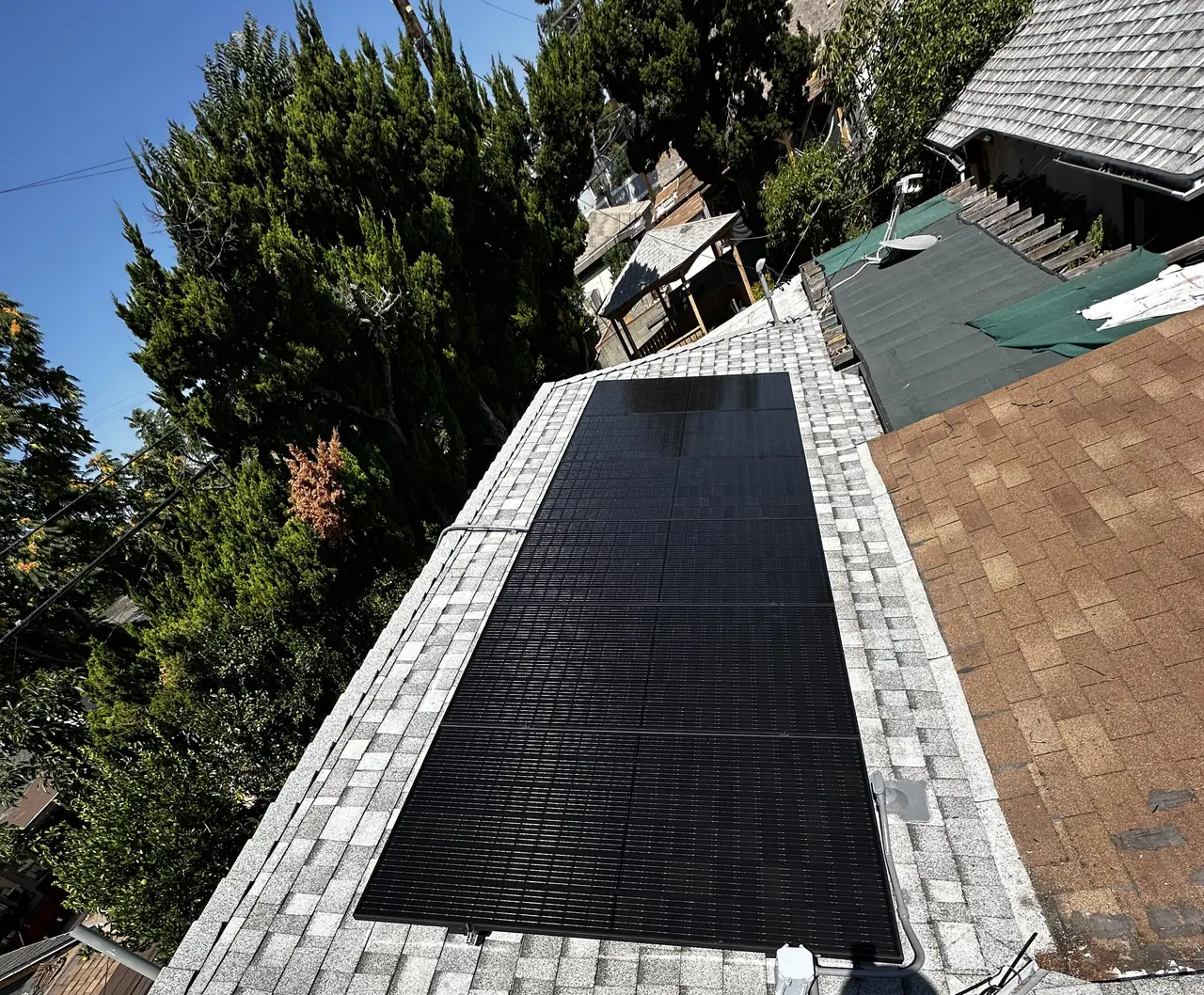
Some roofs offer one big rectangle. This one breaks into several smaller faces around its ridges and hips, so no single face could carry the whole array. The 22 modules were laid out in four sections instead, each on the face it fit. With a microinverter under each module, the sections on different faces do not drag each other down: every panel produces on its own.
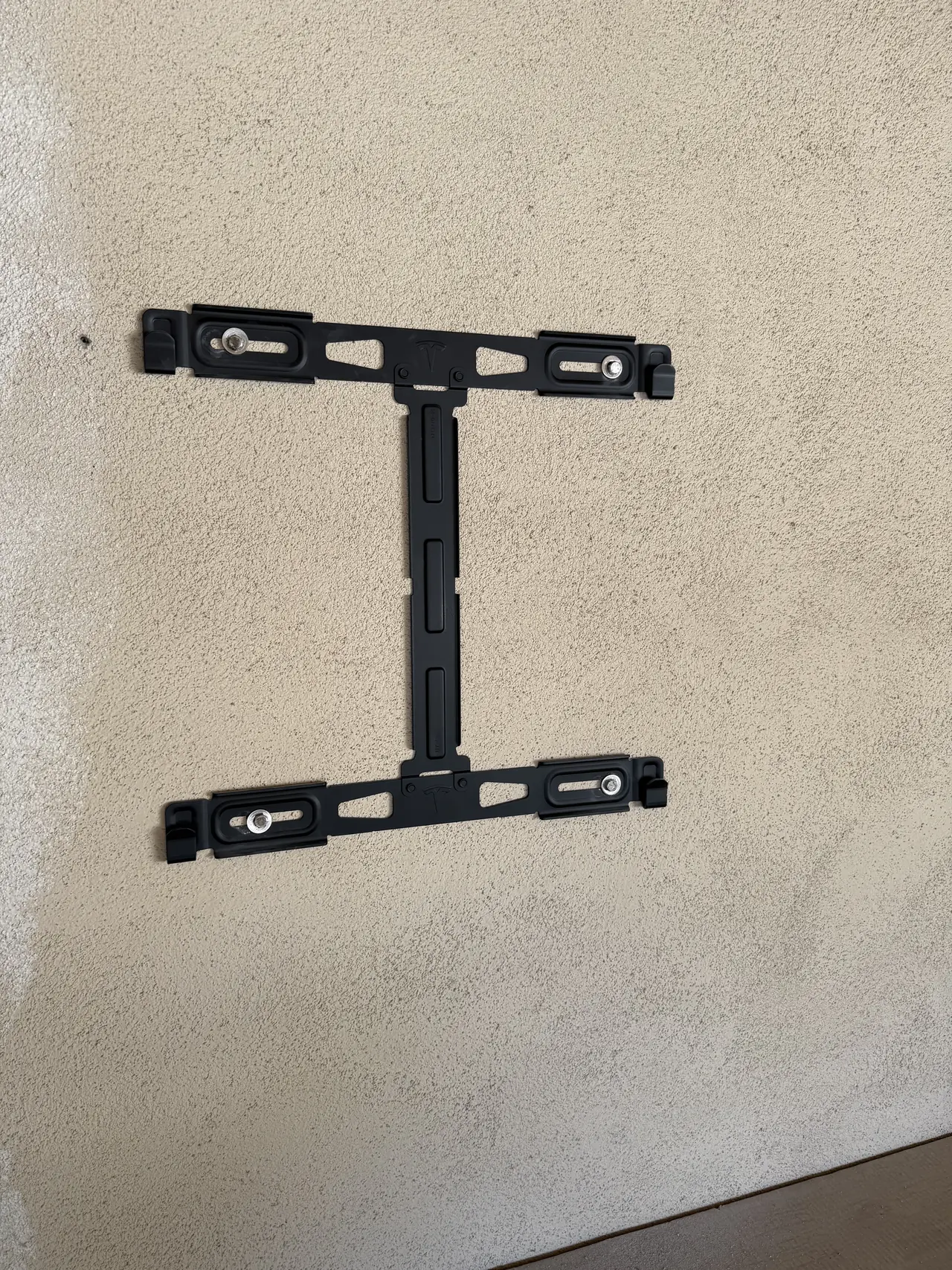
The battery work started before the roof work. By a quarter to ten on 7 August the wall bracket for the Powerwall was already fixed to the stucco under the patio roof. The bracket goes on first because everything around it, conduit routes, the combiner position, clearances, is laid out from where the battery will hang.
The patio wall is a sensible place for it: shaded by the roof over the patio, out of direct sun, reachable from the ground and close to the house's electrical service. The Enphase combiner went to the left of the battery and the Tesla gateway, which manages the battery and the switch to backup power, to its right, and the conduit between them runs in neat loops along the wall.
On a microinverter system the array's output is already household AC by the time it reaches the wall. A battery added to it charges and discharges on that same AC side, which is why an Enphase array and a Tesla battery can sit next to each other on one wall: they coexist in one AC-coupled installation, each with its own controls and monitoring. More on how the brands compare is in Powerwall vs Enphase vs FranklinWH, and on the general case in adding a battery to solar.
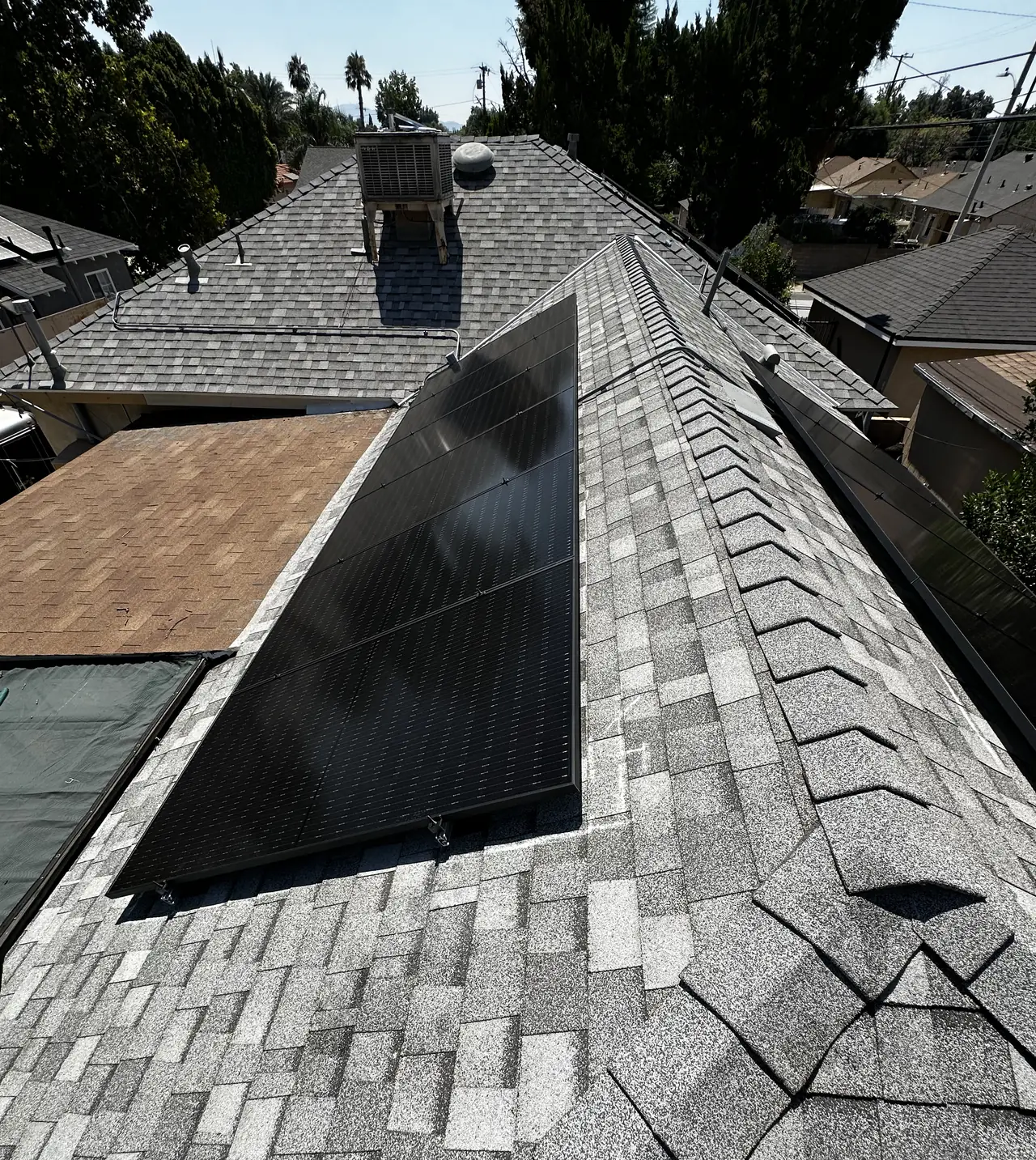
The array was on the roof and the battery on the wall by the morning of 8 August. The house now has solar in four sections of a complicated roof and storage on a shaded wall. On Southern California Edison, whose time-of-use plans price evening electricity highest, that means what the array makes in the afternoon is still there in the evening.
How it ran
| 7 August 2025, 9:47 am | Powerwall bracket fixed to the patio wall |
|---|---|
| 7 August | Mounts, rails and microinverters on four roof sections |
| 7 August, evening | Microinverter layout recorded |
| 8 August 2025, morning | Array, combiner and Powerwall in place |
Bracket first, roof second, all within two days.
What we did
- Laid the 22 modules out in four sections on the faces that could carry them.
- Mounted a microinverter under every module.
- Fixed the Powerwall bracket to the patio wall before the roof work began.
- Hung the Powerwall and mounted the Enphase combiner beside it.
- Ran the conduit between the enclosures along the wall.
- Recorded which microinverter sits under which module.
System specifications
| Modules | 22, in four sections |
|---|---|
| Microinverters | Enphase, one per module |
| Combiner | Enphase, on the patio wall |
| Battery | Tesla Powerwall, wall-mounted under a covered patio |
| Coupling | AC side, alongside the microinverter output |
| Roof | Composition shingle, several faces |
| Utility / AHJ | Southern California Edison / City of San Fernando |
Is your project like this one?
- Your roof is broken into several small faces.
- You want a battery and already have, or want, Enphase microinverters.
- You have a covered patio or garage wall that could hold equipment.
- You are on Southern California Edison and want stored solar for the evening.
- You want to know where a home battery should go.
Cali Energy in San Fernando
San Fernando is its own city, not a Los Angeles neighborhood: permits run through the City of San Fernando Building and Safety Division, interconnection through Southern California Edison.
San Fernando is on Southern California Edison, not LADWP like the Los Angeles neighborhoods around it, and that matters for a battery: how stored solar is credited and what the battery is worth depends on the utility's rules, which change at the city line.
- License and classifications: CSLB #1032379
- Official reference for this process: Southern California Edison — Net Energy Metering
- Official reference for this process: Tesla Energy Library — Powerwall operating temperature and siting
Frequently asked questions
Can a Tesla Powerwall work with Enphase microinverters?
Yes. Microinverters turn each module's output into AC at the roof, so the battery joins the system on the AC side and charges from the array's AC output. On this house an Enphase combiner and a Tesla Powerwall sit side by side on the same wall. The two brands monitor separately, so expect two apps.
Where should a home battery be mounted?
Where the manufacturer's installation manual and the local building and fire codes allow it: required clearances around the unit, distance from doors and windows, the wall and its fastening, and protection from vehicles all decide the spot. Within those limits shade helps; Tesla, for example, recommends keeping Powerwall out of direct sun where temperatures regularly exceed 104°F. Here it went on a stucco wall under a covered patio, beside the combiner.
Does a roof with many small faces work for solar?
It can, especially with microinverters. Each module produces on its own, so splitting the array across several faces costs a little more in mounts and wiring but does not drag the whole system down to its weakest face. This roof carries 22 modules in four sections, each on the face it fits.
Does Cali Energy install solar with batteries in San Fernando?
Yes. San Fernando is on Southern California Edison, and Cali Energy installs solar with batteries here, laying out the array around the roof and placing the battery where it is shaded and serviceable. Permits run through the City of San Fernando Building and Safety Division. License CSLB #1032379.
What this would look like on your roof
Planning solar in San Fernando? Tell us your utility, your roof and what your bill looks like now, and we will model what a system like this would do on your house before you commit to anything.
Or call +1 (323) 844-7777 · Cali Energy, Northridge · CSLB #1032379 (B, C-10, C-39) — design, permits, install and electrical under one licensed contractor.
Related
This timeline reflects this property and this permitting path. Updated October 2026.