

Sylmar, CA · October – November 2025 · LADWP / LADBS
Forty-four modules. Three directions.
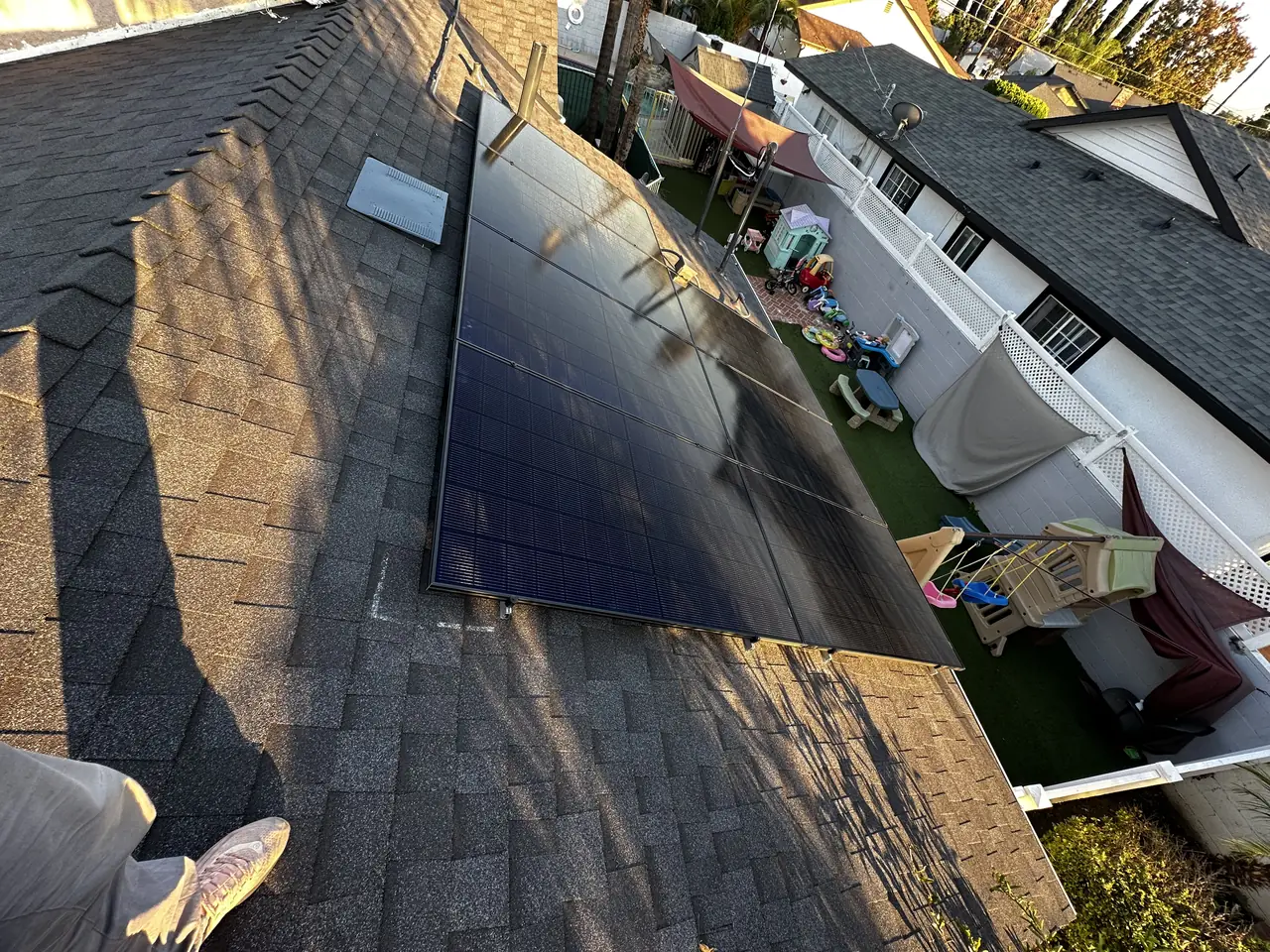
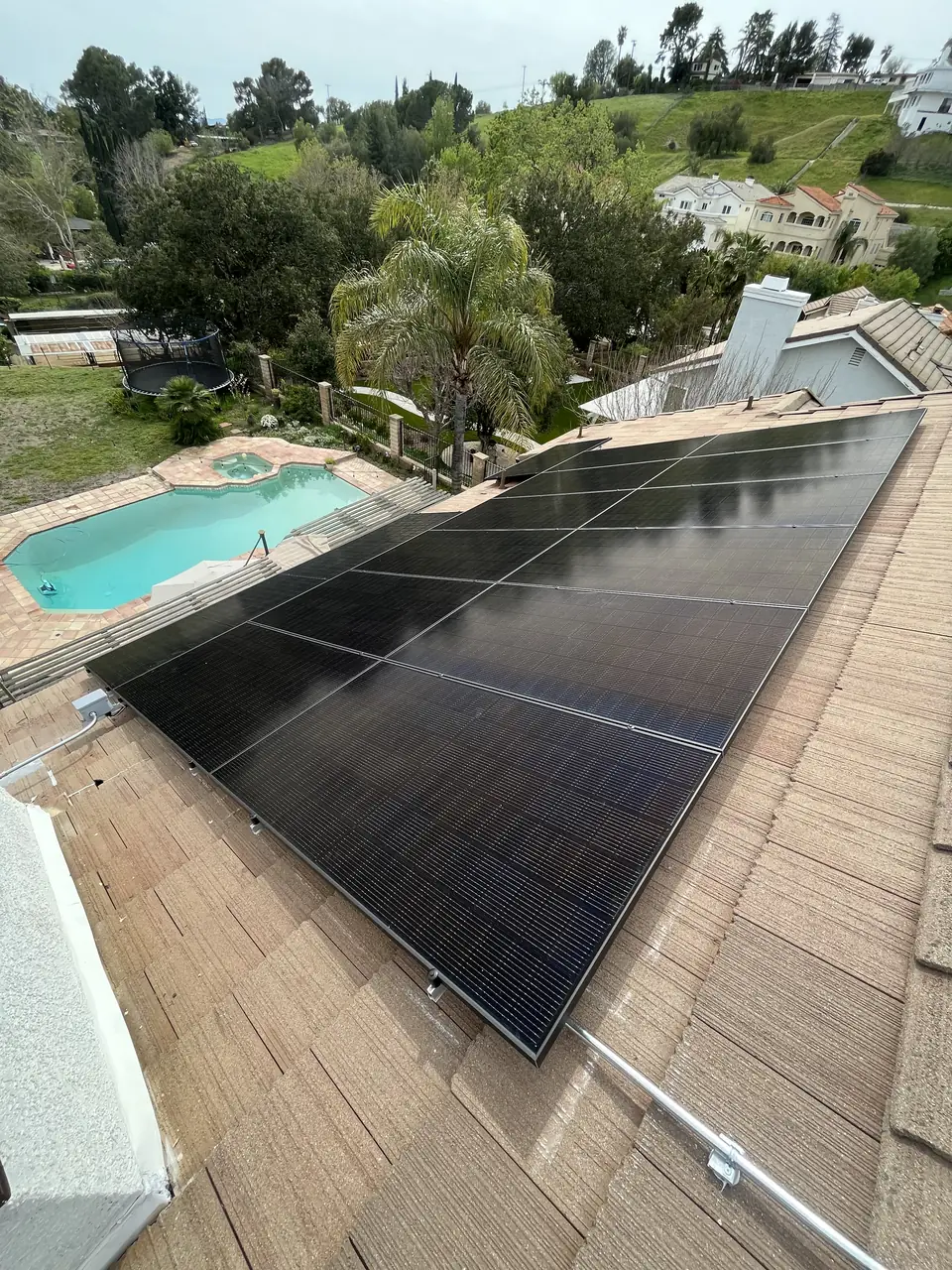
A 19.58 kilowatt DC system on a Sylmar house with a pool. The roof does not offer one big south slope, so the array was split three ways — twenty-six modules east, eleven west, seven south.
A house without one large south-facing plane can still carry a large array. The array is split across the planes the roof actually has, and each group keeps its own orientation. On this project microinverters were the architecture chosen for that; a multi-MPPT string design can also serve different roof planes.
At a glance
- DC System
- 19.58 kW
- AC System
- 16.834 kW CEC
- Modules
- 44 × 445 W
- Inverters
- 44 × Enphase IQ8A
- Arrays
- 26 east, 11 west, 7 south
- Est. first-year output
- 30,317 kWh
- Offset
- 114% of use
- Utility / AHJ
- LADWP / LADBS
The story
Forty-four Canadian Solar 445-watt modules is a large residential array by any measure — 19.58 kilowatts DC, 16.834 kilowatts AC-CEC. The question on this house was never whether the roof could hold them. It was which roof.
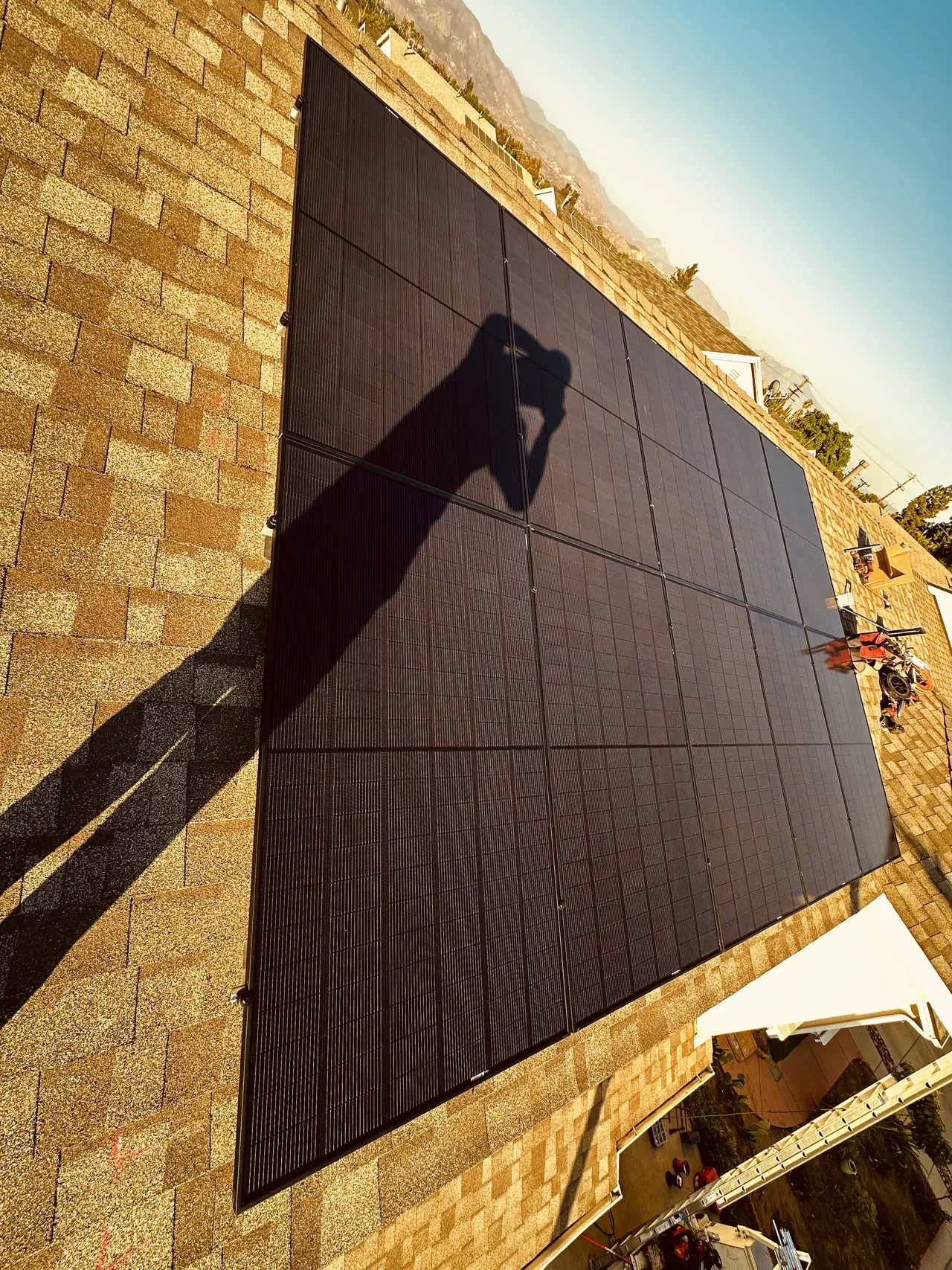
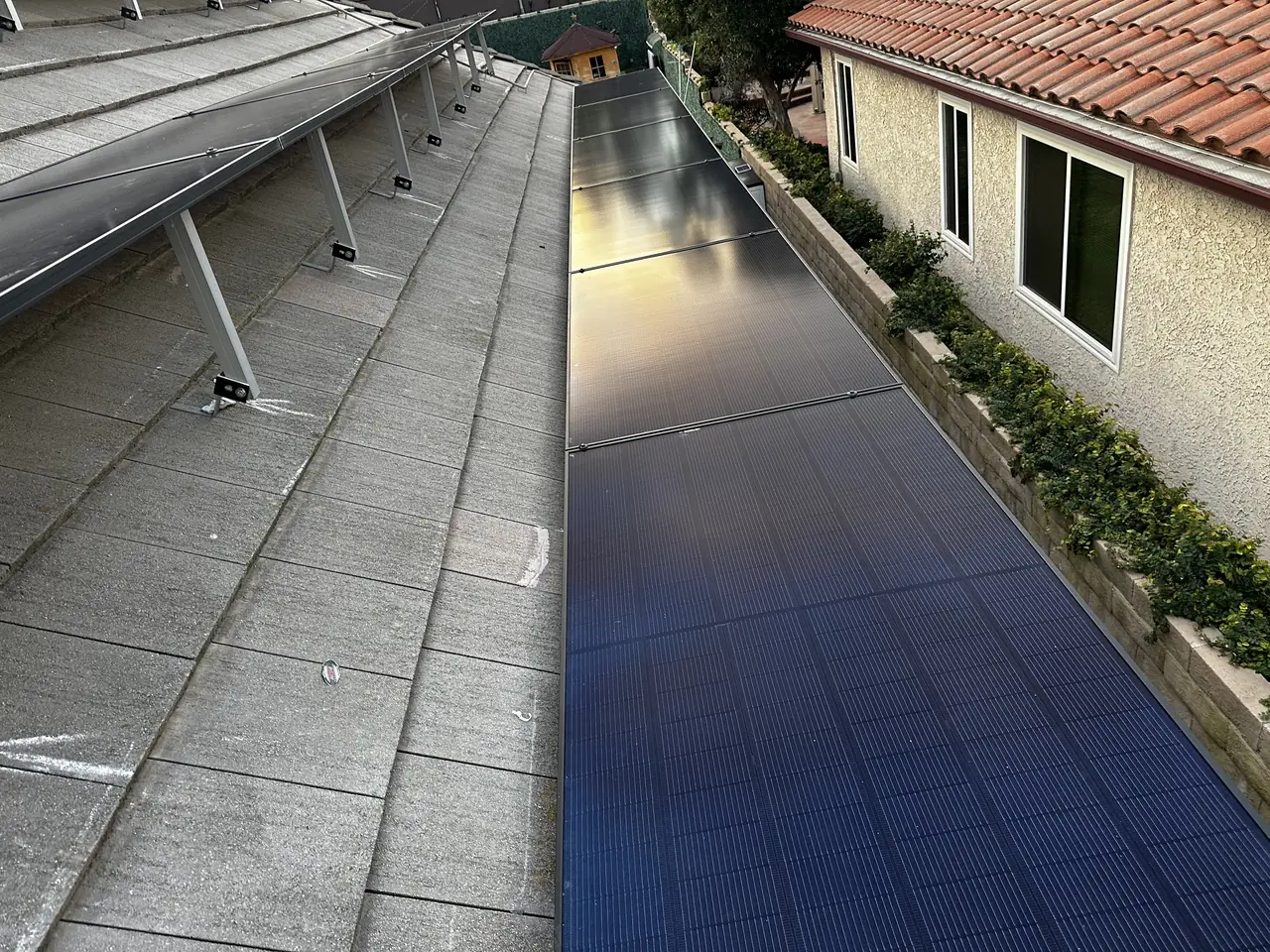
The house has a pool and a wide footprint, and the roof it presents is a set of planes rather than one slope. Twenty-six modules went on the east-facing plane at 94 degrees, eleven on the west at 274, and seven on the south at 184. All three groups sit flush at the roof pitch, 18.43 degrees — no tilt frames, nothing standing above the roofline.
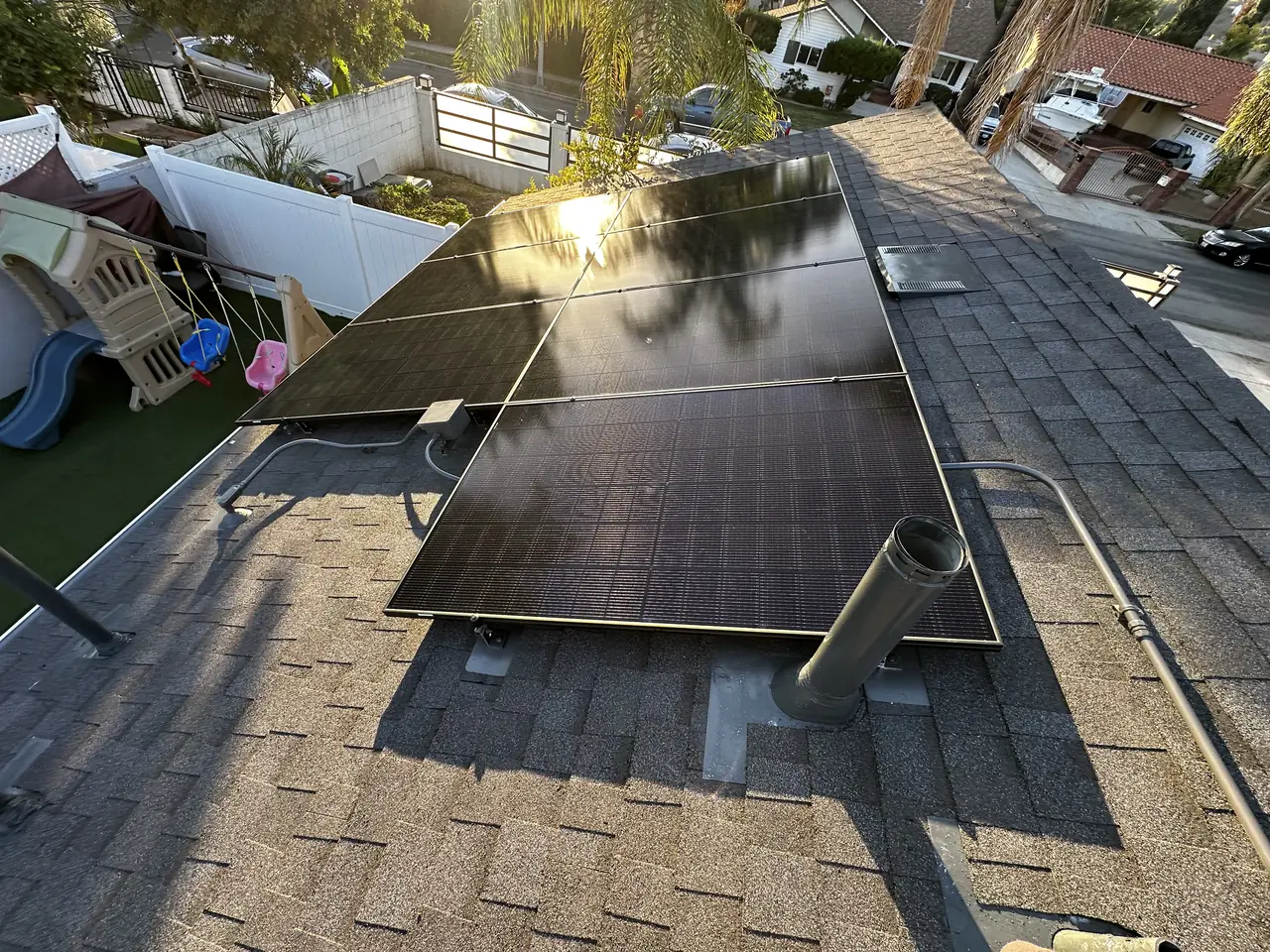
Splitting an array three ways changes what the electronics have to do. East produces in the morning, west in the afternoon, south through the middle of the day, and they never peak together. Every module here has its own Enphase IQ8A microinverter, which gave this array module-level tracking and module-level monitoring across all three orientations. A properly designed string system with several independent MPPT inputs can also serve different roof planes; microinverters were the architecture selected here.
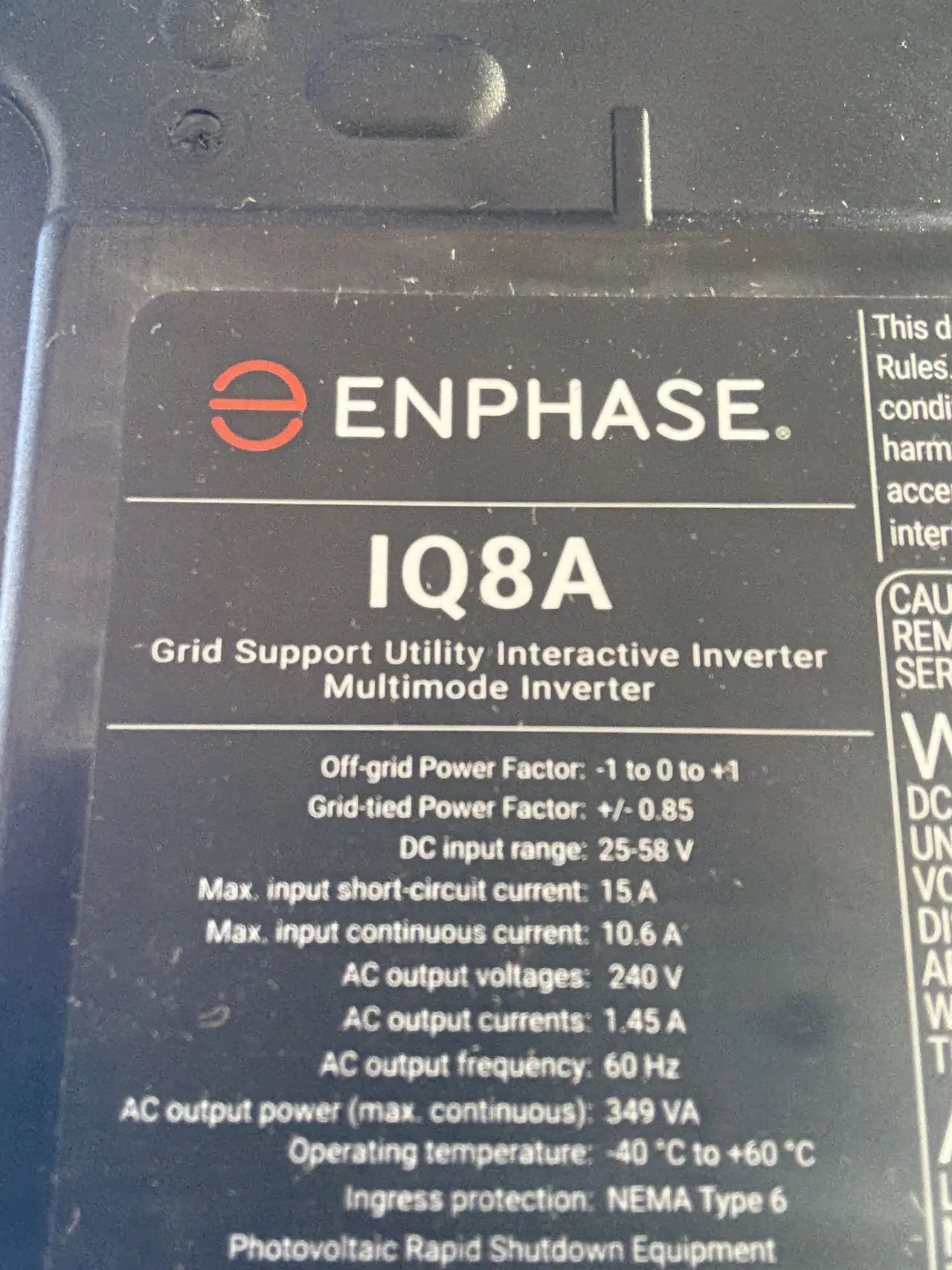
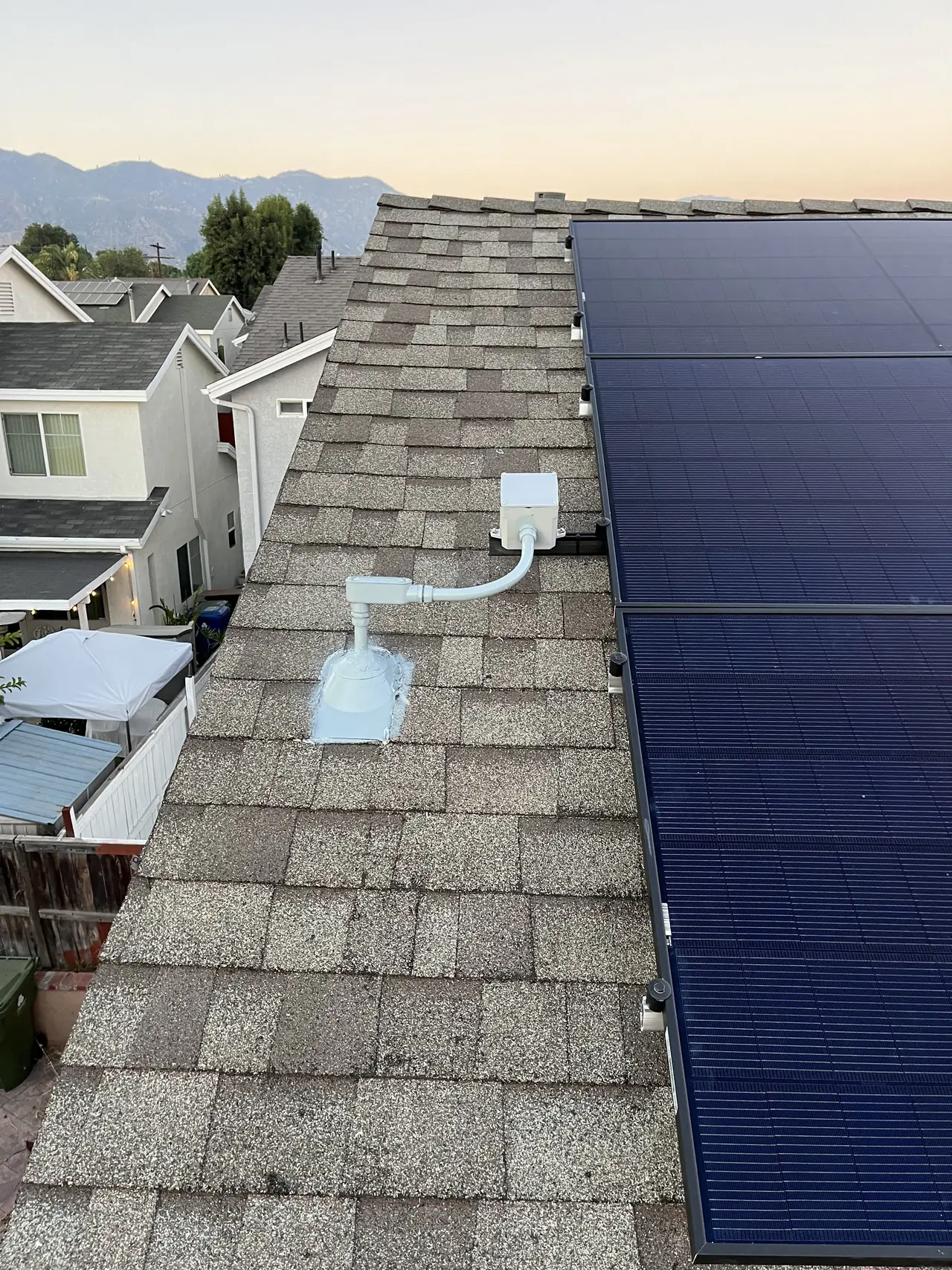
Because the modules produce alternating current on the roof, the array comes down to a single combiner. The finished system runs at 240 volts with a maximum current of 63.8 amps on the solar side.
The design was estimated at 30,317 kilowatt-hours in the first year, which the proposal put at 114 percent of what the household was using. A number above 100 percent is a design choice, not an accident: it leaves room for the house to use more later without a second project.
Contract on the thirteenth of October. Interconnection application on the twentieth. Building department inspection requested on the twenty-eighth, the utility's site evaluation closed the day after, final release and interconnection review both cleared on the third of November, net meter on the twenty-first. Under six weeks from signature to permission to operate.
How it ran
| 13 October 2025 | Contract signed after the final layout was agreed |
|---|---|
| 20 October 2025 | Interconnection application filed; utility fees paid |
| 28 October 2025 | Building department inspection requested |
| 29 October 2025 | Utility site evaluation completed |
| 3 November 2025 | Building department final release; interconnection review completed |
| 21 November 2025 | Permission to operate; net meter set |
The calendar runs from the signed contract to permission to operate and covers permitting, installation, inspection and utility processing rather than time spent on the roof alone.
What we did
- Split the array across the three usable roof planes instead of forcing one block.
- Set all forty-four modules flush at the roof pitch, with nothing standing above the roofline.
- Installed a microinverter under every module so the east, west and south groups run independently.
- Brought the array to a single combiner and sized the solar side at 240 volts and 63.8 amps.
- Filed the interconnection application the week the contract was signed.
- Carried the project through building department release to the net meter.
System specifications
| DC system | 19.58 kW |
|---|---|
| AC system | 16.834 kW CEC |
| Modules | 44 × Canadian Solar TOPHiKu6 CS6.2-48TM, 445 W |
| Inverters | 44 × Enphase IQ8A-72-2-US, one per module |
| Arrays | 26 at 94° east, 11 at 274° west, 7 at 184° south |
| Tilt | 18.43°, flush to the roof |
| Solar side | 240 V, 63.8 A maximum current |
| Roof | Composition shingle, three planes |
| Estimated first-year production | 30,317 kWh — 114% of use |
| Battery | None |
| Utility / AHJ | LADWP / LADBS |
Is your project like this one?
- Your roof faces several directions and none of them is a big clean south slope.
- You have been told your house cannot take a large array.
- You have a pool, air conditioning or an electric car and your bill is large.
- You want to know what each group of panels is doing, not just the system total.
- Your Sylmar property is served by LADWP, while permits are handled by LADBS.
Cali Energy in Sylmar
Sylmar is inside City of Los Angeles boundaries: permits run through LADBS, interconnection through LADWP.
Lots here are wide and the houses on them rarely give you one clean south-facing plane, so a large array is usually several arrays.
This installation is on the Sylmar projects page alongside the others, and what the work covers is set out on the Sylmar service area page.
- License and classifications: CSLB #1032379
- Official reference for this process: LADWP interconnection requirements
Frequently asked questions
Can solar panels face east and west instead of south?
They can, and on many houses they have to. On this roof twenty-six modules face east, eleven face west and seven face south. East and west groups produce earlier and later in the day than a south group, which spreads production out rather than concentrating it at noon. The design was estimated at 30,317 kilowatt-hours in the first year.
Why put a microinverter under every panel on a big array?
Because the groups never peak together, and this design answered that with module-level tracking and module-level monitoring across all three orientations. It is not the only way: a string inverter with several independent MPPT inputs can also handle different roof planes. Microinverters were the architecture selected for this array.
What does a 19 kilowatt system cover?
On this house the estimate was 114 percent of the household's annual use. Sizing above 100 percent is deliberate on a property with a pool: it leaves headroom for more load later without going back for a second project and a second interconnection.
How long does a large system take to switch on in Los Angeles?
This one ran under six weeks from signed contract to permission to operate: application on 20 October, building department final release on 3 November, net meter on 21 November 2025. Size does affect the route: LADWP applies additional requirements above 10 kilowatts AC-CEC, so a system this size carries more documentation than a small one.
Does Cali Energy install large residential arrays in Sylmar?
Yes. Sylmar is inside City of Los Angeles boundaries, so permits run through LADBS and interconnection through LADWP. This project is one of the larger residential systems we have taken through that process.
What this would look like on your roof
Planning solar in Sylmar? Tell us your utility, your roof and what your bill looks like now, and we will model what a system like this would do on your house before you commit to anything.
Or call +1 (323) 844-7777 · Cali Energy, Northridge · CSLB #1032379 (B, C-10, C-39) — design, permits, install and electrical under one licensed contractor.
Related
This timeline reflects this property and this permitting path. Updated September 2026.