

Solar with SCE — the Solar Billing Plan, in practice
SCE is an investor-owned utility, so new solar connects under California’s Solar Billing Plan — the tariff most people call NEM 3.0. Exported power is credited at hourly values instead of the retail rate, which changes how a system should be designed. Here is what that means for your project, and what we file with SCE on your behalf.
Get a free solar estimateWhat changed for SCE solar, and why it matters
Southern California Edison is an investor-owned utility regulated by the California Public Utilities Commission, so it follows the state’s decisions on solar. New systems connect under the Solar Billing Plan — the net billing tariff most people still call NEM 3.0. The core difference from the old net metering: power you export is no longer credited at the retail rate. It is credited at export values that vary by hour and season, and those values are generally well below what you pay to buy the same power back.
That single change reshapes system design. Under old net metering the grid acted like a perfect battery, so the goal was simply to produce as many kilowatt-hours as possible. Under the Solar Billing Plan, the power you use directly and the power you store for the evening are worth far more than the power you export at midday. A system designed the old way, on an SCE address, quietly gives away its best production.
Deeper reading in the blog: how SCE solar billing works, NEM 3.0 explained and NEM 2.0 vs NEM 3.0.
What an SCE solar bill is made of
| Line | What it is |
|---|---|
| Imported energy | Power you pull from the grid, priced by your time-of-use rate plan — expensive in the late-afternoon and evening peak. |
| Export credits | Power your system sends back, credited at hourly export values rather than at retail. Midday exports in mild months are worth the least; evening exports are worth the most. |
| Base Services Charge | A fixed monthly charge that exists regardless of how much solar you produce — SCE describes it as covering the cost of connecting you to the grid and supporting income-qualified programs — along with taxes and fees. |
| Annual settlement (True-Up) | Charges are billed monthly and export credits are applied to those monthly bills; eligible unused credits carry forward through the 12-month period, and once a year a settlement bill trues everything up — in the same month your system started service. |
Source: SCE — Solar Billing Plan, checked August 31, 2026.
Two SCE details that catch people out
You move to TOU-D-PRIME
SCE places Solar Billing Plan customers on the TOU-D-PRIME time-of-use rate. Going solar therefore changes how you are billed for the power you still buy, not just how much — evening hours become the expensive ones, which is exactly when most households cook, cool and charge.
The Energy Export Bonus Credit
SCE states that eligible customers who enroll before 2028 receive an additional export credit of about 4¢ per kWh for residential customers and about 9¢ per kWh for income-qualified customers. Worth knowing the window exists — but eligibility and final values are determined by SCE, so confirm your case with them rather than with any installer’s sales pitch.
Both confirmed on SCE’s Solar Billing Plan page, checked August 31, 2026.
Two things that change the picture entirely
- If you buy power from a CCA rather than SCE. In much of SCE territory a Community Choice Aggregator supplies the energy while SCE still delivers it, and Direct Access customers differ again. Generation credits and charges then come from two parties, and the solar arithmetic changes with them — check which supplier appears on your bill.
- If you are on CARE or FERA. Income-qualified discounts change the price of the power you buy, and therefore the value of every kilowatt-hour your system offsets — and, per SCE, income-qualified customers on the Solar Billing Plan may receive the larger export bonus credit. It does not disqualify you from solar; it changes the numbers, so the modeling has to use your actual discounted rate.
How an SCE solar project runs
| # | Stage | What happens |
|---|---|---|
| 01 | Design against export values | Sized to your usage pattern and rate plan, with the value of self-consumption and storage weighed against export credits — not just maximum production. |
| 02 | Permits | Plans filed with your city or county building and electrical departments, and the fire department where required. |
| 03 | Rule 21 interconnection application | SCE’s interconnection process for customer-owned generation, filed and followed up by us. |
| 04 | Installation | Racking, panels, inverter, disconnects and wiring, built to the approved plans. |
| 05 | Inspection | The jurisdiction signs off on the build. |
| 06 | SCE review and Permission to Operate | SCE authorizes the system to run and enrolls it on the Solar Billing Plan. Final payment is due here — not before. |
Why storage carries more weight on SCE
When exports are credited below retail and evening power is the most expensive of the day, a battery stops being a luxury item and starts being a design decision. Stored midday production covers the evening peak instead of being sold cheaply at noon and bought back dearly at seven. That is the arithmetic behind most SCE solar-plus-storage projects, and it is worth doing with your own numbers rather than a rule of thumb — the honest answer depends on your usage shape, your rate plan and the system cost.
We install Tesla Powerwall and Enphase IQ batteries, with new systems or added to existing ones. See do you need a battery under NEM 3.0 and adding a battery to an existing system.
Our SCE work, in numbers
Counted from our own project archive, not from industry averages.
How we count: one record per job folder tied to a service address, across the 11 cities listed below that our database maps to SCE territory. Utility is assigned by city, not verified per address from a bill or interconnection record. A few addresses carry more than one record, where we came back for separate work. Snapshot taken August 31, 2026 — download the city-by-city breakdown (CSV).
Three documented SCE-area solar-plus-storage projects
Selected examples of storage builds, not a sample of all our SCE work.
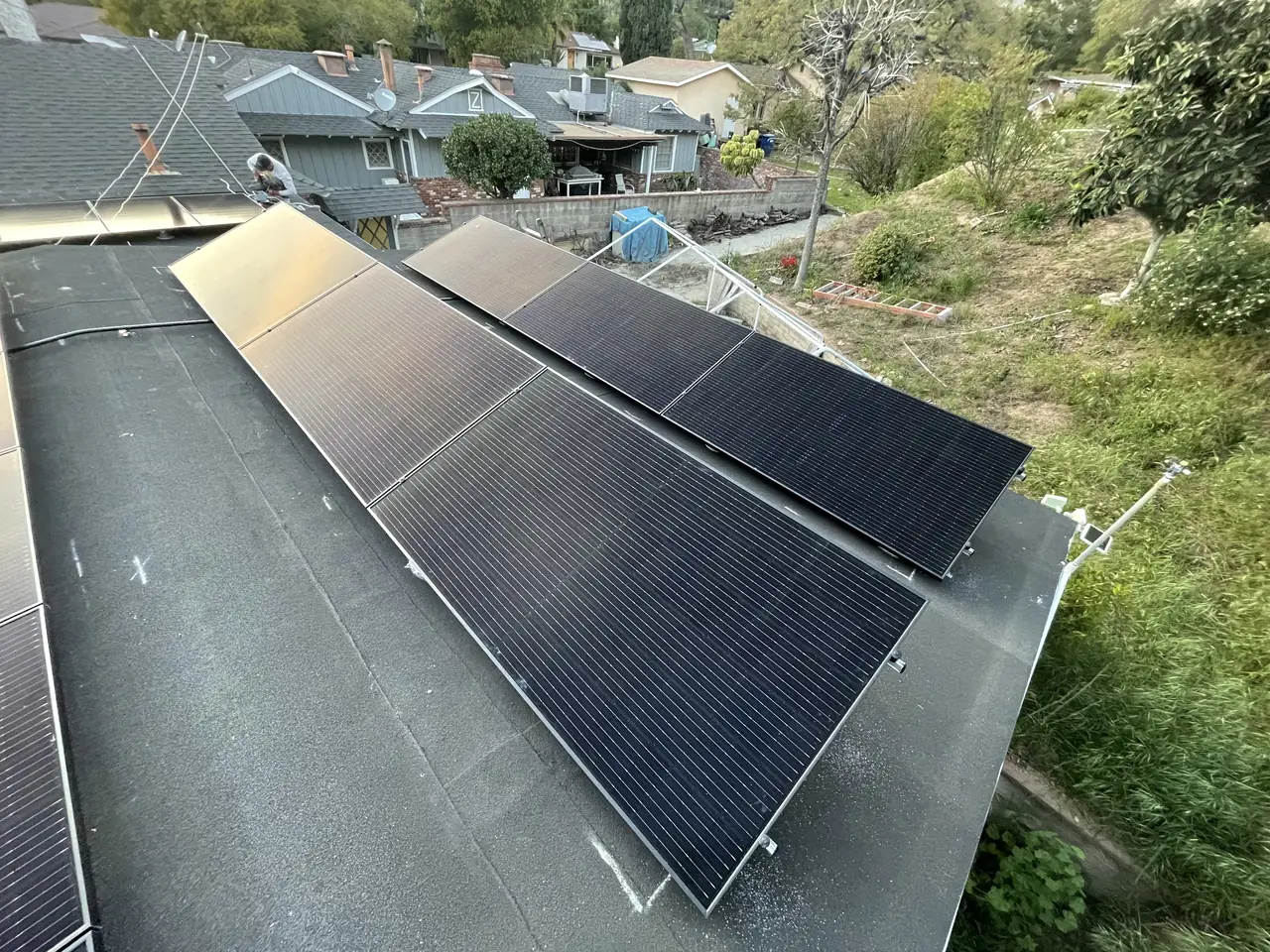
13.77 kW with storage — Monrovia, 2023
34 QCells panels, Enphase IQ8M microinverters and an Enphase IQ Battery 10, on a flat roof — solar and storage designed together on an SCE address.
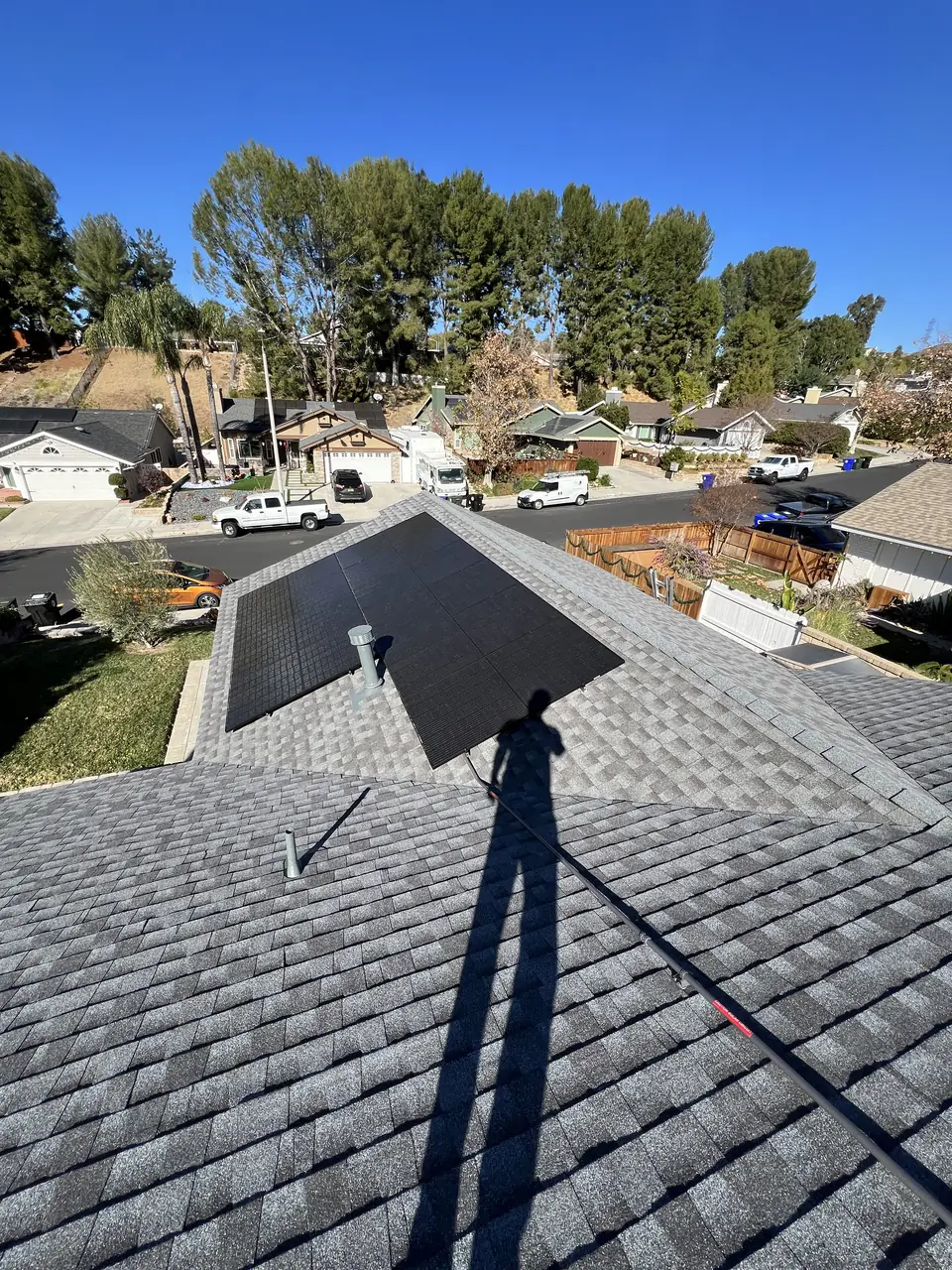
11.34 kW with four batteries — Santa Clarita
28 Q CELLS 405 W panels, Enphase IQ8M microinverters and four IQ Battery 5P units — one of the larger storage capacities we have installed on a residential SCE address.
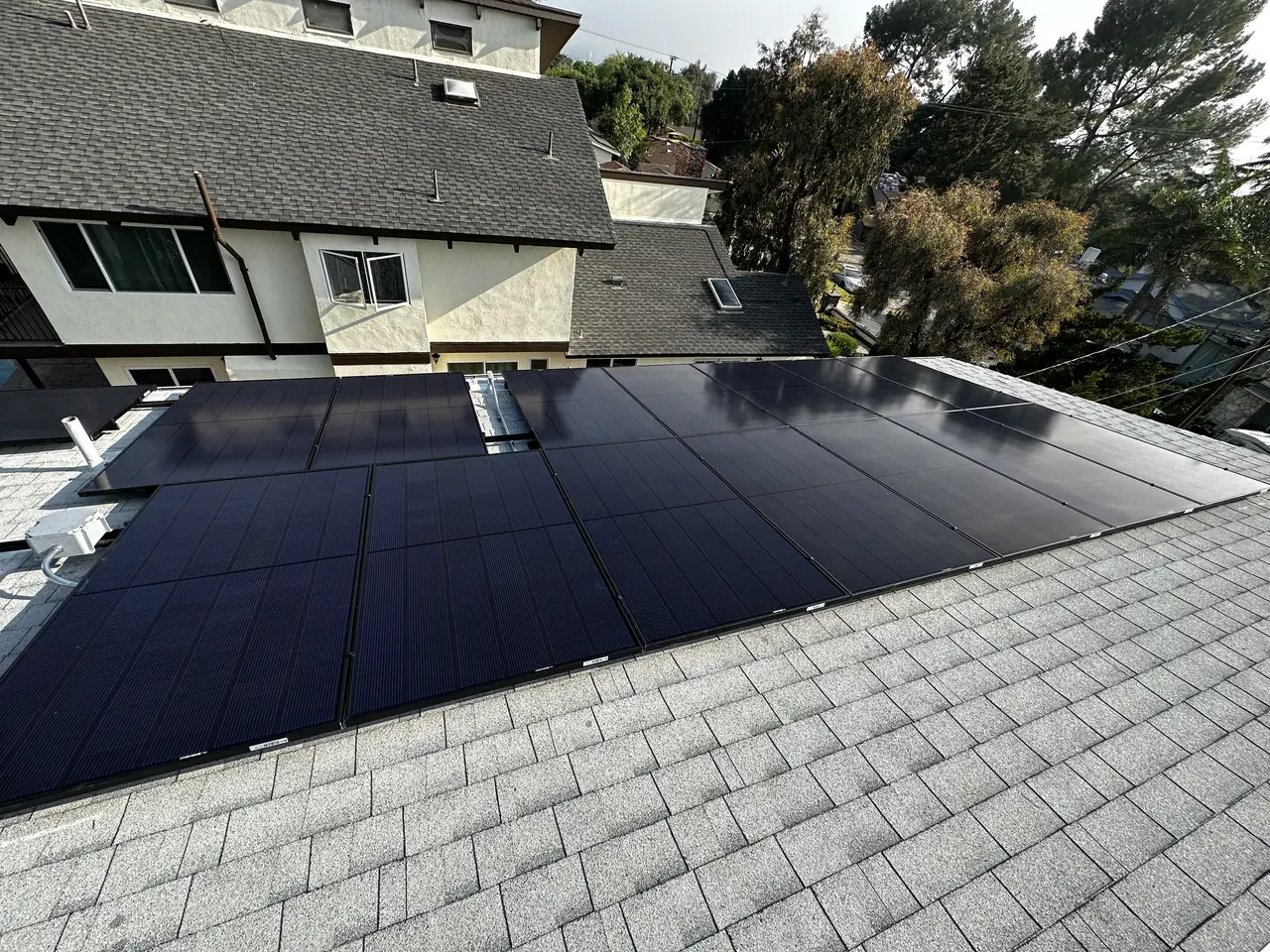
Solar with two LG RESU batteries — Altadena, 2023
A SolarEdge system paired with two LG RESU batteries on composition shingle, installed in 2023 for backup capability in SCE territory.
Our SCE-area cities
11 cities in SCE territory with completed work documented.
Frequently asked
What is the Solar Billing Plan, and is it the same as NEM 3.0?
Yes — the Solar Billing Plan is the net billing tariff commonly called NEM 3.0. It applies to new solar customers of California’s investor-owned utilities, SCE included. Instead of crediting exports at the retail rate, it credits them at export values that vary by hour and season.
Does solar still make sense on SCE under NEM 3.0?
For many homes it does, but the design has to change. Because exports are worth less than retail power, the value shifts toward what you use directly and what you store for the evening. A system copied from a NEM 2.0-era design gives away its best production — which is why the modeling matters more than it used to.
Do I need a battery with SCE solar?
Not always, but far more often than on a municipal utility. Evening power is the most expensive of the day and midday exports earn the least, so storing production instead of exporting it is frequently what makes the numbers work. Whether it pays in your case depends on your usage shape, rate plan and system cost — we run that with your bills, not a rule of thumb.
What is Rule 21?
Rule 21 is SCE’s interconnection tariff — the process by which customer-owned generation is reviewed and authorized to connect to the grid. We prepare and file the application and follow it through to Permission to Operate.
Am I grandfathered if I already have solar on NEM 2.0?
Existing NEM 2.0 customers keep their terms for a defined period from their original permission to operate, and adding capacity can affect that status. Before expanding an older system, check what it does to your grandfathering — we cover the details in our NEM 2.0 grandfathering guide.
Why does my SCE solar bill change so much month to month?
Charges are billed monthly, and both the price of imported power and the value of export credits vary by season and time of day. Eligible unused export credits carry forward through the 12-month period, and once a year — in the month your system started service — SCE issues a settlement, or True-Up, bill. So a single month is a poor measure of how the system is doing; the annual settlement is the real scoreboard.
Which rate plan am I on with SCE solar?
SCE places Solar Billing Plan customers on the TOU-D-PRIME time-of-use rate. That means going solar changes how you are billed for the power you still buy — evening hours cost the most — which is why the design has to account for when your household actually uses power, not only how much.
Related reading
Sources
SCE program details come from the utility’s own published materials and CPUC tariff documents, checked August 31, 2026. Tariffs and program terms belong to SCE and the CPUC and change on their schedule.
- SCE — Solar Billing Plan (billing, TOU-D-PRIME, export bonus credit)
- SCE — Solar Billing Plan FAQs (including CCA and Direct Access)
- CPUC — net energy metering and net billing
- SCE — Energy Management Center (Green Button interval data)
- SCE — residential time-of-use rate plans
- SCE — baseline allowance regions
- SCE — rate and tariff information
- CSLB license lookup — Cali Energy #1032379
Send an SCE bill and we’ll model it properly
Twelve months of bills show the seasonal shape of your usage. If you can also pull your interval data from SCE’s Green Button download, we can see when the house actually uses power — which is what decides whether storage earns its place on an SCE address. You get a line-item quote either way, including the version without a battery.
Get a free solar estimate+1 (323) 844-7777
Free site assessment · No obligation · We won’t spam or sell your number
Prepared by Cali Energy, August 31, 2026. General information, not legal, tax or financial advice. Tariffs, export values and interconnection requirements are set by SCE and the CPUC and change on their schedule; confirm current terms before deciding. See our Content Disclaimer. Cali Energy · 19201 Parthenia St, Unit E, Northridge, CA 91324 · +1 (323) 844-7777 · CSLB #1032379 (B, C-10, C-39)