

Glendale, CA · January 2026 – May 2026 · Glendale Water & Power / City of Glendale
The solar went on in December. The battery came in May.
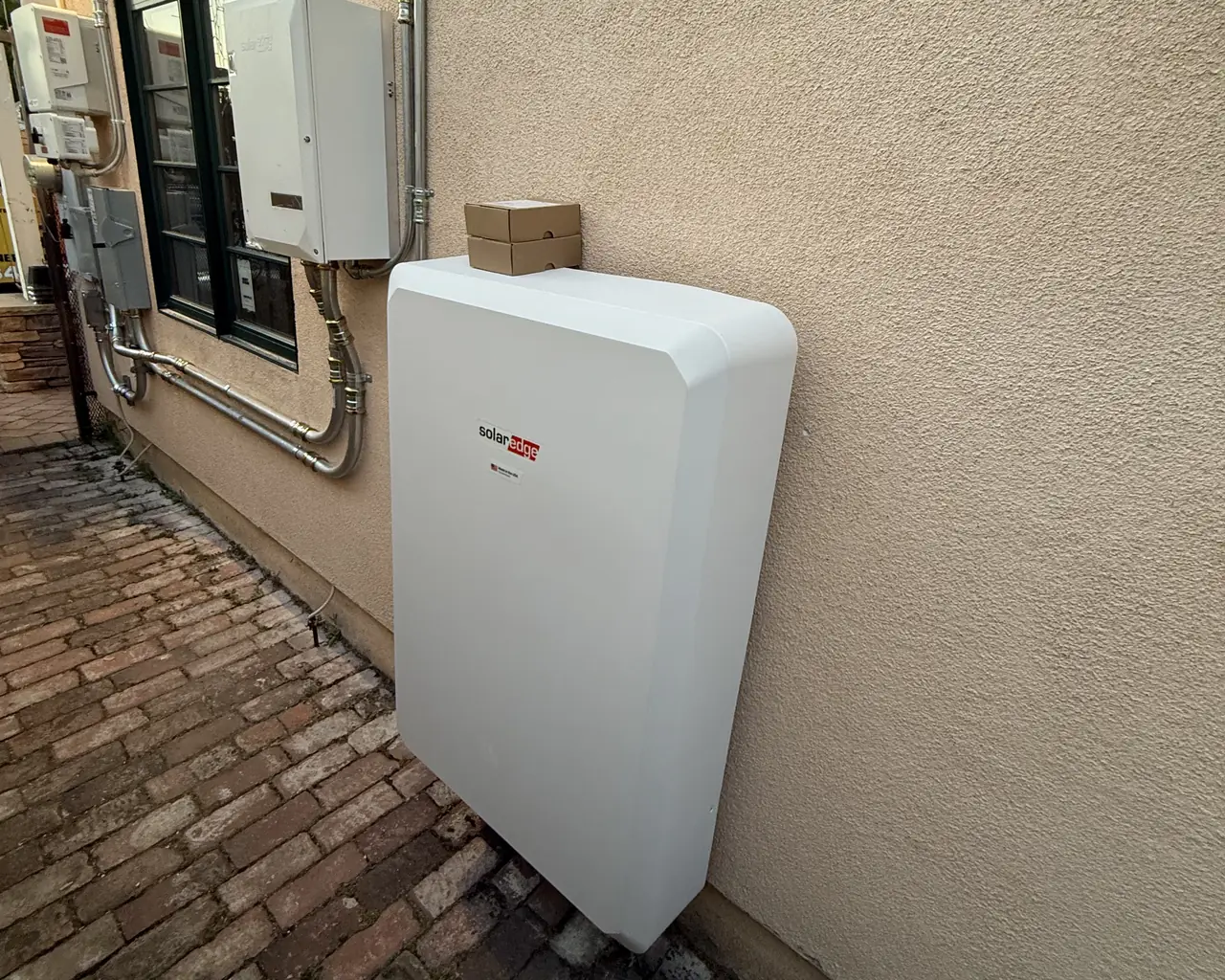
Five months after the array on this Glendale hillside house was switched on, a SolarEdge battery went on the wall beside the inverter, with a backup panel carrying seven chosen circuits. Second permit, second inspection, and the utility released the storage six days after the final.
A battery does not have to be bought with the solar. Added later, it is a separate project: its own plan set and permit with the city, its own final, and in Glendale its own energy-storage permission from Glendale Water & Power. The design work is choosing which circuits the battery will carry when the grid is down — here seven, wired to their own backup panel — and leaving the rest on the grid.
At a glance
- Solar
- SolarEdge inverter with optimizers, switched on 6 January 2026
- Battery
- SolarEdge Home battery, wall-mounted outside
- Backup
- Partial — seven circuits on a dedicated backup panel
- Permit
- Separate from the solar permit
- Final to release
- Six days
- Utility / AHJ
- Glendale Water & Power / City of Glendale
The story
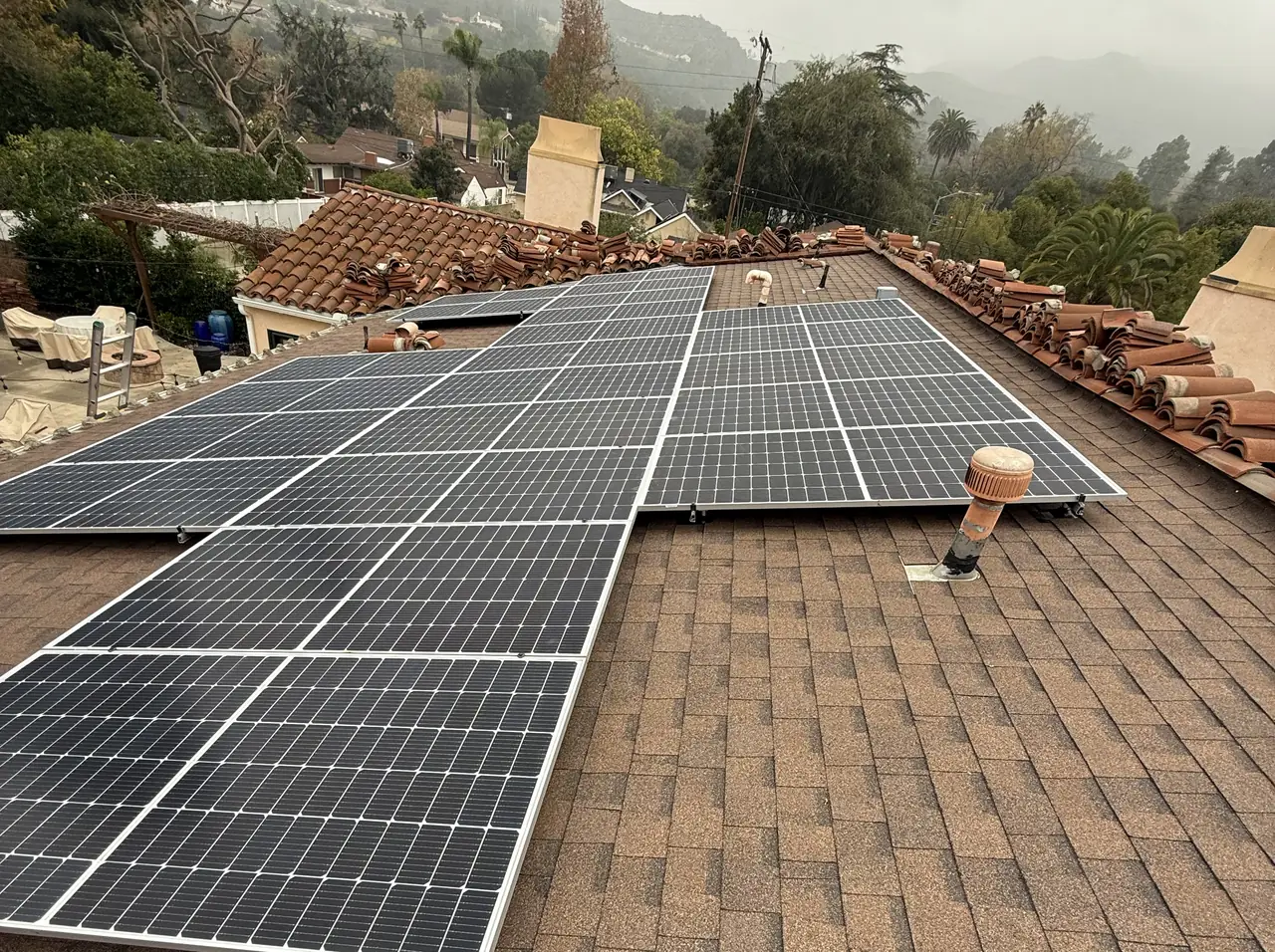
The array on this house came first: a Spanish tile roof with the array footprint re-roofed in shingle, modules on the week before Christmas, permission to operate on the sixth of January. What follows is the battery, because the homeowner wanted backup and had chosen to do the solar first.
That order is common and it is fine. What it means in practice is that the battery is a second project. It gets its own plan set and its own permit from the city, and Glendale Water & Power handles it as an energy-storage interconnection with its own permission at the end. None of the solar paperwork carries over.
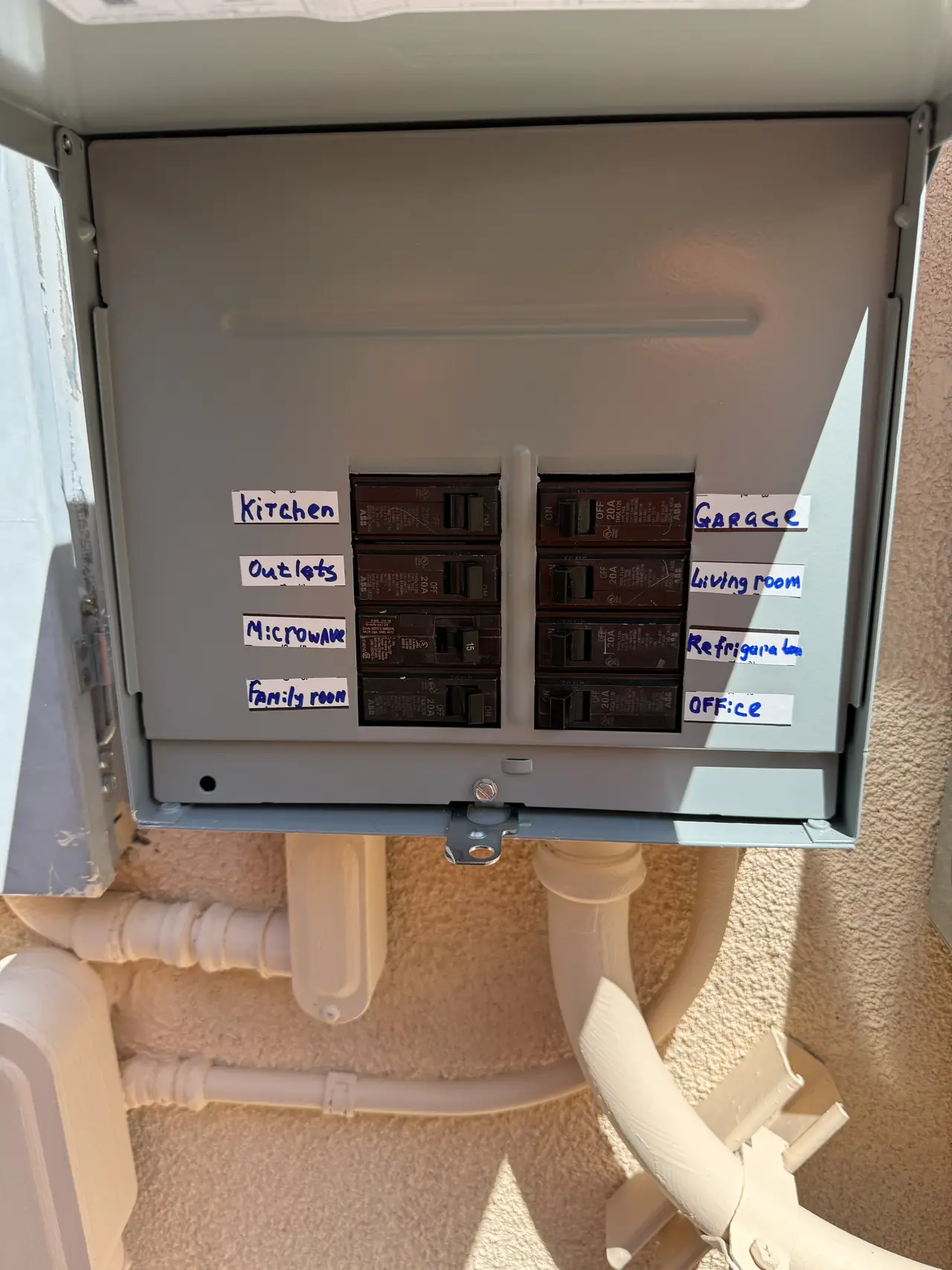
The design decision that matters is not the battery's size but which circuits it protects. A whole-home backup means a battery large enough to carry the air conditioner and the oven, and a cost to match. A partial backup means picking the loads that matter in an outage and moving them to a panel the battery can feed. Here the list was the refrigerator, the kitchen outlets, the microwave, the family room, the living room, the office and the garage. Lights, food, phones, the door, and somewhere to work.
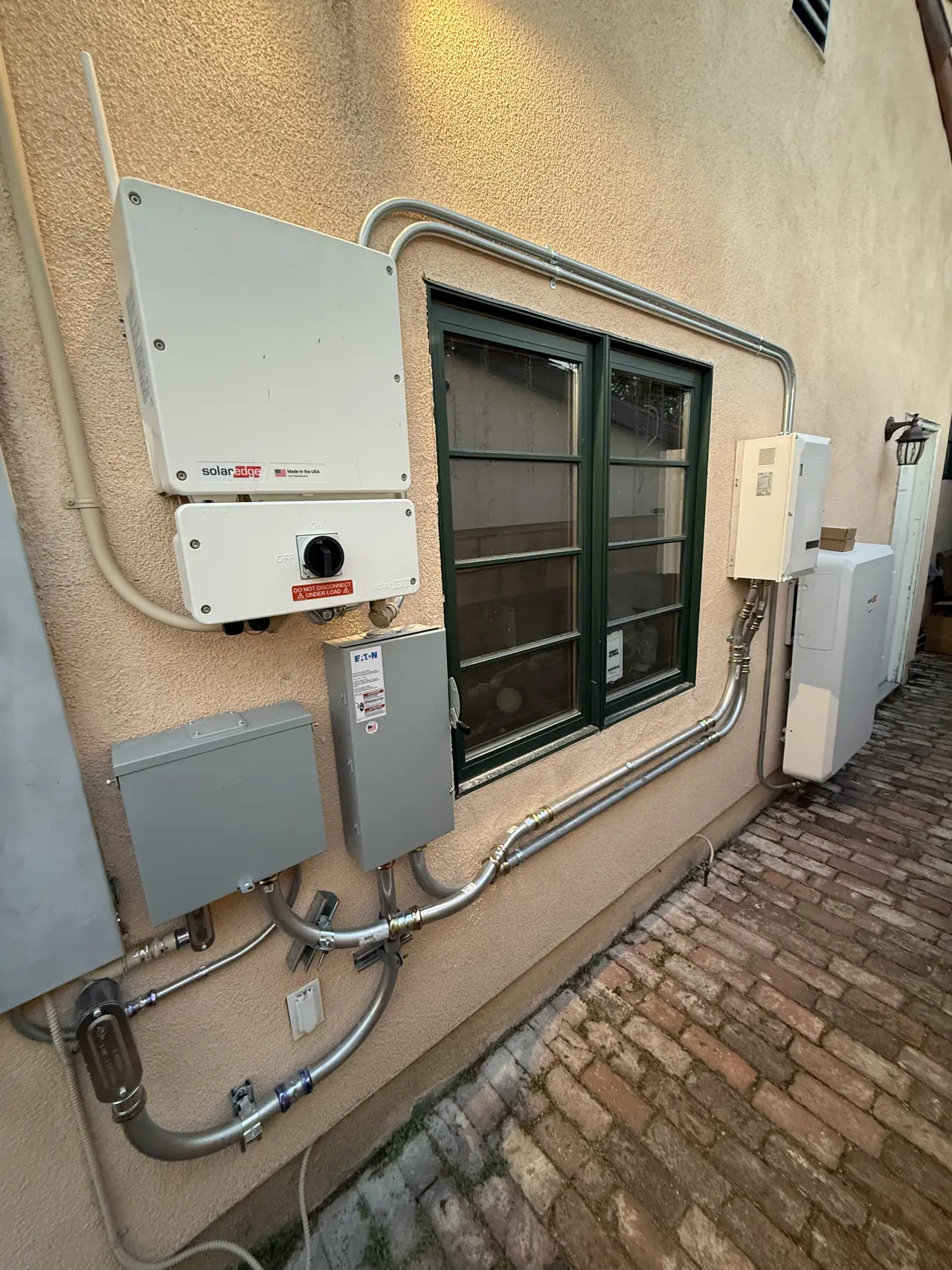
Those circuits were moved to a new backup panel beside the main one, and the battery and its backup interface went on the outside wall in line with the inverter from December, the conduit carried around the window frame rather than across it. The permit and plans arrived at the start of May, the material was on site two days later, and the installation took a day.
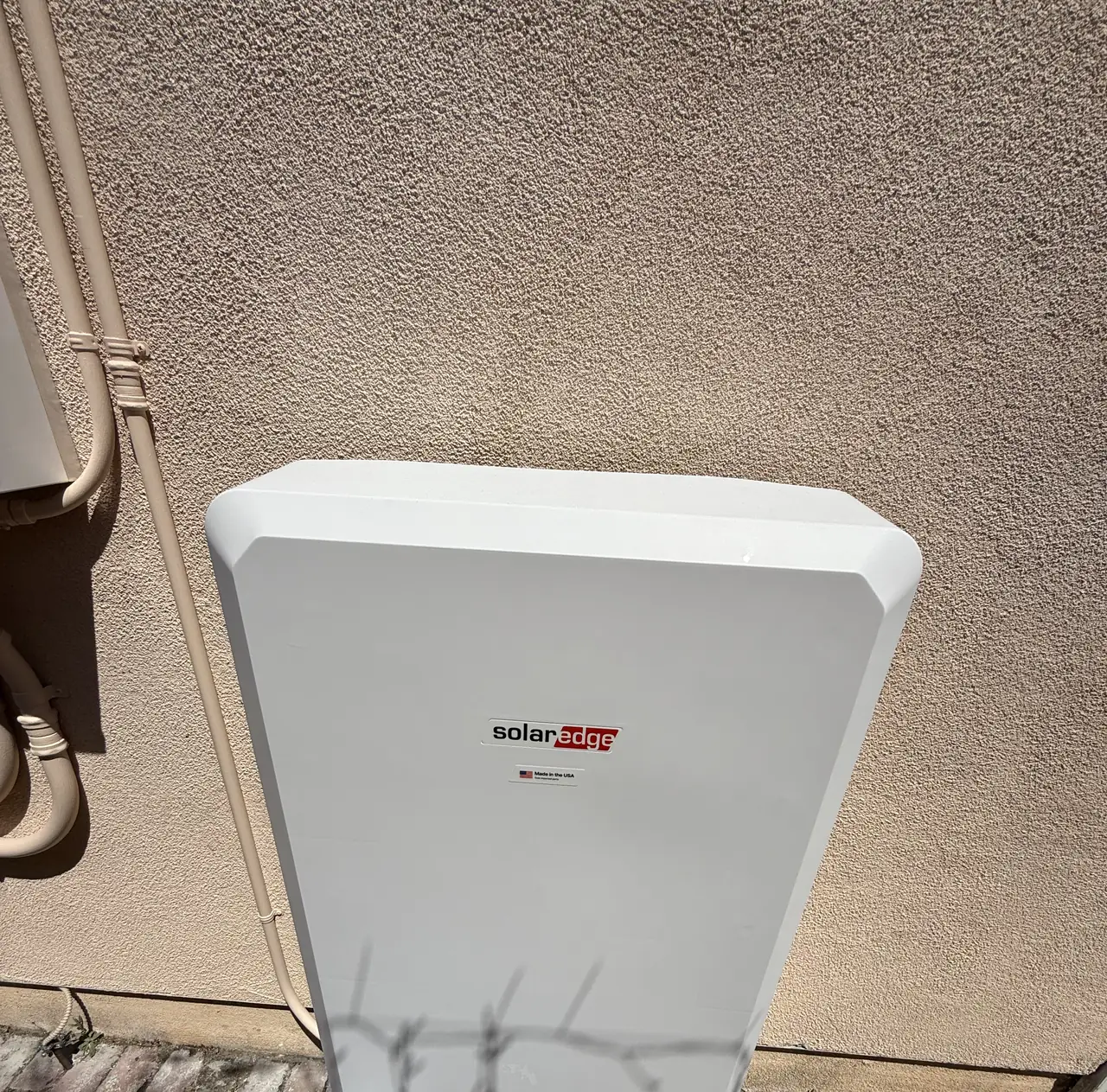
The city's final for the storage was on the fifteenth of May. Glendale Water & Power inspected and released the energy storage on the twenty-first, six days later, and issued its permission to operate for the battery. From that point the seven circuits ride through an outage on the battery and the array recharges it in daylight.
Splitting the work in two costs paperwork. Two plan sets, two permits, two finals and two utility applications, where a combined solar-and-storage job would have carried one of each. A battery that is certain from the start belongs in the first design for that reason alone. A battery that is not certain is perfectly safe to defer, on one condition: the inverter chosen for the solar has to be able to take one later. This one could.
The question to ask before the solar goes on, then, is not whether you want a battery now. It is whether the inverter will accept one, and which circuits you would want it to carry.
How it ran
| 6 January 2026 | Solar permission to operate |
|---|---|
| 4 May 2026 | Battery plan set and permit in hand |
| 6 May 2026 | Battery, backup interface and backup panel installed |
| 15 May 2026 | City final for the energy storage |
| 21 May 2026 | Utility inspection and release — storage permission to operate |
Seventeen days from permit to storage permission.
What we did
- Worked out with the homeowner which circuits the battery would carry.
- Installed a dedicated backup panel and moved the seven circuits to it (C-10).
- Mounted the battery and backup interface on the outside wall in line with the existing inverter.
- Routed the new conduit around the window frame to match the December work.
- Photographed the completed storage for the utility's release and passed the city final.
System specifications
| Battery | SolarEdge Home battery, outdoor wall mount |
|---|---|
| Backup interface | SolarEdge, beside the inverter |
| Backup panel | Dedicated, seven circuits |
| Circuits | Refrigerator, kitchen outlets, microwave, family room, living room, office, garage |
| Inverter | SolarEdge, installed with the solar in December 2025 |
| Utility / AHJ | Glendale Water & Power / City of Glendale |
Is your project like this one?
- You already have solar and want backup without replacing the inverter.
- You want a battery but not the cost of backing up the whole house.
- You are on Glendale Water & Power and want to know if storage is a separate application.
- You are choosing solar equipment now and want to keep a battery option open.
Cali Energy in Glendale
Glendale is its own city with its own municipal utility: permits run through City of Glendale Building & Safety, interconnection through Glendale Water & Power.
Glendale Water & Power treats energy storage as its own interconnection: a battery added after the solar gets a separate application, a separate permit from the city and a separate permission to operate.
This installation is on the Glendale projects page alongside the others, and what the work covers is set out on the Glendale service area page.
- License and classifications: CSLB #1032379
- Official reference for this process: Glendale Water & Power — guide for applying for energy storage interconnection
- Official reference for this process: City of Glendale — getting a permit
Frequently asked questions
Can a battery be added to an existing solar system?
Yes, if the inverter supports it. This house had a SolarEdge inverter from the solar installation, and the battery and backup interface connected to it five months later. If the inverter cannot take a battery, adding one means either replacing it or installing a separate battery inverter, which is a larger job.
What is partial backup?
Backing up chosen circuits rather than the whole house. Those circuits are moved to a separate backup panel that the battery feeds during an outage, and everything else stays on the grid. Here the backup panel carries the refrigerator, kitchen outlets, the microwave, the family room, the living room, the office and the garage. Air conditioning and the oven were left off it.
Does the battery need its own permit in Glendale?
It does. The energy storage had its own plan set and permit from the city and its own final inspection, and Glendale Water & Power treated it as a separate energy-storage interconnection with its own permission to operate, issued six days after the city final.
Is it cheaper to install the battery with the solar?
In paperwork, yes: one plan set, one permit, one final and one utility application instead of two of each. In hardware the difference is small if the solar inverter is battery-ready. Doing the solar first and the battery later is a reasonable sequence when the budget or the decision is not settled.
What this would look like on your roof
Planning solar in Glendale? Tell us your utility, your roof and what your bill looks like now, and we will model what a system like this would do on your house before you commit to anything.
Or call +1 (323) 844-7777 · Cali Energy, Northridge · CSLB #1032379 (B, C-10, C-39) — design, permits, install and electrical under one licensed contractor.
Related
This timeline reflects this property and this permitting path. Updated September 2026.