

Van Nuys, Los Angeles, CA · March 2022 – April 2022 · LADWP / LADBS
Four skylights, and the array went around them.
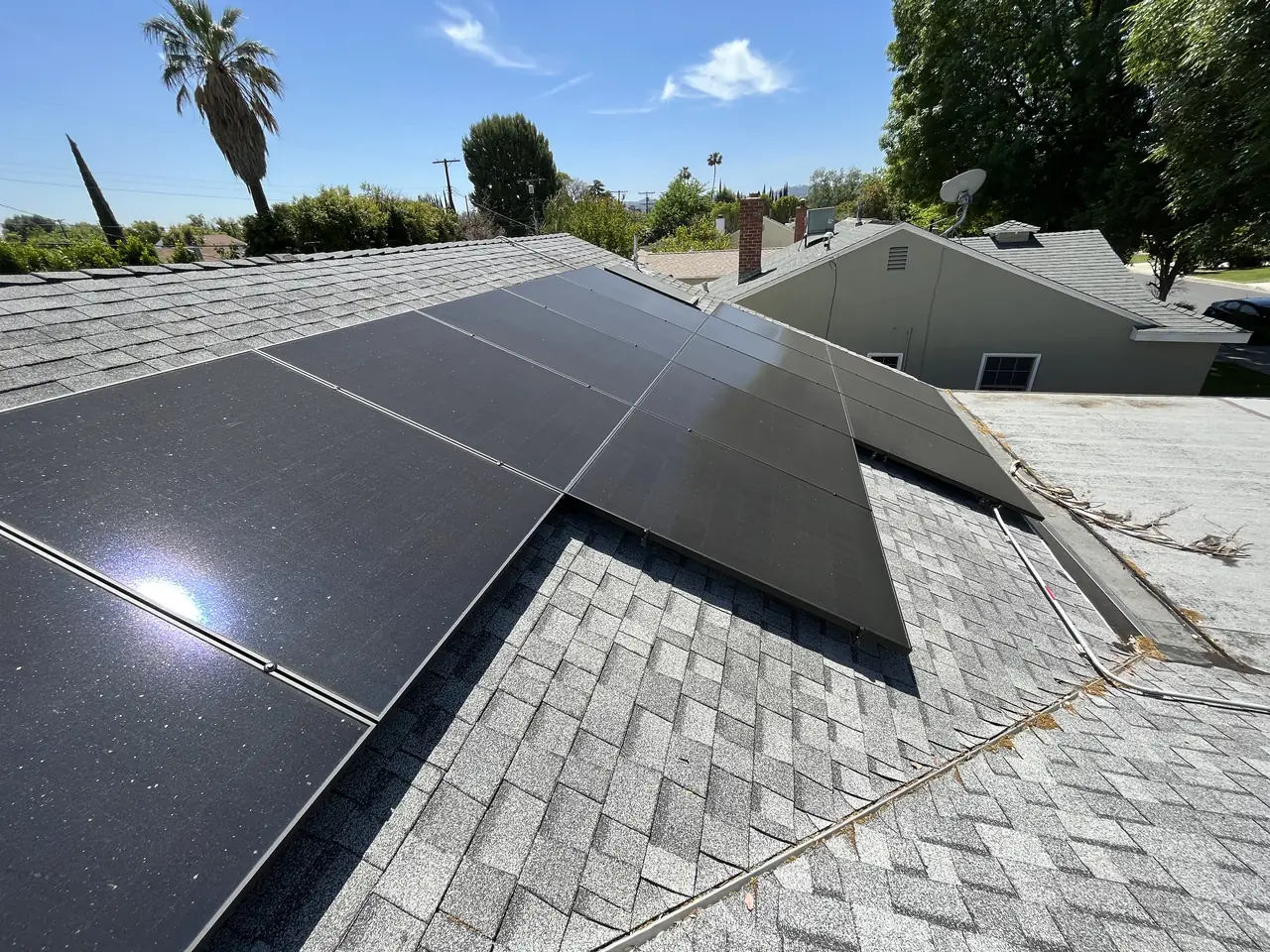
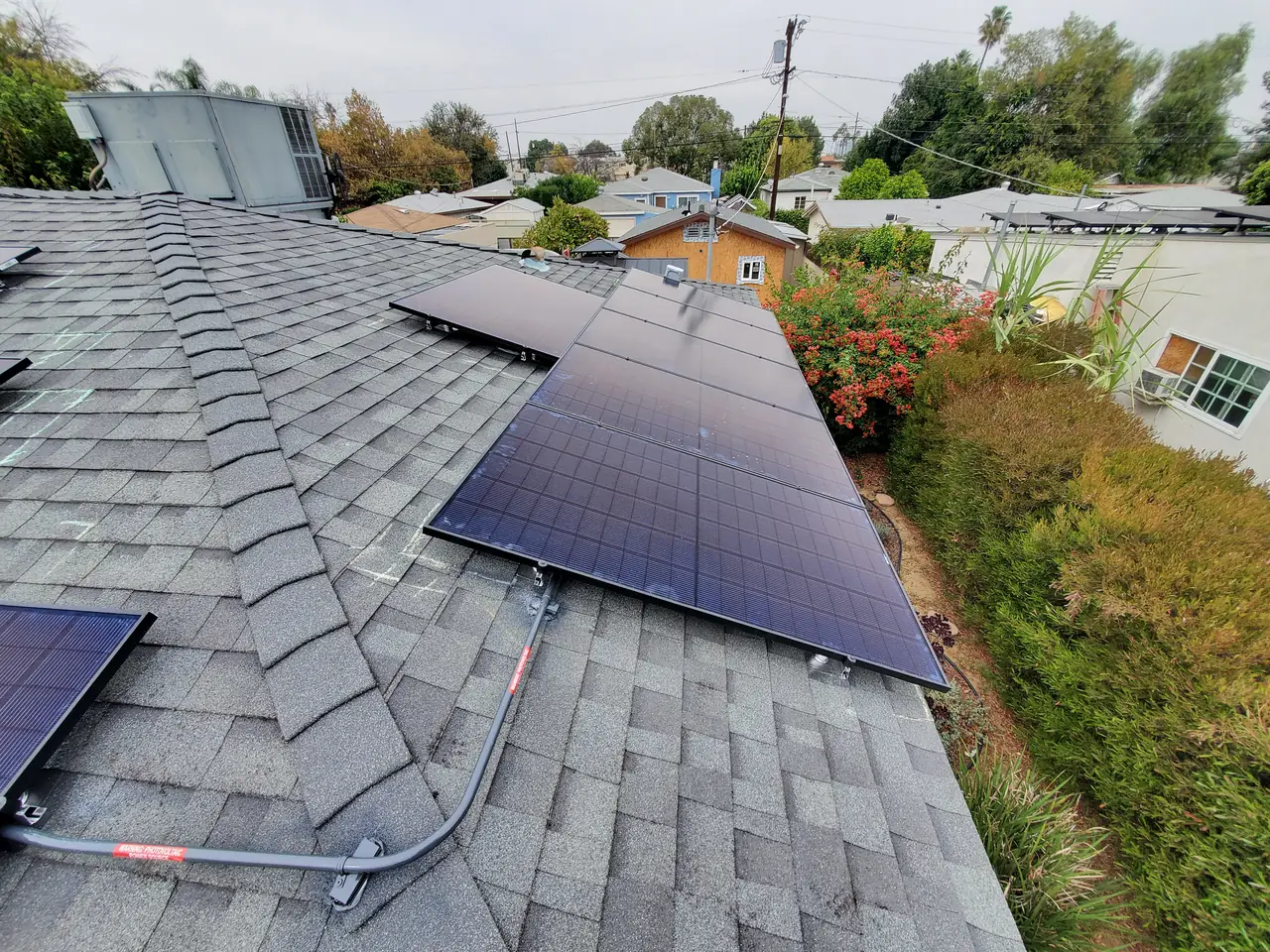
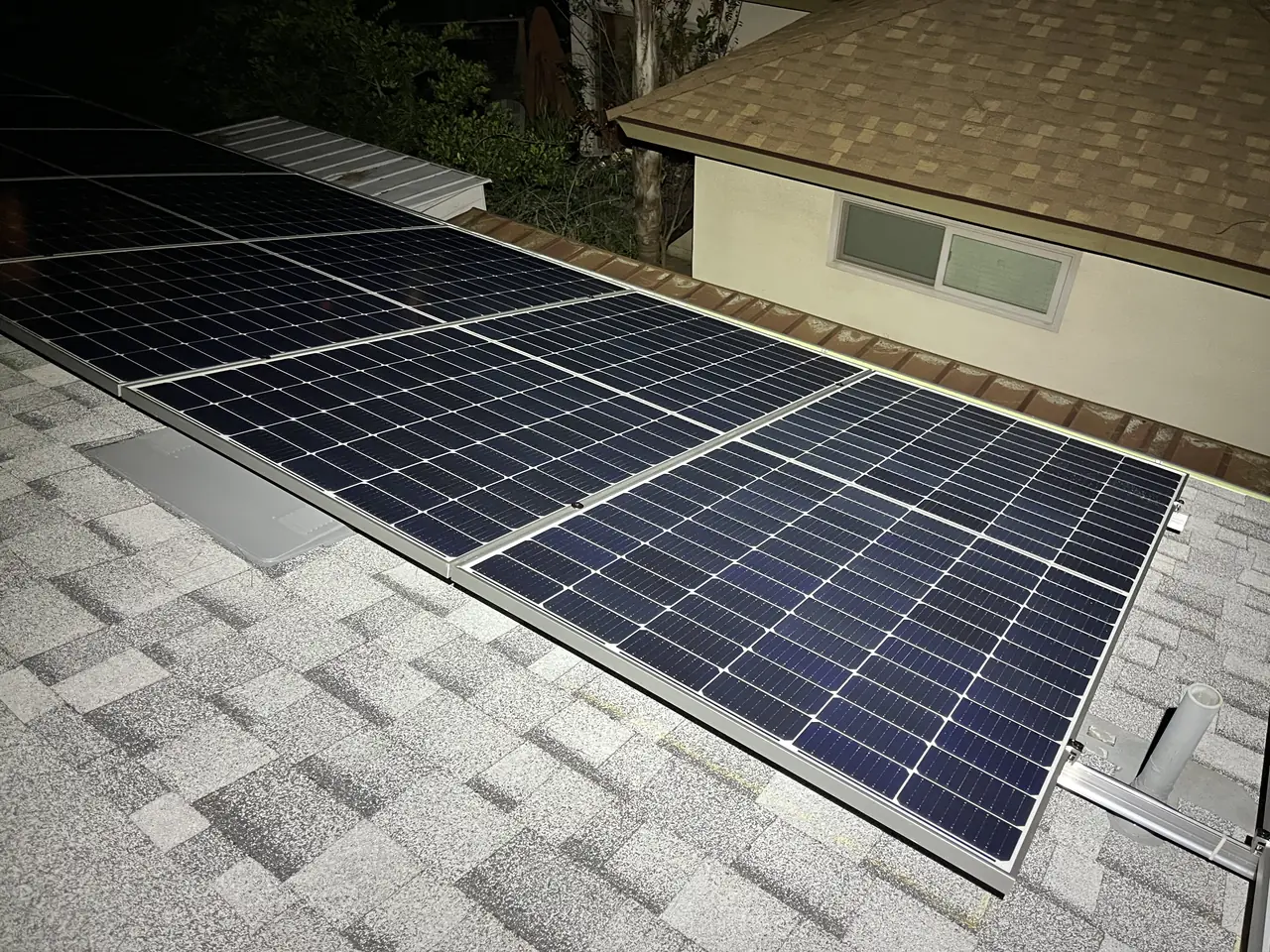
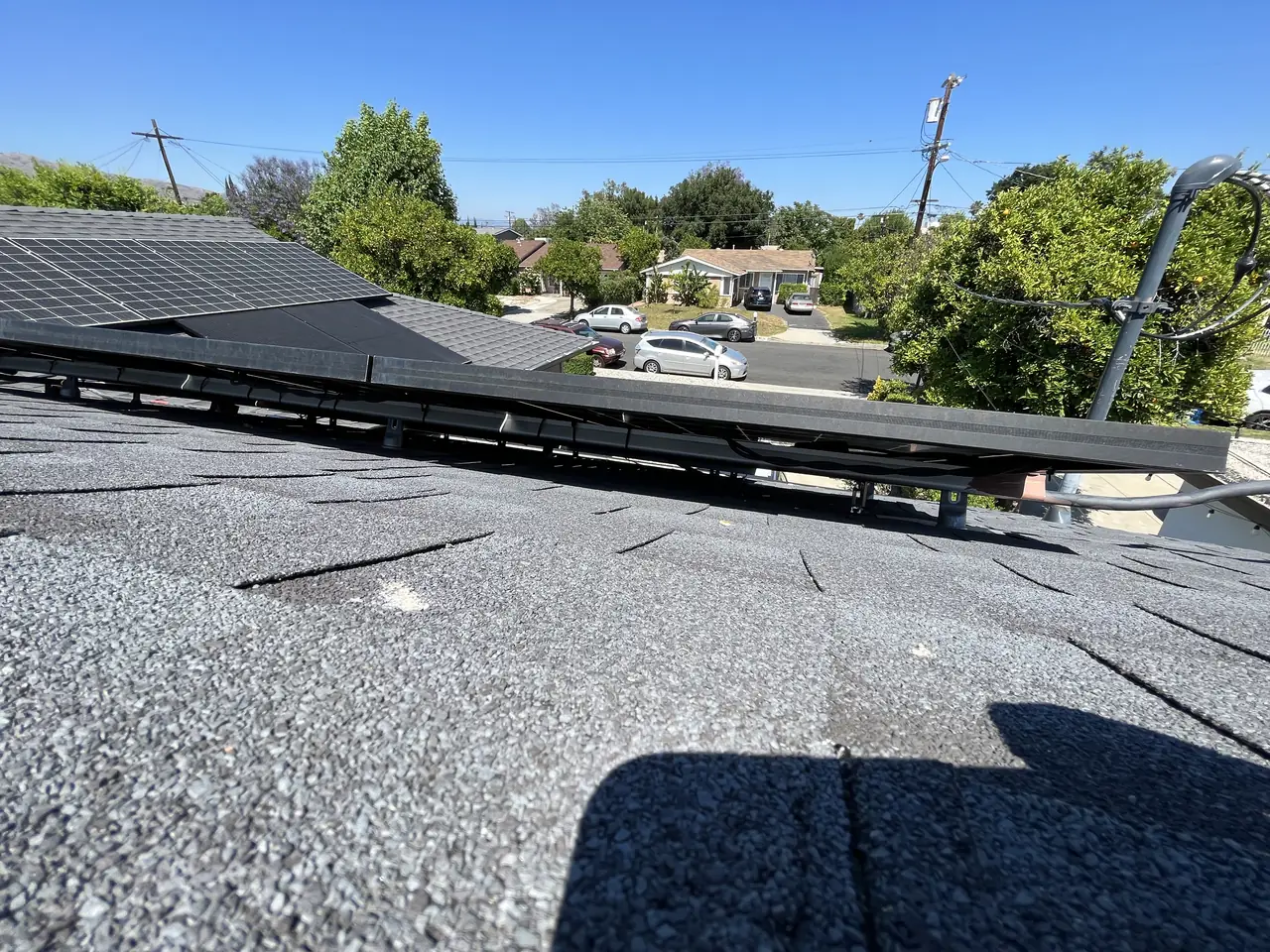
A single-story house with a hip roof, four skylights and a pool in the back. Twenty modules went on in groups, each one placed in the space between openings, with an electrical permit in late March and the system reporting by the middle of April.
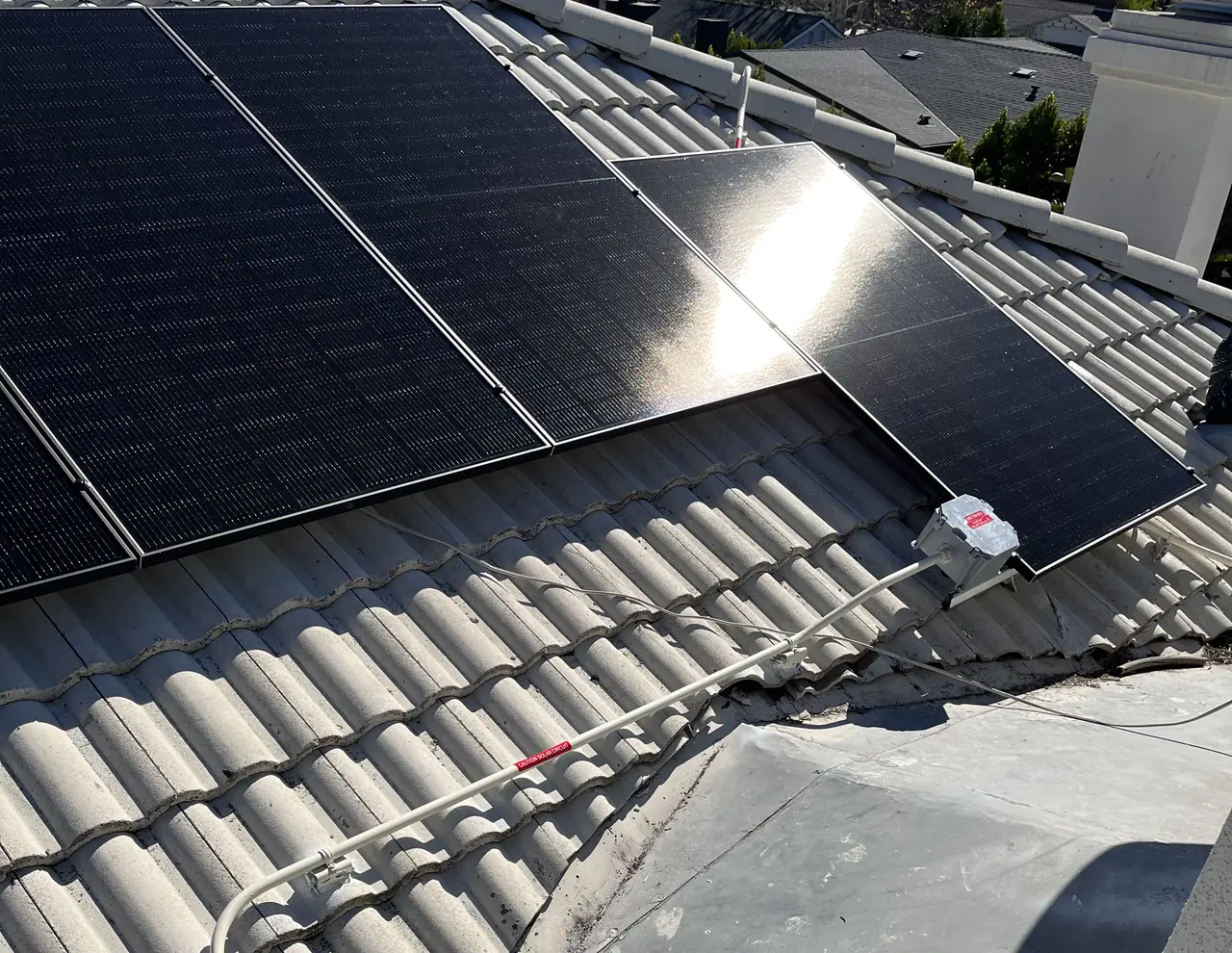
Skylights and roof vents cannot be relocated for an array, so on a hip roof with several openings the modules are laid in small groups between them rather than in one block. On this Van Nuys house Cali Energy laid twenty modules with a microinverter under each across several planes, permitted in late March and commissioned about four weeks later.
At a glance
- Array
- 20 modules in groups across the hip planes
- Inverters
- 20 microinverters, one per module
- Roof
- Composition shingle, hip, four skylights
- Constraint
- Skylights and vents fixed in place
- Electrical permit
- Issued late March 2022
- System reporting
- Mid-April 2022
- Utility / AHJ
- LADWP / LADBS
The story
The roof looks simple from the street and is not. It is a hip, so four planes meeting at the ridges, and it carries four skylights plus the usual collection of vents and a stack. Every one of those is a fixed point. A skylight can be reglazed, reframed and reflashed, but it cannot be slid three feet to the left because an array would prefer it there.
So the layout is subtraction. Start with the planes that receive sun, remove the openings and the setbacks that fire access requires, and place modules in whatever rectangles survive. Here that came to twenty modules in several groups, with a microinverter under each one.
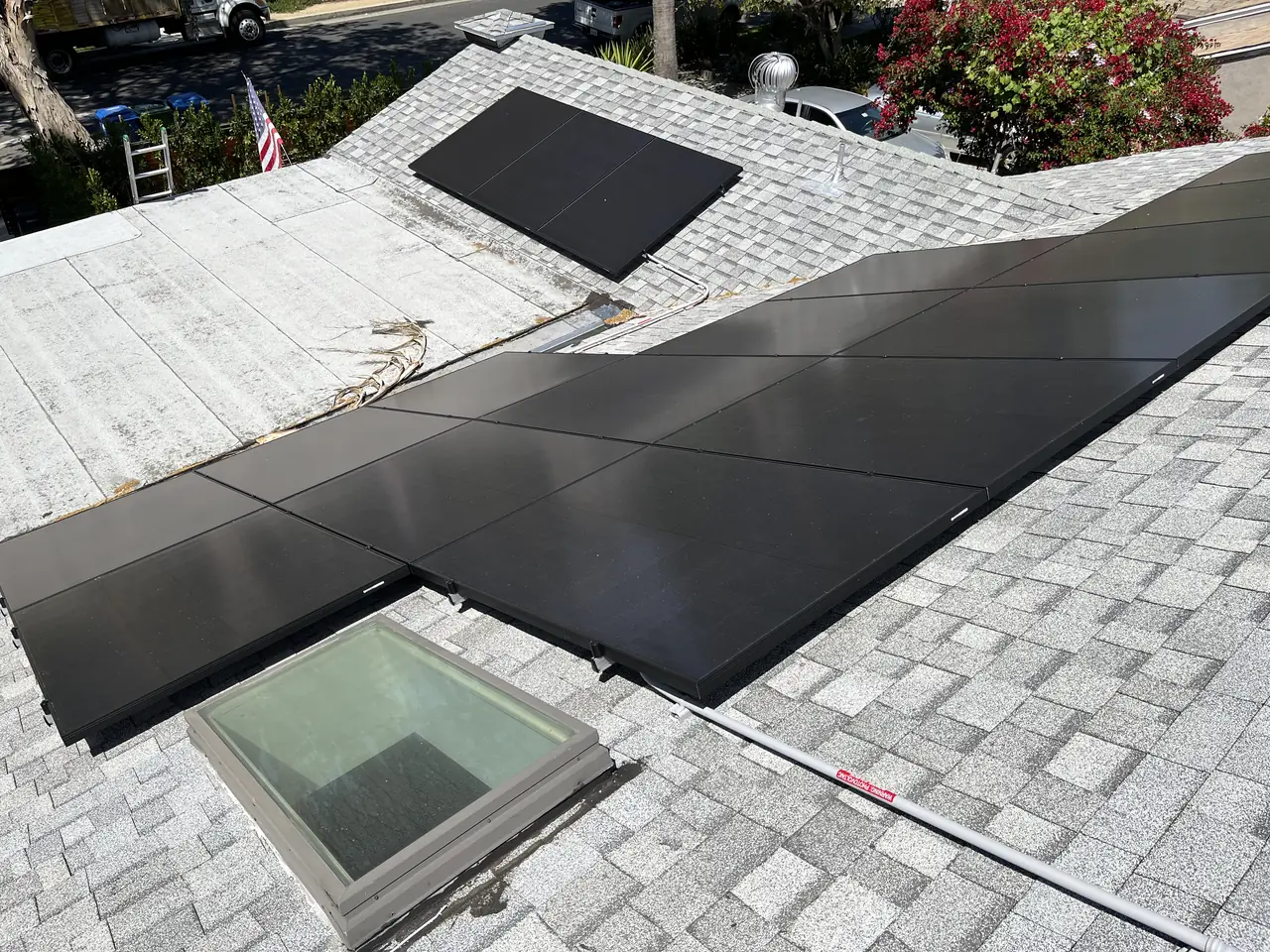
Microinverters matter more than usual on a roof like this. With a module-level inverter, each group can face a different direction and each module can be shaded at a different hour without dragging the rest down. A string inverter would force the groups into electrical arrangements the roof does not naturally support.
The house also has a pool, which is worth mentioning because pool equipment is one of the few residential loads that runs long enough and hard enough to change the shape of a bill. A pump cycling for hours in the afternoon lines up almost exactly with when a south-facing array produces, which is the best coincidence in residential solar.
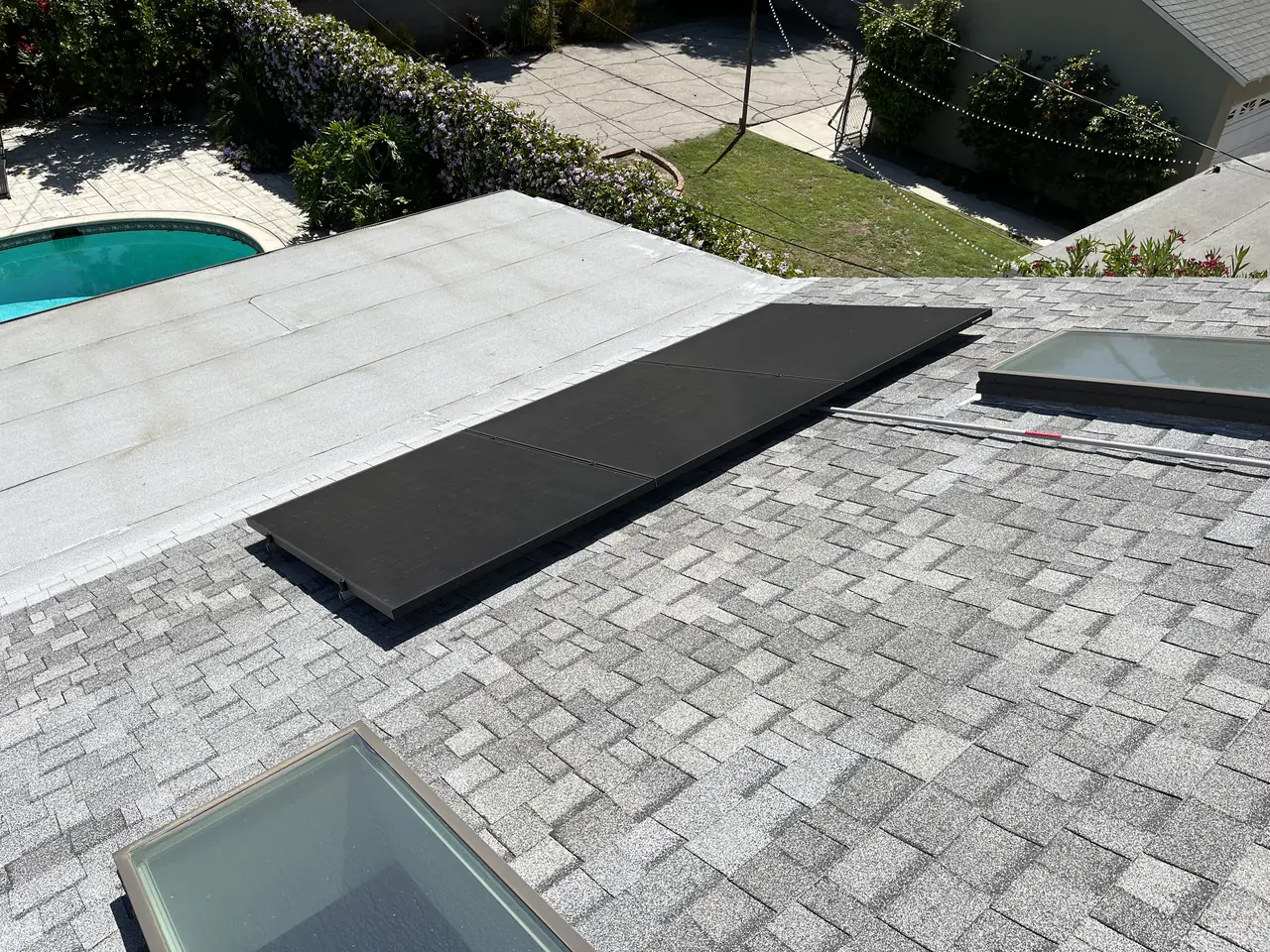
The permitting was the least eventful part. An electrical permit for the work was issued at the end of March through the express counter, which is what a residential photovoltaic job on an existing service uses when nothing structural is involved. The inspection followed, and the system was reporting production from all twenty microinverters by the middle of April.
Four weeks from permit to producing is a good result and it is what an uncomplicated job on an existing service should look like. There was no panel work, no service change and no new meter position — just an array, a breaker and an inspection.
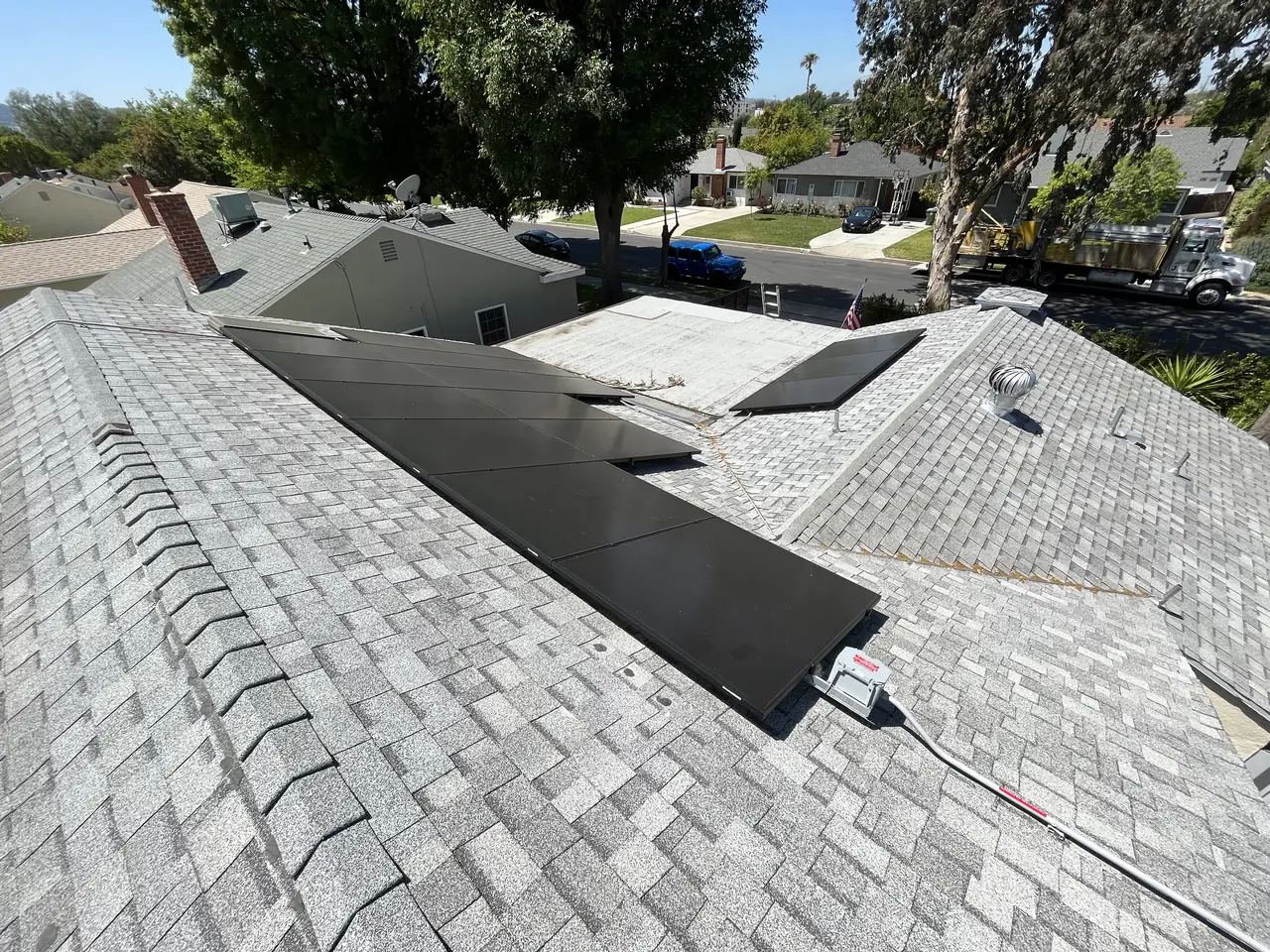
The thing homeowners ask when they see a layout like this is whether the scattered groups are a compromise. They are, in the sense that a clean rectangle would be cheaper to install. They are not, in the sense of output: a module in a small group produces exactly what the same module produces in a large one. What you lose is neatness and a little labor efficiency. What you keep is the skylights.
If a proposal for a roof like this shows one tidy block of modules, ask where the skylights went.
How it ran
| March 2022 | Layout set around the skylights, vents and fire setbacks |
|---|---|
| 22 March 2022 | Electrical permit issued through the express counter |
| Late March 2022 | Array installed in groups across the hip planes |
| Early April 2022 | Inspection and utility interconnection |
| 18 April 2022 | All twenty microinverters reporting production |
About four weeks from permit to a fully reporting system, with no service work involved.
What we did
- Set a layout around four skylights, the roof vents and the required fire access setbacks.
- Installed twenty modules in groups across the sunward hip planes.
- Fitted a microinverter under each module so the groups operate independently.
- Pulled the electrical permit and took the work through inspection.
- Commissioned the system and confirmed all twenty microinverters reporting.
System specifications
| Inverters | 20 microinverters, one per module |
|---|---|
| Layout | Groups fitted between four skylights and the roof vents |
| Fire access | Setbacks kept clear at the ridge and the hips |
| Service work | None — existing panel and meter retained |
| Permit | Electrical express permit |
| Utility / AHJ | LADWP / LADBS |
Is your project like this one?
- Your roof has skylights, vents or a stack in the middle of the sunward plane.
- You have been shown a proposal with one tidy block of modules and want it checked.
- You have a hip roof and several small usable areas rather than one big one.
- You run a pool pump and want the array sized against afternoon load.
- You want an existing-service job done without panel or meter work.
Cali Energy in Van Nuys
Van Nuys sits inside City of Los Angeles boundaries: permits run through LADBS, interconnection through LADWP.
A skylight is a hole in the roof that cannot move. On a hip roof with several of them, the array stops being a rectangle and becomes a set of small groups fitted into whatever is left. Getting that right is layout work, not engineering.
This installation is on the Van Nuys projects page alongside the others, and what the work covers is set out on the Van Nuys service area page.
- License and classifications: CSLB #1032379
- Official reference for this process: LADBS — plan review and permitting
- Official reference for this process: California Energy Commission — solar equipment lists
Frequently asked questions
Can solar modules be installed around skylights?
Yes, and that is normally what happens. Skylights are fixed openings, so the array is laid out in the areas between them with the required fire-access setbacks left open. The result is several small groups rather than one block. Output per module is unaffected by the arrangement, so the only real cost is a little extra labor and a less uniform appearance from the air.
Do I need microinverters for a split-up array?
They help a great deal. With one inverter per module, each group can face a different direction and be shaded at a different time of day without pulling the others down. A single string inverter ties modules together electrically, which forces awkward groupings on a roof with several small usable areas and gives up production when part of the array is in shade.
How long does a straightforward residential solar permit take?
Where no structural or service work is involved, a residential photovoltaic job on an existing service goes through the express permit route and the permit issues the same day it is applied for. The schedule after that is the installation, the inspection and the utility's meter work. On this house the whole sequence ran about four weeks from permit to a reporting system.
Does a pool make solar more worthwhile?
Often, yes. A pool pump is one of the few household loads that runs for hours in the middle of the day, which is exactly when an array produces most. That overlap means more of the production is used on site rather than exported, and it usually shifts the sizing conversation upward compared with a similar house without a pool.
Does Cali Energy work on roofs with skylights in Van Nuys?
Yes, and postwar Van Nuys hip roofs often have several. The array is laid in groups between the fixed openings with the fire-access setbacks left open, and a microinverter under each module keeps the groups working independently. Cali Energy sets that layout on the roof rather than on a satellite image. License CSLB #1032379.
What this would look like on your roof
Planning solar in Van Nuys? Tell us your utility, your roof and what your bill looks like now, and we will model what a system like this would do on your house before you commit to anything.
Or call +1 (323) 844-7777 · Cali Energy, Northridge · CSLB #1032379 (B, C-10, C-39) — design, permits, install and electrical under one licensed contractor.
Related
This timeline reflects this property and this permitting path. Updated September 2026.