

Van Nuys, Los Angeles, CA · November 2022 – February 2023 · LADWP / LADBS
Forty-two modules, and the panel stayed where it was.
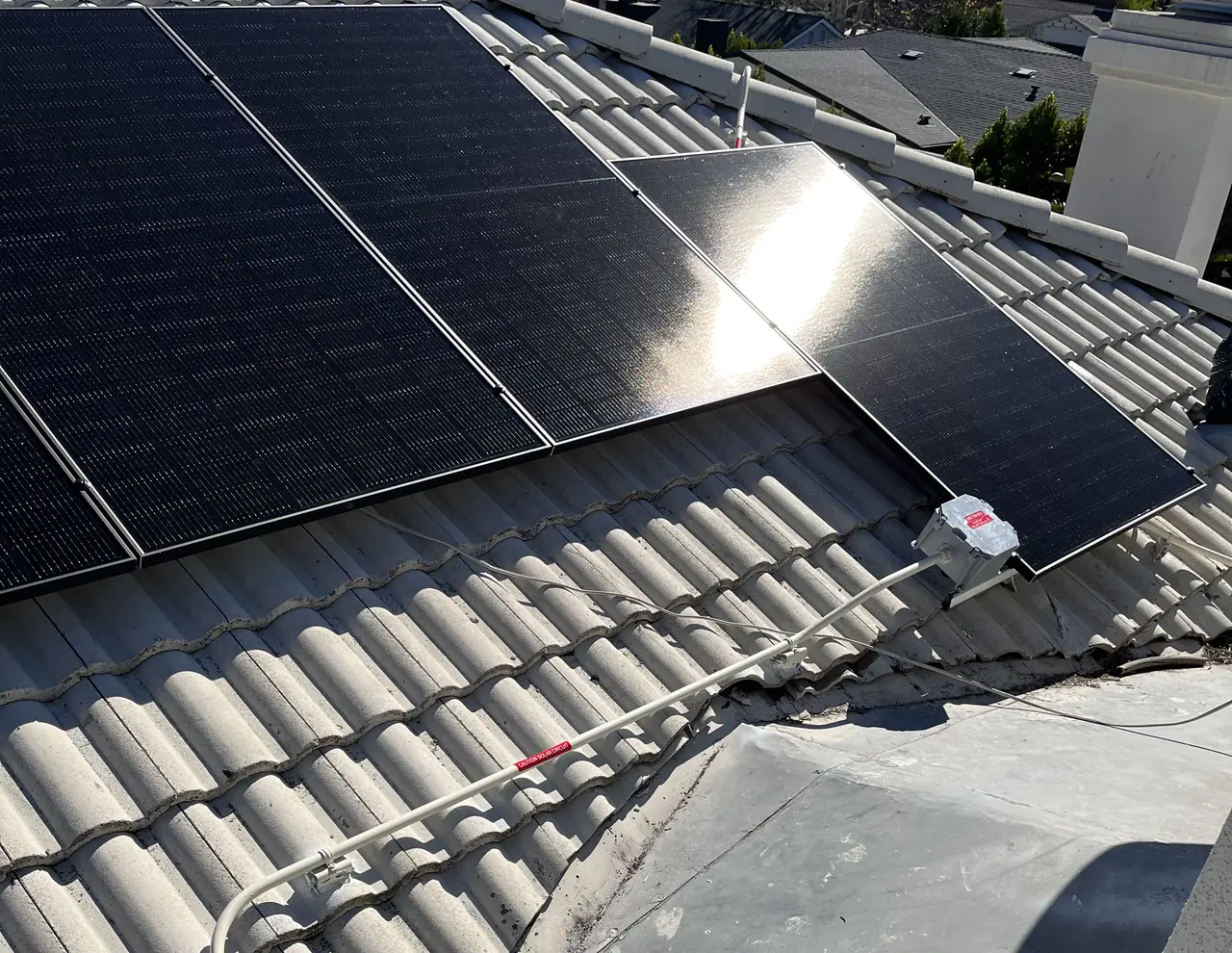
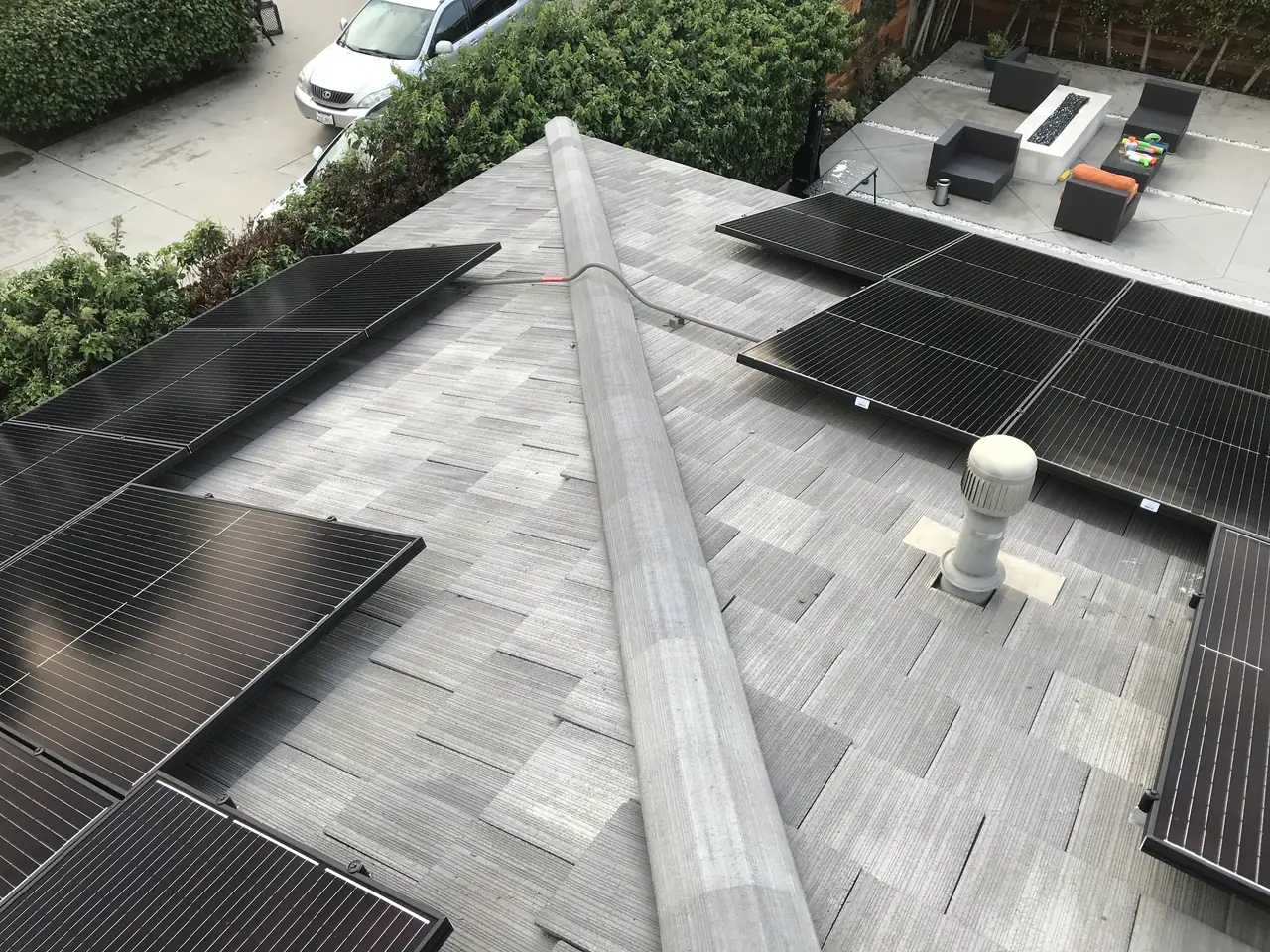
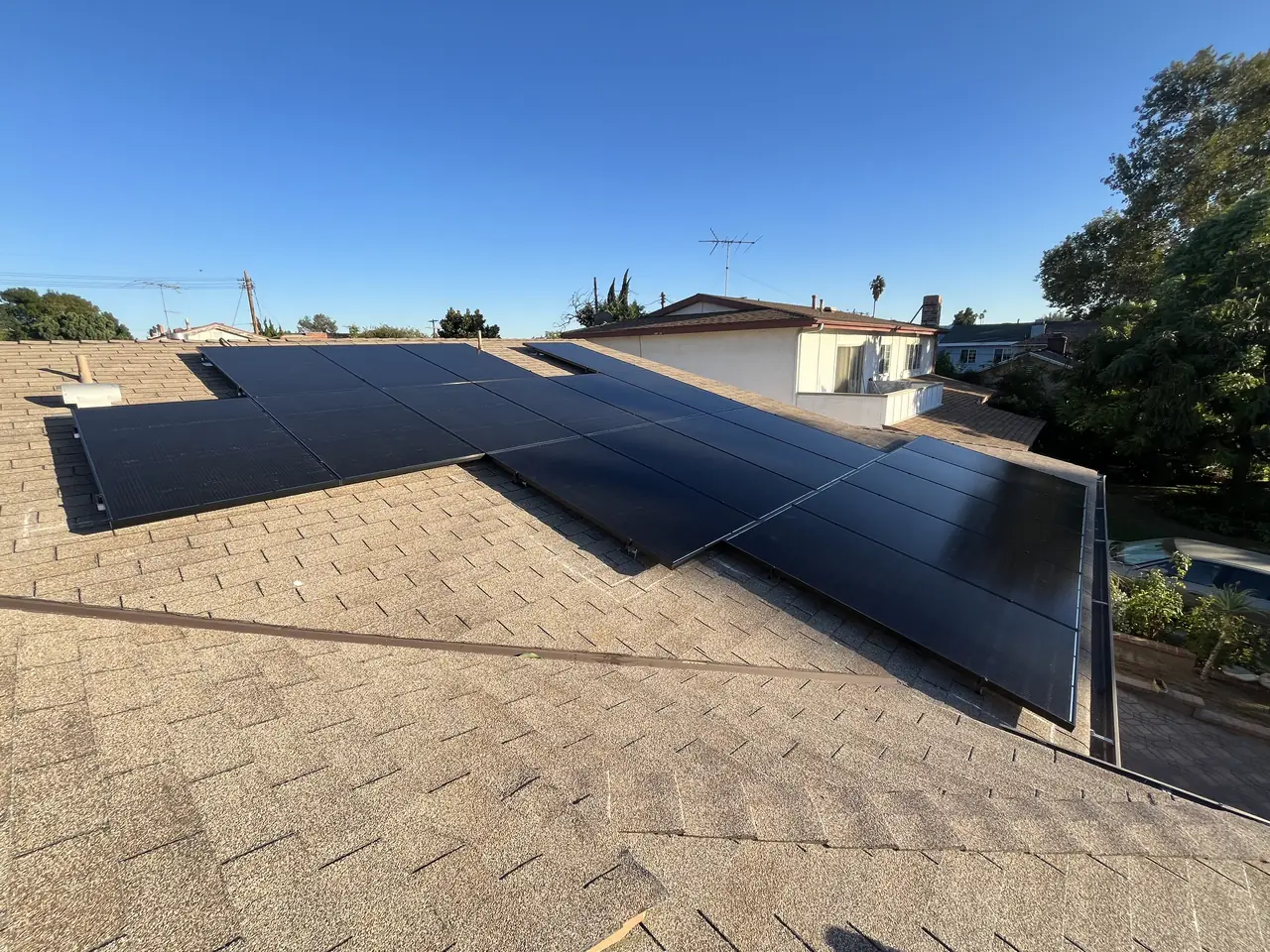
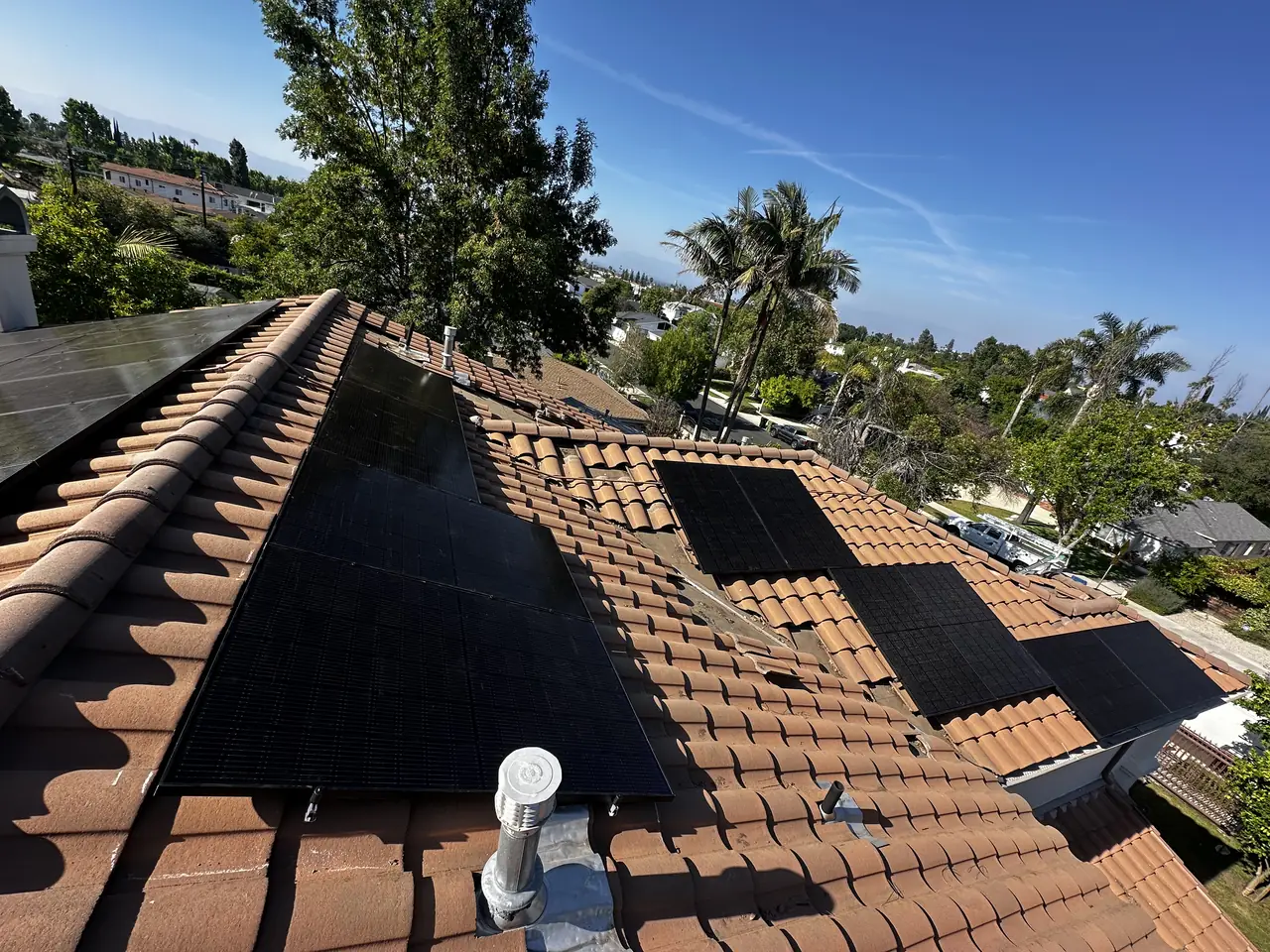
A large two-story house with a concrete tile roof and room for forty-two modules. An array that size usually brings a service upgrade with it. This one did not, because the main breaker came down instead of the panel coming out.
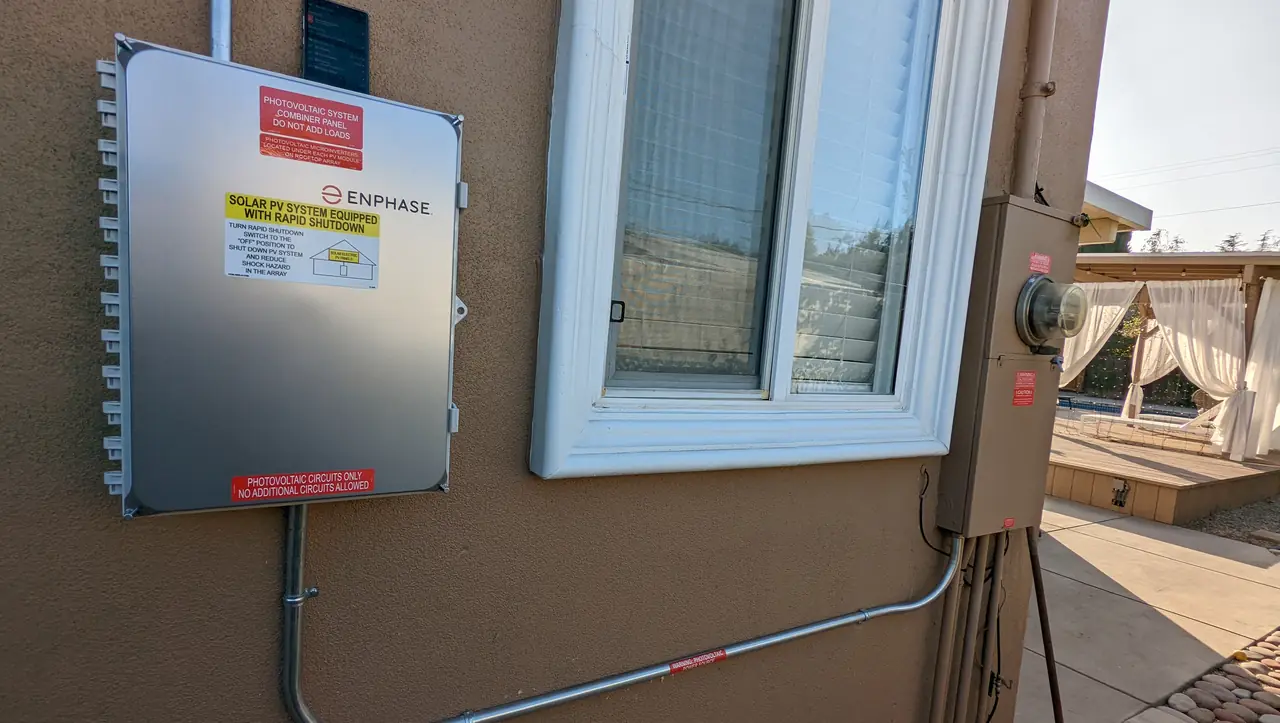
A 16.8 kilowatt array needs a large backfeed breaker, and on a 200-amp panel with a 200-amp main there is rarely room for one. A busbar may carry 120 percent of its rating between the main breaker and the solar breaker, so dropping the main to 175 amps raises the solar allowance from 40 amps to 65 and leaves the panel, the meter and the utility service untouched. On this Van Nuys house that single change let Cali Energy carry forty-two modules without a service upgrade, and the net meter was set ten weeks after the application.
At a glance
- Array
- 42 modules, 400 W each — 16.8 kW DC
- Inverters
- 42 microinverters, one per module
- Size recorded by the utility
- 15.1 kW AC-CEC
- Roof
- Concrete tile, two-story house
- Service
- 200 A panel kept; main breaker lowered to 175 A
- Interconnection agreement
- Returned and reapproved the same day
- Net meter
- Ten weeks after the application
- Utility / AHJ
- LADWP / LADBS
The story
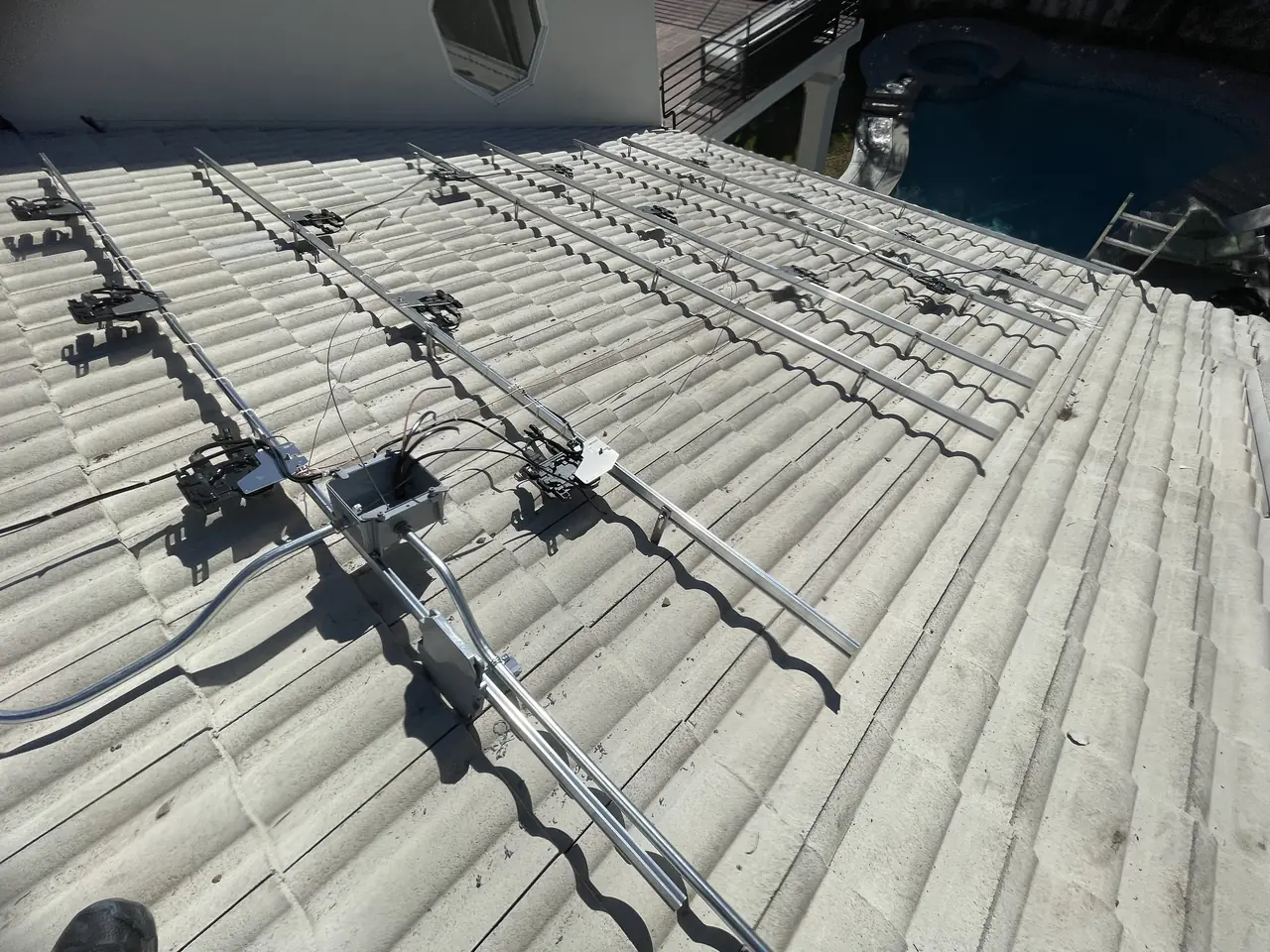
Forty-two modules is a lot of array for a house. At 400 watts each that is 16.8 kilowatts of direct current, with a microinverter under every module and the whole of it landing on one service panel. The reflex answer to a system that size is a service upgrade: pull the old panel, set a larger one, bring the utility out to reconnect. It is expensive, it involves a crew that does not work to your schedule, and on this house it was not necessary.
The constraint is the busbar inside the panel. The main breaker and the solar breaker together may come to 120 percent of what that bar is rated to carry, which on a 200-amp busbar is 240 amps. With a 200-amp main only 40 amps are left, too little for an array this size. Lower the main to 175 amps and the allowance becomes 65, which is enough.
What the house gives up is theoretical. The main breaker is a ceiling on total simultaneous draw, and a 175-amp ceiling is still more than a single-family house with ordinary appliances will ever reach. What it gains is that the panel, the meter socket and the utility's service drop all stay exactly where they are, and the project needs no utility construction at all.
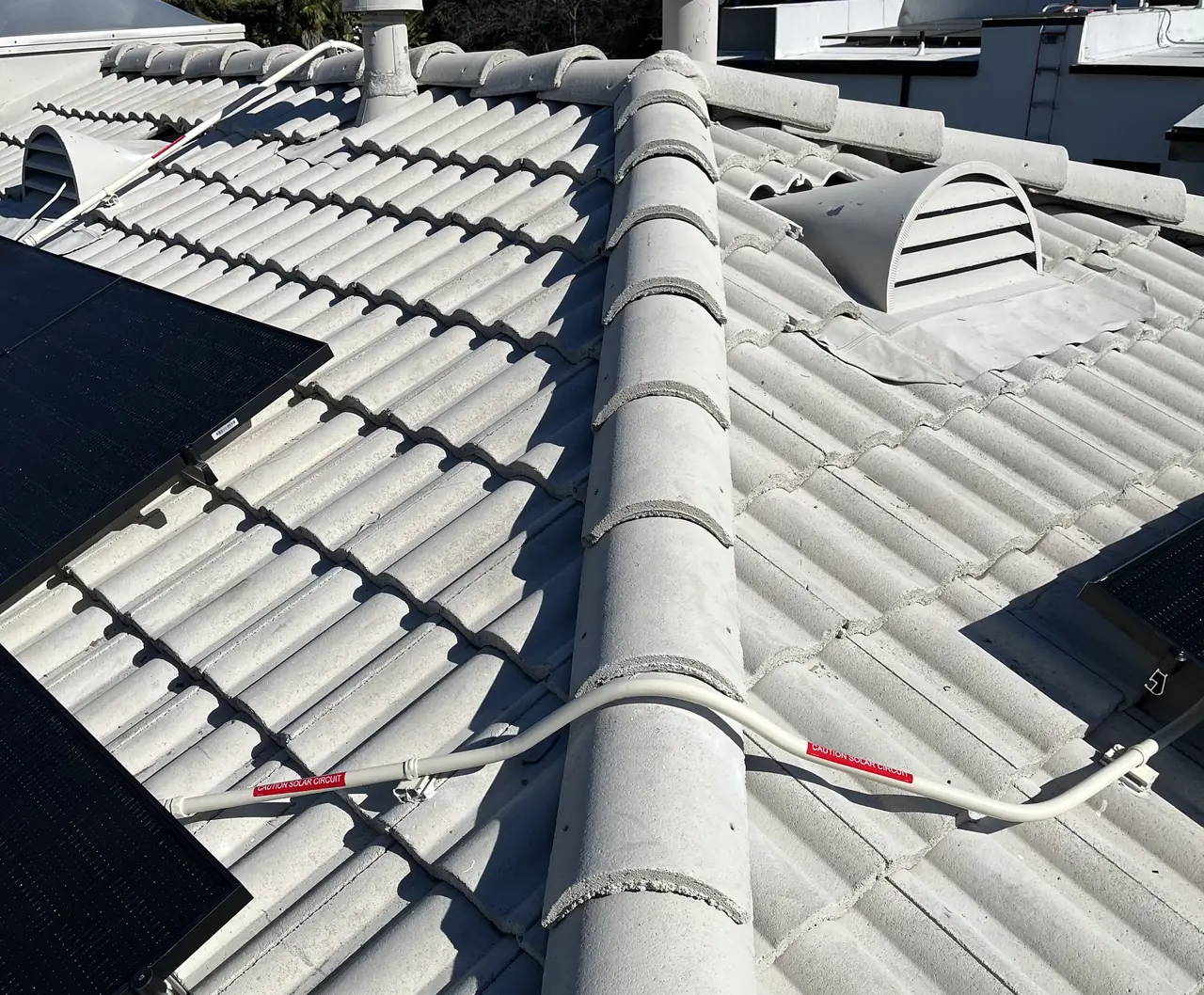
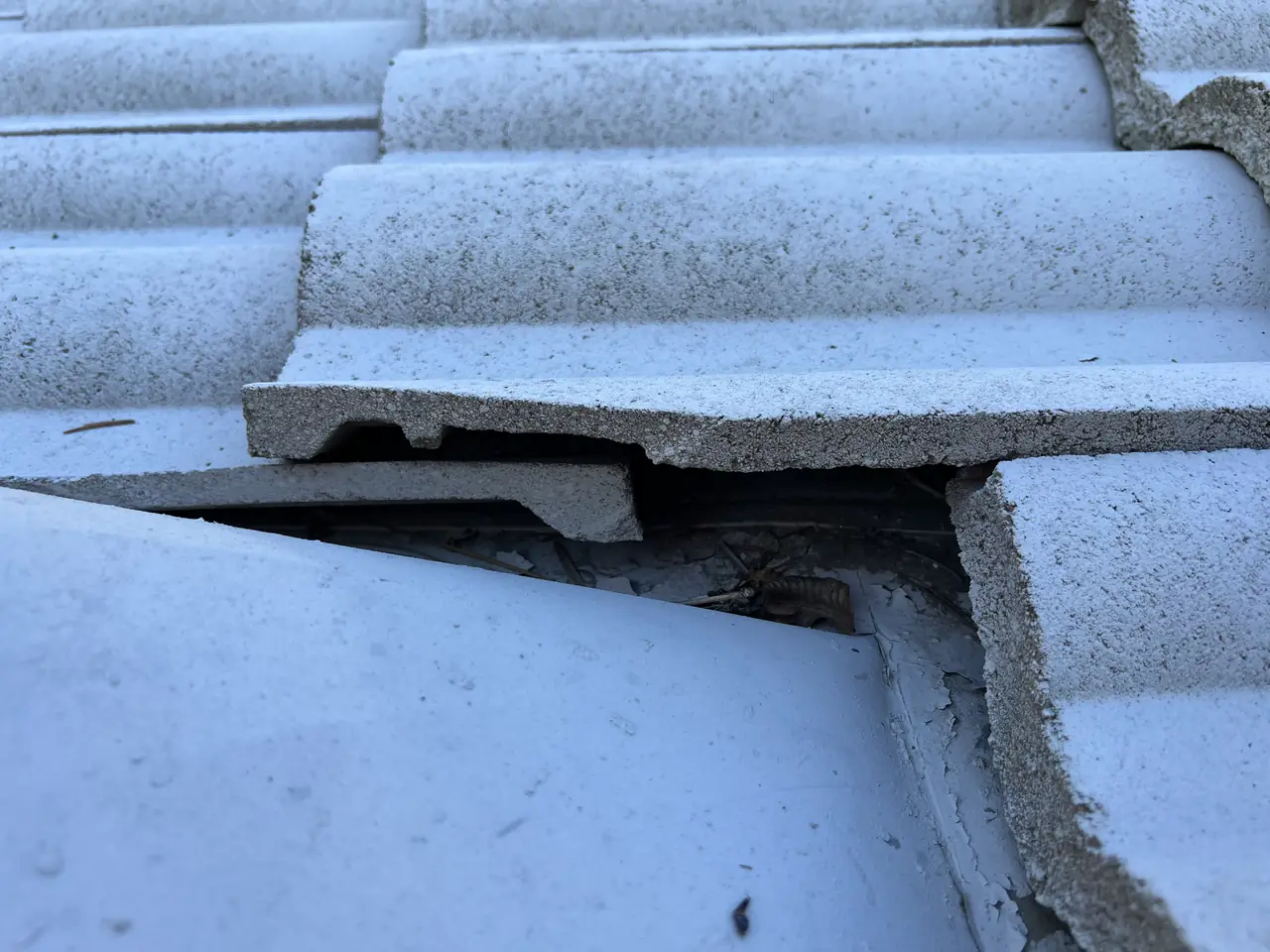
Tile brings its own work. Every mount has to land on a rafter, which means lifting tiles, setting flashing, and putting the tile back so the roof still sheds water the way it was built to. Tiles crack — some were already cracked before anyone climbed up — and the ones that break get replaced rather than patched. It is slower than shingle and it is the reason tile work is priced differently.
The paperwork had one hiccup and it lasted a day. The interconnection agreement was filed with the application at the end of November and came back two days later marked as missing or incorrect. An updated agreement went in the same afternoon and was approved that day. Two months later the utility completed its review, and the net meter was set in the first week of February.
The utility and the post office also disagreed about where this house is. The application was submitted under one neighborhood name, because that is the mailing address on the house. Every notice LADWP sent back over the ten weeks that followed used a different neighborhood name for the same street and the same number, because the utility works from its own service map. Nothing went wrong because of it, but a homeowner watching two sets of documents disagree about where they live has a reasonable question.
The answer is that the utility's name wins for anything the utility does, and the mailing address wins for mail. Both refer to the same property. If you are checking your own project against a utility portal, search by the address and the work request rather than by the neighborhood, or you will conclude your project does not exist.
None of that changed the build. Forty-two modules, tile reset around them, a smaller main breaker, and no service upgrade.
How it ran
| Mid-November 2022 | Design set: 42 modules, microinverters, 175 A derate |
|---|---|
| Late November 2022 | Plan set with load calculations issued |
| Late November 2022 | Interconnection application filed; recovery charge paid |
| Late November 2022 | Site assessment completed; application confirmed |
| Late November 2022 | Agreement returned as incomplete, corrected and approved the same day |
| Early February 2023 | Interconnection review complete; meter request issued |
| Early February 2023 | Net meter set — permission to operate |
Ten weeks from application to net meter, with no utility construction on the service.
What we did
- Designed a 42-module array across the planes of a concrete tile roof.
- Ran the load calculation that showed a 175-amp main breaker would carry the backfeed inside the panel's rating.
- Replaced the main breaker and landed the solar breaker in the existing panel.
- Lifted, flashed and reset roof tile at every mount, replacing tiles that broke.
- Filed the interconnection application and refiled the corrected agreement the same day it was returned.
- Carried the project to the net meter swap and commissioned the system.
System specifications
| Modules | 42 × 400 W — 16.8 kW DC |
|---|---|
| Inverters | 42 microinverters |
| Size recorded by the utility | 15.1 kW AC-CEC |
| Roof | Concrete tile, two-story house |
| Main panel | 200 A, retained |
| Main breaker | Lowered to 175 A to allow the backfeed |
| Service upgrade | Not required |
| Utility / AHJ | LADWP / LADBS |
Is your project like this one?
- You have a large roof and want to know whether the array forces a service upgrade.
- Your house has a 200-amp panel with a 200-amp main breaker.
- You have a concrete tile roof and want to know how mounts are set into it.
- Your utility notices name a different neighborhood than your mailing address.
- You are weighing a derate against replacing the service equipment.
Cali Energy in Van Nuys
Van Nuys sits inside City of Los Angeles boundaries: permits run through LADBS, interconnection through LADWP.
Van Nuys is a postal name that reaches into several neighborhoods, and the boundary in the utility's records is not always the boundary on the mailing address. This project was filed under one neighborhood name and recorded by LADWP under another, for the whole of its life.
This installation is on the Van Nuys projects page alongside the others, and what the work covers is set out on the Van Nuys service area page.
- License and classifications: CSLB #1032379
- Official reference for this process: LADWP interconnection requirements
- Official reference for this process: LADBS — plan review and permitting
Frequently asked questions
Can a 200-amp panel take a 16.8 kW solar array?
Often yes, once the main breaker is lowered. A 200-amp busbar is allowed 240 amps between the main breaker and the solar breaker, so a 200-amp main leaves 40 amps and a 175-amp main leaves 65. That is enough for a large residential array, and the panel stays in place. What it also needs is spare breaker positions and a load calculation showing the house can live inside the smaller main.
Does a 175-amp main breaker limit what I can run at home?
In practice, no. The main breaker caps the total draw at any one instant, not what you use over a day. A single-family house running air conditioning, an oven, a dryer and an electric vehicle charger at the same time still sits well below 175 amps. Where a house genuinely approaches that line — several chargers, or a large shop — the load calculation shows it and the derate is not used.
How are solar mounts attached to a concrete tile roof?
The tile above each rafter is lifted, a mount is fixed into the rafter through flashing that carries water over the course below, and the tile is reseated on top. Nothing is drilled through a tile and nothing rests on tile alone. Tiles that crack during the work are replaced. It is slower than mounting on shingle, and that difference is normally reflected in the price of the job.
Why do my utility documents show a different neighborhood name?
Because the utility records the property under its own service area map, while the mailing address follows the postal name. In this part of the San Fernando Valley the two often disagree, and a single street can carry one name on the envelope and another in the utility's file. Both point at the same house. Search utility records by street address and work request number, not by neighborhood.
Does Cali Energy install solar on tile roofs in Van Nuys?
Yes, and a good share of Van Nuys roofs are tile. The work is slower than shingle because every mount means lifting a tile, setting flashing into the rafter and reseating the tile over it, and because tiles that break get replaced rather than patched. Cali Energy prices tile separately for that reason. License CSLB #1032379.
What this would look like on your roof
Planning solar in Van Nuys? Tell us your utility, your roof and what your bill looks like now, and we will model what a system like this would do on your house before you commit to anything.
Or call +1 (323) 844-7777 · Cali Energy, Northridge · CSLB #1032379 (B, C-10, C-39) — design, permits, install and electrical under one licensed contractor.
Related
This timeline reflects this property and this permitting path. Updated September 2026.