

Van Nuys, Los Angeles, CA · November 2021 – December 2021 · LADWP / LADBS
Application to meter in nineteen days.
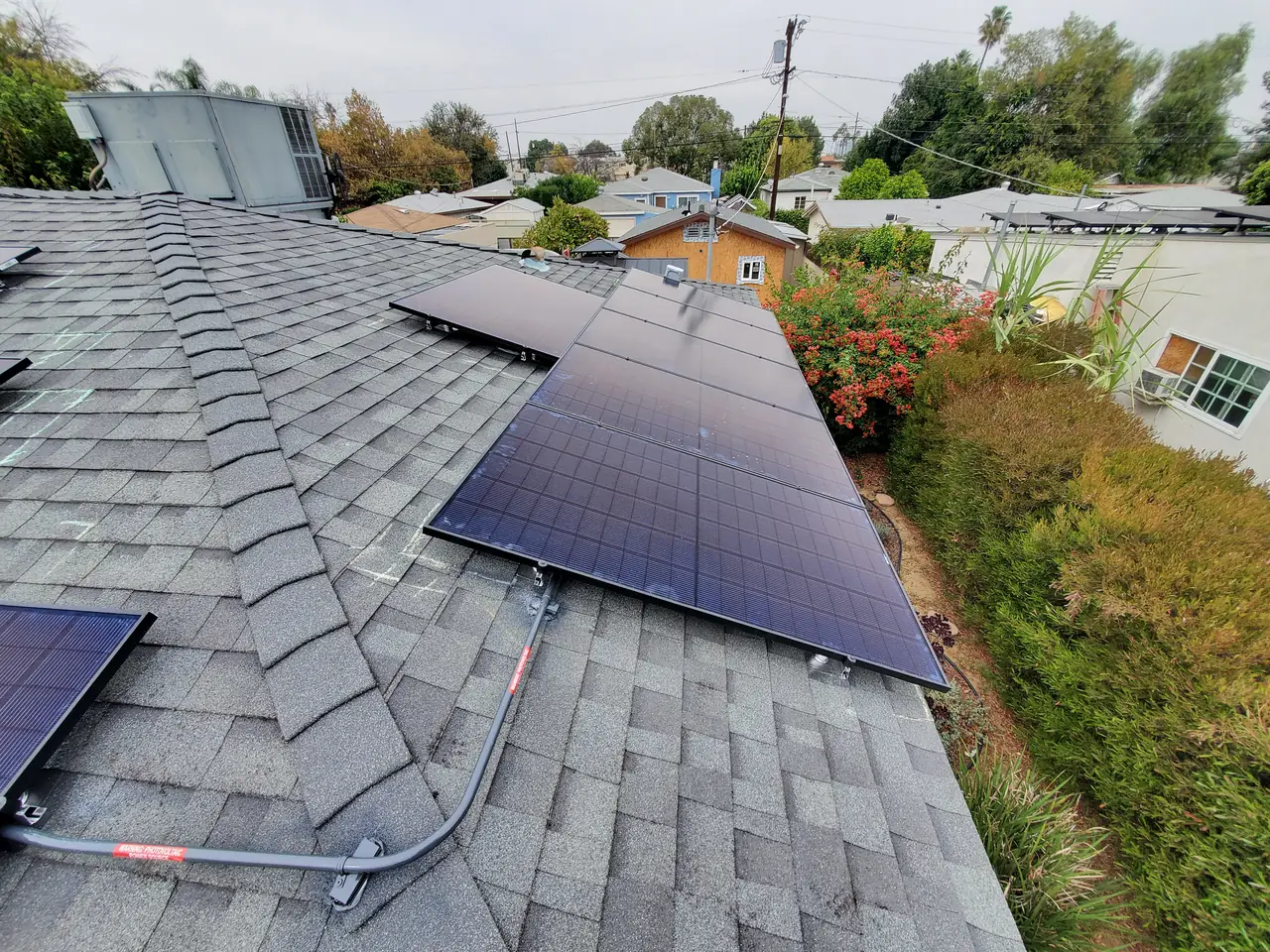
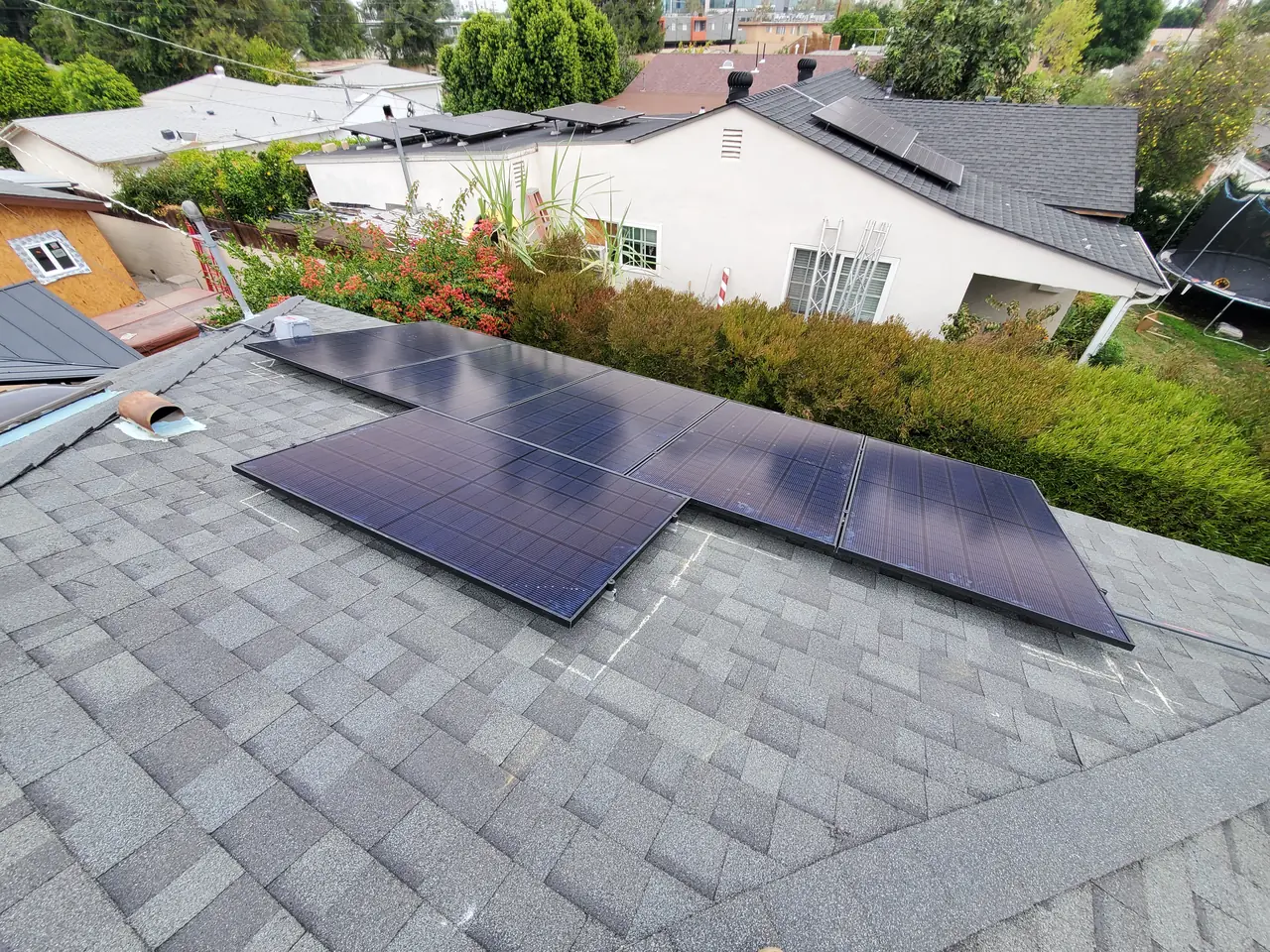
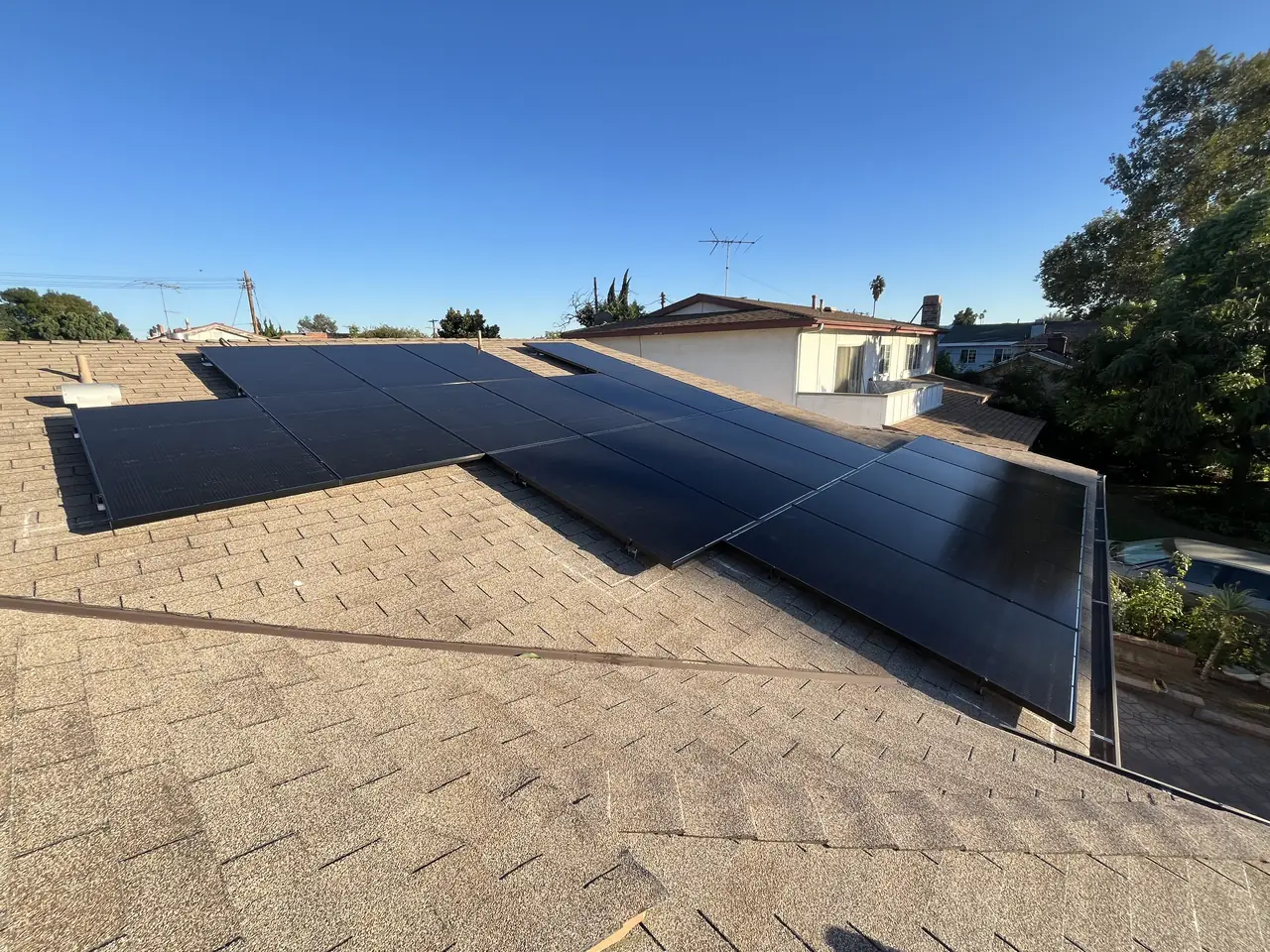
A postwar hip-roof house, twenty-three modules arranged in a chevron across two planes, and an interconnection that never once went back for a correction. Filed in the second week of November, metered on the first of December.
An LADWP residential interconnection can complete in under three weeks when the submission gives the reviewer nothing to send back. On this Van Nuys house the application was filed, confirmed, site-assessed and reviewed within five days, the building release followed, and the net meter was set nineteen days after filing. The system Cali Energy installed is twenty-three modules with a microinverter under each, recorded by the utility at 8.4 kilowatts AC-CEC.
At a glance
- Array
- 23 modules on a hip roof
- Inverters
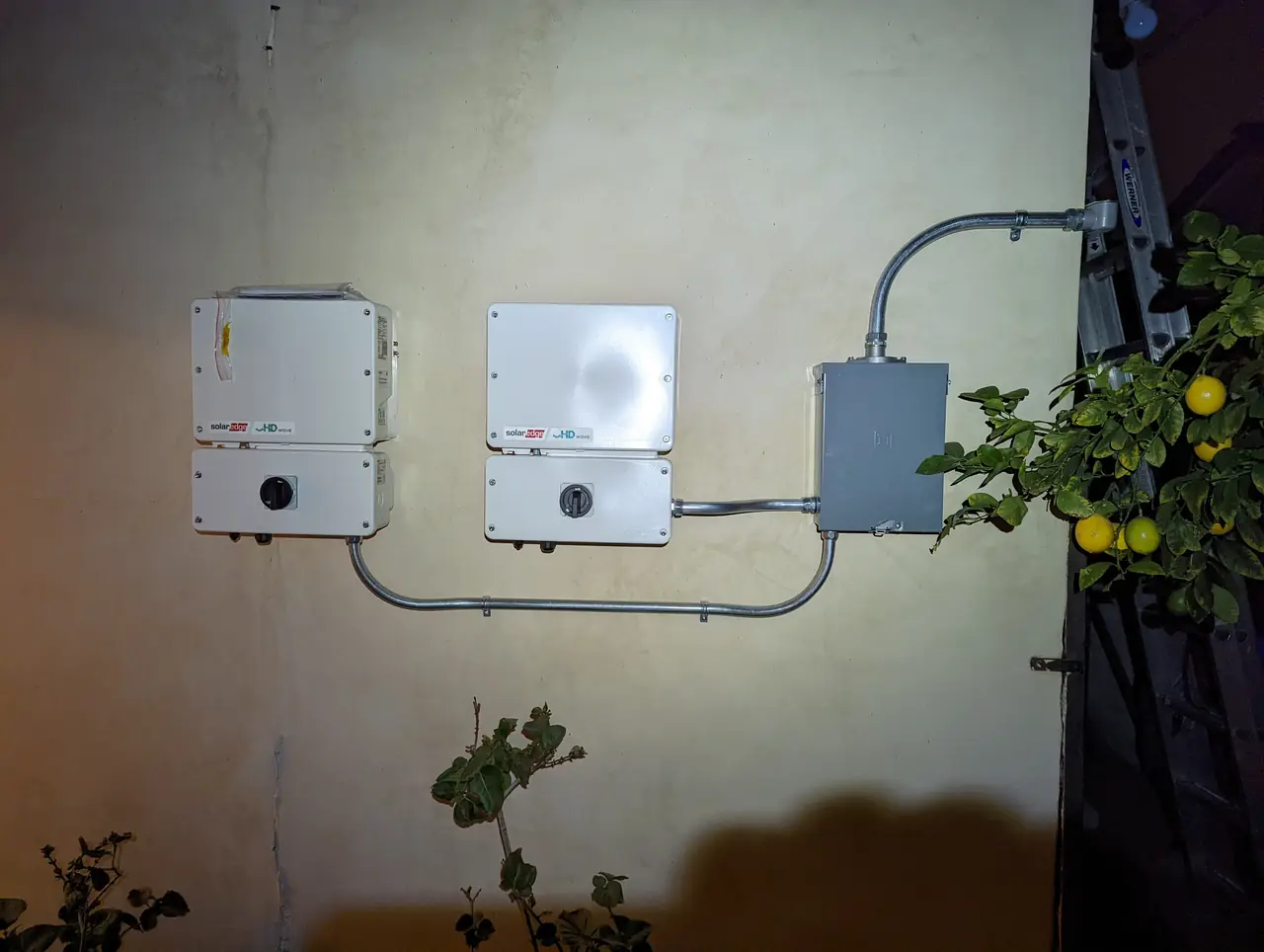
- 23 microinverters, one per module
- Size recorded by the utility
- 8.4 kW AC-CEC
- Roof
- Composition shingle, hip
- Application to confirmation
- Five days
- Application to net meter
- Nineteen days
- Corrections
- None
- Utility / AHJ
- LADWP / LADBS
The story
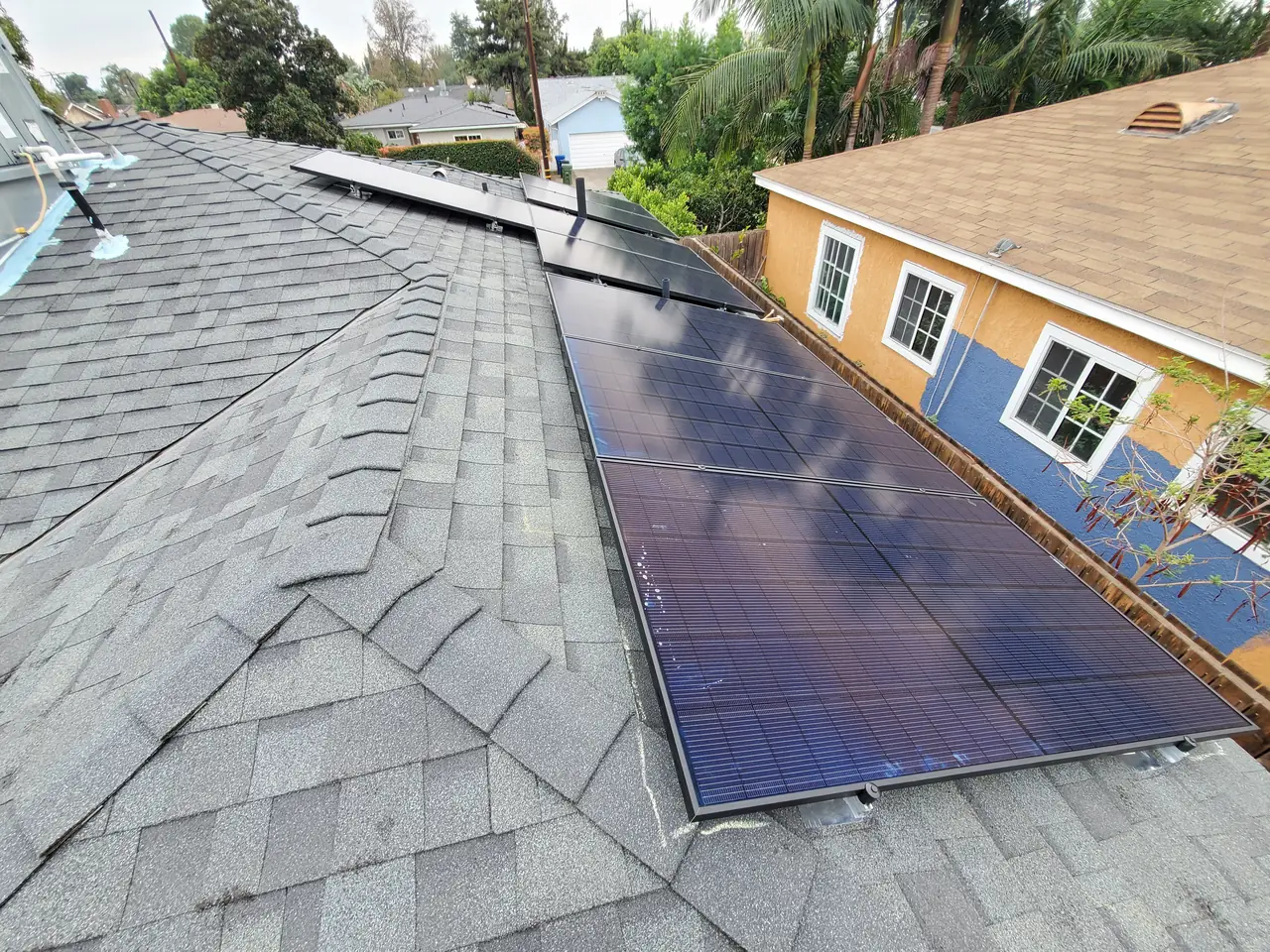
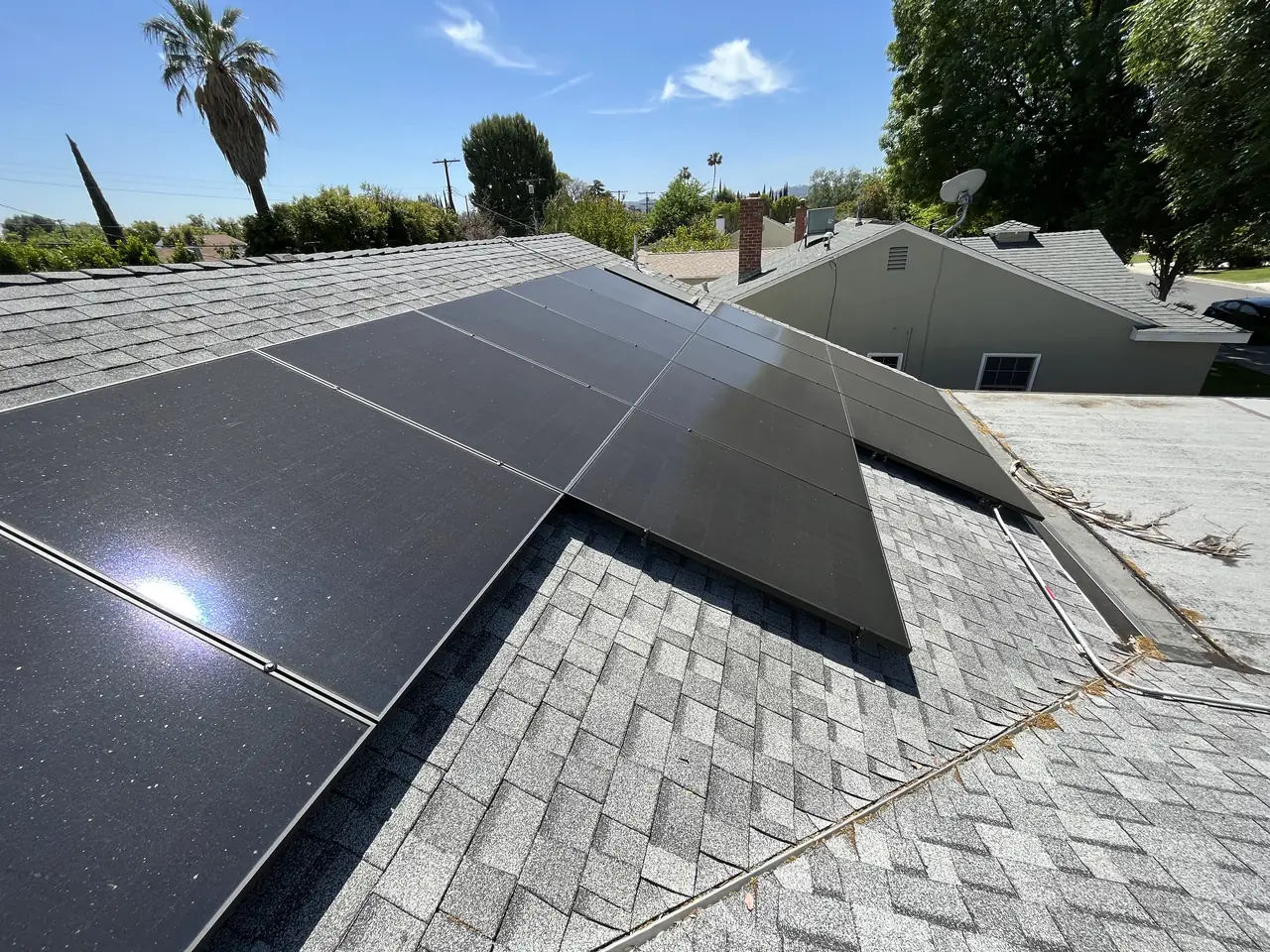
The house is the San Fernando Valley in one building: single story, postwar, a hip roof with four planes and no plane much larger than the others. Hip roofs are harder to fill than gables, because a gable gives you one big rectangle and a hip gives you four triangles and trapezoids that all want a different layout.
Twenty-three modules went on in a chevron, running up the two planes that face the sun and meeting at the hip. It is not a shape anyone draws for its own sake. It is what happens when you put modules only where they will produce and refuse to fill the rest for symmetry.
Then the paperwork did something unusual: it just worked.
The interconnection application went in during the second week of November. The recovery charge cleared three days later. Two days after that the application had been reviewed and confirmed, the site assessment had been completed, and the utility's interconnection review was finished. Five days, start to end, for a stage that routinely takes a month.
At the end of November the utility's service representative wrote a single line confirming the job was with the construction crews. The following day the net meter was set. Nineteen days from filing to permission to operate.
Nothing heroic happened. Nothing went wrong, and the reasons are repeatable.
The system was under ten kilowatts, which is the band where the utility does the least scrutiny. The service equipment was documented and photographed before the application was written, so no field visit was needed to establish what was there. The interconnection agreement was complete on the first submission and was never returned. The building inspection was scheduled around the install rather than after it, so the release existed when the utility wanted it.
The inverse is also true, and it is the more common experience. A missing photograph forces a site visit. An incomplete agreement adds a correction cycle. A final inspection booked three weeks after the crew leaves adds three weeks. None of those are the utility being slow. They are an incomplete submission, and the utility waiting.
Nineteen days is not a promise. It is what a small, clean, well-documented residential interconnection can do when every piece is in place on the first submission.
How it ran
| Second week of November 2021 | Interconnection application filed |
|---|---|
| Mid-November 2021 | Recovery charge received and processed |
| Mid-November 2021 | Application reviewed and confirmed; site assessment completed |
| Mid-November 2021 | Interconnection review complete |
| Third week of November 2021 | Array installed |
| Late November 2021 | Building final inspection passed; release issued |
| End of November 2021 | Utility confirms the job is with its construction crews |
| 1 December 2021 | Net meter set — permission to operate |
Nineteen days from application to net meter, with no corrections at any stage.
What we did
- Laid out a 23-module array across the two sunward planes of a hip roof.
- Documented and photographed the existing service equipment before filing.
- Filed a complete interconnection application and agreement on the first submission.
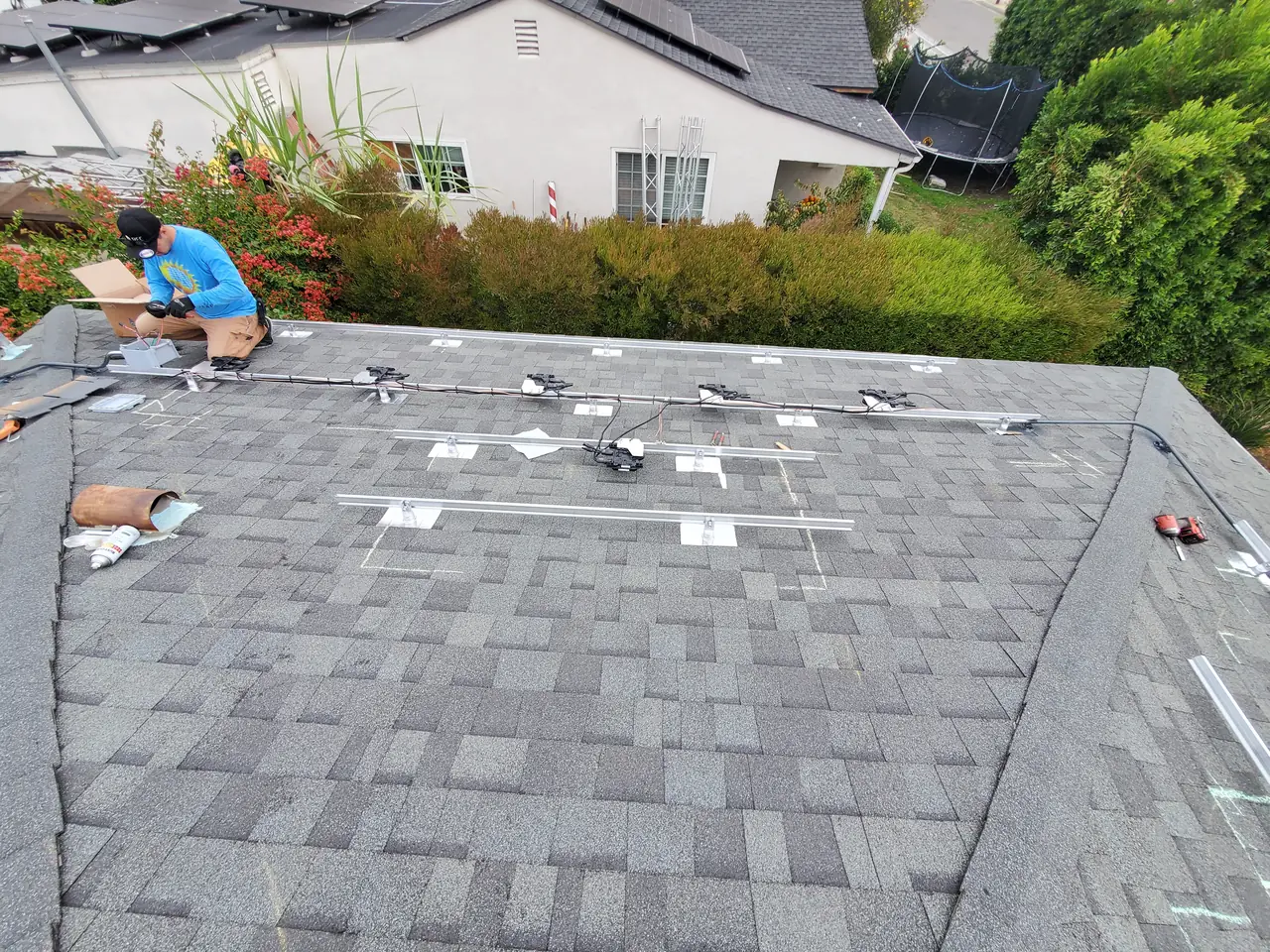
- Installed the mounting system, modules and a microinverter under each module.
- Scheduled the building inspection around the installation so the release was ready when the utility needed it.
- Commissioned the system after the net meter was set.
System specifications
| Modules | 23, arranged in a chevron across two hip planes |
|---|---|
| Inverters | 23 microinverters |
| Size recorded by the utility | 8.4 kW AC-CEC |
| Roof | Composition shingle, hip, four planes |
| Site assessment | Completed without a delay |
| Corrections | None at any stage |
| Utility / AHJ | LADWP / LADBS |
Is your project like this one?
- You have a hip roof and have been told it is awkward for solar.
- You want to know what actually makes an LADWP interconnection fast.
- You are comparing installers on timeline rather than on price alone.
- Your system is under ten kilowatts and you want the shortest realistic path.
- You want the inspection scheduled with the install, not weeks afterward.
Cali Energy in Van Nuys
Van Nuys sits inside City of Los Angeles boundaries: permits run through LADBS, interconnection through LADWP.
The usual complaint about LADWP is that everything takes months. Sometimes it does. Occasionally a project goes through in under three weeks, and it is worth understanding why that happens, because the reasons are entirely within a homeowner's and an installer's control.
This installation is on the Van Nuys projects page alongside the others, and what the work covers is set out on the Van Nuys service area page.
- License and classifications: CSLB #1032379
- Official reference for this process: LADWP interconnection requirements
- Official reference for this process: LADBS — inspections
Frequently asked questions
How long does an LADWP solar interconnection usually take?
Most residential projects run one to three months from application to net meter. The spread comes almost entirely from corrections: a returned agreement, a missing photograph, a site visit that has to be scheduled, or a building release that arrives late. This project took nineteen days because none of those happened, which is the shortest an ordinary residential job realistically goes.
Why is a hip roof harder to fill with solar?
Because it has no single large rectangle. A hip roof breaks into four planes, each facing a different direction and each narrowing toward the top, so a layout that looks tidy on paper often wastes the corners. The practical answer is to cover the planes that actually receive sun and leave the others clear, which is why arrays on hip roofs frequently look asymmetrical.
Does a smaller system get approved faster?
Generally yes. Systems at or below ten kilowatts fall into the band where the utility applies the lightest review, and a site assessment can be bypassed where the existing service is already documented. Larger systems bring extra checks on sizing and service capacity. Size is not the only factor, but it sets the starting point for how much scrutiny the application attracts.
What can a homeowner do to speed up an interconnection?
Two things. Make sure your installer photographs and documents the service equipment before filing, so the utility has no reason to send anyone out. And ask when the final inspection is booked relative to the install date. An inspection scheduled for the week after the crew finishes removes the most common avoidable delay in the whole process.
How fast does Cali Energy get a Van Nuys system through LADWP?
On a small system with documented service equipment, a few weeks. This Van Nuys house ran nineteen days from application to net meter. What Cali Energy controls is the part before the utility: a complete application, photographs taken before filing, and an inspection booked around the install. The meter crew's own queue is not ours to move. License CSLB #1032379.
What this would look like on your roof
Planning solar in Van Nuys? Tell us your utility, your roof and what your bill looks like now, and we will model what a system like this would do on your house before you commit to anything.
Or call +1 (323) 844-7777 · Cali Energy, Northridge · CSLB #1032379 (B, C-10, C-39) — design, permits, install and electrical under one licensed contractor.
Related
This timeline reflects this property and this permitting path. Updated September 2026.