

Van Nuys, Los Angeles, CA · May 2025 – June 2026 · LADWP / LADBS
The array was done in autumn. A year later it was still waiting on Wi-Fi.
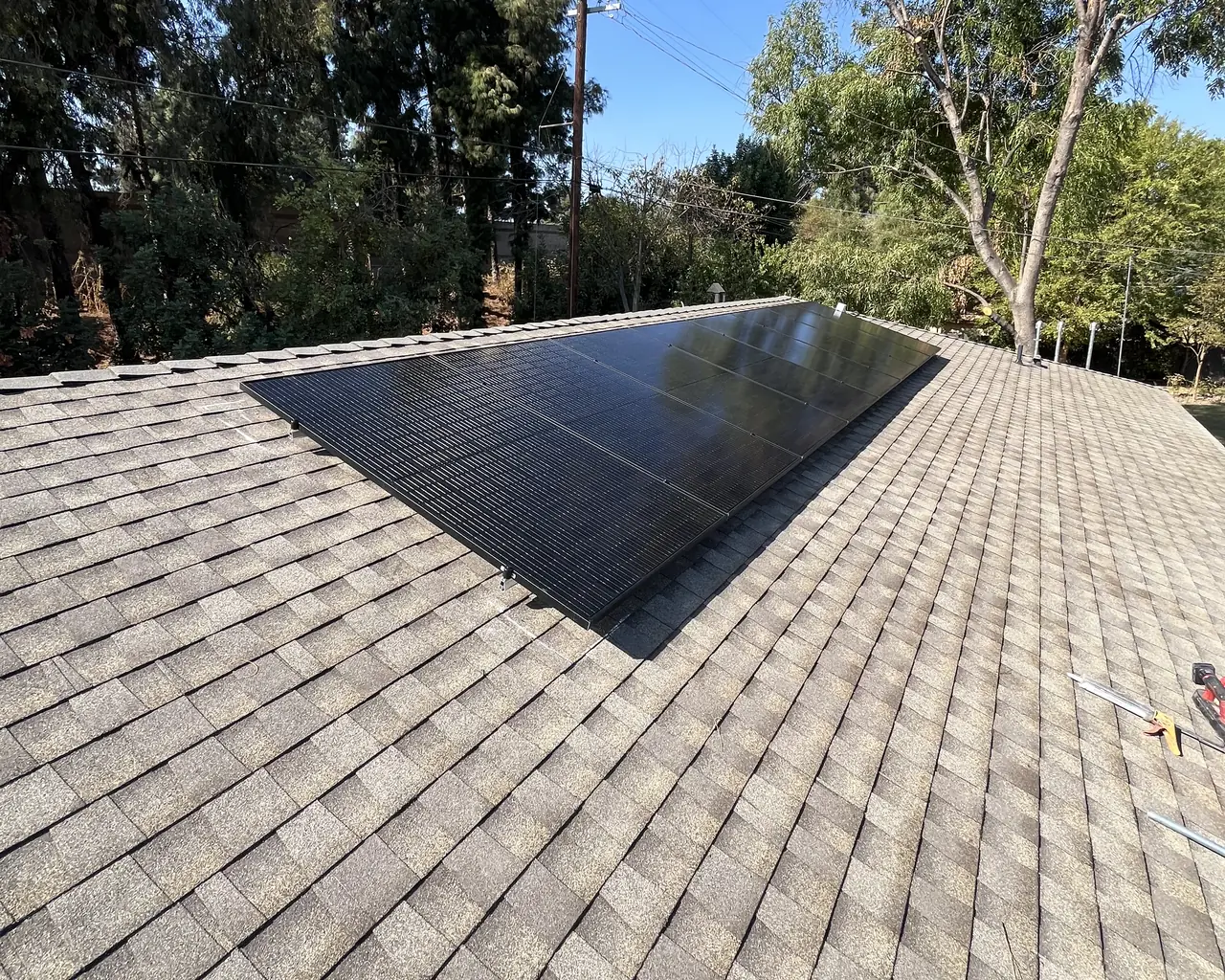
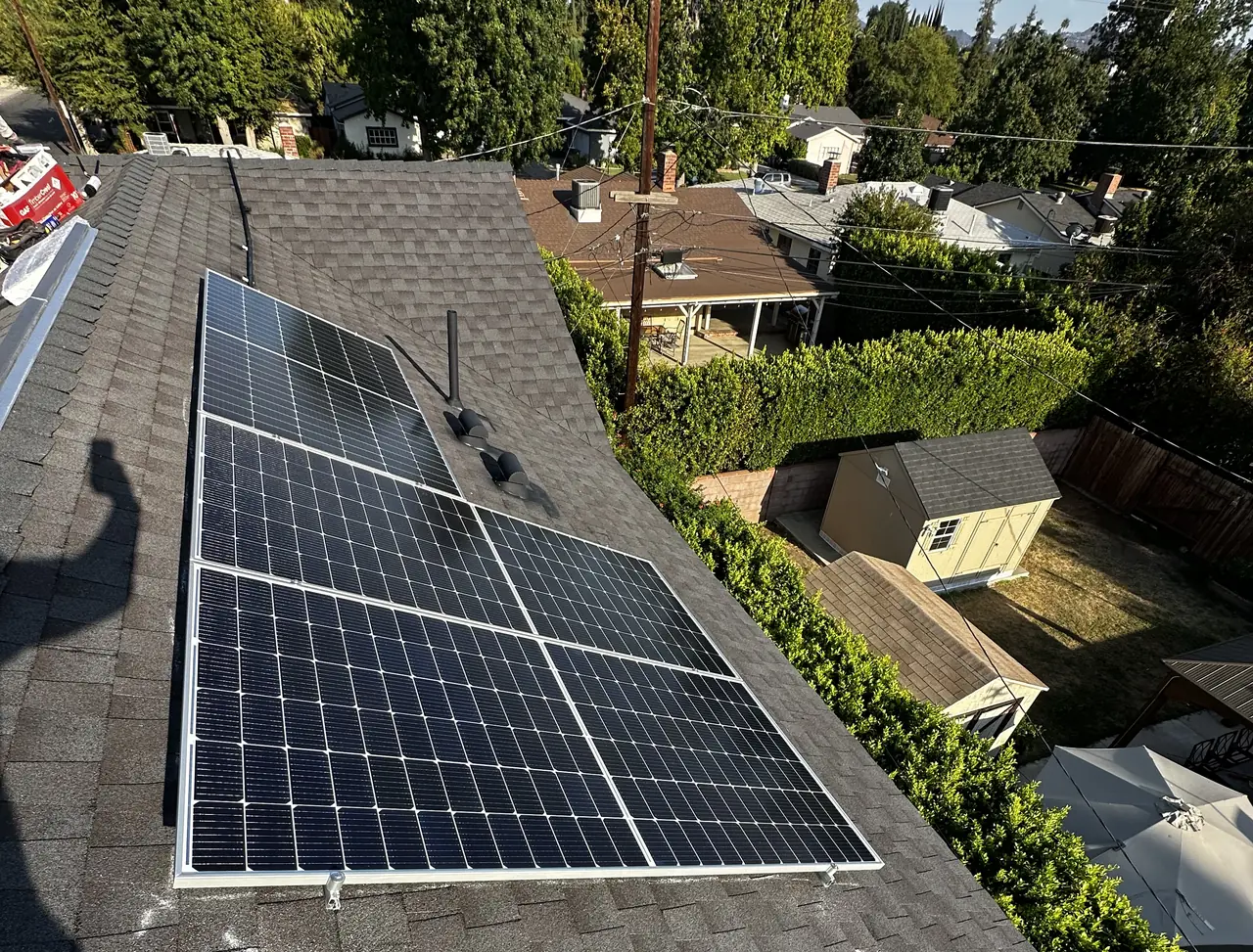
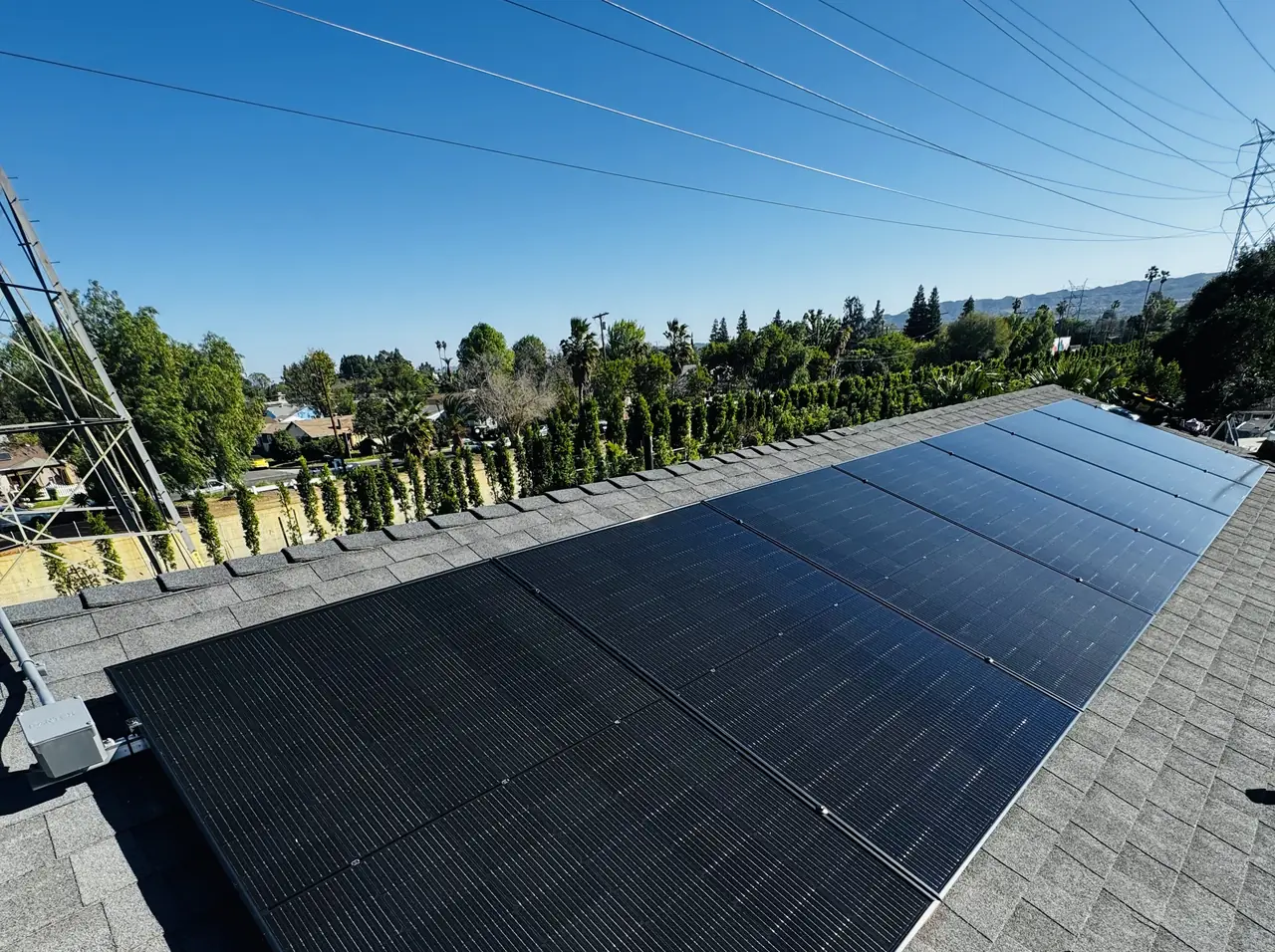
A new dwelling built under the state lot-split law, on a lot that now carries three meters. The array went on a dark shingle hip roof and passed inspection in October. Two things stood between it and running, and neither of them was electrical.
After the building department releases a new dwelling, LADWP still needs photographs of the completed work before it will issue a field order for the solar meter, and once the order is issued a crew visit takes roughly fifteen to twenty business days. On this Van Nuys unit the photographs Cali Energy sent moved the project in a single day, the meter followed inside three weeks, and commissioning then waited for the unit to have an internet connection.
At a glance
- Home
- New dwelling on a lot split under state law
- Size recorded by the utility
- 2.29 kW AC-CEC
- Modules
- All-black
- Inverters
- One microinverter per module
- Metering
- Three-position meter panel serving the lot
- Release to field order
- Five months, cleared by one set of photographs
- Field order to meter
- Under three weeks
- Utility / AHJ
- LADWP / LADBS
The story
The lot carries three meters on one panel: a four-hundred-amp metering assembly with three positions, which is what a property looks like once it has been split and built out under state law. The newest of the three homes is the one this project belongs to.
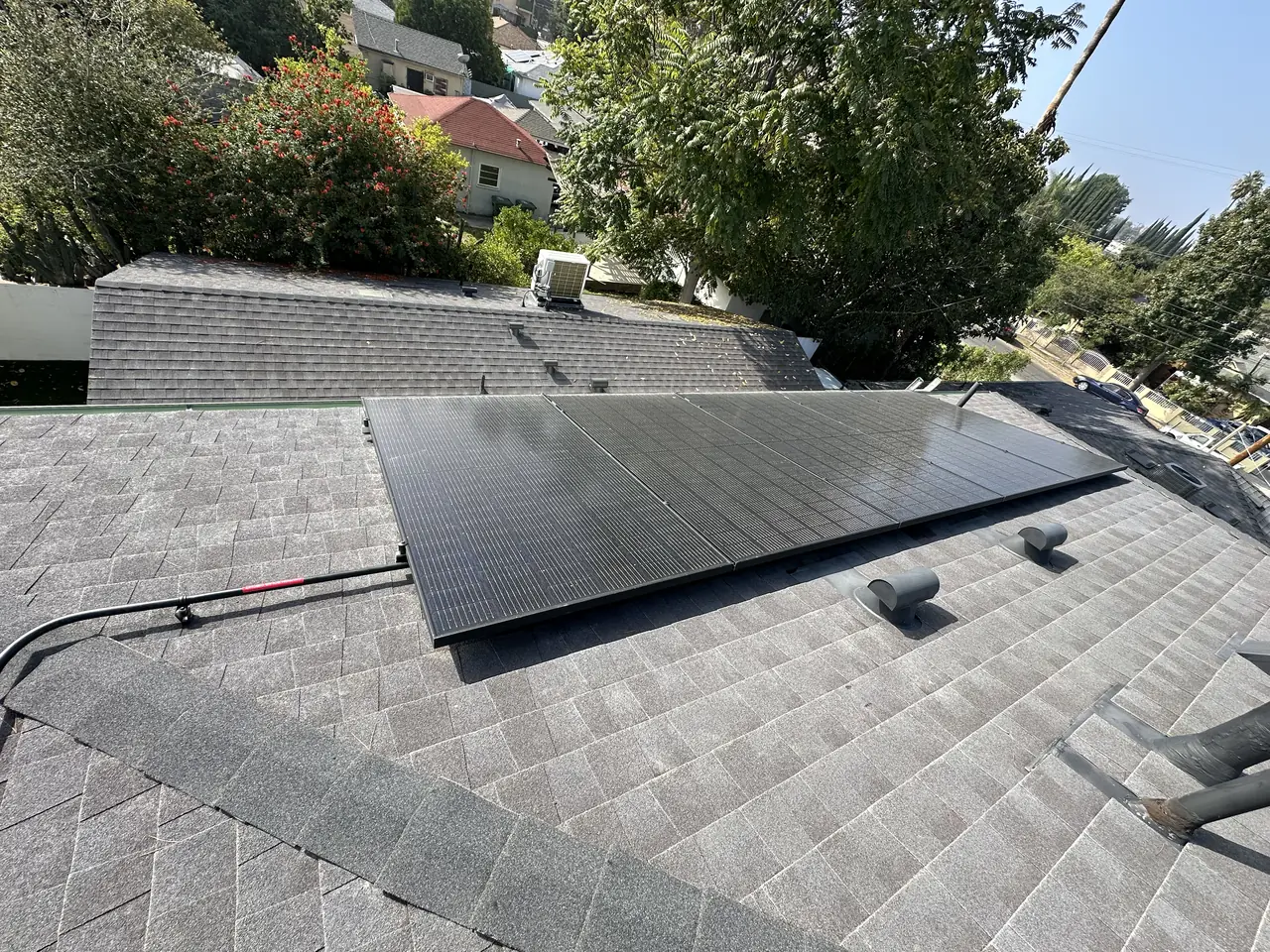
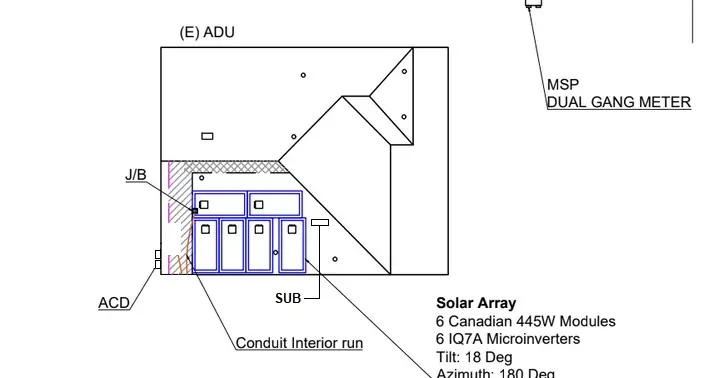
The solar side is modest and was never the difficulty. A small array of all-black modules with a microinverter under each, laid on the sunward planes of a dark shingle hip roof, recorded by the utility at 2.29 kilowatts AC-CEC. The interconnection application went in during May, the work went on through the summer, and the building department released the job in October.
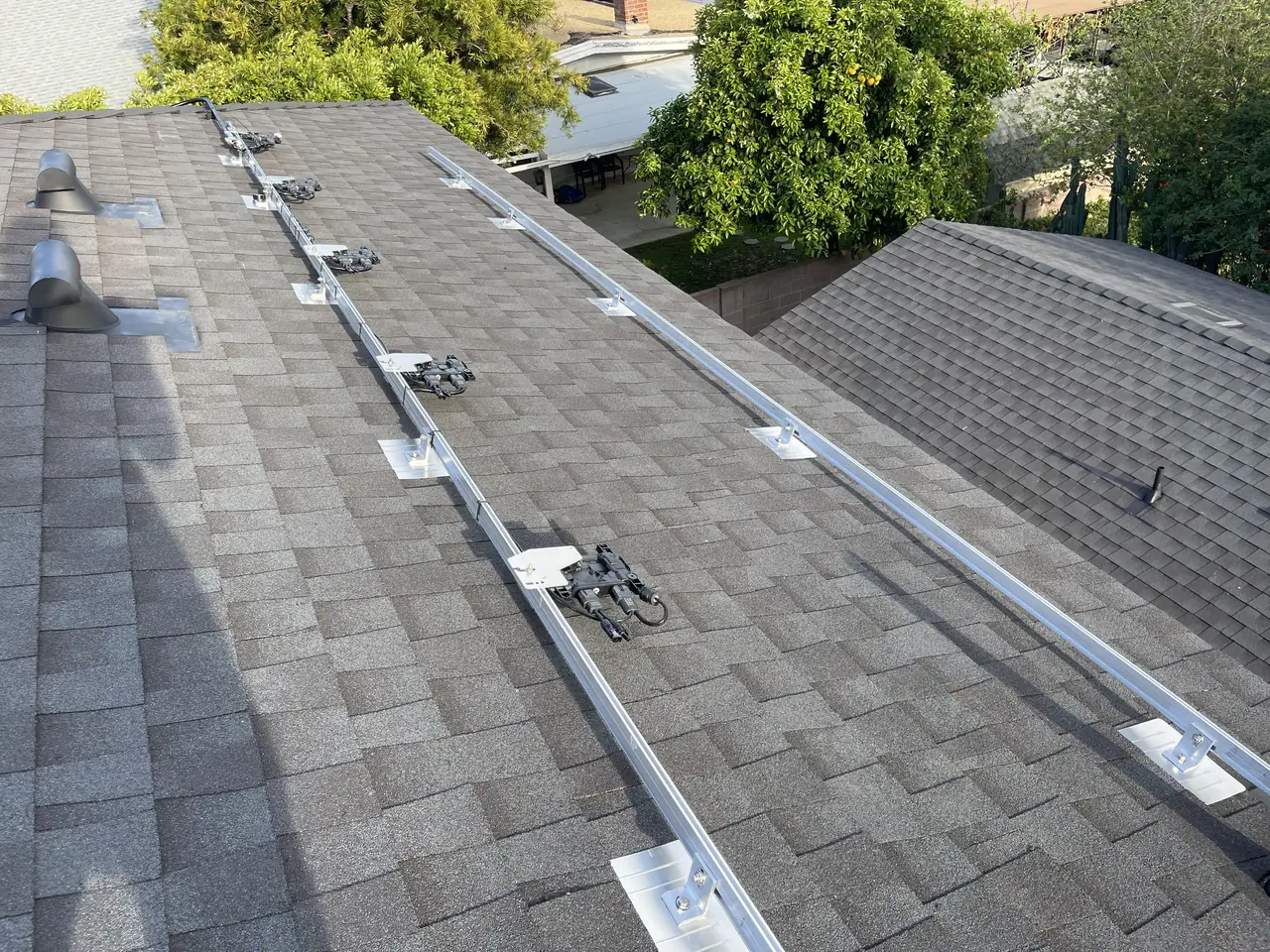
Then the project went quiet, and the reason is worth understanding because it is specific to new construction.
A solar meter is not installed on a building that does not yet have a meter. The utility will not set one on a new dwelling until that dwelling has a permanent service meter and an open billing account, because the solar meter replaces the existing one rather than arriving alongside it. On a new home that means the ordinary service work has to finish first, in its own work request, at its own pace.
Beyond that, the utility wanted to see the finished installation. Not a drawing or a release, but photographs of the completed service equipment as built. That is a reasonable request, and the photographs moved the project in a single day.
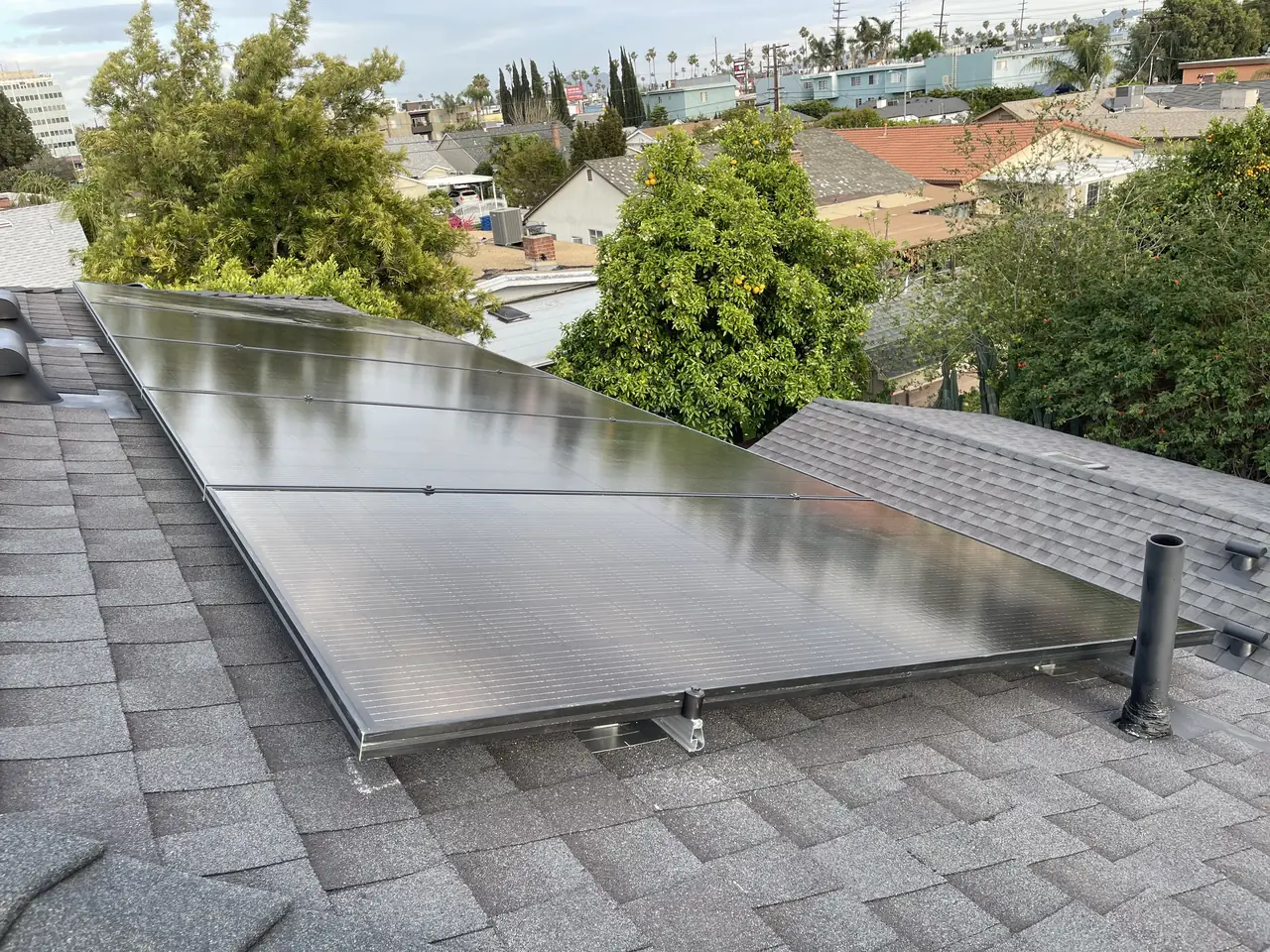
In March the photographs went in. The reply came the same day: the job had been processed and the field order for the solar meter had been sent. We asked how long that takes, and got a straight answer worth writing on a wall — once the order is assigned to a crew, typically a minimum of fifteen to twenty business days, depending on workload.
The crew came inside three weeks, and the net meter was set in the middle of April.
And then the system still did not run, because the unit had no internet.
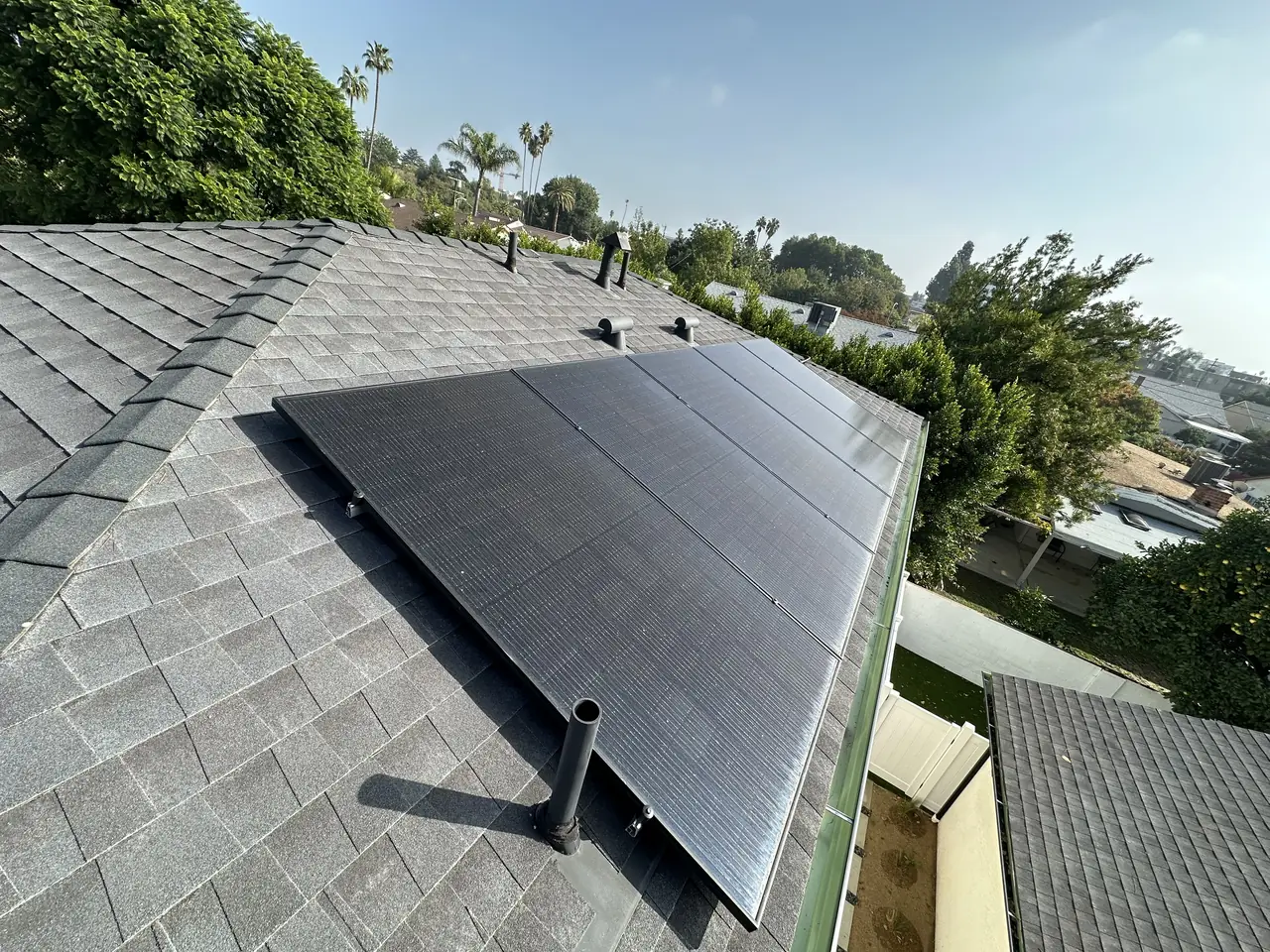
Microinverter systems report through a gateway, and the gateway needs a network to report over. Commissioning is the visit where the system is started, the gateway is joined to the network and every microinverter is confirmed reporting. In an empty new unit with no tenant, there is nothing to join. We asked in June whether Wi-Fi had been installed yet so we could come and switch it on.
That is the whole ending. No fault, no dispute, no technical problem. A finished array, an approved interconnection, a set meter, and a building waiting for somebody to move in and order internet.
If you are building a unit to rent: put the internet connection on the same list as the appliances. It is the cheapest item on it and it is the one that decides when the solar starts counting.
How it ran
| May 2025 | Interconnection application filed; recovery charge processed |
|---|---|
| Summer 2025 | Array installed on the new unit's hip roof |
| October 2025 | Final release from the building department |
| Winter 2025 – 2026 | Utility waits on the unit's permanent meter and completed-work photographs |
| March 2026 | Photographs submitted; field order for the solar meter issued the same day |
| April 2026 | Net meter set |
| June 2026 | Commissioning pending an internet connection in the unit |
Five months from release to field order, one day once the photographs were sent, under three weeks from field order to meter.
What we did
- Designed and installed a small array on the hip planes of a new dwelling's roof.
- Wired the system to the unit's own position on the lot's three-meter assembly.
- Filed the interconnection application against the new unit's service.
- Supplied the completed-work photographs that released the field order for the solar meter.
- Followed the field order through to the meter installation.
- Held commissioning until the unit had a network for the monitoring gateway.
System specifications
| Home | New dwelling on a lot split under state law |
|---|---|
| Size recorded by the utility | 2.29 kW AC-CEC |
| Modules | All-black |
| Inverters | One microinverter per module |
| Roof | Composition shingle, hip |
| Metering | Three-position, 400 A metering assembly for the lot |
| Utility / AHJ | LADWP / LADBS |
Is your project like this one?
- You are building a unit to rent and want the solar running when the tenant arrives.
- Your new home's solar is finished but the utility has not set a meter.
- Your lot has more than one meter and you are adding solar to one of them.
- You have been asked for photographs of completed work and are unsure what for.
- You want to know what actually happens between inspection and switch-on.
Cali Energy in Van Nuys
Van Nuys sits inside City of Los Angeles boundaries: permits run through LADBS, interconnection through LADWP.
The last stages of a solar project are rarely technical. On a newly built home they tend to be administrative or domestic: a photograph the utility needs, a billing account that does not exist yet, an internet connection nobody has ordered because nobody lives there.
This installation is on the Van Nuys projects page alongside the others, and what the work covers is set out on the Van Nuys service area page.
- License and classifications: CSLB #1032379
- Official reference for this process: LADWP interconnection requirements
- Official reference for this process: Los Angeles City Planning — housing policies and ADUs
Frequently asked questions
Why will the utility not install a solar meter on a new building?
Because the solar meter replaces an existing service meter rather than being added beside it. A newly built dwelling has to have its permanent meter set and a billing account open before the solar meter can take its place. Where the ordinary service work is still running as a separate job, the solar side waits for it, regardless of how finished the array is.
What photographs does LADWP want before issuing a field order?
Pictures of the completed installation as built: the service equipment, the point of connection and the meter position, showing the work in its finished state. They let the utility confirm what its crew will find before sending anyone out. Submitting them promptly matters more than most people expect. On this project they turned a five-month pause into a field order the same day.
How long does a solar meter take once the field order is issued?
The utility's own guidance is a minimum of fifteen to twenty business days once the order is assigned to a crew, depending on their workload. This project ran about two weeks. It is a useful number to hold onto, because it separates the part of the wait that is administrative from the part that is simply a crew's schedule.
Does a solar system need internet to work?
The system produces power without it, but it cannot be commissioned or monitored without a network. Microinverter systems report through a gateway that has to join a Wi-Fi or wired connection before the installer can confirm every microinverter is running and hand over monitoring. In an empty new unit that usually means the internet has to be ordered before the final visit.
Does Cali Energy commission the system after the meter is set?
Yes, and it is a separate visit from the installation. Commissioning is where the system is started, the monitoring gateway joins the network and every microinverter is confirmed reporting. Cali Energy holds that visit until the meter is in and the building has a connection, then hands over monitoring to whoever will live there. License CSLB #1032379.
What this would look like on your roof
Planning solar in Van Nuys? Tell us your utility, your roof and what your bill looks like now, and we will model what a system like this would do on your house before you commit to anything.
Or call +1 (323) 844-7777 · Cali Energy, Northridge · CSLB #1032379 (B, C-10, C-39) — design, permits, install and electrical under one licensed contractor.
Related
This timeline reflects this property and this permitting path. Updated September 2026.