

Van Nuys, Los Angeles, CA · December 2024 – May 2025 · LADWP / LADBS
Everything was approved. The meter crew had not been out.
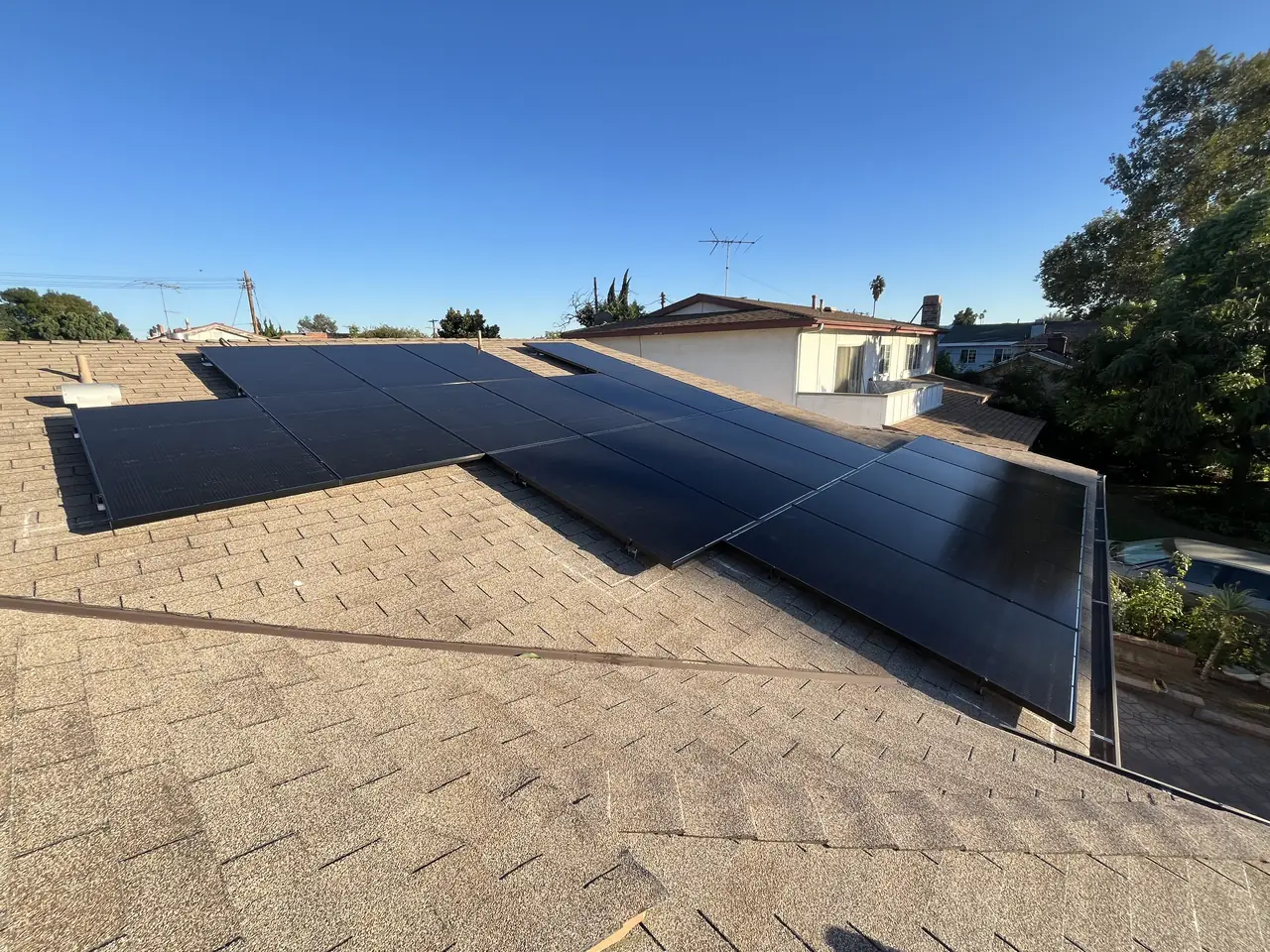
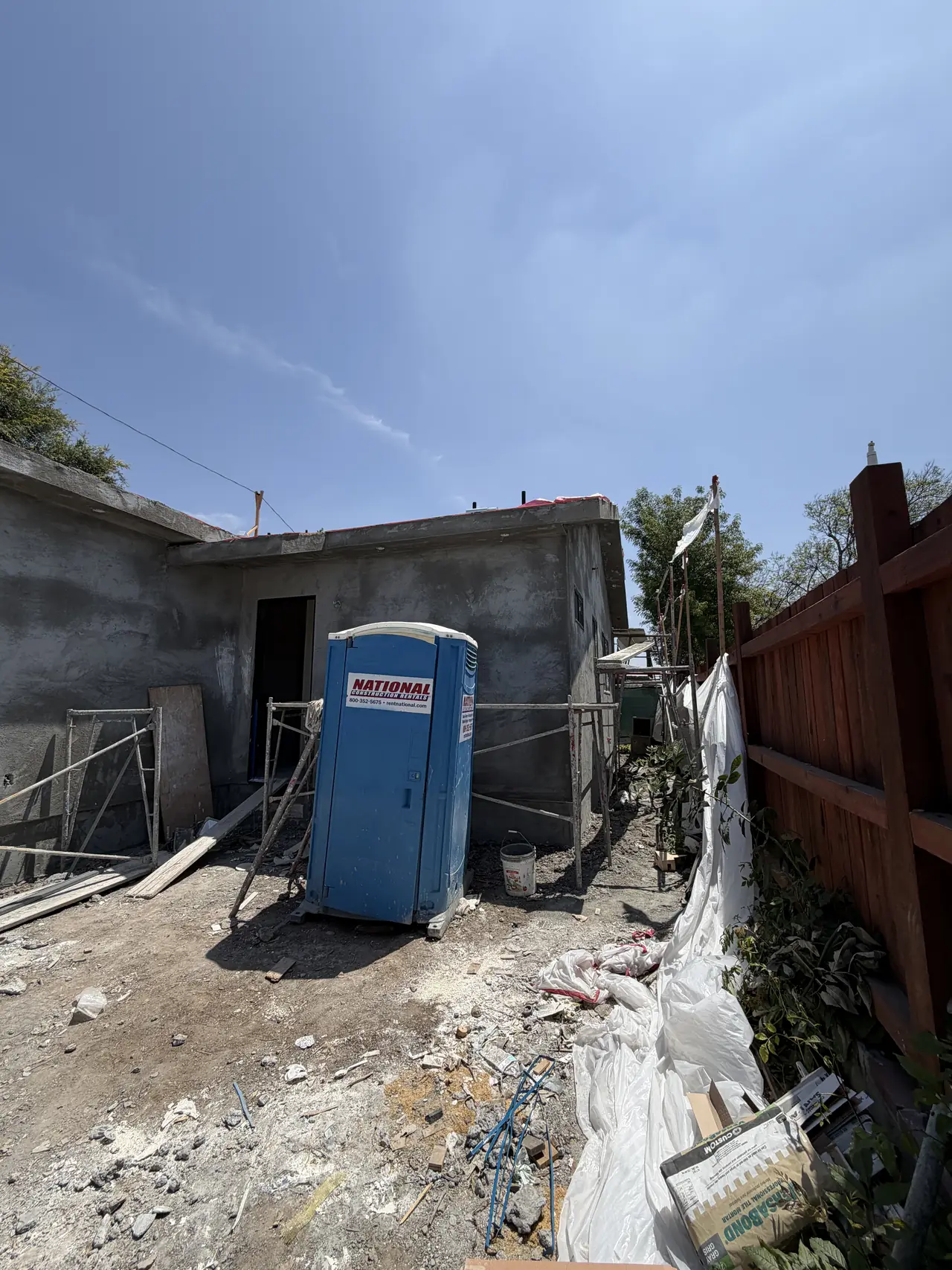
A new single-story dwelling built under the state lot-split law, alongside the existing home on the lot. Two small arrays, two work requests, both released by the building department on the same day in March. The meters went on in May.
Once LADWP completes its interconnection review, the project waits for the meter installation crew, which runs as its own queue. On this Van Nuys lot two dwellings cleared review on the same day in March and both meters were set eight weeks later. The utility's own guidance, which Cali Energy followed here, is to contact the meter installation group directly: service planning cannot schedule or accelerate the crew, and the meter group is the only side that can say where a work request sits in its queue.
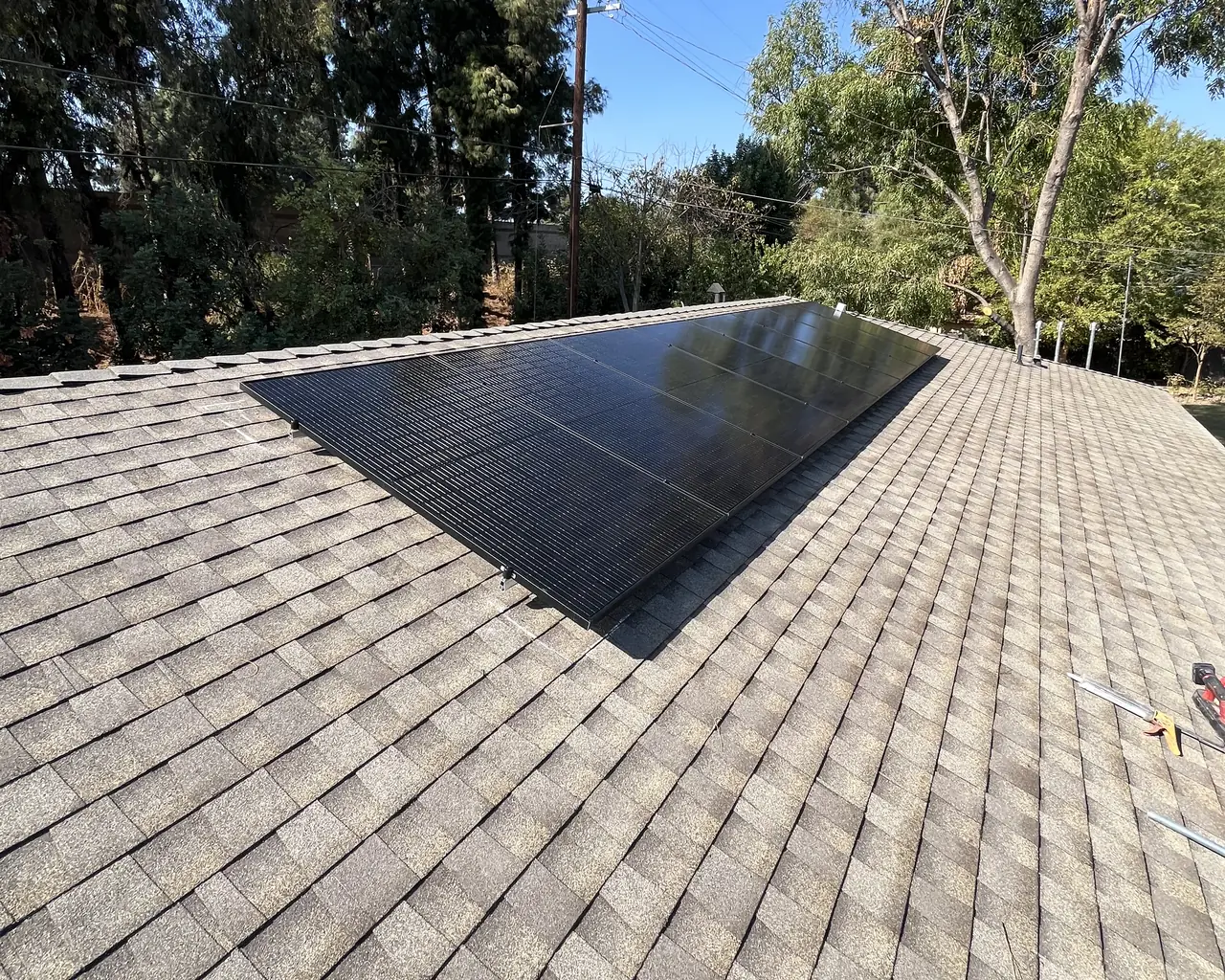
At a glance
- Homes on the lot
- Two: the existing home and a new SB9 dwelling
- New dwelling
- One story, about 64 ft × 33 ft
- Sizes recorded by the utility
- 3.17 kW and 2.38 kW AC-CEC
- Modules
- 400 W, all-black
- Inverters
- One microinverter per module
- Both releases
- Same day in March
- Both meters
- Same day in May
- Utility / AHJ
- LADWP / LADBS
The story
The lot now carries two homes. The original house is still there, and beside it a new single-story dwelling of roughly sixty-four feet by thirty-three, built under the state law that allows a second home on a single-family lot. Two homes means two services, two meters and two solar systems, which by this point in Van Nuys is an ordinary arrangement rather than an unusual one.
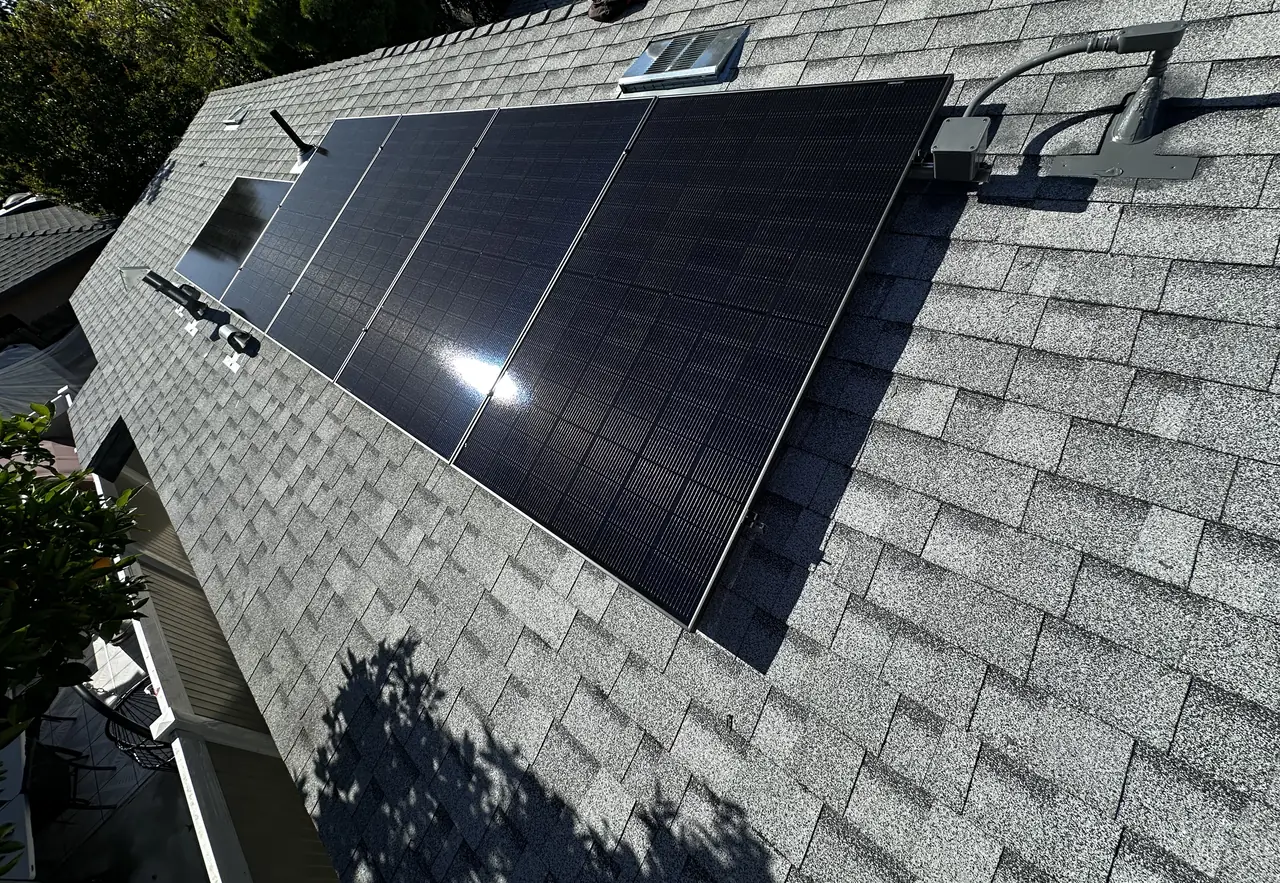
Both arrays are small: one recorded by the utility at 3.17 kilowatts AC-CEC and one at 2.38, all-black four-hundred-watt modules with a microinverter under each, laid in groups on the planes of a hip roof. Neither is complicated. Both were installed, inspected and finished in the ordinary way.
One detail from the filing is worth keeping. Both applications went in on the same December day under a single address, because that was the only address the lot had in the utility's records. When the reviews came back three months later they carried two different house numbers, assigned by the utility as it created the second service. The paperwork you file and the paperwork you get back do not always agree on what the property is called.
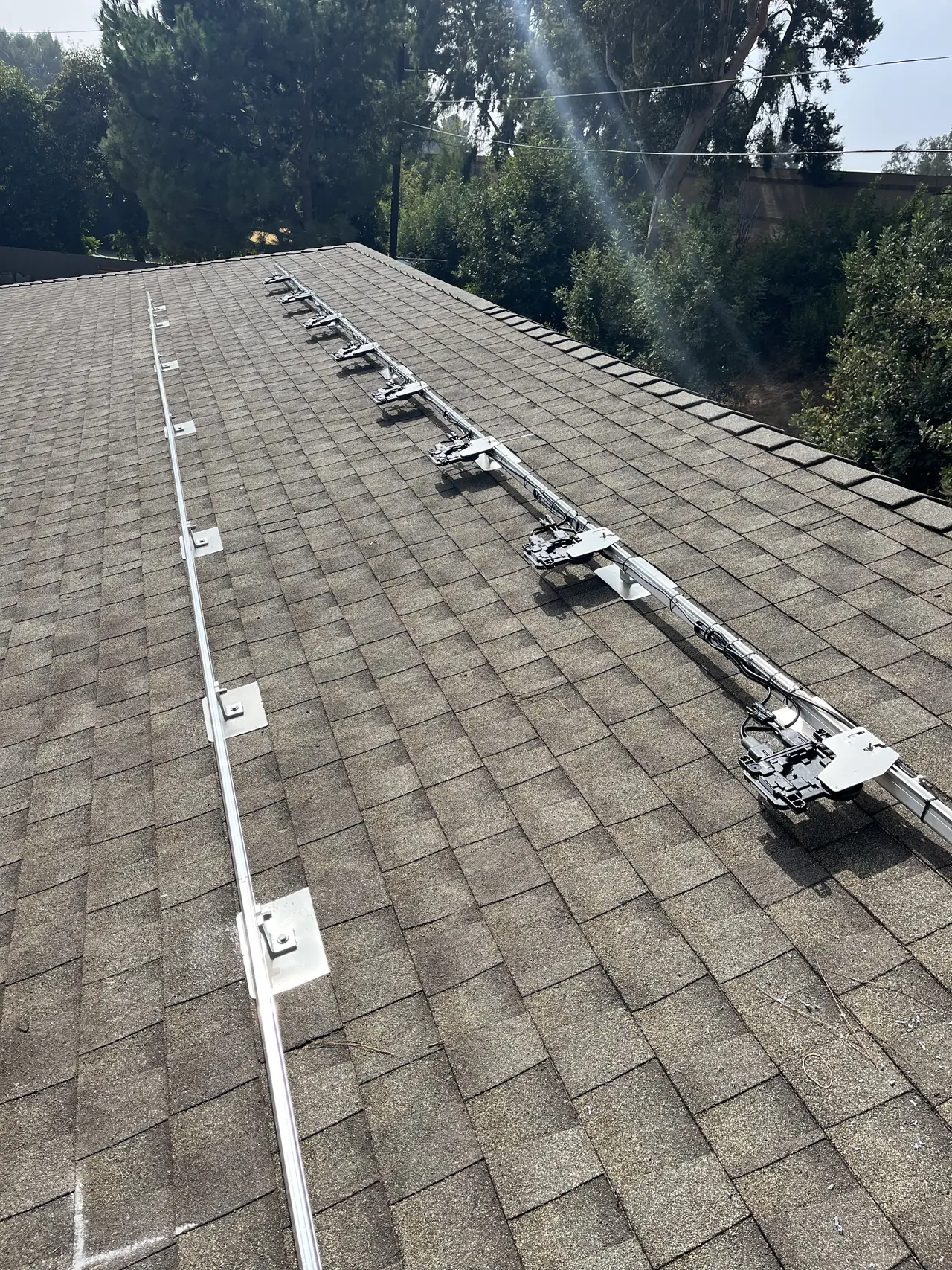
Two applications went in together at the end of December. In March both dwellings received their final release from the building department on the same day, and the utility completed its interconnection review for both that same day. Every box was ticked. Two requests to install net meters went out.
And then, for two months, nothing.
This is the least understood stage of an LADWP project, and the one that produces the most frustration, because from the outside it looks identical to a project that has gone wrong. It has not gone wrong. The interconnection is approved and every document is in. What remains is physical: a crew has to drive out, pull the existing meter and set a net meter in its place. That crew is a separate group inside the utility with its own workload and its own schedule, and it does not report progress.
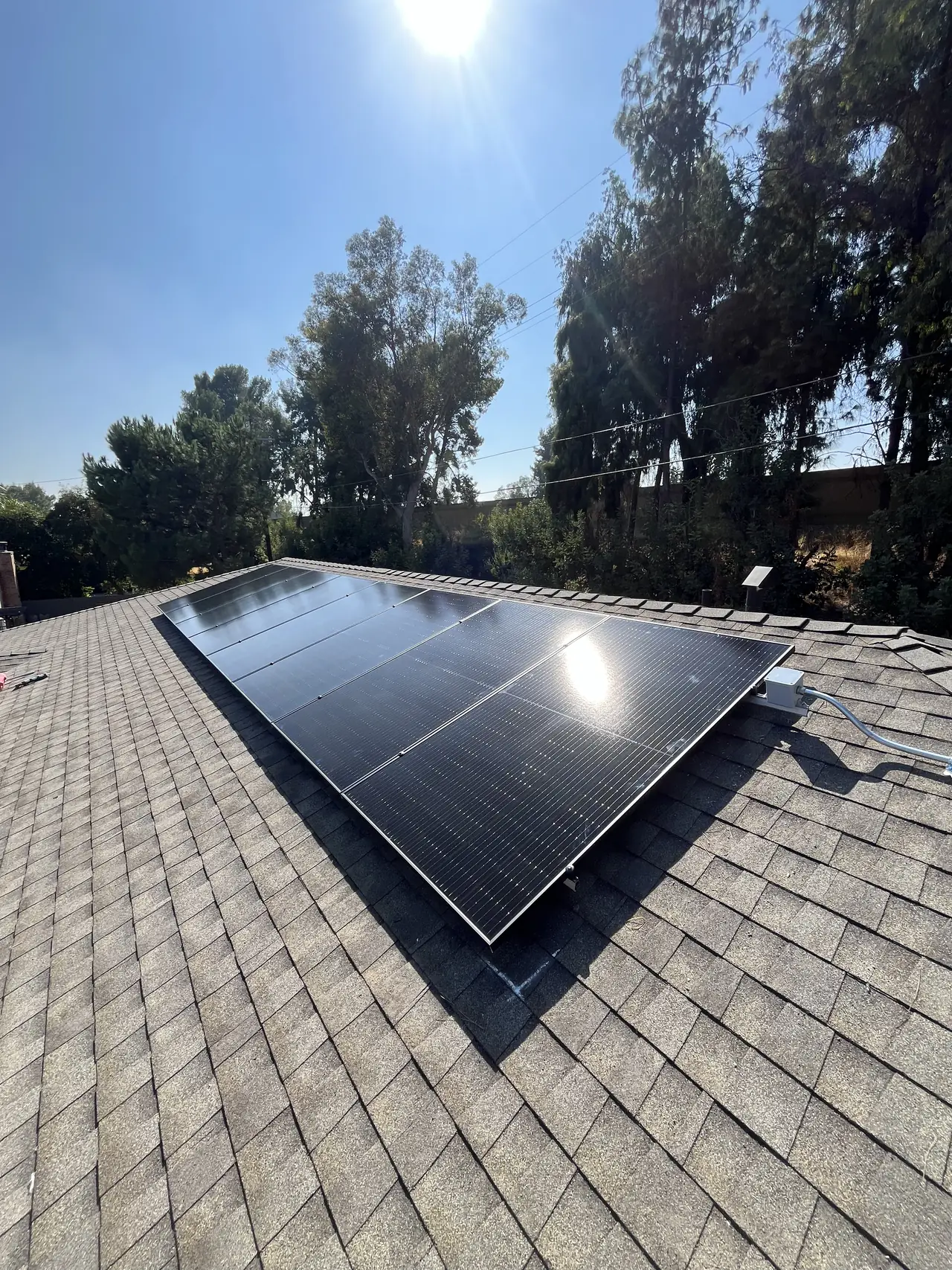
In April we asked the utility's service planning side when the meters would be set. The answer was useful and is worth repeating: contact the meter installation group directly, by phone, and ask when they will be out. Service planning does not schedule that work and cannot speed it up. The meter group can tell you where in their queue a work request sits.
That is the practical lesson. After the interconnection review completes, the question stops being about paperwork and becomes a scheduling question addressed to a different department. Continuing to ask the planners produces polite answers and no progress.
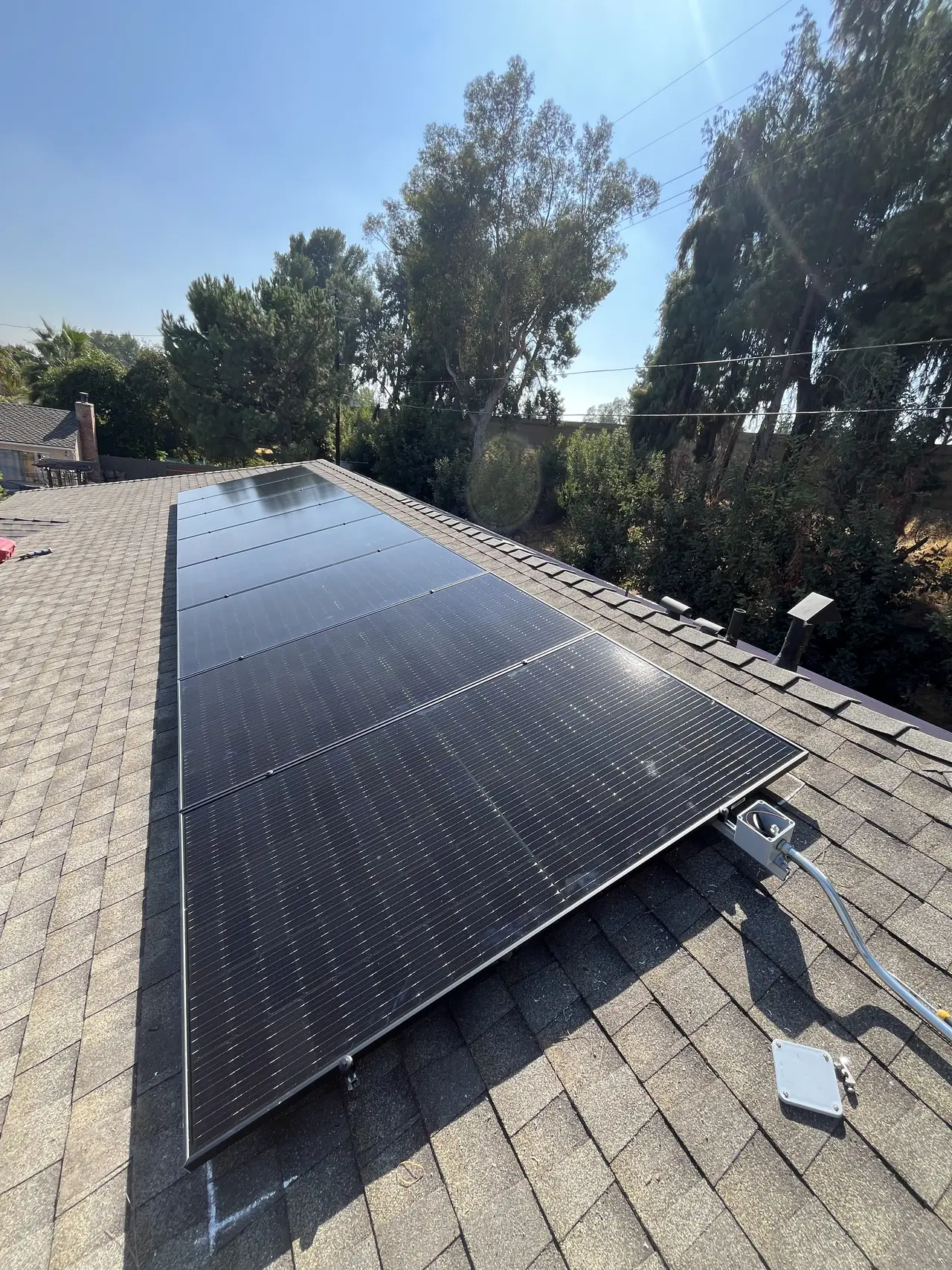
Both meters were set on the same day in May, eight weeks after the releases. Both systems went live together, which is at least tidy: one lot, two homes, two meters, one afternoon.
For a homeowner in this position: the useful question is not when the system will be turned on. It is whether the interconnection review has completed. If it has, the project is in the meter queue, and the only lever left is a phone call to the group that actually holds the schedule.
How it ran
| Late December 2024 | Two interconnection applications filed for the lot |
|---|---|
| March 2025 | Final releases from the building department on both dwellings |
| March 2025 | Interconnection reviews complete; meter requests issued |
| April 2025 | Utility advises contacting the meter installation group directly |
| May 2025 | Both net meters set on the same day — permission to operate |
Eight weeks between a completed interconnection review and the meter crew arriving. No paperwork was outstanding in that window.
What we did
- Designed two small arrays, one for each dwelling on the lot.
- Installed the mounting system, modules and a microinverter under each module on both roofs.
- Filed both interconnection applications together so the two projects moved as one batch.
- Carried both dwellings through their final releases on the same day.
- Pressed the utility for meter scheduling and established which group actually holds it.
- Commissioned both systems once the meters were set.
System specifications
| Homes | Existing house plus a new SB9 dwelling |
|---|---|
| New dwelling | One story, about 64 ft × 33 ft |
| Sizes recorded by the utility | 3.17 kW and 2.38 kW AC-CEC |
| Modules | 400 W all-black |
| Inverters | One microinverter per module |
| Roof | Composition shingle, hip |
| Metering | One net meter per dwelling |
| Utility / AHJ | LADWP / LADBS |
Is your project like this one?
- Your interconnection is approved and the system still has not been switched on.
- You have two homes on one lot and two separate meters.
- You want to know who inside the utility actually schedules the meter change.
- You are being told the project is complete but nothing is happening.
- You are planning a second dwelling and want a realistic end-to-end timeline.
Cali Energy in Van Nuys
Van Nuys sits inside City of Los Angeles boundaries: permits run through LADBS, interconnection through LADWP.
After the interconnection review is finished, one step is left: a utility crew has to come and change the meter. That crew is a separate queue with its own schedule, and it is the part of the process an installer has the least control over and the least visibility into.
This installation is on the Van Nuys projects page alongside the others, and what the work covers is set out on the Van Nuys service area page.
- License and classifications: CSLB #1032379
- Official reference for this process: LADWP interconnection requirements
- Official reference for this process: Los Angeles City Planning — housing policies and ADUs
Frequently asked questions
What happens after LADWP completes the interconnection review?
A request goes to the utility's meter installation crews to swap the existing meter for a net meter. That is the last step before the system can legally run. The review being complete does not mean the meter is scheduled; it means the request has entered a separate queue. Until the crew arrives, the project sits in a state that looks finished on paper and does nothing on the roof.
Who do I contact about a net meter that has not been installed?
The meter installation group, not the service planning engineers. Planning handles the review and the agreement; it does not schedule field crews and cannot move them. The utility itself directs installers to phone the meter group for timing. Having the work request number ready makes that call short and usually produces an actual position in the queue.
How long does the meter swap usually take?
It varies with crew workload rather than with the project. On this lot it was about eight weeks from a completed review. Other projects have run a week or two. The useful expectation is that this stage is measured in weeks and is not something an installer can accelerate, which is why it belongs in the schedule from the start rather than as a surprise at the end.
Can two systems on one lot be switched on at the same time?
Yes, and filing them together is what makes it happen. Where both applications move through review as a batch, both meter requests reach the crew together and are usually handled on one visit. That saves a second trip and means both homes start producing on the same day, which is worth coordinating when a lot carries more than one dwelling.
Does Cali Energy follow the meter queue for Van Nuys customers?
Yes. After the interconnection review closes, the project is out of an installer's hands and into a utility crew's schedule. Cali Energy keeps the work request number, checks the status rather than waiting for notices, and calls the meter installation group when a Van Nuys job stops moving. License CSLB #1032379.
What this would look like on your roof
Planning solar in Van Nuys? Tell us your utility, your roof and what your bill looks like now, and we will model what a system like this would do on your house before you commit to anything.
Or call +1 (323) 844-7777 · Cali Energy, Northridge · CSLB #1032379 (B, C-10, C-39) — design, permits, install and electrical under one licensed contractor.
Related
This timeline reflects this property and this permitting path. Updated September 2026.