

Reseda, CA · January – June 2026 · LADWP / LADBS
Seven modules, one day. Then four months waiting for a meter.
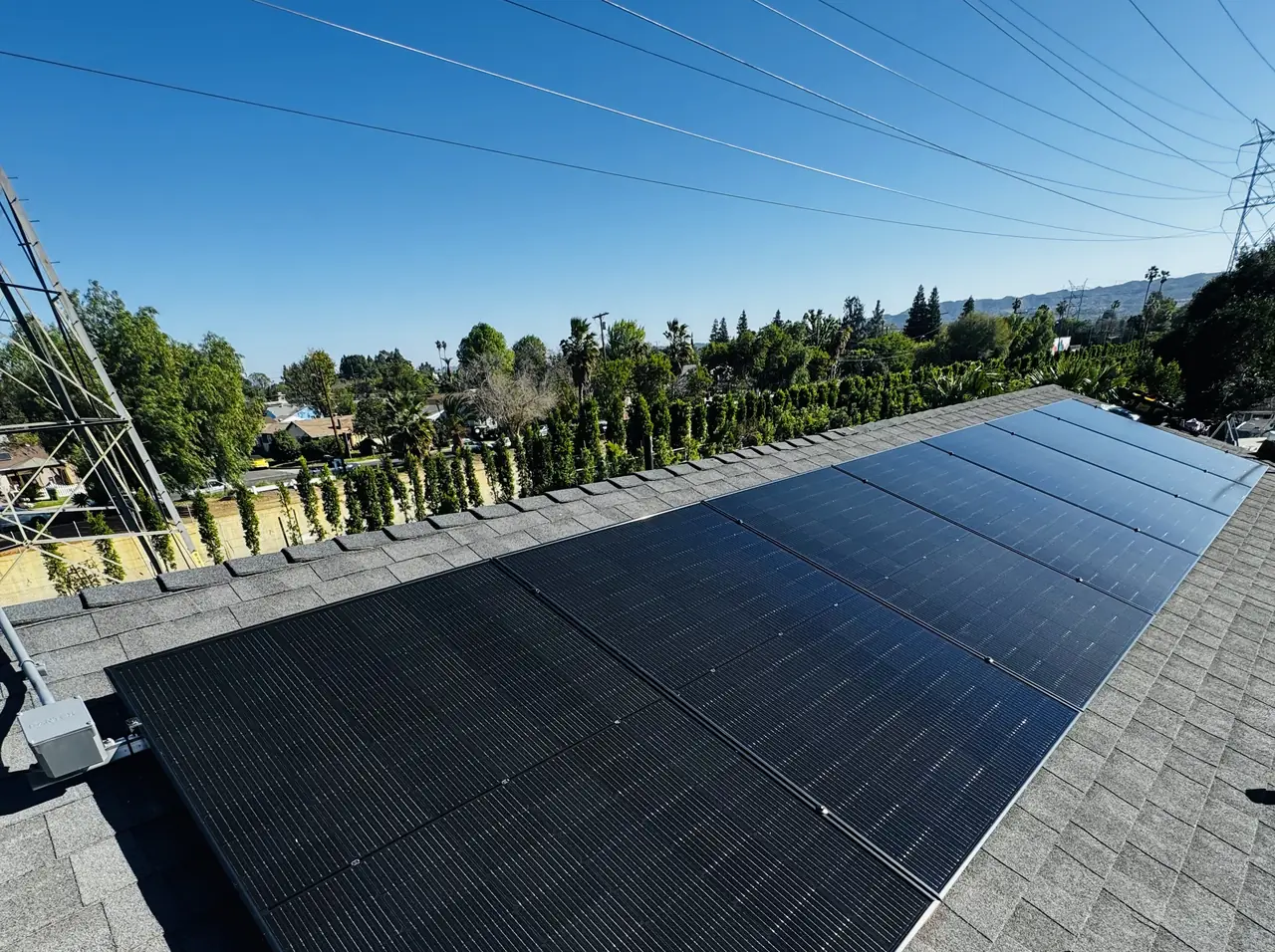
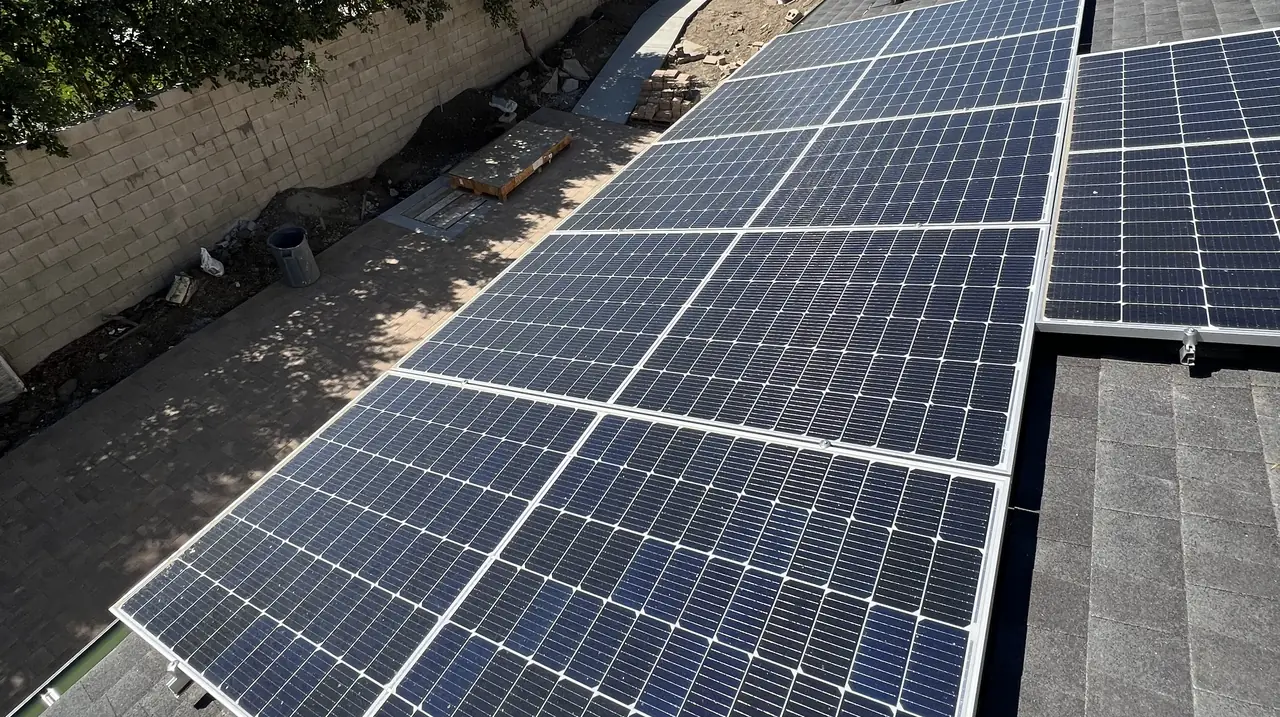
A two-story accessory dwelling unit behind a Reseda house. Seven modules, 2.78 kilowatts AC-CEC, permitted one day and installed the next. Both final inspections passed in a single visit three weeks later. Permission to operate came four months after that, and none of the delay was about the solar.
On a new accessory dwelling unit, the solar is rarely what holds up permission to operate. Two other things do, in order: the building final, which the solar final has to ride along with, and the unit's own permanent utility meter, which is a separate work request opened in the homeowner's name rather than the contractor's. Cali Energy installed and finaled this array inside a month, then tracked the service work request until the meter existed.
At a glance
- Recorded by the utility
- 2.78 kW AC-CEC
- Modules
- 7 × Mission Solar 410 W
- Inverters
- 7 × Enphase IQ8A, one per module
- Dwelling
- New detached two-story accessory dwelling unit
- Service
- Unit's own subpanel; main panel stays on the house
- Install time
- One day
- Battery
- None
- Utility / AHJ
- LADWP / LADBS
The story
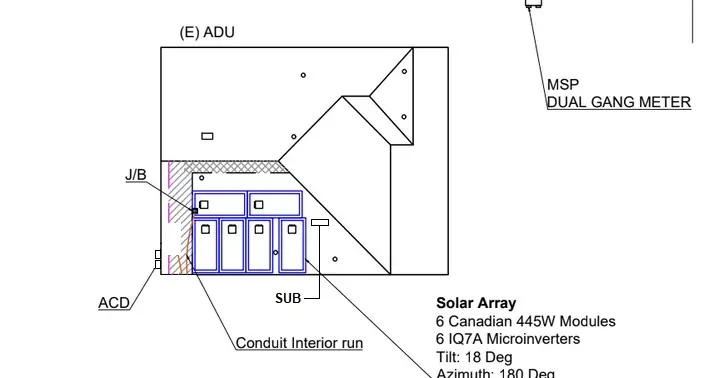
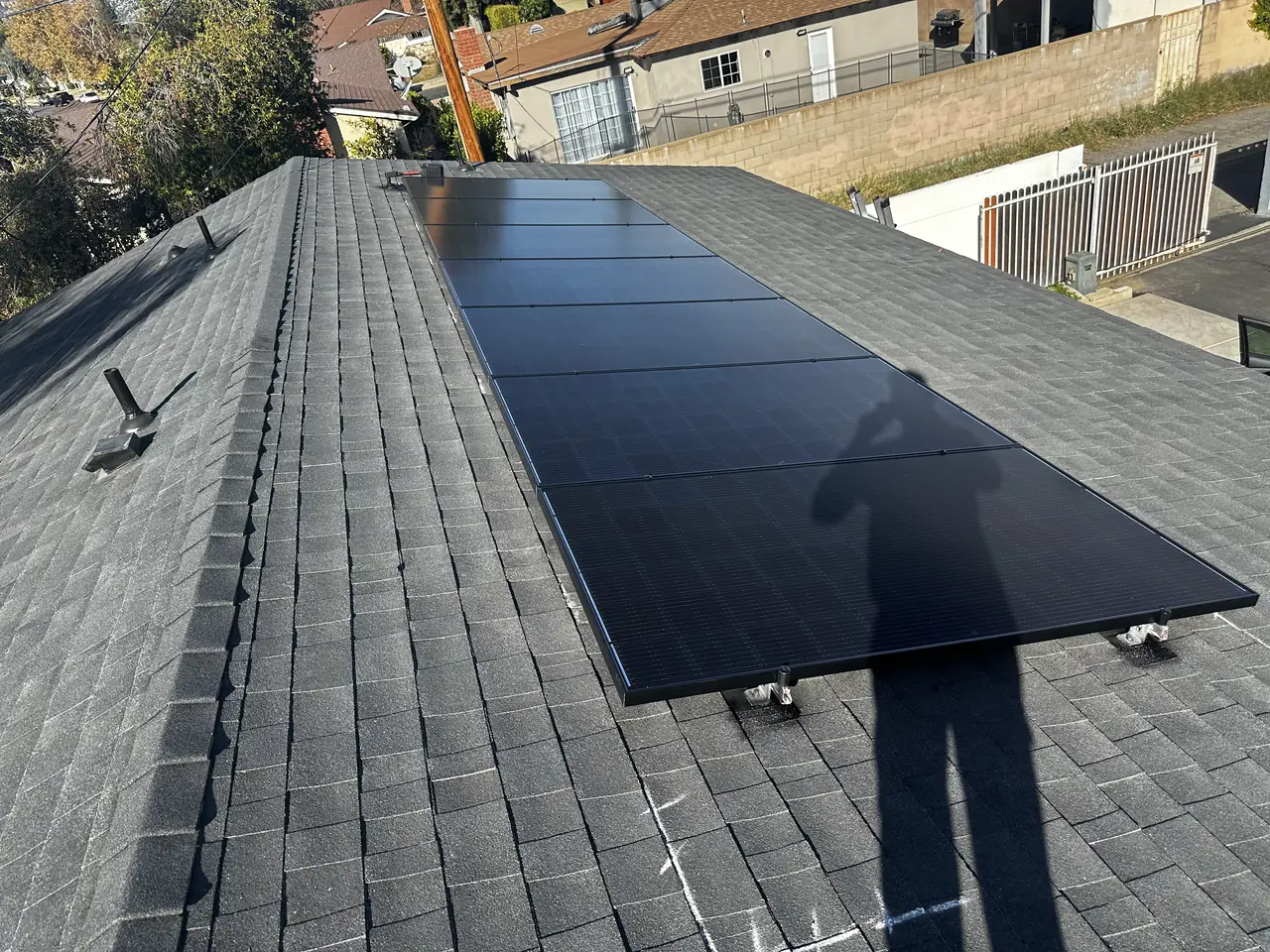
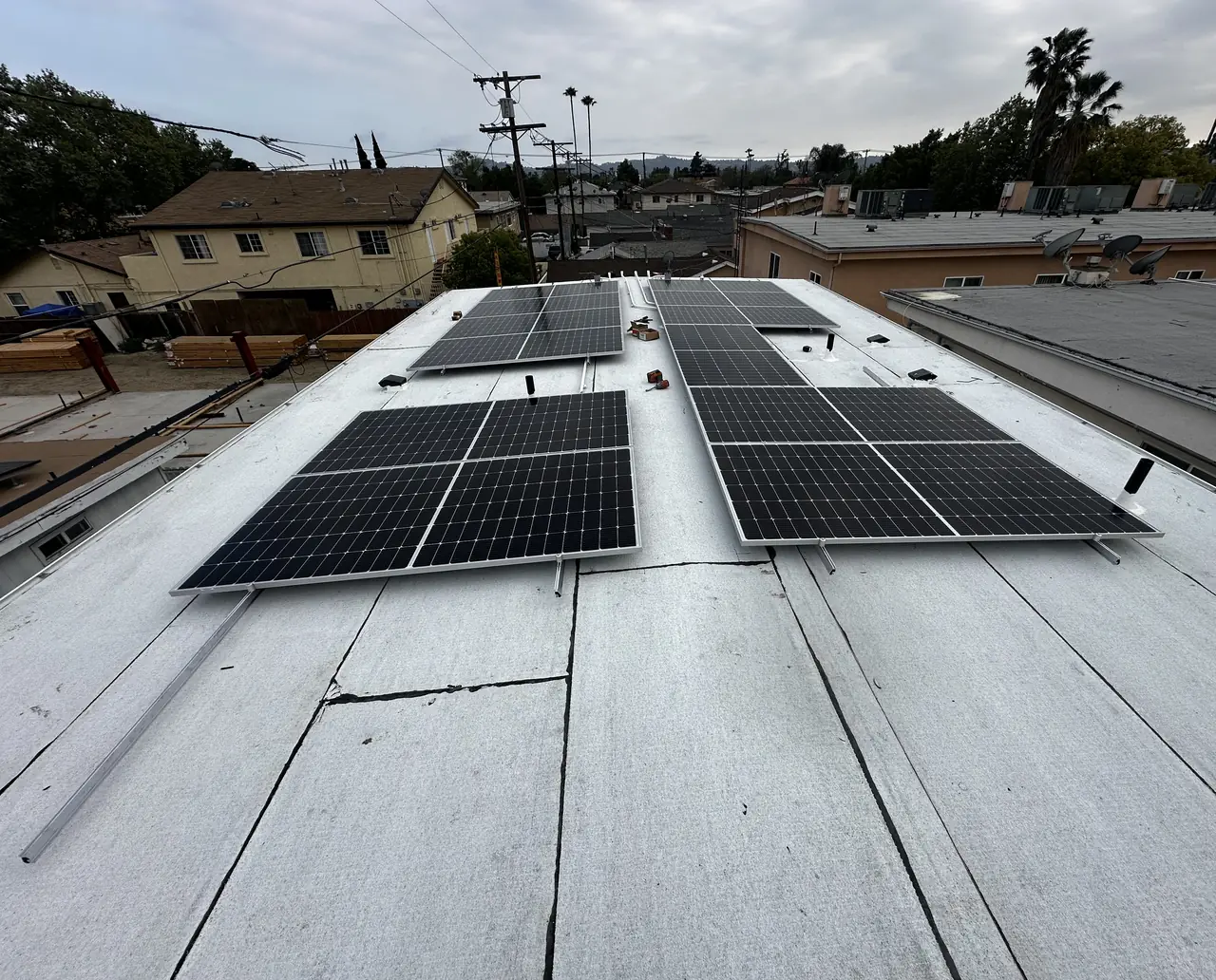
The fast part first. The city issued the electrical permit on a Monday and the crew was on the roof at eight the next morning. Seven Mission Solar 410-watt modules with an Enphase IQ8A microinverter under each one went onto the new unit's composition shingle roof, and the system was complete that afternoon. One day.
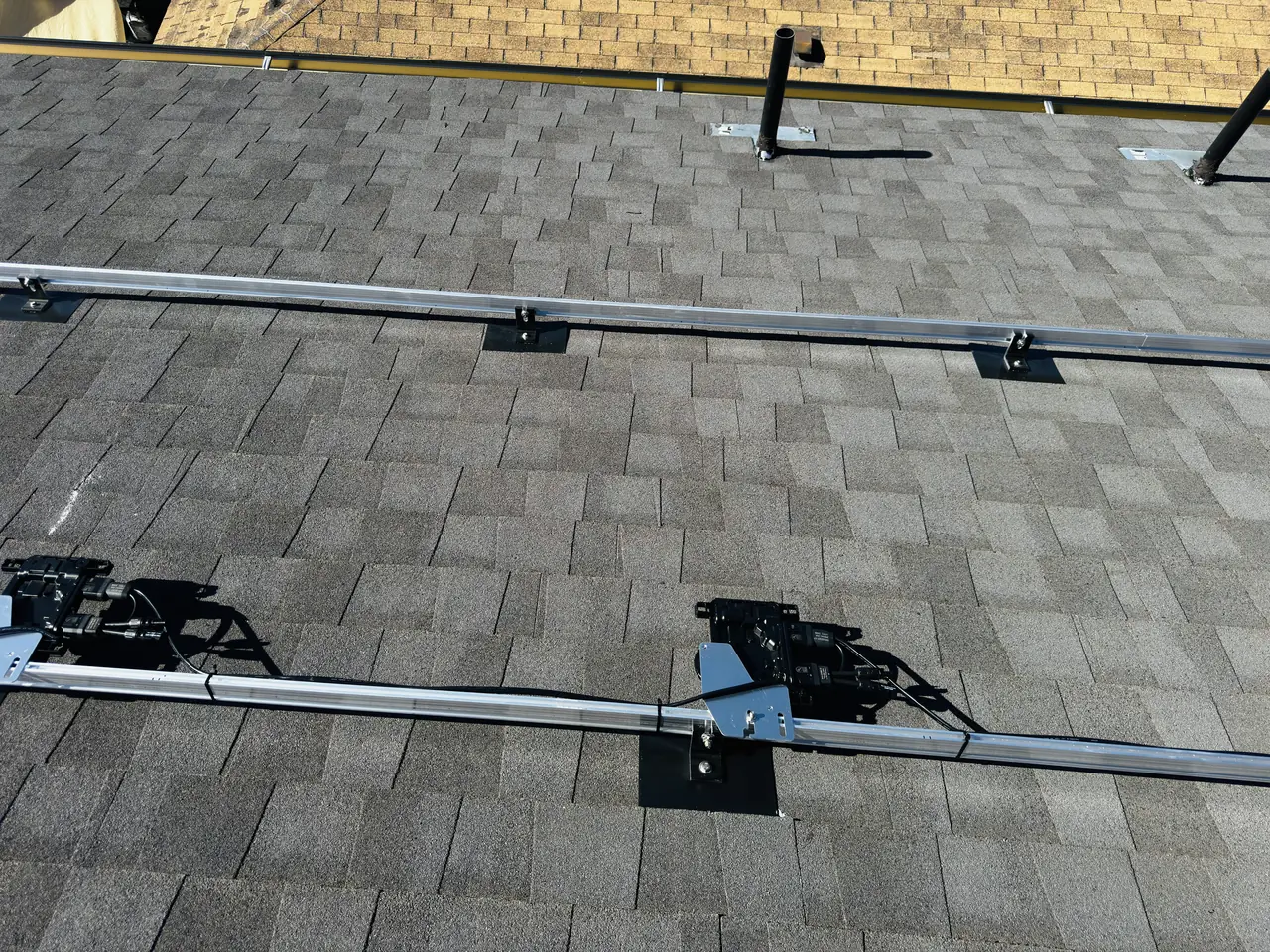
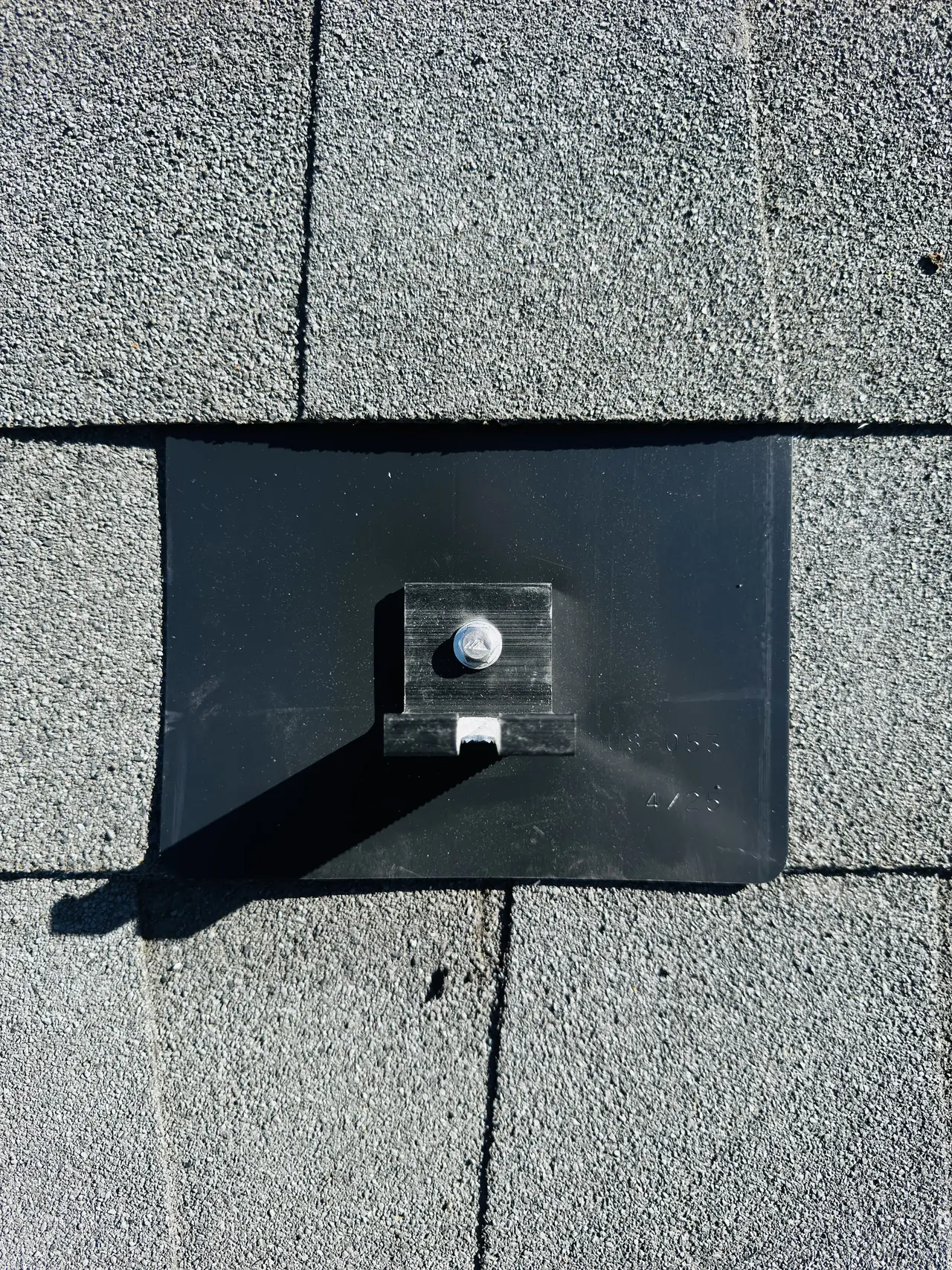
No service work was needed. The unit has its own subpanel outside and the main panel stays on the house, so there was no panel upgrade, no derate and no meter relocation to design around. Every attachment was flashed into the shingle courses in the ordinary way.
Then the project stopped, twice, for two different reasons, and both are worth knowing before you build.
The first was the final inspection. On a new dwelling the solar final does not go ahead on its own; it is booked to the same visit as the building final. The homeowner had been told otherwise on site — that because the solar is a separate permit, it could be inspected separately — and pushed for that. It does not work that way, and calling the solar final early costs a correction rather than saving a week. When the building final was booked, the solar final was put on the same appointment, and both passed in one visit at the end of February.
The second is the part almost nobody plans for. Permission to operate was still four months away, and the reason had nothing to do with panels, inspections or paperwork on our side. A brand-new dwelling unit does not have a permanent utility meter. Getting one is a separate work request from the interconnection, it sits in a different queue, and it is opened in the property owner's name rather than the contractor's. The interconnection cannot complete until there is a meter to convert.
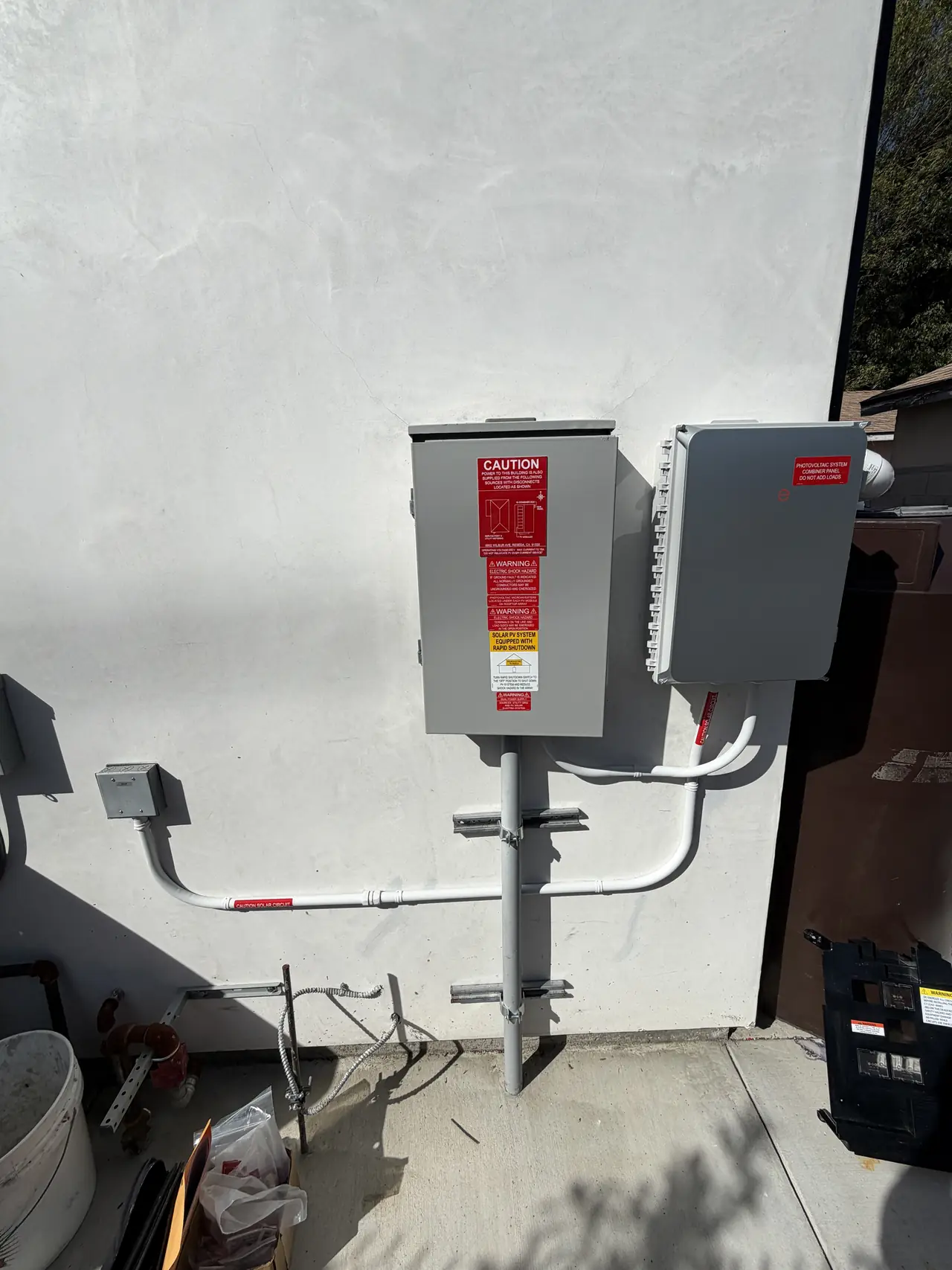
That has a practical consequence. Because the service request is in the owner's name, the contractor cannot chase it directly and the utility will not discuss it with them. What we could do was track it, tell the homeowner when it had gone quiet, and ask him to contact the service representative himself. The utility's final approval on the unit's service came through in the middle of April — and that is an approval, not a meter. The crew that physically sets meters runs its own schedule, and it arrived in the third week of June.
From there it went quickly, because the last step was ready to go. The day after the meter was set the owner had the photograph specification in hand, and three days later the photographs of the installed meter went to the service planner with a request to issue permission to operate. The utility's whole run of progress notices landed that same day, and permission to operate was authorized three days after it.
So if you are putting solar on a unit you are still building, carry two numbers, not one. There is the interconnection work request for the array, and there is the service work request for the building's own meter. They move at different speeds in different queues, and the solar cannot finish before the other one does. Asking your installer for both numbers at the start costs nothing and tells you which queue you are actually stuck in.
How it ran
| May 2024 | Building permit issued for the new detached two-story accessory dwelling unit |
|---|---|
| 26 January 2026 | Homeowner calls; construction drawings requested |
| 27 January 2026 | Site inspected the same day; estimate finalized |
| 28 January 2026 | Stamped roof-mount plan set returned overnight |
| 2 February 2026 | Electrical permit issued; interconnection application confirmed at 2.78 kW AC-CEC |
| 3 February 2026 | Full system installed in one day |
| 11 February 2026 | Building not yet finished; solar final held to ride with the building final |
| 27 February 2026 | Both finals passed in a single visit |
| 3 March 2026 | Building department release received by the utility |
| 16 April 2026 | Utility issues final approval on the unit's own service |
| 25 June 2026 | Permission to operate |
This timeline reflects this property and this permitting path: a new dwelling whose own permanent meter is a separate utility work request from the solar interconnection.
What we did
- Inspected the site the day after the first call and returned a stamped plan set overnight.
- Installed seven modules with an Enphase IQ8A microinverter under each in a single day (C-10).
- Flashed every attachment into the new shingle courses.
- Held the solar final back to ride with the building final rather than calling it early and taking a correction.
- Passed both final inspections in one visit.
- Tracked the unit's separate service work request and told the homeowner when to contact the utility himself, since the request stands in his name.
System specifications
| Recorded by the utility | 2.78 kW AC-CEC |
|---|---|
| Modules | 7 × Mission Solar MSE410HT0B, 410 W |
| Inverters | 7 × Enphase IQ8A microinverters, one per module |
| Dwelling | New detached two-story accessory dwelling unit |
| Roof | Composition shingle, new |
| Attachments | Rail on flashed shingle attachments |
| Service | Unit's own exterior subpanel; main panel remains on the house |
| Panel work | None — no upgrade, no derate |
| Battery | None |
| Utility / AHJ | LADWP / LADBS |
Is your project like this one?
- You are building an accessory dwelling unit and want solar on it.
- Your unit will have its own subpanel fed from the main house.
- Your array is finished and the city will not inspect it yet.
- You have permission to build but no meter on the new unit.
- Your Reseda property is served by LADWP, while permits are handled by LADBS.
Cali Energy in Reseda
Reseda is inside City of Los Angeles boundaries: permits run through LADBS, interconnection through LADWP.
Reseda is a neighborhood in the west San Fernando Valley, inside the City of Los Angeles. Its lots are deep enough that a detached second unit usually goes up behind the house rather than beside it, with its own service run out to it.
This installation is on the Reseda projects page alongside the others, and what the work covers is set out on the Reseda service area page.
- License and classifications: CSLB #1032379
- Official reference for this process: LADBS — accessory dwelling unit permits
- Official reference for this process: LADWP interconnection requirements
Frequently asked questions
Can the solar final be inspected before the building final?
No, even though they are separate permits. On a new dwelling the inspector signs the solar off against a building that legally exists and has passed its own final, so the two are booked onto one appointment. Calling the solar final early produces a correction, not a head start. Here both passed in a single visit.
Why did permission to operate take four months after that?
Because a newly built dwelling has no permanent utility meter, and the interconnection cannot complete until there is a meter to convert. That meter is a separate work request in a separate queue, opened in the property owner's name. The array had been finished and inspected for months while that request worked through.
Can the installer chase the meter for me?
Only indirectly, and that is worth knowing at the start. The service work request stands in the property owner's name, so the utility will discuss it with the owner rather than with the contractor. What a good installer does is track it, tell you when it has gone quiet, and point you at the representative to call.
Did the unit need a panel upgrade?
No. The unit has its own subpanel on an outside wall and the main service panel stays on the house, so there was nothing to upgrade, derate or relocate for a 2.78-kilowatt array. That is part of why the installation itself took one day: no service work means no utility meter spot and no crew visit before the array.
Does Cali Energy handle the utility side on ADU projects?
Yes, and on an accessory dwelling unit that is most of the work. Two separate requests run in two separate queues: the interconnection for the array, and the permanent service for the unit's own meter. The second is opened in the owner's name rather than the contractor's, so a contractor who is not tracking it will not see it stall. Cali Energy carries both request numbers and tells the owner which queue the project is actually sitting in.
What this would look like on your roof
Planning solar in Reseda? Tell us your utility, your roof and what your bill looks like now, and we will model what a system like this would do on your house before you commit to anything.
Or call +1 (323) 844-7777 · Cali Energy, Northridge · CSLB #1032379 (B, C-10, C-39) — design, permits, install and electrical under one licensed contractor.
Related
This timeline reflects this property and this permitting path. Updated September 2026.