

Winnetka, CA · August 2025 – July 2026 · LADWP / LADBS
The ADU has to exist before its solar can be connected.
Two new dwellings going up on one Winnetka lot, each with its own solar system. The applications went in a year before permission to operate, and the reason is worth knowing before you plan a build.
On this project LADWP held both interconnection requests until the new dwellings were complete and had permanent power. The construction schedule, not the application date, is what set the calendar.
At a glance
- Dwellings
- Two on one lot
- Systems
- 2.59 and 2.16 kW AC-CEC
- Metering
- Dual-gang meter, one position per dwelling
- Interconnections
- Two work requests
- Design, one unit
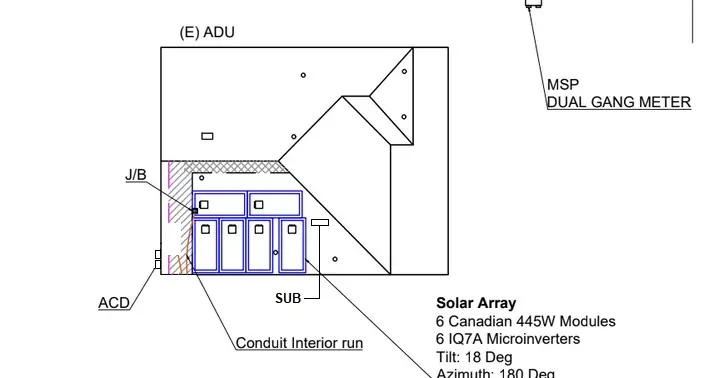
- 6 × Canadian Solar 445 W
- Inverters
- Enphase IQ7A, one per module
- Array
- 18° tilt, due south
- Utility / AHJ
- LADWP / LADBS
The story
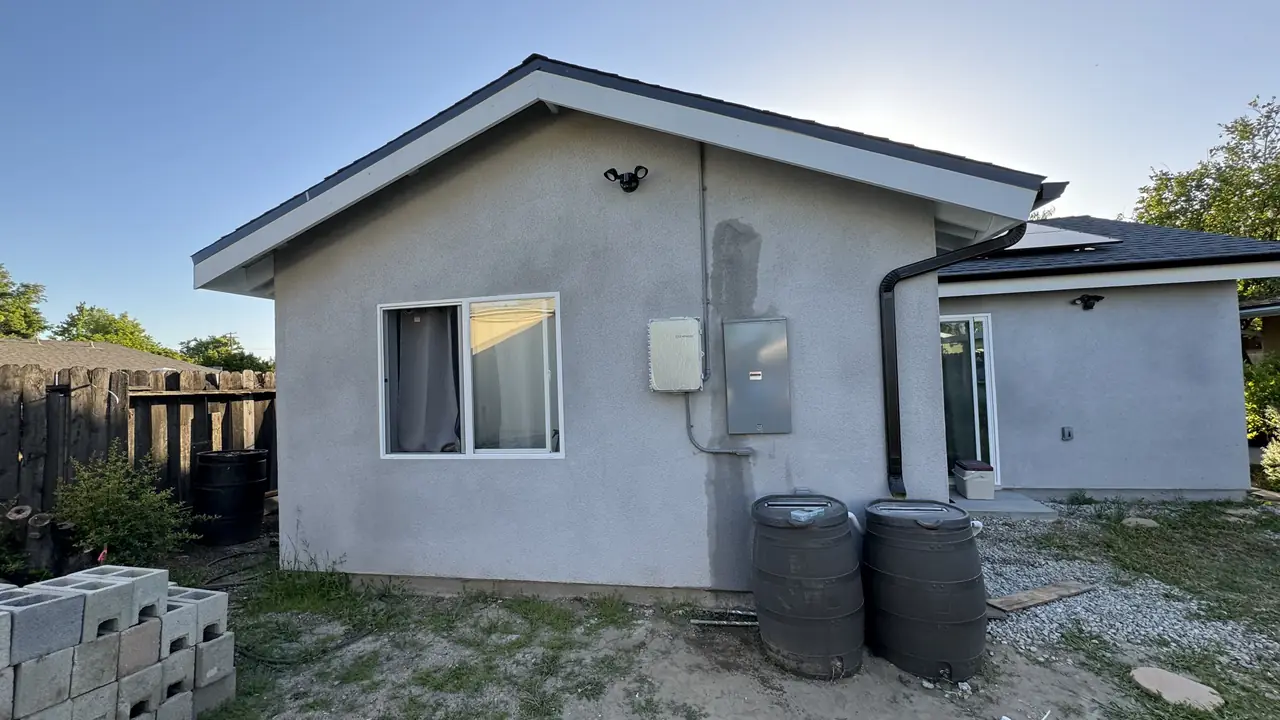
One lot in Winnetka, two new dwellings going up on it, and solar on both. Each dwelling on this property was separately metered, so each one is its own utility customer — and that meant two separate interconnection applications rather than one application for the property.
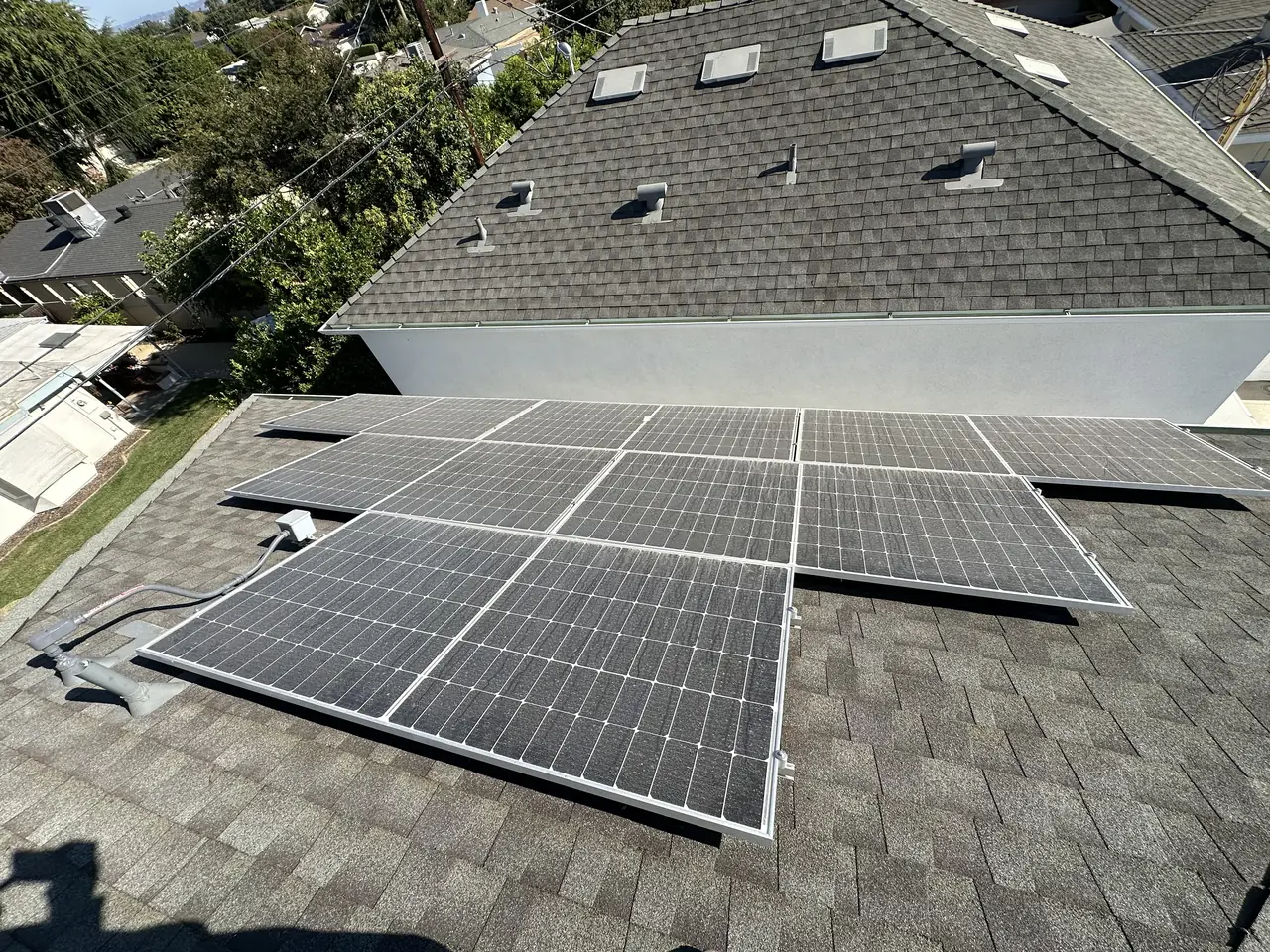
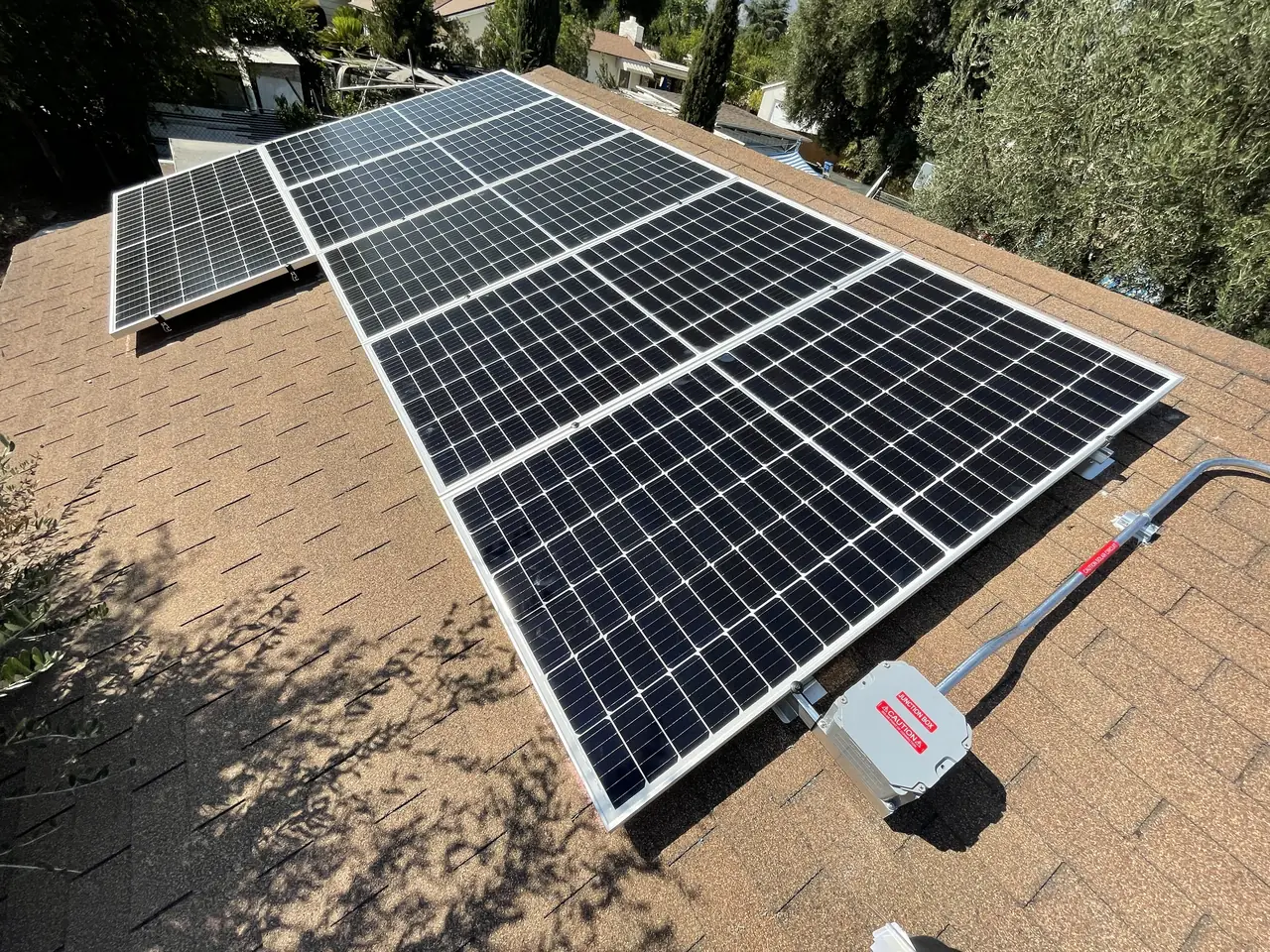
The two systems are small by single-family standards: 2.59 and 2.16 kilowatts AC-CEC. The design for one of them is six Canadian Solar 445-watt modules, each on its own Enphase IQ7A microinverter, flush at eighteen degrees facing due south. On a new dwelling that size, that is the roof you have.
Both applications went to the utility in August 2025, before either dwelling had an address in the utility's system. They were filed against the existing house on the lot, with a note that they were for the new units — the utility relabeled them later, once the new addresses existed.
Then nothing happened for months. Asking why produced the answer that explains the whole project: the work request belongs to a dwelling that is still being built, and the utility cannot process a solar request until that dwelling is complete and has permanent power.
That is a sequence rather than a queue: the building gets finished, the building gets permanent power, and only then does the solar on its roof move through interconnection. The application fees were paid at filing, so an early application is not free — and on this project it did not shorten the calendar either.
The building department released both installations at the end of January 2026. The utility completed its side in July, and permission to operate came through for both dwellings on the same day at the end of that month.
What the owner ends up with is two independent systems on one property: two meters, two solar circuits, two records. Each dwelling's production belongs to that dwelling's account, which is the point of metering them separately in the first place.
How it ran
| 15 August 2025 | Two interconnection applications filed under the existing address |
|---|---|
| 12 November 2025 | Utility confirms the requests cannot proceed until the new dwelling has permanent power |
| 22 January 2026 | Inspections requested for both dwellings |
| 29 January 2026 | Building department release for both |
| 27 July 2026 | Utility site evaluation and approval for both |
| 30 July 2026 | Permission to operate for both dwellings, the same day |
The calendar is set by the construction schedule of the new dwellings rather than by the solar work.
What we did
- Filed a separate interconnection application for each dwelling rather than one for the property.
- Filed against the existing address when the new addresses did not yet exist in the utility's system, with a note on the record.
- Established in writing why the applications were held, and set the schedule around the construction rather than around the queue.
- Designed each roof as its own small system with a microinverter under every module.
- Carried both dwellings through building department release to permission to operate on the same day.
System specifications
| Dwellings | Two on one lot, each separately metered |
|---|---|
| System sizes | 2.59 and 2.16 kW AC-CEC |
| Design, one unit | 6 × Canadian Solar 445 W |
| Inverters | Enphase IQ7A, one per module |
| Array | Flush at 18°, azimuth 180° |
| Interconnection | Two separate work requests |
| Utility condition | Solar request processed after the dwelling has permanent power |
| Battery | None |
| Utility / AHJ | LADWP / LADBS |
Is your project like this one?
- You are building an ADU or a second unit and want solar on it.
- You have been told your solar application is stuck and nobody says why.
- You are not sure whether the new unit needs its own meter.
- You want each dwelling's production to belong to that dwelling's account.
- Your Winnetka property is served by LADWP, while permits are handled by LADBS.
Cali Energy in Winnetka
Winnetka is inside City of Los Angeles boundaries: permits run through LADBS, interconnection through LADWP.
Lot development here often adds a second dwelling, and that changes who the utility customer is.
This installation is on the Winnetka projects page alongside the others, and what the work covers is set out on the Winnetka service area page.
- License and classifications: CSLB #1032379
- Official reference for this process: LADWP Electric Service Requirements
- Official reference for this process: Los Angeles City Planning — SB 9
Frequently asked questions
Can solar be installed on an ADU while it is still being built?
It can be installed, but on this project it could not be interconnected yet. LADWP held both requests until the new dwellings were complete and had permanent power, and said so in writing. The application fees had already been paid at filing, so plan the interconnection around the construction schedule.
Does an ADU need its own meter for solar?
Not necessarily. On this property each solar-equipped dwelling was separately metered and carried its own interconnection record. LADWP also allows an ADU to remain behind the primary residence's meter, so the correct structure depends on how the property is served — and that is settled at design, because it decides how many applications there are.
What happens if the new address does not exist yet?
The application goes in against the existing address on the lot with a note that it is for the new unit, and the utility relabels it once the address exists. That is what happened here, and it is why one work request number appeared under two addresses.
Why were both systems so small?
Each system was sized separately for its dwelling's load and usable roof area; one design used six modules. That put them at 2.59 and 2.16 kilowatts AC-CEC.
Does Cali Energy do solar on new ADUs in Winnetka?
Yes, including the interconnection side where each dwelling is its own utility customer. Winnetka is inside City of Los Angeles boundaries, so permits run through LADBS and interconnection through LADWP.
What this would look like on your roof
Planning solar in Winnetka? Tell us your utility, your roof and what your bill looks like now, and we will model what a system like this would do on your house before you commit to anything.
Or call +1 (323) 844-7777 · Cali Energy, Northridge · CSLB #1032379 (B, C-10, C-39) — design, permits, install and electrical under one licensed contractor.
Related
This timeline reflects this property and this permitting path. Updated September 2026.