

Van Nuys, Los Angeles, CA · September 2025 – June 2026 · LADWP / LADBS
The array was here. The paperwork said it was there.
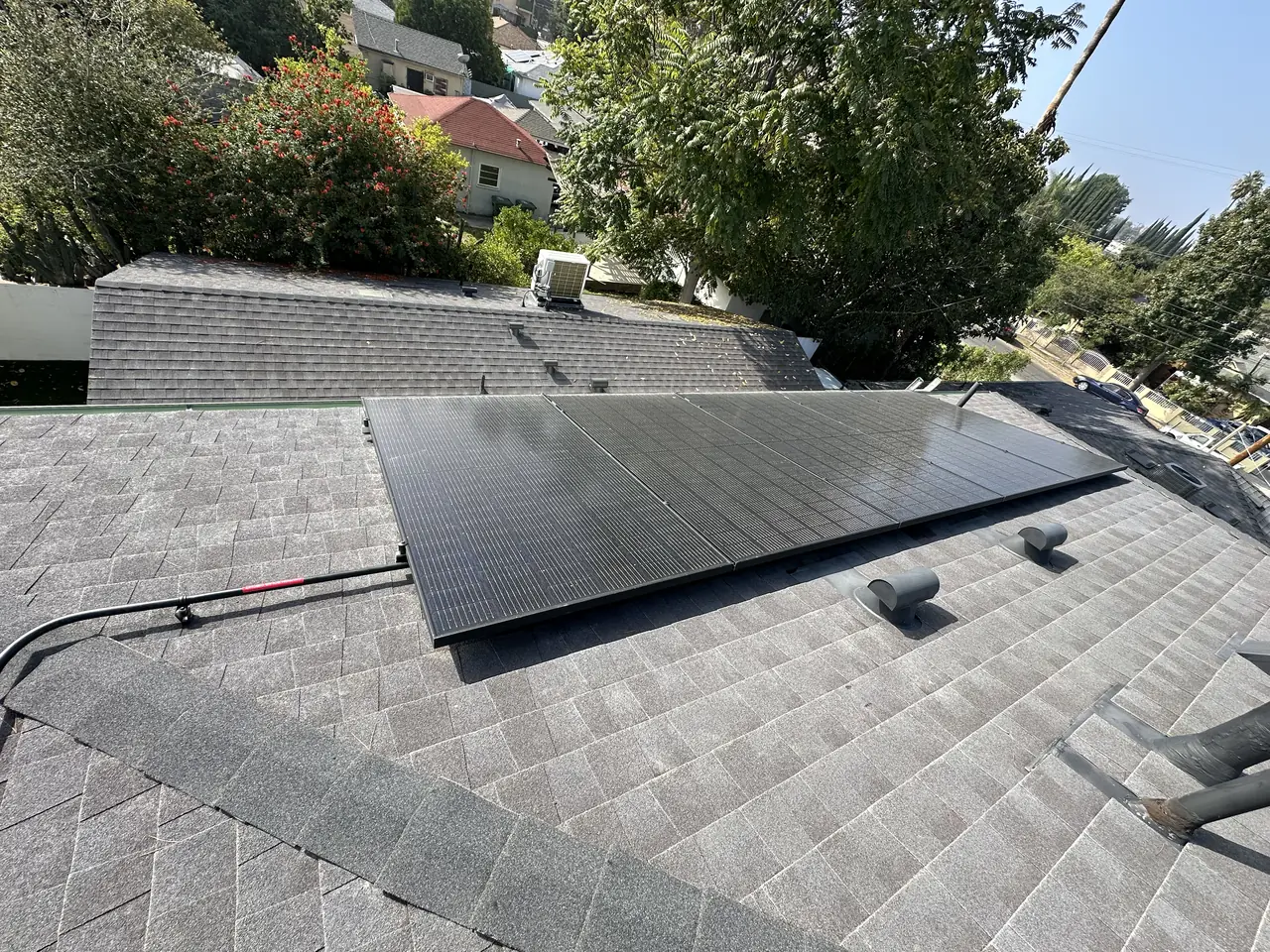
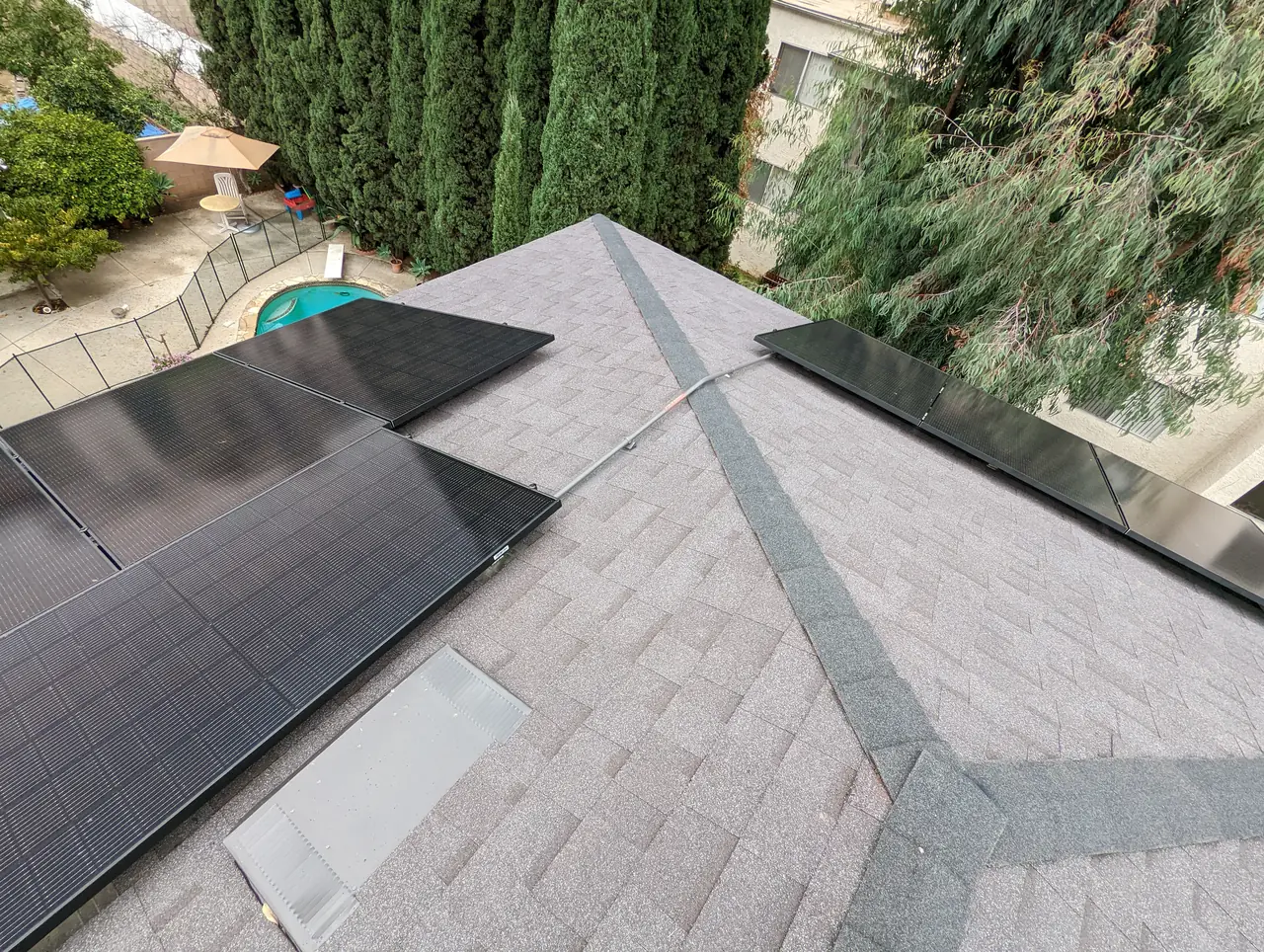
A reroof in reflective charcoal shingle and a small array on a newly built unit at the back of the lot. The interconnection was filed under the main house, because that was the only address the utility recognized, and the confusion surfaced the day we sent a photograph of the meter.
Where a newly built unit has no service address in the utility's system, the interconnection has to be filed under the parent property on the same lot, and the unit's own address belongs in the comments so the reviewer can see it. On this Van Nuys lot Cali Energy opened the unit's solar work request under the main house, the meter photograph showed the other street the unit fronts, and the field order issued the same day the mismatch was explained.
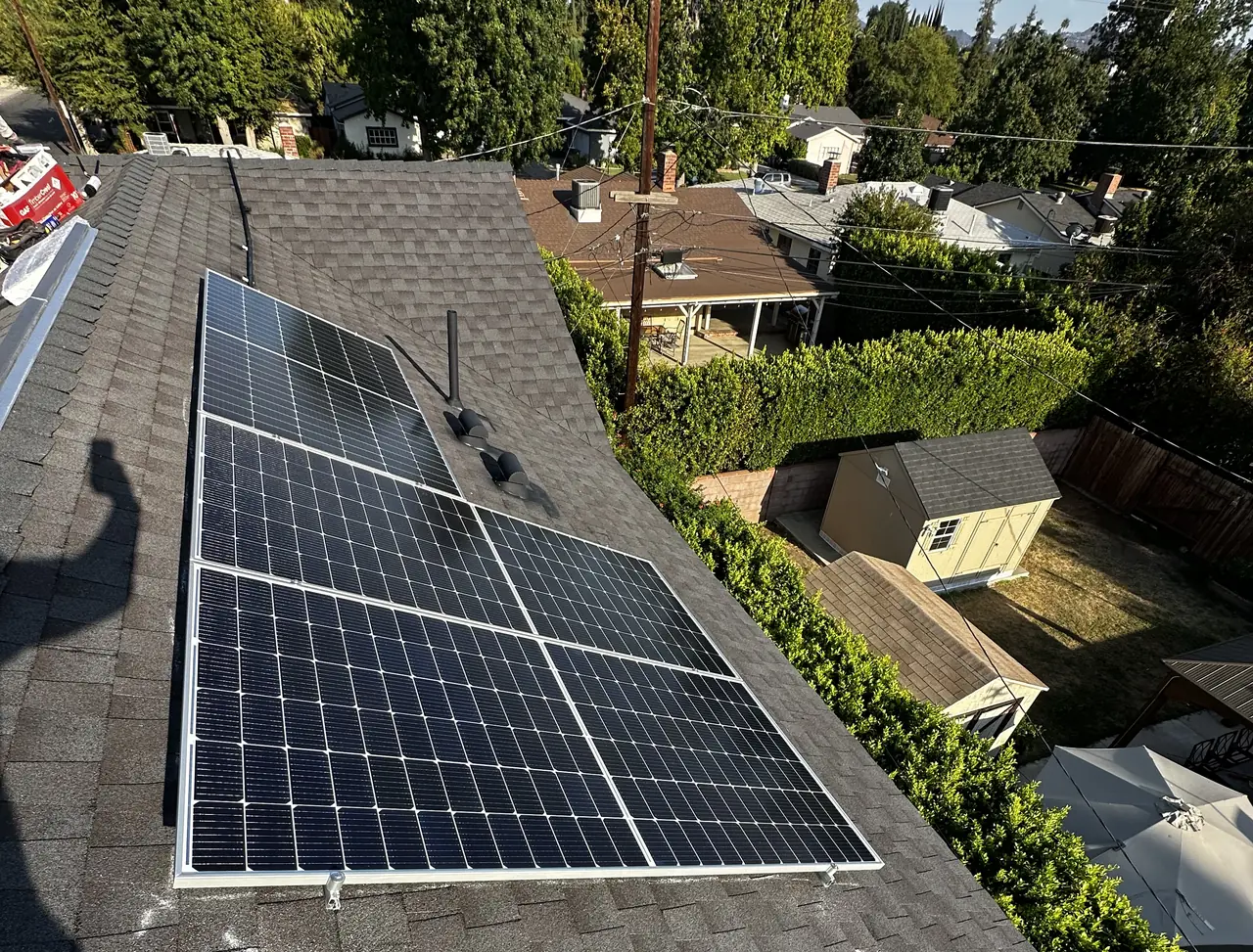
At a glance
- Scope
- Reroof and solar under one agreement
- Roofing
- Reflective charcoal shingle, solar reflectance index above 20
- Roof area
- About 1,875 sq ft
- Size recorded by the utility
- 2.59 kW AC-CEC
- Inverters
- One microinverter per module
- Filed under
- The main house — the unit had no utility address
- Switched on
- June 2026
- Utility / AHJ
- LADWP / LADBS
The story
The work came as one question: price the roof and the solar together. That is the right order to ask it in. A roof under an array is the single item on a house that becomes expensive to reach once the modules are on, so doing both at once is cheaper than doing them two years apart.
The roofing specification had a requirement in it that is easy to miss. The shingle had to be a reflective product with a solar reflectance index above twenty. California's energy standards set reflectance requirements for roofs in this climate zone, and a reroof that does not meet them does not pass. The material went in as charcoal reflective shingle, about eighteen hundred and seventy-five square feet of it, with matching drip edge.
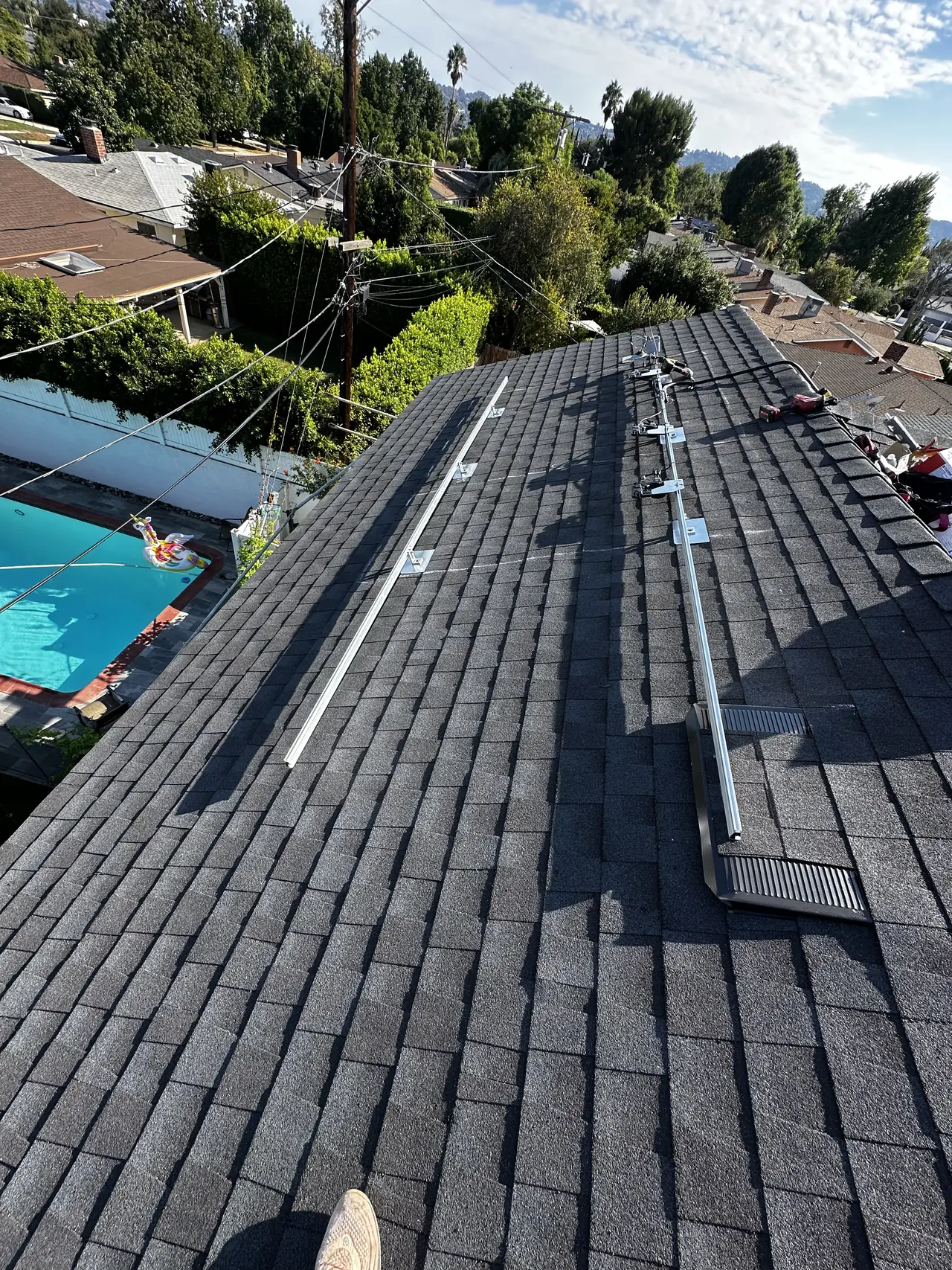
People assume a cool roof has to be light-colored. It does not. Reflectance in these products comes from the granule coating rather than the shade, which is why a charcoal shingle can carry an index above twenty and a pale one can fail. What matters is the rated product, not the appearance, and the rating is what the inspector checks.
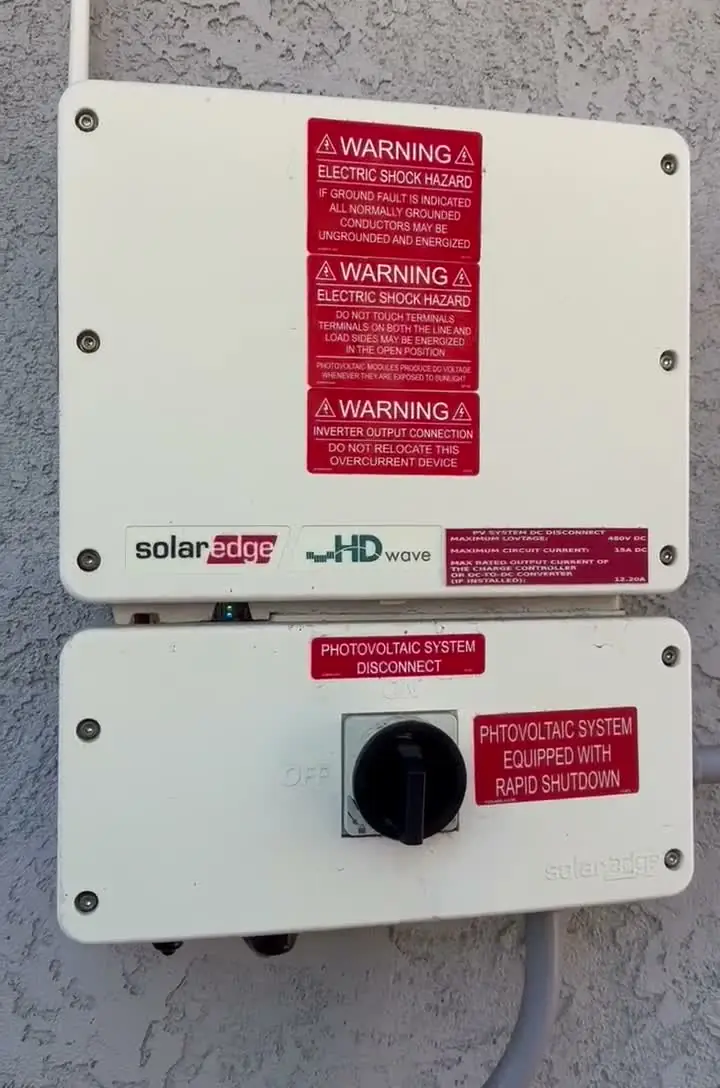
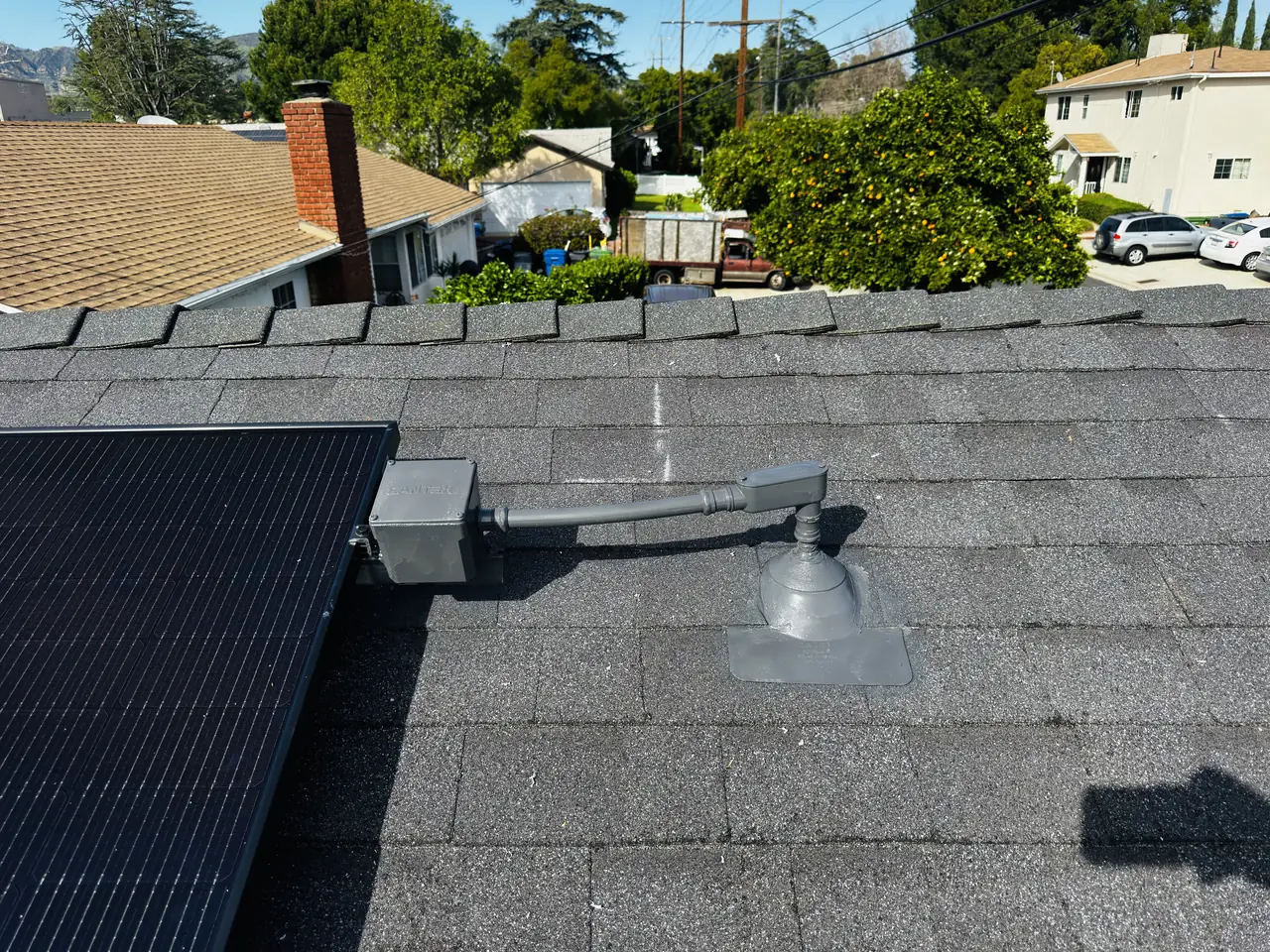
The array is small because the unit it serves is small and separately metered: a system sized to one household rather than to the roof it sits on, with the utility recording it at 2.59 kilowatts AC-CEC and a microinverter under each module. The shingle order covered the property's roofs, which is why the area and the array do not scale together.
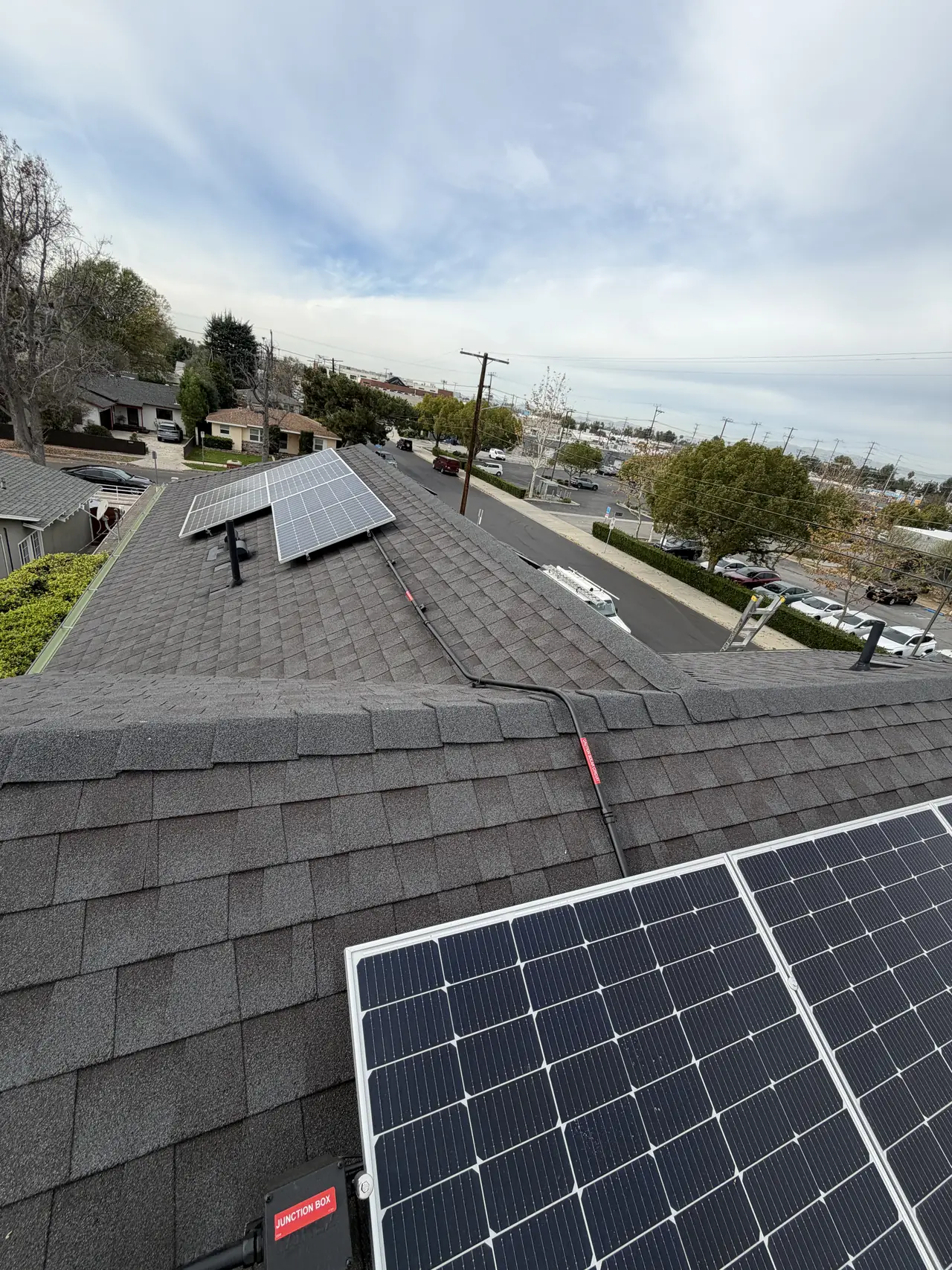
The complication was the address, and it is the kind of thing that only happens on a lot that has just grown a second building.
The lot has a main house on one street and a new unit that fronts another. The unit is new, so at the time the interconnection was filed the utility had no service address for it. The only address its system would accept was the main house's, so that is what the work request carried. The unit's own supply had to be run in underground from the service point, and the utility's fee for that went through in the same week as the application.
Months later we sent the utility a photograph of the newly installed electric meter, which is what releases the solar meter. The photograph showed a meter with a house number on it, and the number was not the one on the work request. The reviewer asked, reasonably, what address this was for.
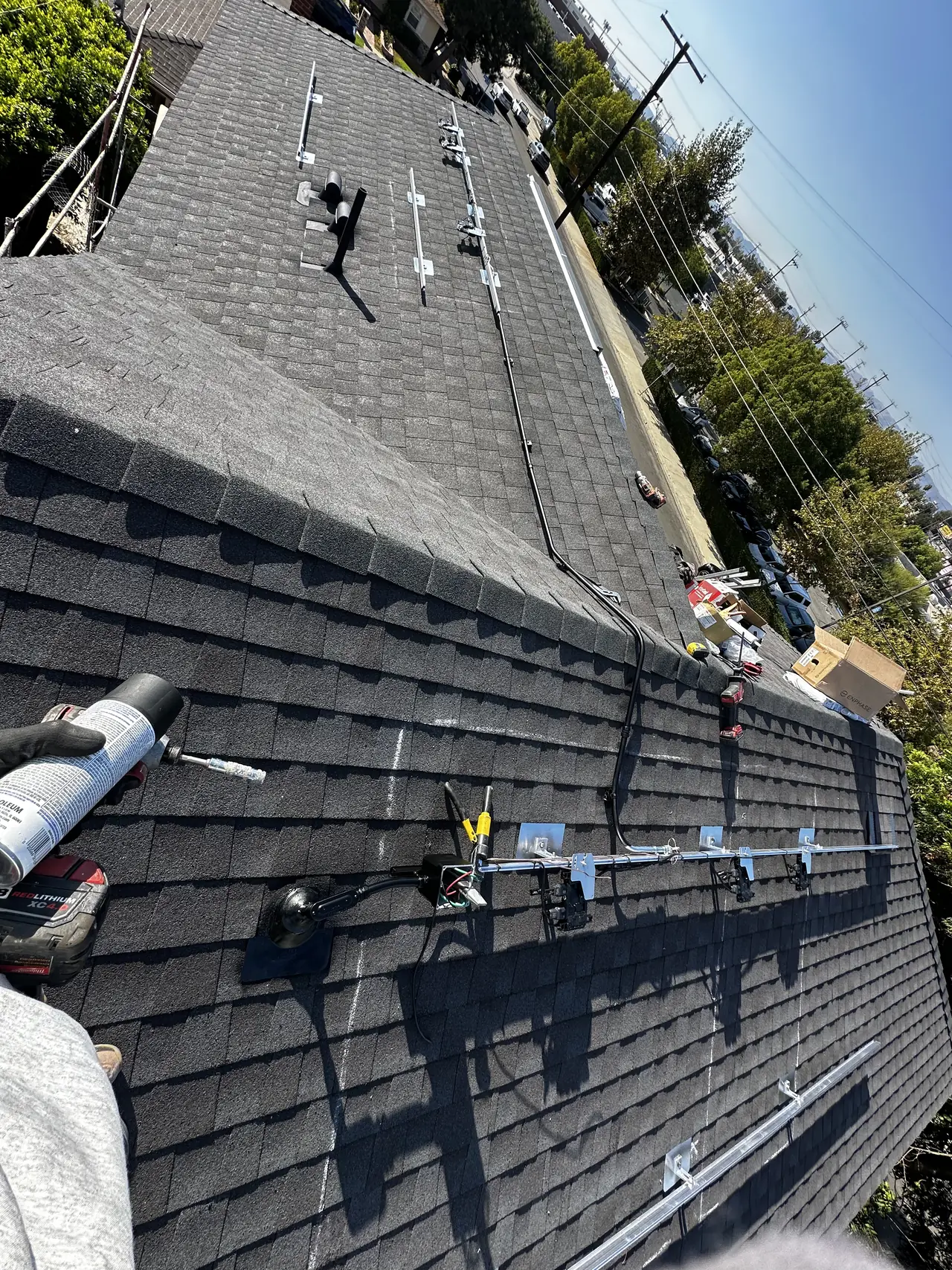
The answer took one sentence: the photograph is the new unit, the work request is the main house, and they are the same property. The field order for the solar meter went out the same day, with a note for the future — where the work request cannot be opened under the correct address, put the correct address in the comments so the reviewer sees it without having to ask.
That is a genuinely useful instruction and it now goes on every application we file for a new unit. It costs one line and it removes a round trip that would otherwise land at the very end of a project, when everyone is already waiting.
The system was switched on at the start of June and monitoring was handed over the same day.
How it ran
| September 2025 | Roof and solar priced together; roof measured |
|---|---|
| September 2025 | Reflective charcoal shingle ordered and delivered |
| September 2025 | Agreement signed; interconnection application filed under the main house |
| September 2025 | Underground service fees paid for the new unit |
| January 2026 | Utility confirms the unit needs its permanent meter first |
| May 2026 | Meter photograph submitted; address mismatch explained; field order issued the same day |
| June 2026 | System switched on and monitoring handed over |
Nine months end to end, with the last stretch spent on a meter, a photograph and a question about which street the building is on.
What we did
- Priced and scheduled the reroof and the array as one piece of work.
- Specified and ordered a reflective shingle meeting the reflectance index the energy standards require.
- Reroofed about 1,875 square feet in charcoal reflective shingle with matching drip edge.
- Installed the array with a microinverter under each module on the new roof.
- Carried the interconnection under the parent property's address and resolved the mismatch when the meter photograph raised it.
- Commissioned the system and handed over monitoring.
System specifications
| Scope | Reroof and photovoltaic array under one agreement |
|---|---|
| Roofing | Reflective charcoal shingle, SRI above 20 |
| Roof area | About 1,875 sq ft |
| Size recorded by the utility | 2.59 kW AC-CEC |
| Inverters | One microinverter per module |
| Building | Newly built unit at the rear of the lot |
| Interconnection | Filed under the parent property's address |
| Utility / AHJ | LADWP / LADBS |
Is your project like this one?
- You need a reroof and are considering solar within the next few years.
- You have been told a cool roof has to be a light color.
- You are putting solar on a newly built unit that has no utility address yet.
- Your utility work request and your building address do not match.
- You want one contractor holding both the roof and the array.
Cali Energy in Van Nuys
Van Nuys sits inside City of Los Angeles boundaries: permits run through LADBS, interconnection through LADWP.
A newly built unit exists on a permit long before it exists in a utility's records. Until the utility assigns it a service address, everything filed for it goes under the parent property — the older house on the same lot. That works until somebody compares a photograph with a file.
This installation is on the Van Nuys projects page alongside the others, and what the work covers is set out on the Van Nuys service area page.
- License and classifications: CSLB #1032379
- Official reference for this process: LADBS — accessory dwelling units
- Official reference for this process: LADWP Electric Service Requirements
Frequently asked questions
Should I replace my roof before installing solar?
If the roof is within a few years of needing replacement, yes, and doing both under one agreement is cheaper than doing them separately. Removing and reinstalling an array to reroof underneath it is a real cost with no benefit. Where the roof has a decade left, the array goes on as it is and the question can wait.
Does a cool roof have to be light colored?
No. The requirement is a rated solar reflectance index, and that comes from the granule coating rather than the shade of the shingle. Reflective products are made in charcoal and other dark colors that meet the index, while some pale shingles do not. What the inspector checks is the product rating, so the specification matters and the appearance does not.
What do I do if a new unit has no address in the utility's system?
File the interconnection under the parent property, which is the only address the system will accept, and put the unit's actual address in the comments on the application. That way the reviewer sees both from the start. Without it, the mismatch surfaces later, usually when a photograph of the meter arrives showing a different street.
Why does the utility want a photograph of the electric meter?
Because it confirms the permanent service is installed and energized, which is the precondition for issuing a field order to replace that meter with a solar one. On a new building the utility cannot assume the ordinary service work is and a photograph settles it faster than any other evidence. Sending it unprompted is worth doing.
Does Cali Energy do roofing and solar together in Van Nuys?
Yes, and on a roof near the end of its life that is the cheaper order. Taking an array off to reroof under it is a real cost with no benefit. Cali Energy specifies the shingle to meet the reflectance the energy standards require, does the reroof, then sets the array on the new surface. License CSLB #1032379.
What this would look like on your roof
Planning solar in Van Nuys? Tell us your utility, your roof and what your bill looks like now, and we will model what a system like this would do on your house before you commit to anything.
Or call +1 (323) 844-7777 · Cali Energy, Northridge · CSLB #1032379 (B, C-10, C-39) — design, permits, install and electrical under one licensed contractor.
Related
This timeline reflects this property and this permitting path. Updated September 2026.