

Van Nuys, Los Angeles, CA · March 2024 – April 2024 · LADWP / LADBS
Two meters on one wall, and two houses behind them.
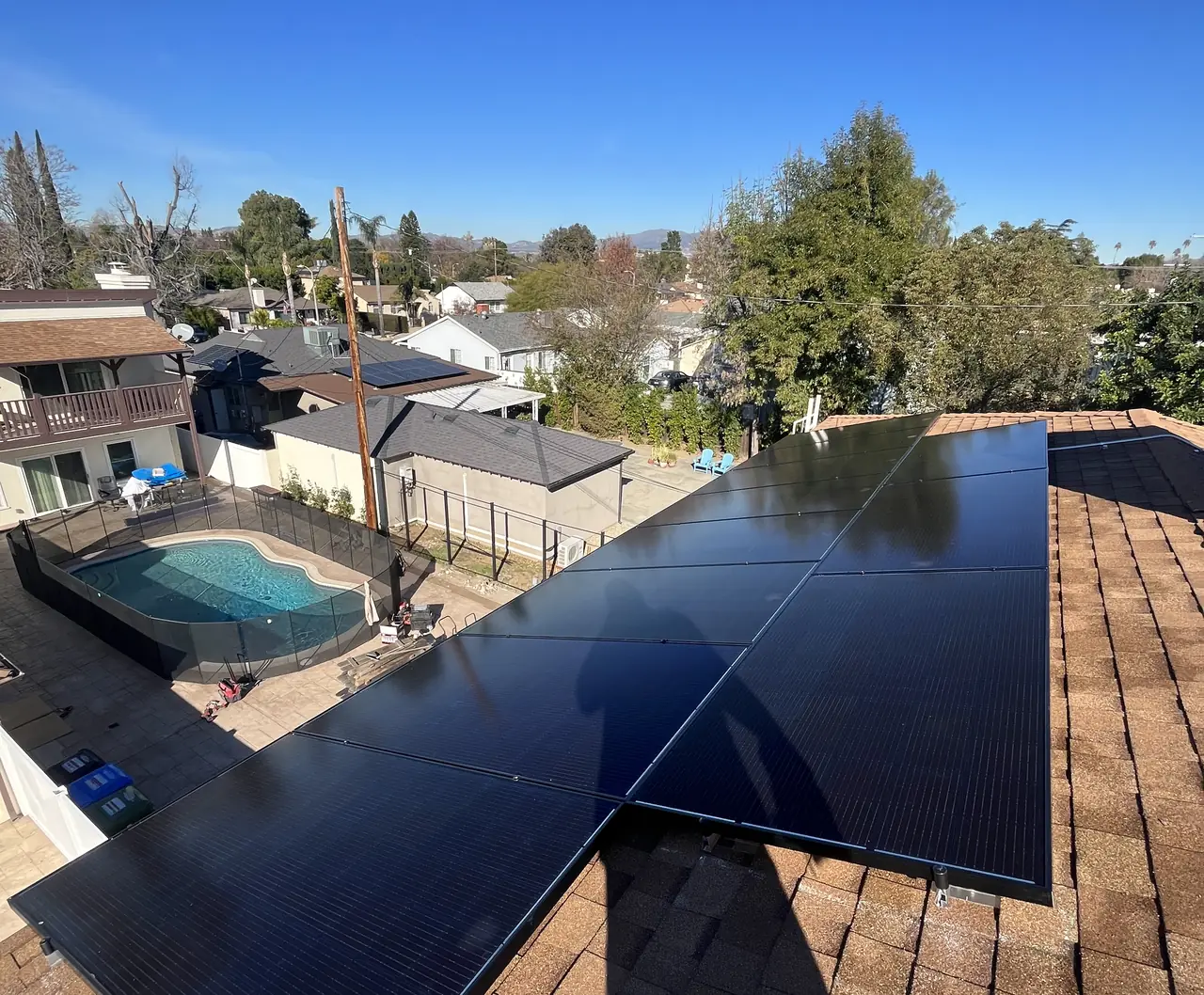
A new two-story home of fourteen hundred and twenty-two square feet, built under the state lot-split law on a lot that already had a house. Eighteen modules on its roof, its own meter beside the original one, and twenty-six days from application to switched on.
A home built under California's lot-split law is a separate dwelling with its own electrical service, so its solar system is interconnected on its own account rather than added to the original house's. On this Van Nuys lot the new two-story home took eighteen modules with a microinverter under each, recorded by the utility at 5.85 kilowatts AC-CEC, and Cali Energy carried the interconnection from application to net meter in twenty-six days.
At a glance
- Array
- 18 modules — two rows of eleven and seven
- Inverters
- 18 microinverters, one per module
- Size recorded by the utility
- 5.85 kW AC-CEC
- Home
- New two-story dwelling, 1,422 sq ft, built under SB9
- Fire protection
- Residential sprinklers throughout
- Metering
- Its own meter, beside the original house's
- Application to net meter
- 26 days
- Utility / AHJ
- LADWP / LADBS
The story
From the sidewalk the lot reads as one property with two front doors. It is not a duplex. The second building is a separate two-story home of fourteen hundred and twenty-two square feet, built new under the state law that lets a single-family lot carry a second dwelling, with residential sprinklers throughout because every new home in California is built with them now.
The difference matters the moment you reach the side wall, where two meters sit next to each other. A duplex is usually one service divided inside. A lot with two homes on it is two services, two accounts and two separate relationships with the utility, and solar follows the service.
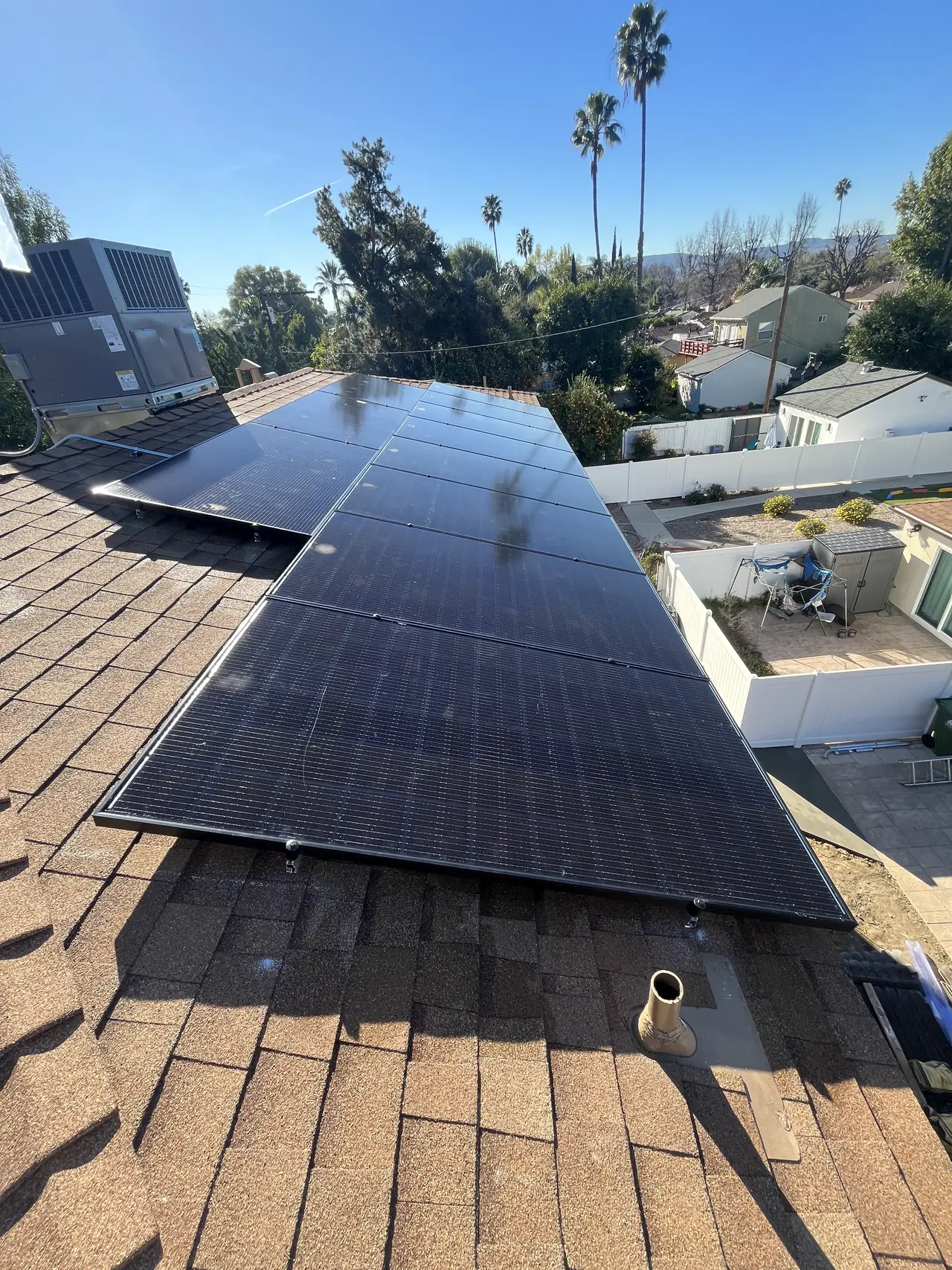
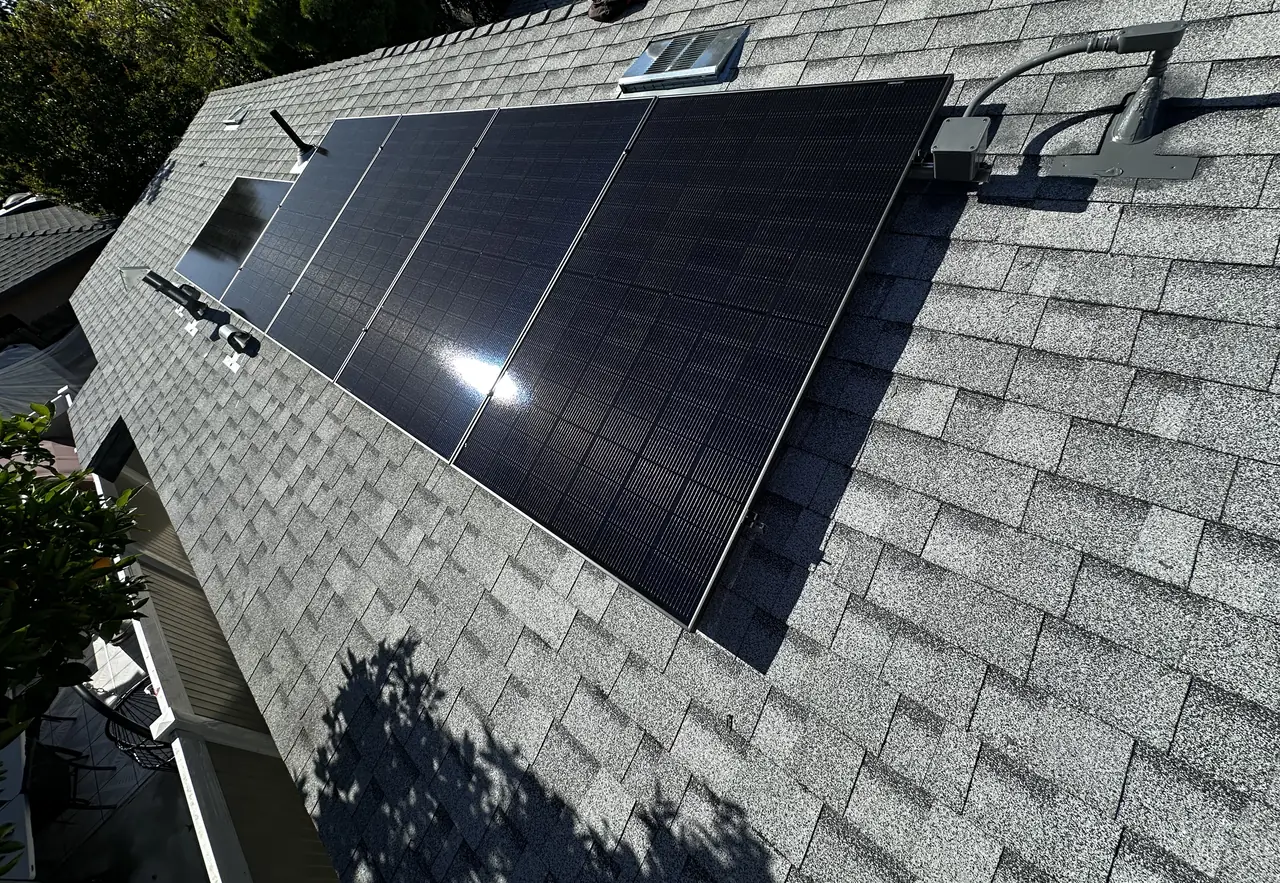
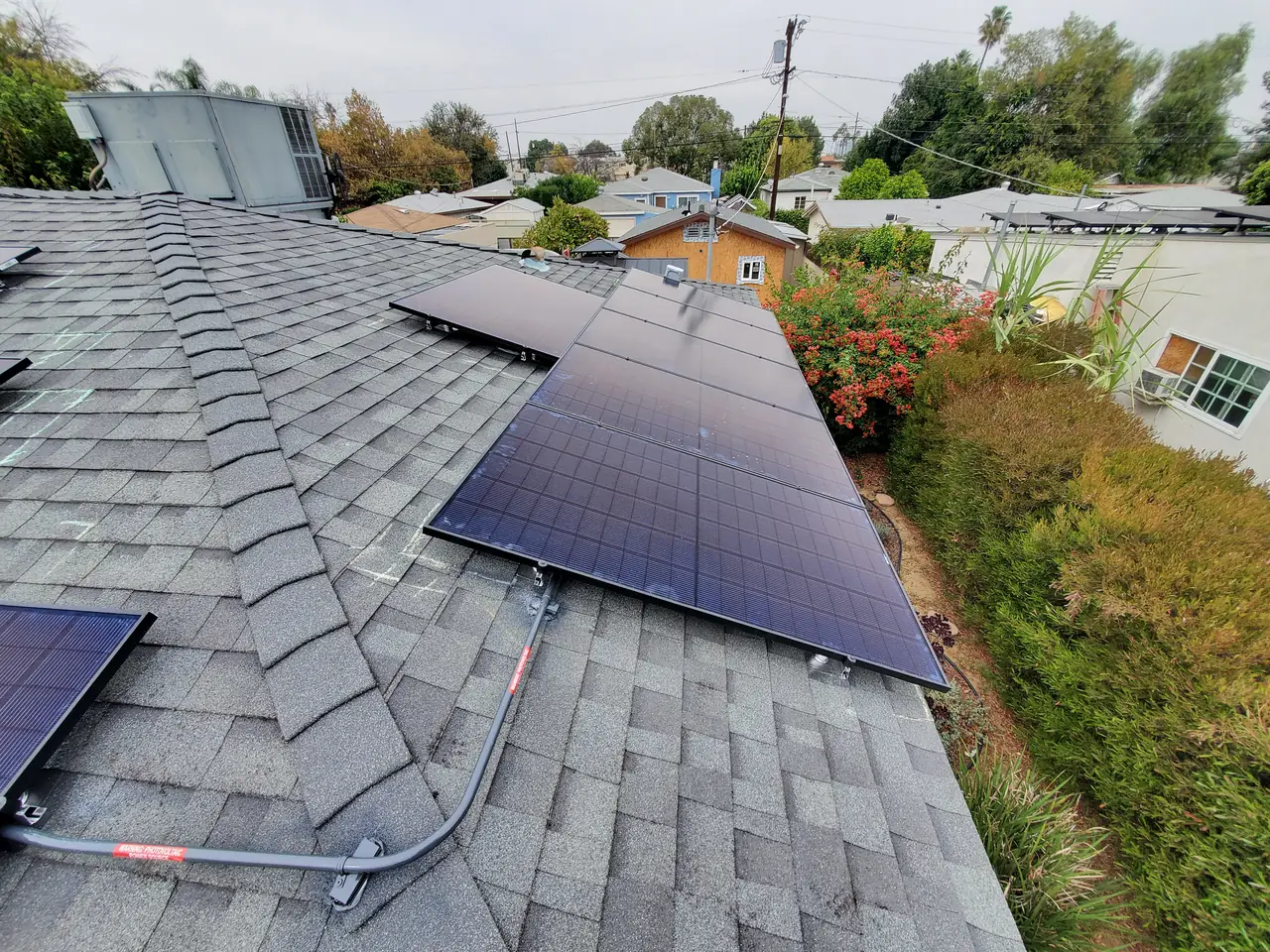
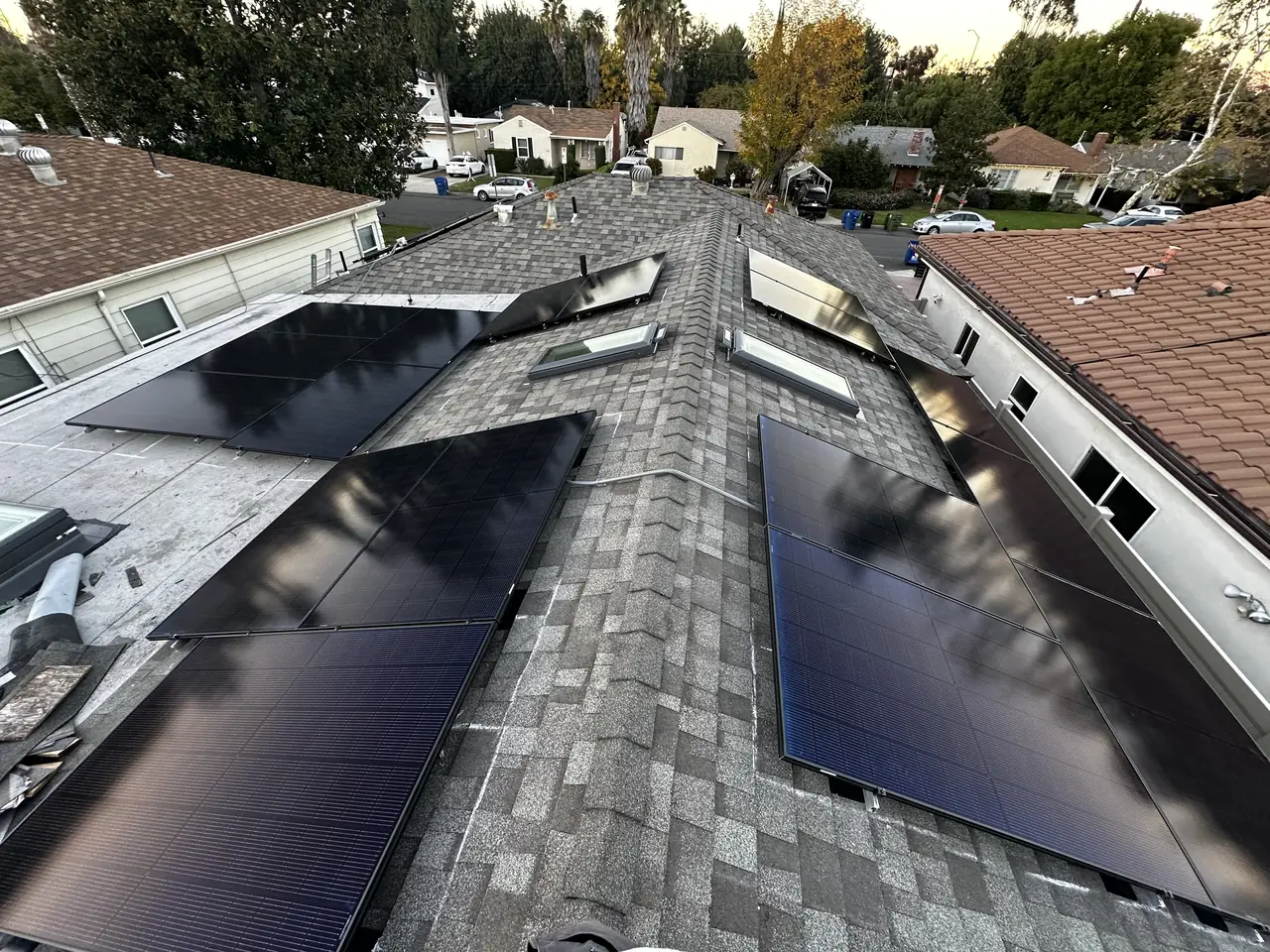
So the array on the new home is the new home's array. Eighteen modules, split into a row of eleven along the main slope and a row of seven on the shorter one, with a microinverter under each module and the utility recording the system at 5.85 kilowatts AC-CEC. Nothing about it touches the older house's meter, and the older house's consumption has no bearing on what this system is allowed to produce.
A new build makes the solar work faster in one respect and slower in another. Faster, because the roof is new and clean, the rafters are where the drawings say they are, and the electrical service is being built anyway. Slower, because nothing can be energized until the home itself has a permanent meter and an open account. The array can be finished and waiting while the building is still closing out.
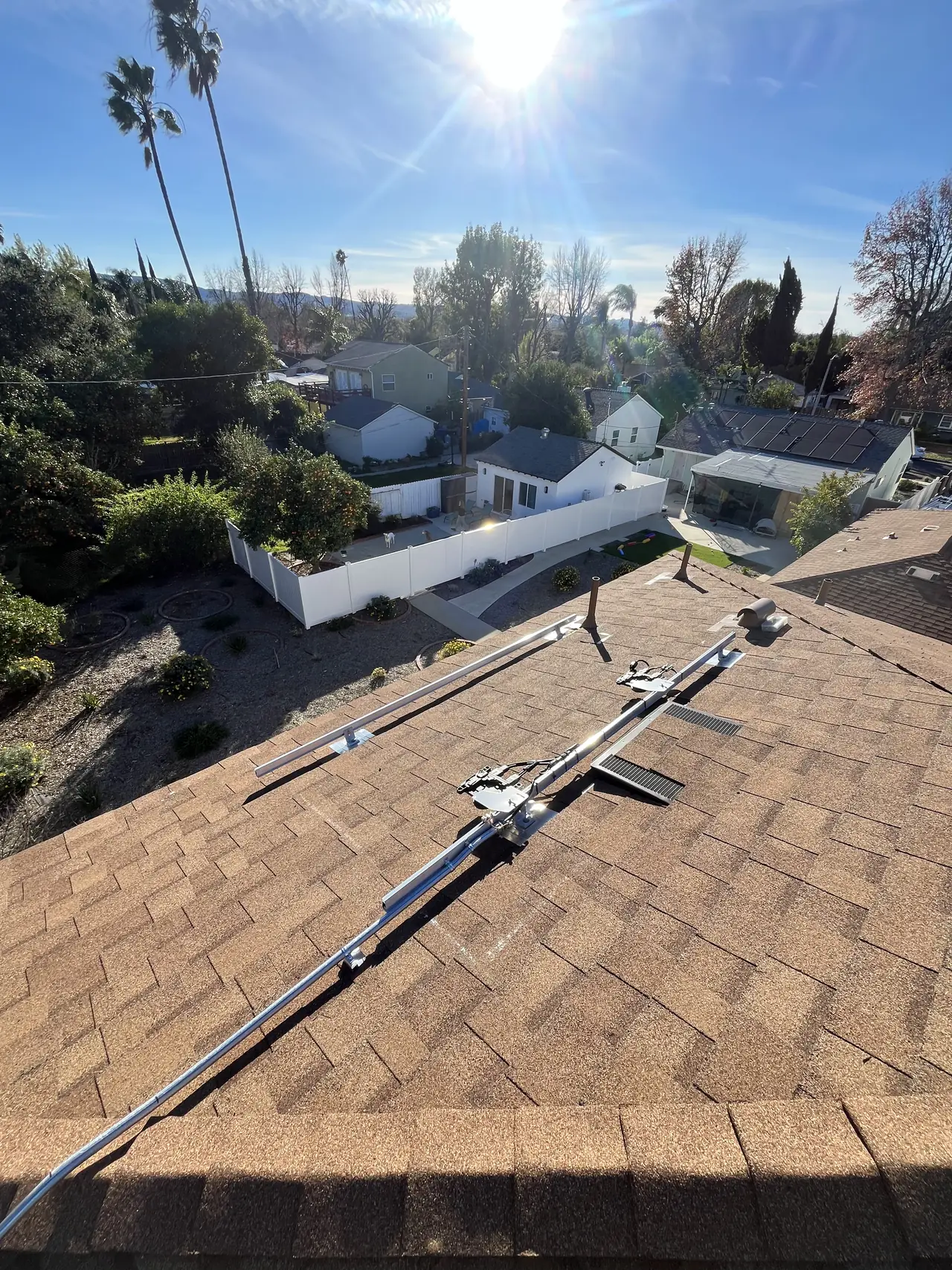
Here the sequencing worked. The interconnection application went in during the second week of March and the utility confirmed it four days later. The site assessment was bypassed, which the utility does on smaller systems where the service is already documented.
The one push came at the start of April. The building department's final inspection had already passed, but the release had not reached the utility, and an interconnection sits still until it does. A short message asking whether the release had been received brought it through the same day. The utility completed its review that afternoon and the meter request went out.
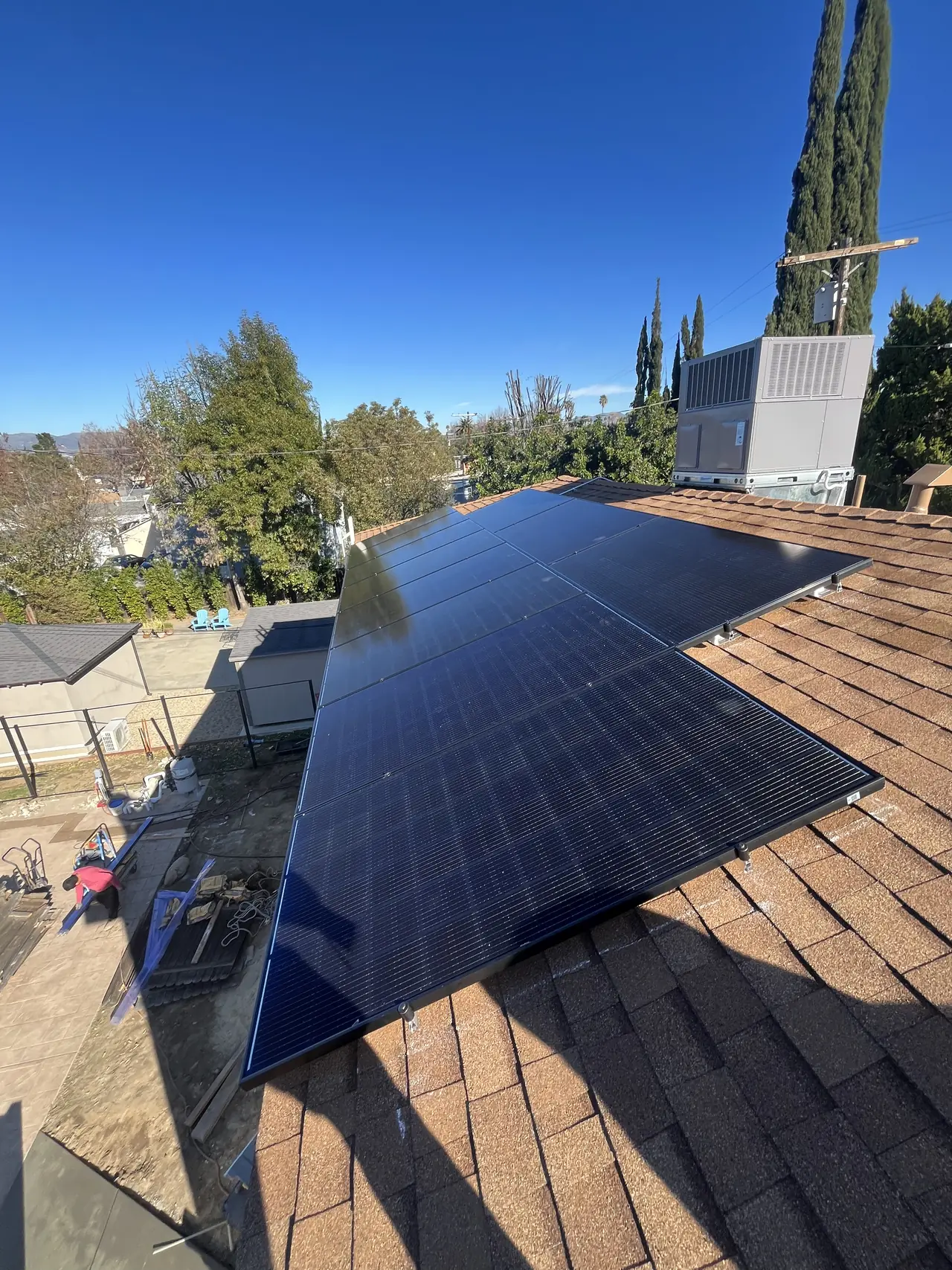
The net meter was set a week later, twenty-six days after the application was filed. That is fast for an LADWP residential interconnection, and it happened because nothing in the submission was ambiguous: a new service, a documented panel, a system under ten kilowatts, and a release chased the day it was late rather than a month later.
For anyone building a second home on a Van Nuys lot: plan the array with the house, not after it. The roof framing, the conduit path and the service equipment are all decisions being made anyway, and making them once is far cheaper than retrofitting a finished building.
How it ran
| Mid-March 2024 | Interconnection application filed; recovery charge paid |
|---|---|
| Mid-March 2024 | Application confirmed; site assessment bypassed |
| Early April 2024 | Final release from the building department chased and received |
| Early April 2024 | Interconnection review complete; meter request issued |
| Mid-April 2024 | Net meter set — permission to operate |
Twenty-six days from application to net meter on a new dwelling with its own service.
What we did
- Designed an 18-module array in two rows for the slopes of a new shingle roof.
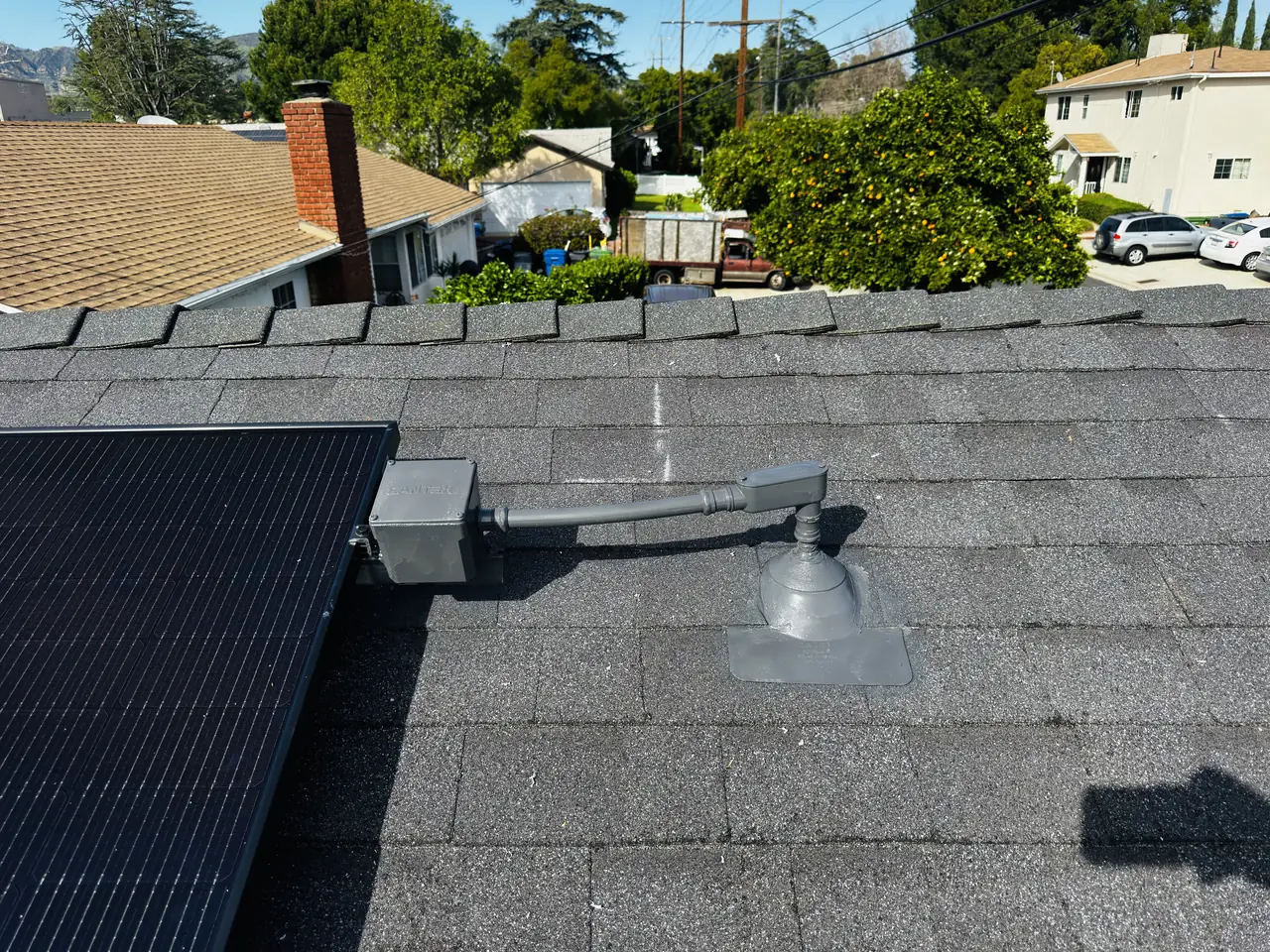
- Set the mounting system, conduit and modules with a microinverter under each.
- Filed the interconnection application against the new home's own service.
- Chased the final release when it had not reached the utility and cleared it the same day.
- Followed the work request to the net meter and commissioned the system.
System specifications
| Modules | 18, in two rows of eleven and seven |
|---|---|
| Inverters | 18 microinverters |
| Size recorded by the utility | 5.85 kW AC-CEC |
| Home | New two-story dwelling under SB9, 1,422 sq ft |
| Roof | Composition shingle, two slopes |
| Metering | Separate meter from the original house |
| Utility / AHJ | LADWP / LADBS |
Is your project like this one?
- You are building a second home on an existing single-family lot.
- Your property will have two meters and you are unsure how solar divides between them.
- You want the array designed while the new home is still being framed.
- You are on LADWP and want a realistic timeline for a new-build interconnection.
- Your final inspection has passed but the utility says it has no release.
Cali Energy in Van Nuys
Van Nuys sits inside City of Los Angeles boundaries: permits run through LADBS, interconnection through LADWP.
Two front doors on one lot used to mean a duplex. In Van Nuys it now more often often means a lot that has been split under state law, with a second, separate home built behind or beside the first. The wiring tells you which: a duplex shares a service, a split lot does not.
This installation is on the Van Nuys projects page alongside the others, and what the work covers is set out on the Van Nuys service area page.
- License and classifications: CSLB #1032379
- Official reference for this process: Los Angeles City Planning — housing policies and ADUs
- Official reference for this process: LADWP interconnection requirements
Frequently asked questions
Does a second home on my lot need its own solar system?
If it has its own meter, yes. Solar is credited against the account it is wired to, so an array on one home does nothing for the other's bill when the two are metered separately. Where a builder is still deciding the service arrangement, that decision effectively decides how many solar systems the property will need and how many interconnection applications have to be filed.
How fast can an LADWP interconnection go on a new home?
About a month, when every document agrees with the others. This project ran twenty-six days from application to net meter. The slow version of the same job has an undocumented service that forces a field visit, a system over ten kilowatts that draws a sizing review, or a building release nobody notices is missing. Each of those adds weeks, and they stack.
What happens if the final release does not reach the utility?
The interconnection stops and no notice is sent, because from the utility's side nothing has changed. The inspection has passed and the building department's records show it, but the utility is waiting for the electronic release before it will schedule a meter. Asking the utility directly whether it has the release is usually enough to move it, and it costs one email.
Do new homes need fire sprinklers in Los Angeles?
Yes. Every new one- and two-family dwelling in California is built with residential sprinklers throughout, whether it is one story or two, and the permit records it. It affects solar only indirectly, through the plumbing and the attic space the array's conduit has to share, but it is worth knowing before the roof penetrations are laid out so nothing has to be moved later.
Does Cali Energy do solar on new SB9 homes in Van Nuys?
Yes, and it is a large part of the work in Van Nuys, where lots are being split and built out. A second dwelling has its own service, so it needs its own array and its own interconnection. Cali Energy designs around the meter arrangement while the home is still being framed, then carries the interconnection to the net meter. License CSLB #1032379.
What this would look like on your roof
Planning solar in Van Nuys? Tell us your utility, your roof and what your bill looks like now, and we will model what a system like this would do on your house before you commit to anything.
Or call +1 (323) 844-7777 · Cali Energy, Northridge · CSLB #1032379 (B, C-10, C-39) — design, permits, install and electrical under one licensed contractor.
Related
This timeline reflects this property and this permitting path. Updated September 2026.