

Granada Hills, CA · January – September 2026 · LADWP / LADBS
The unit had no address, so the application went in under the main house.
A small array on a new accessory dwelling, and a hundred and eight days between the first confirmation and permission to operate — almost all of it spent on which address the record belonged to.
An interconnection request is filed against a service address. An accessory dwelling that will have its own meter does not necessarily have its own address yet, so the request goes in under the main house and has to be corrected later. Until the correction lands, the utility's own staff cannot find the work request when they search the address the meter is actually on. It is a records problem, not an engineering one, and it costs real weeks.
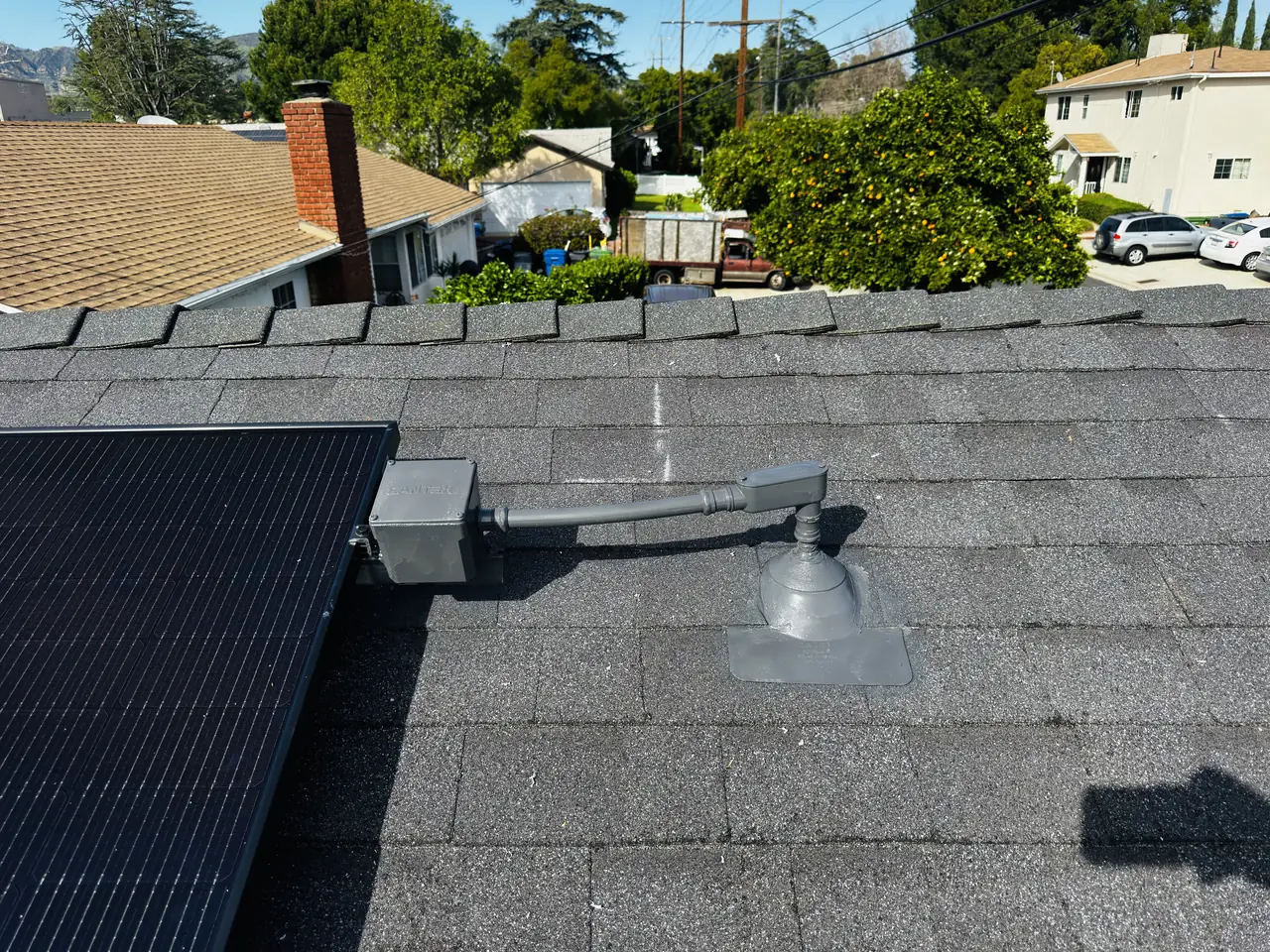
At a glance
- Building
- New detached accessory dwelling behind a main house
- Recorded by the utility
- 1.99 kW
- Modules
- 5 × Mission 410 W
- Microinverters
- 5 × Enphase IQ8A
- First confirmation
- 10 March 2026 — under the main house address
- Notices reissued
- 26 May 2026 — under the ADU address
- Permission to operate
- 26 June 2026
- First confirmation to permission
- 108 days
The story
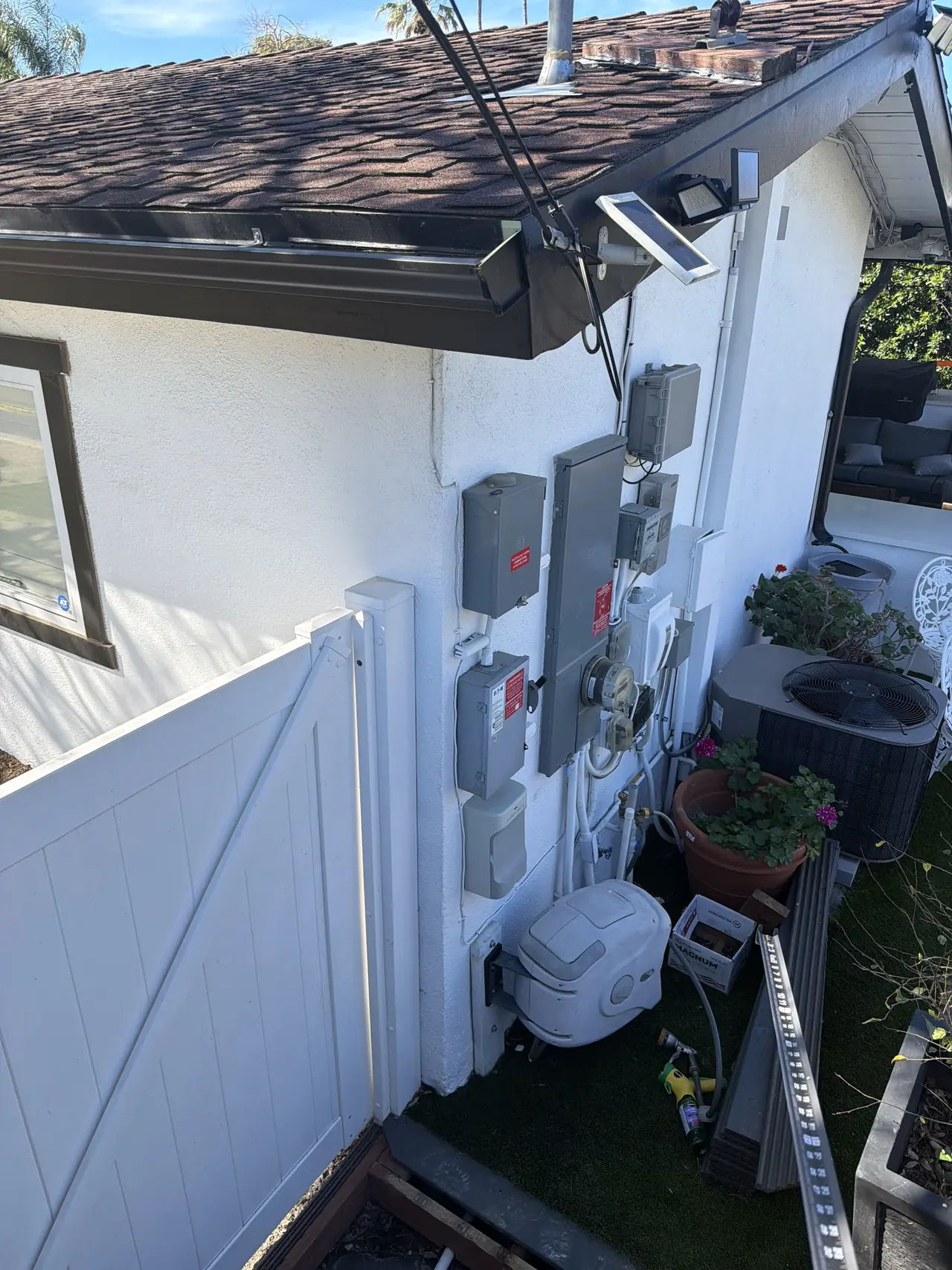
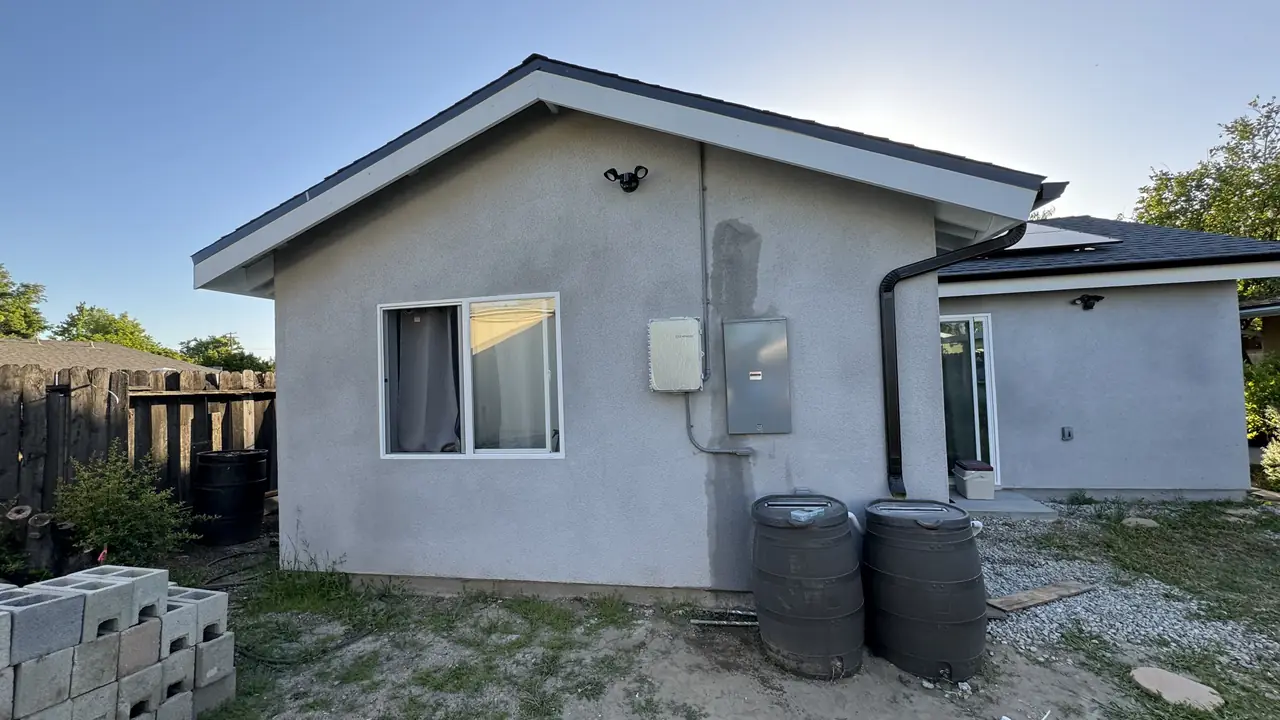
The estimate for this system was written in January 2026, and the internal note attached to it records the constraint: the accessory dwelling will have its own main panel and its own meter installed on the unit itself, and no address has been assigned to it yet.
That is not unusual and it is not anybody's mistake. An accessory dwelling gets a meter when the service is built. It gets an address when the city assigns one, and those two events are not coordinated. In between there is a building with a service, a meter and no name.
So the interconnection request went in against the only address that existed — the main house. The first confirmation came back on the tenth of March, naming the main house, for a system of 1.99 kilowatts.
Then the record had to catch up with the building. The notices stopped and restarted in the second half of May, this time naming the accessory dwelling, and the review chain effectively ran again from there.
The clearest illustration of the cost came in June. Writing to the utility about the project under the main house address, the reply came back: no work orders for this address. The work request existed, the system was on the roof, and the representative searching the address he had been given could not see it — because by then the record lived under the other one.
What untangles it is nothing clever: reply with both addresses, say plainly which is the main house and which is the unit, and name the work request number so the search is not against a string at all. That is the whole fix, and it works because everybody on the other end is also trying to find the same job.
The building department's final release was issued on the twenty-first of May. The site evaluation, the representative's approval and the meter request landed together on the twenty-third of June, and permission to operate followed three days later. A hundred and eight days from the first confirmation.
The system has run since June, and the owner's monitoring account is live.
If you are building an accessory dwelling with its own meter, ask the city when the address will be assigned, and tell your installer the moment it is. Everything downstream — the interconnection record, the meter, the monitoring account, the bill — is filed against that string, and every week it does not exist is a week somebody is filing against the wrong one.
Permission to operate came through in June and the accessory dwelling has run on its own meter since. Cali Energy carried this Granada Hills project through an address that did not exist for most of it. The plan set for the same unit was checked part by part before filing.
How it ran
| January 2026 | Estimate prepared; the accessory dwelling will have its own meter and no address has been assigned yet |
|---|---|
| 10 March 2026 | Interconnection request confirmed under the main house address |
| 21 May 2026 | Building department's final release issued |
| 26 May 2026 | Notices reissued under the accessory dwelling's own address |
| 23 June 2026 | Site evaluation, approval and meter request, all together |
| 23 June 2026 | Utility representative, searching the main house address: no work orders found |
| 26 June 2026 | Permission to operate |
108 days from the first confirmation. The engineering took a day.
What we did
- Filed against the only address that existed and flagged the mismatch in writing.
- Carried the correction through until the record sat on the right service.
- Answered the utility's search failure with both addresses and the work request number.
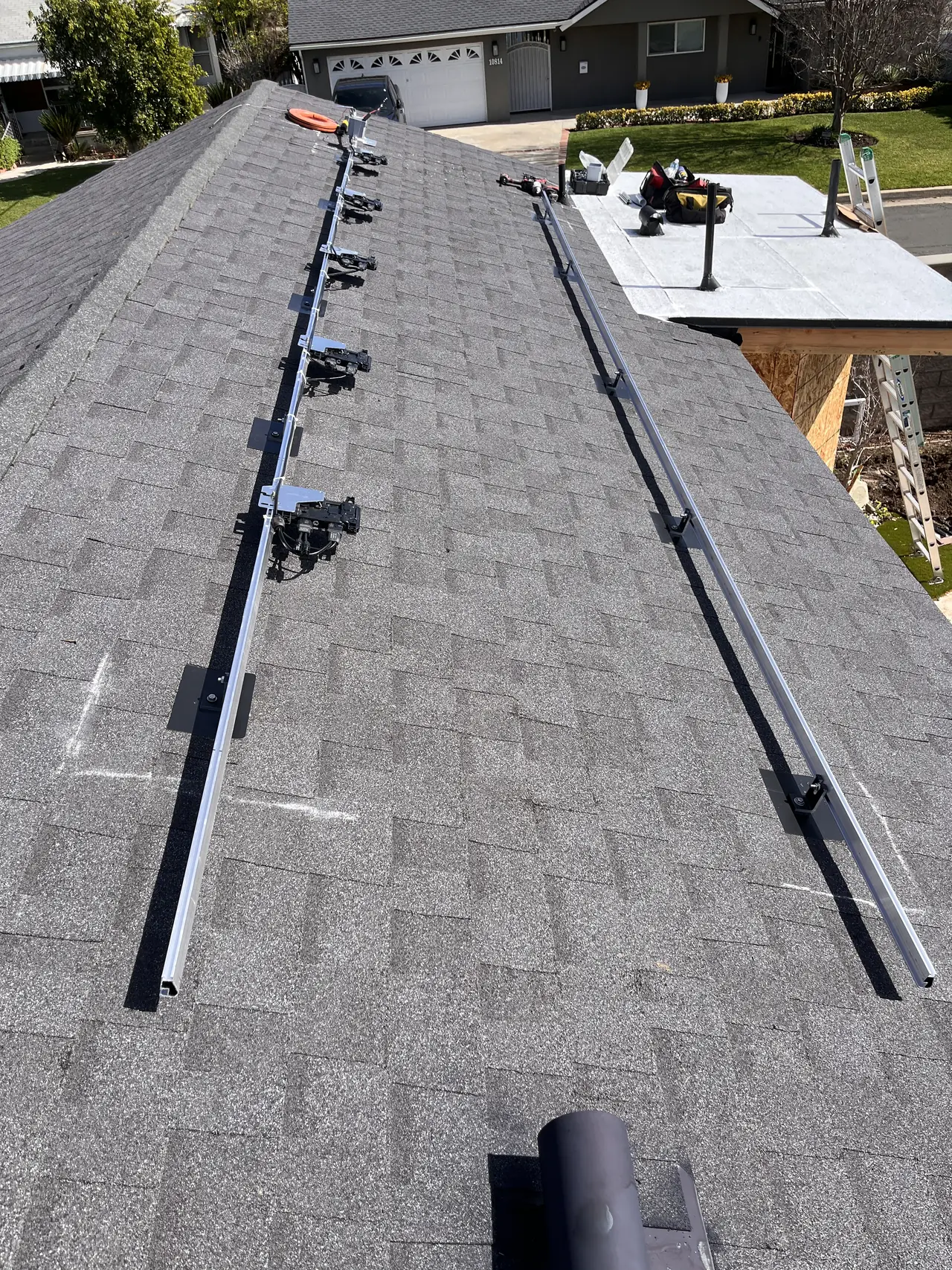
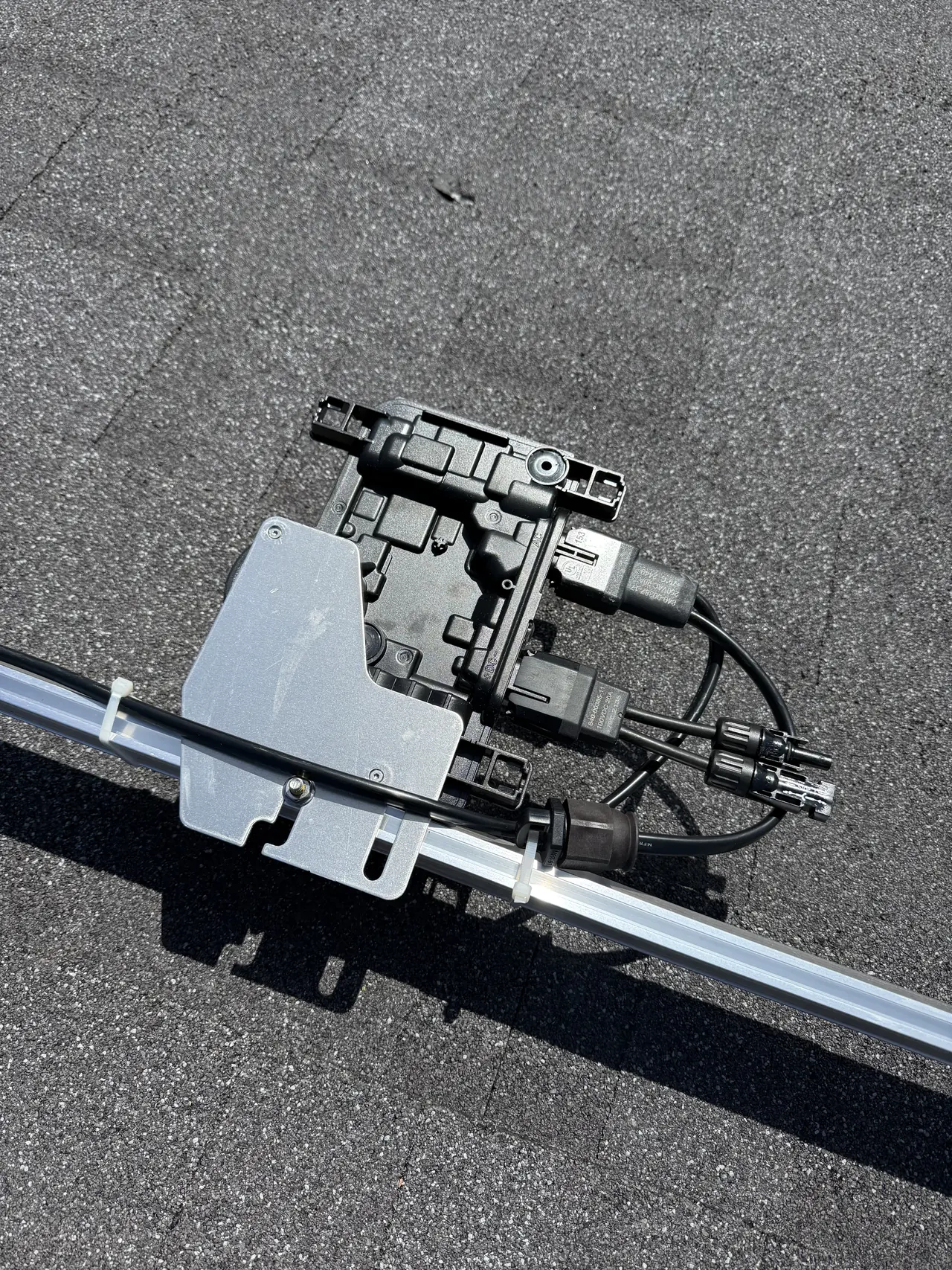
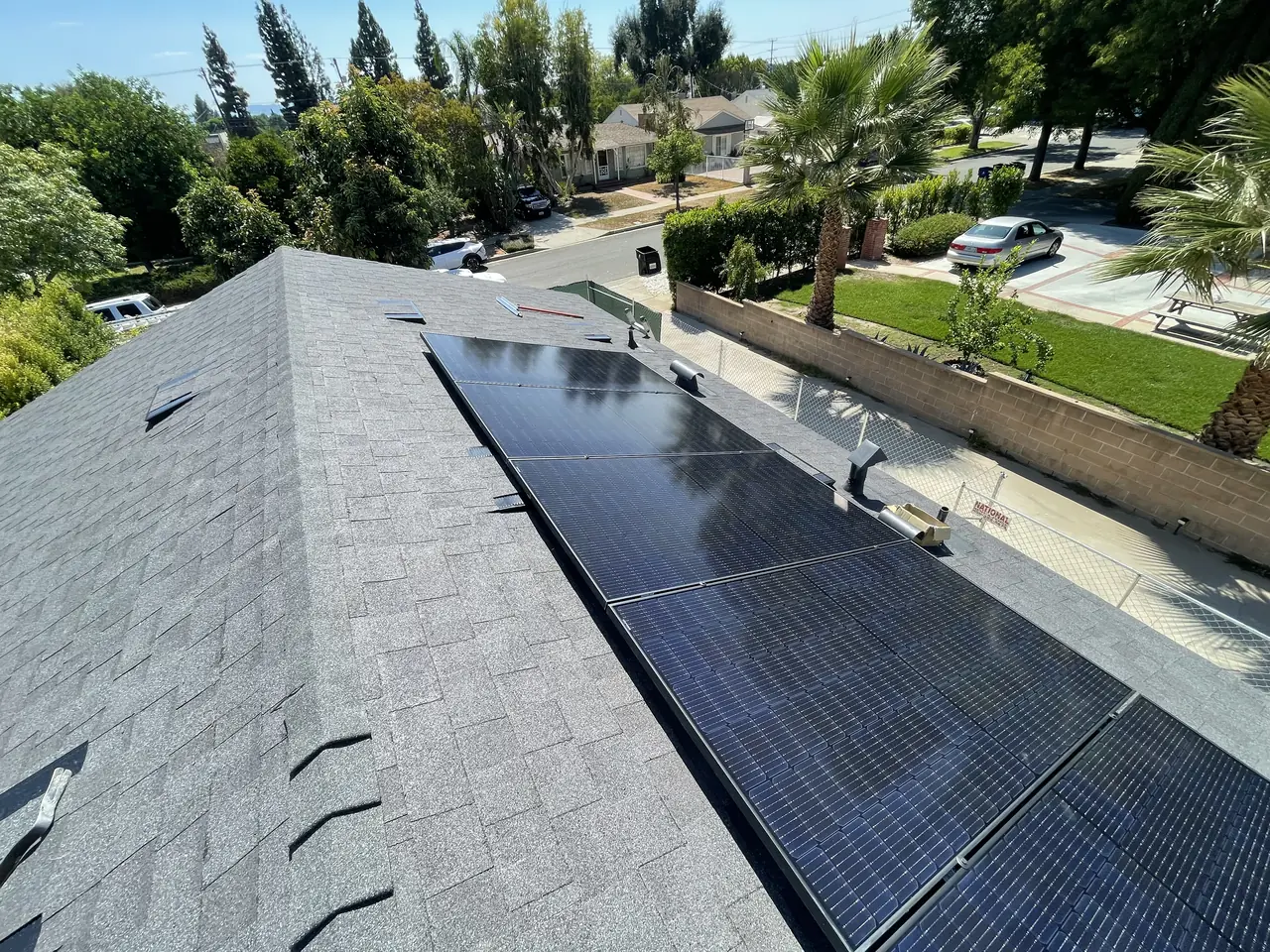
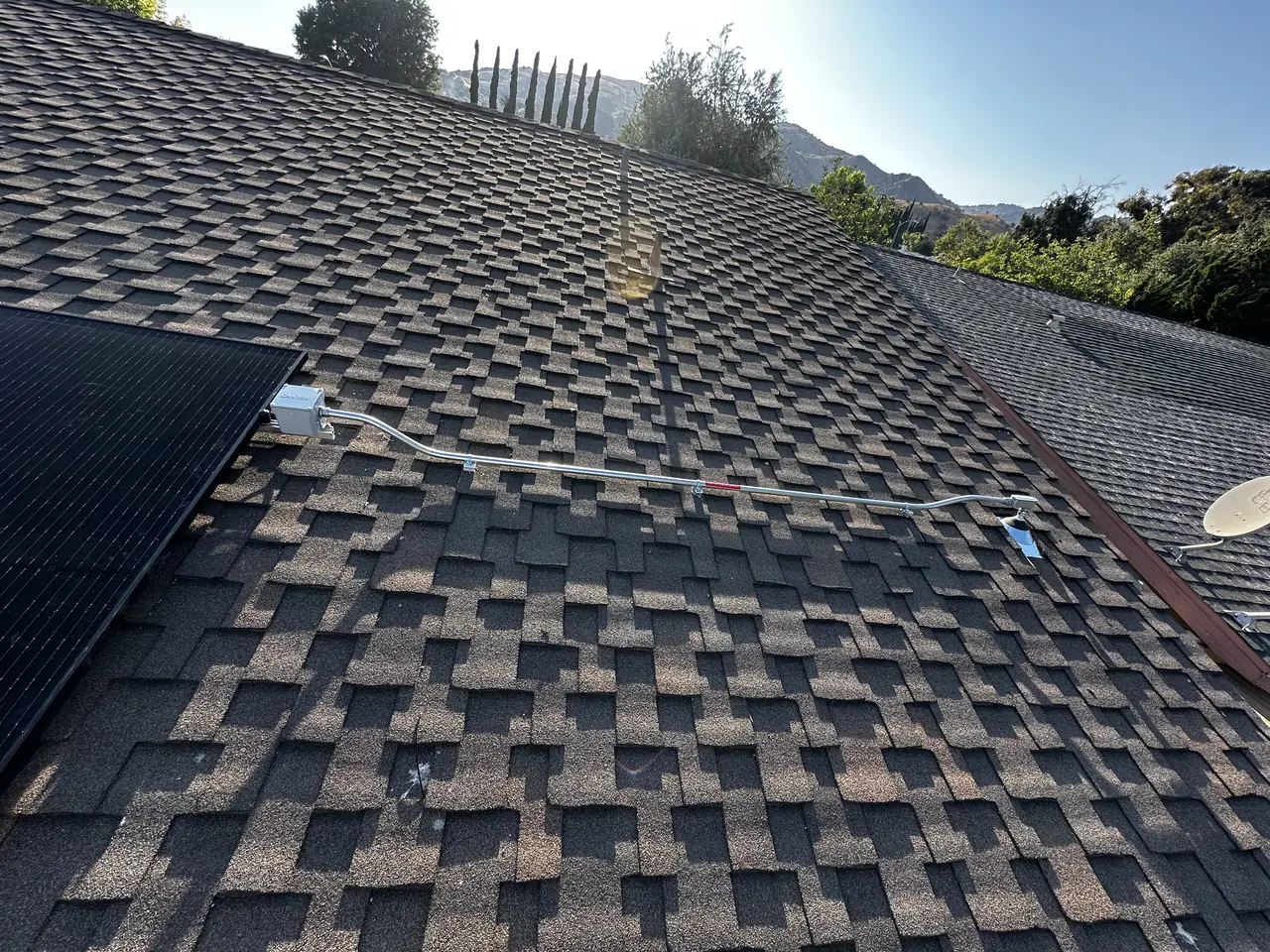
- Set five modules with a microinverter under each on the accessory dwelling roof.
- Handed the monitoring account to the owner once the system was running.
System specifications
| Building | New detached accessory dwelling with its own service and meter |
|---|---|
| Modules | 5 × Mission 410 W |
| Microinverters | 5 × Enphase IQ8A, one per module |
| Recorded by the utility | 1.99 kW |
| Filed against | The main house address, the only one that existed |
| Corrected to | The accessory dwelling's own address, in May |
| First confirmation to permission | 108 days |
| Utility / AHJ | LADWP / LADBS |
Is your project like this one?
- You are building an accessory dwelling that will have its own meter.
- Your unit has a service and no address yet.
- The utility cannot find a work request you know exists.
- Your paperwork is split between a main house address and a second dwelling.
- Your system is running and you still cannot see it in an app.
Cali Energy in Granada Hills
Granada Hills sits inside City of Los Angeles boundaries, so every project here is permitted through LADBS and interconnected through LADWP. Our work in Granada Hills runs from single-row arrays on accessory dwelling units to systems on underground services, on composition shingle and on concrete tile.
An accessory dwelling gets its own meter long before it gets its own address, and every utility record in between has to be filed under something.
This installation is on the Granada Hills projects page alongside the others, and what the work covers is set out on the Granada Hills service area page.
- License and classifications: CSLB #1032379
- Official reference for this process: LADWP — interconnection process, types 1, 2 and 3
Frequently asked questions
Can an interconnection be filed before an ADU has an address?
It has to be filed against something, and in practice that is the main house. The record then has to be corrected once the city assigns the unit its own address. Filing early still takes a queue position; just expect the correction and the time it adds.
Why could the utility not find the work request?
Because it was searching the address it had been given — the main house — after the record had been moved to the accessory dwelling. Both addresses are real and both belong to the project, but a search matches one string. Quoting the work request number rather than an address is what ends that conversation.
Does an ADU with its own meter need its own application?
Yes. An interconnection request attaches to a meter, so a separately metered accessory dwelling is its own customer with its own application, its own charge and its own permission to operate.
What should I ask for at handover?
The monitoring account in your own name, opened and showing production before the crew leaves, and a copy of the permission to operate notice. Those two together are what let you confirm the system is running and prove it is authorized to. Ask for both on the day rather than afterwards.
Does Cali Energy install solar on accessory dwellings in Granada Hills?
Yes, including units with their own main panel and their own meter. Those are separate services and they need their own interconnection record, which is filed against the unit's address. On this project the address had not been assigned when the work started, so every notice went out under the main house. Cali Energy carried the Granada Hills project through the reissue and on to permission to operate.
What this would look like on your roof
Planning solar in Granada Hills? Tell us your utility, your roof and what your bill looks like now, and we will model what a system like this would do on your house before you commit to anything.
Or call +1 (323) 844-7777 · Cali Energy, Northridge · CSLB #1032379 (B, C-10, C-39) — design, permits, install and electrical under one licensed contractor.
Related
This timeline reflects this property and this permitting path. Updated September 2026.