

Tarzana, CA · October – December 2022 · LADWP / LADBS
No single plane was big enough. So the array is seven small ones.
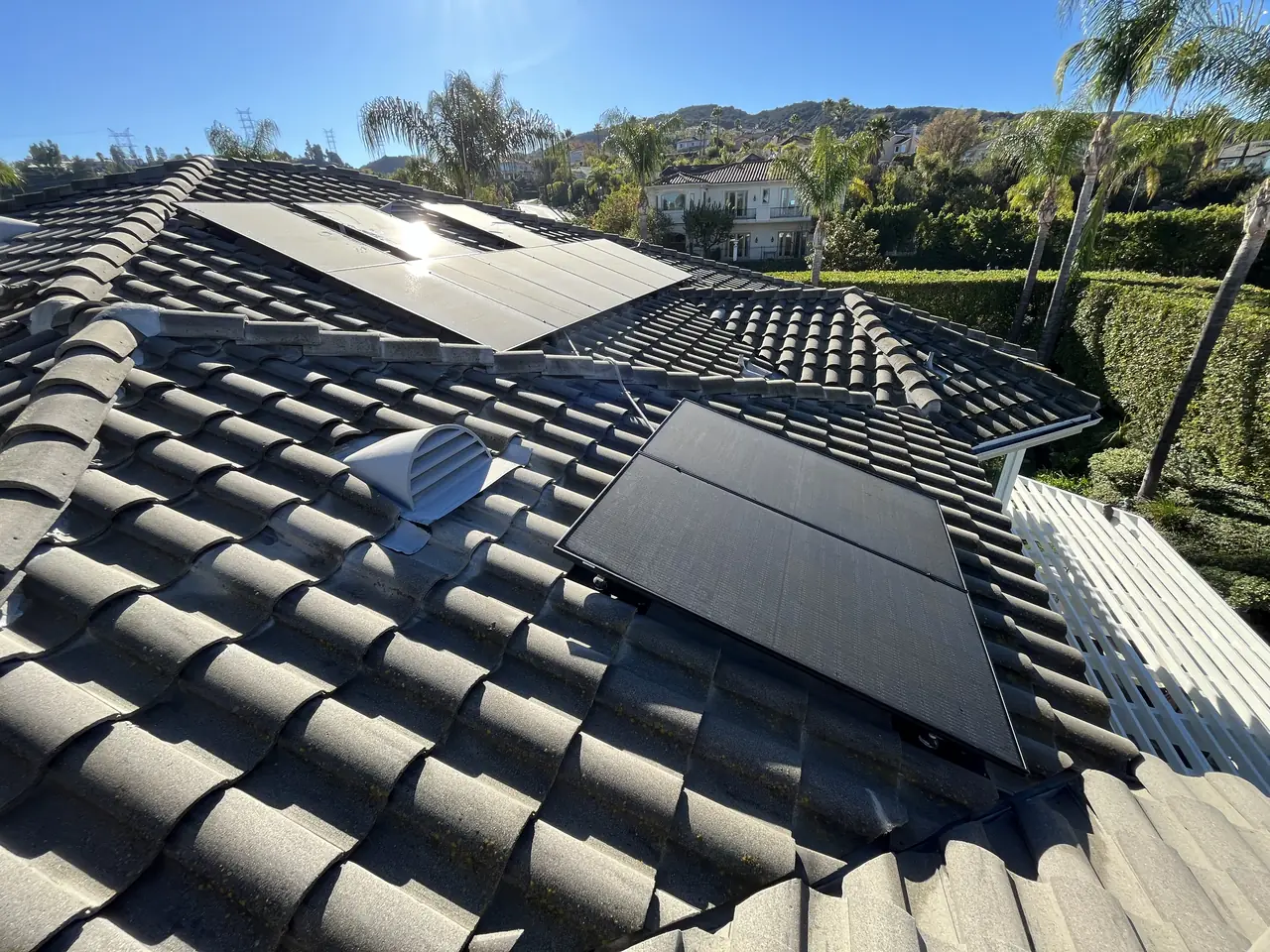
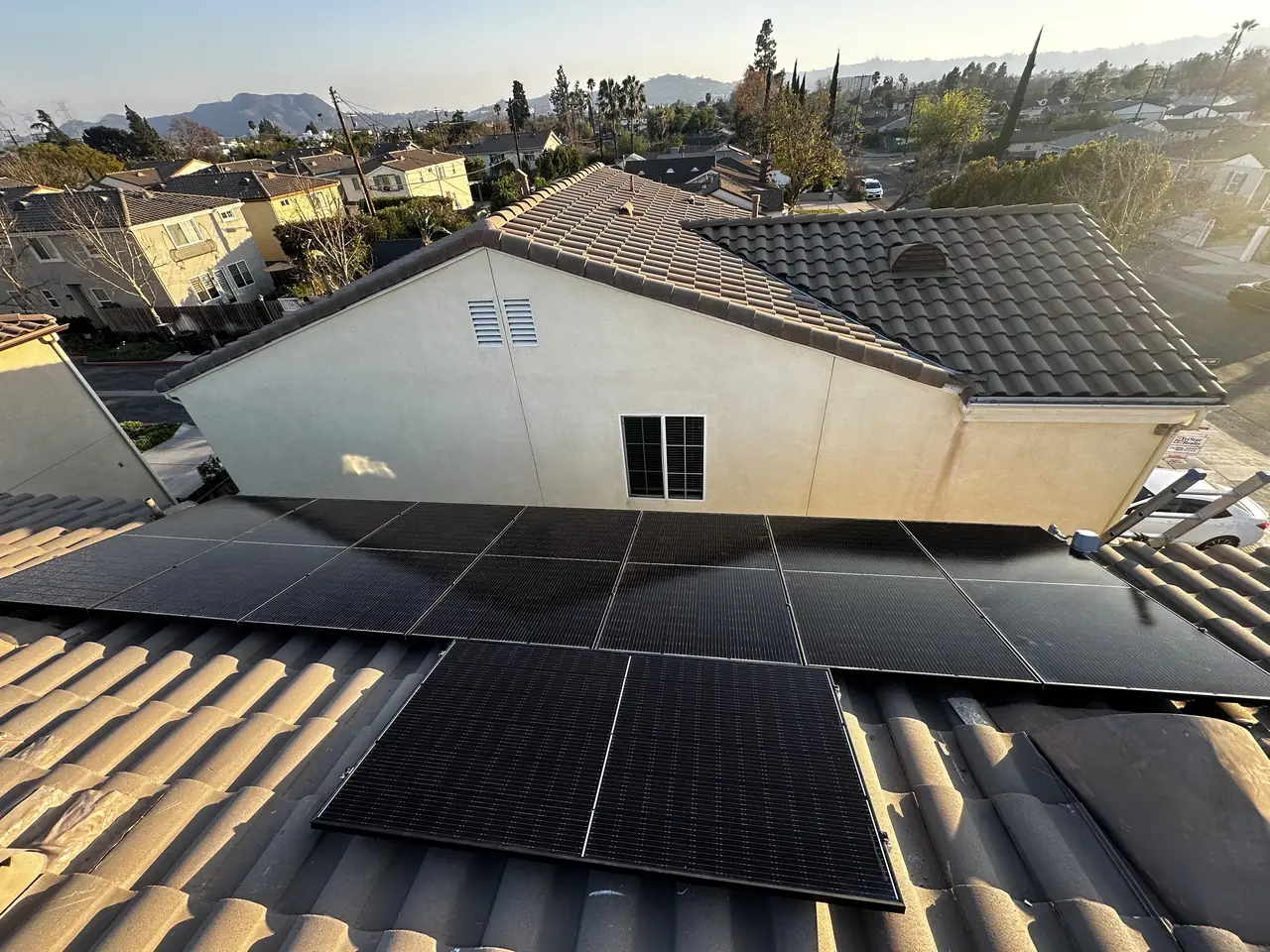
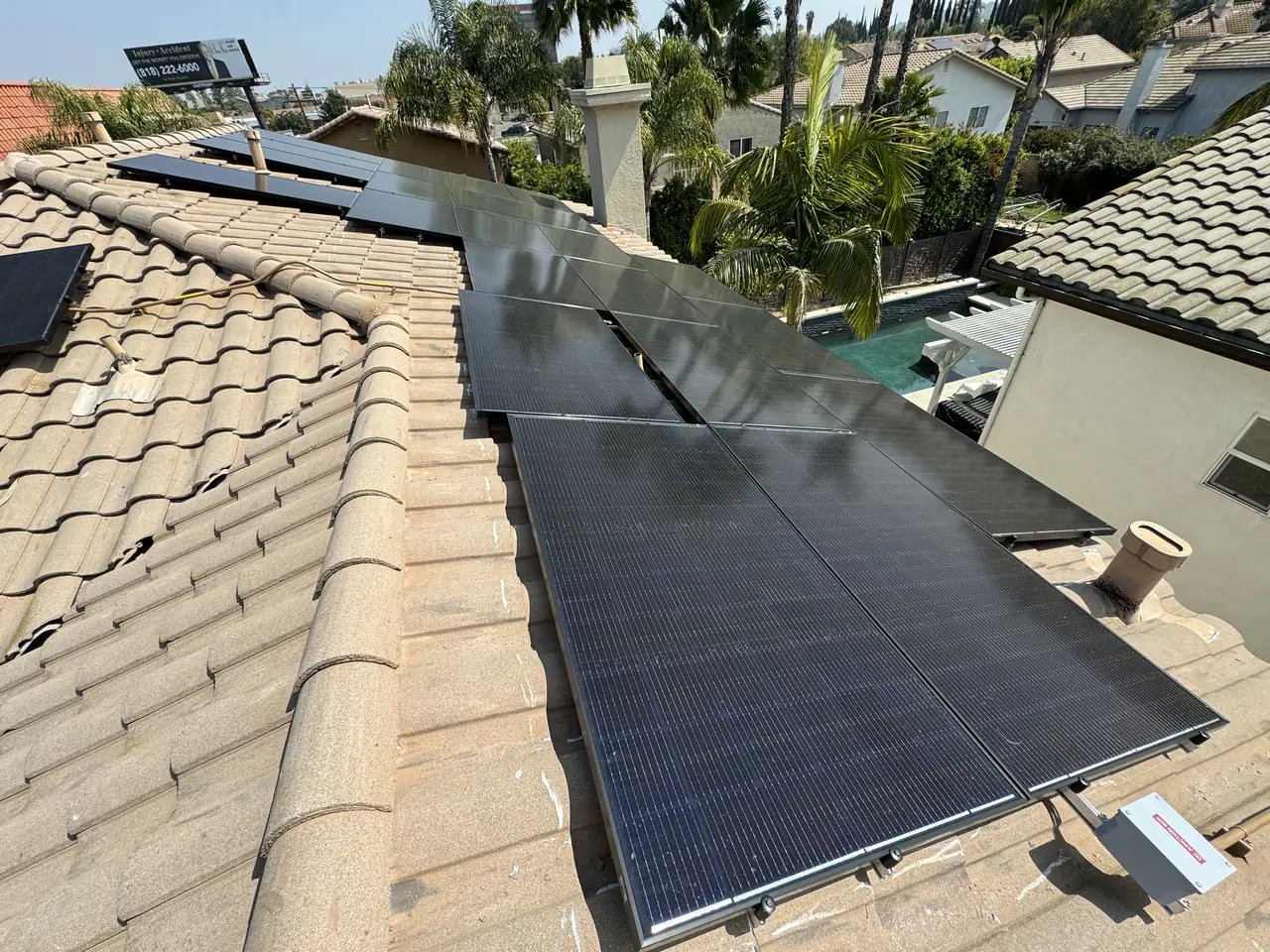
A two-story house behind a guarded gate in Tarzana, with a concrete S-tile roof cut into hips and short planes. The array is a set of small groups, two to four modules each, on tile hooks and flashed tile kits, with an Enphase microinverter under every module. Installed on the thirtieth of November 2022, final inspection passed on the fifteenth of December.
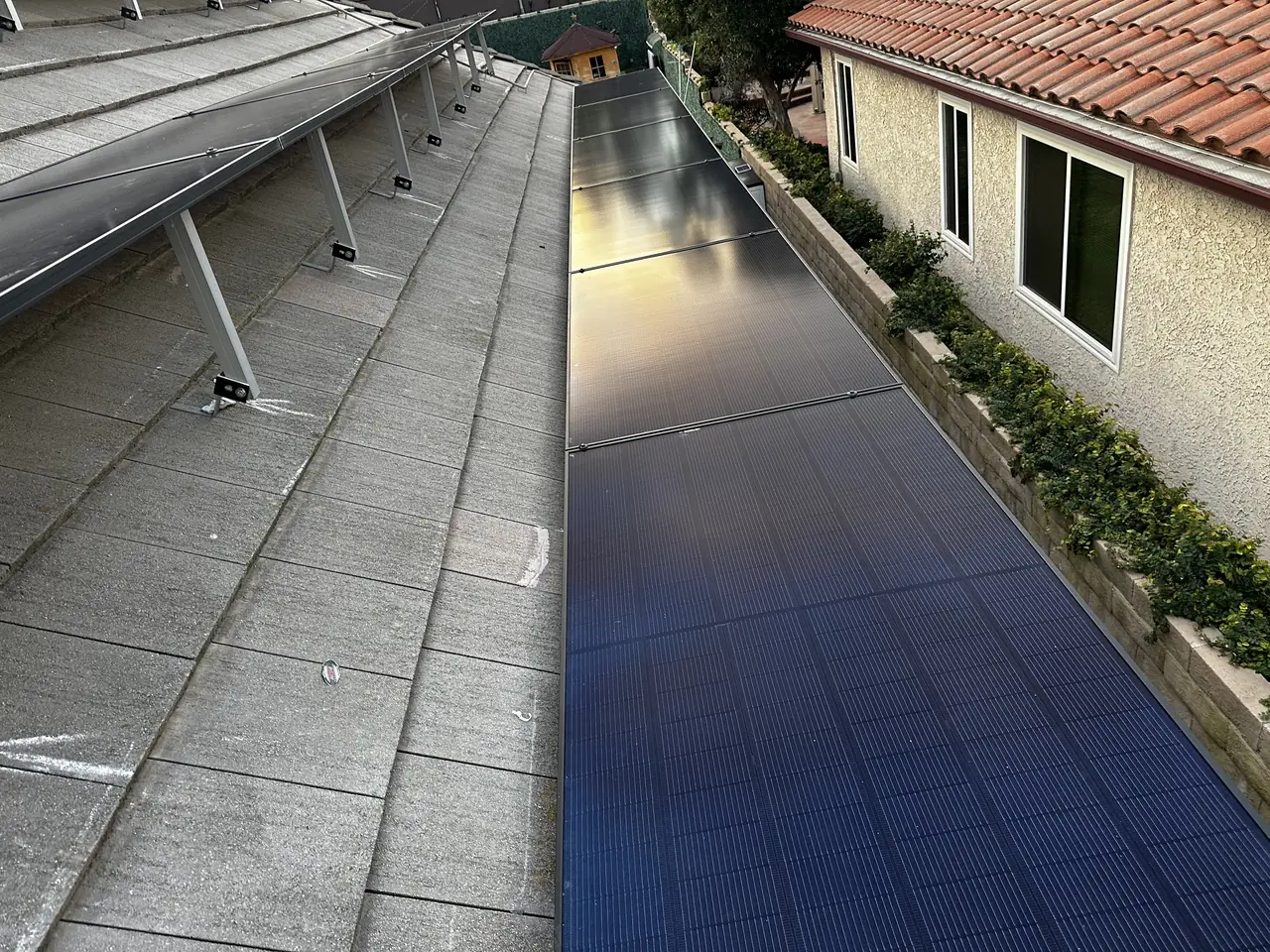
On a hipped S-tile roof there is rarely one plane that takes the whole array, so the design becomes a set of groups, each on its own plane, each converting on its own through a microinverter. The roof work is the same at every attachment: a tile comes up, a hook or a flashed base goes to the rafter, and the tile goes back. Done well, the roof sheds water exactly as it did, and the groups together add up to the system the house needed. That is how Cali Energy built this one in Tarzana: seven groups, one combiner, one final inspection.
At a glance
- Inverters
- Enphase IQ microinverters, one per module
- Roof
- Concrete S-tile, hipped, many short planes
- Layout
- Groups of two to four modules on separate planes
- Attachments
- Tile hooks and flashed tile-replacement kits
- Installed
- 30 November 2022
- Final inspection
- Passed 15 December 2022
- Site
- Gated community with guarded entry
- Utility / AHJ
- LADWP / LADBS
The story
The roof is the whole story. It is concrete S-tile over a hipped plan, which means the planes are short, they meet at angles, and each one faces a slightly different way. There is no run of roof that would take twenty modules in a rectangle. There are, instead, seven places that will take two, three or four.
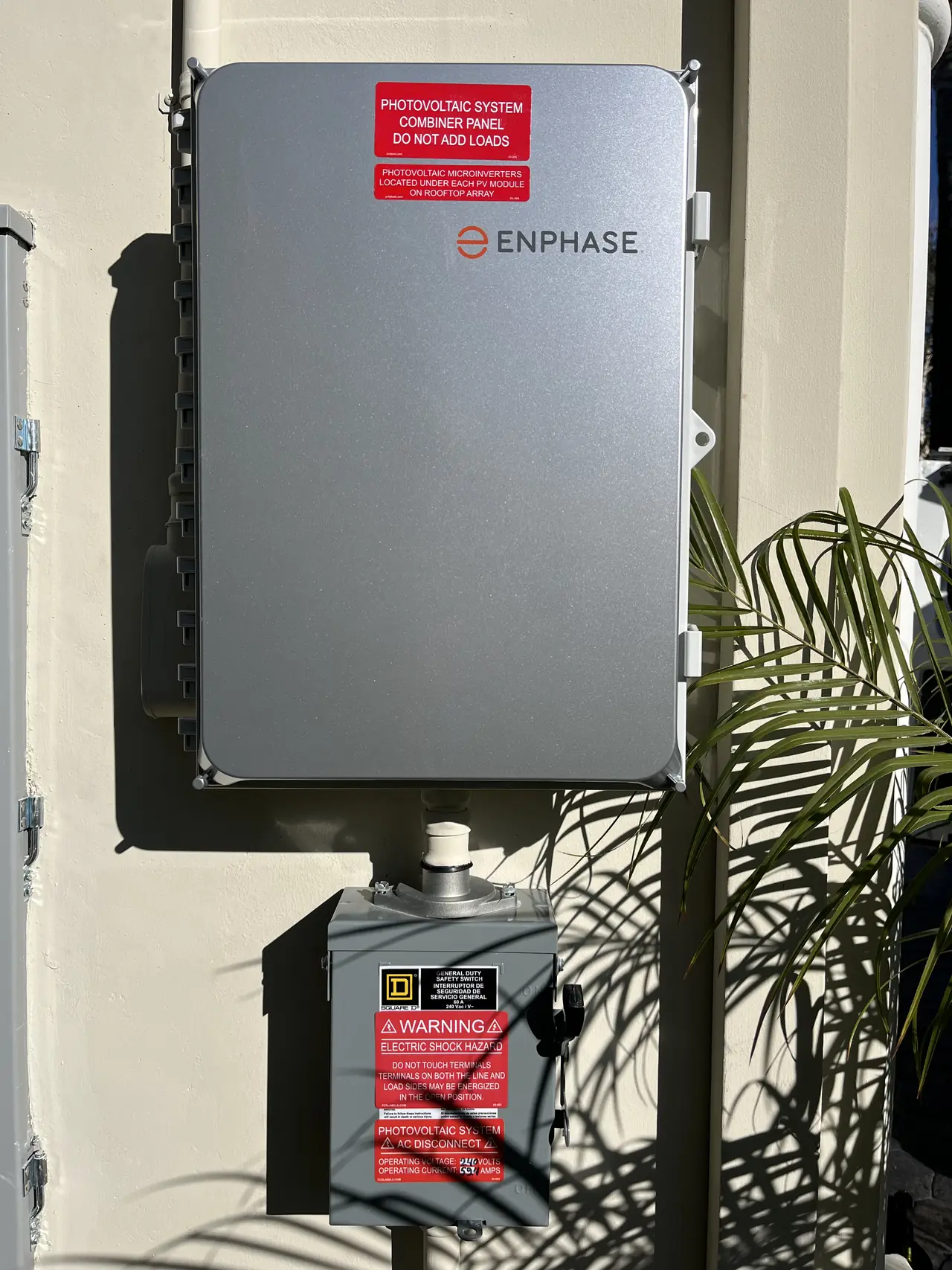
So that is how it was drawn. Groups of modules, each on its own plane, each converting on its own with an Enphase microinverter underneath, all landing in one combiner on the wall. A string inverter would want the groups wired in series and would produce to the weakest plane at any hour; microinverters let each group produce to its own light.

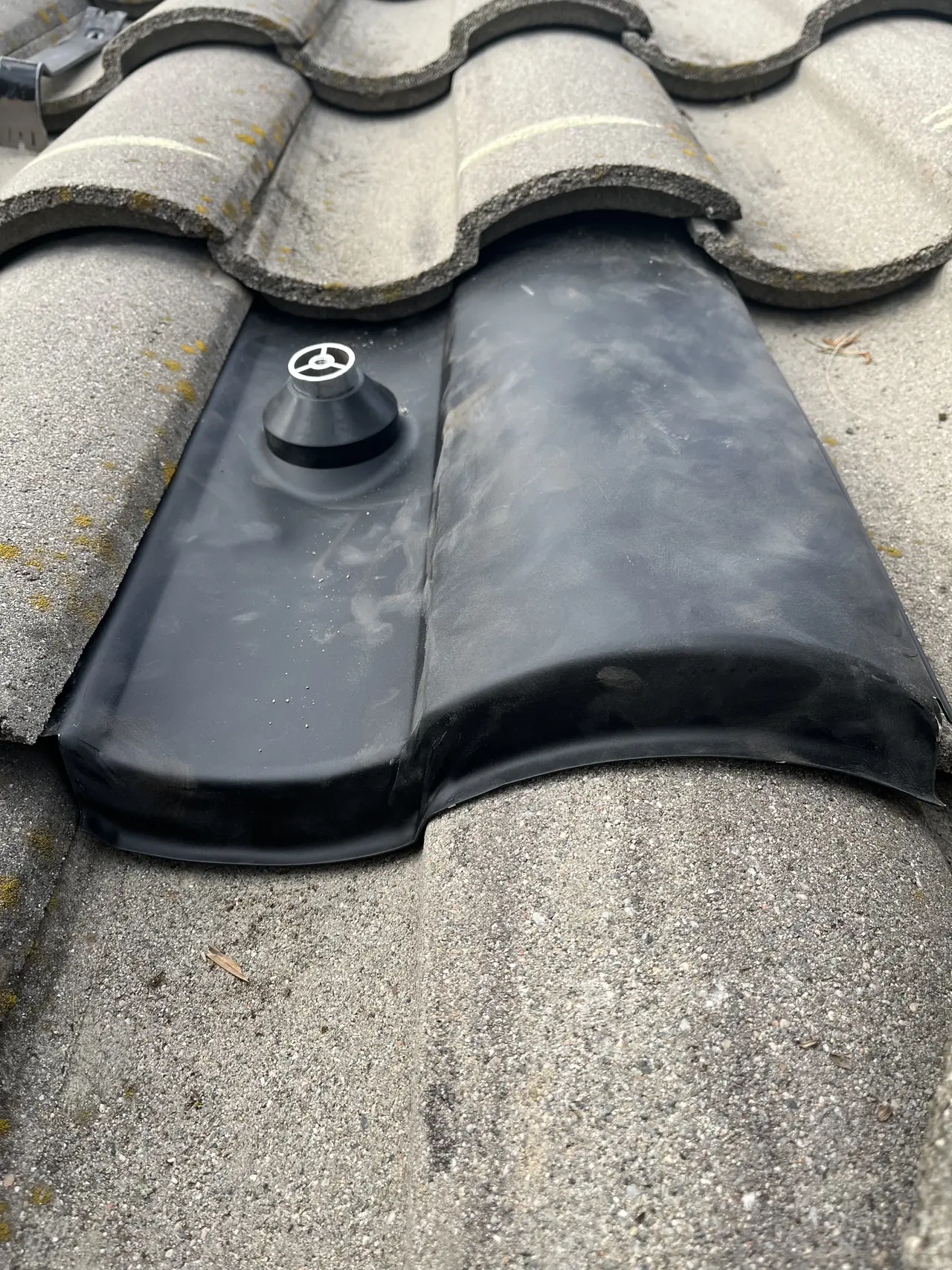
Every group means attachments, and on S-tile every attachment is roofing work before it is solar work. At each point a tile is lifted, a hook is fastened through the underlayment into the rafter and sealed, and the tile is set back over the hook so the profile is unbroken. Where a penetration has to pass through the tile field, a flashed replacement tile takes the place of the original: a formed metal or composite pan with a sealed collar, lapped under the course above so it sheds water the way the tile did.
The plan check with the city came back with corrections at the start of November and was cleared. The site is a gated community with a guard at the entry, so the crew list went in ahead of the day and the materials were delivered inside the gate before it. The array went up on the thirtieth of November 2022.
The final inspection was requested and passed on the fifteenth of December, two weeks after the install. The trade-off in a design like this is plain: seven groups mean seven rail sets, more attachments per module, more tile handled and more conduit than one rectangle would need. It is slower to build. It is also the only way this roof takes a system of this size without cutting into it.
How it ran
| Late October 2022 | Roof surveyed; array designed as seven groups |
|---|---|
| Early November 2022 | Plan check corrections issued by LADBS and cleared |
| 30 November 2022 | Array installed |
| 15 December 2022 | Final inspection passed |
This timeline reflects this property: a gated site and a hipped S-tile roof, with the array built as separate groups.
What we did
- Drew the array as seven groups on separate planes rather than forcing one rectangle onto a hipped roof.
- Fixed every attachment to a rafter through lifted tile, on hooks and flashed tile-replacement kits, with each tile reset over it (C-39, C-10).
- Put an Enphase microinverter under every module so the groups produce independently, landing in one combiner and disconnect on the wall.
- Cleared the city's plan check corrections before installation.
- Delivered materials and the crew list through the community gate ahead of the install day.
- Installed on the thirtieth of November 2022 and passed the final inspection on the fifteenth of December.
System specifications
| Inverters | Enphase IQ microinverters, one per module |
|---|---|
| Combiner | Enphase IQ Combiner with a fused disconnect |
| Roof | Concrete S-tile, hipped, short planes |
| Layout | Seven groups of two to four modules on separate planes |
| Attachments | Tile hooks to the rafters; flashed tile-replacement kits at penetrations |
| Site | Gated community, guarded entry |
| Battery | None |
| Utility / AHJ | LADWP / LADBS |
Is your project like this one?
- Your roof is concrete S-tile with hips and short planes and no big rectangle.
- You have been told your roof only fits a small system.
- You want to know what actually goes under the tile at each attachment.
- You live in a gated community and need a contractor who plans for the gate.
- Your Tarzana property is served by LADWP, while permits are handled by LADBS.
Cali Energy in Tarzana
Tarzana is inside City of Los Angeles boundaries: permits run through LADBS, interconnection through LADWP.
Tarzana is a neighborhood in the southwestern San Fernando Valley, inside the City of Los Angeles. Several gated communities sit in the hills south of the boulevard, and tile roofs are the norm there.
This installation is on the Tarzana projects page alongside the others, and what the work covers is set out on the Tarzana service area page.
- License and classifications: CSLB #1032379
- Official reference for this process: LADBS — plan review and permitting
- Official reference for this process: California Energy Commission — solar equipment lists
Frequently asked questions
Can a hipped S-tile roof take a full-size system?
Usually, if the array is drawn as groups. A hipped roof breaks into short planes facing different ways, and none of them takes a rectangle of twenty modules. Groups of two to four on seven planes add up to the same system, provided each module converts on its own. On this house that is how it was done, with an Enphase microinverter under every module.
What goes under the tile at each attachment?
At a hook point, the tile is lifted, a stainless hook is lag-bolted through the underlayment into the rafter and sealed, and the tile goes back over the hook with its profile intact. At a penetration, the original tile is replaced with a flashed kit — a formed pan with a sealed collar — lapped under the course above so water runs over it. No attachment relies on sealant alone.
Does a gated community change anything?
Only the logistics. The guard checks names at the gate, so the crew list goes in ahead of the install day and the materials are delivered inside the gate before it, rather than arriving with the crew. On this house that planning was done the week before and the install itself took one day.
Why is a grouped array slower to build?
Because every group needs its own rails and its own attachments, and on tile every attachment means handling tile. Seven groups mean seven rail sets, more roof penetrations per module and more conduit than a single rectangle. It is the price of using the roof that exists rather than the roof one might wish for.
What this would look like on your roof
Planning solar in Tarzana? Tell us your utility, your roof and what your bill looks like now, and we will model what a system like this would do on your house before you commit to anything.
Or call +1 (323) 844-7777 · Cali Energy, Northridge · CSLB #1032379 (B, C-10, C-39) — design, permits, install and electrical under one licensed contractor.
Related
This timeline reflects this property and this permitting path. Updated September 2026.