

Chatsworth, CA · 2024 · LADWP / LADBS
One roof. Four arrays. Two angles.
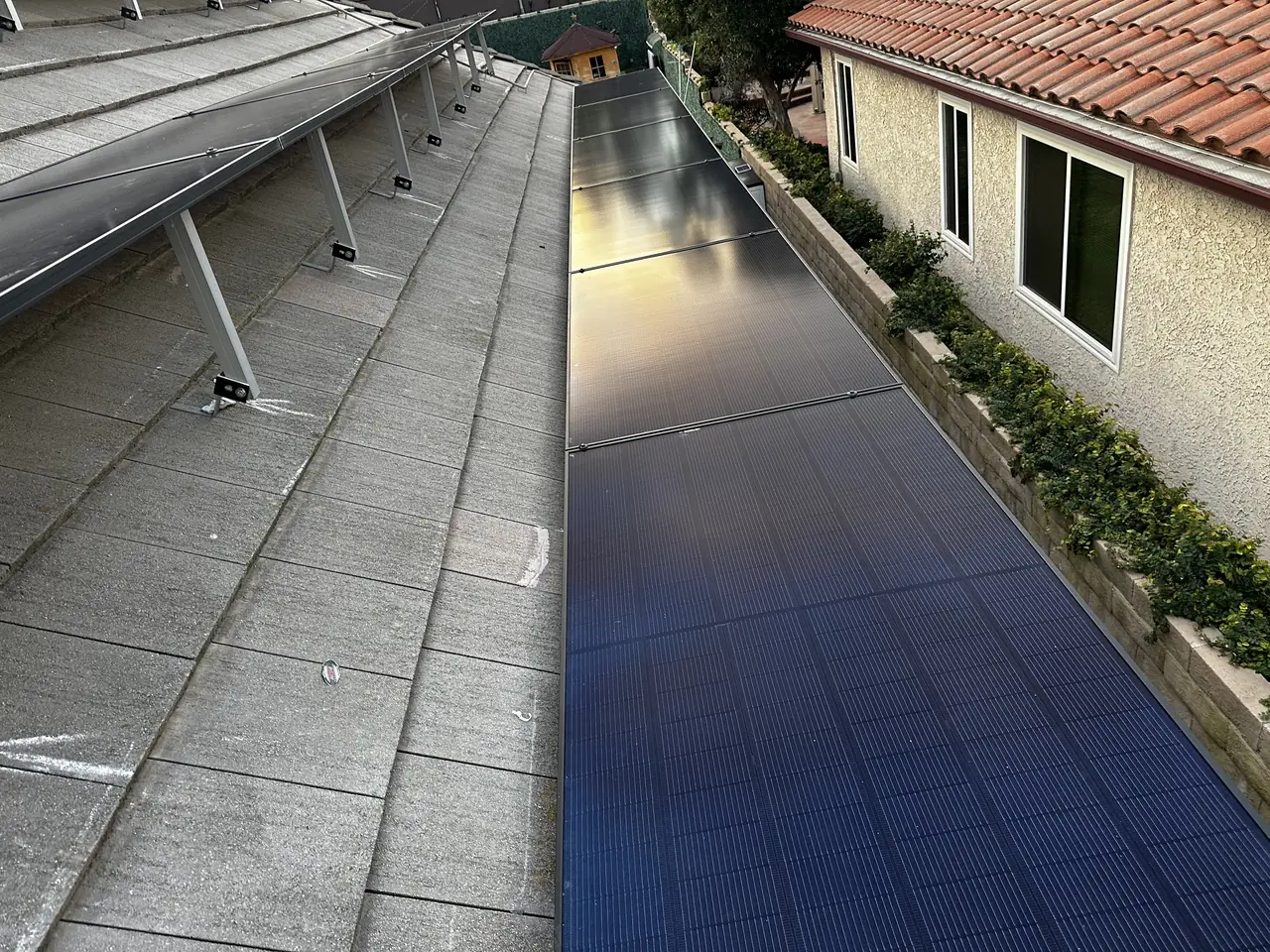
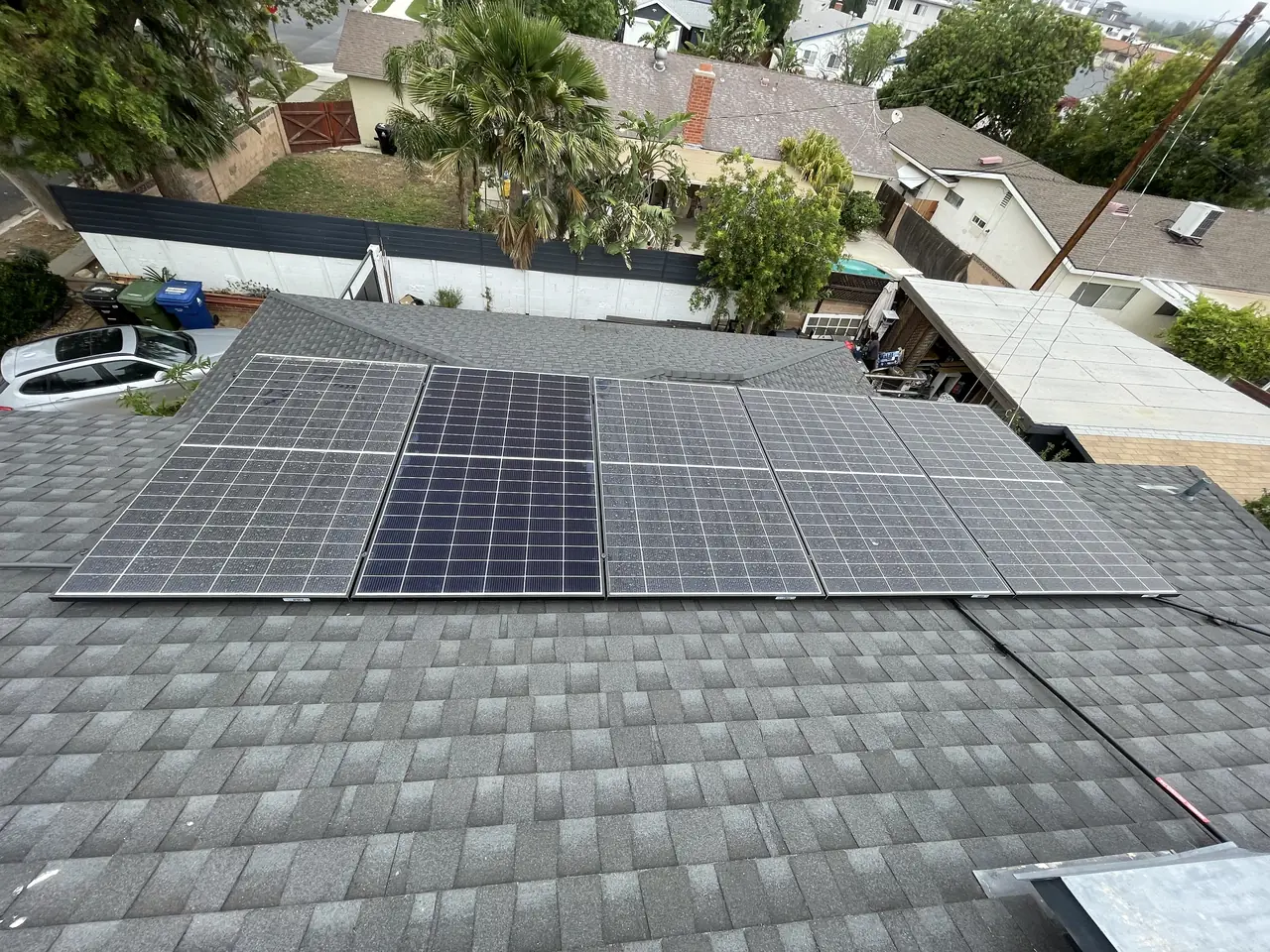
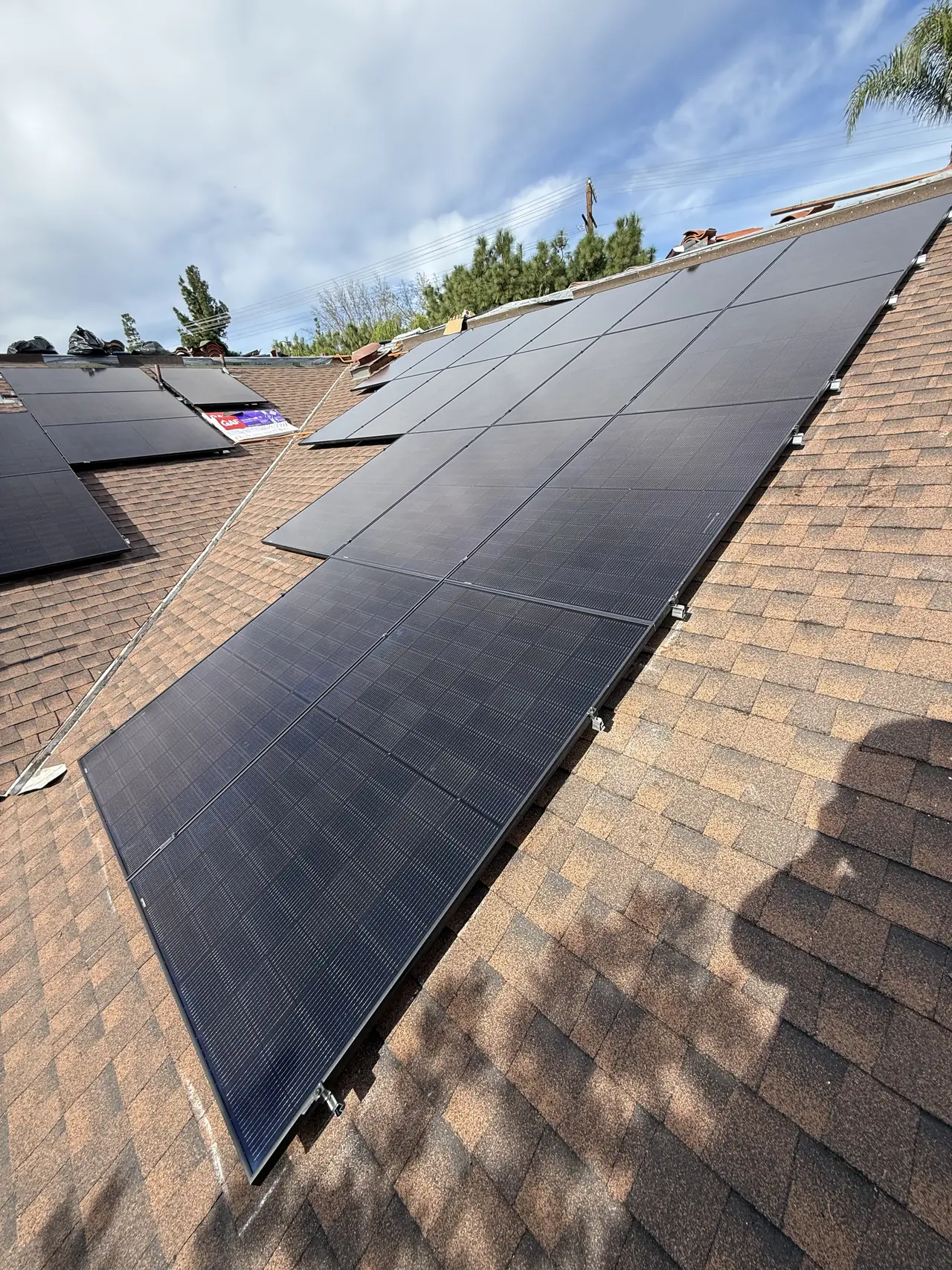
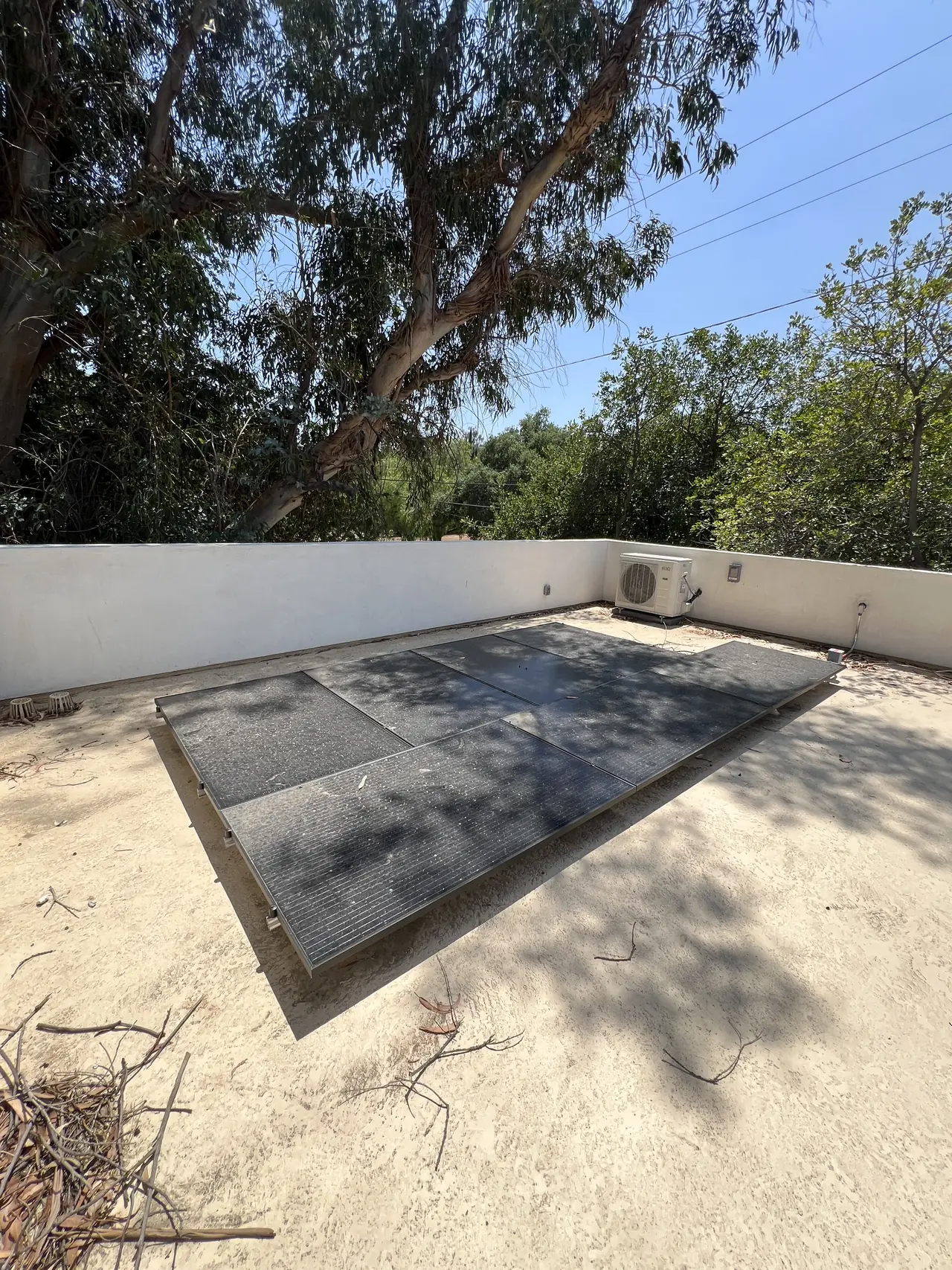
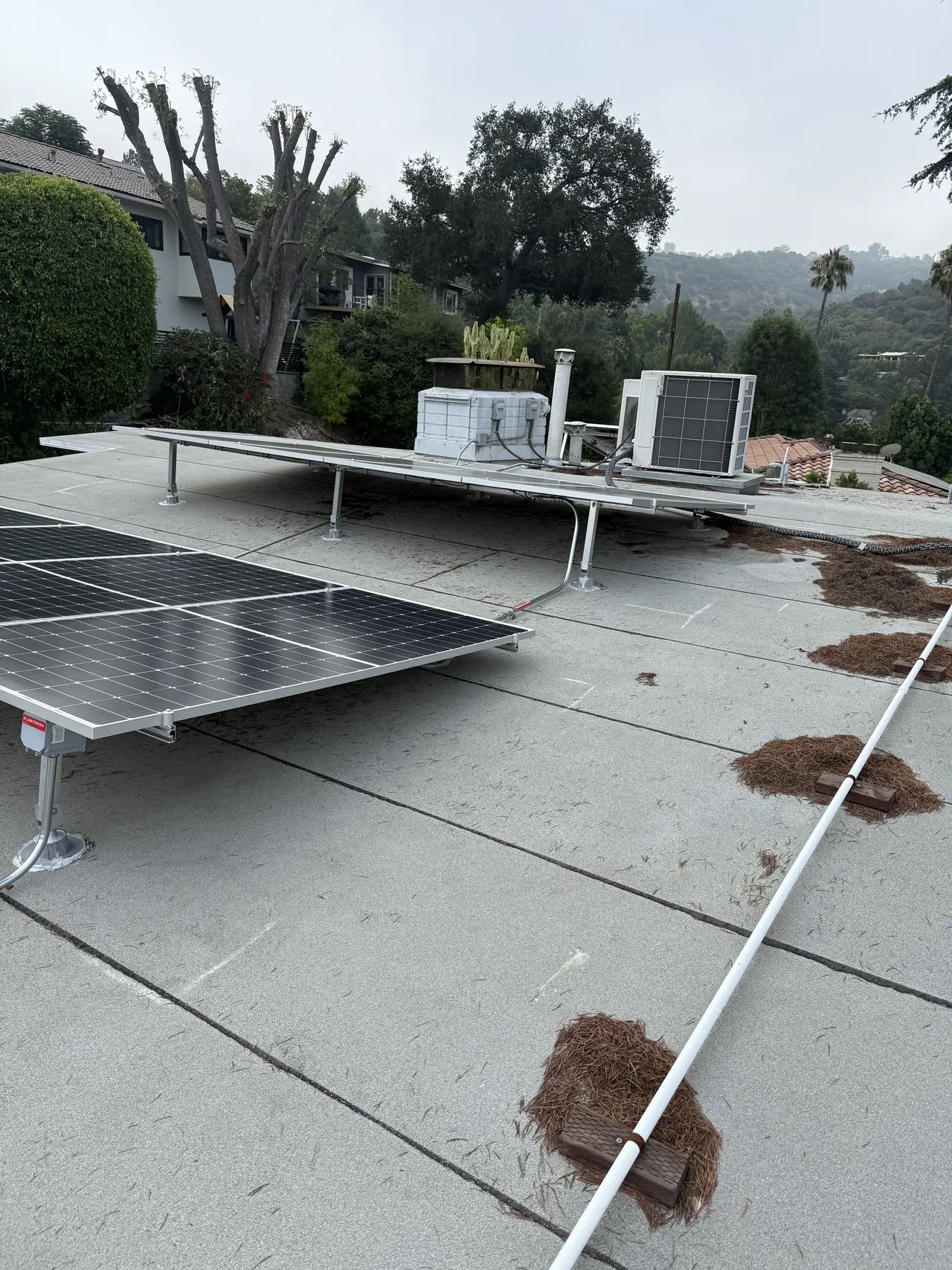
A 13.77 kilowatt DC system on a Chatsworth house whose roof is not one surface. Fifteen modules lie flat on a low-slope section. Nineteen more sit at 35 degrees, facing two different directions.
A roof with a flat section and pitched planes does not force a compromise. The array is split into groups, each with its own pitch and heading, and the design accounts for each separately.
At a glance
- DC System
- 13.77 kW
- AC System
- 11.851 kW CEC
- Modules
- 34 × REC 405 W
- Inverters
- Enphase IQ8M
- Sub-arrays
- Four
- Angles
- 0° flat and 35°
- Est. first-year output
- 12,986 kWh
- Utility / AHJ
- LADWP / LADBS
The story
Thirty-four REC 405-watt modules is a large residential array, and this roof would not take them in one block. Part of it is low slope. The rest runs at 35 degrees in two directions.
So the system was designed as four groups rather than one. Fifteen modules lie flush on the low-slope section, facing due south at zero tilt. Nine sit at 35 degrees facing south. Nine more sit at 35 degrees facing east, and a single module completes the east-facing run.
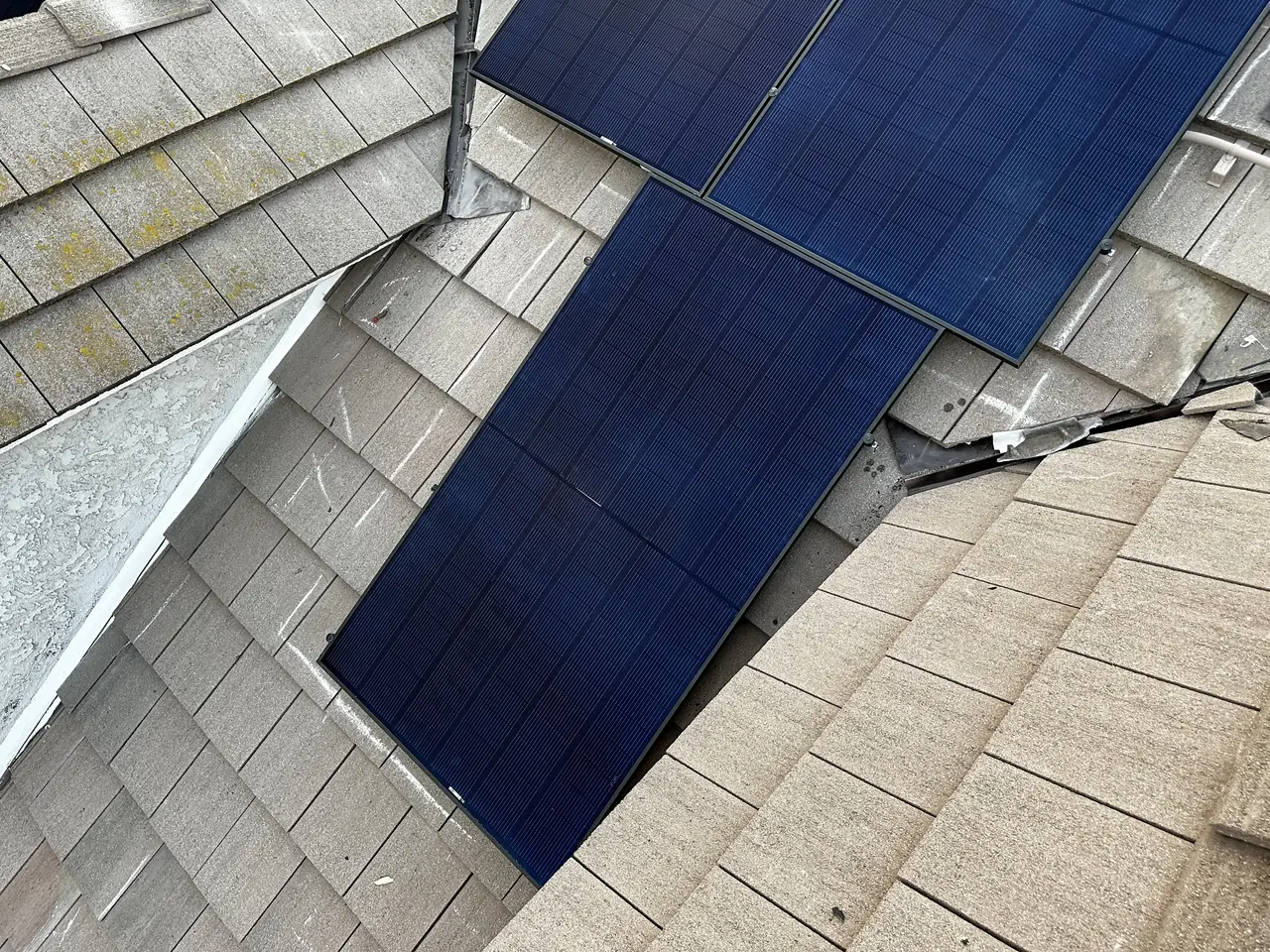
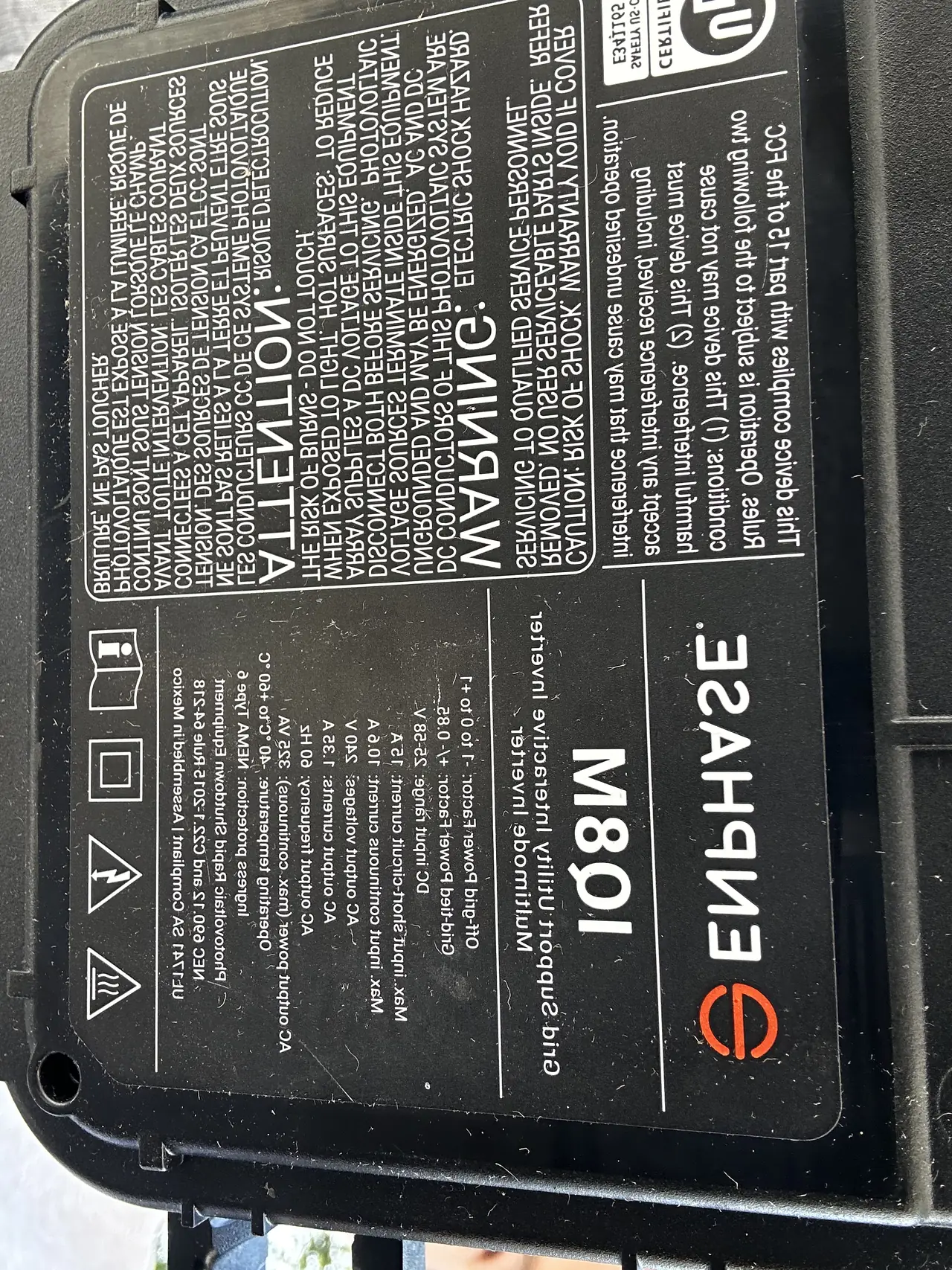
A module lying flat and a module at 35 degrees produce differently through the day and through the year, and an east-facing group peaks hours before a south-facing one. Different orientations call for an electrical design that keeps unlike roof planes from limiting one another. On this project every module has its own Enphase IQ8M microinverter, which gives independent operation and monitoring at each position.
The numbers for the whole thing: 13.77 kilowatts DC, 11.851 kilowatts AC-CEC, an estimated 12,986 kilowatt-hours in the first year. The proposal put that at 76 percent of what the house was using — a large array that still does not cover the whole bill, which is what a house this size with a pool looks like on paper.
Worth saying plainly: four groups is not complexity for its own sake. It is what happens when you use the roof you have rather than only the part of it that faces the right way.
How it ran
| January 2024 | Design and proposal — four sub-arrays across the roof |
|---|---|
| 2024 | Installation: 34 modules, one microinverter per module |
| 2024 | Commissioning and handover |
What we did
- Designed the array as four groups matched to the roof rather than one block.
- Laid fifteen modules flush on the low-slope section at zero tilt.
- Installed nineteen further modules at 35 degrees across two headings.
- Fitted a microinverter under every module so the groups run independently.
- Set up per-module monitoring across all thirty-four positions.
System specifications
| DC system | 13.77 kW |
|---|---|
| AC system | 11.851 kW CEC |
| Modules | 34 × REC 405AA, 405 W |
| Inverters | Enphase IQ8M-72-2-US, one per module |
| Sub-array 1 | 15 modules, 180° south, 0° tilt, flush |
| Sub-array 2 | 9 modules, 89° east, 35° tilt, flush |
| Sub-array 3 | 9 modules, 180° south, 35° tilt, flush |
| Sub-array 4 | 1 module, 91° east, 35° tilt, flush |
| Estimated first-year production | 12,986 kWh |
| Battery | None |
| Utility / AHJ | LADWP / LADBS |
Is your project like this one?
- Your roof has a flat section and pitched planes.
- Part of your roof faces east or west and you have been told to ignore it.
- You want a large array on a house that does not have one big clean roof.
- You have a pool and your bill is larger than the roof can fully cover.
- Your Chatsworth property is served by LADWP, while permits are handled by LADBS.
Cali Energy in Chatsworth
Chatsworth is inside City of Los Angeles boundaries: permits run through LADBS, interconnection through LADWP.
Houses of this size here rarely offer one clean plane, and the roof usually has a flat section somewhere on it.
This installation is on the Chatsworth projects page alongside the others, and what the work covers is set out on the Chatsworth service area page.
- License and classifications: CSLB #1032379
- Official reference for this process: LADWP interconnection process
Frequently asked questions
Can solar panels lie flat on a roof?
Yes. On this house fifteen of the thirty-four modules sit flush on a low-slope section at zero tilt, facing south. Flat mounting gives up some winter output compared with a tilted frame, and it keeps the array out of sight from the street and avoids the wind loading a tilted frame brings. Which is right depends on the roof.
Do panels facing different directions work together?
They do when the electrical design accounts for it. Here every module has an Enphase IQ8M microinverter, so the east-facing group and the south-facing group produce on their own schedules and each position is monitored separately. Mixing unlike roof planes is a design question, and this is how it was answered on this roof.
Why would a large system still not cover the whole bill?
Because the roof sets the ceiling. This array is 13.77 kilowatts DC across four groups and was estimated at 76 percent of the household's use. On a house with a pool that is a normal result, and it is better to know the number before signing than to assume a large array means a zero bill.
Does Cali Energy design around awkward roofs in Chatsworth?
It is most of what the design work is. Chatsworth is inside City of Los Angeles boundaries, so permits run through LADBS and interconnection through LADWP, and the sub-array layout with its pitches and azimuths is part of the approved plan set.
What this would look like on your roof
Planning solar in Chatsworth? Tell us your utility, your roof and what your bill looks like now, and we will model what a system like this would do on your house before you commit to anything.
Or call +1 (323) 844-7777 · Cali Energy, Northridge · CSLB #1032379 (B, C-10, C-39) — design, permits, install and electrical under one licensed contractor.
Related
This timeline reflects this property and this permitting path. Updated September 2026.