

North Hollywood, CA · June – September 2023 · LADWP / LADBS
Seventeen modules, five different directions.
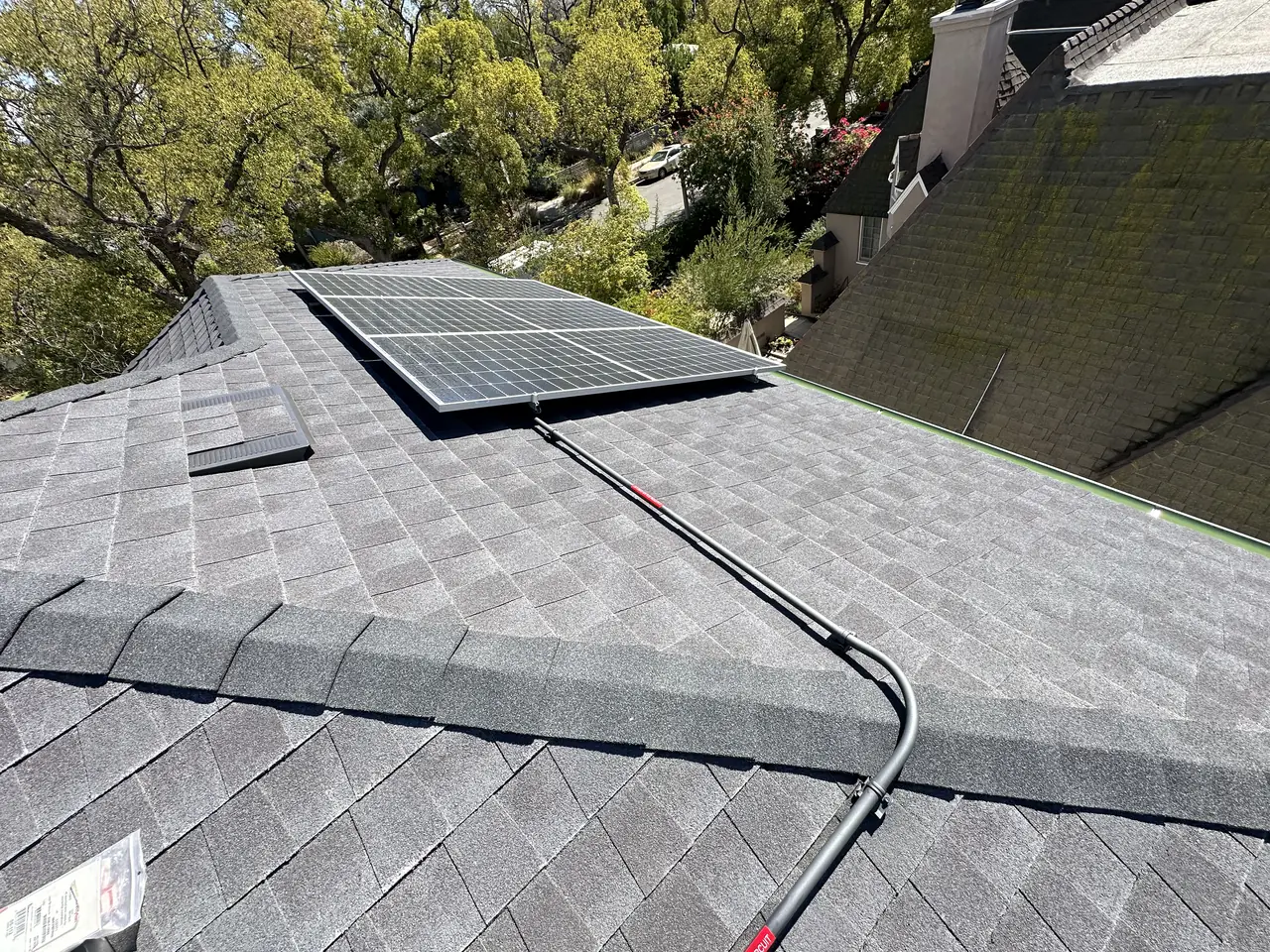
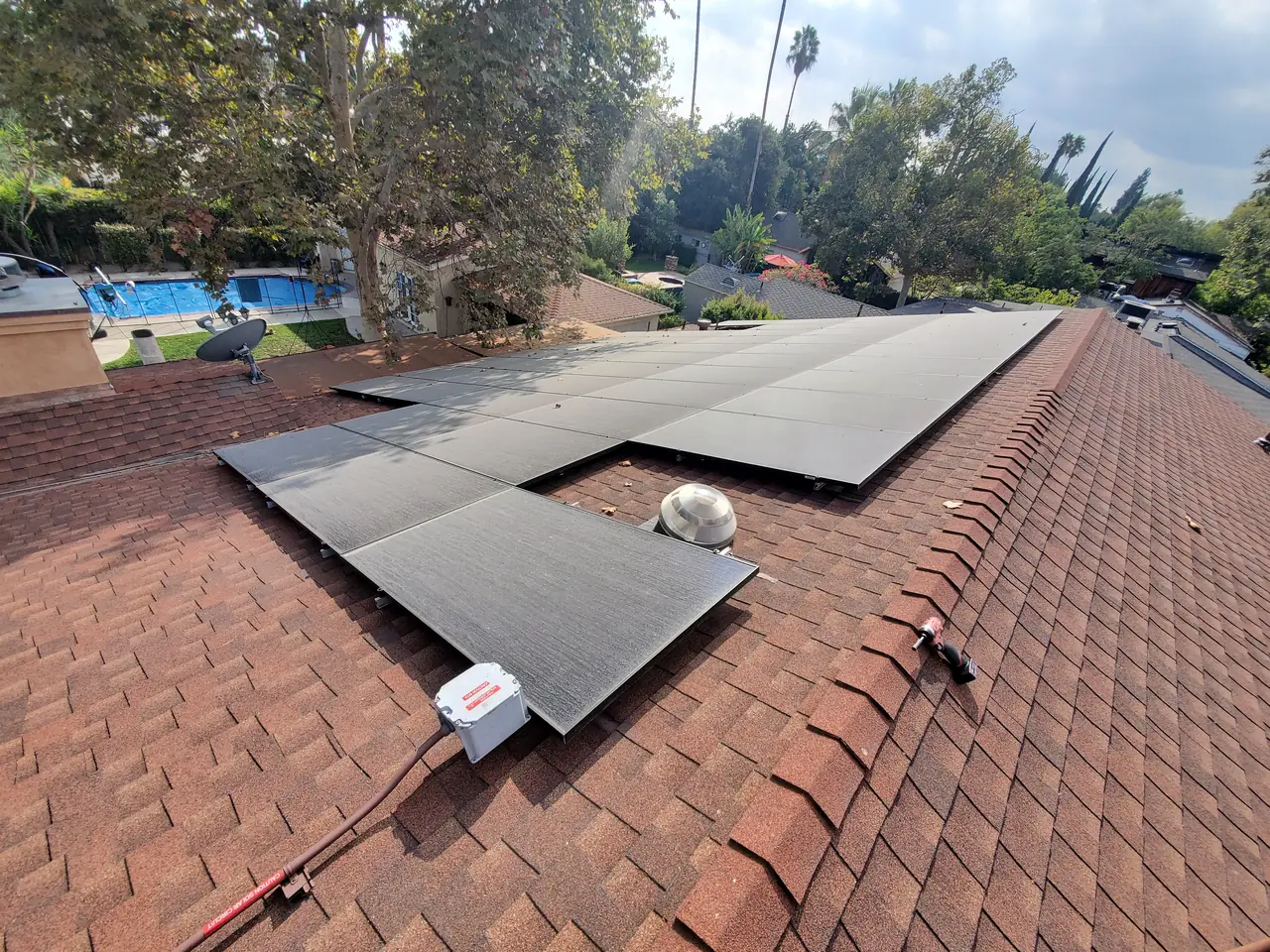
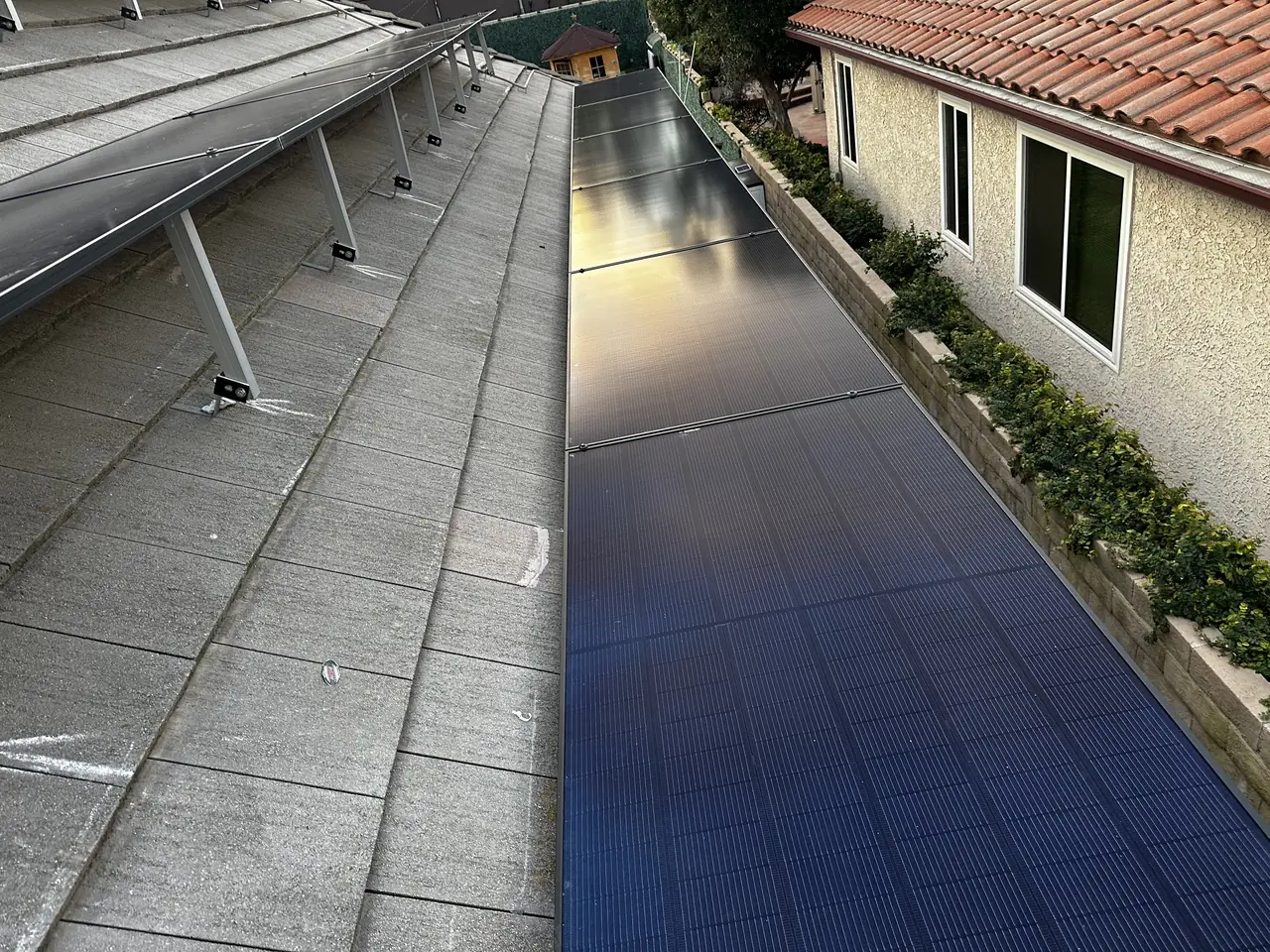
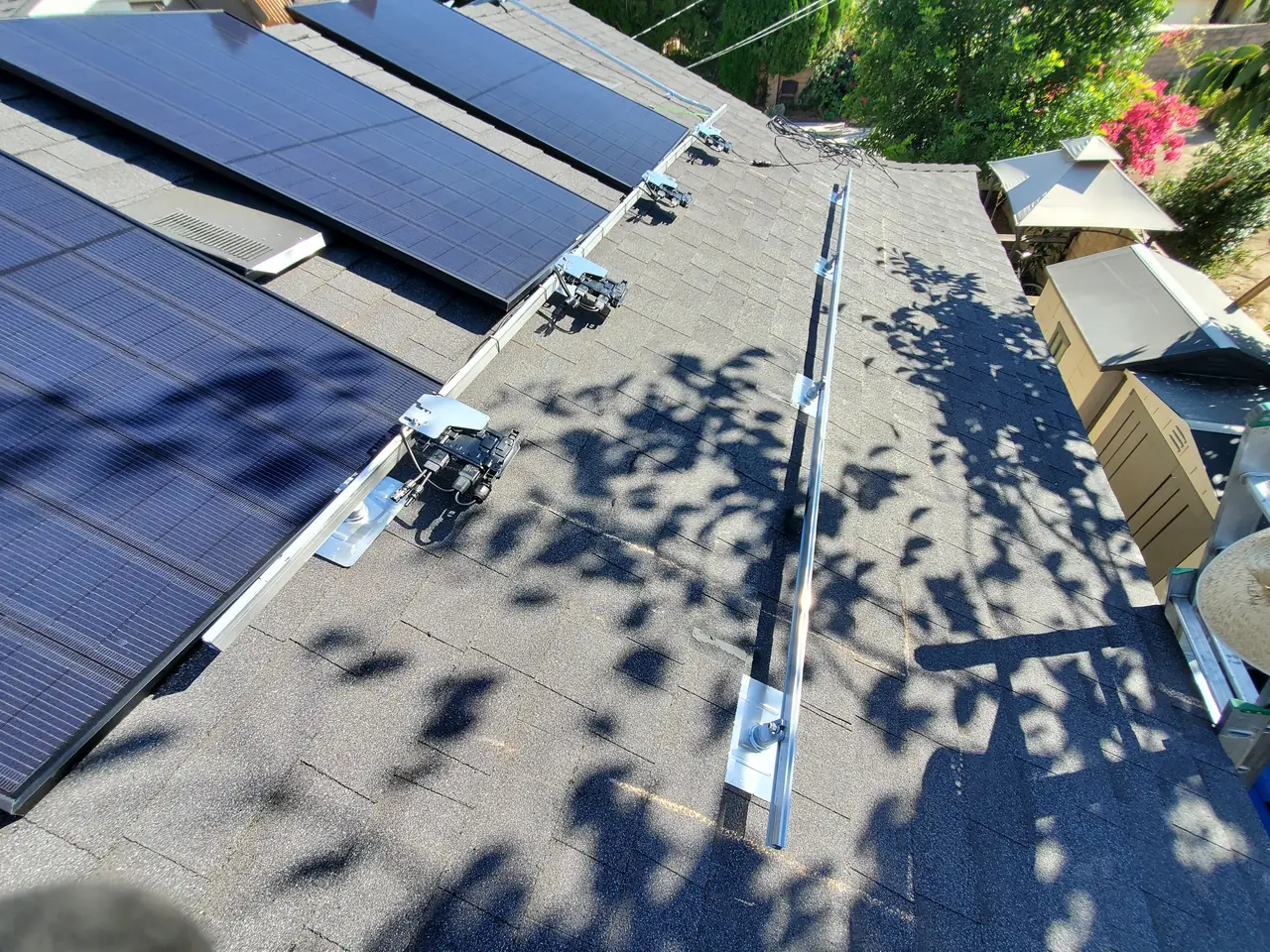
A roof that has been added to until it has no single main face left. The array was split five ways to use all of it — and two modules ended up alone on faces of their own.
A roof with several faces is not a worse solar roof, it is a different design problem. Modules pointing different ways peak at different times, so they need electronics that let each face work on its own terms: a microinverter per module, per-module optimisers, or a string inverter with enough separate trackers for the groups. What does not work is putting mixed orientations on one shared string with none of those.
At a glance
- Array
- 6.715 kW DC — 17 × 395 W
- Orientations
- Five
- Tilts
- 18° on four faces, 5° on the fifth
- Alone on their face
- Two modules
- Roof
- Replaced first — 18 squares over 2,127 sq ft
- Permit records
- Re-roof over new solid sheathing; permit finaled
- In the roofing scope
- 170 ft of fascia, twelve sheets of plywood
- Utility / AHJ
- LADWP / LADBS
The story
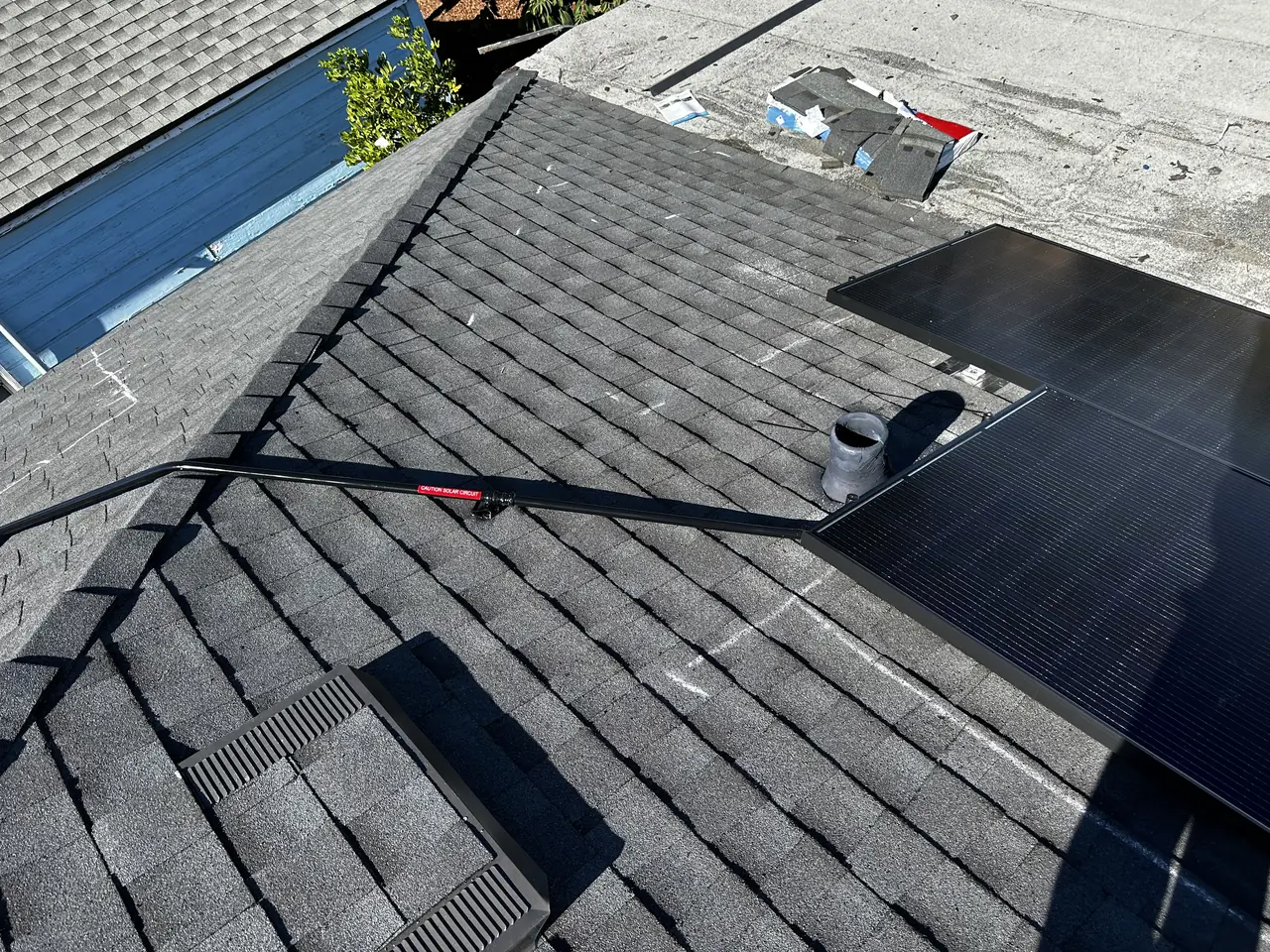
Count the faces on this roof and you get five. Northwest, west, south at one angle, east, and south again at a different angle. That is what happens to a house that has been extended more than once: each addition brings its own ridge, and the roofline ends up a collection of planes rather than one shape.
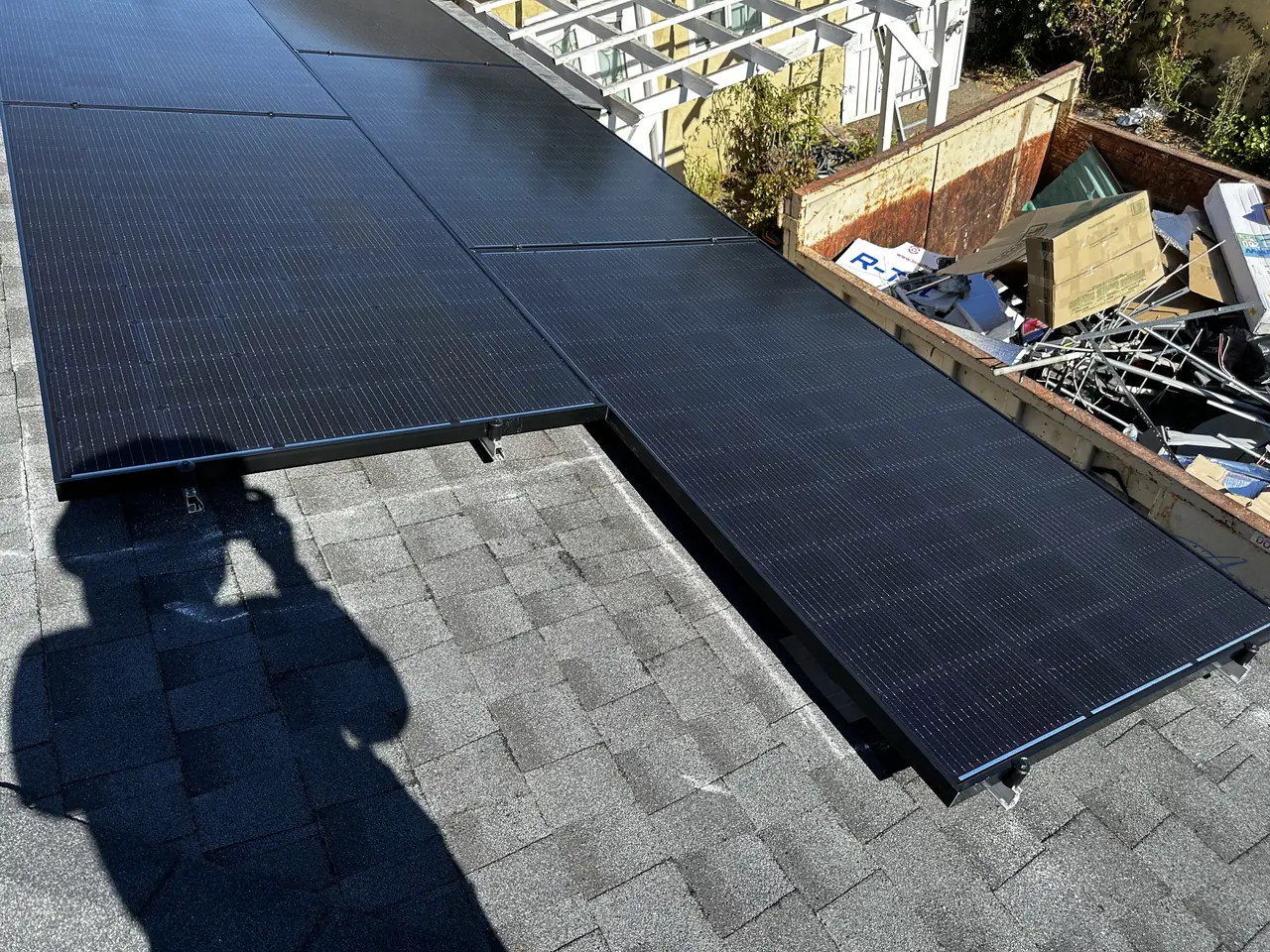
The array follows the roof rather than fighting it. Six modules northwest, five east, four on the low-slope south face, and then the two that make the point: one single module facing west, one single module facing south at a slightly different bearing. Seventeen in all, 6.715 kilowatts DC.
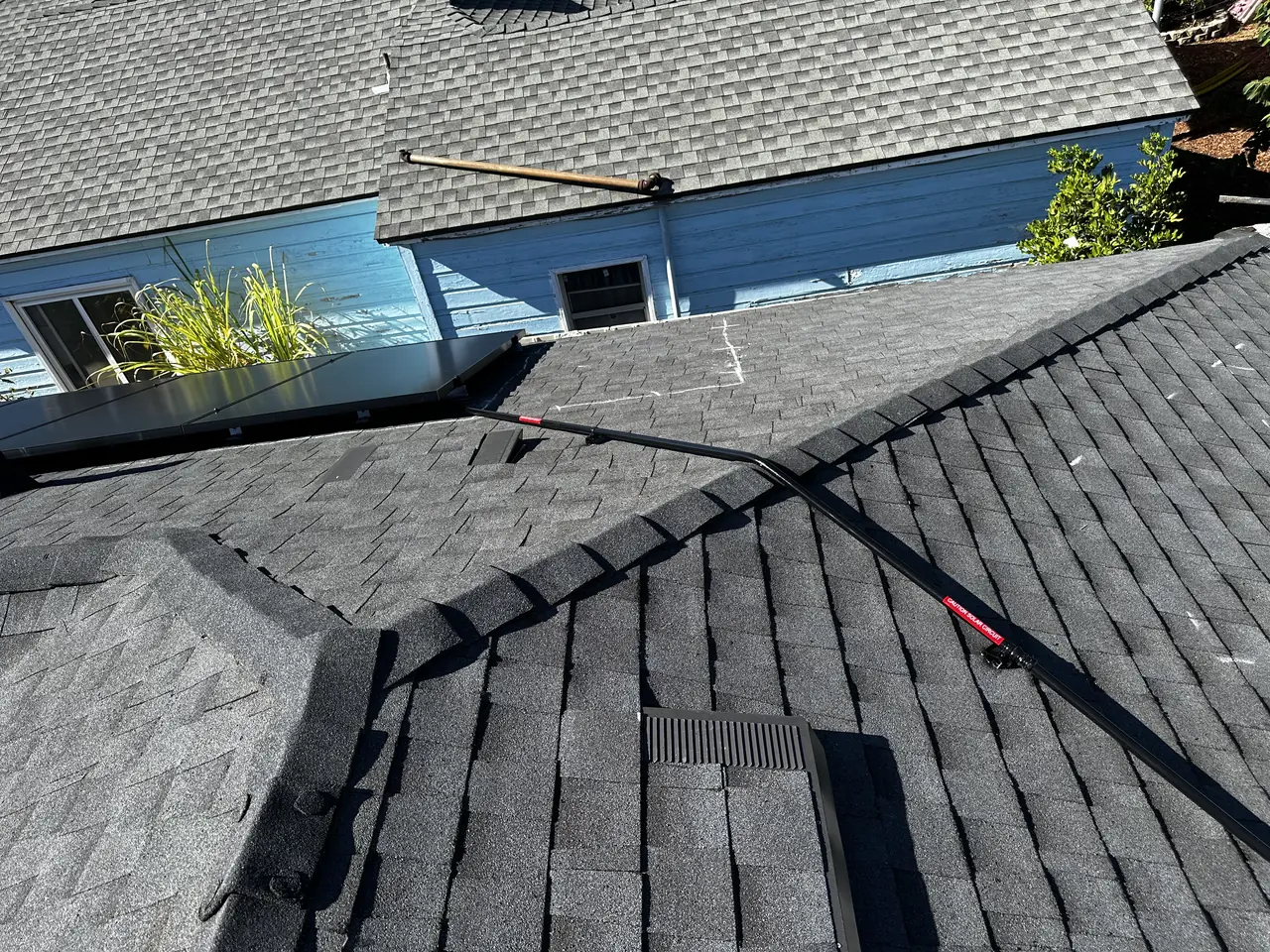
Two modules alone on their own faces is not a rounding error, it is a decision. Each of those panels needs its own attachment points and its own flashings — the same labour as a module in a row of six, for a sixth of the output. They also have to be reached, which on this roof meant extending the cabling across a hip to pick up a single panel.
Whether they are worth including comes down to the electronics. Put mixed orientations on one shared string with nothing at module level and the string operates at a single compromise point, so the odd panel out costs the others something. Give each module its own converter — a microinverter here — and each panel works on its own terms: the west one produces late, the east ones early, the four on the low-slope section steadily through the middle of the day.
Microinverters are not the only way to get there and it would be dishonest to pretend otherwise. Per-module optimisers on a string inverter solve the same problem, and a string inverter with several independent trackers can handle a few distinct orientations on its own. The question to put to a contractor is not which brand they prefer but how many independently controlled groups their design gives you, and whether that number is at least as large as the number of faces on your roof.
None of that would have been worth doing on the roof as we found it. The covering went first: a full tear-off across roughly two thousand one hundred square feet, eighteen squares of charcoal shingle, synthetic underlayment, a roll of weather-lock, a hundred and sixty feet of ridge cap and seven vents.
The scope underneath the shingle was the part worth pricing. It carried a hundred and seventy feet of fascia board and twelve sheets of half-inch plywood on the main house — the flat section was not included. The permit describes the re-roof as going over new solid sheathing, eighteen squares, and it was finaled.
That sequence matters more on a roof like this than on a simple one. Seventeen modules across five faces means a lot of attachments and a lot of penetrations, and every one of them is a hole in the covering. Putting them through shingle that was about to be replaced would have meant doing the whole job twice.
The interconnection was filed in the middle of July, the fee was paid the same day, and the review, confirmation and site assessment all came back nine days later.
If your roof looks like this one, the question to ask a contractor is not how many panels fit. It is which faces they are proposing to use and which they are quietly leaving empty — and if the answer is that the awkward ones are not worth it, ask what the electronics they are quoting would do with them.
How it ran
| 29 June 2023 | Array proposed — seventeen modules across five orientations |
|---|---|
| 18 July 2023 | Interconnection filed; fee paid the same day |
| 24 July 2023 | Re-roof scope set — tear-off, 18 squares, seven vents |
| 25 July 2023 | Re-roof permit over new solid sheathing |
| 27 July 2023 | Utility review, confirmation and site assessment complete |
| 27 July 2023 | Rot found: fascia board and plywood replacement priced |
| August – September 2023 | Roof replaced, then the array installed |
Nine days from filing to a completed site assessment.
What we did
- Mapped five usable roof faces and designed the array to use all of them.
- Kept two single modules on faces of their own rather than dropping them.
- Put a microinverter under every module so the orientations do not interfere.
- Stripped and replaced the covering before any attachment went through it.
- Replaced rotten fascia and sheathing found during the tear-off.
- Filed the interconnection and paid the fee the same day, with review complete nine days later.
System specifications
| Array | 6.715 kW DC / 5.673 kW AC on the signed proposal |
|---|---|
| Modules | 17 × 395 W |
| Orientation 1 | Northwest, 313° — six modules at 18° |
| Orientation 2 | East, 90° — five modules at 18° |
| Orientation 3 | South, 180° — four modules at 5° |
| Orientation 4 | West, 271° — one module at 18° |
| Orientation 5 | South, 179° — one module at 18° |
| Microinverters | One per module |
| Roof scope | Tear-off over ~2,127 sq ft; 18 squares shingle, synthetic underlayment, weather-lock, 160 ft ridge cap, seven vents |
| Structural repair | 170 ft of 1×4 fascia and twelve sheets of ½ in plywood |
| Utility / AHJ | LADWP / LADBS |
Is your project like this one?
- Your roof has been added to and now points in several directions.
- You have been quoted a system that ignores half your roof.
- You are comparing microinverters against a string inverter and want a concrete reason.
- Your roof is due for replacement and you want the array planned around it.
- You want to know what gets found when the old covering comes off.
Cali Energy in North Hollywood
North Hollywood is inside City of Los Angeles boundaries: permits run through LADBS, interconnection through LADWP.
A lot of the older housing here has been added to over the decades, and the roofline records every one of those additions as another hip, another valley, another face pointing somewhere new.
This installation is on the North Hollywood projects page alongside the others, and what the work covers is set out on the North Hollywood service area page.
- License and classifications: CSLB #1032379
- Official reference for this process: California Energy Commission — solar equipment lists
- Official reference for this process: LADBS — plan review and permitting
Frequently asked questions
Can solar panels face different directions on the same roof?
Yes, with per-module electronics. This roof carries seventeen modules across five orientations — northwest, east, west and south at two different angles — and each module has its own microinverter so they do not interfere with one another.
Is a single panel on its own face worth installing?
It has to be decided module by module. On this roof two modules sit alone on faces of their own; each needed its own attachments, flashing and conduit run, and each earns its keep because it converts independently rather than being tied to a string.
Why does orientation matter so much with a string inverter?
Because a string performs to its weakest member at any moment. Modules facing different ways peak at different times, so stringing them together means something is always holding the rest back.
Should the roof be replaced before a complicated array?
The more faces an array uses, the more attachments and penetrations it makes. On this project the covering was stripped and replaced first, and the building department permit records the new work as going over new solid sheathing.
What happens if rot is found under the old roof?
It is priced and replaced. Here that was a hundred and seventy feet of fascia board and twelve sheets of half-inch plywood, on the main house only — the flat section did not need it.
What this would look like on your roof
Planning solar in North Hollywood? Tell us your utility, your roof and what your bill looks like now, and we will model what a system like this would do on your house before you commit to anything.
Or call +1 (323) 844-7777 · Cali Energy, Northridge · CSLB #1032379 (B, C-10, C-39) — design, permits, install and electrical under one licensed contractor.
Related
This timeline reflects this property and this permitting path. Updated September 2026.