

Tarzana, CA · March – April 2024 · LADWP / LADBS
Filed on a Friday. Permission to operate eighteen days later.
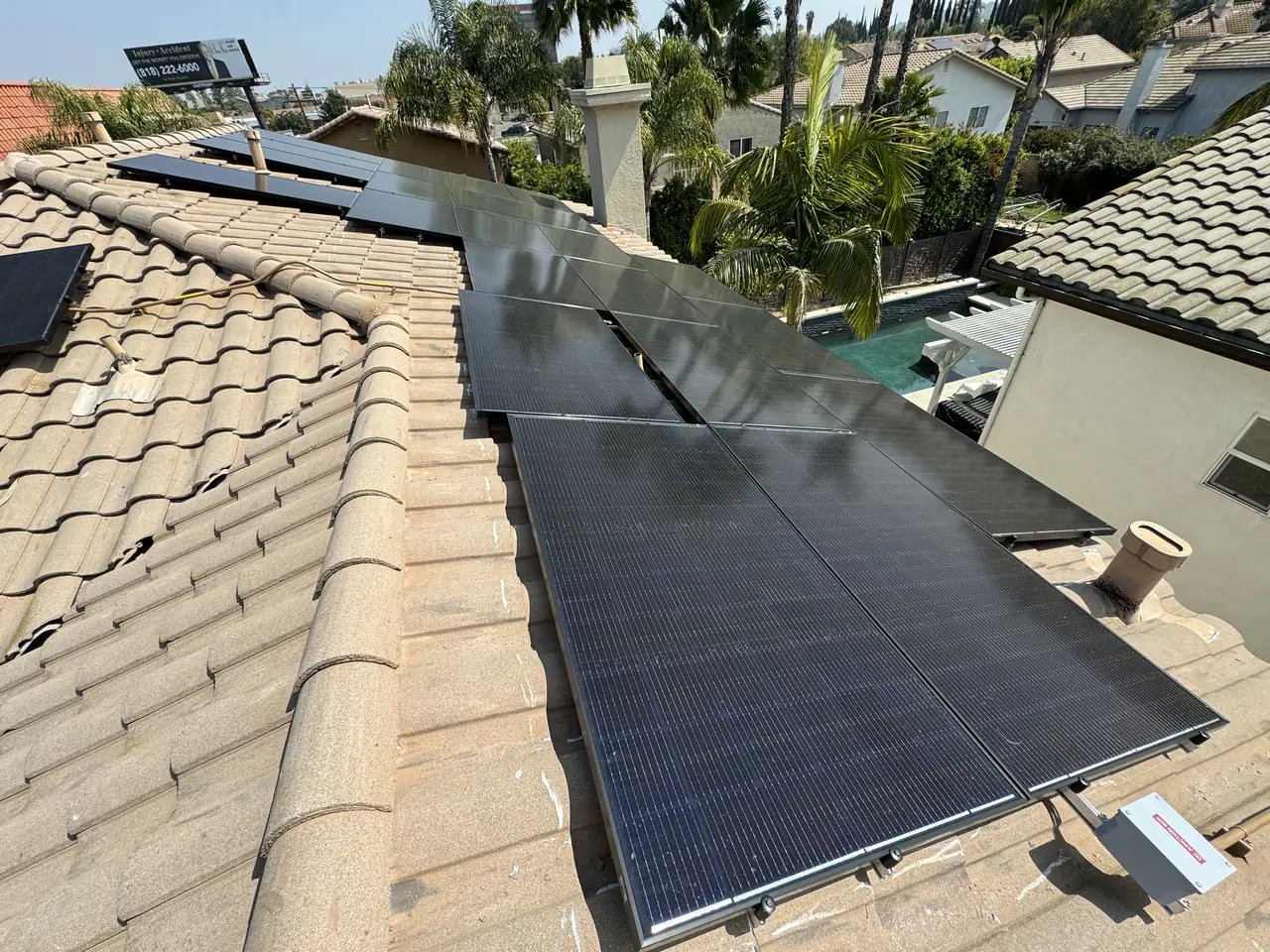
A 9.75-kilowatt AC-CEC array across three planes of a concrete S-tile roof on a two-story house in Tarzana, fed from an underground service. The interconnection application went in on the fifteenth of March 2024 and LADWP granted permission to operate on the second of April.
An interconnection moves fastest when nothing about the service has to change: no new panel, no meter relocation, and a site the utility can assess from photographs. On this house the service is underground and stayed as it was, the array was on the roof before the application was filed, and the city's final inspection was requested four days after filing. With the release in hand the utility had nothing left to wait for, and Cali Energy took the project from filing to permission to operate in eighteen days.
At a glance
- Recorded by the utility
- 9.75 kW AC-CEC
- Inverters
- Enphase IQ microinverters, one per module
- Roof
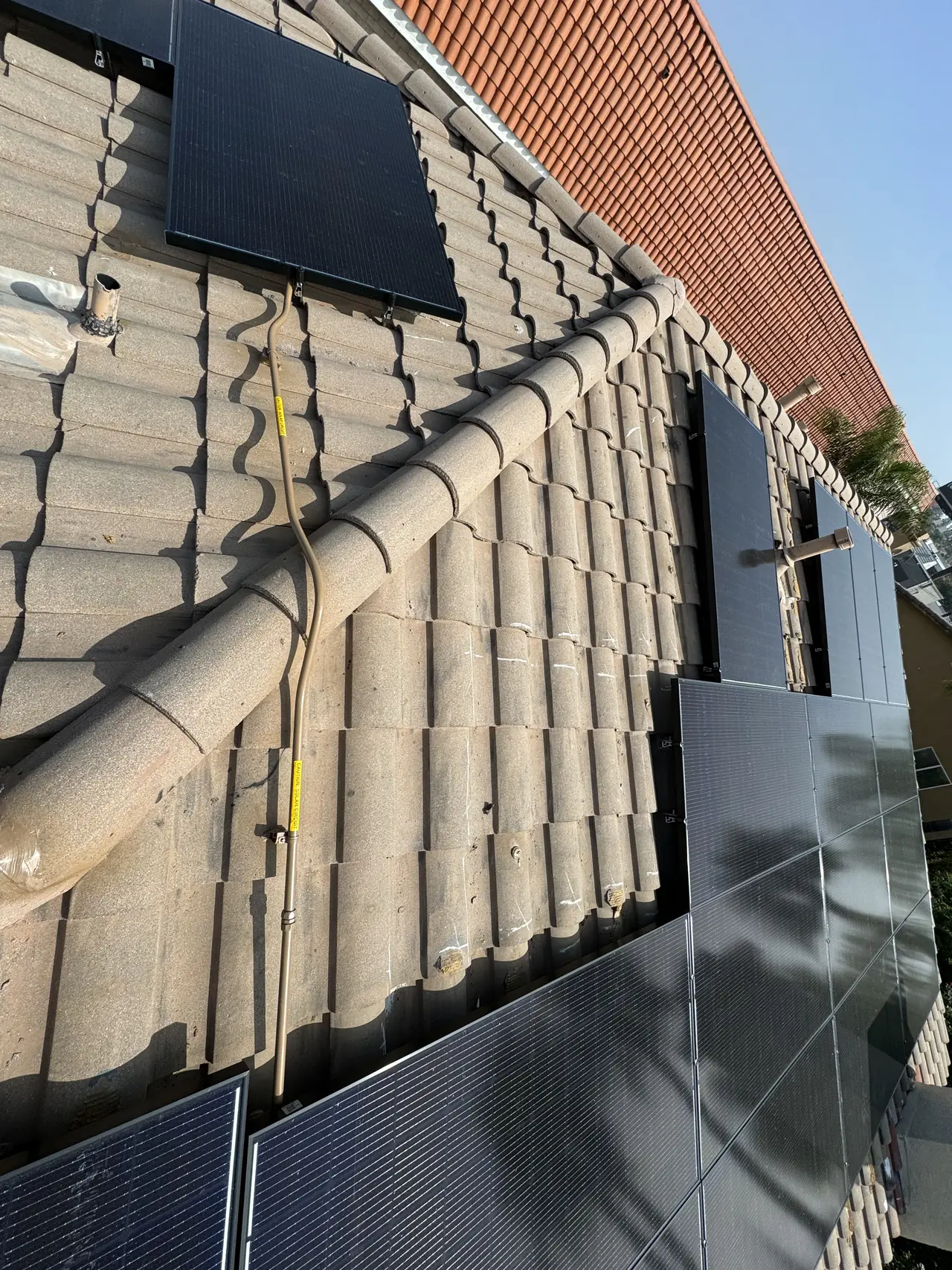
- Concrete S-tile, three planes
- Service
- Underground; no panel change
- Application to PTO
- 18 days
- House
- Two-story, on a boulevard frontage
- Battery
- None
- Utility / AHJ
- LADWP / LADBS
The story
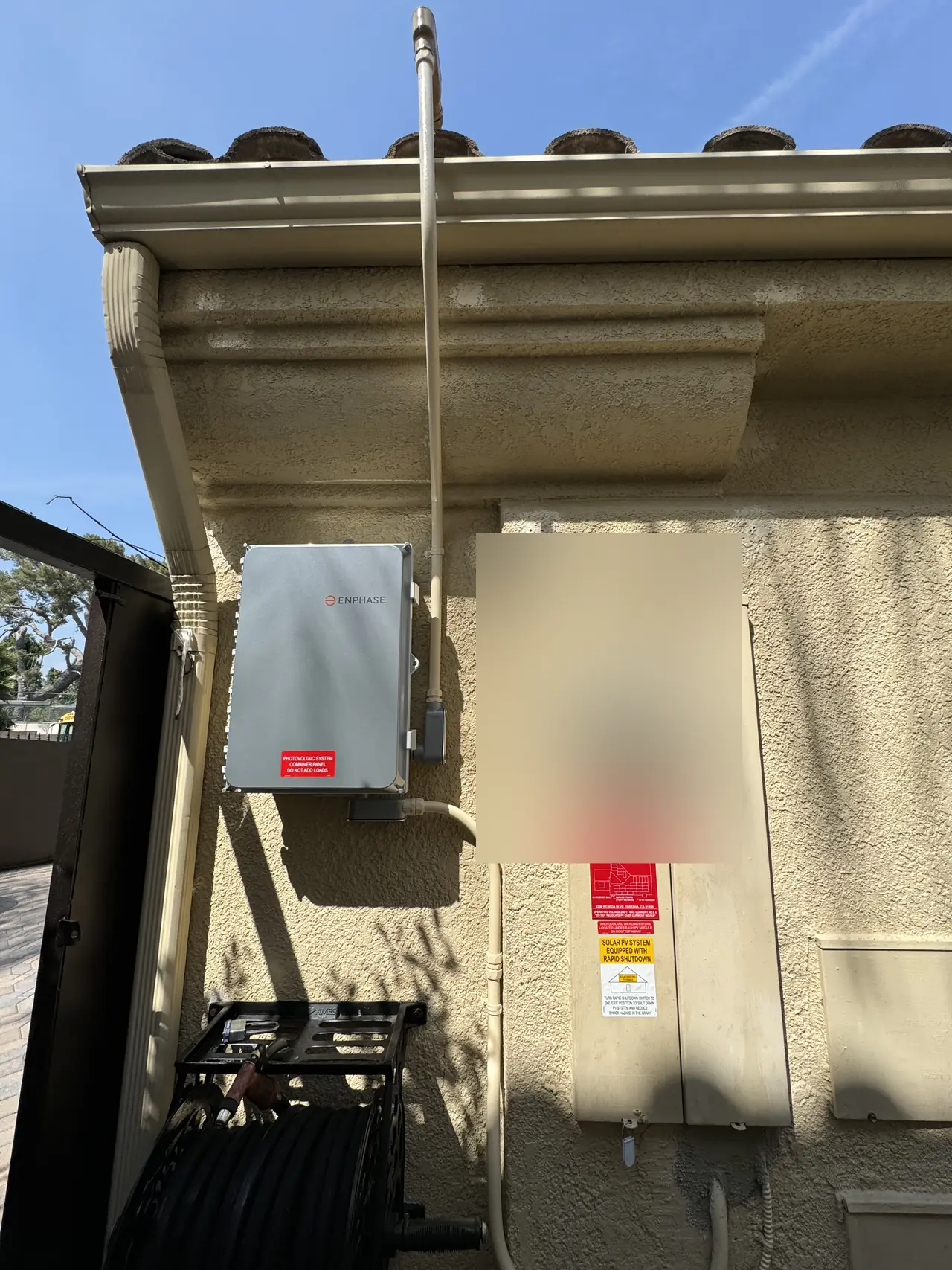
The house faces one of the boulevards that run north to south through the Valley, and on those streets the power comes up out of the ground. There is no service drop, no weatherhead on the roof, and the meter panel on the side wall is fed from below. For the solar interconnection that is one fewer thing to plan around, and the utility records it as an underground meter-only job: the array connects, the meter changes, nothing else moves.
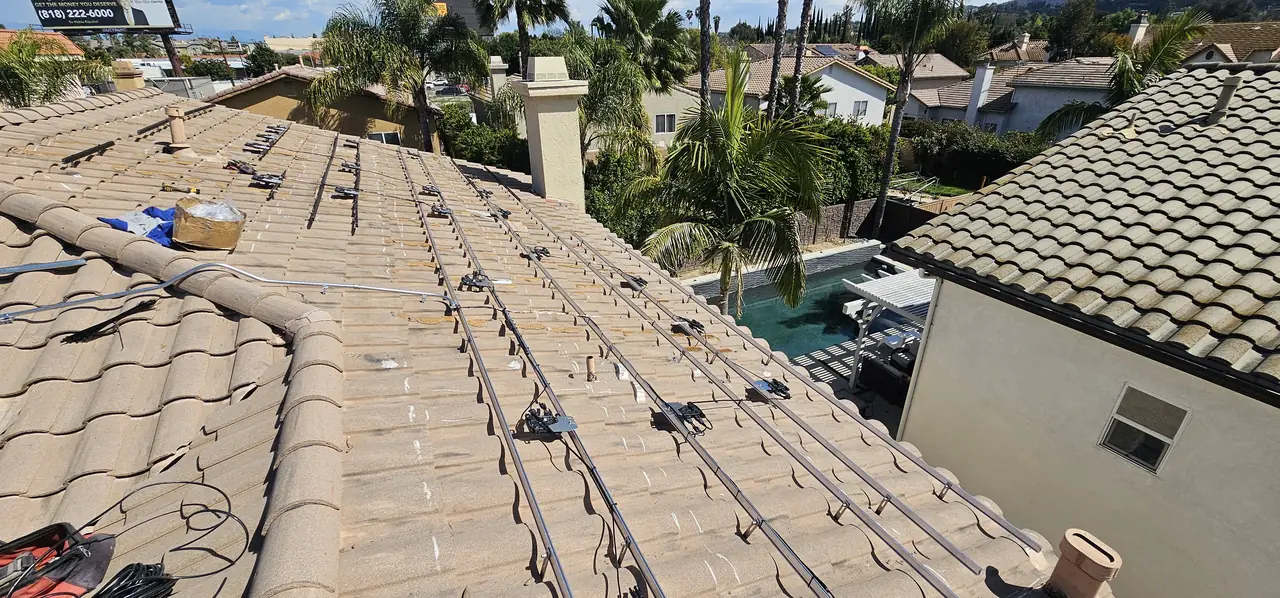
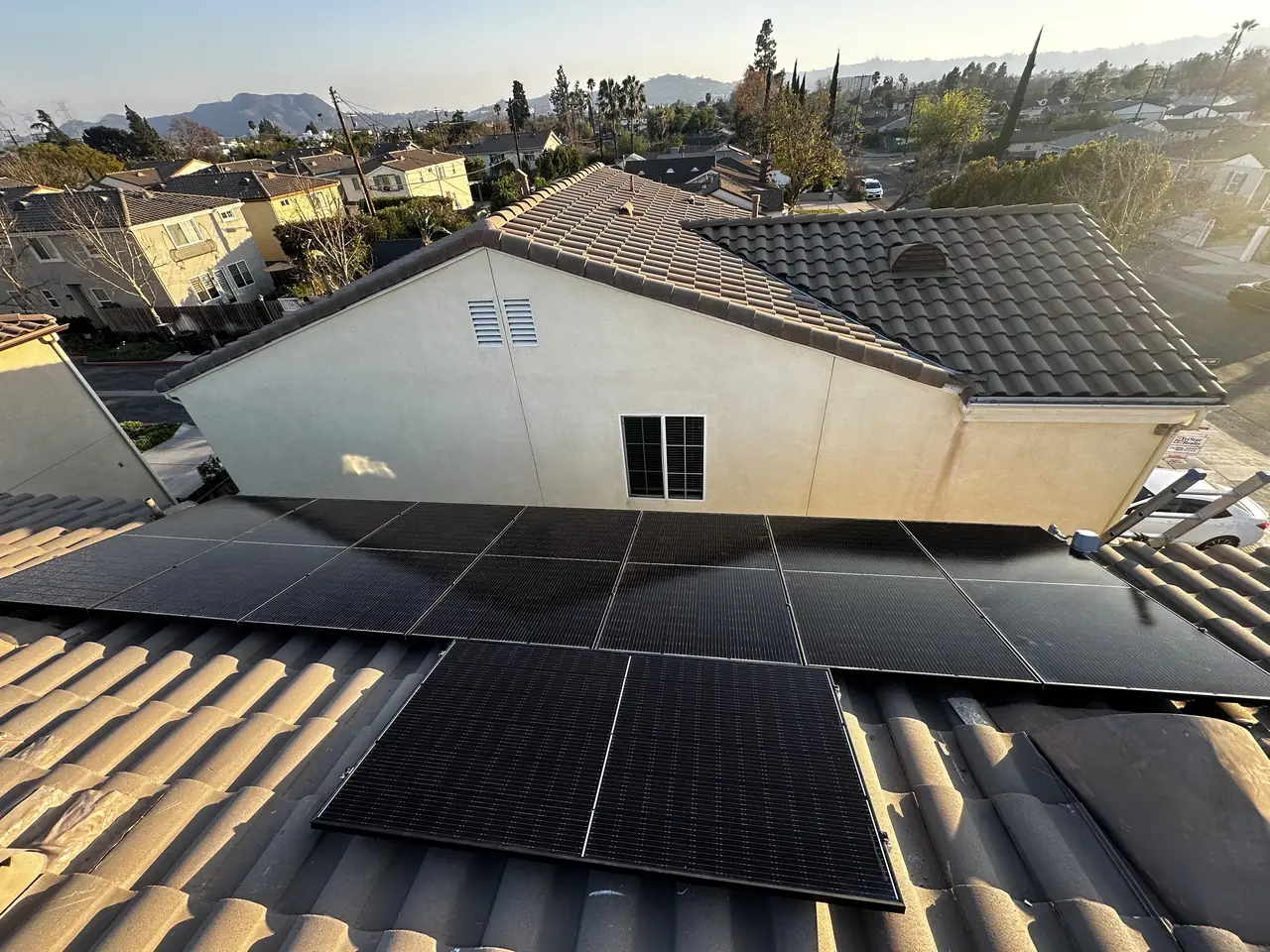
The roof is concrete S-tile over three planes. Tile is not a fast roof to work on. Each attachment means lifting a tile, fixing a hook to the rafter through the underlayment, sealing the penetration and setting the tile back over the hook so that it sheds water the way it did before. The rails run on the hooks, above the tile, and the modules sit on the rails.
The modules are black-framed, each with an Enphase microinverter underneath, landing in a combiner on the side wall next to the meter panel. On a roof of three planes at different orientations, one microinverter per module is the difference between three groups that each produce to their own light and one string that produces to its weakest member.
The calendar is the point of this one. The interconnection application went to LADWP on Friday the fifteenth of March 2024 at 9.75 kilowatts AC-CEC, and the utility fee was paid the same day. The city's final inspection was requested on the nineteenth, with the array already on the roof. On the twentieth the utility reviewed the application, confirmed it and closed its site evaluation from the photographs submitted with it. The building department's release reached the utility on the twenty-seventh, and the utility's own interconnection review closed the same day with a meter order.
A new net meter was set on the second of April 2024, and permission to operate came with it. Eighteen days, filing to switch-on, with the building department's inspection inside that window.
What made it move is not luck. The service did not change, so there was no meter spot and no utility crew visit before the array. The photographs the utility asks for in place of a site visit were in the application. And the city's inspection was requested the week the application went in, so the release was never the thing everyone was waiting on. A project that needs a panel upgrade, or a service that has to be relocated, does not run on this calendar.
How it ran
| 15 March 2024 | Interconnection application filed at 9.75 kW AC-CEC; utility fee paid |
|---|---|
| 19 March 2024 | Final inspection requested from LADBS |
| 20 March 2024 | Application reviewed and confirmed; utility site evaluation closed |
| 27 March 2024 | LADBS release transmitted; utility interconnection review completed; meter order sent |
| 2 April 2024 | New net meter set; permission to operate |
This timeline reflects this property and this permitting path: an underground service left as it was, with the array installed before the application was filed.
What we did
- Set the array across three S-tile planes on tile hooks fixed through the underlayment to the rafters, with each tile reset over its hook (C-39, C-10).
- Put an Enphase microinverter under every module so the three planes produce independently.
- Kept the underground service and the existing meter panel as they were.
- Filed the interconnection with the photographs the utility uses in place of a site visit.
- Requested the city's final inspection four days after the utility application.
- Carried the project from filing to permission to operate in eighteen days.
System specifications
| Recorded by the utility | 9.75 kW AC-CEC |
|---|---|
| Inverters | Enphase IQ microinverters, one per module |
| Combiner | Enphase IQ Combiner beside the meter panel |
| Roof | Concrete S-tile, three planes |
| Racking | Rail on tile hooks fixed to the rafters |
| Service | Underground; meter-only interconnection, no panel change |
| Battery | None |
| Application to PTO | 18 days |
| Utility / AHJ | LADWP / LADBS |
Is your project like this one?
- Your house fronts a boulevard and your power comes from underground.
- You have a concrete tile roof and have been told solar on tile is slow or risky.
- Your roof has more than one usable plane and they face different ways.
- You do not need a panel upgrade and want to know how fast the rest can go.
- Your Tarzana property is served by LADWP, while permits are handled by LADBS.
Cali Energy in Tarzana
Tarzana is inside City of Los Angeles boundaries: permits run through LADBS, interconnection through LADWP.
Tarzana is a neighborhood in the southwestern San Fernando Valley, inside the City of Los Angeles. Electric service is LADWP, which records each interconnection as overhead or underground depending on how the house is fed.
This installation is on the Tarzana projects page alongside the others, and what the work covers is set out on the Tarzana service area page.
- License and classifications: CSLB #1032379
- Official reference for this process: LADWP Electric Service Requirements
- Official reference for this process: LADBS — inspections
Frequently asked questions
Does an underground service make solar harder?
Not on its own. The meter panel is fed from below instead of from a pole, and if the panel and the meter stay where they are, the utility processes the interconnection as a meter-only job. It becomes more involved only when the service itself has to be upgraded, because then the underground run and the vault are part of the work. On this house nothing about the service changed.
How is solar attached to a concrete S-tile roof?
With tile hooks. At each attachment point a tile is lifted, a hook is fastened through the underlayment into the rafter and sealed, and the tile goes back over the hook. The mounting rails run on the hooks above the tile surface and the modules sit on the rails. No tile carries any load and the roof sheds water as it did before.
Why eighteen days?
Because nothing had to be built or moved before the utility could act. The array was installed ahead of the application, the city's inspection was requested four days after filing, the utility assessed the site from photographs rather than a visit, and the release arrived on the twenty-seventh. The meter was set on the second of April. A project with a panel upgrade in it adds a meter spot and a utility crew visit before any of that.
Why microinverters on this roof?
Three planes facing different directions see different light through the day. With one microinverter under each module, every module converts its own output and one plane in shade does not pull the others down. A single string inverter would tie the planes together and produce to the weakest of them.
Does Cali Energy install on tile roofs in Tarzana?
Yes. Cali Energy holds B, C-10 and C-39 classifications under CSLB #1032379, covering roofing, electrical and solar, and tile hooks through a concrete tile roof are a roofing detail as much as a solar one. Tarzana is inside City of Los Angeles boundaries, so permits run through LADBS and interconnection through LADWP.
What this would look like on your roof
Planning solar in Tarzana? Tell us your utility, your roof and what your bill looks like now, and we will model what a system like this would do on your house before you commit to anything.
Or call +1 (323) 844-7777 · Cali Energy, Northridge · CSLB #1032379 (B, C-10, C-39) — design, permits, install and electrical under one licensed contractor.
Related
This timeline reflects this property and this permitting path. Updated September 2026.