

North Hollywood, CA · January 2025 · LADWP / LADBS
On a tile roof, the mount is the job.
Hooks reaching down to base plates bolted through the tile, the penetrations sealed, the rail carried clear above the surface. Every tile on this roof stayed where it was — which is one of two accepted ways to do it, and the one worth explaining.
There are two accepted families of mount on concrete tile. In a tile replacement, a tile is taken out of the water course and a shaped metal pan takes its place, carrying the attachment. In a tile hook, the tile stays: a formed hook reaches down to a base plate fixed into the rafter and lifts the rail clear above the tile. This roof used hooks. Neither family is the wrong answer; what separates a good tile mount from a bad one is whether the hook is an engineered part matched to the tile profile, whether the base lands in a rafter, and how the penetration beneath it is sealed.
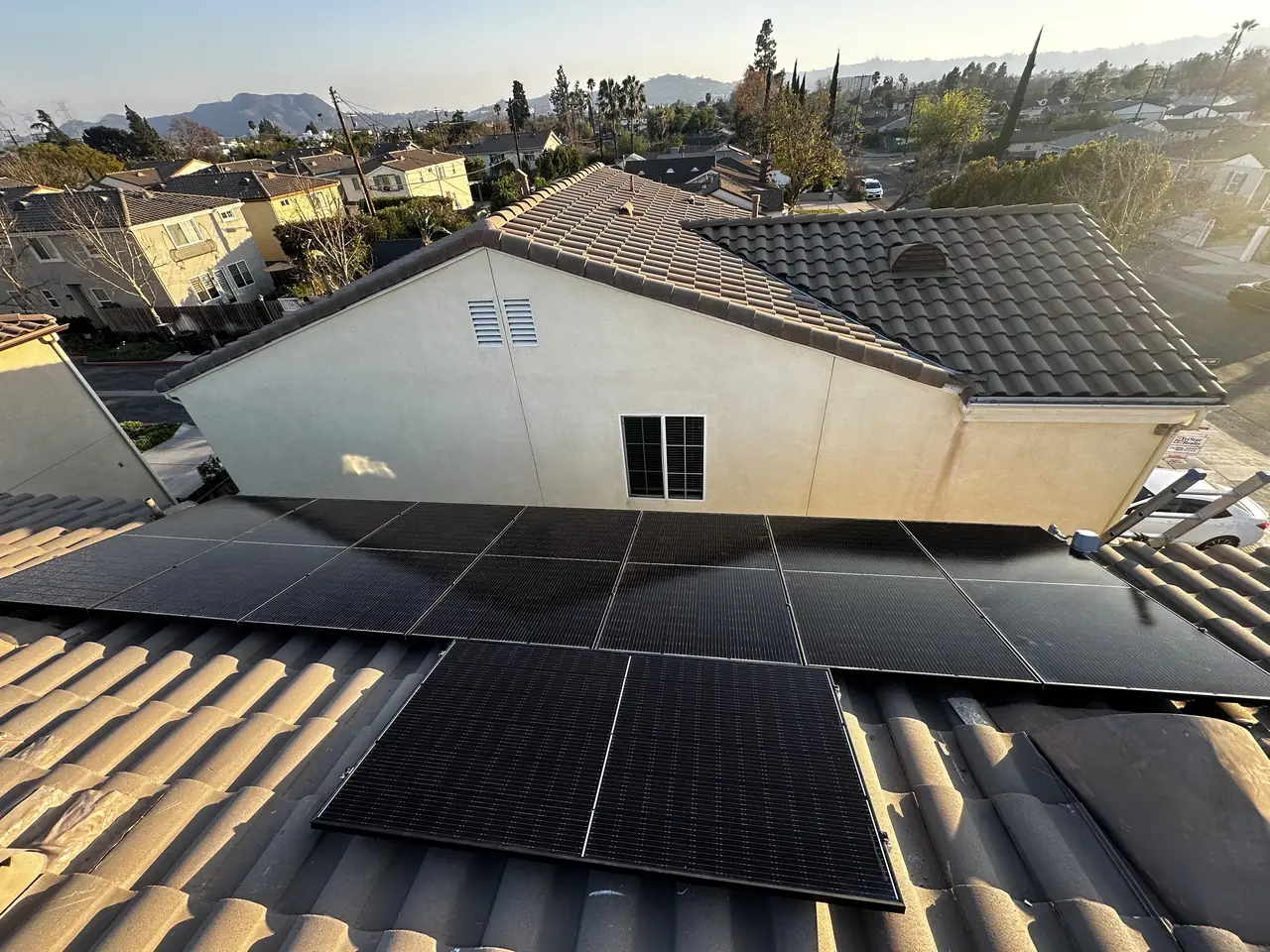
At a glance
- Roof
- Concrete tile, barrel profile
- Mounts
- Tile hooks on lag-bolted base plates
- Tiles removed
- None — every tile stayed in the course
- Penetration
- Sealed over the fixings
- Modules
- All-black framed, laid in landscape
- Electronics
- One device per module on the rail
- Array
- Two roof planes
- Install
- Documented across a single day
The story
Most of what is worth knowing about solar on a tile roof is decided before a single module is lifted, at the point where a metal foot meets a covering that was never designed to have anything screwed to it.
A concrete tile roof does not keep water out with the tile alone. It keeps water out with the underlayment beneath the tile and with the way each tile laps over the one below it. The tile is the weather shield and the drainage path; the membrane underneath is what actually stops water reaching the timber. Any mount has to make peace with both of those.
There are two accepted ways to do that, and it is worth naming them properly because contractors rarely explain which one they are quoting.
The first is a tile replacement. A tile comes out of the course and a shaped metal pan goes in where it was, carrying the attachment, with the course above lapping over its head. The water path becomes metal instead of concrete at that point, and it is a mechanical seal.
The second is a tile hook. The tile stays where it is. A formed hook is fixed to a base plate below and reaches up and over to carry the rail clear above the tile surface, with the tile bedding back down over the hook's shank. That is what was used on this roof.
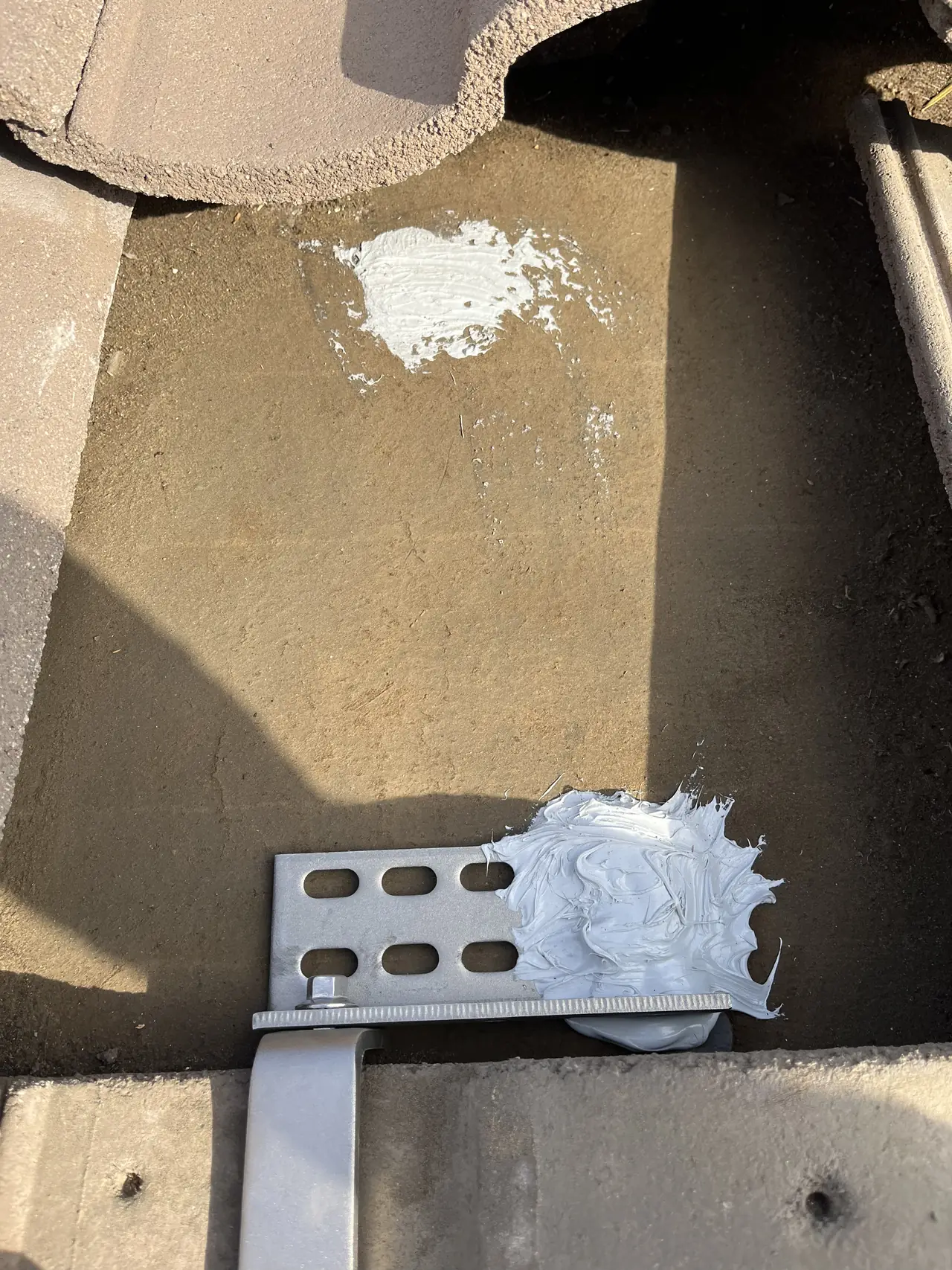
Look at what that photograph is actually showing, because it is the part of the job you will never see again once the array is up. A slotted base plate sits on the tile, fixed down with lag bolts that have to land in a rafter rather than in the batten or the empty air between. The heads are covered with a heavy bead of sealant. The hook leg bends down from the plate and runs forward over the tile below.
And here is the honest trade-off. On a hook mount the water is kept out of that penetration by sealant. Sealant is a material with a service life — it is good for years, not for the life of the roof, and it is a maintenance item whether or not anybody tells you so. On a tile replacement the water path is a metal pan lapped by the course above, which is mechanical and does not depend on a bead staying flexible. That is the real difference between the two families, and it is not the difference most quotes describe.
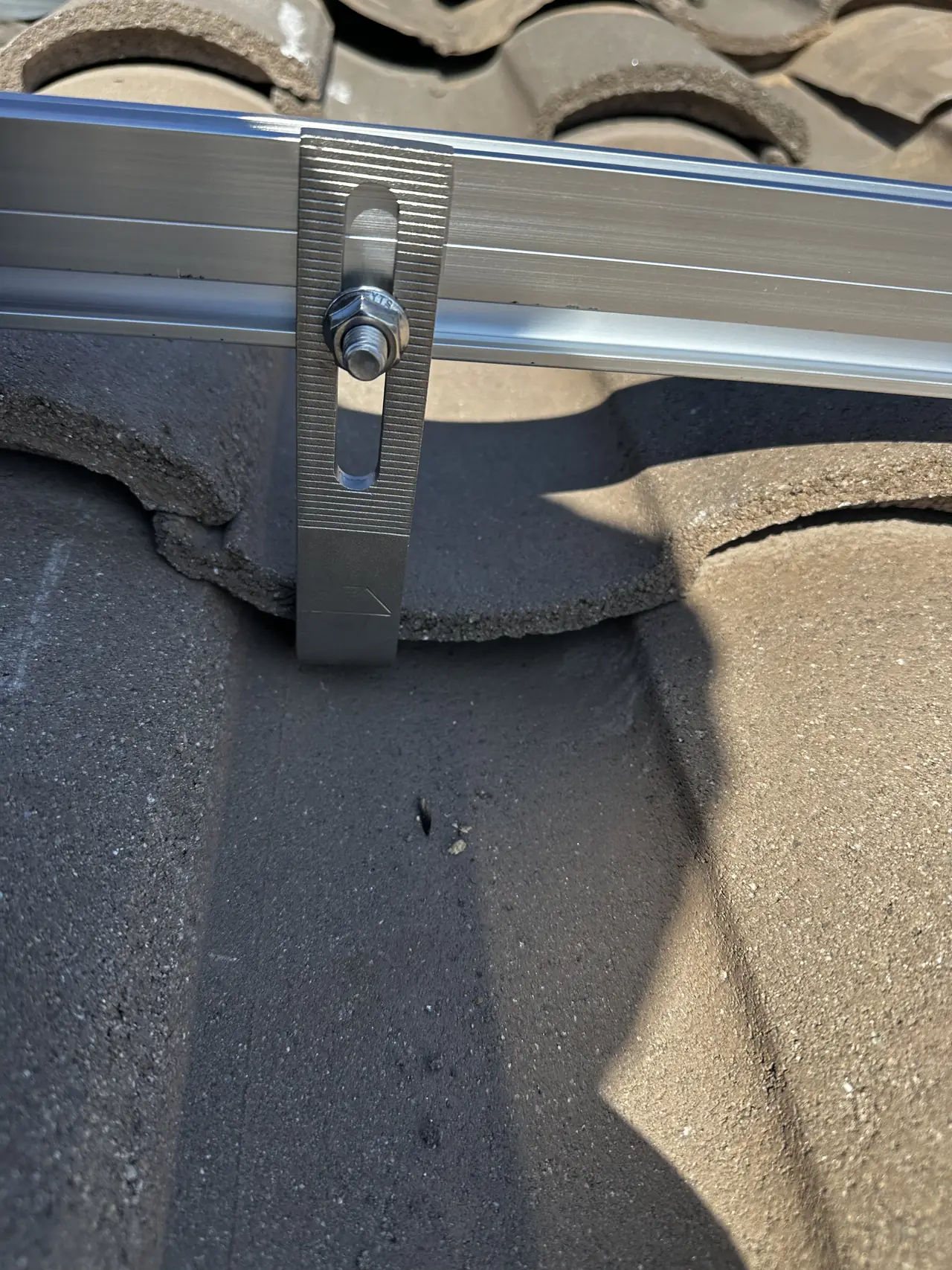
Neither family is the wrong answer. Both are engineered systems with published instructions, and hooks are the normal answer on a great many tile roofs. What makes a tile mount bad is narrower and more specific than the choice of family: an improvised bracket rather than a hook made for the tile profile; a tile forced to bear on a point so it rocks and cracks; a base plate that missed the rafter; a penetration left to a smear of sealant rather than a proper cap.
Broken tiles are worth a sentence of their own. Concrete tile is walked on during an installation and some of it breaks, especially on an older roof. That is normal. The question is not whether tiles will break but who replaces them and out of whose pocket, and that belongs in writing before anybody goes up.
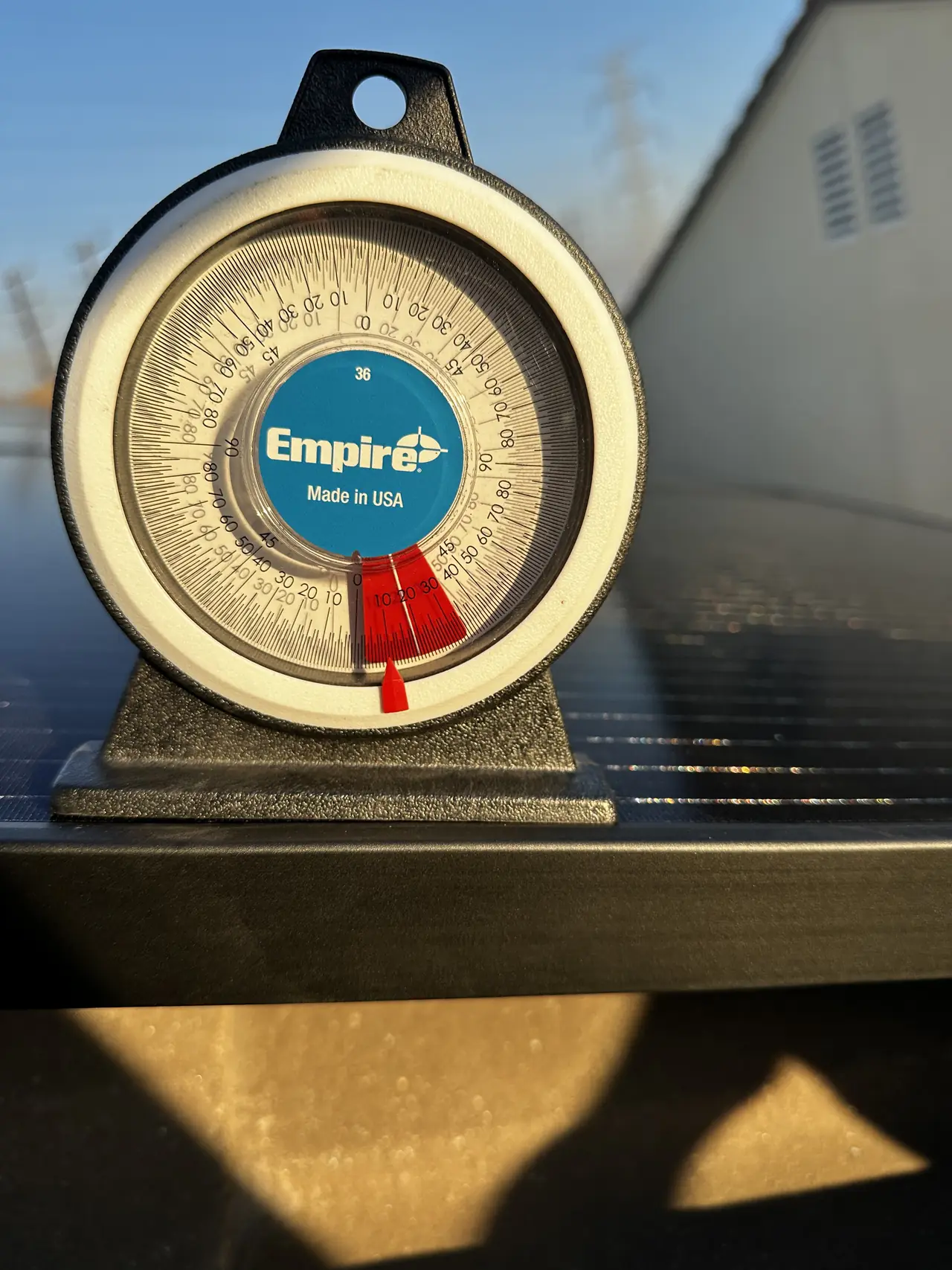
One more small thing that says a lot. That is an angle finder standing on an installed module, being read on the roof. The pitch is already on the plan set, but a plan set is drawn from measurements somebody else took, and pitch is not a cosmetic number. It feeds the production estimate, it changes how far apart the attachments have to be for wind uplift, and on tile it changes how the hook sits against the profile.
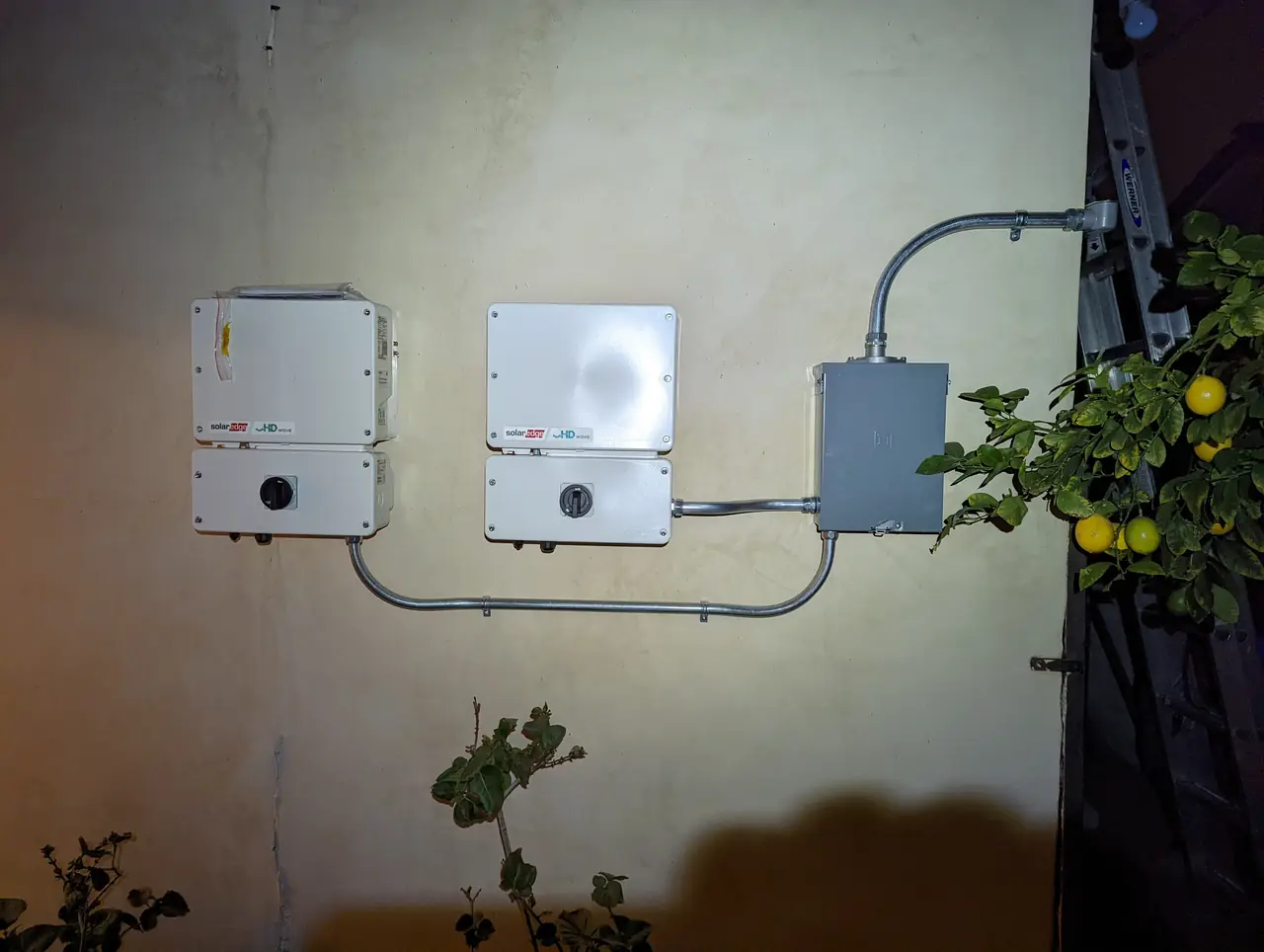
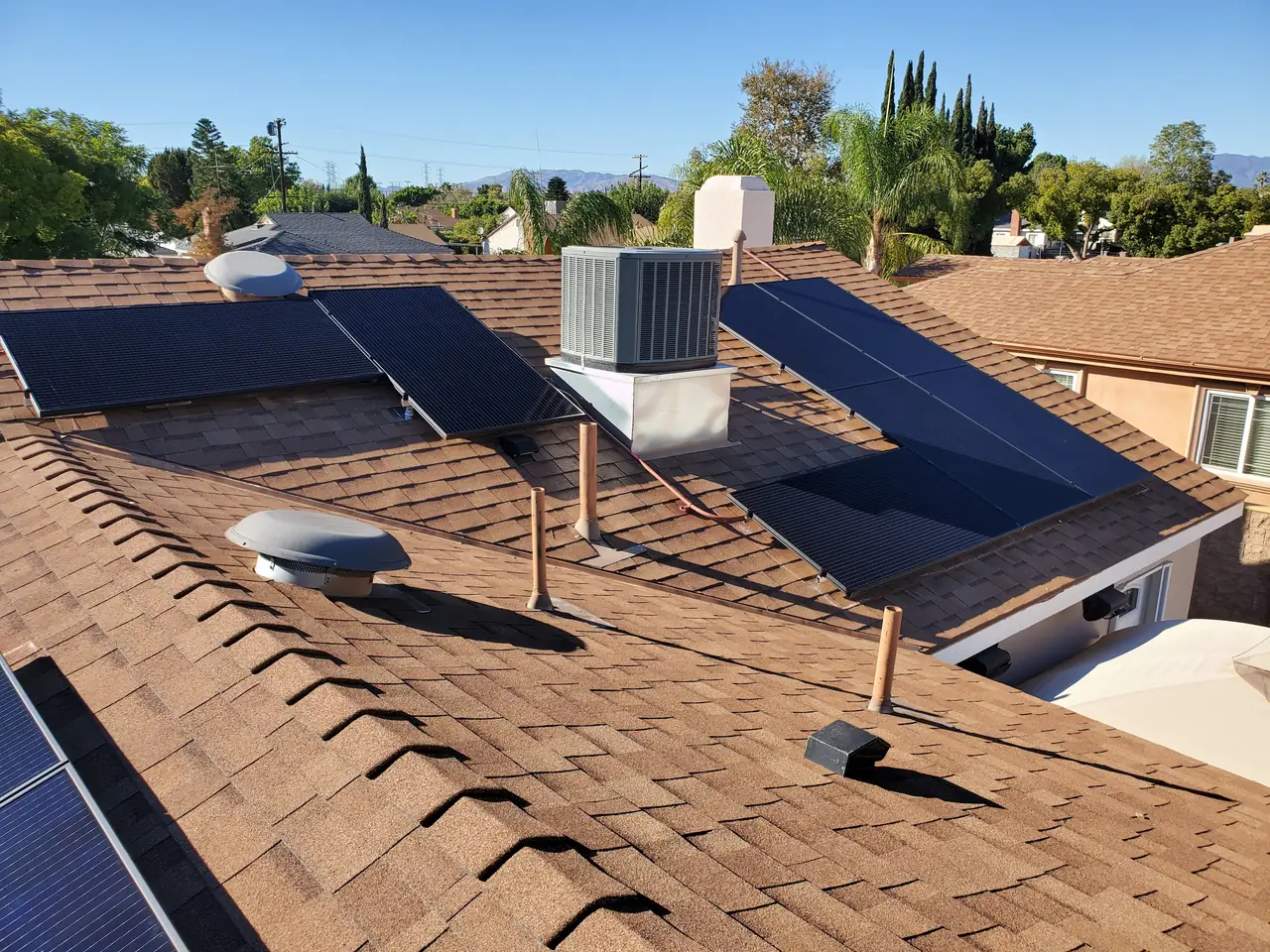
The rest is ordinary and should be. All-black framed modules laid in landscape across two planes, with one piece of electronics per module on the rail underneath. Conductors come off the roof at a single point, down the outside of the building in conduit, to the disconnect and the panel on the wall.
If you have a tile roof and you are collecting quotes, four questions separate the people who have done this from the people who are about to learn on your house. Which mounting family are you quoting, hooks or tile replacement? What is the part called and is it made for my tile profile? How is the penetration under it waterproofed, and is that a sealant that will need looking at again? And who pays for broken tiles?
How it ran
| January 2025 | Base plates set and lag-fixed through the tile into the rafters |
|---|---|
| January 2025 | Fixings sealed; hooks fitted and tiles bedded back down |
| January 2025 | Rails set and levelled across two roof planes |
| January 2025 | Modules laid in landscape, electronics mounted per module |
| January 2025 | Pitch checked on the installed array with an angle finder |
| January 2025 | Conductors brought down in conduit to the disconnect and panel |
All of it inside one day, on 17 January 2025.
What we did
- Mounted on tile hooks, leaving every tile in the course rather than cutting any out.
- Fixed the base plates through the tile into the rafters and sealed over the heads.
- Carried the rail clear above the tile surface so the tiles bed back down unloaded.
- Checked the roof pitch with an angle finder on the installed array, not on paper.
- Ran the conductors down the outside in conduit to a disconnect and panel reachable from the ground.
System specifications
| Roof covering | Concrete tile, barrel profile |
|---|---|
| Mounting family | Tile hook — tiles retained, not replaced |
| Attachment | Slotted base plate, lag-fixed through the tile into the rafter |
| Waterproofing at the fixing | Sealant over the lag heads |
| Racking | Rail carried clear above the tile on the hook |
| Pitch | Checked on the installed array, not taken from the drawing |
| Modules | All-black framed, landscape orientation |
| Module electronics | One unit per module, rail-mounted |
| Roof planes | Two |
Is your project like this one?
- You have a concrete tile roof and have been told solar is a problem on it.
- You want to know what is underneath an array once it is up.
- You have two quotes and only one of them names the mounting part.
- You want to know how the penetrations under your array are waterproofed.
- You want to know who pays for tiles broken during an installation.
Cali Energy in North Hollywood
North Hollywood is inside City of Los Angeles boundaries: permits run through LADBS, interconnection through LADWP.
The newer tracts on this side of North Hollywood are concrete tile rather than composition shingle, and tile is where the mounting detail stops being a formality.
This installation is on the North Hollywood projects page alongside the others, and what the work covers is set out on the North Hollywood service area page.
- License and classifications: CSLB #1032379
- Official reference for this process: LADBS — plan review and permitting
- Official reference for this process: California Energy Commission — solar equipment lists
Frequently asked questions
Can solar be installed on a concrete tile roof?
Yes, and it is routine. There are two accepted families of mount: tile replacement, where a tile comes out and a metal pan takes its place, and tile hooks, where the tile stays and a formed hook carries the rail above it. This roof used hooks.
Do the tiles have to be removed?
Not with a hook mount. On this roof every tile stayed in the course; the hooks reach down to base plates fixed through the tile into the rafters and lift the rail clear of the surface. With a tile replacement mount, one tile per attachment does come out.
Is a hook mount worse than a tile replacement?
Not worse, different. Both are engineered systems with published instructions. The practical difference is where the waterproofing lives: on a hook the penetration is sealed with sealant, which has a service life and is a maintenance item; on a replacement the water path is a metal pan lapped by the course above, which is mechanical. Ask which you are getting.
What makes a tile mount actually bad?
An improvised bracket instead of a hook made for the tile profile; a tile forced to bear on a point so it rocks and cracks; a base plate that missed the rafter; or a penetration closed with a smear rather than properly capped. None of those are about which family was chosen.
Do tiles get broken during an installation?
Some usually do, particularly on older roofs, because concrete tile has to be walked on. That is normal. What matters is that replacing them is agreed in writing beforehand rather than argued about afterwards.
Why measure the roof pitch if it is already on the plans?
Because the plan set is drawn from somebody else's measurement, and pitch feeds the production estimate, the attachment spacing for wind uplift, and how the hook sits against the tile profile. On this roof it was checked on the installed array.
Does Cali Energy install on tile roofs in North Hollywood?
Yes, including the roofing scope where tiles need replacing. Cali Energy holds B, C-10 and C-39 classifications under CSLB #1032379.
What this would look like on your roof
Planning solar in North Hollywood? Tell us your utility, your roof and what your bill looks like now, and we will model what a system like this would do on your house before you commit to anything.
Or call +1 (323) 844-7777 · Cali Energy, Northridge · CSLB #1032379 (B, C-10, C-39) — design, permits, install and electrical under one licensed contractor.
Related
This timeline reflects this property and this permitting path. Updated September 2026.