

Simi Valley, CA · September 2021 – November 2021 · Southern California Edison / City of Simi Valley
The association is not the last step. It is the first.
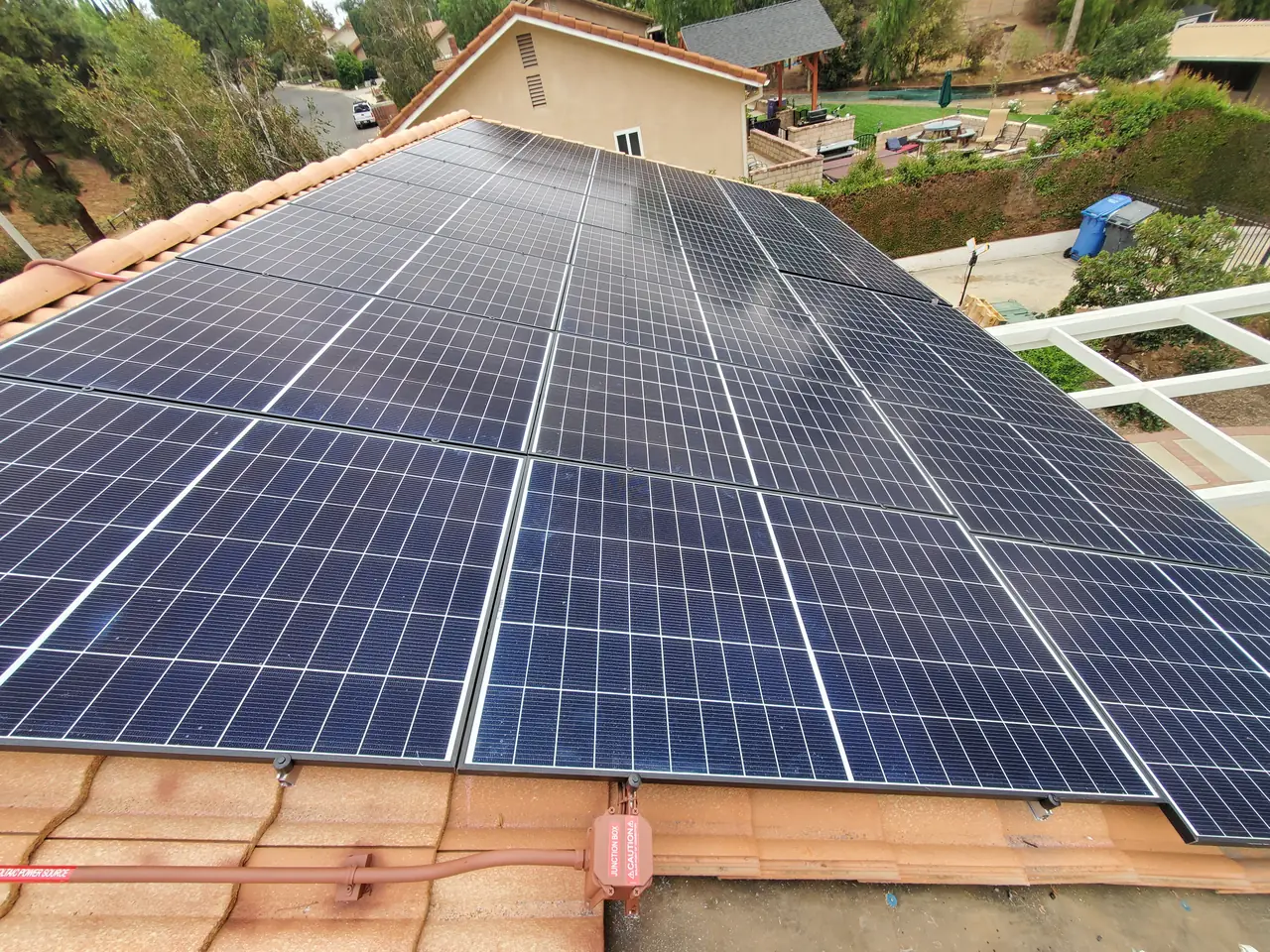
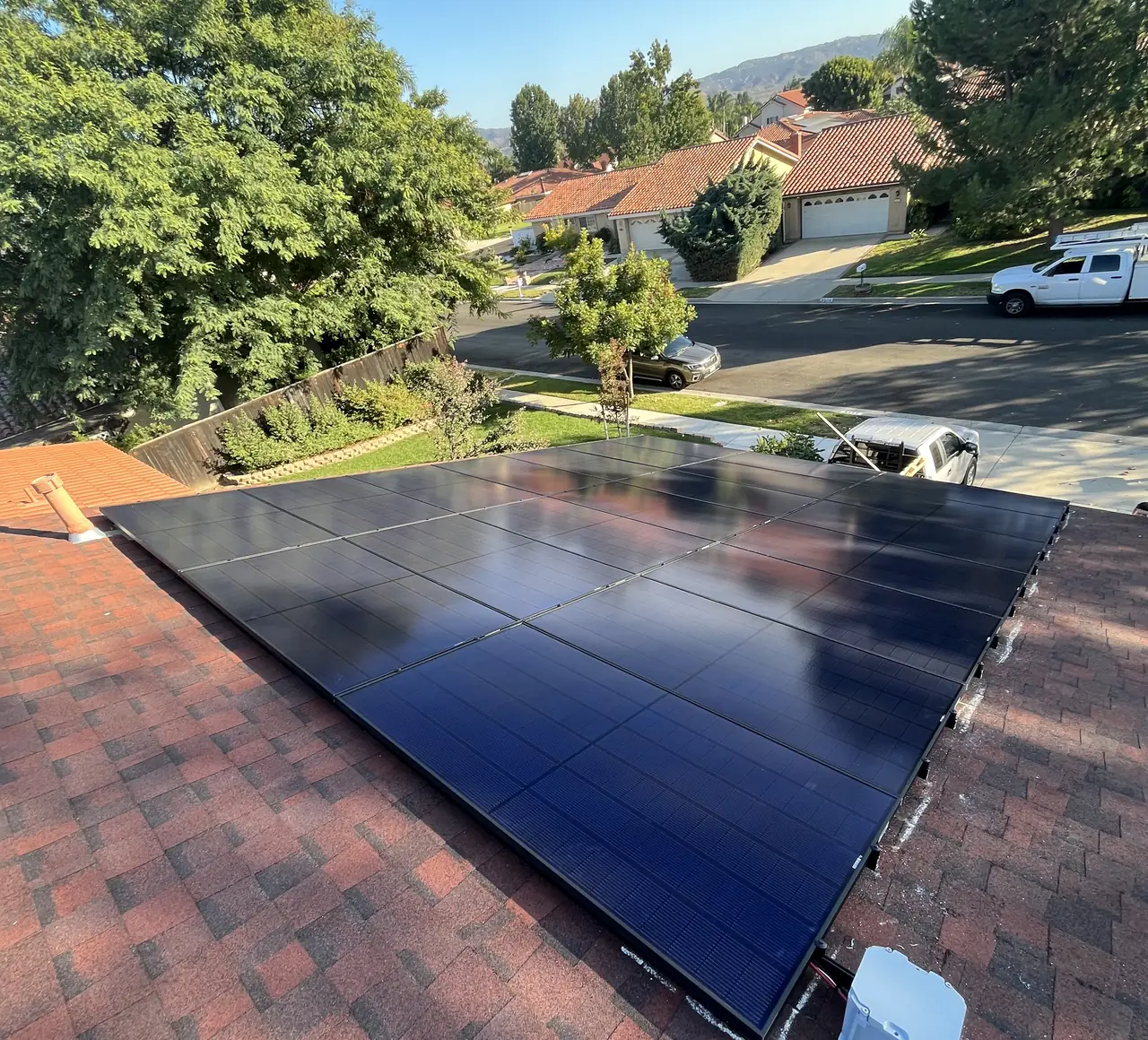
A twenty-four module array on a Simi Valley house inside an association. The approval letter was in hand before the permit application went in, which is why nothing stopped.
California's solar rights legislation stops an association from banning a residential solar installation and limits the restrictions it may impose to reasonable ones. What it does not do is take the association out of the chain. The association still reviews the application, still issues a written approval, and the city still expects that paperwork with the permit. Left to the end, it adds weeks at the worst moment. Taken first, it costs nothing. Across the tract developments that make up much of Simi Valley, it is the normal first step rather than an unusual one.
At a glance
- Modules
- 24 x REC Alpha 370 W
- System size
- 8.88 kW DC
- Site inspection
- 8 September 2021
- Plan set issued
- 18 September 2021
- Association approval letter
- 21 September 2021
- Final inspection passed
- October 2021
- Later work
- Expansion quoted 2024; service call 2025
- Utility / AHJ
- Southern California Edison / City of Simi Valley
The story
The house sits inside an association, which in this part of Ventura County is the normal case rather than the exception. Cali Energy surveyed the roof in early September, the plan set came back on the eighteenth, and the association's written approval followed three days later. Only then did anything go to the city.
That order is what this comes down to. Associations in California cannot prohibit a residential solar installation, and the restrictions they may place on one are limited by statute to those that do not significantly raise the cost or reduce the output. Owners read that and conclude the association can be ignored. It cannot: what the law removes is the power to say no, not the association's place in the process.
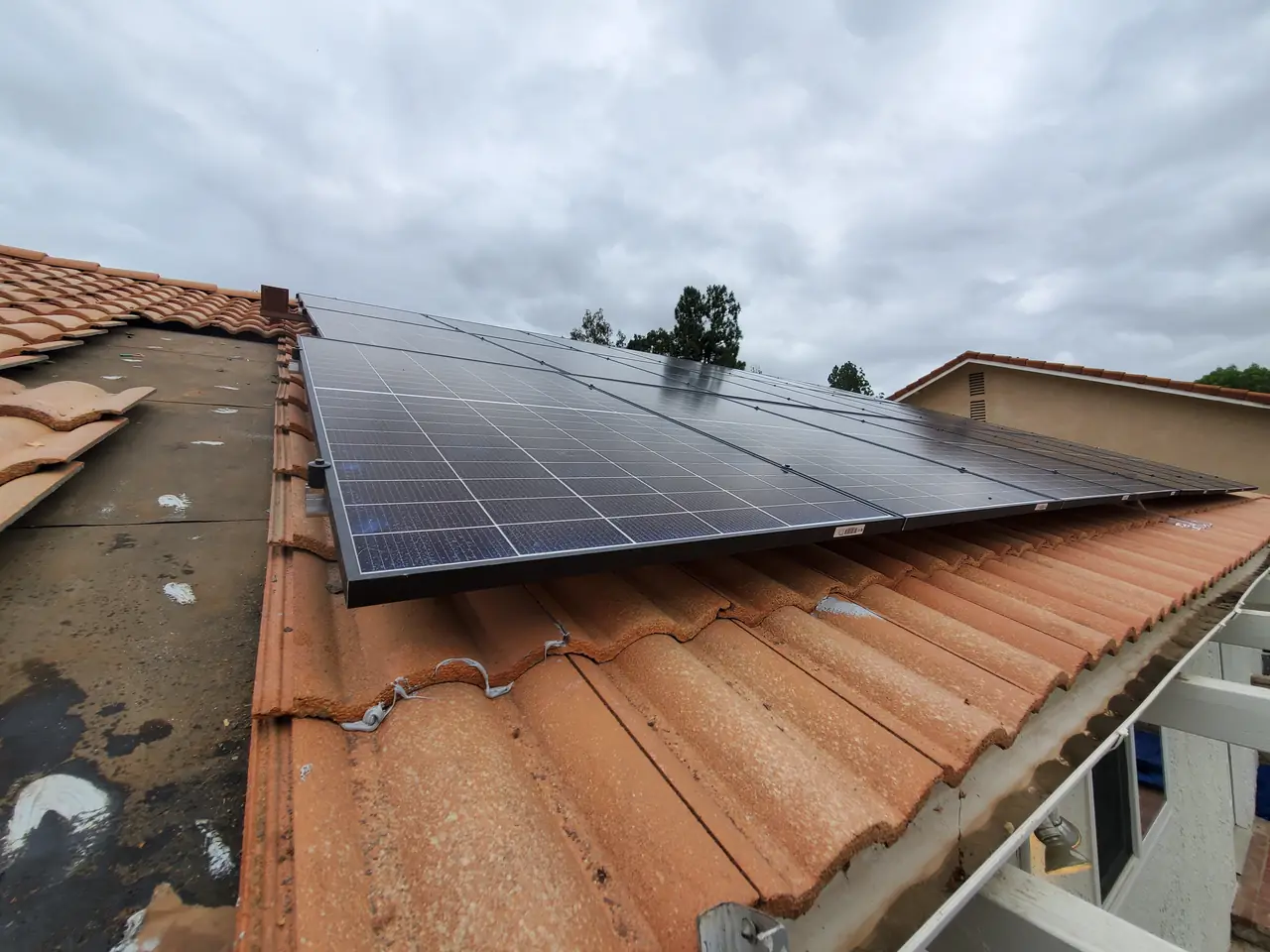
In practice the association reviews an application, asks about placement and visibility, and issues a letter. That letter is what the city wants to see, and an application filed without it waits. Worse, an owner who installs first and asks afterwards can find themselves arguing about a roof that is already finished, which is a bad place to argue from even when the law is on their side.
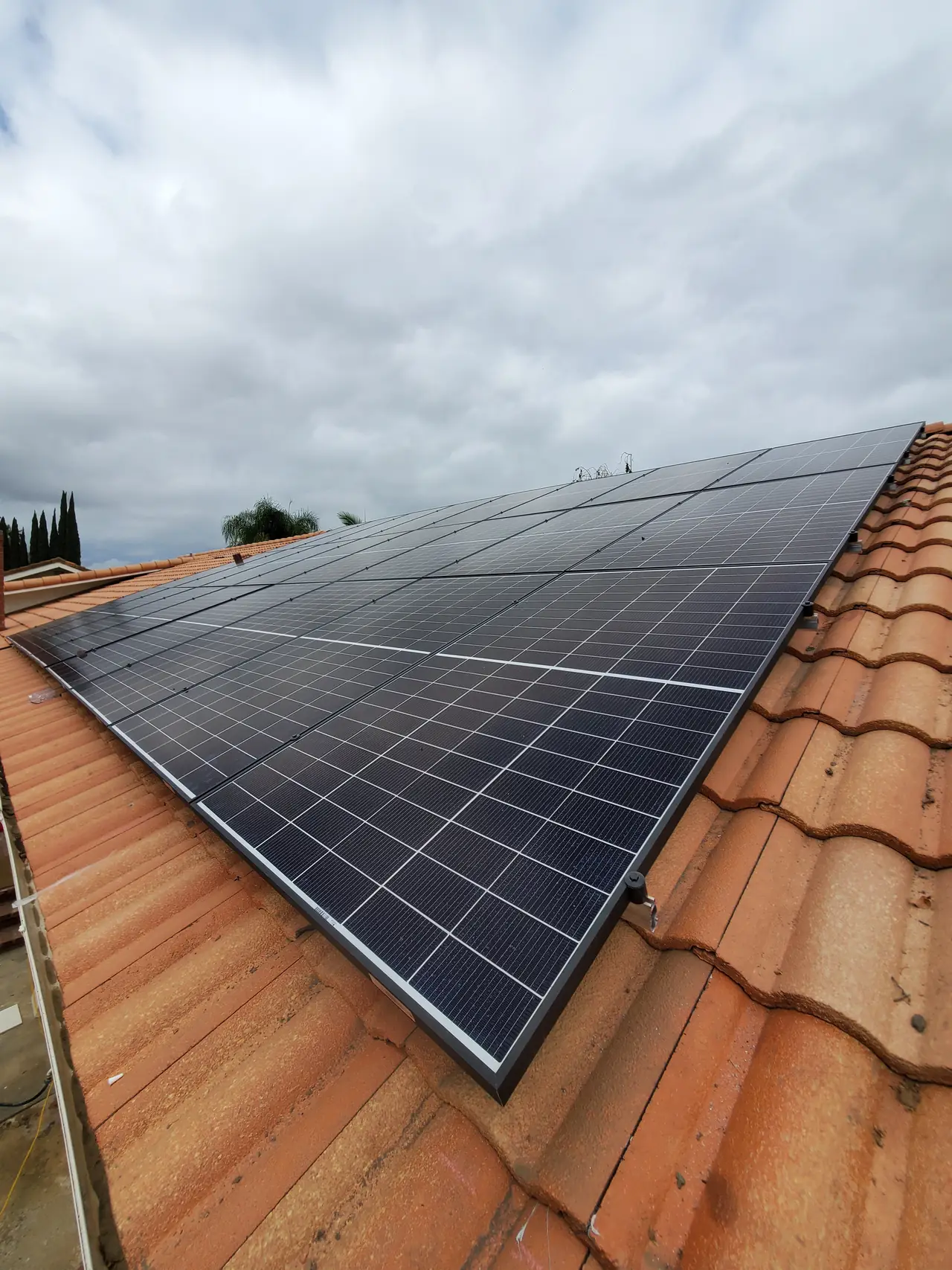
The technical side of this project was ordinary and well documented. Twenty-four REC Alpha modules at three hundred and seventy watts, eight and nine-tenths kilowatts on the roof. The final inspection passed in October and the permission to operate followed after a round of corrections on the interconnection paperwork.
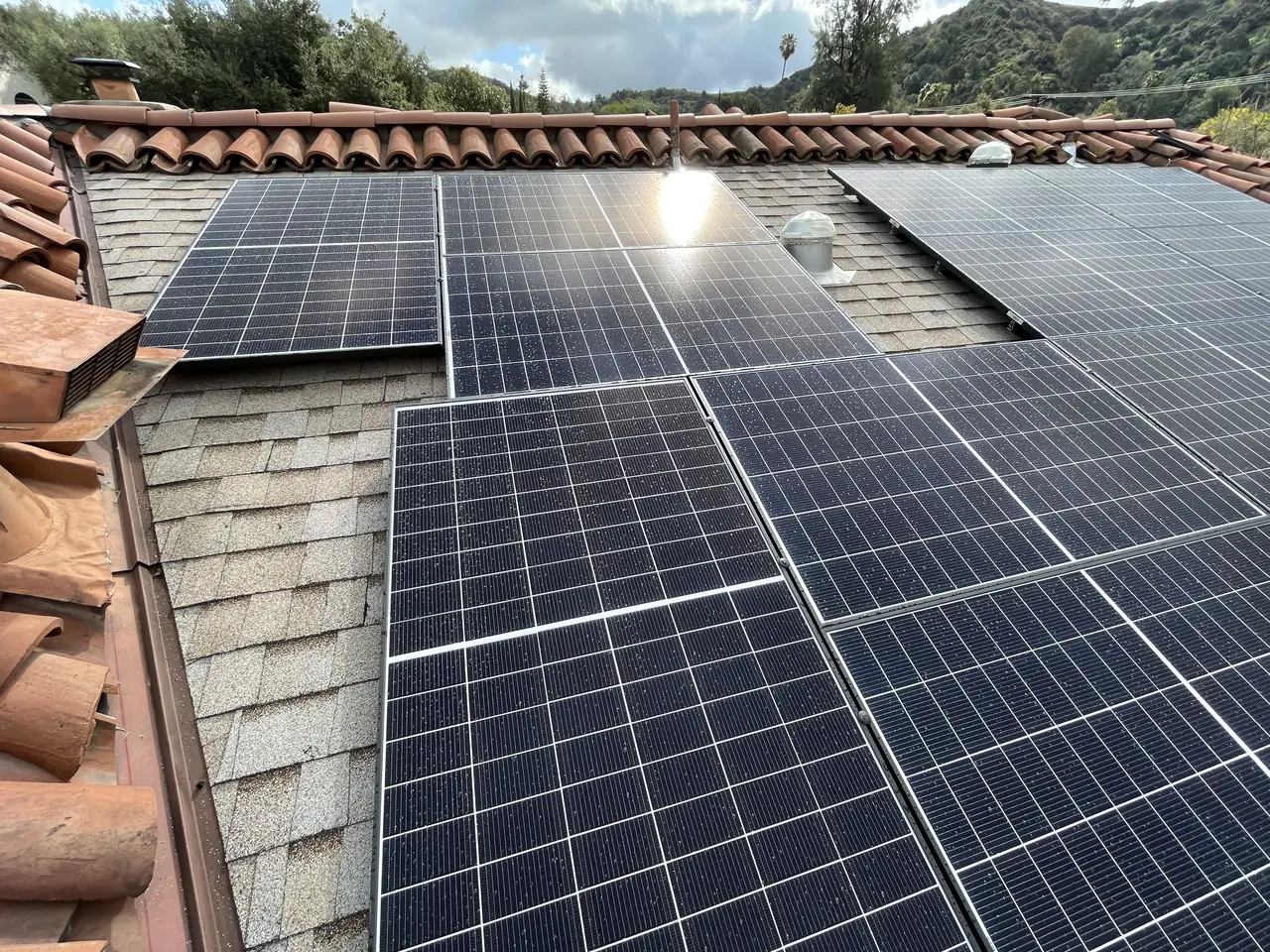
Two later chapters matter because they are what an array actually looks like over years rather than weeks. In 2024 the owner asked about adding capacity; a separate roof face would hold sixteen more modules, and twelve were quoted with their own production estimate. In 2025 the monitoring showed a single microinverter not reporting, which was opened with the manufacturer as a warranty case. Neither of those is a fault in the original work. Both are what owning a system involves.
How it ran
| 8 September 2021 | Site inspection |
|---|---|
| 18 September 2021 | Plan set issued for review |
| 21 September 2021 | Homeowners association approval letter received |
| September 2021 | Permit application filed with the association letter |
| October 2021 | Array installed; final inspection passed |
| November 2021 | Interconnection corrections answered; permission to operate |
| April 2024 | Expansion on a second roof face quoted |
| January 2025 | Single microinverter not reporting; warranty case opened |
Three days from plan set to association approval, because the application was prepared for it. This timeline reflects this property.
What we did
- Prepared the association submission from the same plan set as the permit application, so both described the same array (C-10).
- Obtained the written association approval before filing with the city.
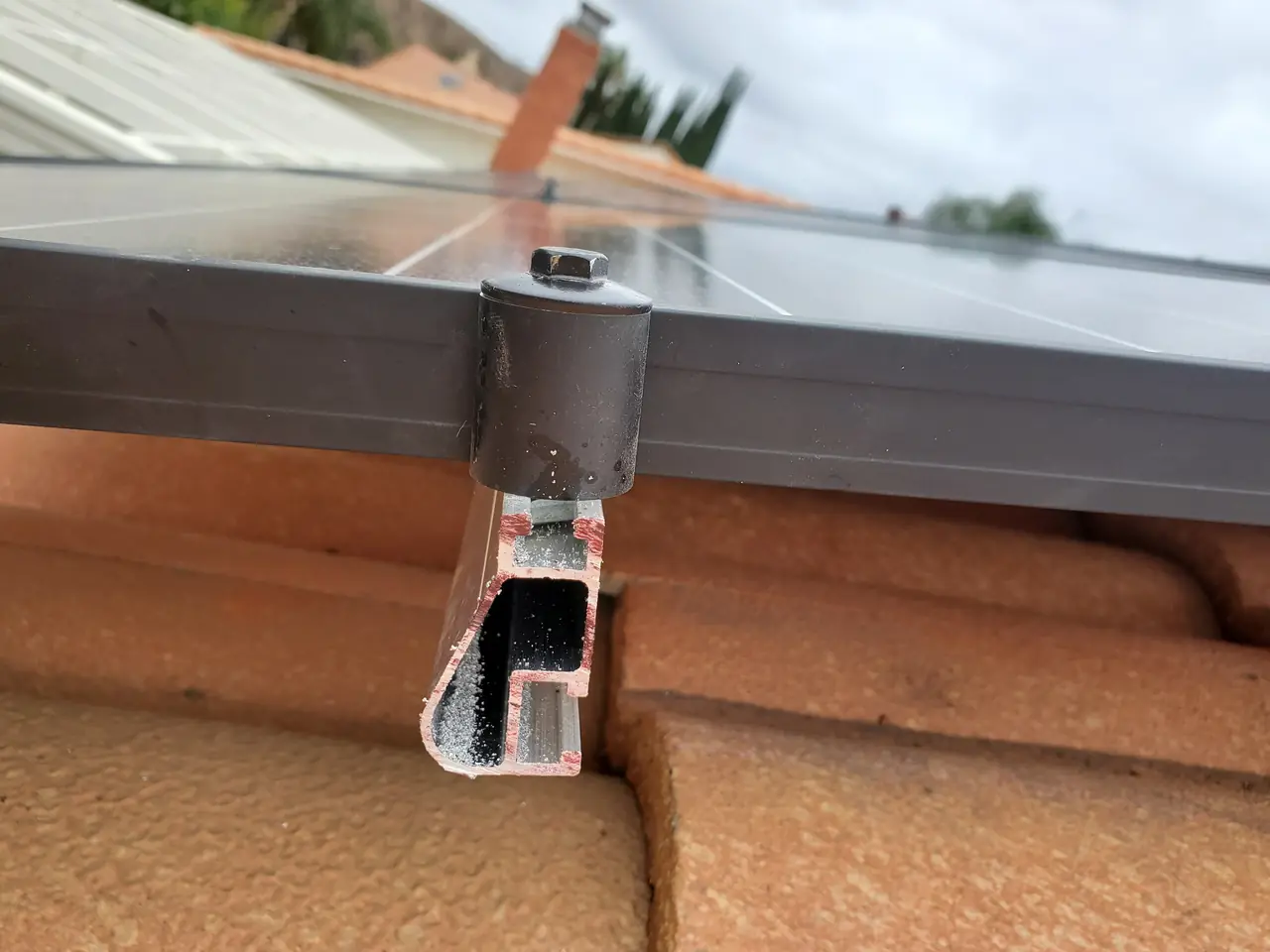
- Installed twenty-four modules with every attachment flashed individually.
- Carried the project through the city final inspection.
- Answered the interconnection corrections and followed the project to permission to operate.
- Measured a second roof face and quoted an expansion against its own production estimate three years later.
- Opened a manufacturer warranty case when module-level monitoring showed one unit silent.
System specifications
| Modules | 24 x REC Alpha 370 W |
|---|---|
| System size | 8.88 kW DC |
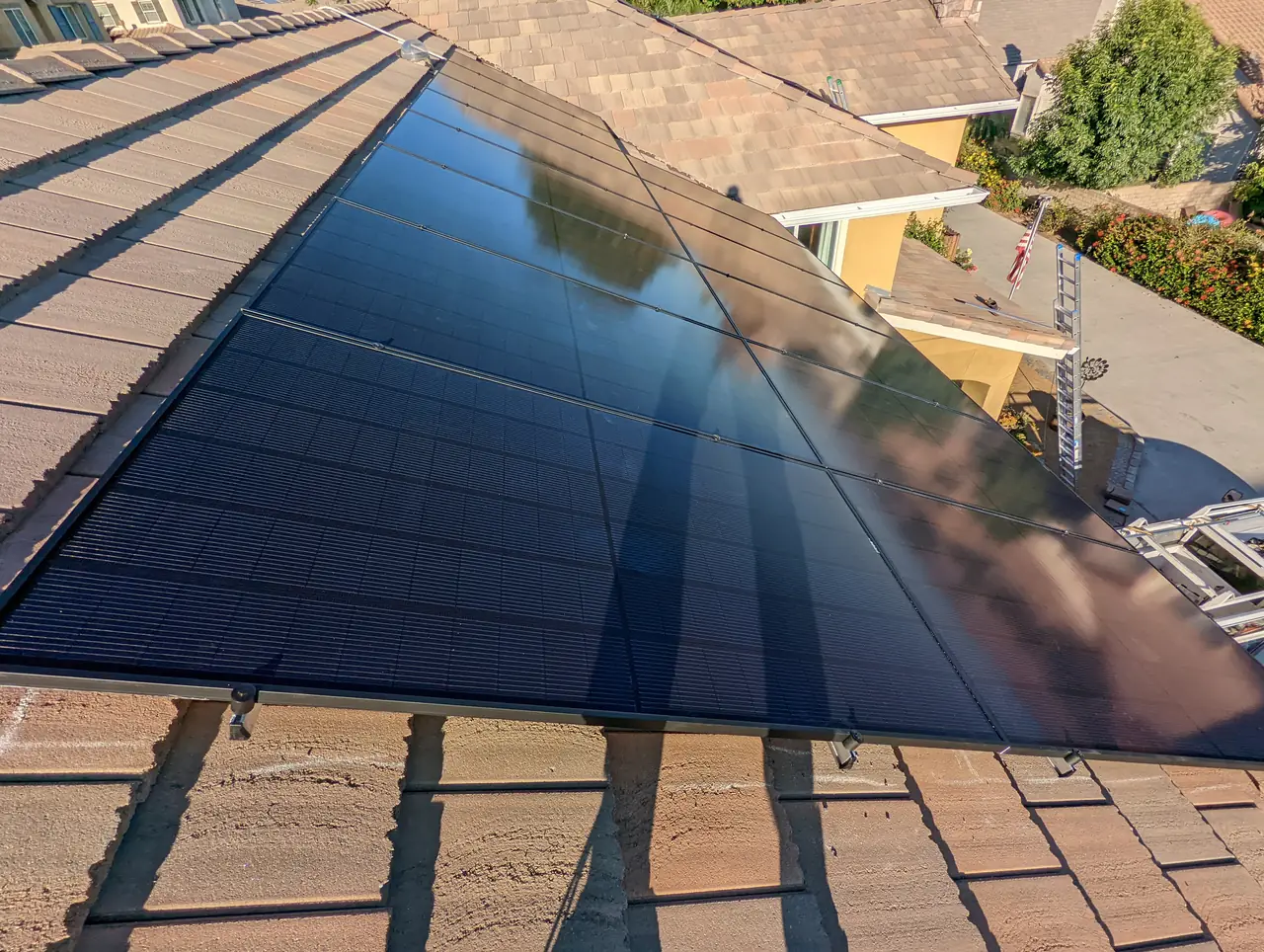
| Roof | Concrete tile |
| Association review | Written approval obtained before the city application |
| Expansion capacity | A second roof face measured at 16 modules |
| Monitoring | Module-level, which is how the 2025 fault was found |
| Utility / AHJ | Southern California Edison / City of Simi Valley |
Is your project like this one?
- Your house is inside a homeowners association and you are planning solar.
- You have been told the association cannot stop you and are not sure what that means in practice.
- Your permit application is waiting on paperwork nobody warned you about.
- You want to add modules to an array that was installed years ago.
Cali Energy in Simi Valley
Simi Valley is a city in Ventura County: permits run through the City of Simi Valley Building & Safety Division, interconnection through Southern California Edison.
Large parts of Simi Valley are tract developments with active homeowners associations. California law limits what an association may refuse on a solar installation, but it does not remove the association from the process, and the city will want to see that it has been through.
This installation is on the Simi Valley projects page alongside the others, and what the work covers is set out on the Simi Valley service area page.
- License and classifications: CSLB #1032379
- Official reference for this process: CSLB — check a contractor's license
- Official reference for this process: Southern California Edison — generating your own power
Frequently asked questions
Can a homeowners association refuse solar in California?
It cannot prohibit a residential installation, and the restrictions it may impose are limited by statute to reasonable ones that do not significantly increase cost or reduce production. That is not the same as having no role. The association still reviews the application and issues written approval, and the city expects to see it with the permit.
Does Cali Energy handle association submissions in Simi Valley?
Yes. Cali Energy prepares the association submission from the same plan set as the permit application, so the array the association approves is the array that gets built, and files with the city once the approval letter is in hand. Fifteen completed Simi Valley projects are on our projects page. Our license is CSLB #1032379.
When should the association be approached?
Before the city, and ideally as soon as the plan set exists. The association wants to see placement and appearance, which is exactly what the plan set shows, so one document serves both submissions. Leaving it until the permit is in hand puts an unpredictable review in front of a scheduled installation.
Can modules be added to an existing array later?
Usually, and what limits it is rarely the roof. Adding capacity means checking what the service and the existing interconnection allow, and whether the addition is treated as a new system by the utility. On this house a second roof face measured out at sixteen modules three years after the original array went up.
What this would look like on your roof
Planning solar in Simi Valley? Tell us your utility, your roof and what your bill looks like now, and we will model what a system like this would do on your house before you commit to anything.
Or call +1 (323) 844-7777 · Cali Energy, Northridge · CSLB #1032379 (B, C-10, C-39) — design, permits, install and electrical under one licensed contractor.
Related
This timeline reflects this property and this permitting path. Updated September 2026.