

Simi Valley, CA · June 2022 – July 2022 · Southern California Edison / City of Simi Valley
Approved in minutes, by software. Here is what it read.
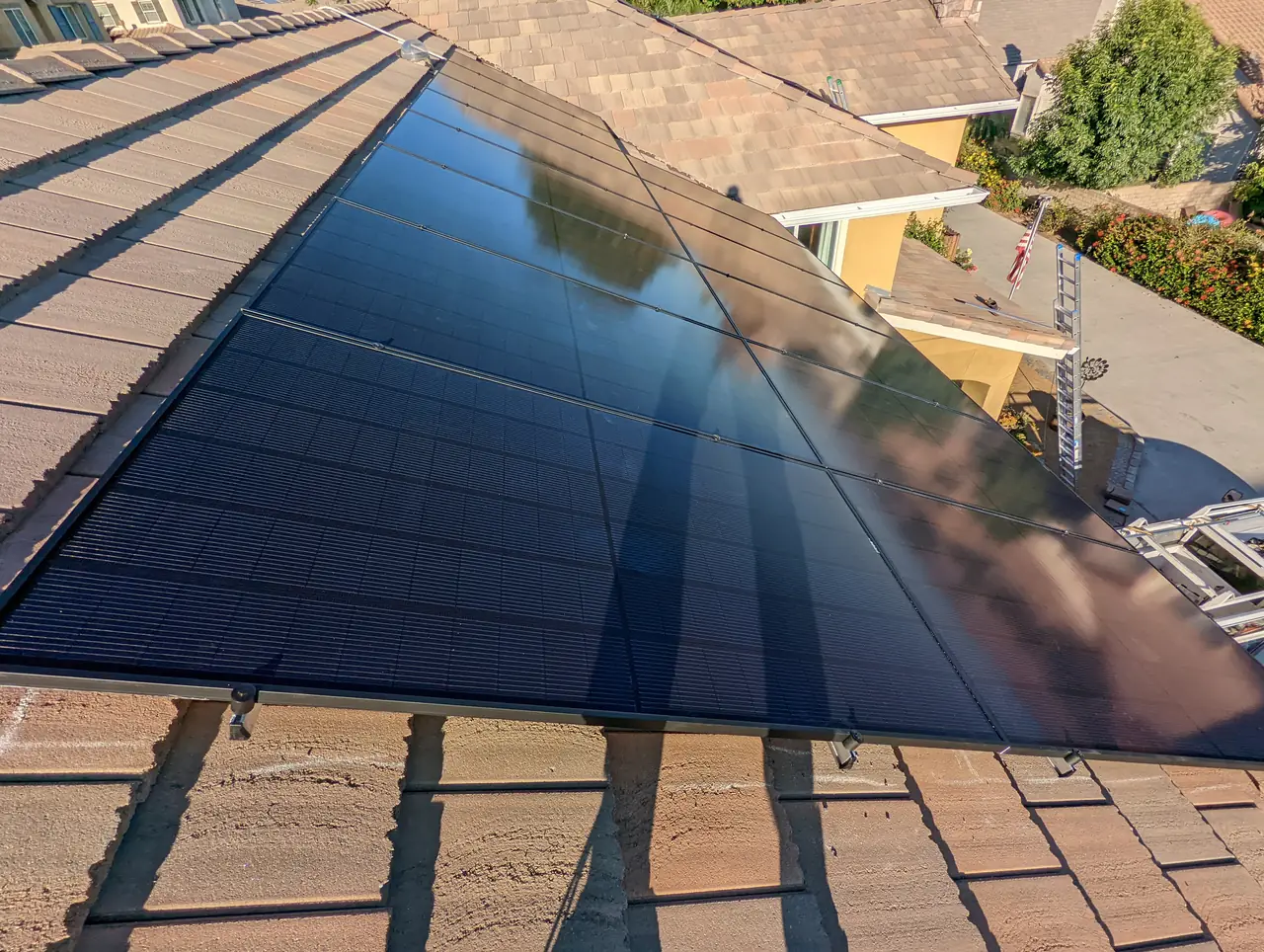
A thirty-two module array on a Simi Valley house, with a service upgrade and a tilted north-facing section, approved through an automated permitting platform three days after the plans were drawn.
An automated residential solar permit platform is a code-compliance engine, not a rubber stamp. It reads the same inputs a plan checker would — module and inverter models from the state equipment lists, service and busbar ratings, breaker sizes, conductor and conduit specification, array layout, attachment spacing and structural assumptions — and refuses anything outside the standard residential envelope. What it removes is the wait, not the requirements. Cali Energy prepared this Simi Valley plan set to clear it first time, and the field inspection afterwards was unchanged.
At a glance
- Modules
- 32 x REC Alpha 400 W
- System size
- 12.8 kW DC
- Microinverters
- Enphase IQ8Plus, one per module
- Service
- Main panel upgraded to 225 A
- North-facing section
- Tilted racking rather than flush mounting
- Plans issued
- 17 June 2022
- Automated approval
- 20 June 2022
- Utility / AHJ
- Southern California Edison / City of Simi Valley
The story
Cali Energy issued the plans for this house on a Friday and the permit approval came back on the Monday. No counter appointment, no plan check queue, no correction cycle. The city accepts residential solar through an automated review platform, and a design that meets the rules is approved by software.
The word instant invites the wrong conclusion, so here is what the platform actually does. The platform is a compliance engine built around the residential code. It reads the module and inverter models and checks them against the state equipment lists. It reads the service rating, the busbar rating and the breaker sizes, and applies the interconnection rules. It reads conductor sizes, conduit fill, attachment spacing and the structural assumptions. A design that sits inside the standard residential envelope is approved. A design that does not is rejected and goes to a human.
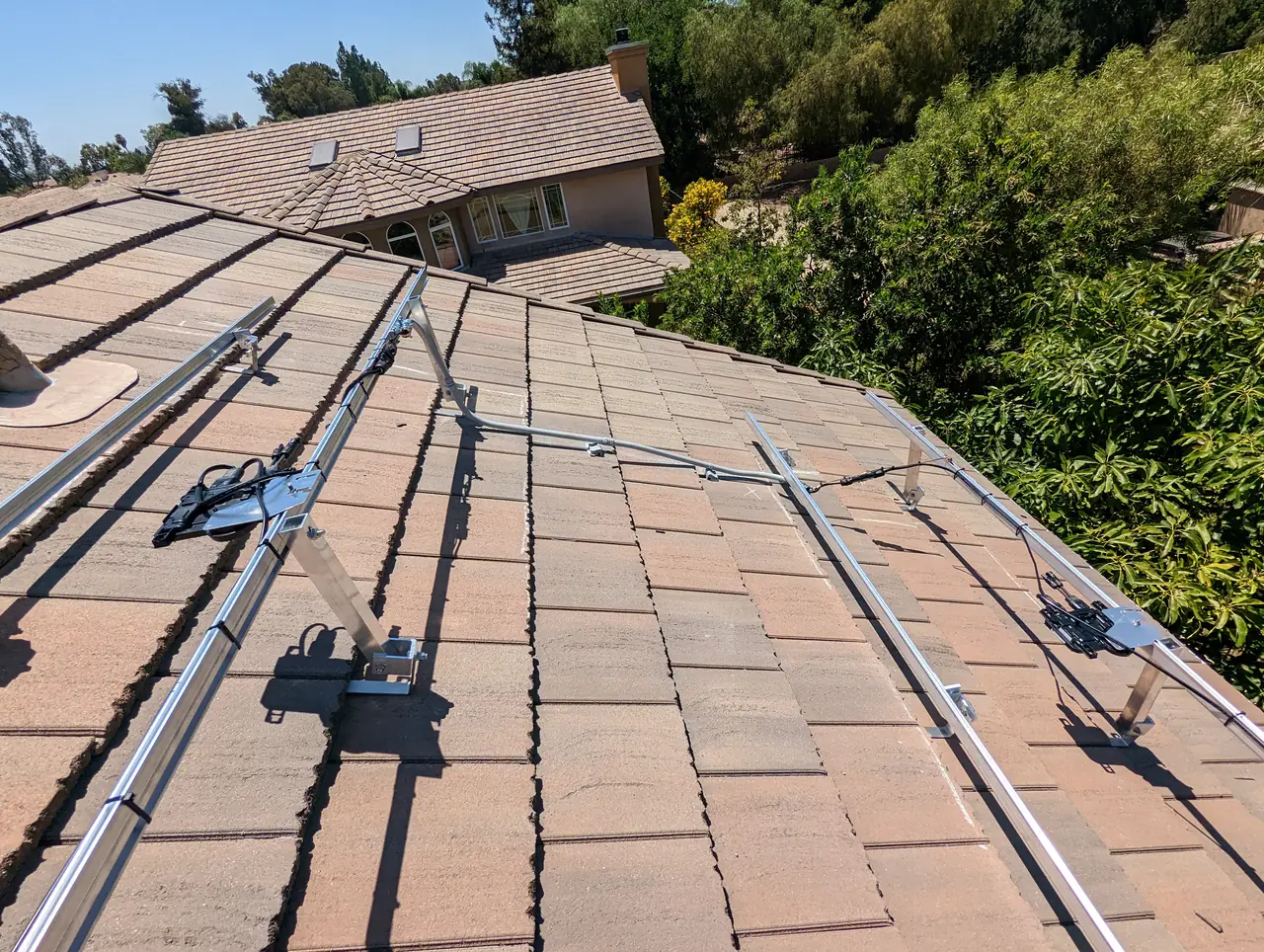
So the accurate description is that it removes the queue, not the standard. Every requirement still applies, and the field inspection afterwards is exactly what it always was: an inspector on the roof, checking that what was approved is what was built.
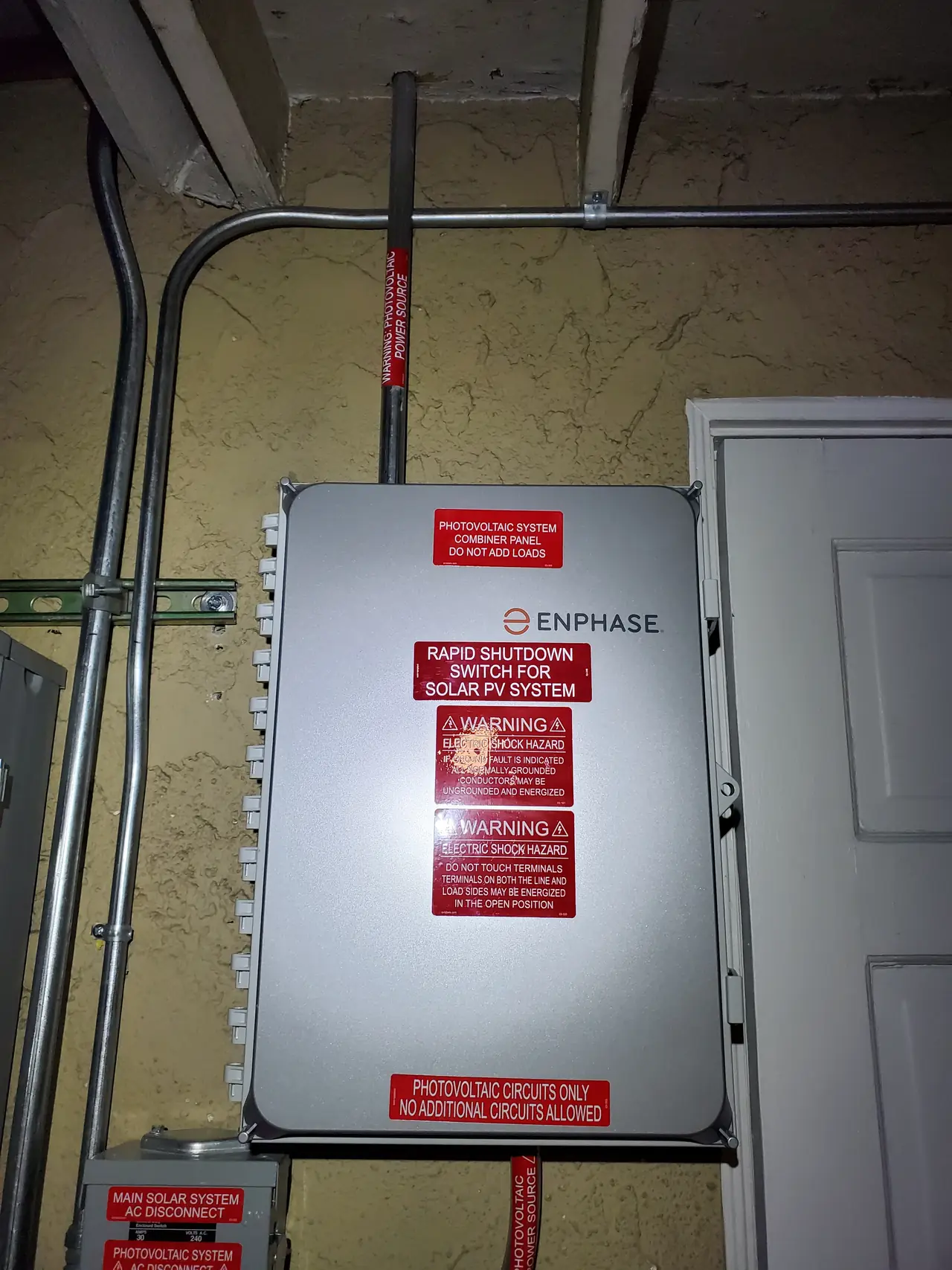
What this system had to satisfy was not trivial. Thirty-two REC Alpha modules at four hundred watts is twelve point eight kilowatts, which is a large residential array, and it needed the service upgraded to two hundred and twenty five amps to carry it. The busbar arithmetic is the part an automated check is genuinely good at: it is deterministic, it is where human plan checkers most often disagree with each other, and it has one right answer.
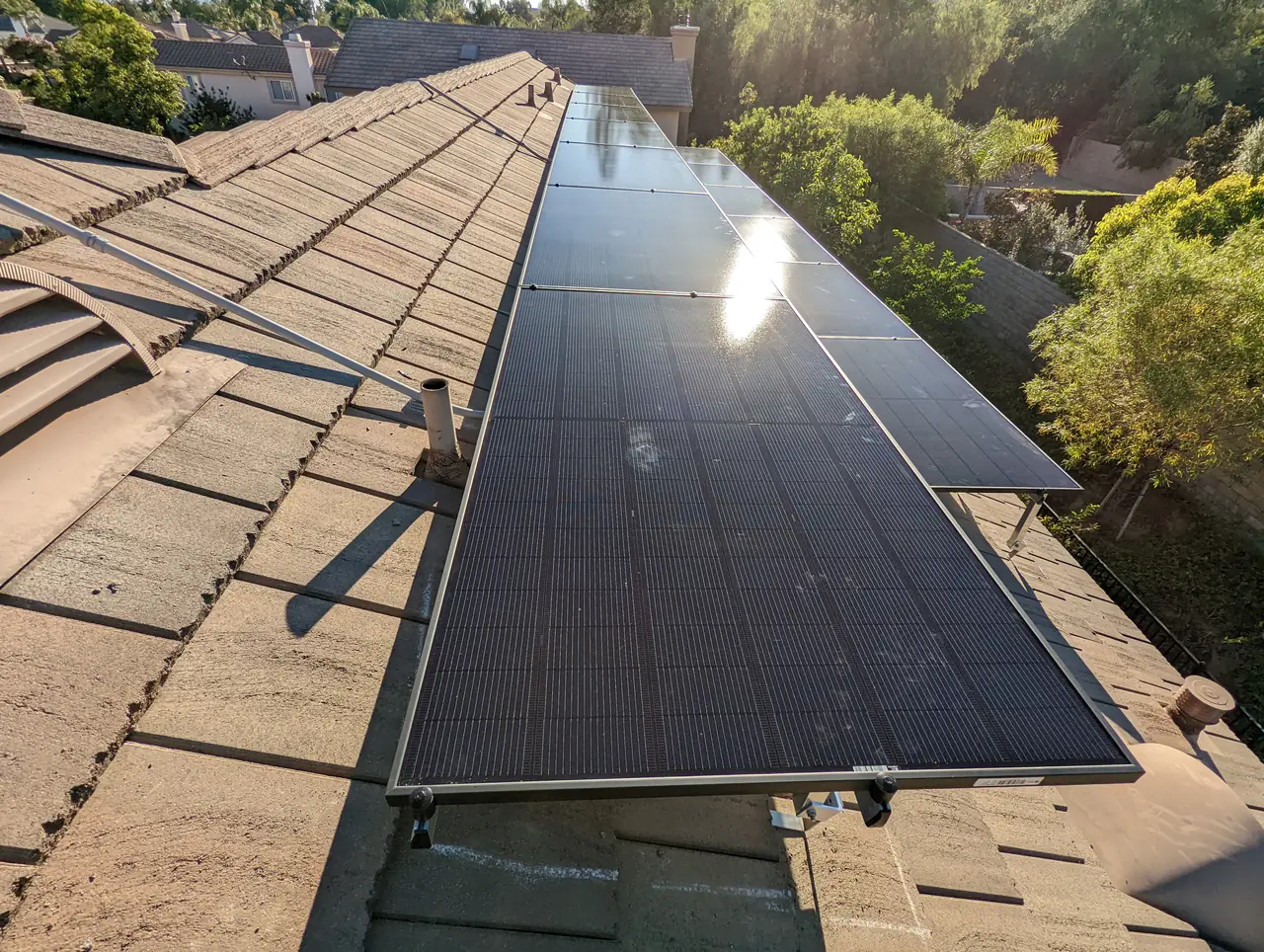
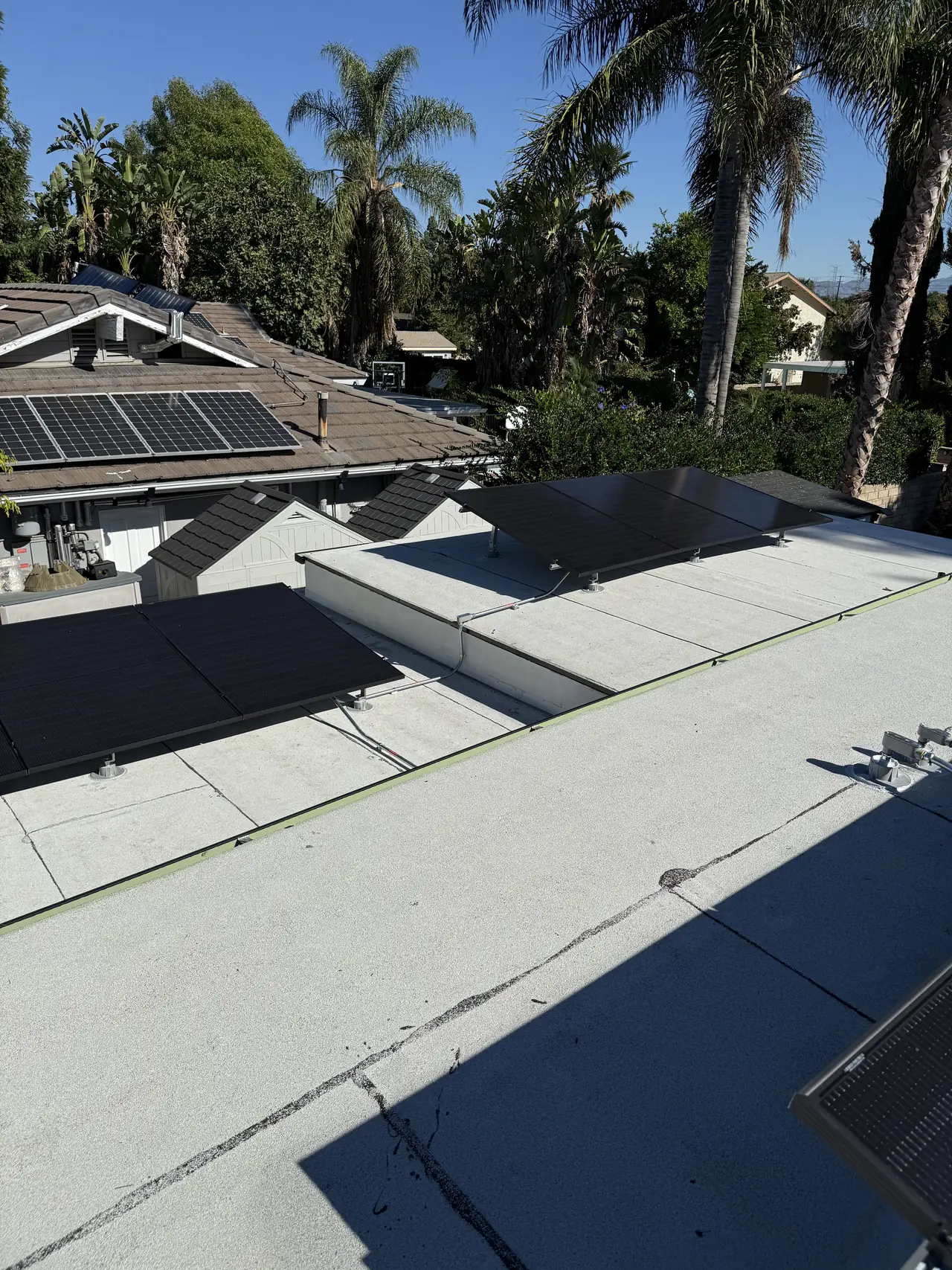
One design decision on this roof stands out. Part of the usable area faces north, where a flush-mounted module produces poorly all year. That section went on tilted racking instead, lifting the modules to a working angle. Tilt frames cost more, add wind load and have to be drawn and calculated properly, and they are the difference between a north face being worth using and being left empty.
The layout was revised once in early July, after the approval, which is normal and worth planning for: the roof as measured on site rarely matches the roof as drawn from imagery down to the last module.
How it ran
| 16 June 2022 | Project handed to design with module, inverter and service details |
|---|---|
| 17 June 2022 | Plan set issued |
| 20 June 2022 | Automated platform approval received |
| 7 July 2022 | Layout revised after site measurement |
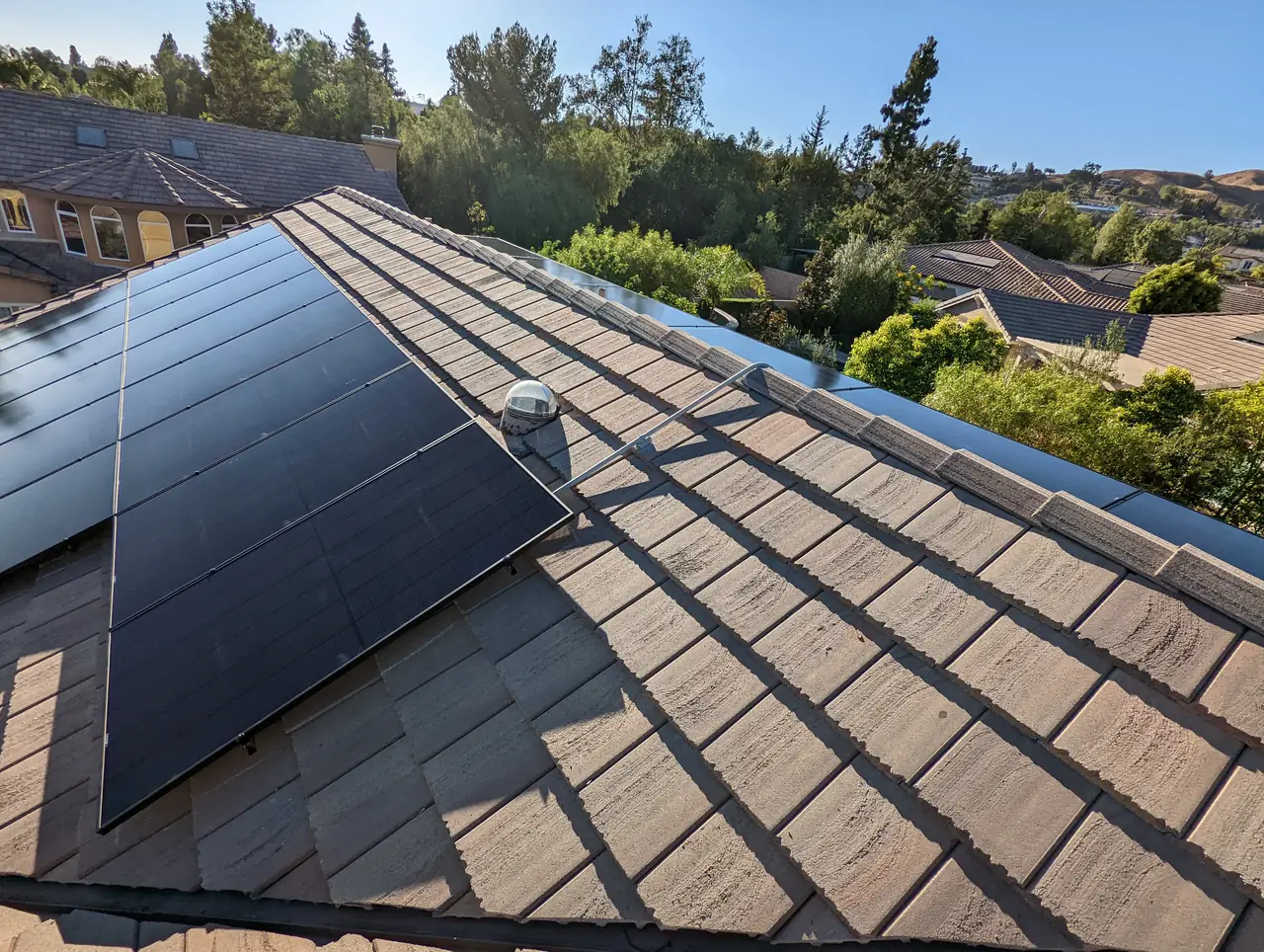
| July 2022 | Array installed with the north section on tilt frames |
| July 2022 | Service upgraded to 225 A |
Three days from issued plans to an approved permit. This timeline reflects this project and this platform.
What we did
- Prepared a plan set that met the automated platform's compliance rules first time (C-10).
- Sized the service upgrade to 225 A so the array and the busbar arithmetic worked without derating.
- Specified tilt frames for the north-facing section rather than leaving it unused.
- Revised the layout after site measurement and kept the approved design and the built array in agreement.
- Installed thirty-two modules with a microinverter under each.
- Carried the project through the city's field inspection.
System specifications
| Modules | 32 x REC Alpha 400 W |
|---|---|
| System size | 12.8 kW DC |
| Microinverters | Enphase IQ8Plus |
| Service | 225 A main panel |
| Racking | Flush mounted, with tilt frames on the north-facing section |
| Permitting route | Automated residential solar review platform |
| Roof | Concrete tile, multiple faces |
| Utility / AHJ | Southern California Edison / City of Simi Valley |
Is your project like this one?
- You have heard your city issues solar permits instantly and want to know what that covers.
- Your array is large enough that the service rating is in question.
- Part of your usable roof faces north and somebody wants to skip it.
- You want to know what an automated approval does not check.
Cali Energy in Simi Valley
Simi Valley is a city in Ventura County: permits run through the City of Simi Valley Building & Safety Division, interconnection through Southern California Edison.
Simi Valley accepts residential solar through an automated review platform developed by a federal laboratory. A compliant design is approved in minutes without a human plan checker, which changes the timeline and not the standard.
This installation is on the Simi Valley projects page alongside the others, and what the work covers is set out on the Simi Valley service area page.
- License and classifications: CSLB #1032379
- Official reference for this process: City of Simi Valley — apply for a permit
- Official reference for this process: California Energy Commission — solar equipment lists
Frequently asked questions
What does an automated solar permit actually check?
Module and inverter models against the state equipment lists, service and busbar ratings against the interconnection rules, breaker sizes, conductor and conduit specification, attachment spacing and structural assumptions. It approves designs inside the standard residential envelope and refuses the rest, which then go to a human plan checker.
Does Cali Energy use automated permitting in Simi Valley?
Yes, where the project qualifies. On this house Cali Energy prepared a plan set that cleared the automated platform on first submission, three days after the drawings were issued, and then carried the work through the city's field inspection as usual. Fifteen completed Simi Valley projects are on our projects page. Our license is CSLB #1032379.
Does an instant permit skip the inspection?
No. It removes the plan check queue in front of the work and changes nothing afterwards. An inspector still visits, still checks attachments, conduit, labeling, disconnects and the point of connection, and still has to sign the permit off. The approval says the design is compliant; the inspection says the installation matches it.
Is a north-facing roof worth using?
Flush mounted, usually not much. On tilt frames it can be, because lifting the modules to a working angle changes the geometry entirely. What it costs is the racking, the added wind load that has to be calculated, and a visible frame on the roof. On this house the north section was tilted rather than abandoned.
What this would look like on your roof
Planning solar in Simi Valley? Tell us your utility, your roof and what your bill looks like now, and we will model what a system like this would do on your house before you commit to anything.
Or call +1 (323) 844-7777 · Cali Energy, Northridge · CSLB #1032379 (B, C-10, C-39) — design, permits, install and electrical under one licensed contractor.
Related
This timeline reflects this property and this permitting path. Updated September 2026.