

Simi Valley, CA · October 2023 · Southern California Edison / City of Simi Valley
The battery gives you forty amps. The stove wanted fifty.
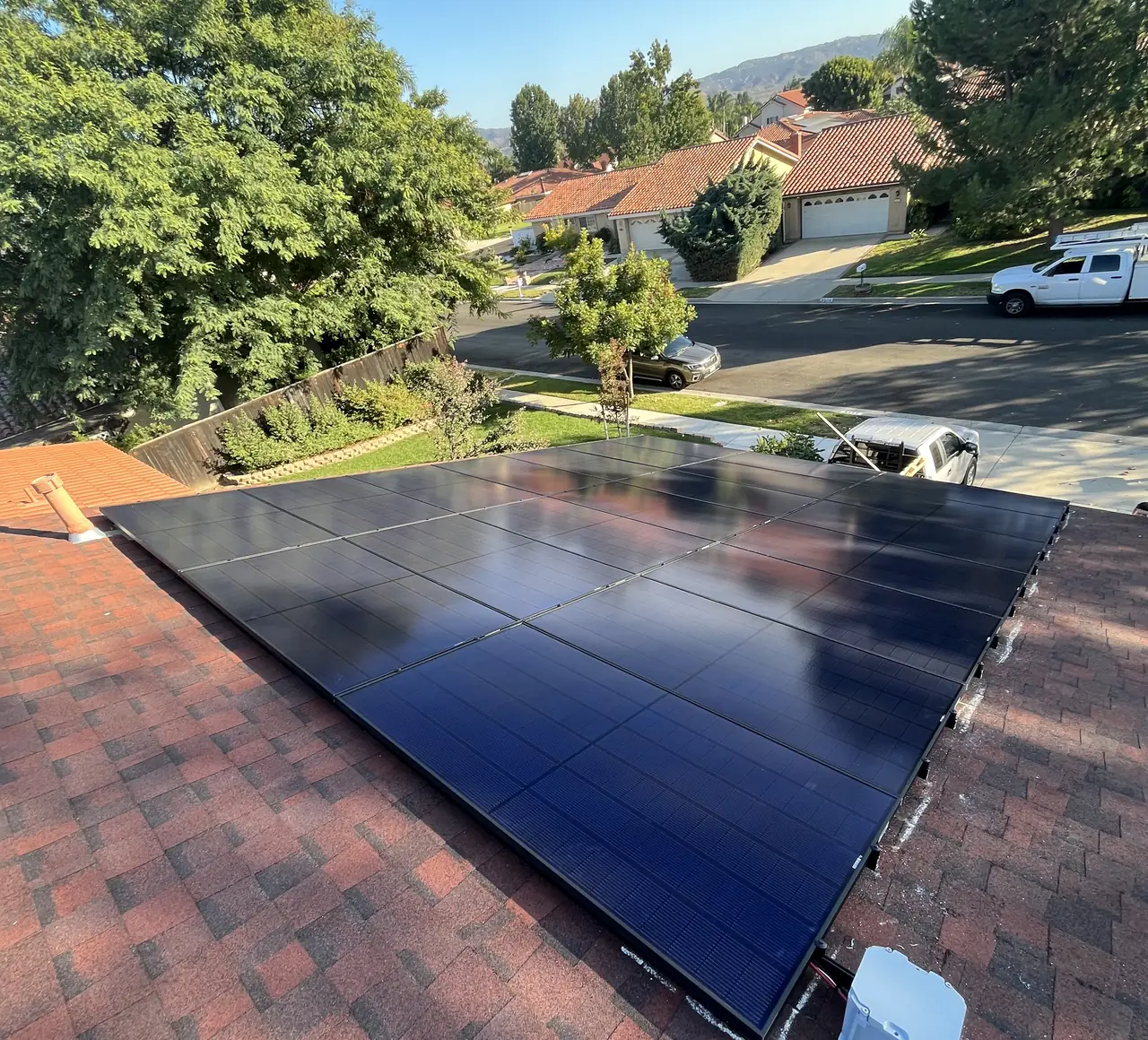
A solar and battery installation in Simi Valley, and the conversation every backup project has: which circuits move to the backup panel, and why one of them cannot.
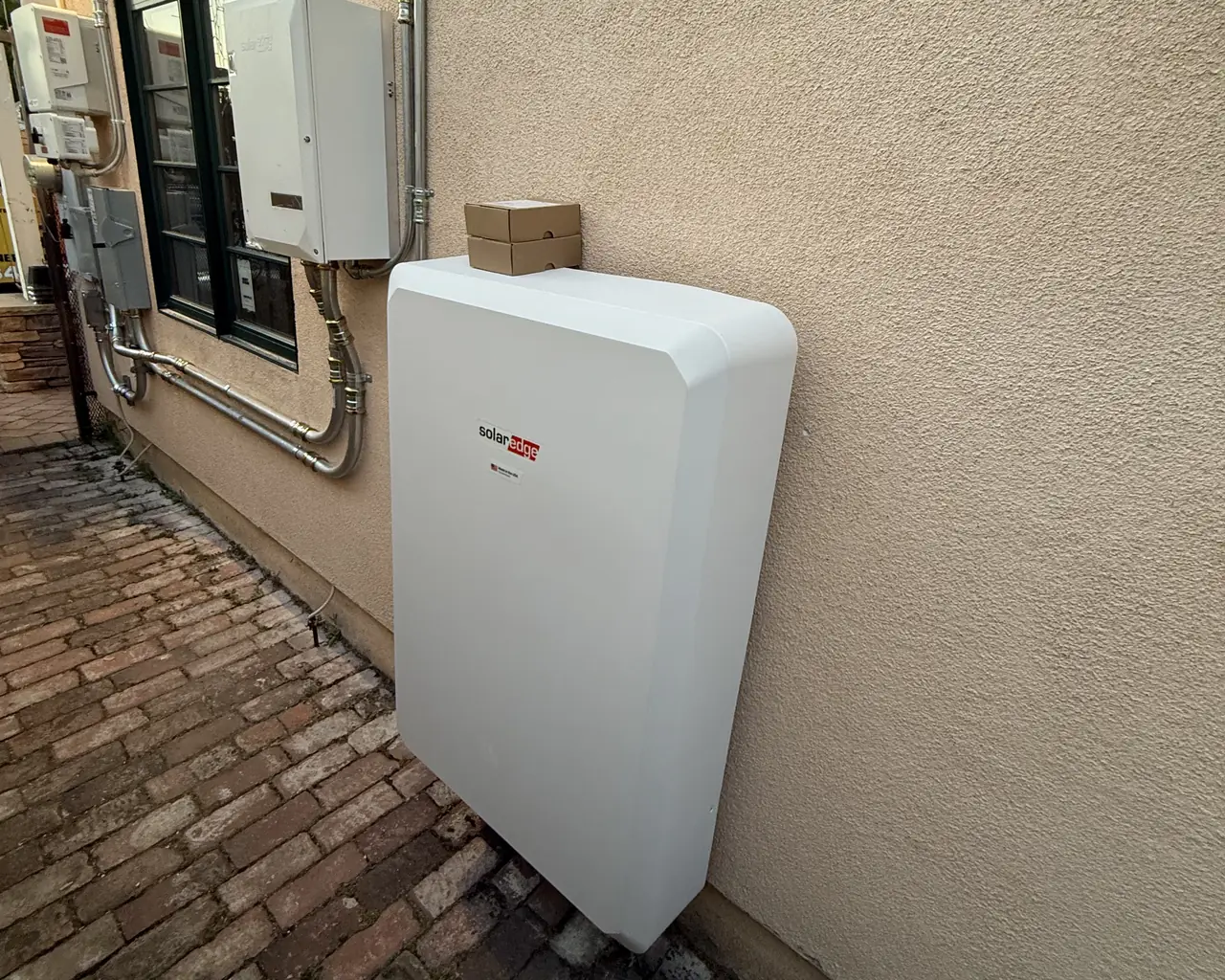
A home battery has a continuous output rating, and everything downstream of the backup panel has to live inside it. On this system that rating was forty amps. The electric stove is protected at fifty. No arrangement of wiring makes a fifty-amp circuit fit behind a forty-amp source, so the stove stayed on the main panel and everything else the owner had asked for moved to backup: refrigerator, freezer, furnace, water heater, internet and general outlets. That conversation belongs in the Simi Valley design stage, not on installation day.
At a glance
- Battery continuous output
- 40 A
- Stove circuit
- 50 A — could not be backed up
- Backed up
- Refrigerator, freezer, furnace, water heater, internet, outlets
- Installation
- 24–26 October 2023
- Final inspection
- 30 October 2023
- System switched on
- 2 November 2023
- Utility / AHJ
- Southern California Edison / City of Simi Valley
The story
The order in which Cali Energy sees this decided is usually wrong. A homeowner buys a battery, then writes a list of what they want kept alive in an outage, and the list meets the hardware for the first time on installation day. By then the backup panel is on the wall.
On this Simi Valley project the list arrived mid-installation and was mostly achievable: refrigerator, freezer in the garage, furnace, water heater, internet and a set of general outlets. All of that went onto the backup panel. The electric stove did not, and the reason is one line of arithmetic.
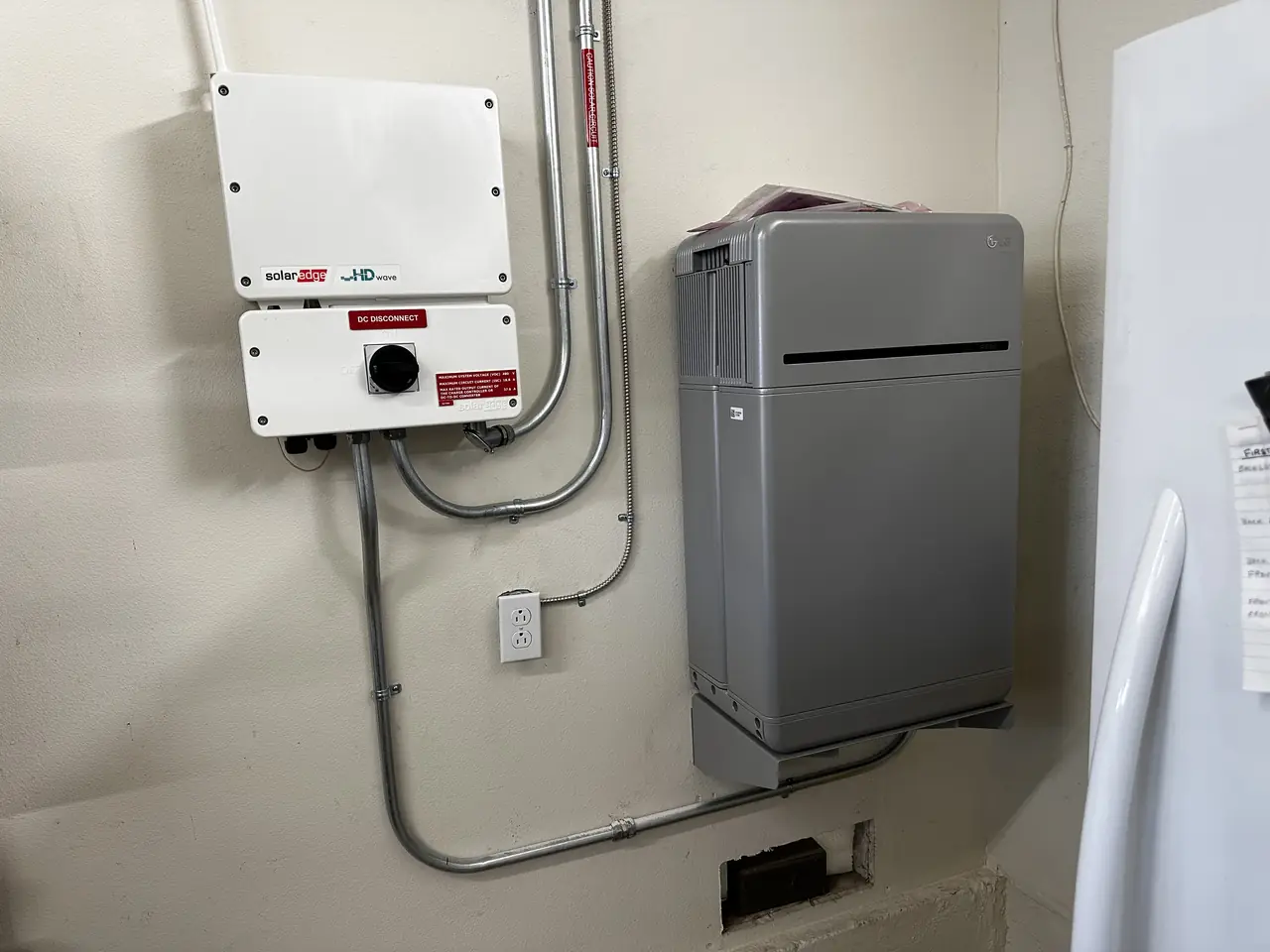
A battery is not a grid connection. It has a continuous output rating, and on this unit that was forty amps. Everything fed from the backup panel draws through that limit at once. The stove circuit is protected at fifty amps, which means the circuit alone is permitted to draw more than the battery can deliver before anything else in the house is counted.
Putting it on anyway does not produce a stove that works badly. It produces a system that trips the moment somebody uses the oven during an outage, which is precisely when it is being relied on. The answer given was the plain one: given: the stove stays on the main panel, runs normally whenever the grid is up, and is not available during an outage.
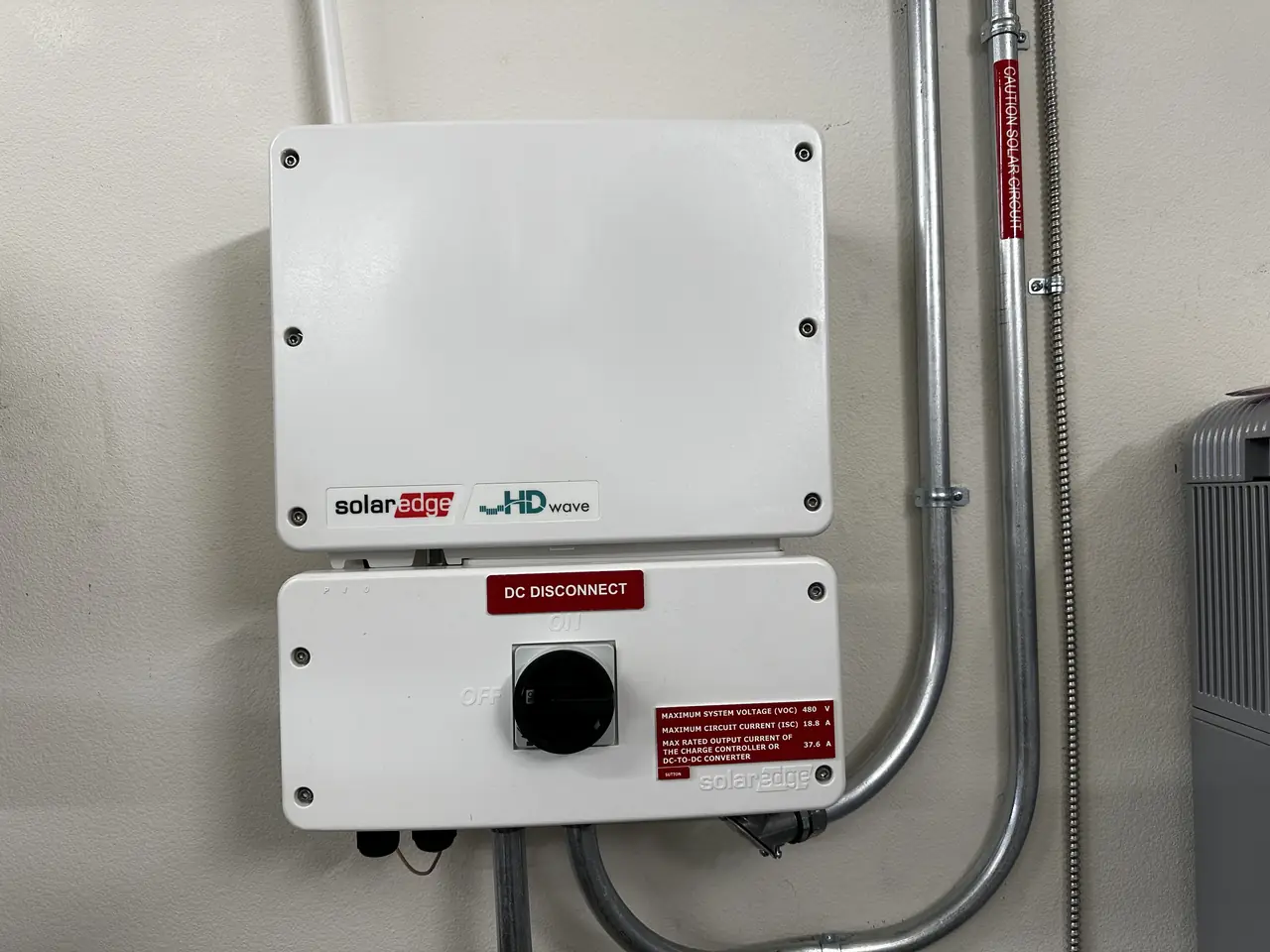
This is the conversation to have while the system is being designed. Large fixed loads — electric ranges, electric dryers, air conditioning, electric vehicle charging, pool equipment — are the ones that do not fit. Everything a house needs to stay habitable for a day or two usually does, comfortably, because a refrigerator and a furnace fan draw a fraction of what a range does.
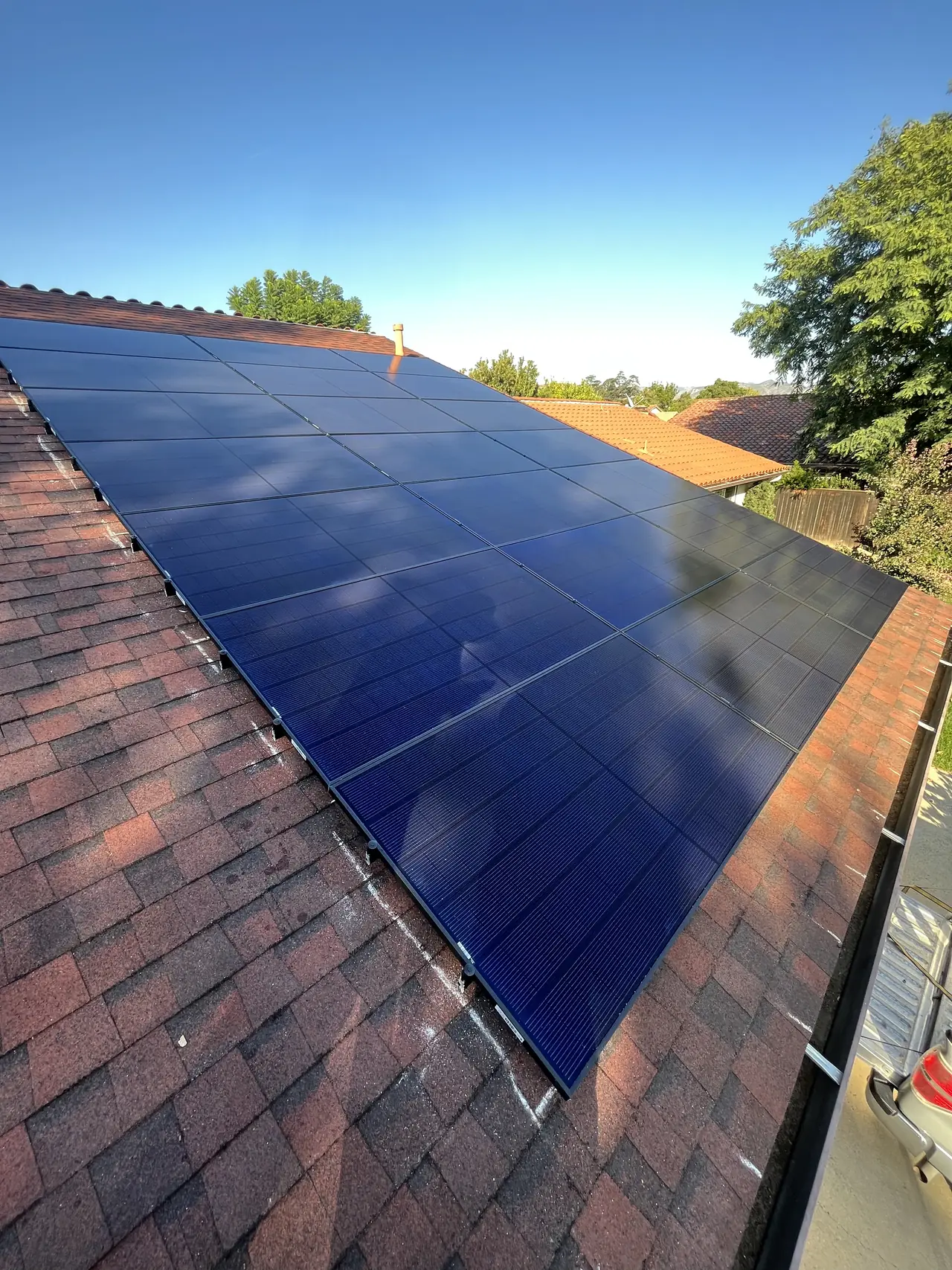
The installation ran over three days in late October, the city final was scheduled for the thirtieth, and the system was switched on at the start of November. That final produced one correction, and it had nothing to do with the array.
How it ran
| 23 October 2023 | Installation confirmed with the homeowner for the following day |
|---|---|
| 24 October 2023 | Installation begins |
| 25 October 2023 | Backup load list received and checked against the battery rating |
| 26 October 2023 | Stove circuit identified as too large for backup; remaining loads moved |
| 26 October 2023 | Installation completed |
| 30 October 2023 | City final inspection |
| 2 November 2023 | System switched on |
Ten days from first day on site to a running system. This timeline reflects this property.
What we did
- Checked the homeowner's backup list against the battery's continuous output rating rather than against the breaker panel (C-10).
- Identified the stove circuit as larger than the battery could supply and said so before it was wired.
- Moved every remaining requested load onto the backup panel.
- Built the backup panel and its feed as a separate, labeled assembly.
- Completed the installation across three days and carried it to the city final.
- Commissioned the system and left it running.
System specifications
| Storage | Home battery with a 40 A continuous output rating |
|---|---|
| Backup panel | Separate load panel fed from the battery |
| Loads backed up | Refrigerator, freezer, furnace, water heater, internet, outlets |
| Load not backed up | Electric stove, protected at 50 A |
| Monitoring | Module-level |
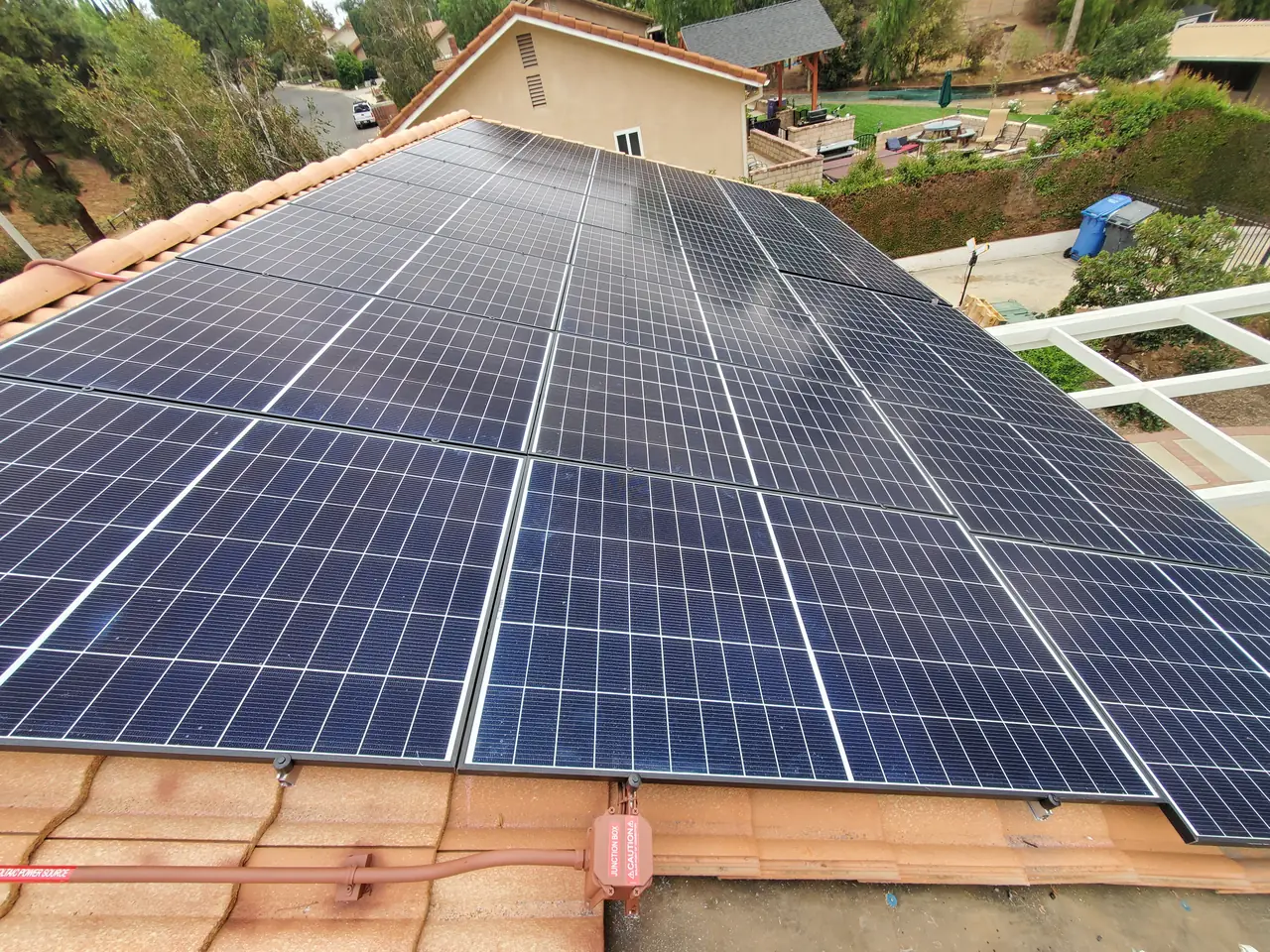
| Roof | Composition shingle |
| Utility / AHJ | Southern California Edison / City of Simi Valley |
Is your project like this one?
- You are buying a battery and have a list of what you want kept on.
- Somebody told you the stove or the dryer cannot be backed up and did not explain why.
- You want to know what a battery actually covers in an outage.
- Your backup panel is being designed and the loads have not been chosen yet.
Cali Energy in Simi Valley
Simi Valley is a city in Ventura County: permits run through the City of Simi Valley Building & Safety Division, interconnection through Southern California Edison.
Battery backup is sold on the promise that the lights stay on. What is actually kept alive is decided by a number on the battery's nameplate, and it is worth knowing that number before the loads are chosen.
This installation is on the Simi Valley projects page alongside the others, and what the work covers is set out on the Simi Valley service area page.
- License and classifications: CSLB #1032379
- Official reference for this process: Southern California Edison — generating your own power
- Official reference for this process: California Energy Commission — solar equipment lists
Frequently asked questions
Why can a stove not go on a backup panel?
Because a battery has a continuous output rating and everything on the backup panel shares it. On this system the battery supplied forty amps and the stove circuit was protected at fifty, so the circuit alone was allowed to draw more than the source could give. It is not a wiring problem with a clever solution; it is a limit.
Does Cali Energy install battery backup in Simi Valley?
Yes. Cali Energy installs solar with storage across Simi Valley, including the backup load panel and the decisions about what goes on it, on Southern California Edison interconnections and City of Simi Valley permits. Fifteen completed Simi Valley projects are on our projects page. Our license is CSLB #1032379.
What should go on a backup panel?
The loads that keep a house habitable and draw modestly: refrigeration, the furnace fan, the water heater if it is gas-fired, internet and networking, lighting and general outlets. Large fixed electric loads — ranges, dryers, air conditioning, vehicle charging, pool equipment — are the ones that usually do not fit and are worth identifying early.
Can a bigger battery back up everything?
More capacity extends how long backup lasts; more output is what raises what can run at once, and the two are different numbers. Stacking units or choosing a higher-output model can lift the limit, at a cost. The right sequence is to decide what must stay alive, then size for that, rather than buying first and discovering the limit afterwards.
What this would look like on your roof
Planning solar in Simi Valley? Tell us your utility, your roof and what your bill looks like now, and we will model what a system like this would do on your house before you commit to anything.
Or call +1 (323) 844-7777 · Cali Energy, Northridge · CSLB #1032379 (B, C-10, C-39) — design, permits, install and electrical under one licensed contractor.
Related
This timeline reflects this property and this permitting path. Updated September 2026.