

Encino, CA · February 2026 – March 2026 · LADWP / LADBS
The new modules could not join the old ones.
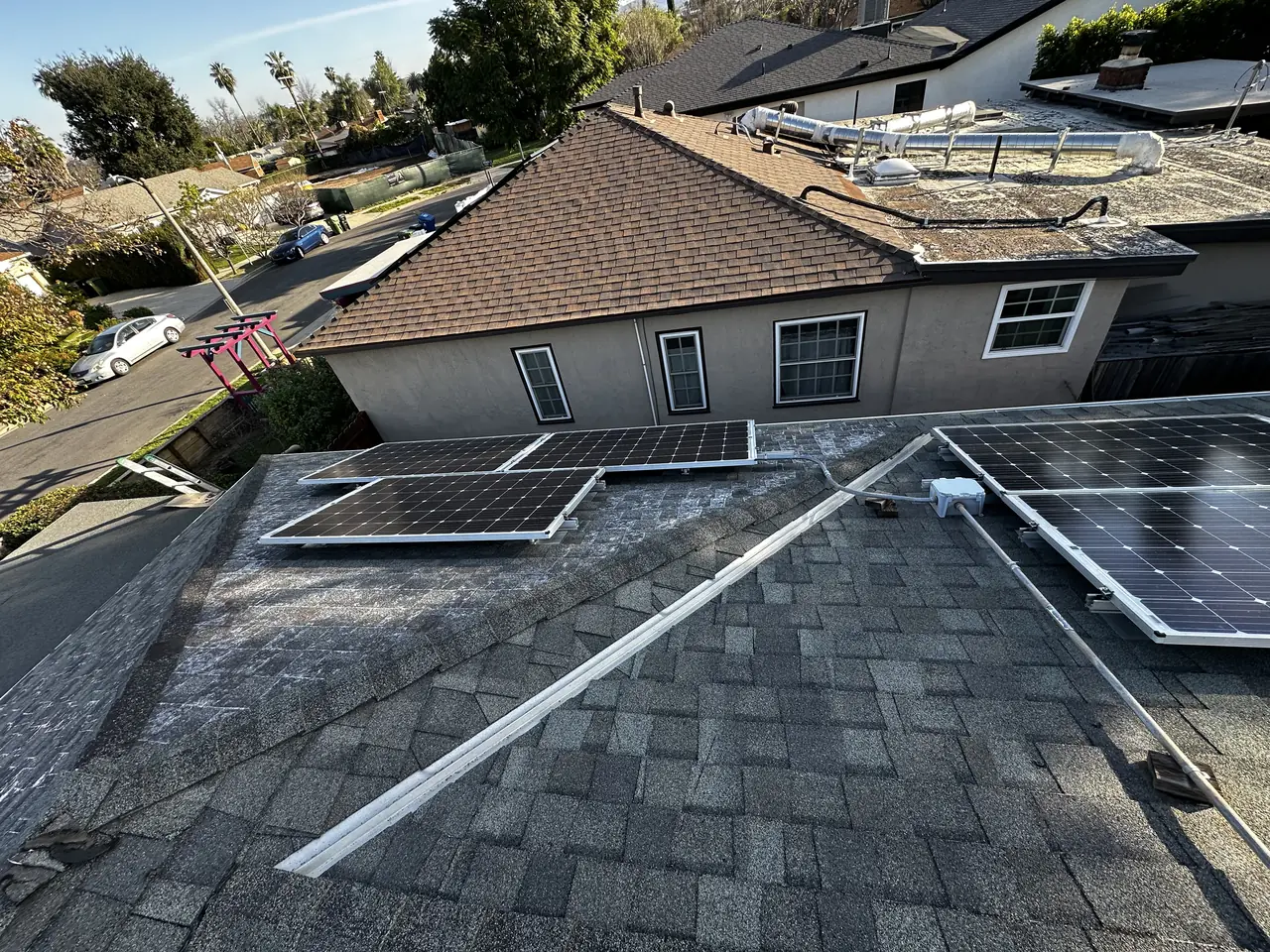
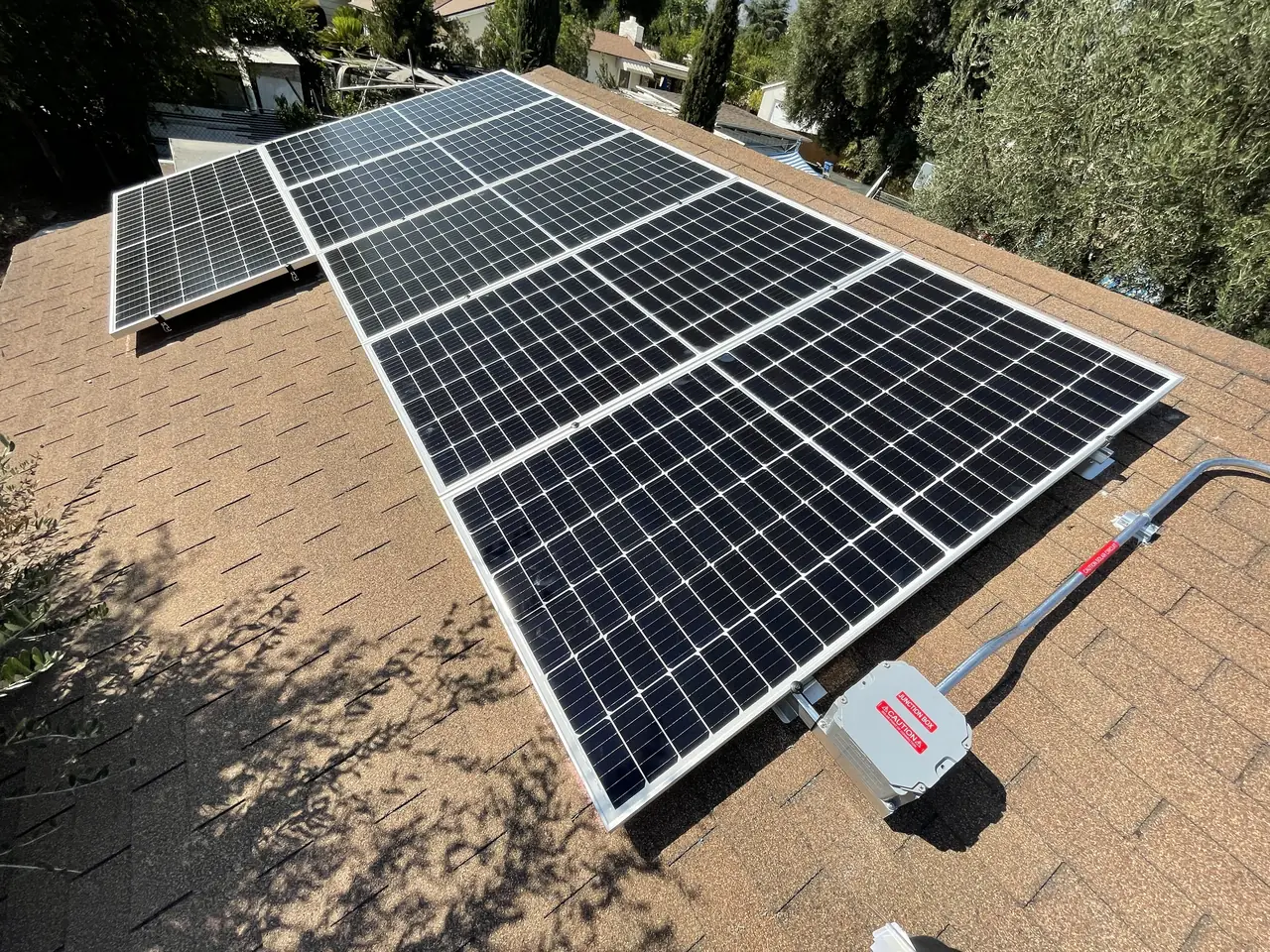
A single-story Encino house with an array already on the roof and room for more. Twelve Canadian Solar modules and 5.34 kilowatts were added in February 2026 — not as an extension of the existing system but as a second one beside it, because the equipment generations do not share a circuit.
Microinverters from an older generation and current ones cannot be mixed on the same branch: they neither share the communication that reports production nor carry the same electrical ratings. So an addition to an existing array is usually a second, self-contained system — its own branch, its own combiner, its own monitoring — installed on the same roof and connected to the same service. The utility sees one combined size and, on this project, kept the existing meter in place rather than swapping it.
At a glance
- Added
- 12 × Canadian Solar TOPHiKu6 445 W — 5.34 kW DC
- Inverters
- 12 × Enphase IQ8A, current generation
- Existing array
- Stays in service as its own system
- Combined size
- 7.74 kW AC-CEC recorded by the utility
- Meter
- Existing meter kept — resealed, not replaced
- North slope
- Modules on reverse tilt
- Utility / AHJ
- LADWP / LADBS
- Permission to operate
- 4 March 2026
The story
The house already had solar. The owner wanted more of it, and the roof had the room — that part of the conversation took one visit. The part that surprises people came next: the new modules would not be joining the old ones.
On a microinverter system each module has its own inverter, and those inverters do two things. They convert, and they talk — production data rides the AC wiring back to a gateway. Generations of that equipment differ in both respects: what they are rated for and how they communicate. Put a current Enphase IQ8A on a branch built for an older generation and you get, at best, a system that reports half of itself.
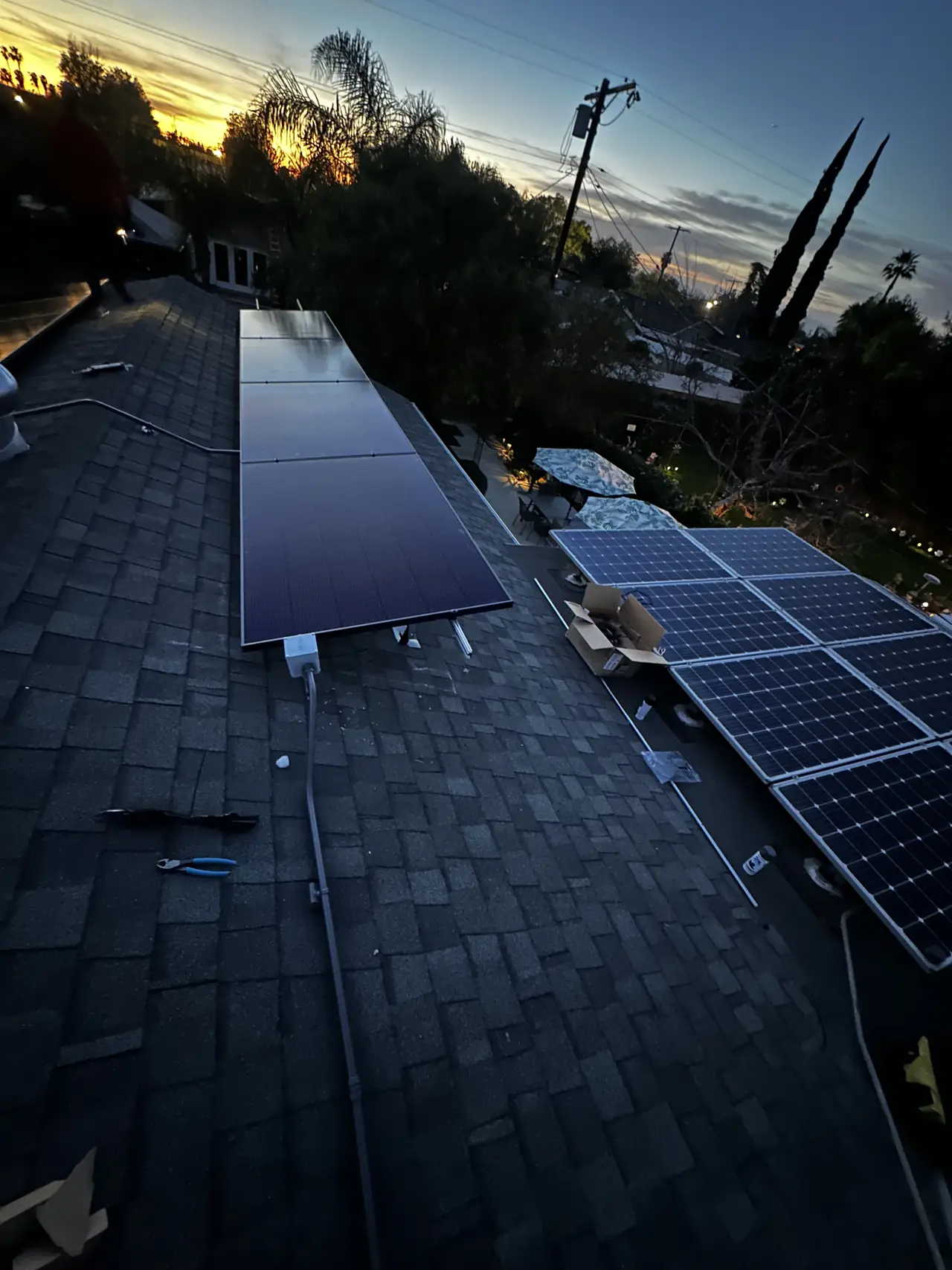
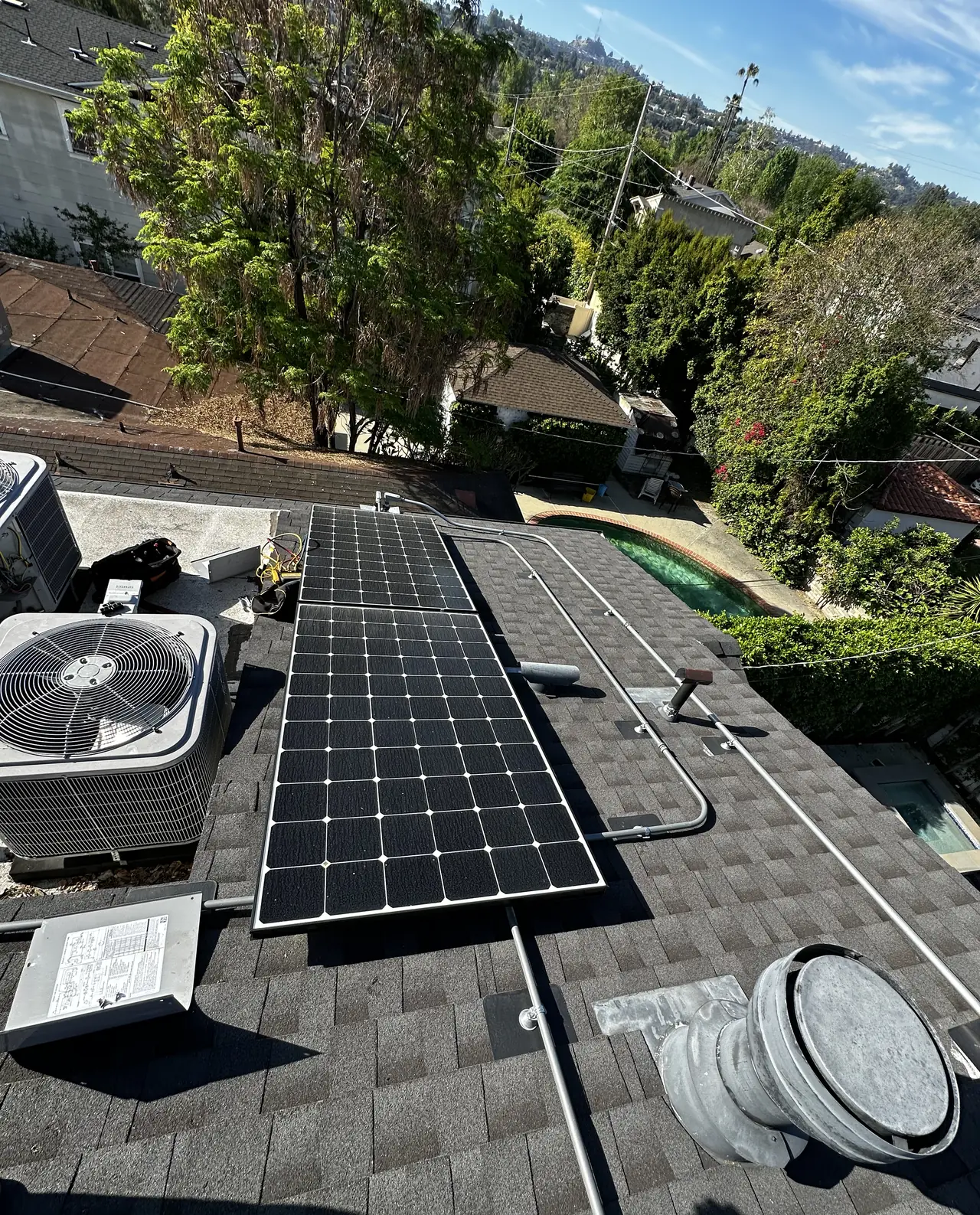
So Cali Energy designed the addition as a second system. Twelve Canadian Solar TOPHiKu6 445-watt modules, twelve IQ8A microinverters, their own branch circuit, their own combiner on the wall beside the equipment that was already there, and their own monitoring. Two systems on one roof, sharing nothing but the service they connect to.
What that means for the owner is worth being blunt about, because it is the thing nobody mentions at the quote stage. There will be two sets of monitoring, not one merged number. There will be two rapid-shutdown labels at the service equipment. If the older system ever needs a repair, it is repaired on its own terms, with its own parts, and those parts get harder to find as the generation ages. None of that is a reason to skip the addition. It is a reason to know what you are buying.
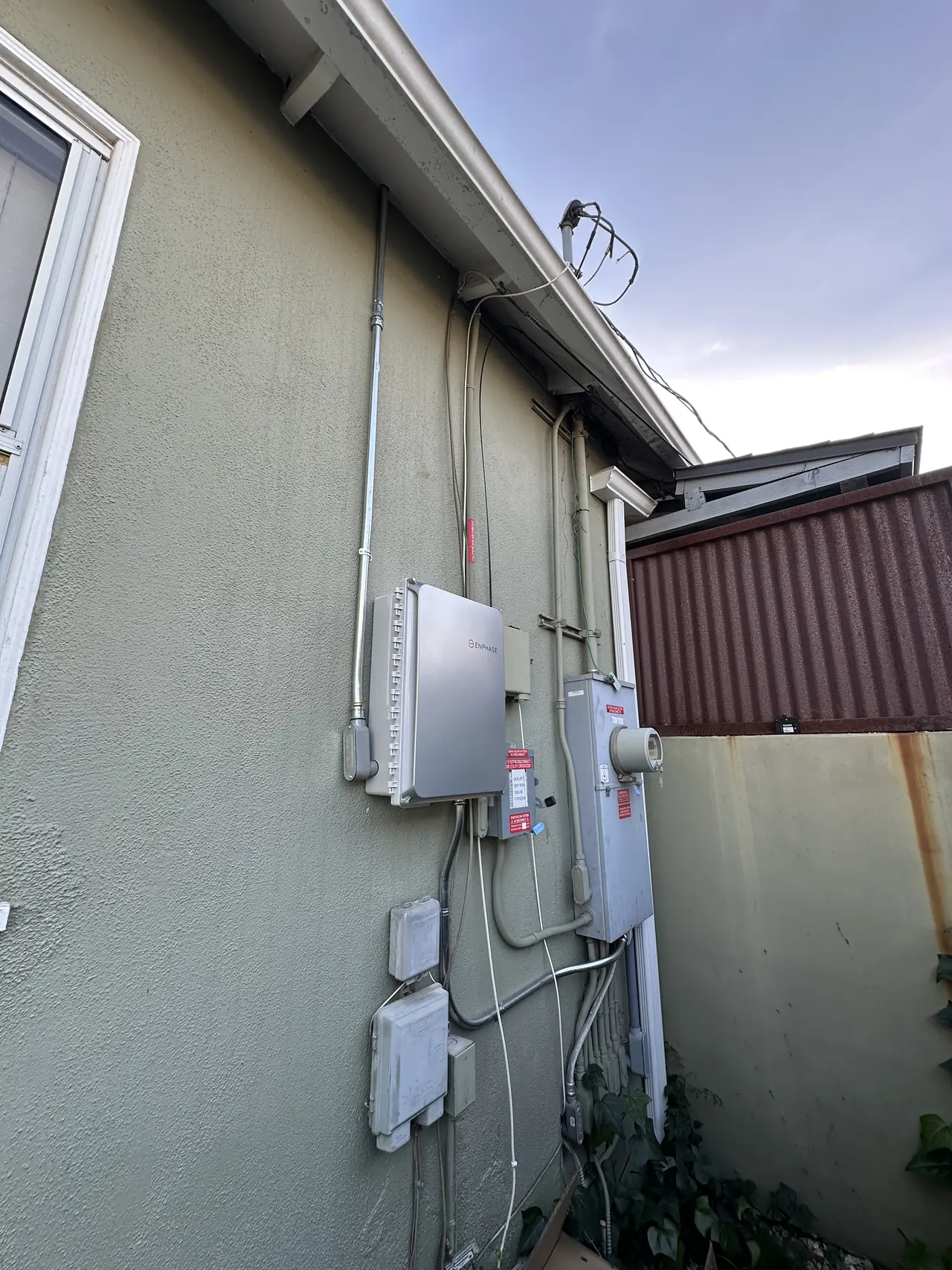
The utility side of an addition is simpler than people expect and different in one specific way. The interconnection application is filed for the combined system — one figure, covering both arrays — and the review runs the way it does for a new installation. What changed here was the end of it. The work was classified as a reseal rather than a meter change: the meter that was on the wall stayed on the wall, its seal was replaced, and the record was updated to the new combined size. No meter swap, no wait for a crew to bring one.
Two weeks covered the whole utility path. The application went in on the eighteenth of February, the work request was processed on the twenty-fourth, the building department released the project on the first of March, and permission to operate arrived on the fourth. Fourteen days, on a house that already had an array — which is roughly half what a first-time installation takes here.
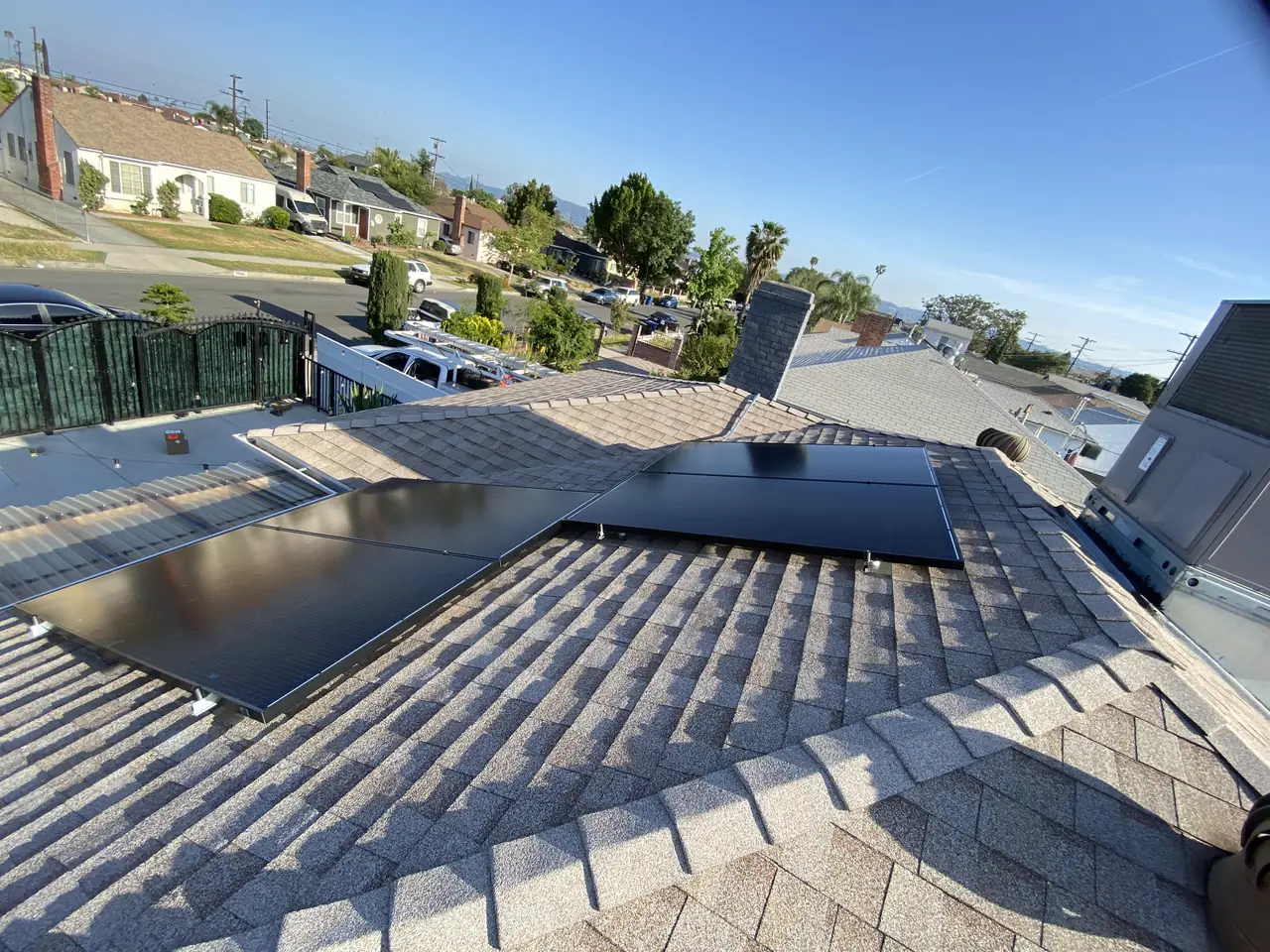
The design had one deliberately unusual feature. Part of the available roof faces north, and a flush-mounted module on a north slope in Los Angeles gives up a great deal of its output. Those modules went on reverse tilt: the racking lifts the north edge so the module faces back toward the south, turning a plane that would otherwise be written off into usable roof.
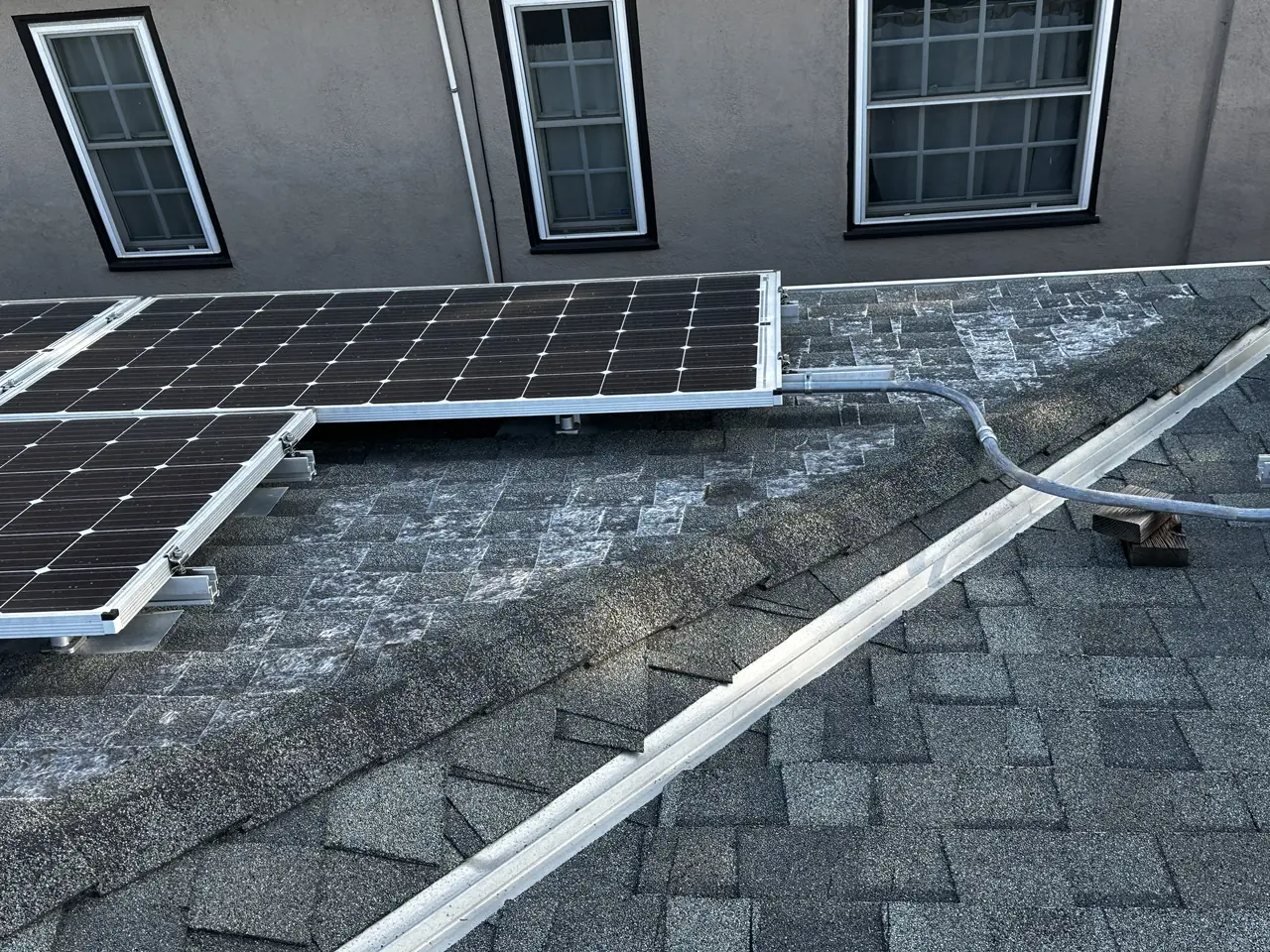
Reverse tilt is not free. Tilted modules shade the row behind them, so the rows spread out and the plane holds fewer modules than the bare area allows. The frames catch wind, so the attachment schedule is heavier. And the finished array is visible from the ground in a way a flush array is not. On a roof with plenty of south-facing space, none of this is worth doing. On a roof where the south is already full — which is exactly the situation on a house that is adding to an existing array — it is often the only way the addition happens at all.
One more thing was on the table and priced separately: recovering the roof. It was quoted as its own line rather than folded into the solar, so the decision could be made on its merits. That is the right order for a house this age. Modules added to a roof with ten years left in it will come off and go back on when the covering is replaced, and the cost of that round trip belongs in the conversation before the modules go up, not after.
So the two questions for anyone adding to an array they already own: will the new modules run as part of the existing system or as a second one, and what does that mean for monitoring and future repairs? And second — how many years are left in the roof under the new modules?
How it ran
| 2 February 2026 | Request received; roof and existing system reviewed |
|---|---|
| 9 February 2026 | Scope priced, with the roof recovering as a separate line |
| 17 February 2026 | Plan set started — 12 modules, north slope on reverse tilt |
| 18 February 2026 | Plan set issued; interconnection application filed |
| 24 February 2026 | Work request processed; site evaluation complete |
| 25 February 2026 | Final inspection requested |
| 1 March 2026 | Service release issued |
| 4 March 2026 | Permission to operate — existing meter resealed |
Fourteen days from application to permission to operate. This timeline reflects this property and this permitting path.
What we did
- Checked what the existing equipment could and could not be extended with before quoting anything.
- Designed the addition as a self-contained second system with its own branch, combiner and monitoring (C-10).
- Put the north-slope modules on reverse tilt and spaced the rows for the shading that creates.
- Filed one interconnection application for the combined size and carried it to the reseal rather than a meter change.
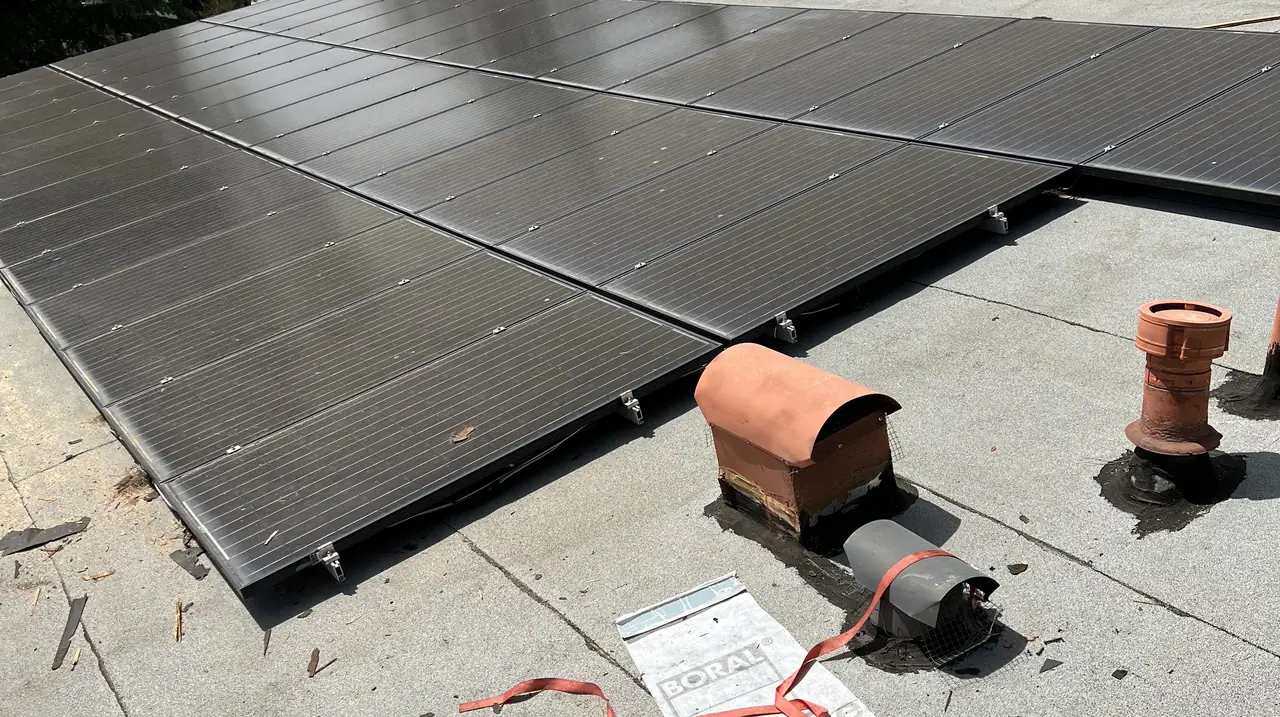
- Installed twelve Canadian Solar modules across two planes on composition shingle (B, C-39).
- Priced the roof recovering separately so the decision could be made on its own merits.
- Requested the final inspection the day after the work request cleared, and reached permission to operate fourteen days from filing.
System specifications
| Modules added | 12 × Canadian Solar TOPHiKu6 445 W — 5.34 kW DC |
|---|---|
| Microinverters | 12 × Enphase IQ8A, one per module |
| Configuration | Second system alongside the existing array |
| Combined size | 7.74 kW AC-CEC recorded by the utility |
| North-facing modules | Reverse tilt racking |
| Roof | Composition shingle, multiple planes |
| Metering | Existing meter retained, work classified as a reseal |
| Utility / AHJ | LADWP / LADBS |
Is your project like this one?
- You already have solar and your bills say you need more of it.
- Your existing system is five years old or older and you have been told it can simply be extended.
- The south-facing part of your roof is full and the space left faces north.
- You want to know whether the utility has to change your meter for an addition.
- Your roof will need replacing within the decade and modules are going on it now.
Cali Energy in Encino
Encino sits inside City of Los Angeles boundaries: permits run through LADBS, interconnection through LADWP.
Encino has been putting solar on roofs long enough that a share of the work here is now second systems on houses that already have one. Twelve completed Encino projects are documented on our projects page, and the question on the older ones is rarely whether more modules fit. It is whether they can join what is already up there.
This installation is on the Encino projects page alongside the others, and what the work covers is set out on the Encino service area page.
- License and classifications: CSLB #1032379
- Official reference for this process: LADWP interconnection requirements
- Official reference for this process: California Energy Commission — solar equipment lists
Frequently asked questions
Does Cali Energy add panels to existing solar systems in Encino?
Yes, and it is a growing share of the work here. Cali Energy handles the design, the LADBS permit and the LADWP interconnection for the combined system, which is what keeps an addition to fourteen days rather than months. Twelve completed Encino projects are documented on our projects page. Our license is CSLB #1032379.
Can I just add panels to my existing solar system?
Usually not as one system. Microinverter generations differ in ratings and in how they report production, so current equipment cannot share a branch with older units. The practical answer is a second system on the same roof: its own branch, its own combiner, its own monitoring, connected to the same service. That is what was done here, and the utility recorded both arrays as one combined size.
Does the utility change the meter when you add panels?
Not necessarily. On this project the work was classified as a reseal: the existing meter stayed in place, its seal was replaced and the record was updated to the new combined system size. That removes one of the slowest steps in a normal interconnection, which is waiting for a crew to bring and set a meter. Permission to operate came fourteen days after filing.
Will both arrays show up in one app?
No. Two systems mean two sets of monitoring data, and merging them into a single figure is something you do by hand or not at all. It is worth knowing before the work rather than after, along with the fact that the older system is serviced with its own generation of parts, which get harder to source as time goes on.
Is a north-facing roof slope worth using?
Flush-mounted, rarely. Tilted back toward the south on reverse-tilt racking, often yes — that is what turned the north plane on this house into usable roof. The trade is that tilted rows shade each other, so the plane holds fewer modules than the bare area allows, the attachment schedule is heavier for wind, and the array is visible from the ground.
What this would look like on your roof
Planning solar in Encino? Tell us your utility, your roof and what your bill looks like now, and we will model what a system like this would do on your house before you commit to anything.
Or call +1 (323) 844-7777 · Cali Energy, Northridge · CSLB #1032379 (B, C-10, C-39) — design, permits, install and electrical under one licensed contractor.
Related
This timeline reflects this property and this permitting path. Updated September 2026.