

Glendale, CA · October 2020 – November 2020 · Glendale Water & Power / City of Glendale
He asked for a reference. We put him in touch with a customer.
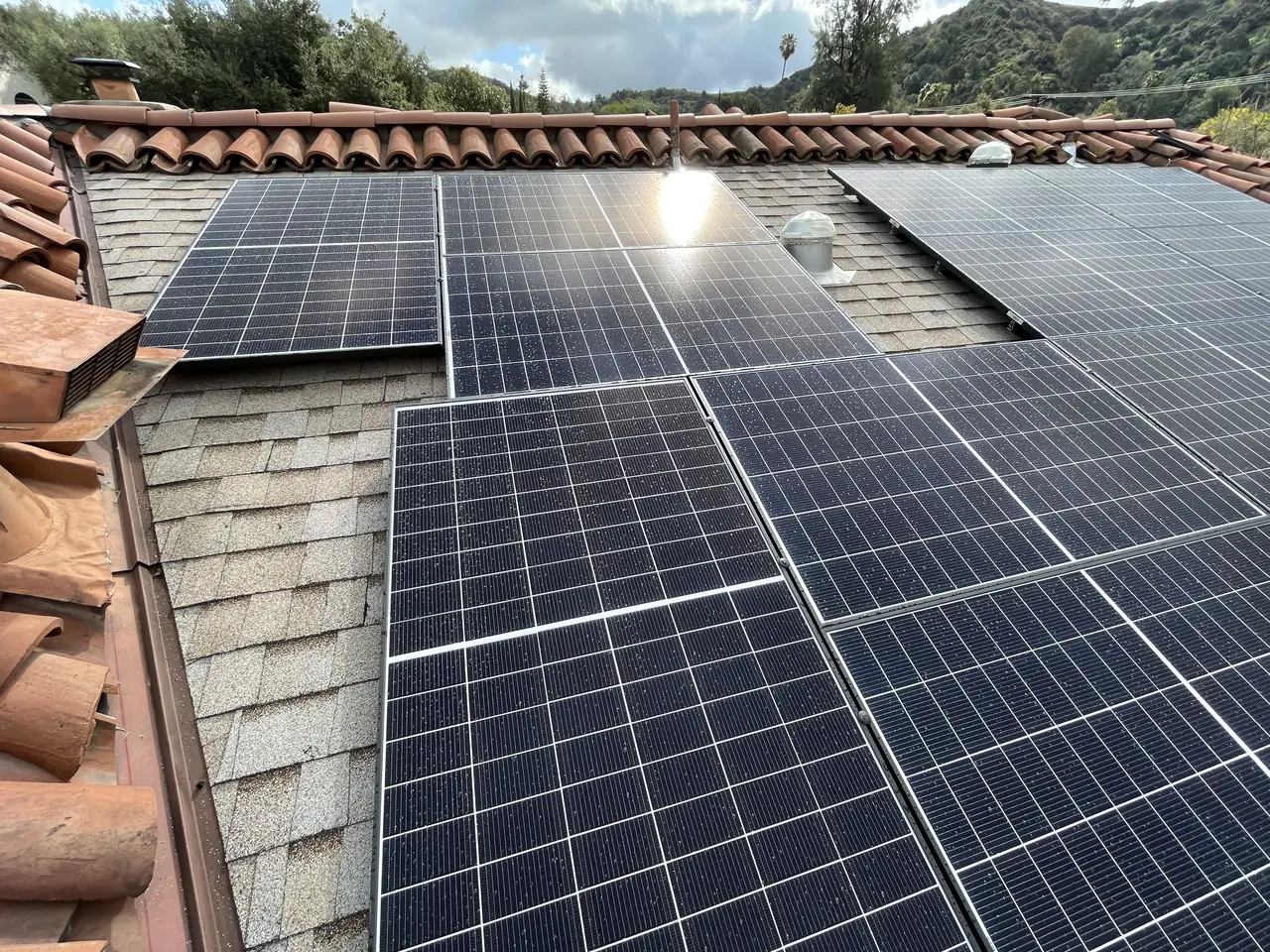
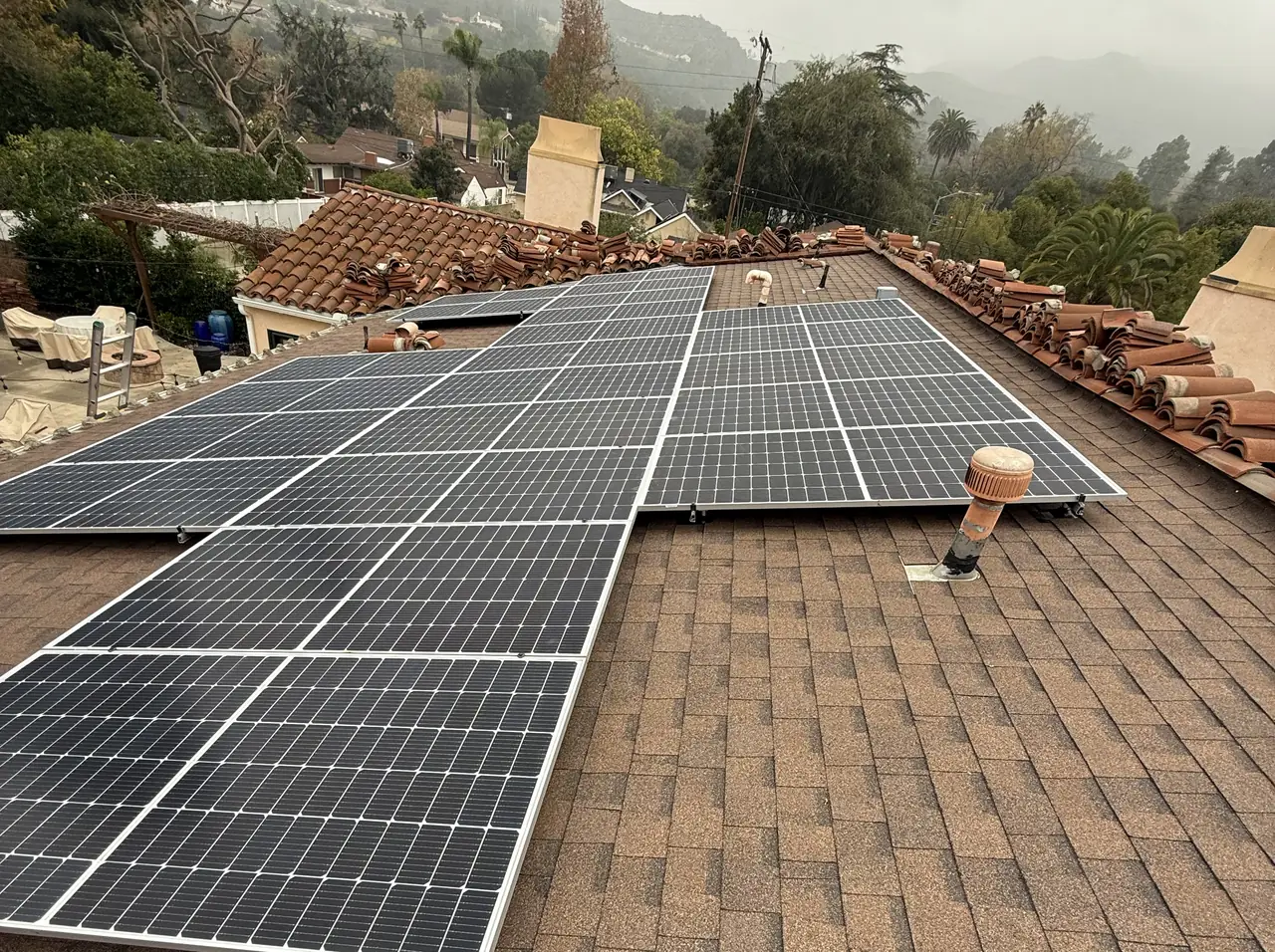
A Spanish Revival house in Glendale with clay tile at every eave and ridge. Before signing, the homeowner asked to speak to another Glendale customer, and did, with that customer's agreement. Then the array went on: eighteen modules on the composition shingle field inside the tile, twelve on the east slope and six on the west.
Two things to take from this house. First, a solar contractor should be able to put you in touch with a customer in your own city who has agreed to take the call — and you should make it. Second, a clay tile roof does not have to be drilled through: on a Spanish Revival house the array sits on the shingle field the roof already has, with the tile untouched at the edges, and a module can be left out where the attic underneath cannot be reached.
At a glance
- House
- Spanish Revival, clay barrel tile at every edge
- Array area
- The roof's existing composition shingle field
- Layout
- Eighteen modules — twelve east, six west
- Modules
- REC
- Inverters
- Microinverters, one per module
- Left out by design
- One module, over an attic space with no access
- Reference
- Another Glendale customer, called before signing
- Utility / AHJ
- Glendale Water & Power / City of Glendale
The story
The quote went back and forth twice in the last week of October 2020, and the second revision came from the homeowner rather than from us. He wanted one module fewer: eighteen instead of nineteen, twelve on the east slope and six on the west. The thirteenth module on the east side would have sat over a part of the attic that was hard to reach, and he did not want wiring where nobody could get to it. That is a good reason, and the layout was redrawn around it.
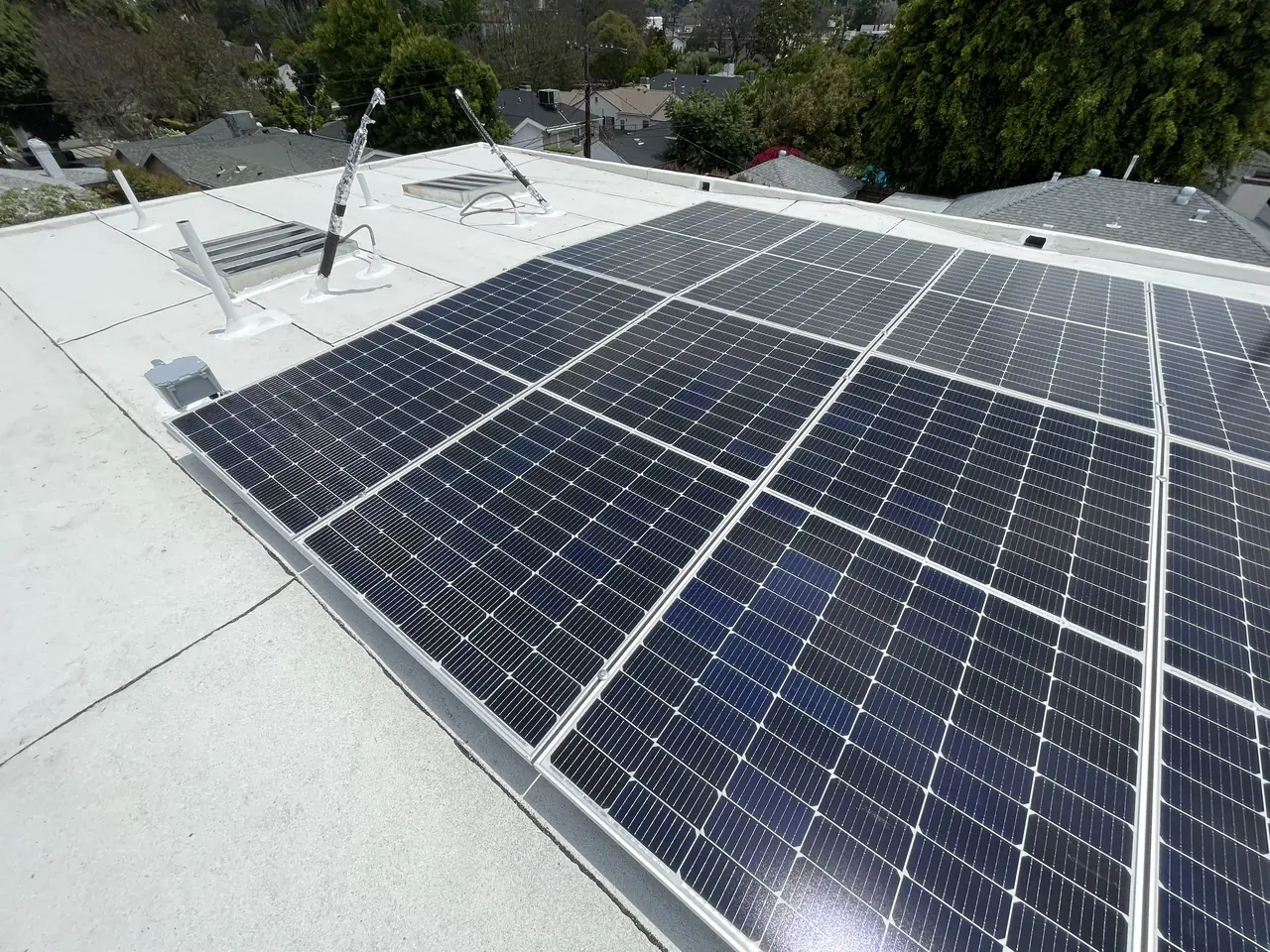
Then he asked for something better than a brochure: another customer, in Glendale, who would talk to him. One of our customers on the other side of town, whose flat-roof system had gone in that same October, agreed to take the call, and the contact went across with that agreement. The report that came back was that the work had been done well and the owner was pleased, and that he was still waiting on the city and the utility to finish their part before the system could be switched on. Both halves of that were true, and both were worth hearing.
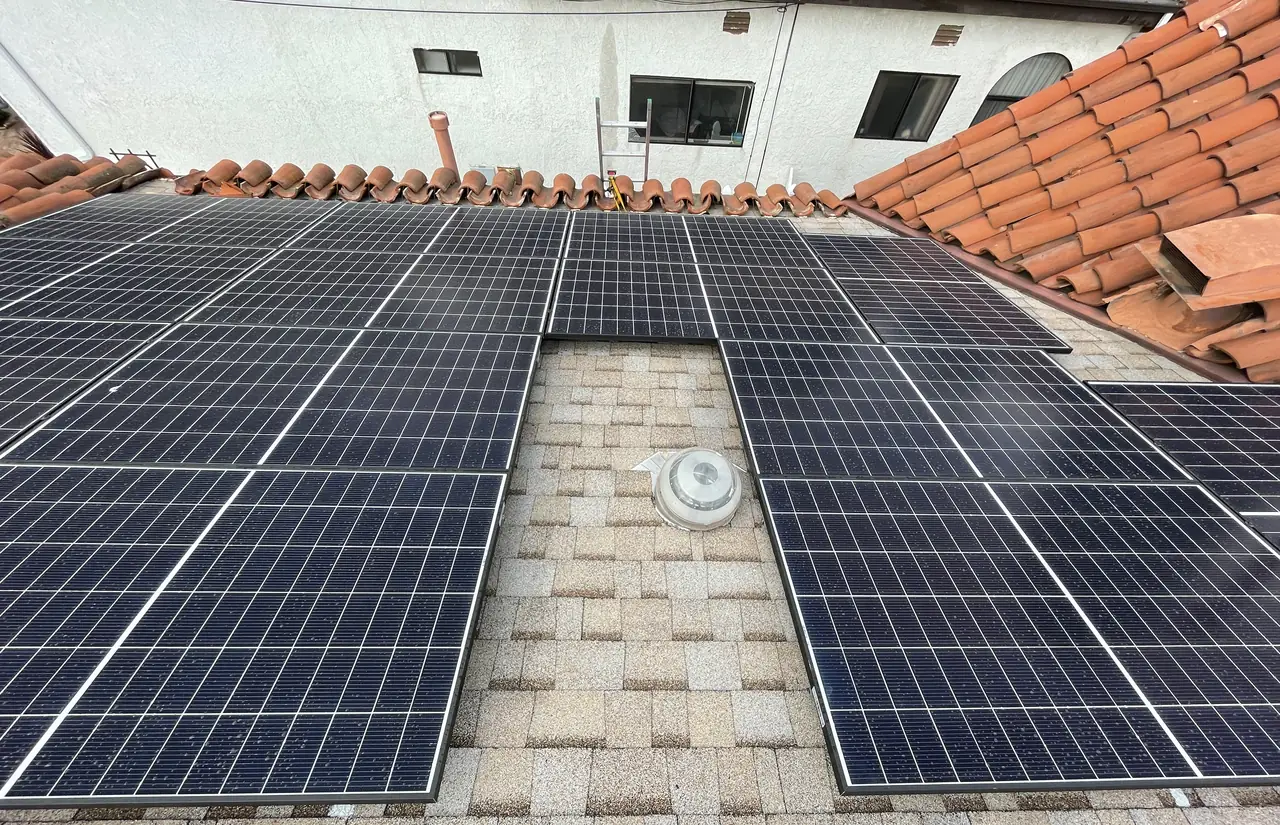
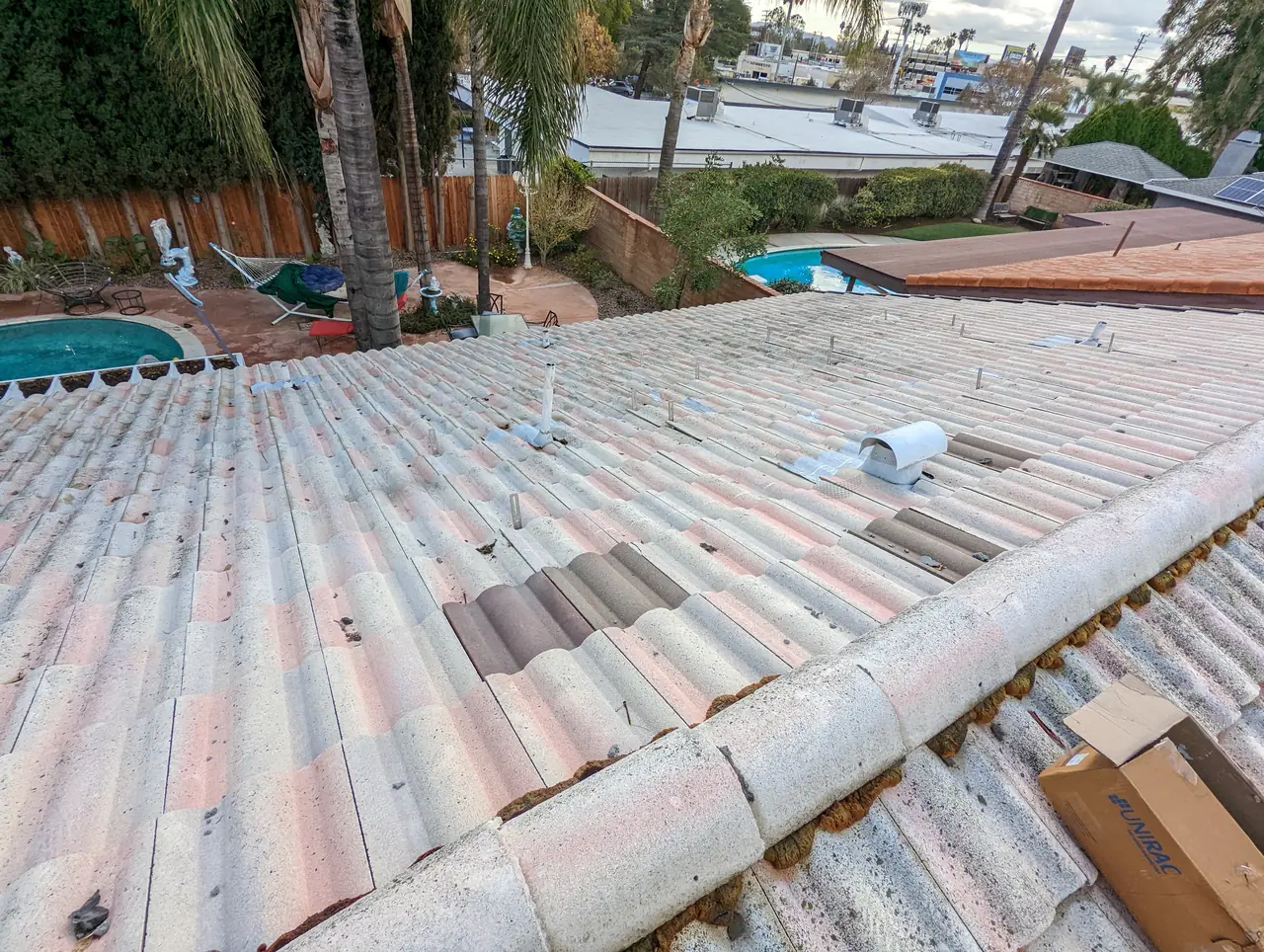
The roof itself is the other half of the story. The house is Spanish Revival, with clay barrel tile along every ridge, hip and eave, and a field of composition shingle between them. That is a common Glendale detail on houses of this age, and it is a gift for solar: the modules sit on the shingle, mounted on ordinary flashed feet, and the tile that gives the house its face is never walked on or drilled. Where a Glendale roof is tile all the way across, the array footprint has to be re-roofed in shingle to reach the same position. Here the roof had already done that work.
Eighteen modules with a microinverter under each one went on across the two slopes, twelve east and six west, wired back to a combiner on the side wall — around six kilowatts by the homeowner's own reckoning when he set the layout. The east group wraps the vent the layout was drawn around; the west group sits in a clean rectangle between two lines of tile.
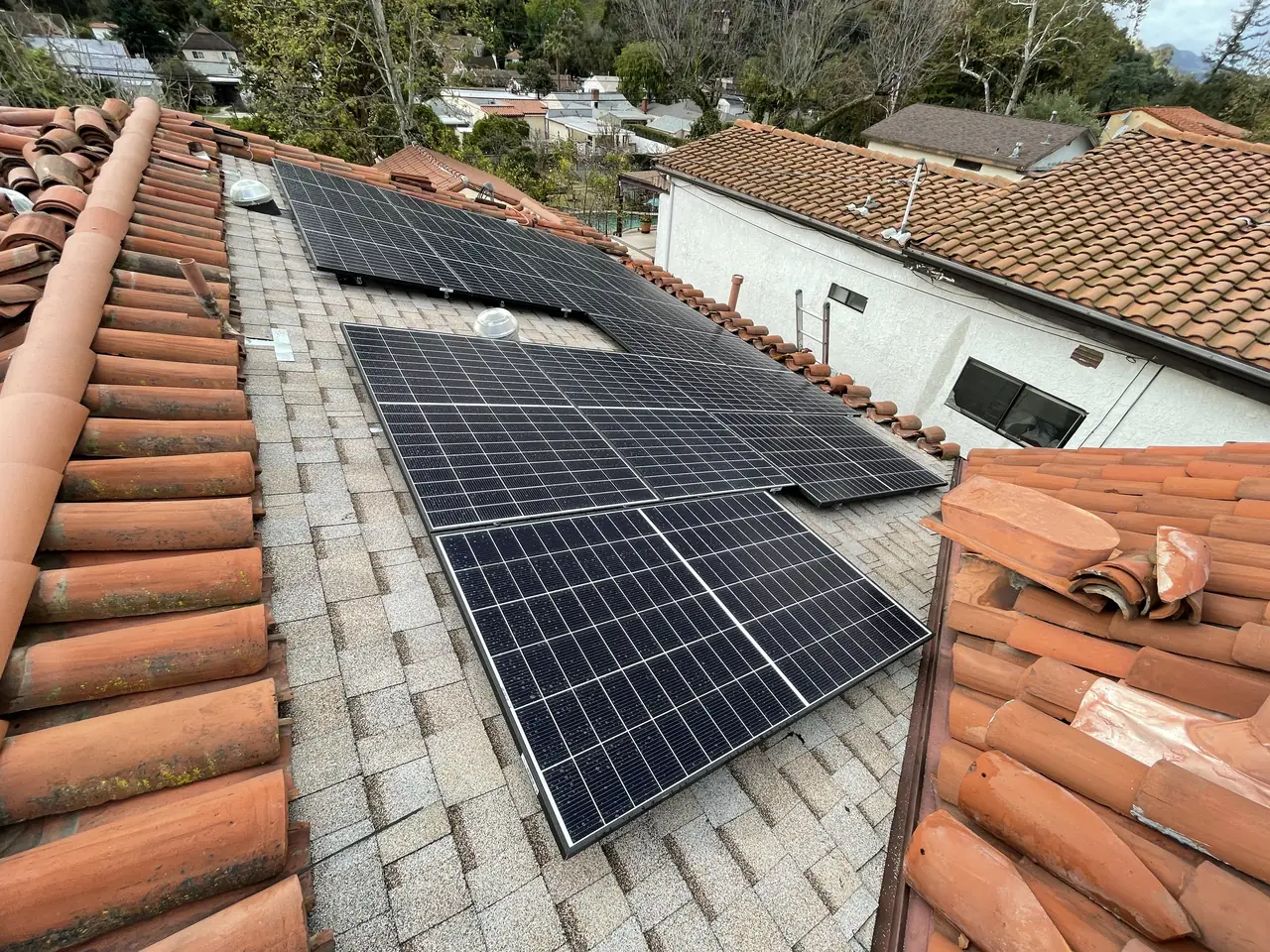
The module that was left out has a price, and it is paid every year. A system one module smaller produces a little less for as long as it runs. Set against that, a module whose wiring cannot be reached is a module nobody can service without opening the roof. The homeowner made that trade with his eyes open, and it was the right call.
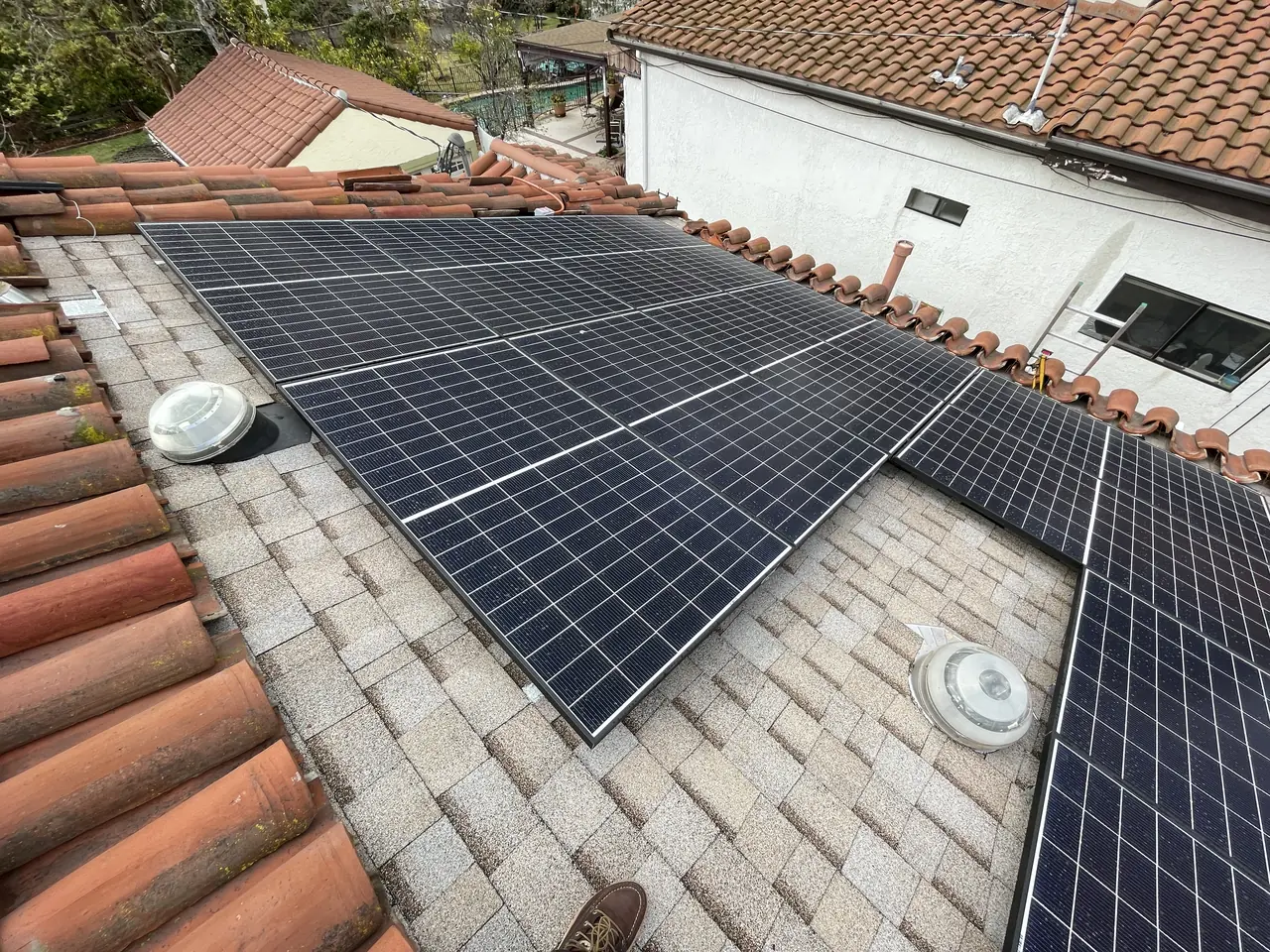
The question this homeowner asked is the one to borrow. Not whether a company has done tile roofs, but whether it has done one in your city, and whether the owner will pick up the phone.
How it ran
| 26 October 2020 | Quote issued with the material and labor breakdown |
|---|---|
| 28 October 2020 | Homeowner asks for one module fewer, split twelve east and six west |
| 29 October 2020 | Layout redrawn; revised quote issued |
| 30 October 2020 | A Glendale customer's contact provided as a reference |
| 3 November 2020 | Homeowner reports back after speaking to the reference |
The decision took nine days, with one call to another Glendale customer in the middle of it. The array that followed was built to the layout agreed on the twenty-ninth: twelve modules east, six west, on the shingle field inside the tile.
What we did
- Revised the layout around the homeowner's rule: no module over an attic space that cannot be reached.
- Put him in touch with a Glendale customer who had agreed to take the call, and left the conversation to them.
- Mounted eighteen modules on flashed feet across the existing shingle field, keeping the clay tile at every edge untouched (C-39, C-10).
- Fitted a microinverter under each module across the east and west slopes.
- Wired both groups to a combiner on the side wall.
System specifications
| Roof | Clay barrel tile at ridges, hips and eaves; composition shingle field |
|---|---|
| Mounting | Flashed feet on the shingle field |
| Layout | 12 modules on the east slope, 6 on the west |
| Modules | REC |
| Inverters | Microinverters, one per module |
| Utility / AHJ | Glendale Water & Power / City of Glendale |
Is your project like this one?
- Your house is Spanish Revival with clay tile at the edges and shingle between.
- You want to talk to a real customer in Glendale before you sign.
- Part of your attic is hard to reach and you want the array designed around it.
- You are comparing quotes and want to know why one module more or less matters.
Cali Energy in Glendale
Glendale is its own city with its own municipal utility: permits run through City of Glendale Building & Safety, interconnection through Glendale Water & Power.
Glendale's Spanish Revival houses carry clay tile on every edge and a field of shingle between, which changes where an array can be fastened. The question this homeowner asked first was who else in Glendale had had it done.
This installation is on the Glendale projects page alongside the others, and what the work covers is set out on the Glendale service area page.
- License and classifications: CSLB #1032379
- Official reference for this process: Glendale Water & Power — Net Energy Metering program
- Official reference for this process: CSLB — check a contractor's license
Frequently asked questions
Can I ask a solar company for a customer reference?
You should, and you should ask for one in your own city. A customer in Glendale knows the utility, the city inspectors and the roof types you have. Expect the contractor to ask that customer first rather than hand out a number. On this house the call went to someone whose system had just been installed, who said the work was good and that the utility was still finishing its part, and the homeowner signed with a clear picture of both.
Why leave a module out of the layout?
Because the attic under that spot could not be reached. Every microinverter and every connector under the array has to be serviceable someday, and a module over a space nobody can get to is a module nobody can fix without opening the roof. Eighteen modules with full access was the better system than nineteen with one blind spot.
How does solar go on a roof with clay tile edges?
On this house the tile runs along the ridges, hips and eaves and the field between is composition shingle, which is common on Spanish Revival homes. The modules mount to the shingle with standard flashed feet, and the tile is neither walked on nor drilled. Where the whole roof is tile, the array footprint can be re-roofed in shingle to get the same result.
Does Cali Energy install solar in Glendale?
Yes, and this house is one of the reasons the reference question works: the customer we put this homeowner in touch with was another Glendale house we had just completed. Our license is CSLB #1032379; permits run through City of Glendale Building & Safety and interconnection through Glendale Water & Power.
What this would look like on your roof
Planning solar in Glendale? Tell us your utility, your roof and what your bill looks like now, and we will model what a system like this would do on your house before you commit to anything.
Or call +1 (323) 844-7777 · Cali Energy, Northridge · CSLB #1032379 (B, C-10, C-39) — design, permits, install and electrical under one licensed contractor.
Related
This timeline reflects this property and this permitting path. Updated September 2026.