

San Fernando, CA · May 2025 · Southern California Edison / City of San Fernando
A ring of sealant under every mount, then the flashing over it
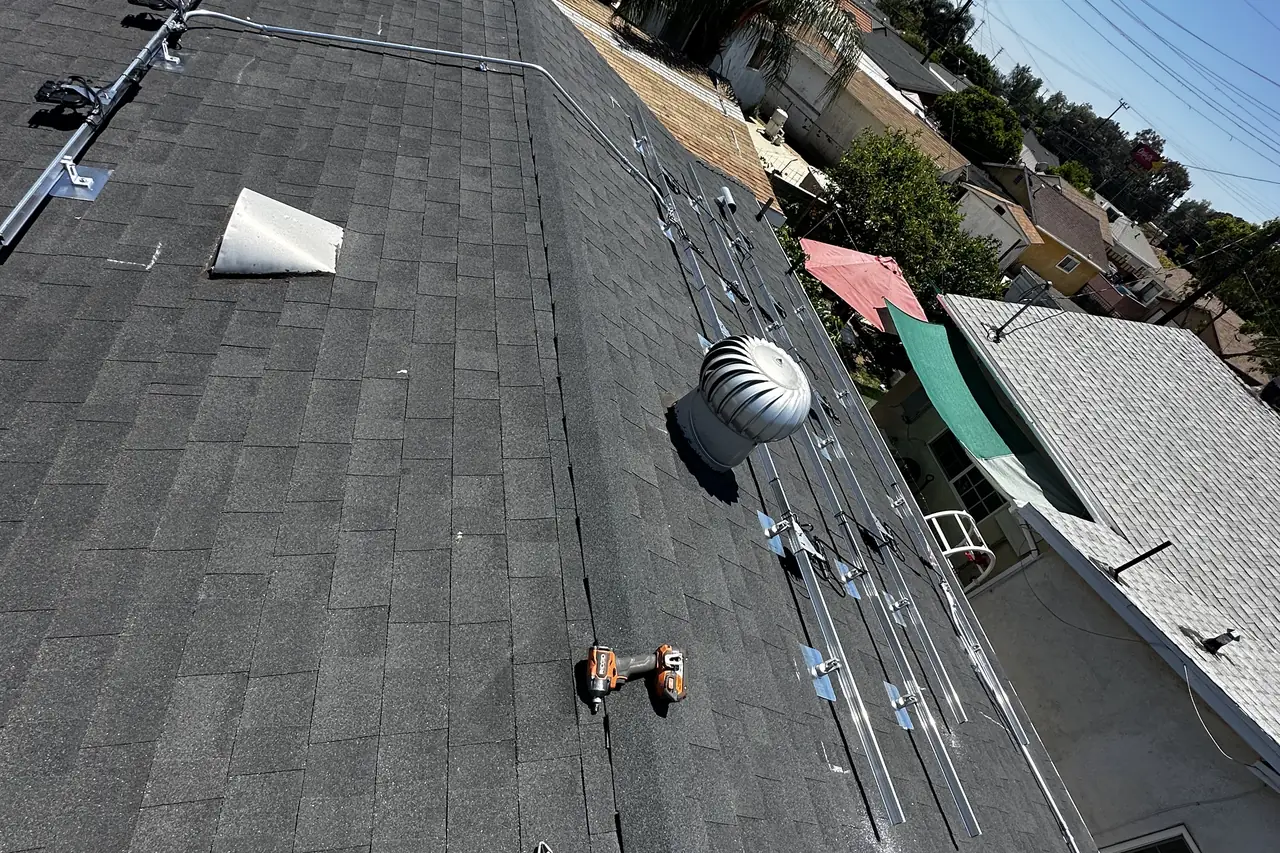
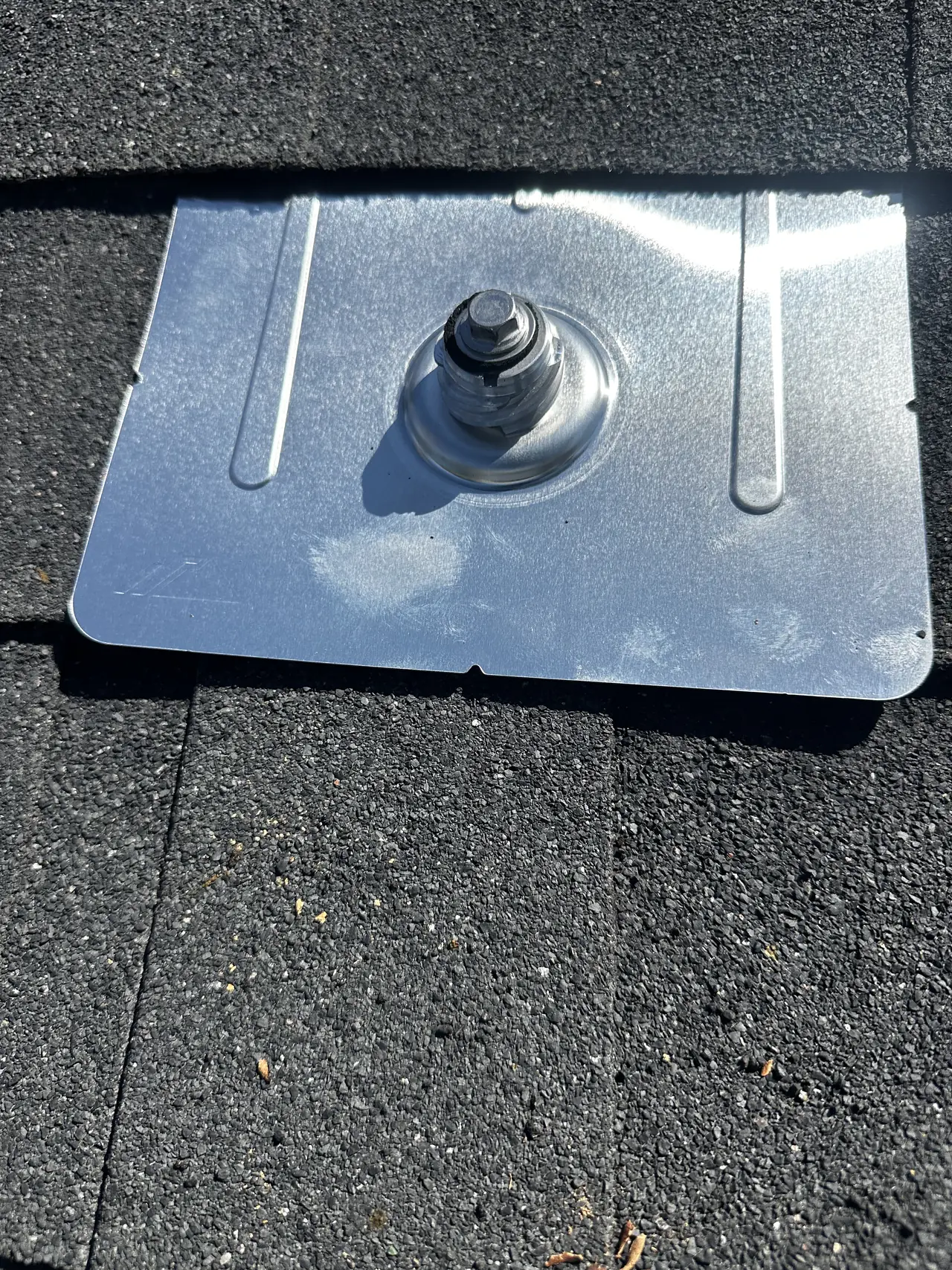
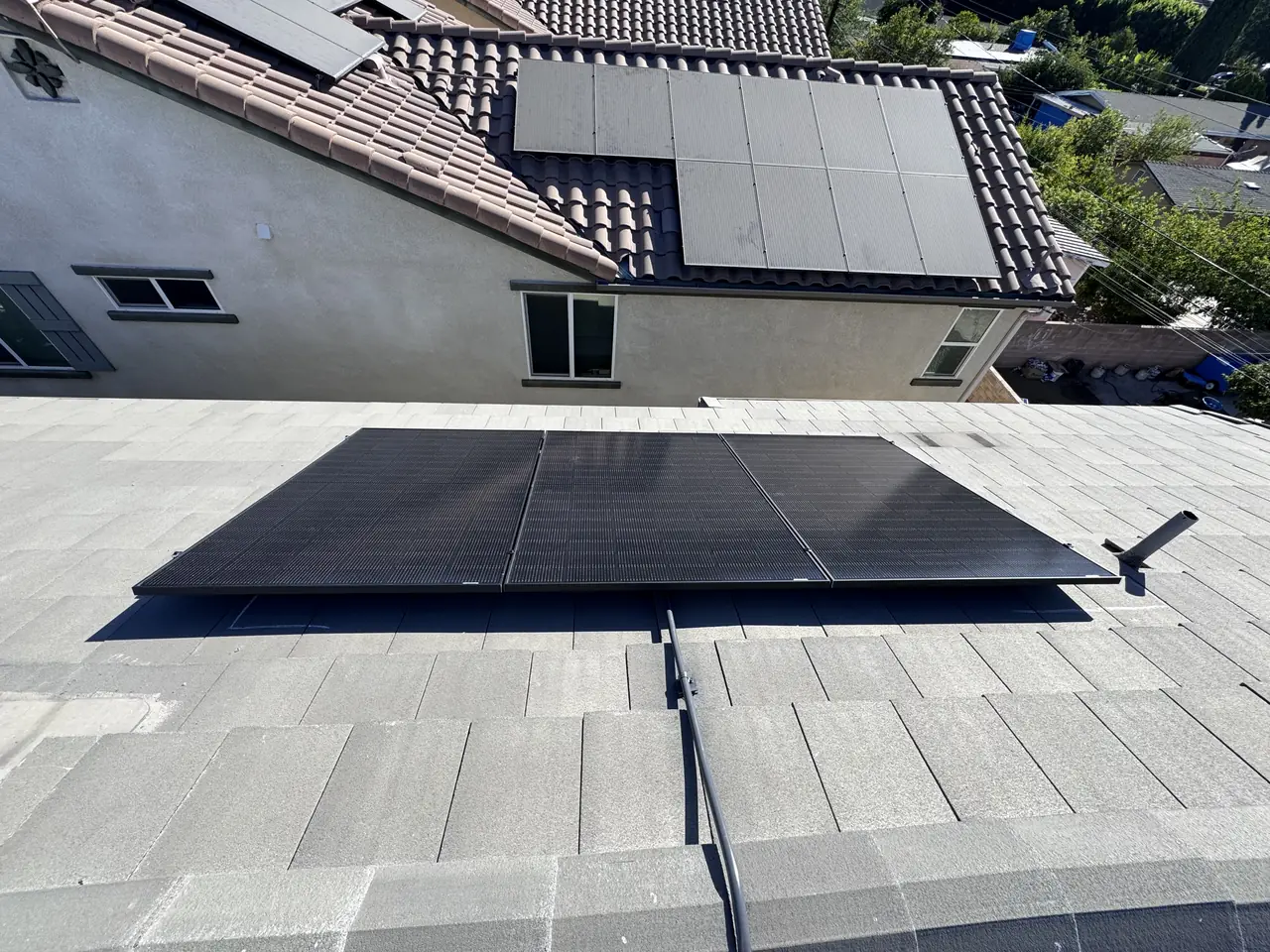
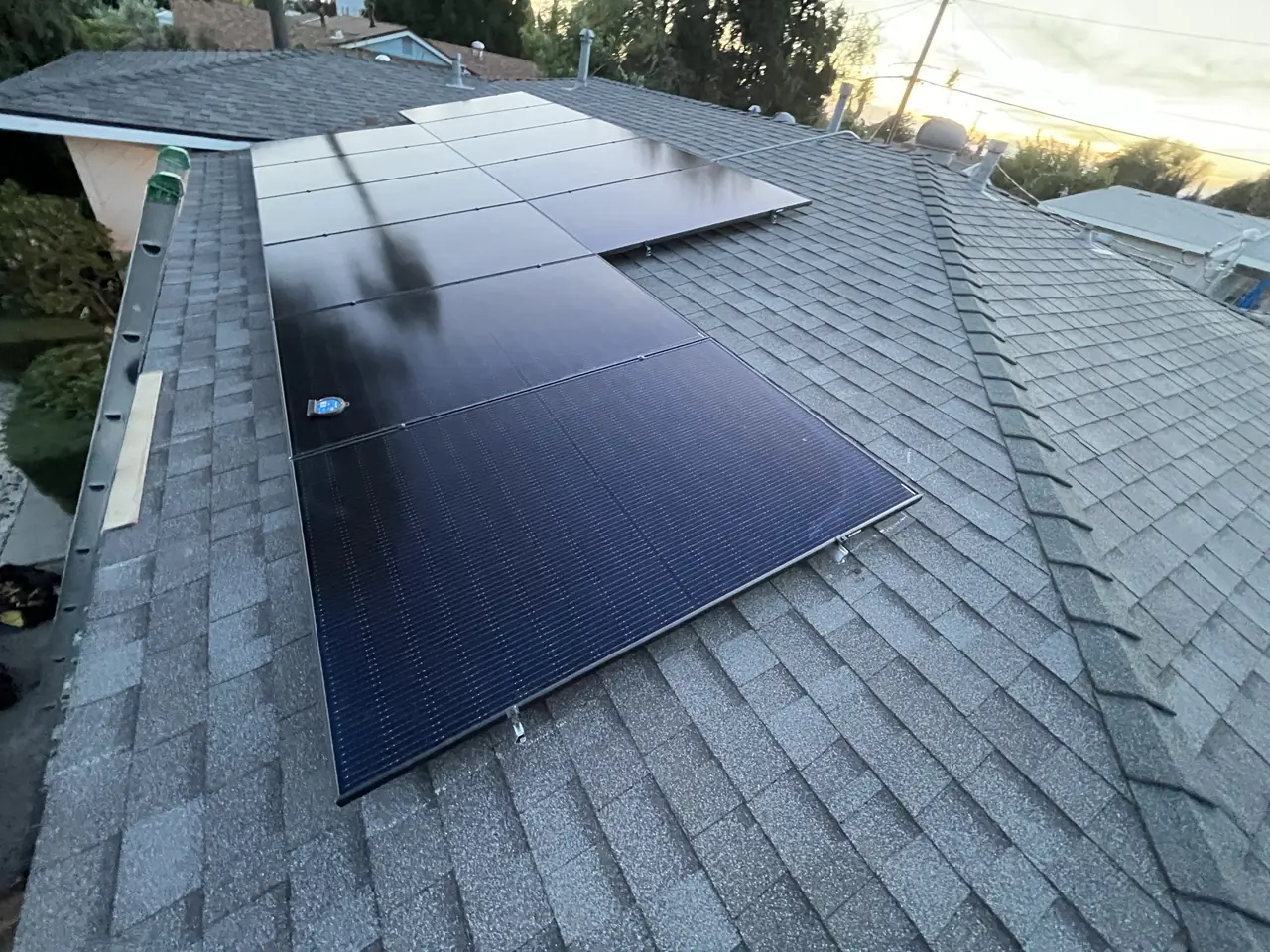
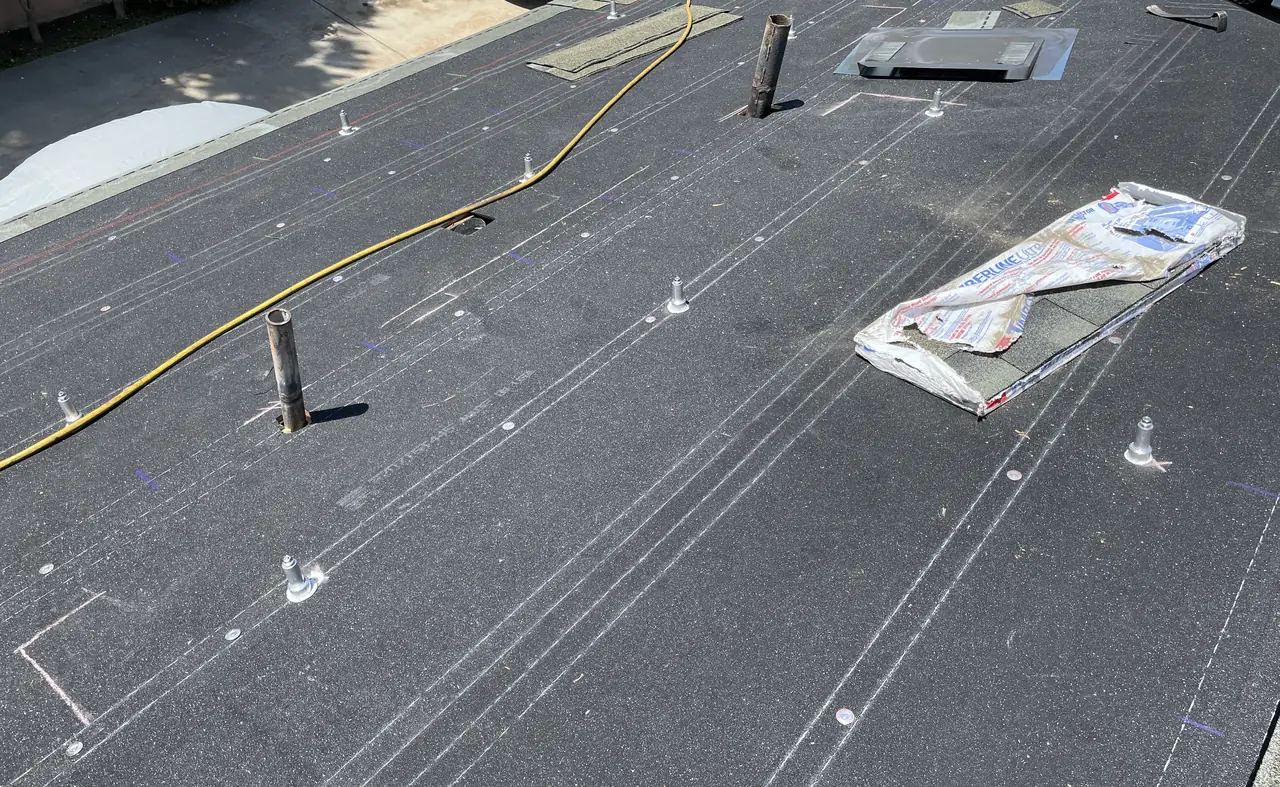
Fourteen modules on a dark shingle roof, in two groups of seven. Before a single flashing went down, each bolt hole got a ring of sealant around it.
This San Fernando installation is 14 modules in two groups of seven on a composition shingle roof, completed by Cali Energy in one day on 8 May 2025. Every mount was sealed twice: a ring of sealant around the bolt hole, then a flashing plate over it woven into the shingle course above. Once the modules were on, the tilt of the array was checked with an inclinometer, and an Enphase combiner and AC disconnect went on the wall below.
At a glance
- Array
- 14 modules, two groups of seven
- Microinverters
- Enphase, one per module
- Roof
- Composition shingle
- At every mount
- Sealant ring, then flashing woven under the course
- Tilt
- Checked with an inclinometer on the modules
- On the wall
- Enphase combiner and AC disconnect
- Installed
- 8 May 2025, in one day
The story
A solar mount on a shingle roof means a bolt through the roof deck, and every one of those holes is a place water could go. The standard answer is a flashing plate slid under the shingle course above, so water runs over it. On this roof every hole got a second layer underneath the flashing as well.
Work began at about twenty to nine in the morning, and the sequence at each mount is the same. The mount position is marked, the hole is drilled into the rafter, and before anything goes over it a ring of sealant is laid around the hole and across the area the flashing will cover.

Then the flashing plate goes down over it and its upper edge is slid under the shingle course above, and the lag bolt is driven through into the rafter. The sealant fills the space between the plate and the roof around the bolt; the flashing sheds the water that runs down the roof.
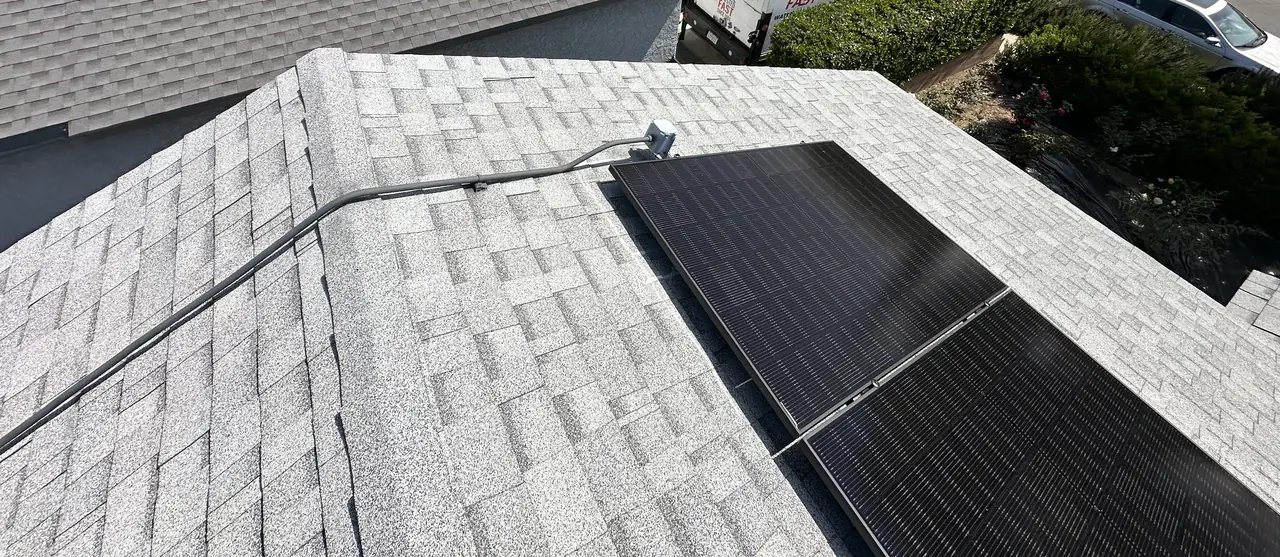
With the mounts in, the rails went on, and the fourteen modules went onto them in two groups of seven, each group its own circuit from the microinverters back to the combiner. The conduit runs along the top of the array and down to the wall.
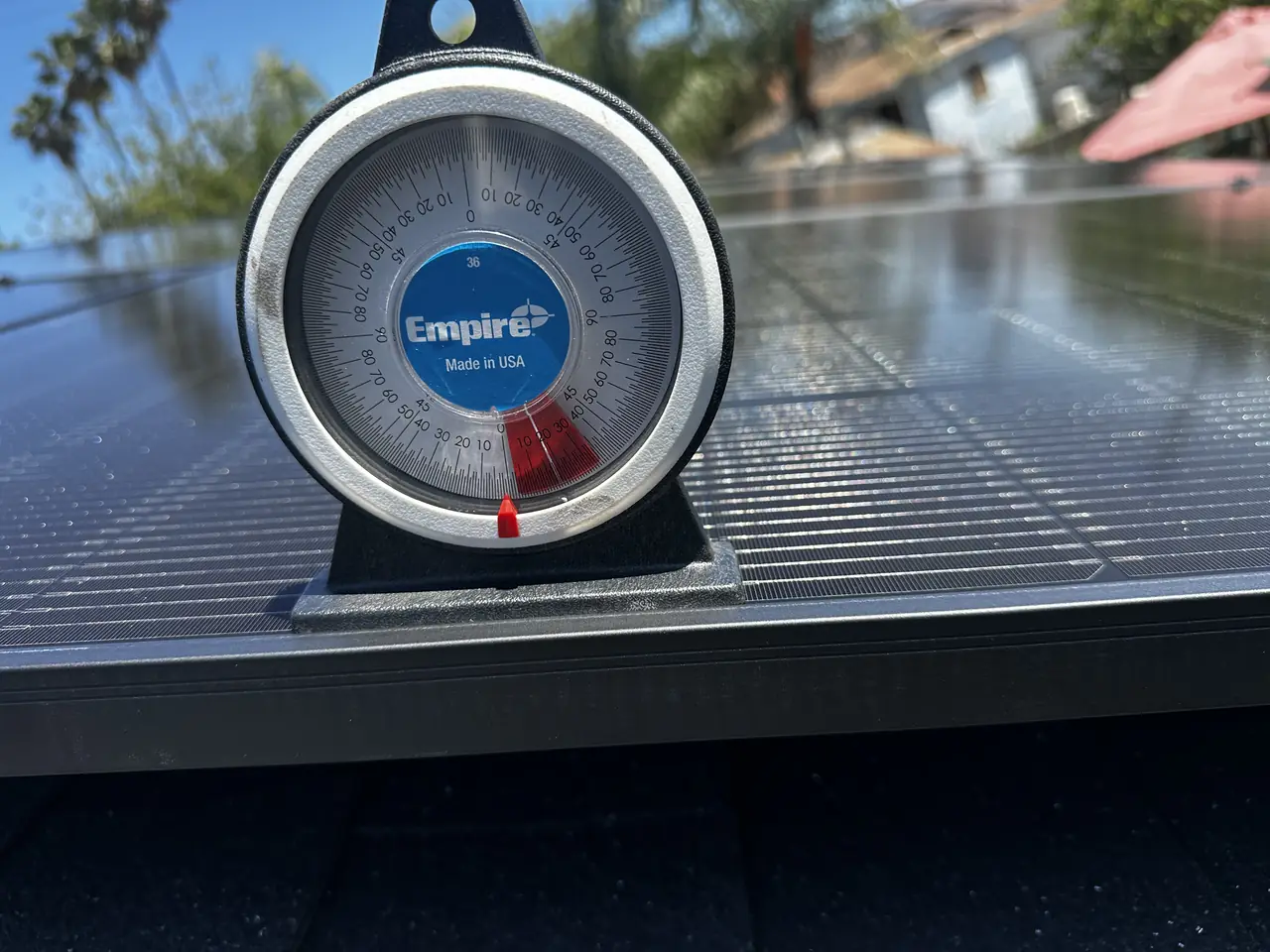
Once the modules were on, the crew set an inclinometer on them to check the tilt. A flush-mounted array follows the roof, so the reading is the roof's own pitch, and it is the number that goes into a production estimate.
By the middle of the afternoon the combiner and the AC disconnect were on the wall and the array was complete: fourteen modules, and under every one of the mounts that hold them, two separate layers between the bolt and the weather. That layering is what keeps a mount from becoming a roof problem years later.
How it ran
| 8 May 2025, about 8:40 am | Mount holes drilled and sealed |
|---|---|
| Morning | Flashings set under the shingle courses; rails on |
| Midday | Microinverters and 14 modules installed in two groups |
| Afternoon | Tilt checked; combiner and disconnect on the wall |
Every hole sealed before it was covered, all in one day.
What we did
- Located each mount on a rafter and drilled the holes.
- Laid a ring of sealant around every hole before covering it.
- Set a flashing over each mount, slid under the shingle course above.
- Installed rails, microinverters and 14 modules in two groups of seven.
- Checked the tilt of the finished array with an inclinometer.
- Mounted the Enphase combiner and AC disconnect on the wall.
System specifications
| Modules | 14, in two groups of seven |
|---|---|
| Microinverters | Enphase, one per module |
| Mounting | Flashed mounts on rails, sealant under every flashing |
| Roof | Composition shingle |
| Combiner / disconnect | Enphase combiner, AC disconnect on the wall |
| Utility / AHJ | Southern California Edison / City of San Fernando |
Is your project like this one?
- You have a shingle roof and worry about leaks around the mounts.
- You want to know what actually goes under a solar mount.
- Your array will be about a dozen modules or a little more.
- You want a production estimate based on your real roof pitch.
Cali Energy in San Fernando
San Fernando is its own city, not a Los Angeles neighborhood: permits run through the City of San Fernando Building and Safety Division, interconnection through Southern California Edison.
San Fernando sits on the north edge of the Valley, a separate city with its own Building and Safety Division, which coordinates fire code enforcement with the Los Angeles Fire Department. Its inspectors go out Monday through Thursday mornings.
- License and classifications: CSLB #1032379
- Official reference for this process: City of San Fernando — Building and Safety Division
Frequently asked questions
Do solar mounts leak on a shingle roof?
A properly flashed mount should not. The flashing plate goes under the shingle course above it, so water runs over the plate and past the bolt. On this roof each hole was also ringed with sealant before the flashing went on, so there are two separate layers between the bolt and the weather. When mounts do leak, a common cause is a flashing that is missing or sealed only on its face.
Why is sealant used under the flashing as well?
The flashing handles water running down the roof; sealant handles the gap right around the bolt, where wind-driven rain or a lifted shingle edge could otherwise reach the hole. Neither replaces the other. A mount sealed only from the top depends on a bead of sealant staying intact in the sun for decades.
Why check the tilt with an inclinometer after installation?
The tilt is one of the inputs to a production estimate, and on a flush-mounted array it equals the roof pitch. Measuring it on the finished modules confirms the number the design used instead of assuming it from a drawing. Small differences in tilt change the estimate only a little, but the check takes a minute.
Does Cali Energy install on shingle roofs in San Fernando?
Yes. The city's own Building and Safety Division handles permits, and Southern California Edison handles interconnection. Cali Energy flashes every mount into the shingle courses and keeps the equipment that needs ground access on the wall. License CSLB #1032379.
What this would look like on your roof
Planning solar in San Fernando? Tell us your utility, your roof and what your bill looks like now, and we will model what a system like this would do on your house before you commit to anything.
Or call +1 (323) 844-7777 · Cali Energy, Northridge · CSLB #1032379 (B, C-10, C-39) — design, permits, install and electrical under one licensed contractor.
Related
This timeline reflects this property and this permitting path. Updated October 2026.