

Burbank, CA · August 2023 – September 2023
The tile was fine. Everything under it was not.
A section of tile roof in Burbank taken apart, rebuilt from the deck up and put back together with the same tile. About three hundred square feet, and a handful of spares.
On a tile roof the tile is a rain screen and the underlayment beneath it is the waterproofing. Tile can last fifty years or more; the felt under it commonly fails in twenty to thirty. So a leaking tile roof usually needs its underlayment and flashings replaced, not its tile. The repair is to lift the tile carefully, stack it, strip and replace what is underneath, rebuild the flashings, and set the same tile back. Cost goes into labor rather than material, and the roof keeps its original appearance. On older Burbank houses, where the tile profile is often out of production, that last part matters more than it sounds.
At a glance
- Work
- Tile lifted, underlayment and flashings replaced, same tile reset
- Area
- About 300 square feet
- New underlayment
- Self-adhered high-temperature membrane
- Wall junction
- Torch-applied membrane carried under the Z-bar flashing
- Flashings
- New tile pan flashings
- Ventilation
- Two low-profile roof vents, 30 by 24 inches
- Completed
- 27 September 2023
- Contingency
- Damaged sheathing replaced where found
The story
The call was a leak, and the roof was tile. Those two facts together point almost always at the same place, and it is not the tile.
A tile roof is two systems stacked. The tile sheds the bulk of the water and takes the sun, the wind and the foot traffic. Under it, on the deck, is the underlayment: felt or membrane, and that is what actually keeps water out of the house. The tile will outlive the people who chose it. The membrane has a service life measured in a couple of decades, and when it goes, water finds the deck while the roof still looks perfect from the street.
So the scope Cali Energy set for this section of roof was the underlayment and the flashings, with the original tile preserved and reused. Roughly three hundred square feet came apart: tile lifted and stacked, old underlayment stripped off the deck, sheathing checked and replaced where it had gone soft.
The new underlayment is a self-adhered high-temperature membrane, chosen because tile roofs get hot and stay hot, and an ordinary felt bakes. Where the roof meets the vertical wall of a projecting element, a torch-applied membrane was carried up and run beneath the Z-bar flashing rather than stopped short behind it. That junction is where tile roofs of this kind leak, and it is the detail most often done to a standard that looks right and drains wrong.
New tile pan flashings went in at the valleys and penetrations. Two low-profile vents, thirty inches by twenty-four, were set into the field: a tile roof with a sealed underlayment traps heat, and giving it somewhere to go is part of making the new membrane last as long as its rating.
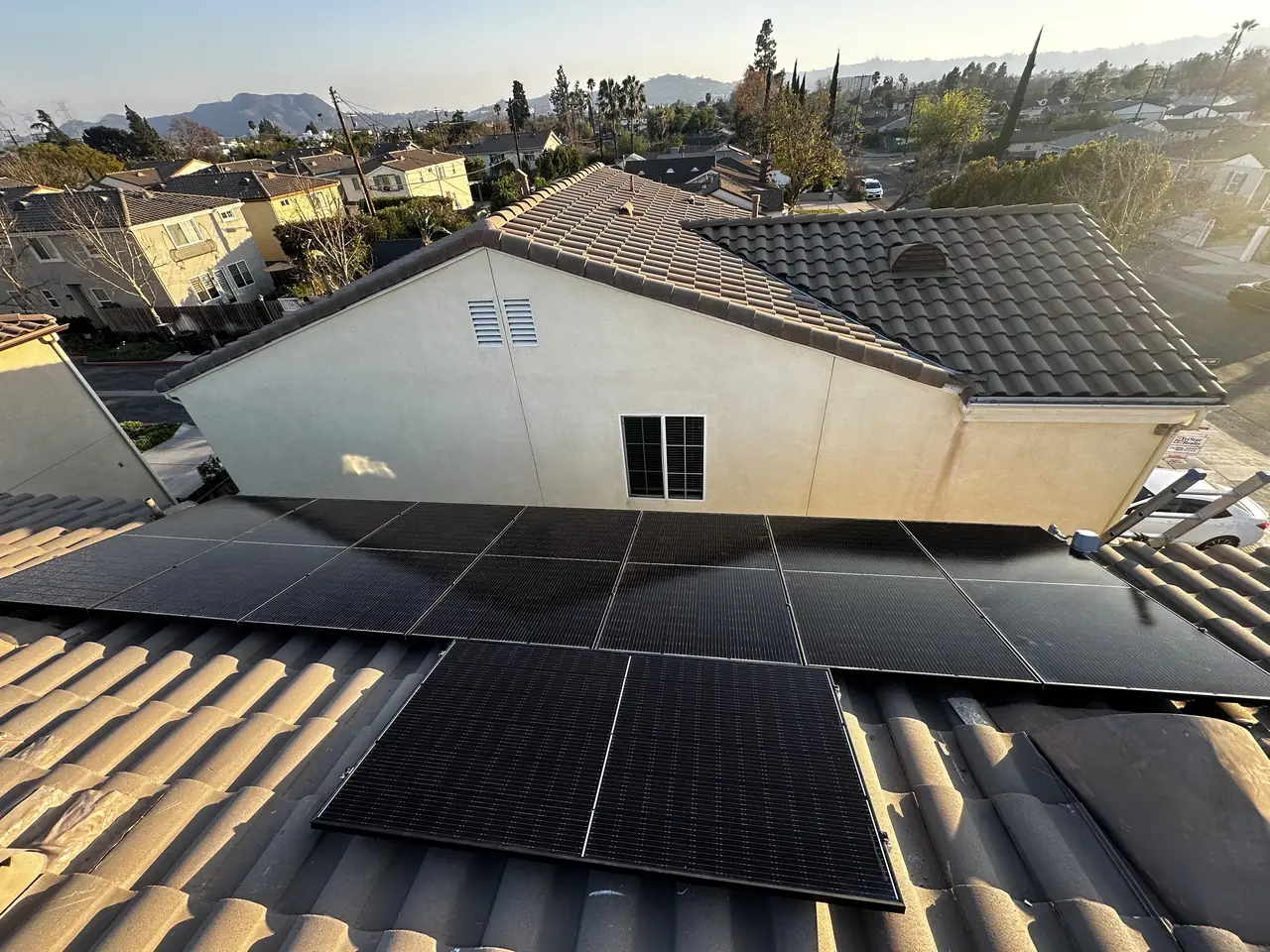
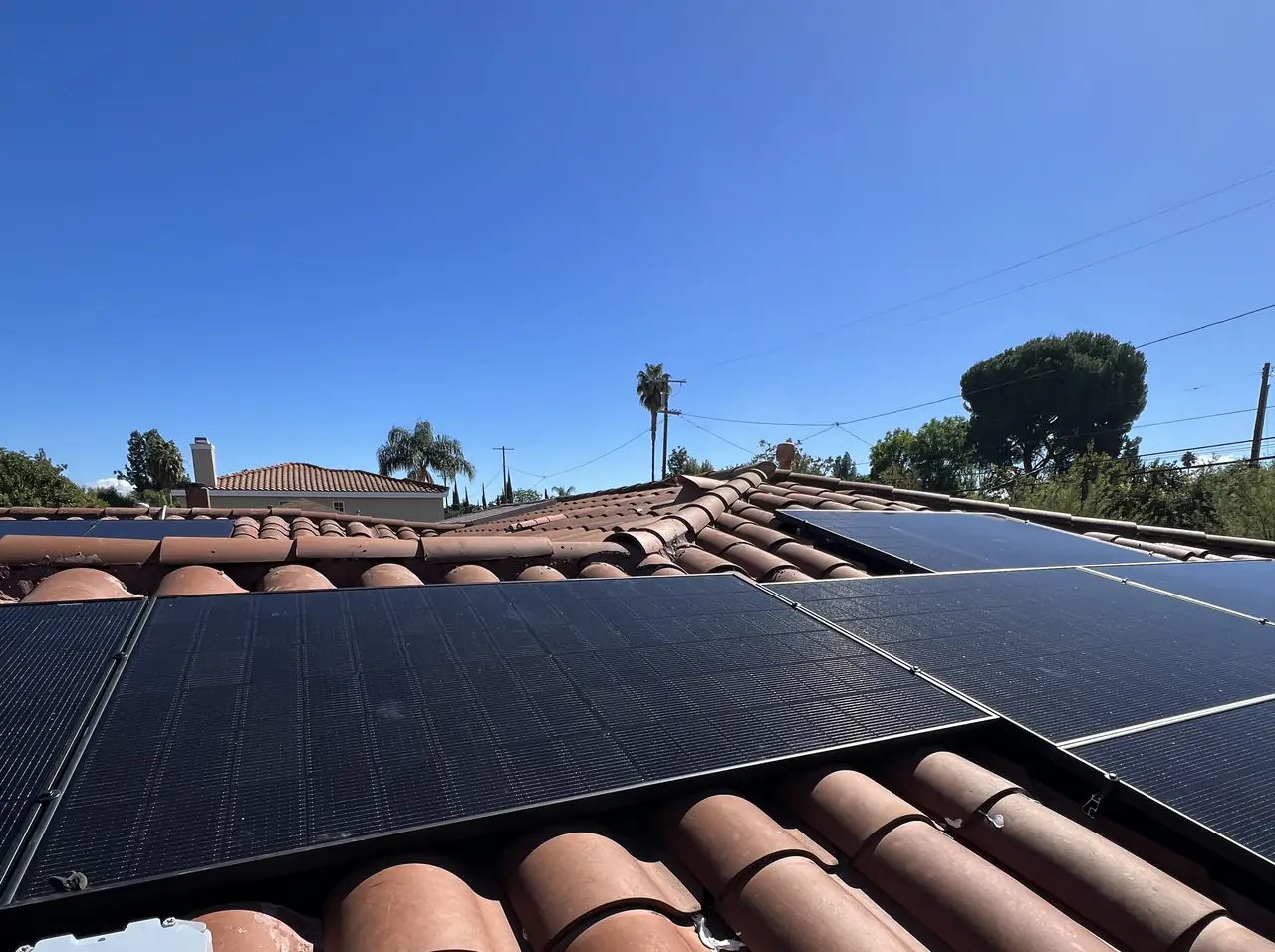
Then the tile went back on. The same tile, off the same roof, in the same pattern. A handful of spares were kept on hand for the pieces that crack in handling, because some always do. From the street nothing about the house changed. Under the tile, the part that was failing has been replaced entirely.
The work was quoted at the end of August, material was ordered in the second week of September, and the repair was finished on the twenty-seventh.
How it ran
| 31 August 2023 | Roof inspected and the repair scoped |
|---|---|
| 11 September 2023 | Material ordered: membrane, torch-applied sheet, flashings, vents |
| 18 September 2023 | Tile lifted and stacked; old underlayment stripped |
| Week of 18 September 2023 | Sheathing checked and replaced where damaged |
| Week of 18 September 2023 | New underlayment laid; wall junction carried under the Z-bar flashing |
| Week of 25 September 2023 | New tile pan flashings and two roof vents set |
| 27 September 2023 | Original tile reset; repair complete |
Under a month from inspection to a finished repair on a section of roof. This timeline reflects this property and this scope.
What we did
- Inspected the roof and scoped the repair to the underlayment and flashings rather than the tile (C-39).
- Lifted and stacked the original tile so it could be reset rather than replaced.
- Stripped the failed underlayment and replaced damaged sheathing where it was found.
- Laid a self-adhered high-temperature membrane suited to the heat a tile roof holds.
- Rebuilt the wall junction with a torch-applied membrane carried under the Z-bar flashing.
- Set new tile pan flashings and added two low-profile vents to the field.
- Reset the original tile in its original pattern and kept spares for handling breakage.
Scope of work
| Roof type | Concrete tile over a wood deck |
|---|---|
| Area repaired | About 300 square feet |
| Underlayment | Self-adhered high-temperature membrane |
| Wall junction | Torch-applied membrane under the Z-bar flashing |
| Flashings | New tile pan flashings |
| Ventilation added | Two low-profile vents, 30 by 24 inches |
| Tile | Original tile lifted, stored and reset; spares held for breakage |
| Sheathing | Inspected and replaced where damaged |
Is your project like this one?
- Your tile roof is leaking and somebody has quoted you a full tear-off.
- Your tile is discontinued and you want to keep what is on the roof.
- The leak shows up at a wall or a chimney rather than in the open field.
- Your roof is twenty to thirty years old and has never had the felt replaced.
- You want solar later and need the roof sound before anything is fastened to it.
Cali Energy in Burbank
Burbank is its own city with its own municipal utility: permits run through the City of Burbank Building & Safety Division, interconnection through Burbank Water and Power.
Plenty of Burbank houses carry concrete or clay tile that has outlived two generations of the felt beneath it. The tile is rarely the thing that fails, which changes what a repair should actually consist of.
This roof is on the Burbank projects page alongside the others, and what the work covers is set out on the Burbank service area page.
- License and classifications: CSLB #1032379
- Official reference for this process: City of Burbank — Building & Safety
- Official reference for this process: CSLB — check a contractor's license
Frequently asked questions
Does a leaking tile roof need new tile?
Usually not. The tile is a rain screen and the underlayment beneath it is what keeps water out, and the underlayment is the part with the shorter life. On a roof where the tile is sound, the repair is to lift it, replace the membrane and flashings, and set the same tile back. The house looks unchanged and the failing layer is gone.
Does Cali Energy do roofing in Burbank as well as solar?
Yes. Cali Energy takes on roof repair and replacement in Burbank as its own scope, including tile work like this one, and it is often the right first step when solar is planned for the same roof. Eleven completed Burbank projects are on our projects page. Our license is CSLB #1032379.
Why do tile roofs leak at walls rather than in the open?
Because the open field is simple and the junctions are not. Where a tile roof meets a vertical wall the water has to be carried up the wall, behind the cladding and back out onto the roof, and that is built from several overlapping pieces. If the membrane stops behind the flashing instead of running under it, the detail looks finished and drains into the wall.
Can the original tile really be reused?
In most cases, yes, with allowance for breakage. Tile is lifted by hand and stacked rather than dropped, and a proportion cracks in handling however carefully it is done, so spares are kept on site. Reusing tile matters most when the profile or color is discontinued, which on older Burbank houses it frequently is.
What this would look like on your roof
Planning solar in Burbank? Tell us your utility, your roof and what your bill looks like now, and we will model what a system like this would do on your house before you commit to anything.
Or call +1 (323) 844-7777 · Cali Energy, Northridge · CSLB #1032379 (B, C-10, C-39) — design, permits, install and electrical under one licensed contractor.
Related
This timeline reflects this property and this permitting path. Updated September 2026.