

Granada Hills, CA · October 2021 – August 2023 · LADWP / LADBS
The leak was blamed on the array. It was not the array.
Eighteen months after the system went on, water appeared and the solar got the blame. What was actually found, and why the diagnosis matters more than the repair.
Any water that appears after an array goes on gets attributed to the array, and often that is correct — a mount through a tile roof is a hole in a roof. Often it is not. The only way to settle it is to go and look, trace where the water is actually entering, and say so plainly whichever way it comes out. Here the penetration predated the installation. It was sealed on the same visit regardless.
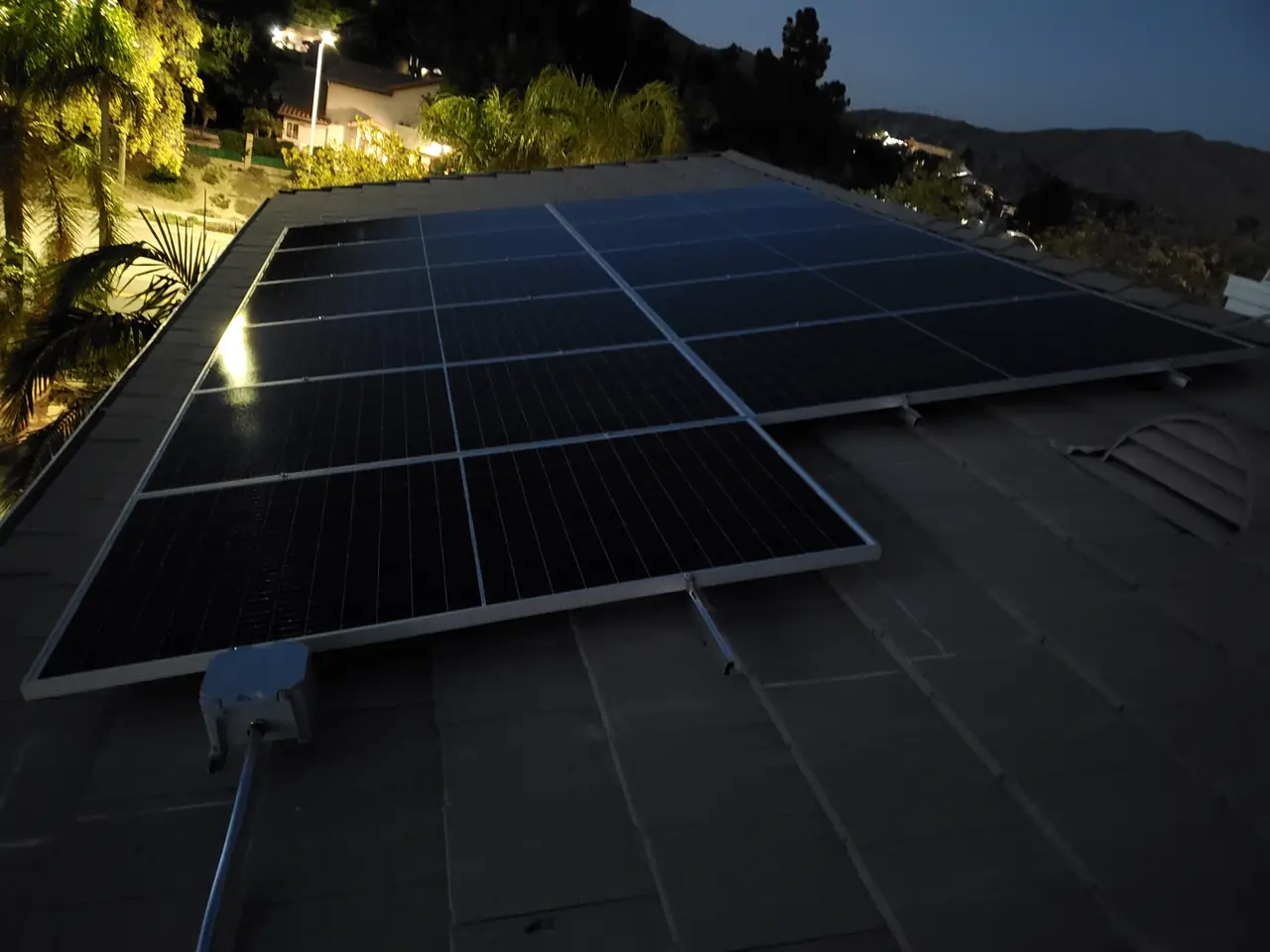
At a glance
- Roof
- Concrete tile
- System
- 27 modules with power optimizers and a string inverter
- Installed
- 2021 — final passed 29 October
- Leak reported
- March 2023
- Site visit
- Two days after the report
- Found
- Existing penetration, unrelated to the installation
- Action
- Sealed on the same visit
- Utility / AHJ
- LADWP / LADBS
The story
The system went on in the fall of 2021 — twenty-seven modules with a power optimizer under each and a string inverter on the wall, on a concrete tile roof. The final passed at the end of October. Ordinary work, and nothing to write about.
Eighteen months later the owner reported leaks, and described them as coming from the solar side.
That attribution is completely reasonable and it is what almost everybody does. An array on a tile roof means a set of attachments that go through the covering, and a homeowner who has had a dry roof for twenty years and a wet one since the panels went on is not making an unfair leap. The job is not to argue with it. The job is to go and find out.
We scheduled the visit for two days later.
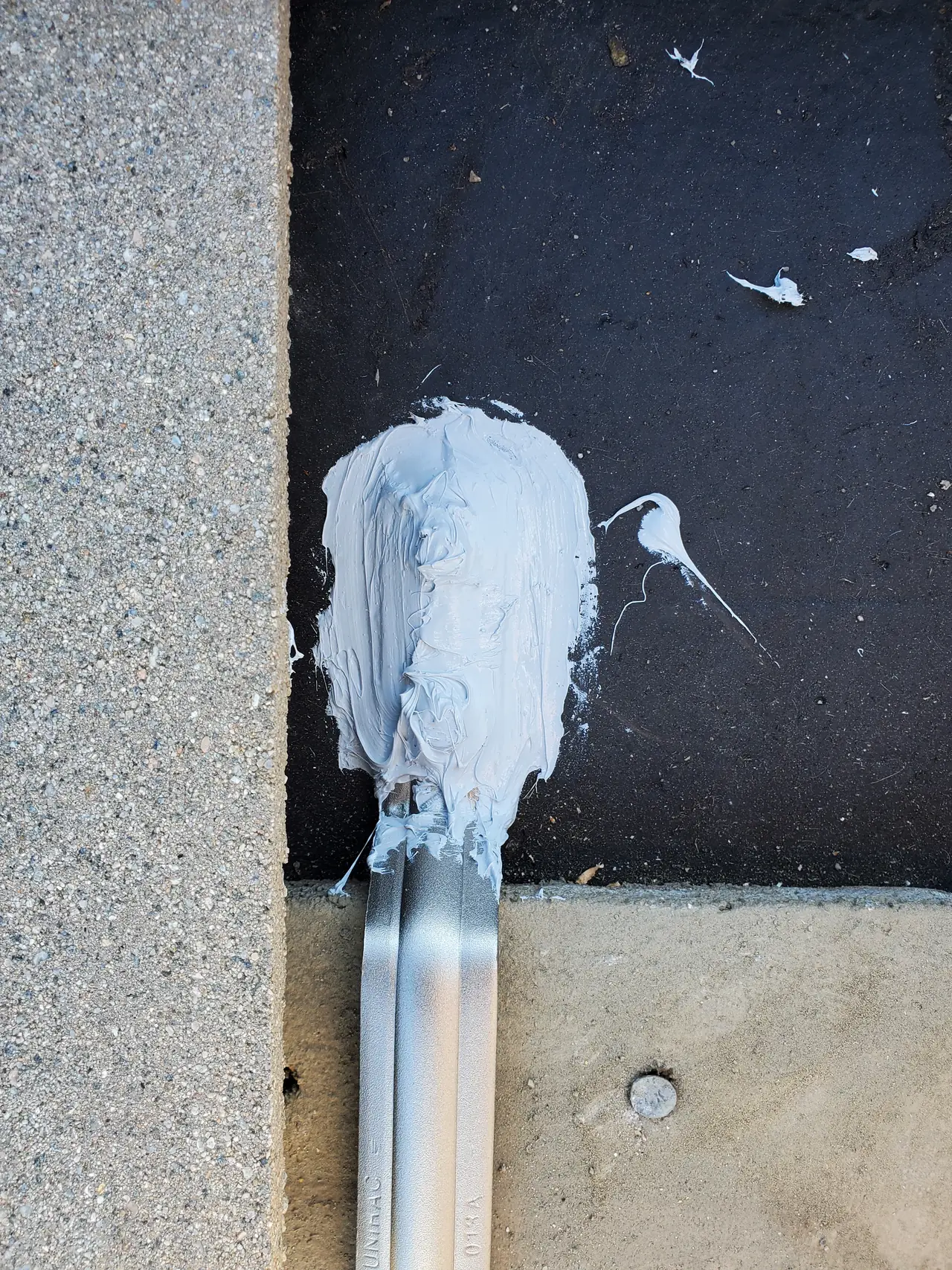
What we found was a penetration that predated the array. It had nothing to do with the racking, it carried no mount, and it was where water was getting in. We sealed it that day and told the owner exactly that.
Two things about how that gets handled. The first is that you seal it anyway. Arguing about whose hole it is while a roof leaks is an excellent way to be right and useless at the same time; the cost of a tube of sealant and a trip up a ladder is not worth a dispute. The second is that you say what you found, in writing, without softening it in either direction. Denying a cause by reflex is worth nothing, and accepting one to keep the peace is worth less, because the next time the array really is the cause nobody will be able to tell the difference.
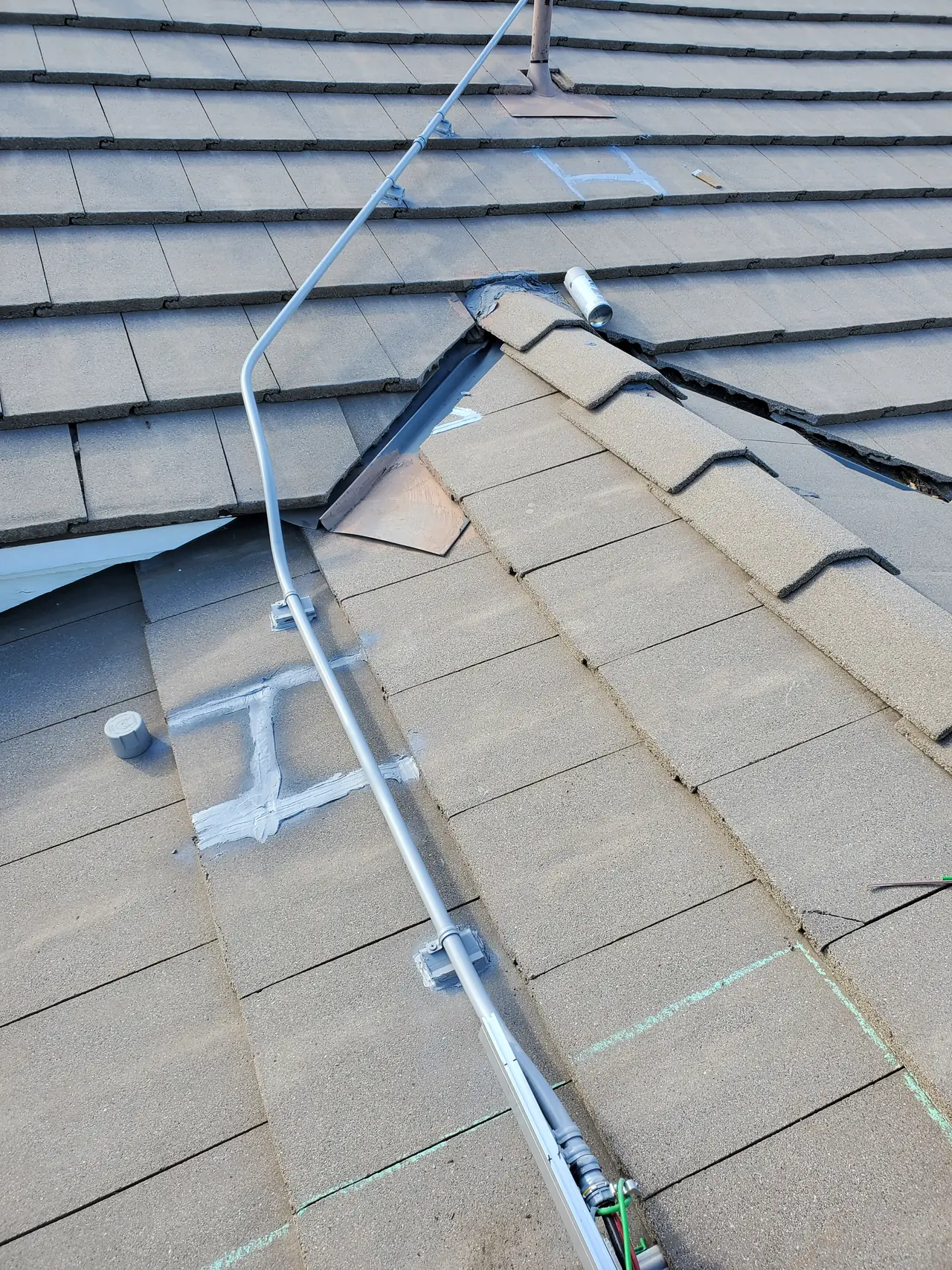
The conversation that followed is the more useful half. Once somebody is on a roof looking at water, the question stops being about one hole and becomes about the covering. This roof is concrete tile, and on tile the tiles themselves are not the waterproofing — the underlayment beneath them is, and it has a shorter life than the tile above it. A tile roof at twenty-five or thirty years often has sound tile sitting on underlayment that has failed.
So a full underlayment replacement was scoped: strip the tile, replace the underlayment across the whole roof, put the tile back, and replace what breaks in the process — a couple of squares of matching tile, drip edge, riser metal, valley metal, pipe flashings. Matching the tile took real work, because a discontinued profile in the wrong shade is worse than no repair at all; the existing tile was identified down to the manufacturer's part number before anybody quoted anything.
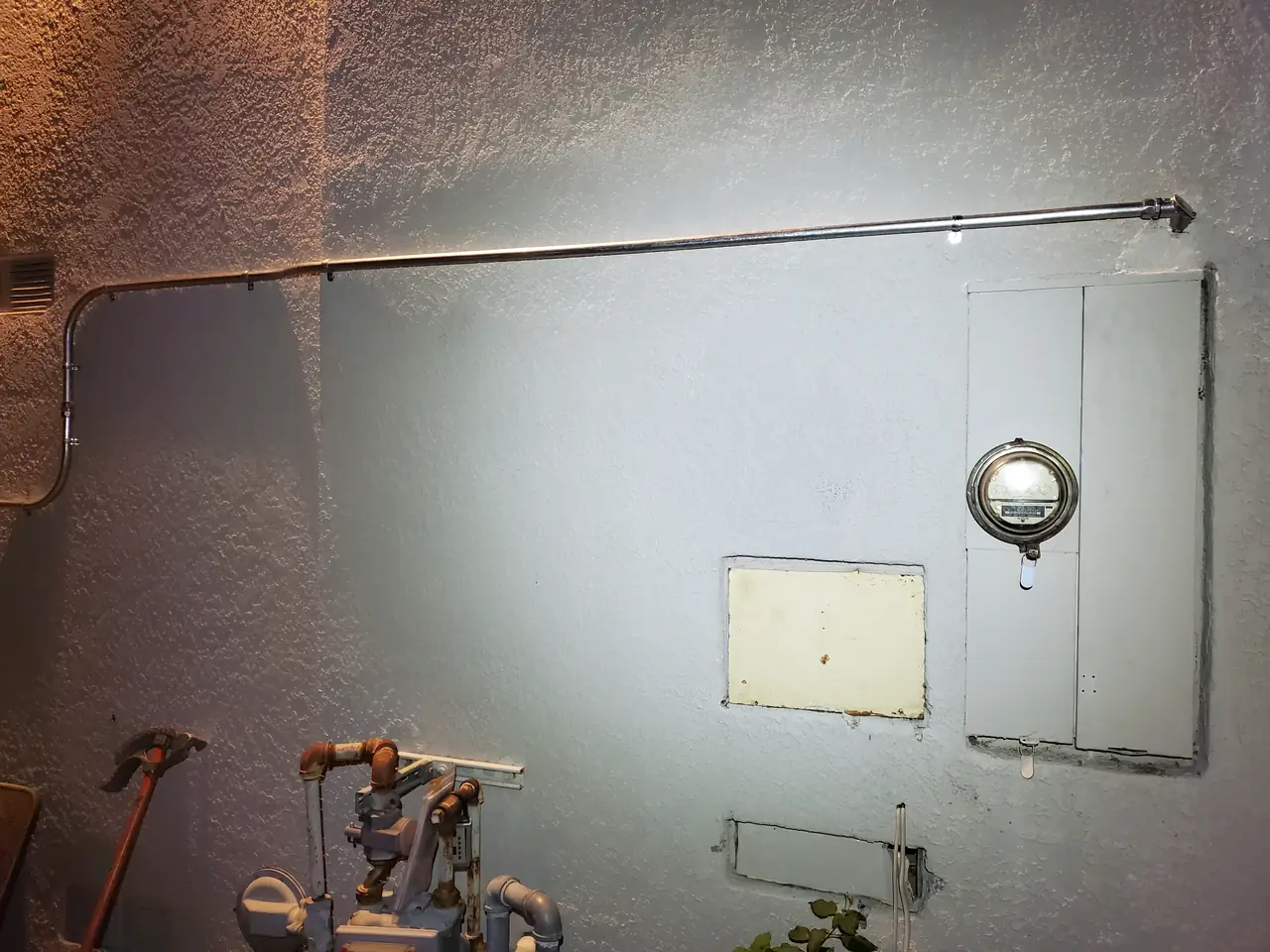
The owner took a different route in the end — he brought his own roofer and asked only that the modules come off and go back on, which is what we did. The value of the visit to the owner was the diagnosis: he knew what the covering needed, why, and what matching the tile would involve before he commissioned anything.
If water appears after an array goes on, ask for three things. Somebody on the roof, not a phone diagnosis. A written statement of where the water is entering. And, if it turns out not to be the array, a straight answer about what the covering has left in it — because on a tile roof the answer is usually about the underlayment, and that is a much bigger conversation than one hole.
Cali Energy sealed the penetration on the visit and set out in writing what the covering needed. The array on that Granada Hills roof is the same one that needed a new inverter a few years later, which is on five years in, a new inverter.
How it ran
| October 2021 | System installed on concrete tile; final passed on the 29th |
|---|---|
| March 2023 | Owner reports leaks and attributes them to the solar |
| March 2023 | Site visit two days later; penetration found and sealed |
| May – August 2023 | Full tile underlayment replacement scoped, with matching tile identified by part number |
| August 2023 | Owner elects to use his own roofer and asks only for removal and reinstallation of the modules |
Two days from the report to somebody standing on the roof.
What we did
- Attended within two days of the leak being reported.
- Traced where water was actually entering rather than diagnosing it by phone.
- Sealed the penetration on the visit.
- Reported the finding in writing, without softening it either way.
- Scoped a full underlayment replacement and matched the existing tile by part number.
System specifications
| Roof | Concrete tile |
|---|---|
| System | 27 modules, power optimizers, string inverter |
| Reported | Leaks, attributed by the owner to the array |
| Found | A penetration predating the installation, unrelated to any mount |
| Action | Sealed on the visit |
| Scoped afterwards | Full underlayment replacement with the tile lifted and reset |
| Tile | Existing profile identified by manufacturer part number before quoting |
| Utility / AHJ | LADWP / LADBS |
Is your project like this one?
- Water has appeared since your array went on and nobody has been up to look.
- You have a tile roof and are being told the tile is fine.
- You want to know how a leak near solar should be diagnosed.
- Your roof needs underlayment and there is an array in the way.
- You are trying to work out whether a repair is a warranty claim or not.
Cali Energy in Granada Hills
Granada Hills sits inside City of Los Angeles boundaries, so every project here is permitted through LADBS and interconnected through LADWP. Our work in Granada Hills runs from single-row arrays on accessory dwelling units to systems on underground services, on composition shingle and on concrete tile.
Concrete tile is common on the larger houses here, and it is the roof where water problems and solar mounts are most often confused for one another.
This installation is on the Granada Hills projects page alongside the others, and what the work covers is set out on the Granada Hills service area page.
- License and classifications: CSLB #1032379
- Official reference for this process: CSLB — check a contractor's license
Frequently asked questions
Do solar mounts cause roof leaks?
They can — every attachment is a penetration, and a badly flashed one will leak. But water appearing after an installation is not proof that the installation caused it, and the only way to know is to trace where it is entering. On this roof the penetration predated the array entirely.
What should a contractor do if the leak is not theirs?
Seal it, then say so. Arguing about ownership while a roof is leaking helps nobody, and the materials cost almost nothing. What matters is that the written finding is accurate, because a contractor who accepts blame to keep the peace has made the next diagnosis worthless.
Why does a tile roof leak when the tiles look fine?
Because the tile is not the waterproofing. The underlayment beneath it is, and it has a shorter service life than the tile. A tile roof of twenty-five or thirty years commonly has perfectly sound tile sitting on underlayment that has given up.
Can underlayment be replaced without removing the array?
No. The tile has to come off across the area being replaced, and anything mounted through it comes off first. That is why the state of the underlayment is worth establishing before an array goes on rather than after.
Why does matching the tile matter so much?
Because a repair in the wrong profile or the wrong shade is visible from the street for the life of the roof, and older profiles get discontinued. Identifying the existing tile by manufacturer part number before quoting is what makes a repair invisible rather than obvious.
What does Cali Energy do if a Granada Hills roof leaks after an array goes on?
Sends somebody up to look, rather than diagnosing it by telephone. On this Granada Hills roof the water was entering at a penetration that predated the array and had nothing to do with the mounts. We sealed it on the visit anyway, reported the finding in writing, and set out what the tile covering needed — which turned out to be the underlayment, not the hole.
What this would look like on your roof
Planning solar in Granada Hills? Tell us your utility, your roof and what your bill looks like now, and we will model what a system like this would do on your house before you commit to anything.
Or call +1 (323) 844-7777 · Cali Energy, Northridge · CSLB #1032379 (B, C-10, C-39) — design, permits, install and electrical under one licensed contractor.
Related
This timeline reflects this property and this permitting path. Updated September 2026.