

Long Beach, CA · May – July 2021 · Southern California Edison / City of Long Beach
The mounts went in while the roof was open, before the shingles
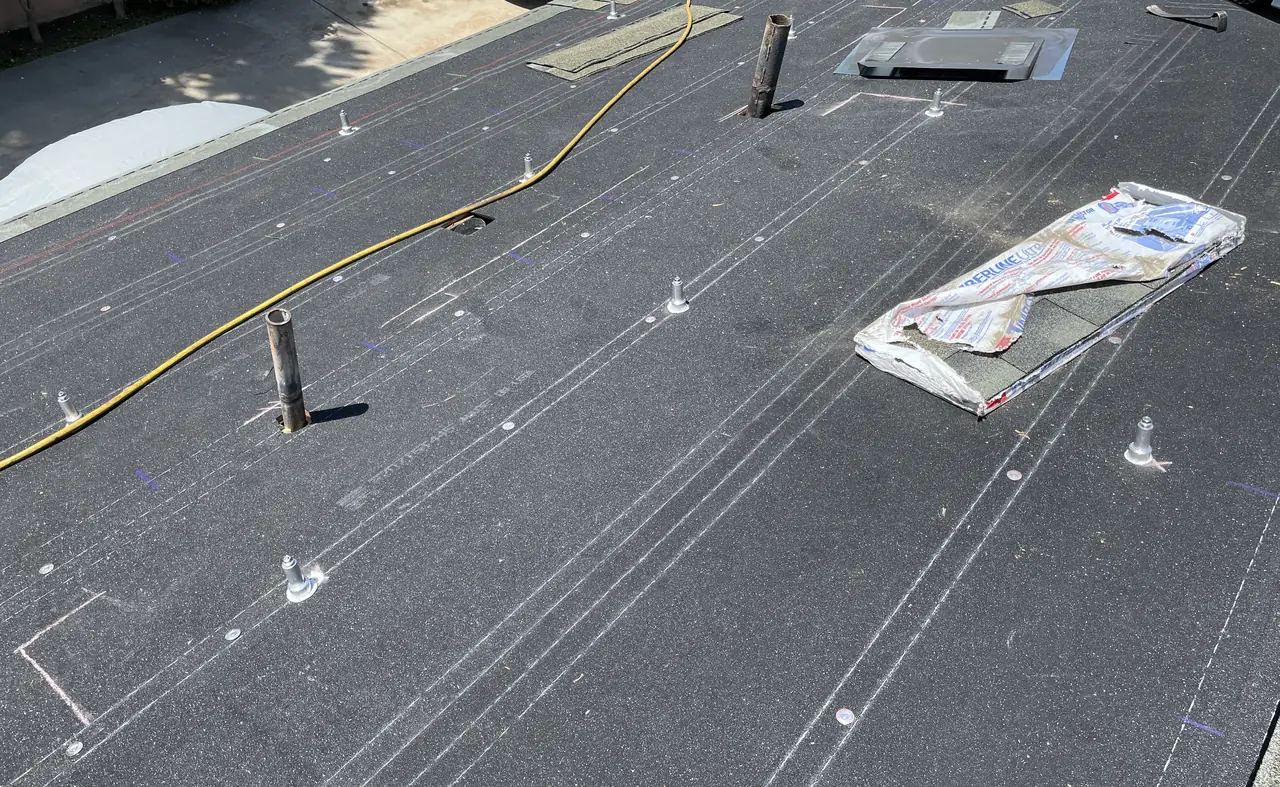
A roof stripped back to the deck, chalk lines across the felt, and a grid of flashed feet standing on it with no modules anywhere in sight. When the array went on later it did not cut a single new hole in the new covering.
This Long Beach roof was being re-covered as part of the same project, so Cali Energy set the array's flashed mounting feet onto the open deck and the new shingles were laid over their flanges — no cutting into a finished roof afterwards. The stamped drawings called for one type of standoff and the open deck needed another, so the substitution was confirmed before a course went down and the plans were revised to match. The system — 27 REC 370 W modules on a SolarEdge inverter, 9.99 kW DC — followed in July and the final passed on 13 July 2021.
At a glance
- Array
- 27 modules, REC 370 W — 9.99 kW DC
- Inverter
- SolarEdge
- Roof
- Composition shingle, being re-covered
- Order of work
- Feet onto the open deck, shingles over the flanges
- Feet set
- 4 May 2021
- Array installed
- 6 July 2021
- Monitoring
- Cellular, five-year plan
- Final inspection
- Passed 13 July 2021
The story
Normally a solar mount is an intrusion into a finished roof. The shingles are already down, so each attachment means lifting a course, driving a lag into the rafter below, sliding a flashing up under the shingle above it and bedding the whole thing in sealant. Done properly it is completely reliable. It is still surgery on something that was finished.
On this house it did not have to be. The roof was being re-covered that week, which meant that for a few days the old shingles were gone and the deck was open under fresh underlayment. That is the one window in the life of a roof when solar mounts can go in as part of the roof rather than into it.
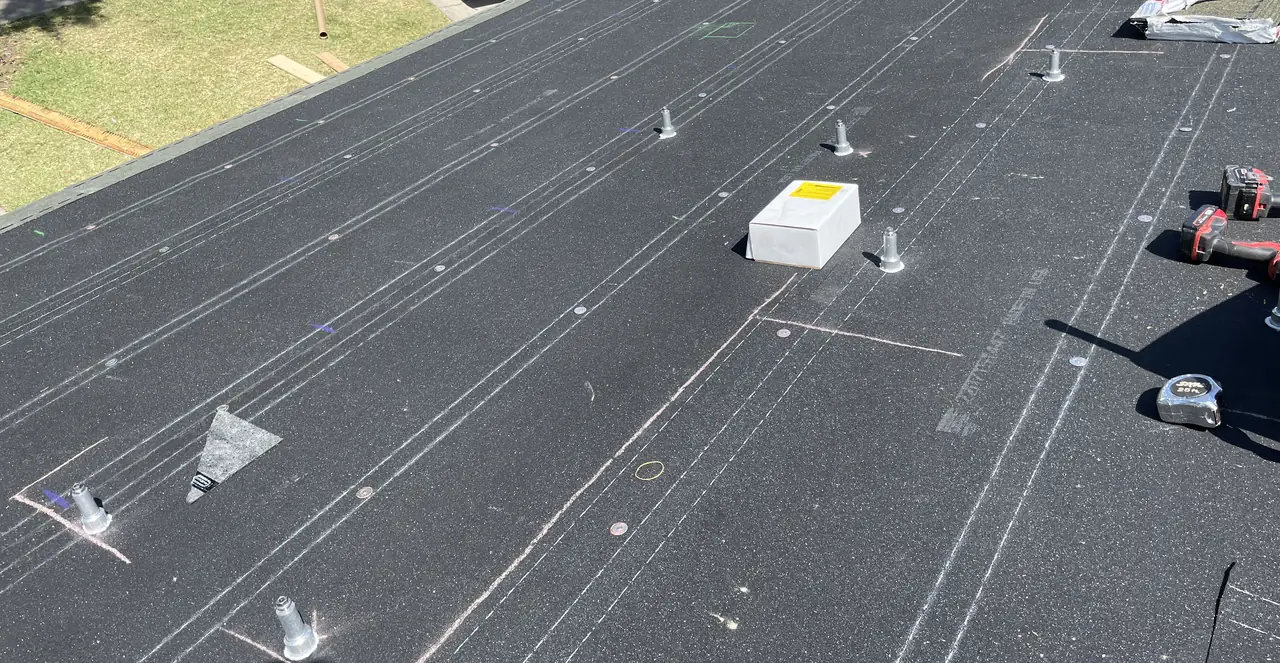
So the array was set out before anything else happened. Rows chalked on the felt where they would sit, spacing measured, every foot position marked, and then the flashed feet fixed down through the underlayment into the rafters. No modules, no rails, nothing else on the roof — just a grid of standoffs on a bare deck, which is what a correctly sequenced job looks like at that stage.
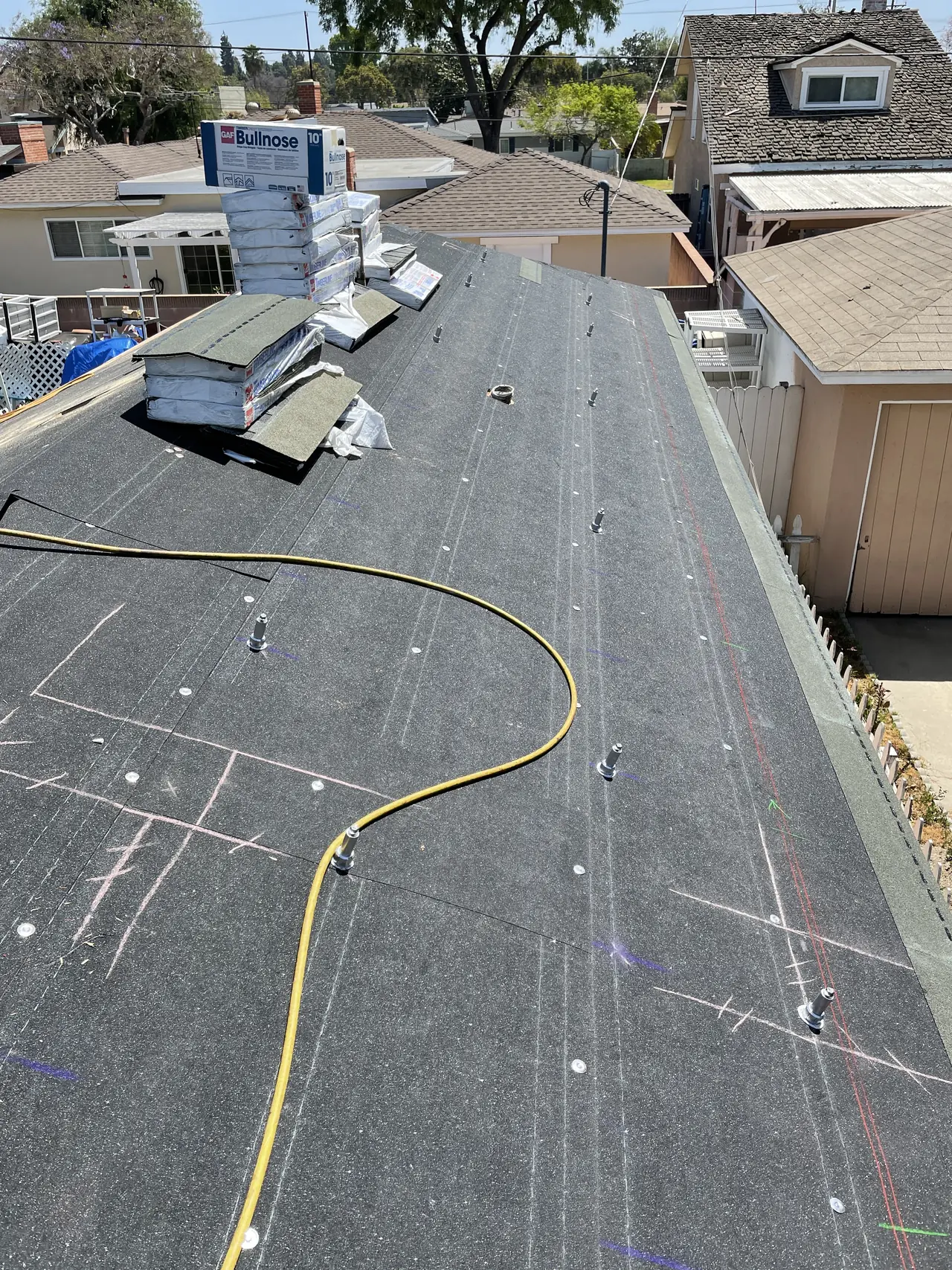
Then the roofers came back over the top of it. Each new shingle course laps over the flange of the foot it meets, exactly the way it laps over a vent flashing, so the waterproofing is the roof's own rather than a patch added afterwards. Nobody lifts a finished shingle, nobody cuts one, and the array's footprint is built into the covering from the first course up.
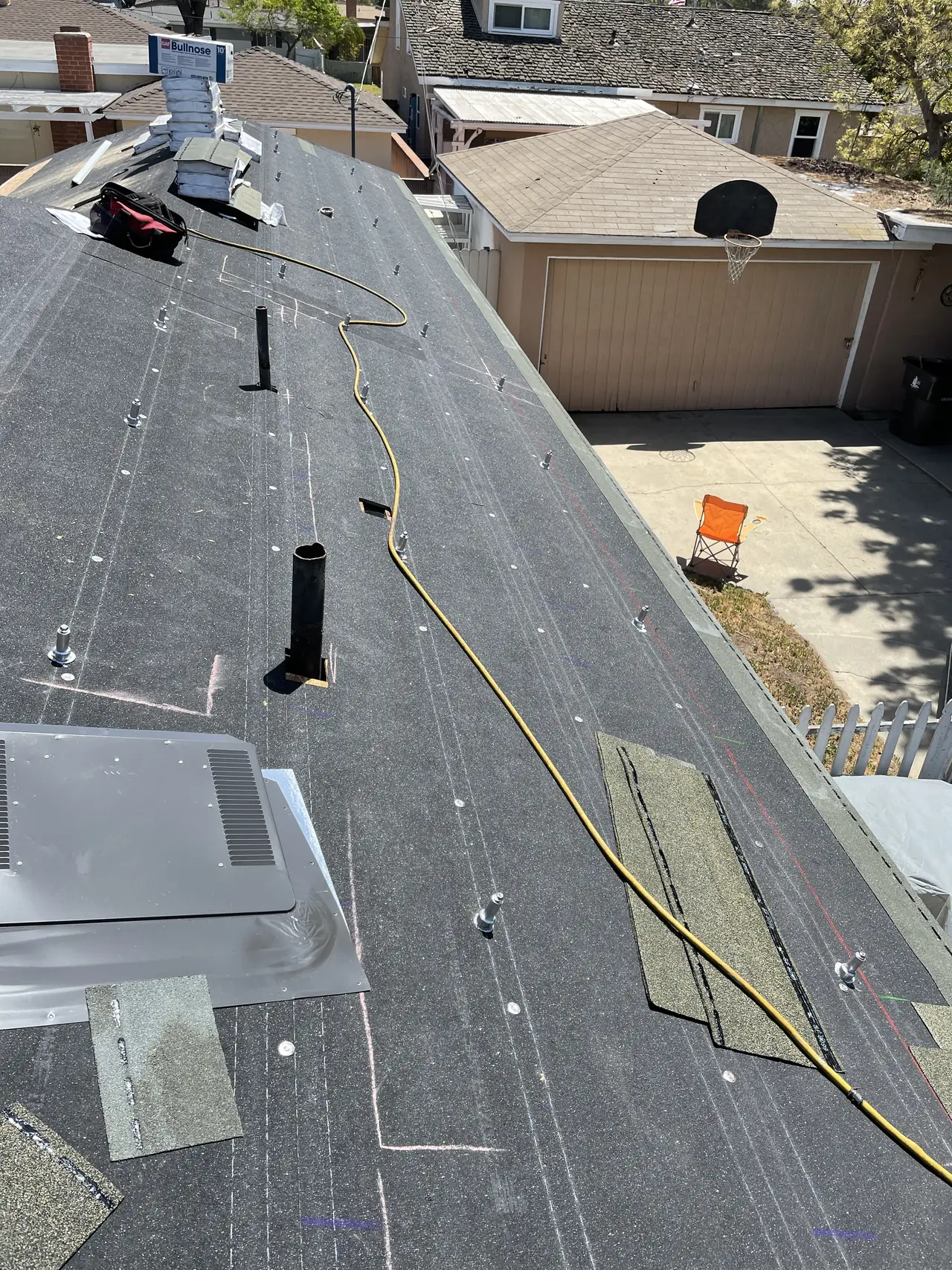
One detail decided before any of that, and it is the part of this job that actually needed judgment. The stamped drawings specified one style of flashed attachment; an open deck being re-covered wants another — a taller standoff the new courses can be worked around. Getting that wrong is expensive in a way that is invisible for years, because the wrong height leaves either a flange the shingles cannot lap or a post that fouls the rail. So the substitution and its height were confirmed before a single course went down, and the drawings were revised to describe what had actually been fixed to the rafters.
The rest of the installation followed in the first week of July: rails and twenty-seven modules of 370 watts onto the standoffs that were already there, a SolarEdge inverter, and monitoring on a cellular link rather than the house network. Nothing had to be opened up again. The final inspection passed on 13 July.
The practical version of all this: if your roof is due to be replaced and solar is anywhere in the plan, say so before the roofers start. Mounting that goes in with the covering is drier and cheaper than mounting cut into it afterwards, and the window lasts only as long as the deck is open.
How it ran
| Early May 2021 | Roof stripped for re-covering; array set out in chalk on the open deck |
|---|---|
| 3 May 2021 | Standoff type and height confirmed against the drawings before any course went down |
| 4 May 2021 | Flashed feet fixed into the rafters through the underlayment |
| Same week | New shingles laid over the flanges of every foot |
| 6 July 2021 | Rails, 27 modules and the inverter installed on the existing feet |
| 13 July 2021 | Final inspection passed |
The mounting went in with the covering, and the finished roof never had to be opened again.
What we did
- Set the whole array out in chalk on the open deck before anything was fixed.
- Checked the specified attachment against what an open deck actually needs and confirmed the substitution and its height before a course went down.
- Fixed the flashed feet into the rafters through the underlayment while the roof was still stripped.
- Coordinated with the roofing work so every new shingle course lapped over the flanges.
- Returned in July to install the rails, twenty-seven REC 370 W modules and the inverter on the feet already in place.
- Set the monitoring up on a cellular link and passed the final on 13 July 2021.
System specifications
| Modules | 27 × REC 370 W — 9.99 kW DC |
|---|---|
| Inverter | SolarEdge |
| Mounting | Flashed feet fixed to the rafters through the underlayment |
| Waterproofing | New shingle courses lapped over every flange |
| Roof | Composition shingle, re-covered over the mounts |
| Monitoring | Cellular, five-year plan |
| Final inspection | Passed 13 July 2021 |
| Utility / AHJ | Southern California Edison / City of Long Beach |
Is your project like this one?
- Your roof is due for replacement and you are thinking about solar.
- You do not want anybody cutting into a brand new roof.
- Your drawings specify hardware and nobody has checked it against the roof.
- You are worried about how many holes are going into your roof.
- Your roofer and your solar installer have never spoken to each other.
Cali Energy in Long Beach
Long Beach is its own city, not a Los Angeles neighborhood: permits run through the City of Long Beach Building & Safety Bureau, interconnection through Southern California Edison.
A re-roof and a solar installation are usually two separate visits months apart, and the second one cuts into the first one's work. When they happen in the same season there is a better order available, and it only exists for a few days: while the old covering is off and the deck is open.
This installation is on the Long Beach projects page alongside the others, and what the work covers is set out on the Long Beach service area page.
- License and classifications: CSLB #1032379
- Official reference for this process: California Energy Commission — solar equipment lists
- Official reference for this process: City of Long Beach — Permit Center
Frequently asked questions
Should solar mounts go in before a new roof is laid?
If the timing allows, yes. While the deck is open the feet can be fixed straight into the rafters and the new shingle courses laid over their flanges, so the waterproofing is part of the roof instead of a patch added later. Nobody lifts or cuts a finished shingle afterwards. It is the driest and cheapest version of the job, and the window lasts only a few days.
What if the drawings specify the wrong attachment?
It gets caught before it is fixed, not after. The attachment that suits a finished shingle roof is not always the one that suits an open deck being re-covered, and the height has to let the new courses lap the flange without fouling the rail. Here the substitution was confirmed before a course went down and the drawings were revised to describe what was actually fixed to the rafters.
How is an ordinary solar mount waterproofed on shingle?
The course above the attachment is lifted, a lag goes into the rafter, a metal flashing slides up under that course, and the penetration is bedded in sealant so water runs over the flashing rather than into the hole. Done properly it lasts as long as the roof. It is still work done into a finished covering, which is what setting the feet early avoids.
Does Cali Energy work alongside a re-roof in Long Beach?
Yes, and it is worth arranging. When a Long Beach roof is being re-covered, Cali Energy sets the array out and fixes the mounting while the deck is open, checks the specified hardware against what the deck actually needs, and comes back for the rails, modules and electrical work. It takes one phone call before the roofers start. License CSLB #1032379.
What this would look like on your roof
Planning solar in Long Beach? Tell us your utility, your roof and what your bill looks like now, and we will model what a system like this would do on your house before you commit to anything.
Or call +1 (323) 844-7777 · Cali Energy, Northridge · CSLB #1032379 (B, C-10, C-39) — design, permits, install and electrical under one licensed contractor.
Related
This timeline reflects this property and this permitting path. Updated September 2026.