

Granada Hills, CA · November 2025 · LADWP / LADBS
The sealant is not what keeps the water out. The flashing is.
An array on composition shingle, documented one attachment at a time. Every mount on this roof is the same three steps, and the order of them is what decides whether a roof leaks in year eight.
A solar mount on a shingle roof is a hole through the covering, and there are two ways to close it. The wrong way is a bead of sealant over the fastener: it looks finished, it works for a few seasons, and then the sealant fails because sealant always fails. The right way is a metal flashing plate slid up under the course above the hole, so water running down the roof passes over the metal and back onto the shingle below. Sealant goes under the plate as a secondary barrier, not as the barrier.
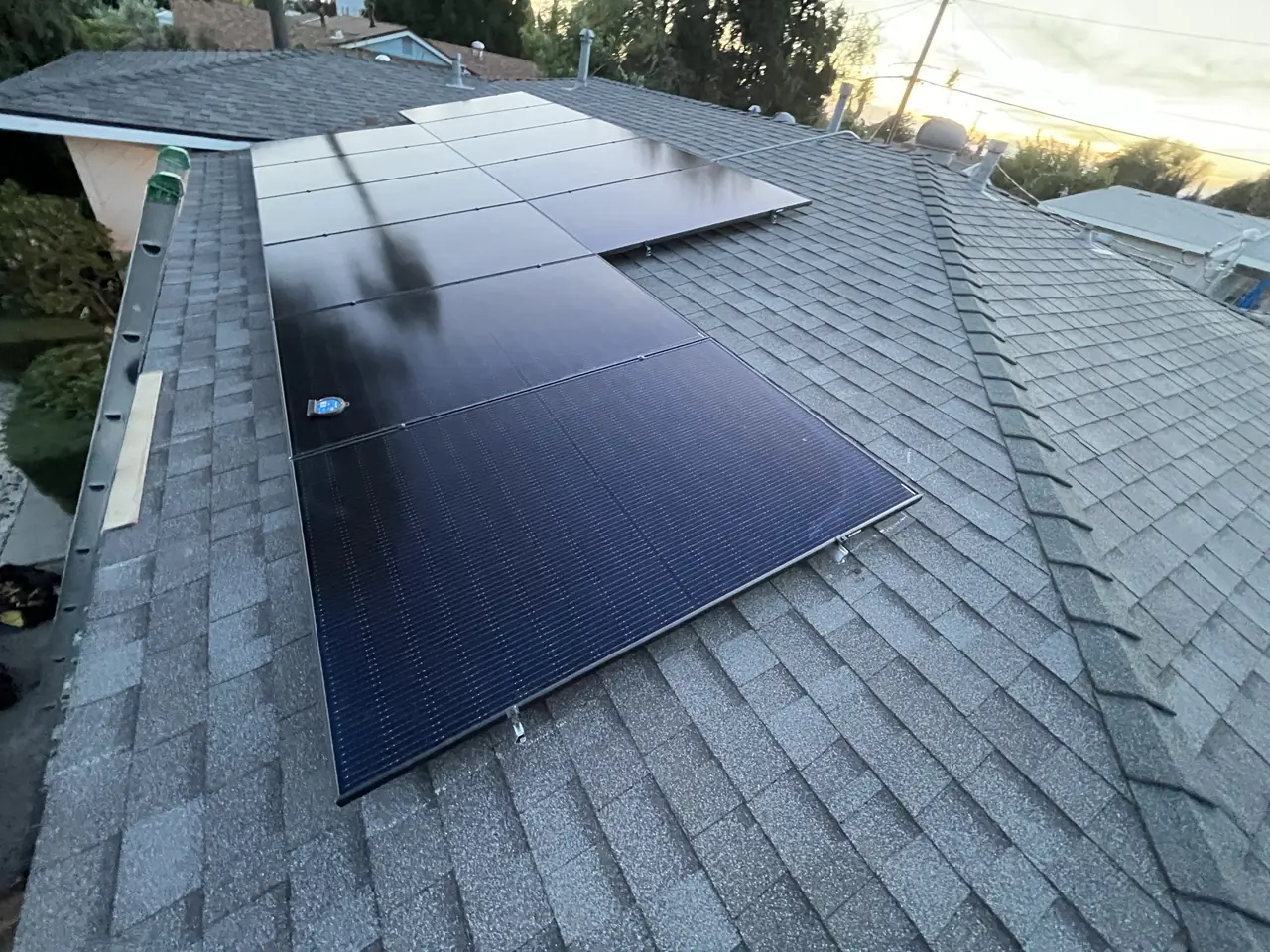
At a glance
- Roof
- Composition shingle
- Array
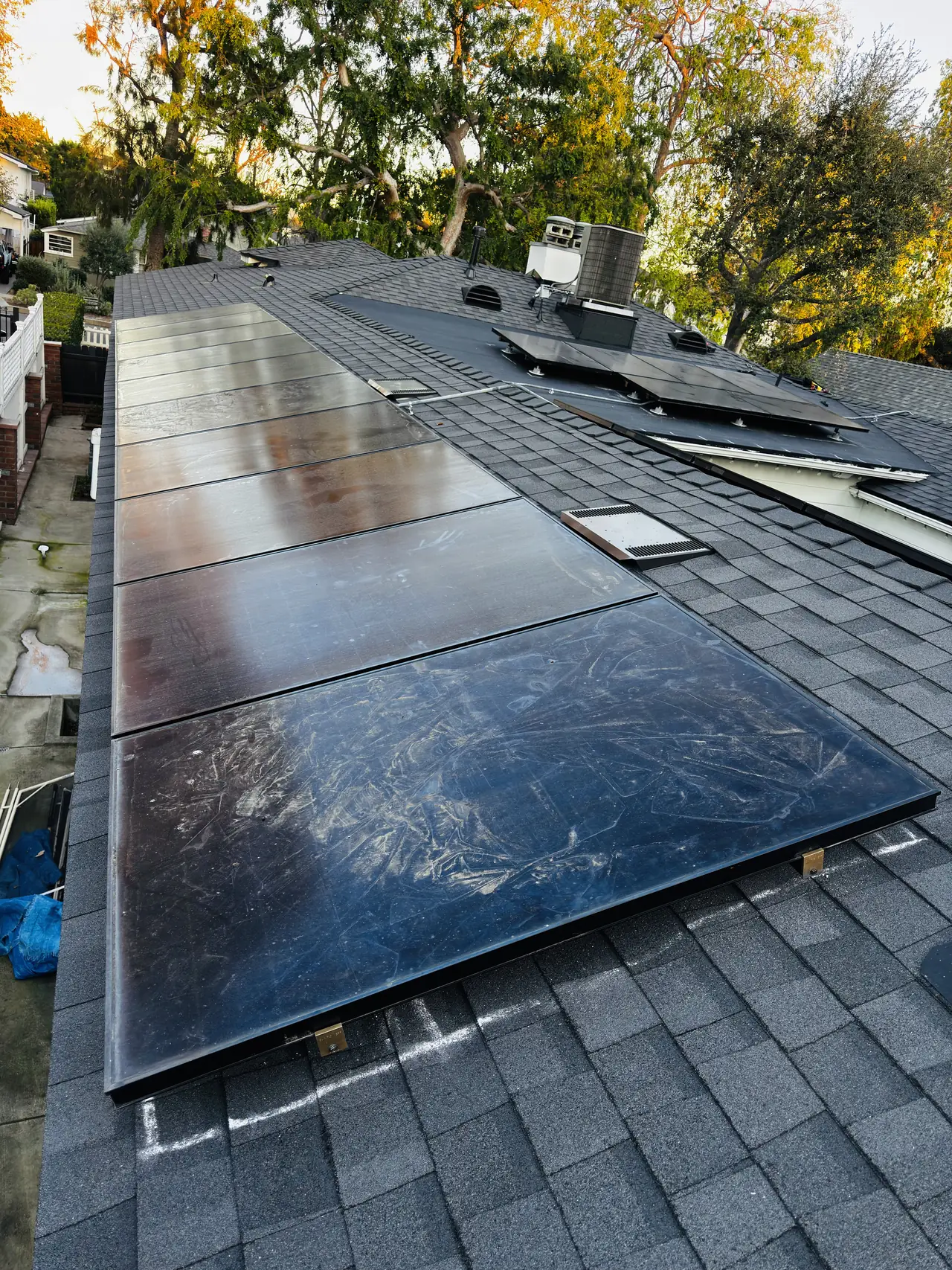
- Across several roof planes
- Every mount
- On a flashing plate, slid under the course above
- Sealant
- Horseshoe bead at each fastener, open at the downhill side
- Penetrations
- Existing vent pipes re-flashed where the work reached them
- Utility / AHJ
- LADWP / LADBS
The story
One detail gets repeated at every attachment on this roof, and it is the detail that decides whether a roof with an array on it is still dry in fifteen years, and it is invisible from the ground the day it is finished.
An attachment holding solar racking is a lag bolt driven through the covering into the structure. That is a hole in a roof. Whatever you do next is the entire waterproofing of that hole.
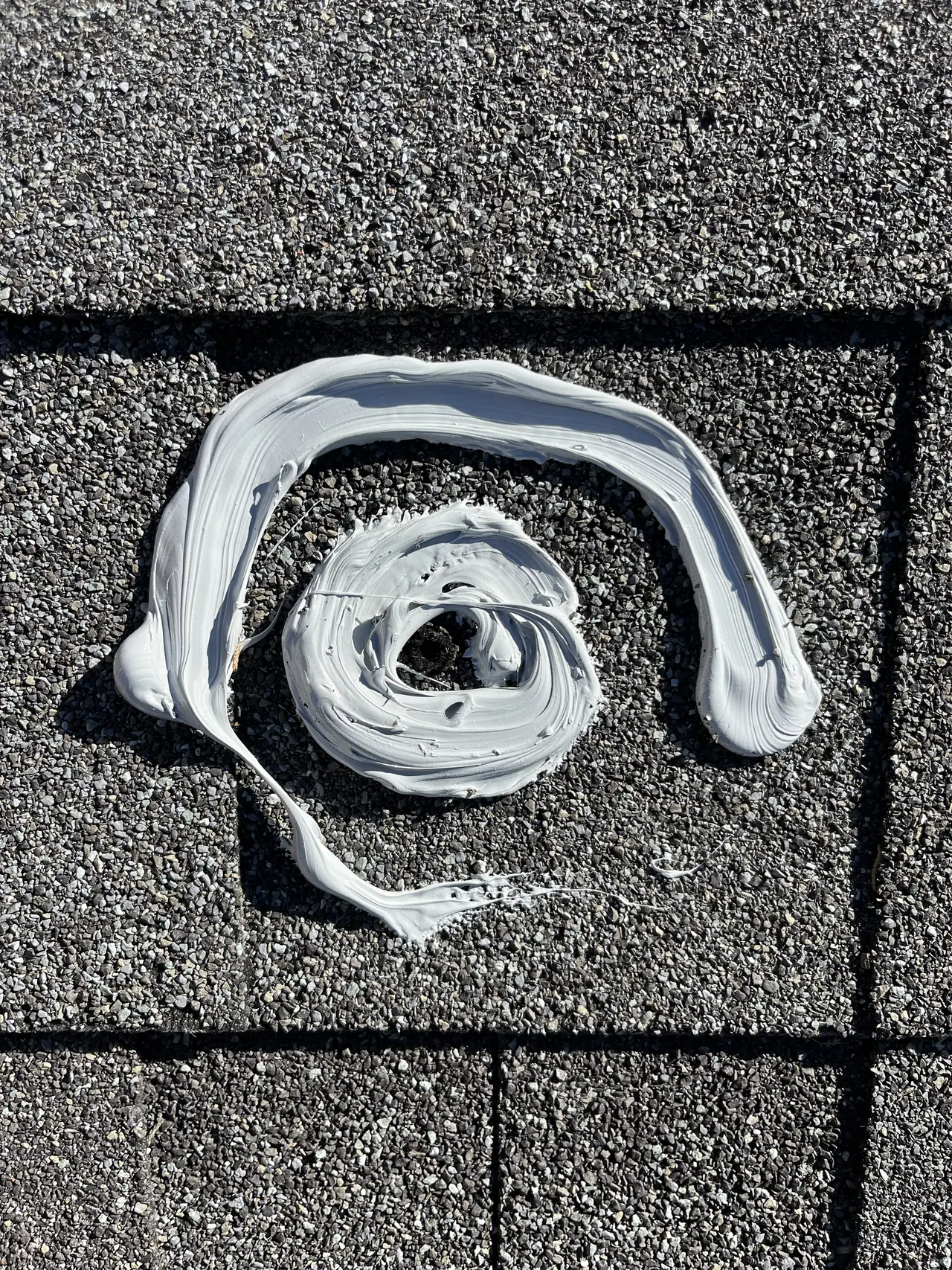
Start with what the sealant is and is not. It is a secondary barrier. It is not the waterproofing, and a roof where the sealant is doing the work is a roof on a timer — every sealant eventually shrinks, cracks and lets go, and a mount sealed that way fails silently, under a module, where nobody looks.
Two things about the sealant bead. It is applied around the hole before anything goes on top of it, not squeezed over the top afterwards. And it is a horseshoe rather than a closed ring — open at the downhill side. A closed ring would dam any water that did get under the plate and hold it against the hole. Left open at the bottom, the same water runs out.
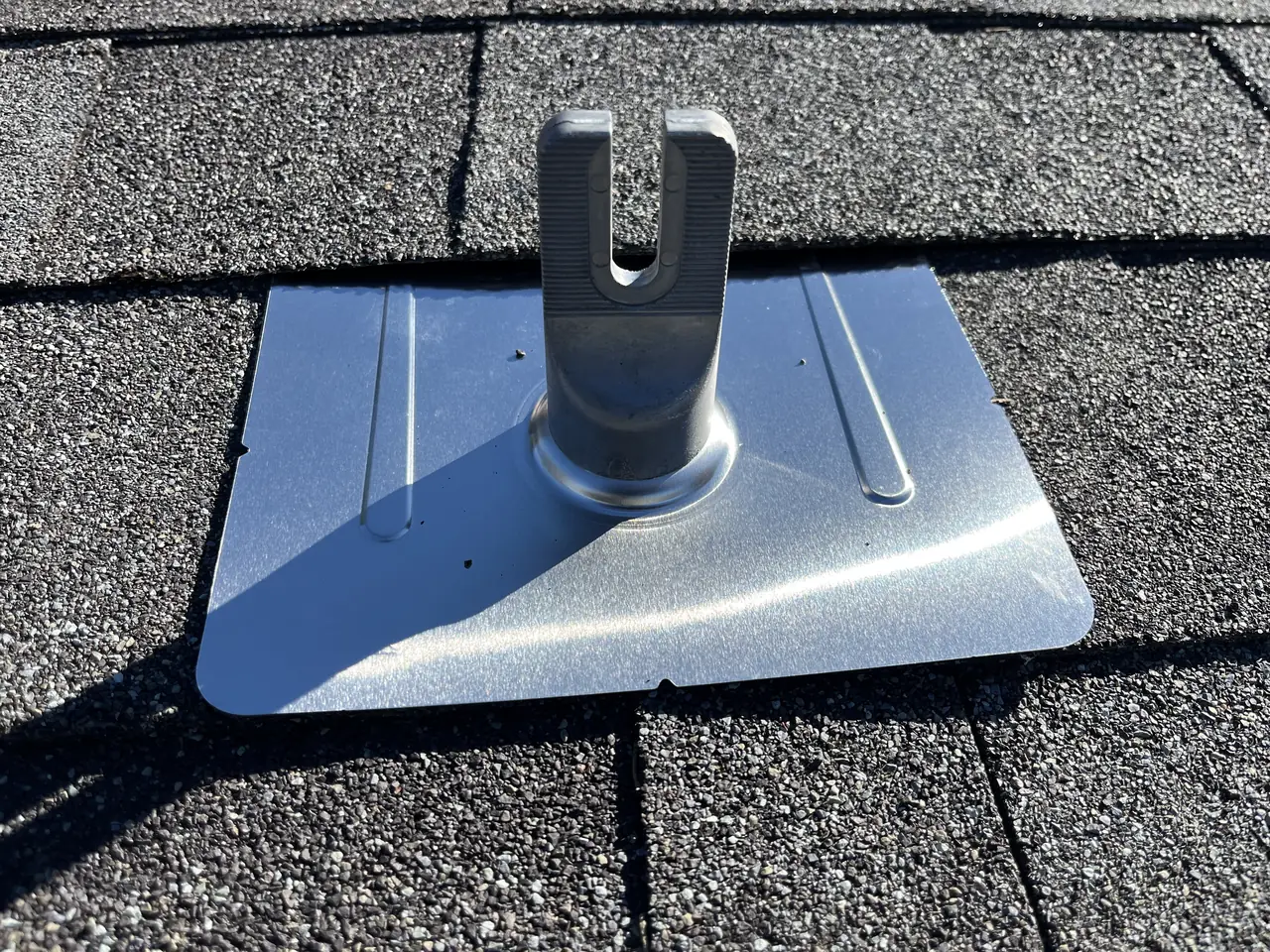
Then the flashing. A flat metal plate goes over the fastener, and the top edge of that plate slides up underneath the shingle course above it. That is the part people miss. Water running down a shingle roof reaches the plate, travels over the metal, and comes back out onto the shingle below the plate — it never reaches the hole, because the hole is under metal that is itself under a shingle.
If the plate is laid on top of the shingles instead of tucked under the course, the geometry is reversed: water runs down the shingle and straight onto the upslope edge of the plate, where the only thing stopping it is sealant. That installation looks identical from the driveway and is a different roof entirely.
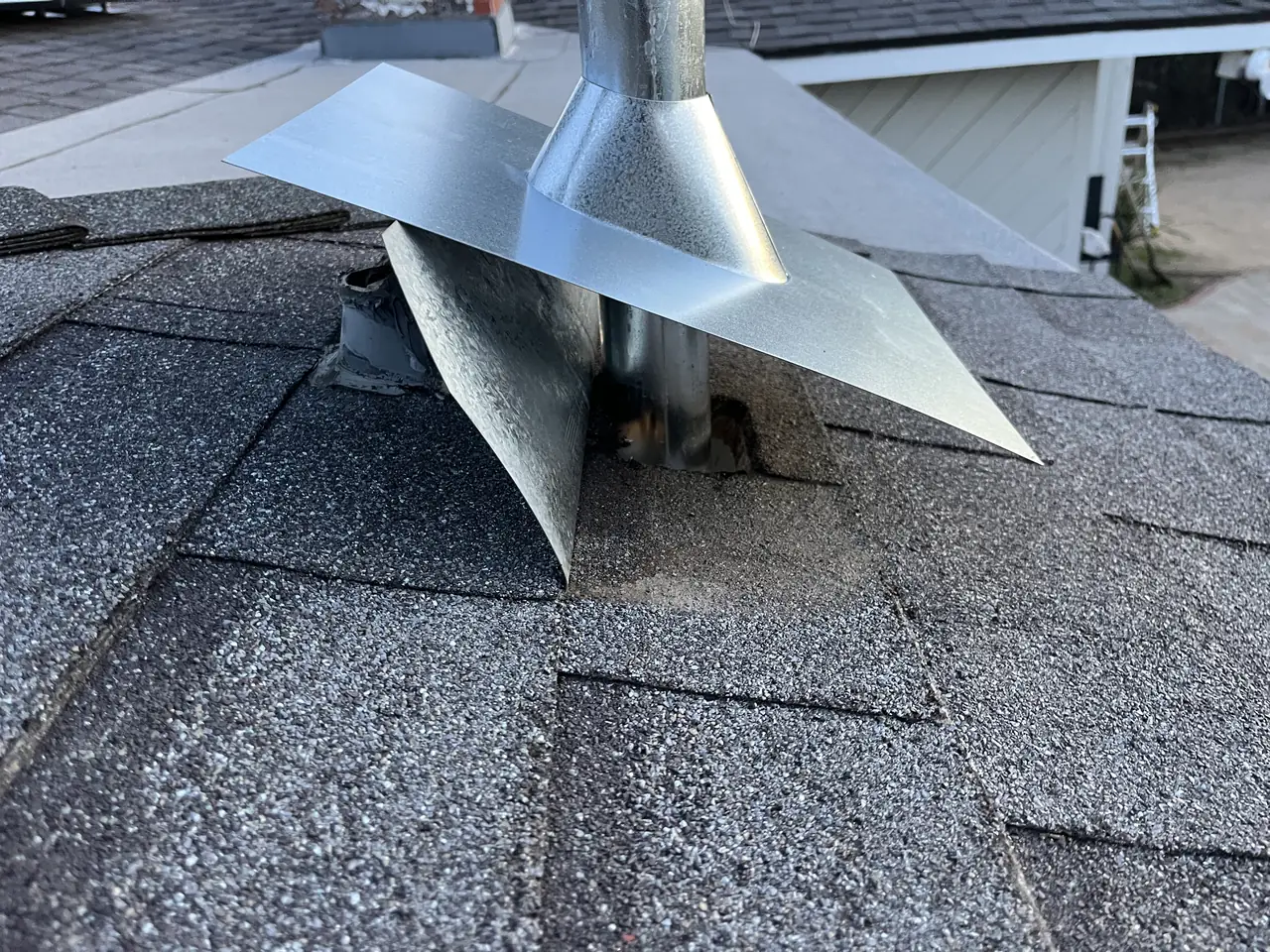
One more thing this roof shows. Where the work reached an existing penetration — a vent pipe, a flue — that penetration was re-flashed rather than worked around. Old pipe flashings on a roof of any age are frequently the first thing to fail, and they sit in exactly the part of the roof where an array is about to make future access expensive. Doing them while the crew is already up there costs an hour.
What to ask, if you are having this done. Ask whether the mounts are flashed or sealed. If the answer is sealed, that is your answer about the whole job. Ask to be sent photographs of the flashings before the modules go on — every competent installer takes them anyway, because they are the evidence the work was done properly and the only evidence that exists once the array is on top.
And if somebody is already on your roof, ask them to look at the existing pipe flashings while they are there. It is the cheapest roofing work you will ever buy, and the window closes the day the array goes on.
The modules went on over flashed attachments and re-flashed vents, the final passed and the system has been running since. Cali Energy flashes every mount on a Granada Hills shingle roof, because the alternative is a roof warranted by a tube of sealant.
How it ran
| November 2025 | Attachments set and flashed, mount by mount |
|---|---|
| November 2025 | Existing vent penetrations re-flashed |
| November 2025 | Rails and modules set across several roof planes |
One detail, repeated at every attachment. That is the whole standard.
What we did
- Flashed every attachment with a plate tucked under the shingle course above it.
- Applied sealant under the plate, open at the downhill side, as a secondary barrier.
- Re-flashed existing vent penetrations while the roof was accessible.
- Photographed each attachment before the modules covered it.
System specifications
| Roof | Composition shingle |
|---|---|
| Array | Across several planes of the same roof |
| Attachment | Lag into structure, flashing plate under the course above |
| Sealant | Applied under the plate as a horseshoe, open at the downhill side |
| Existing penetrations | Vent pipes re-flashed while the roof was open |
| Evidence | Each attachment photographed before the modules went on |
| Utility / AHJ | LADWP / LADBS |
Is your project like this one?
- You have composition shingle and an array is being quoted.
- You have been shown a photograph of sealant and told the roof is watertight.
- You want to know what to ask for before the modules go on.
- Your roof has old vent flashings and an array is about to go over that area.
- You are comparing two quotes and the difference is not in the modules.
Cali Energy in Granada Hills
Granada Hills sits inside City of Los Angeles boundaries, so every project here is permitted through LADBS and interconnected through LADWP. Our work in Granada Hills runs from single-row arrays on accessory dwelling units to systems on underground services, on composition shingle and on concrete tile.
Composition shingle is the common roof here, and it is the one where a solar mount is most often done badly — because a bead of sealant looks like a finished job from six feet away.
This installation is on the Granada Hills projects page alongside the others, and what the work covers is set out on the Granada Hills service area page.
- License and classifications: CSLB #1032379
- Official reference for this process: LADBS — plan review and permitting
Frequently asked questions
Are solar mounts supposed to be sealed or flashed?
Flashed. A metal plate goes over the fastener with its top edge slid under the shingle course above, so water travels over the metal and back onto the roof below it. Sealant belongs underneath that plate as a secondary barrier. A mount held watertight by sealant alone is a mount that will leak, because every sealant eventually lets go.
Why is the sealant bead shaped like a horseshoe?
So that anything which does get under the plate can run out again. A closed ring of sealant traps water against the fastener hole and holds it there. Left open at the downhill side, the same water drains away. It is a small detail and it is the difference between a secondary barrier and a small reservoir.
How can I tell whether my mounts were flashed properly?
Once the modules are on, you cannot — which is why the photographs taken during installation are the only evidence that will ever exist. Ask for them before the array goes up, and look for the upper edge of each plate disappearing under the course above rather than sitting on top of it.
Should old vent flashings be replaced at the same time?
If the array is going near them, yes. Old pipe flashings are among the first things to fail on any roof, and once modules are over that area the cost of reaching them multiplies. An hour of work while the crew is already on the roof removes a problem that is otherwise waiting fifteen years.
How does Cali Energy attach an array to a Granada Hills shingle roof?
With a flashing under the shingle course above the mount, so that water running down the roof passes over the metal and back onto the covering without reaching the fastener. Sealant alone is not an attachment method. Cali Energy flashes every penetration on a Granada Hills shingle roof, and re-flashes the existing vent pipes in the array footprint while the crew is already up there.
What this would look like on your roof
Planning solar in Granada Hills? Tell us your utility, your roof and what your bill looks like now, and we will model what a system like this would do on your house before you commit to anything.
Or call +1 (323) 844-7777 · Cali Energy, Northridge · CSLB #1032379 (B, C-10, C-39) — design, permits, install and electrical under one licensed contractor.
Related
This timeline reflects this property and this permitting path. Updated September 2026.