

Pacoima, CA · June 2025 · LADWP / LADBS
Next door in Pacoima, a different roof entirely.
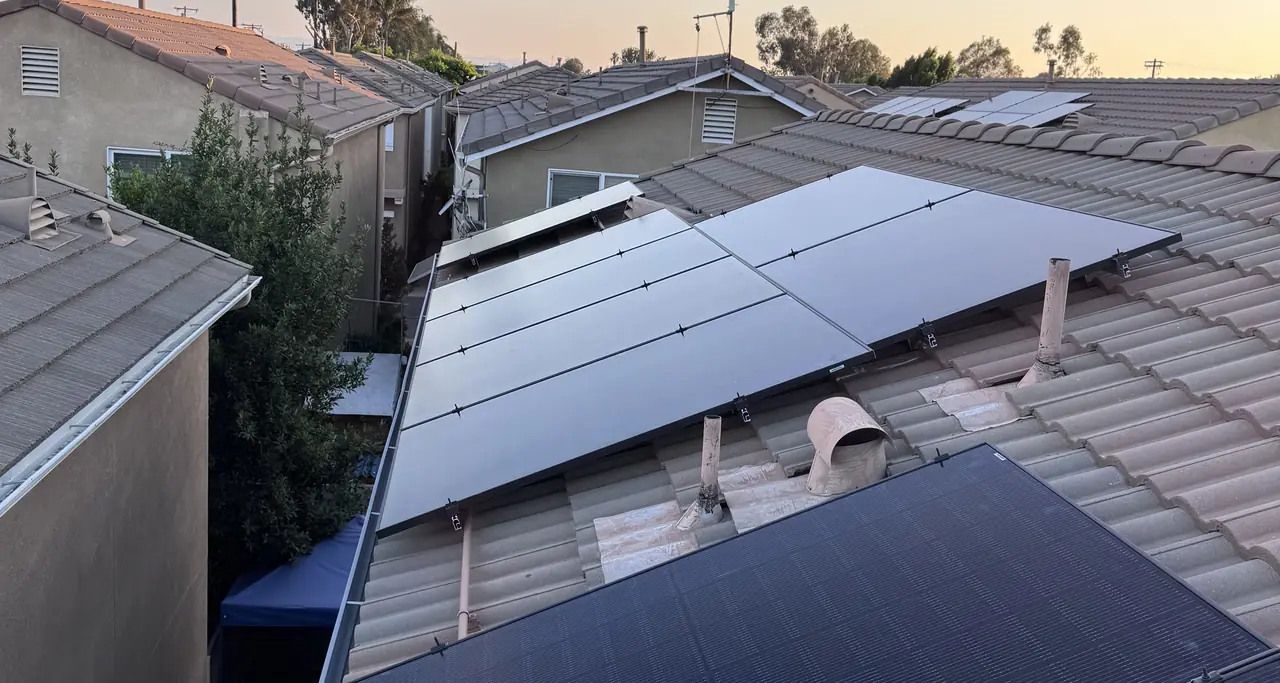
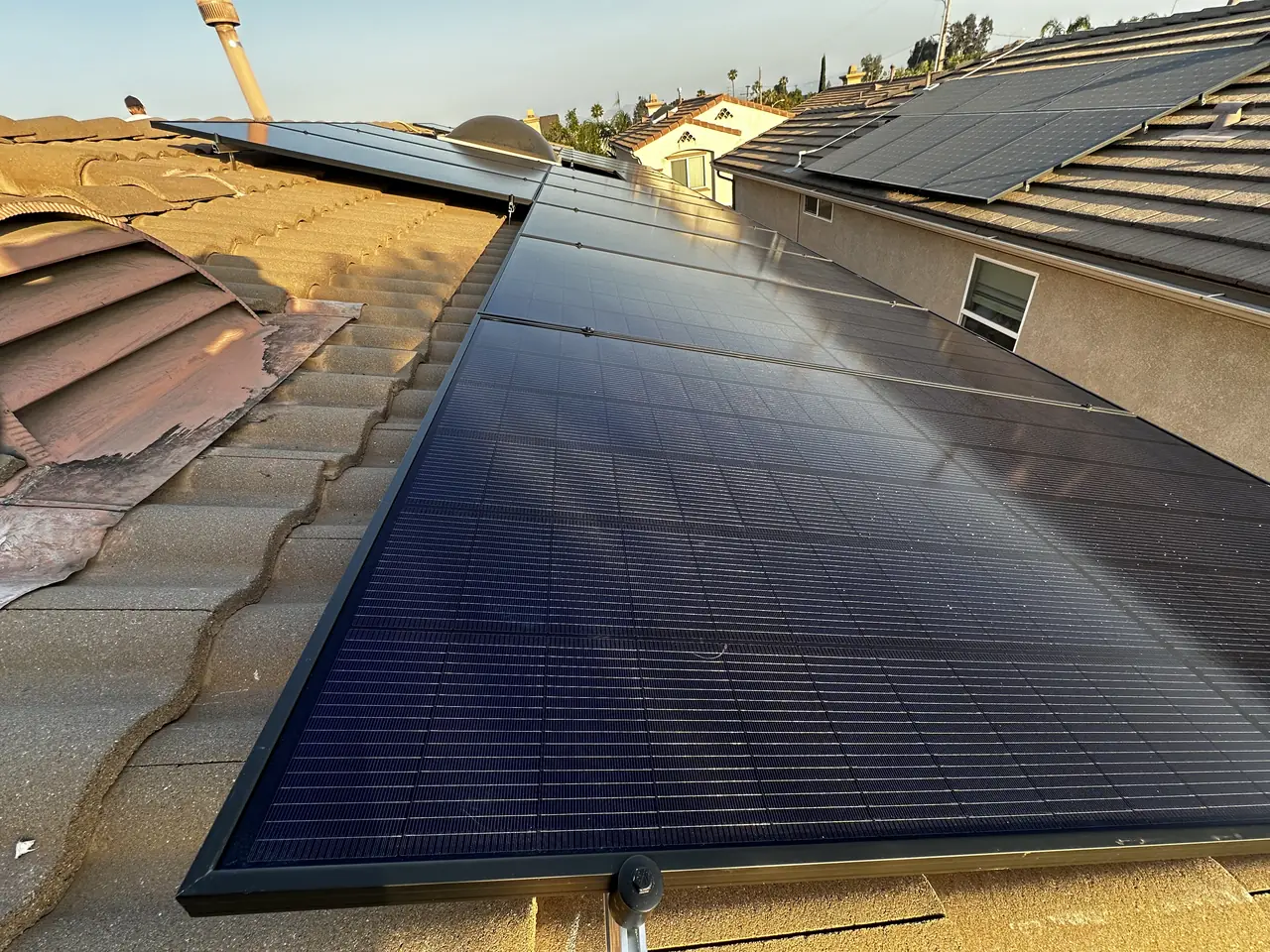
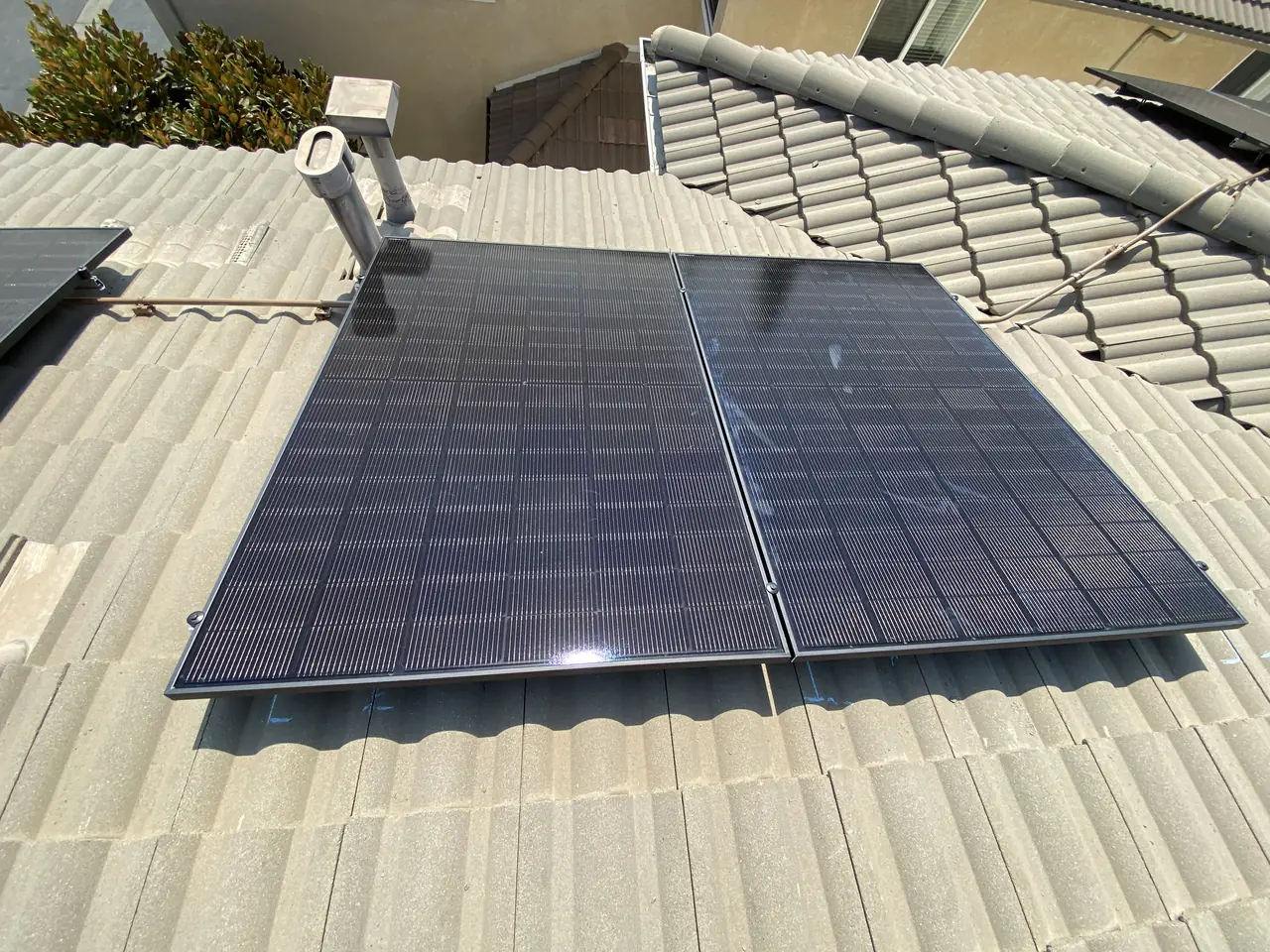
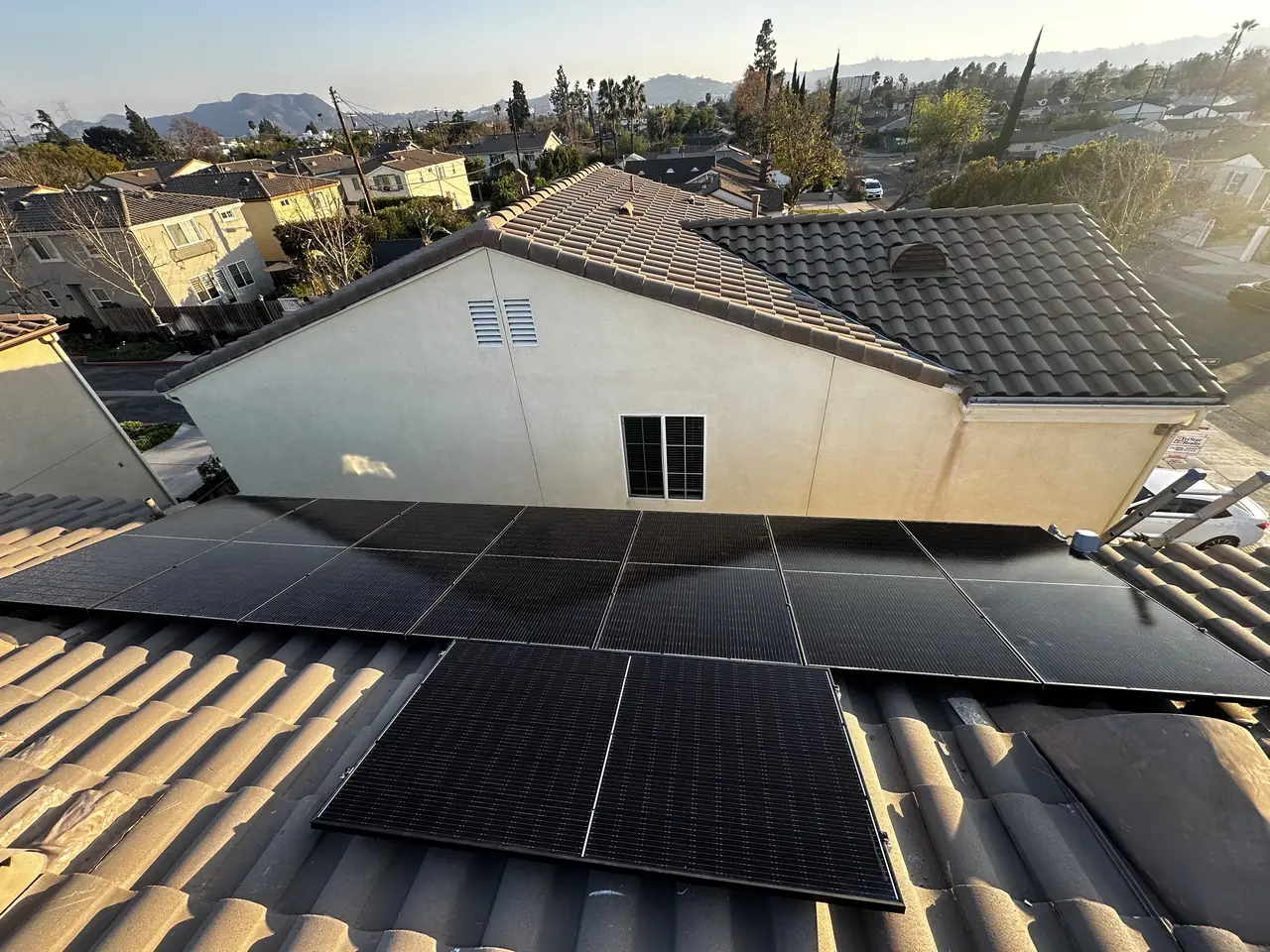
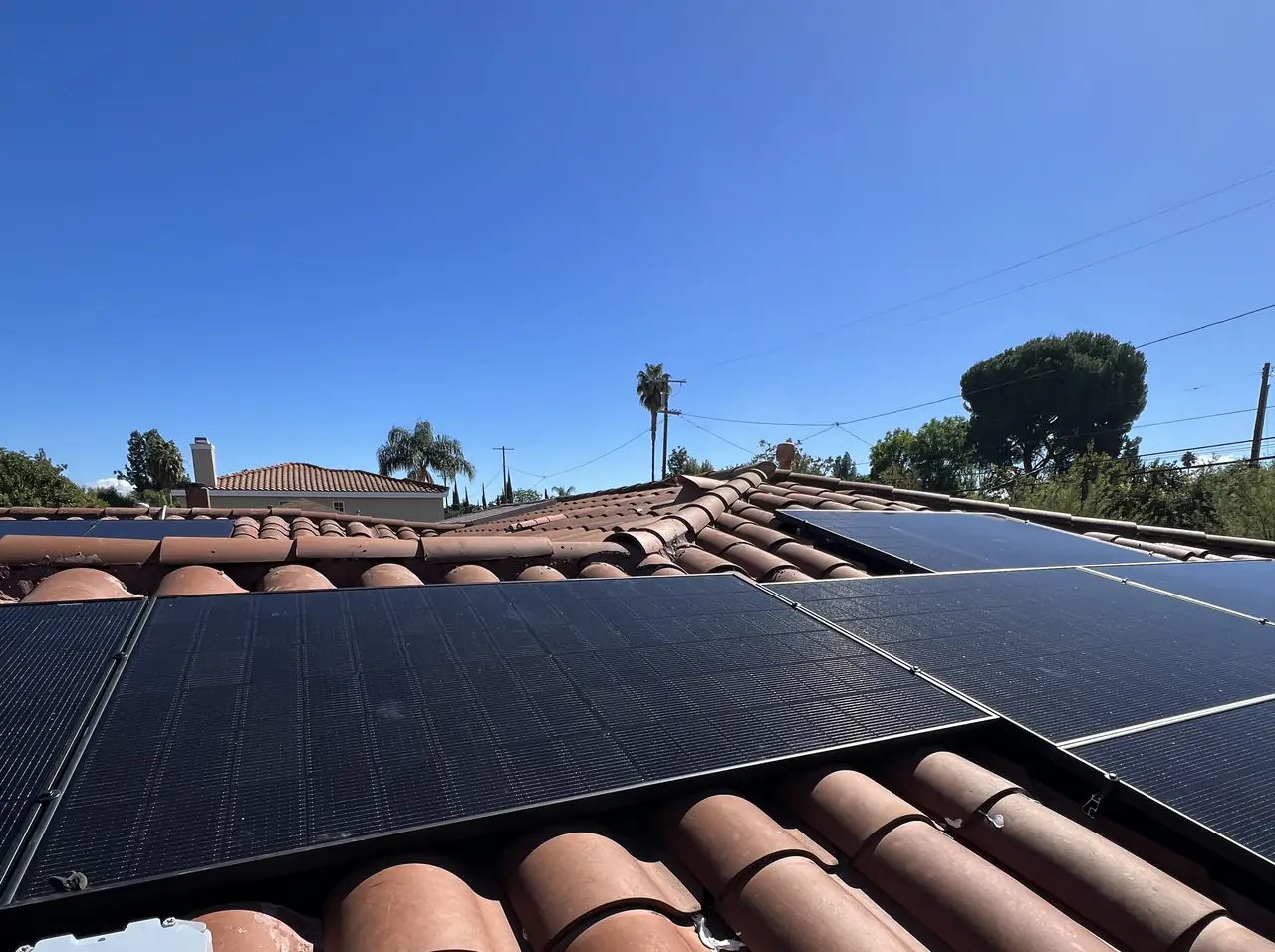
The first of two neighboring Pacoima houses. This one is concrete tile, which changes the attachments, the pace and the planning.
Two neighboring houses on the same Pacoima street took solar ten weeks apart in the summer of 2025, and the roofs are not the same. This one is concrete tile. Cali Energy works tile by lifting the covering along the rail lines, fixing the attachment into the structure below, flashing every penetration and resetting the tile over the top. It is slower than composition shingle, it breaks more material, and it has to be laid out before anything is lifted rather than adjusted as the crew goes. Both Pacoima projects ran their own LADBS permit and their own LADWP interconnection through to permission to operate.
At a glance
- Roof
- Concrete tile
- Installed
- June 2025
- Neighboring project
- Composition shingle, ten weeks later
- Mounting
- Tile lifted along rail lines, penetrations flashed, tile reset
- Layout
- One clear plane, stopping short of hips and penetrations
- Breakage
- Expected and planned for; layout fixed before lifting
- Applications
- Separate permit and interconnection from the neighbor
- Utility / AHJ
- LADWP / LADBS
The story
Two neighboring houses on the same Pacoima street took solar in the same summer, ten weeks between them — two separate Cali Energy projects with separate applications. Neighbors often compare notes and assume the jobs were the same. They were not, because the roofs are not.
This one is concrete tile. On tile the array is not fixed through the covering the way it is on shingle. The tile comes off along the lines where the rails will run, the attachment is fixed into the rafters or the decking below, the penetration is flashed, and the tile goes back over it. Done properly the finished roof looks as though the mounts grew out of it and the waterproofing is under the tile where it belongs rather than relying on a bead of sealant on top.
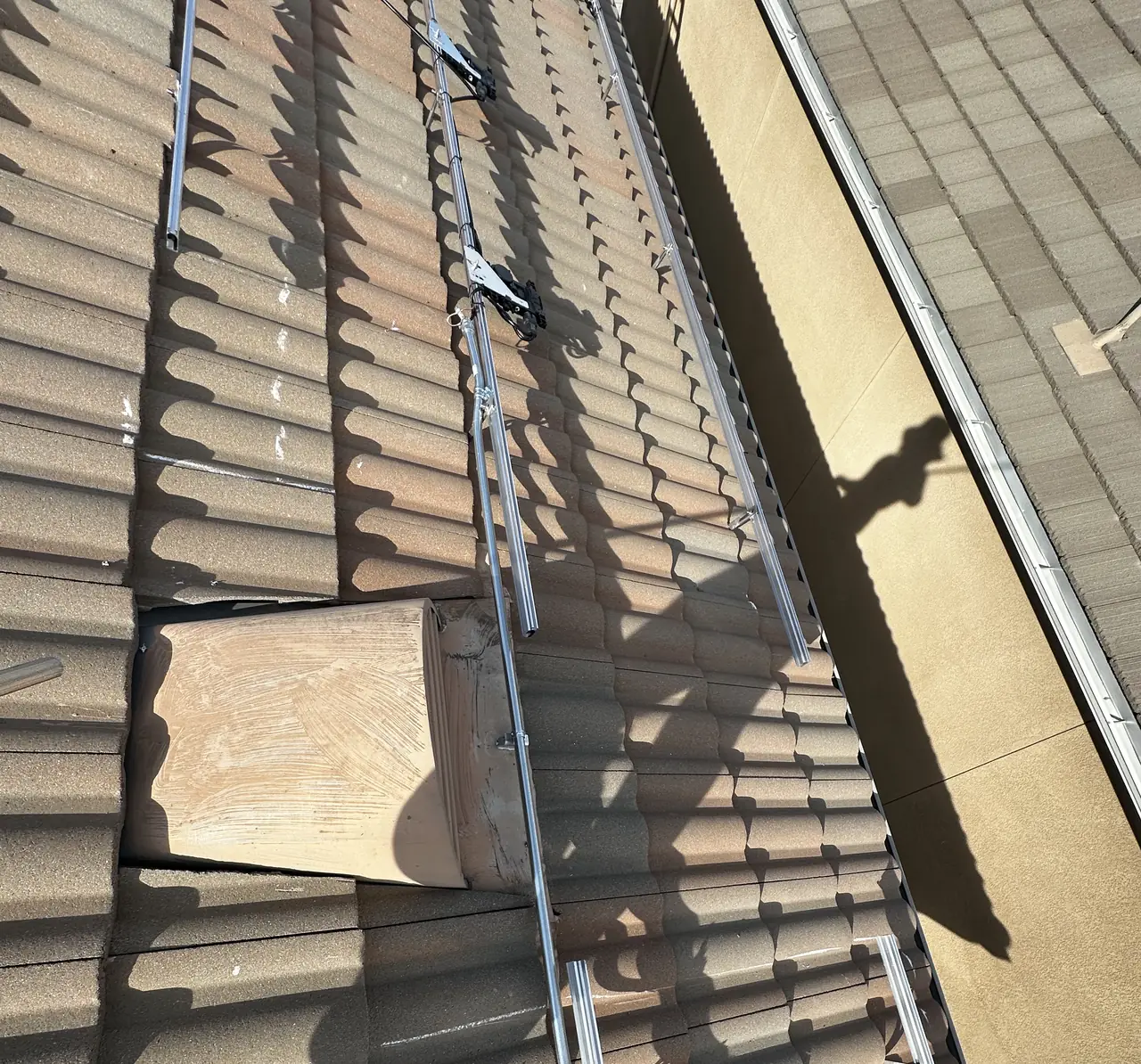
Two things follow from that. The first is pace: tile takes longer than shingle for the same number of modules, and a crew that is moving as fast on tile as it would on shingle is cutting something. The second is planning. Tile breaks. Some of it will break no matter how carefully it is handled, and the older and more brittle the profile, the more of it goes. That is why the layout is fixed on paper before the first piece is lifted — every adjustment made on the roof costs material that may not be replaceable in a matching color.
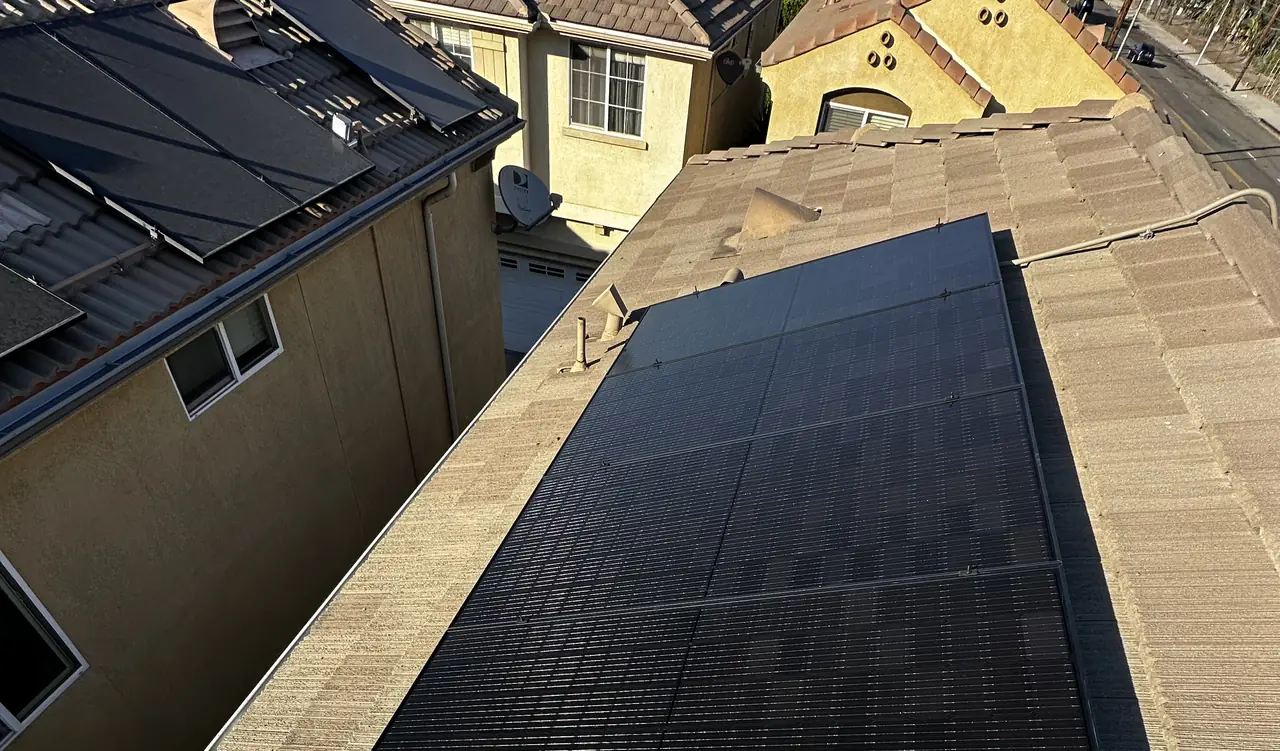
The other choice is where the array sits. Rather than filling the roof, the modules occupy one clear plane and stop where the roof stops being simple. That is deliberate. Working around a hip, a valley or a vent on tile multiplies the penetrations and the breakage for a small number of extra modules, and on a system sized to a household's actual usage those extra modules are rarely worth what they cost to place.
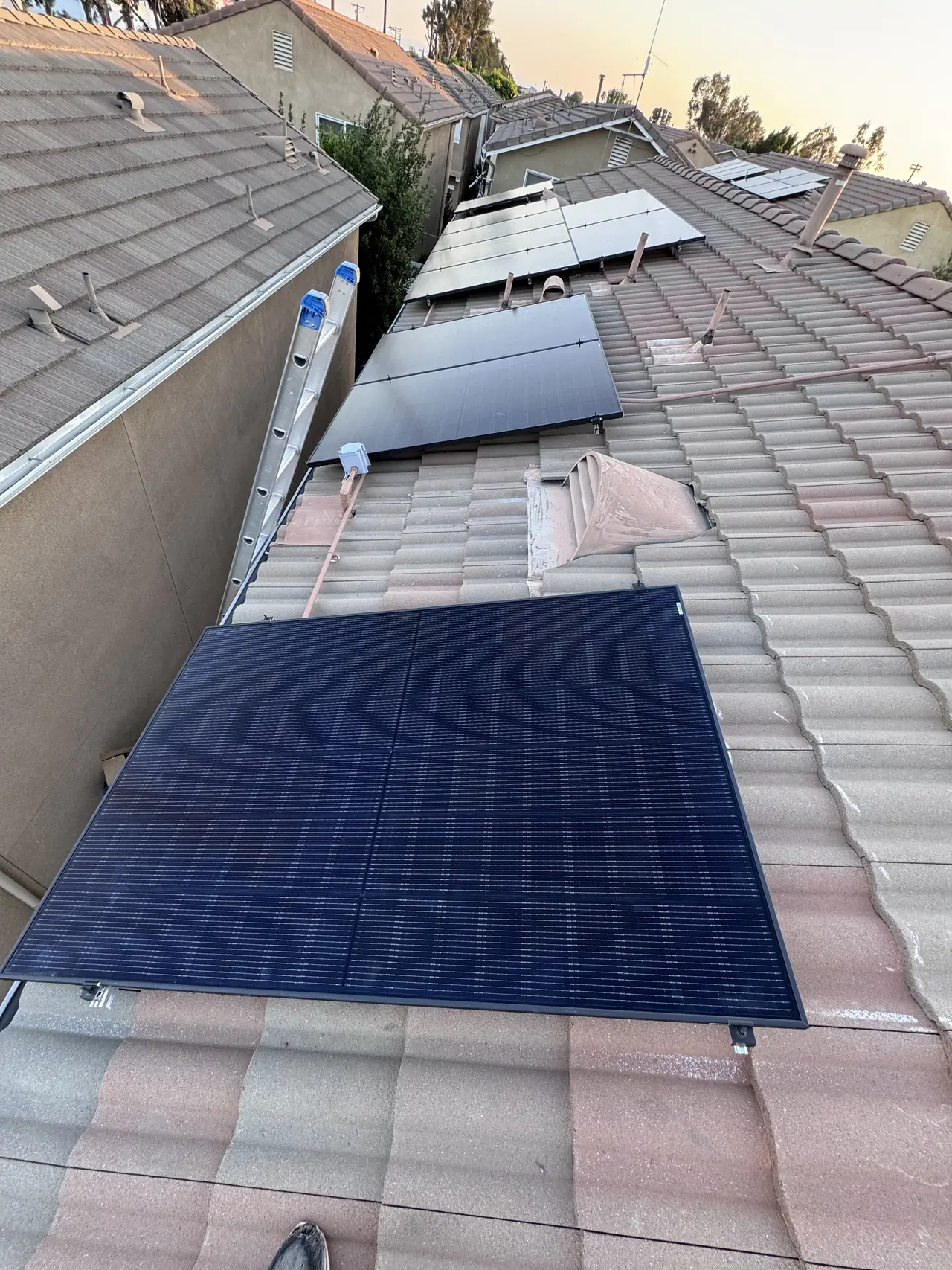
From there the project ran the ordinary Pacoima sequence: the LADBS permit closed at final inspection, the utility completed its interconnection review and set the net meter, and permission to operate followed. The house next door went through the same three steps on its own paperwork ten weeks later. Same street, same utility, same building department, same month's weather — and a completely different day's work on the roof.
How it ran
| June 2025 | Array installed on concrete tile |
|---|---|
| June – July 2025 | LADBS final inspection, then utility interconnection review, net meter and permission to operate |
| August 2025 | The neighboring house, on composition shingle, installed as a separate project |
Two neighboring properties, ten weeks apart, with different roofs and separate applications. This timeline reflects these properties and this period.
What we did
- Laid the array out on paper before lifting any tile (C-10).
- Fixed attachments into the structure below the covering rather than through it.
- Flashed every penetration and reset the tile over the top.
- Kept the array on one clear plane rather than working around hips and vents for marginal modules.
- Ran the neighboring property as its own project with its own application.
System specifications
| Roof | Concrete tile |
|---|---|
| Mounting | Tile hooks into the structure, penetrations flashed, tile reset |
| Flashing | Under the tile, not sealant on the surface |
| Layout | One clear plane, stopping short of hips and penetrations |
| Pace | Slower than composition shingle for the same module count |
| Neighboring project | Composition shingle, separate application |
| Utility / AHJ | LADWP / LADBS |
Is your project like this one?
- You have a concrete or clay tile roof.
- A neighbor next door has had solar installed and you are comparing quotes.
- You have been told tile and shingle cost the same to work on.
- You want to know why an array stops short of the edge of a roof.
- You are worried about tile breakage during an installation.
Cali Energy in Pacoima
Pacoima is a City of Los Angeles neighborhood in the northeast San Fernando Valley, which means the permit goes through LADBS and the interconnection through LADWP. The housing is mostly post-war single story on modest services, and the ZIP it shares with Arleta turns up in the paperwork more often than anyone expects.
This installation is on the Pacoima projects page alongside the others, and what the work covers is set out on the Pacoima service area page.
- License and classifications: CSLB #1032379
- Official reference for this process: California Building Standards Commission — California Building Standards Code
- Official reference for this process: LADBS — plan review and permitting
Frequently asked questions
Is installing solar on a tile roof different from shingle?
Yes, materially. On tile the covering is lifted along the rail lines, the attachment is fixed into the structure below, each penetration is flashed, and the tile is reset over the top. It takes longer than shingle for the same number of modules and it breaks material along the way. A tile job that is moving at shingle speed is skipping a step.
Will my tiles break during a solar installation?
Some will. Tile is brittle, older profiles more so, and even careful handling breaks a proportion of what is lifted. A good installer expects that, sources replacements before starting where the profile allows it, and fixes the layout before lifting anything so that nothing is moved twice.
Does Cali Energy install on tile roofs in Pacoima?
Yes. Cali Energy works on concrete tile, clay barrel tile and composition shingle across Pacoima, lifting and resetting tile over flashed penetrations rather than sealing on the surface. Nine completed Pacoima projects are on our projects page. Our license is CSLB #1032379.
Why does the array stop before the edge of the roof?
Because the last few modules usually cost more than they are worth. Working around a hip, a valley or a vent multiplies penetrations and, on tile, breakage. Code setbacks take some of the edge as well. On a system sized to a household's real usage, filling the roof is not the goal.
What this would look like on your roof
Planning solar in Pacoima? Tell us your utility, your roof and what your bill looks like now, and we will model what a system like this would do on your house before you commit to anything.
Or call +1 (323) 844-7777 · Cali Energy, Northridge · CSLB #1032379 (B, C-10, C-39) — design, permits, install and electrical under one licensed contractor.
Related
This timeline reflects this property and this permitting path. Updated September 2026.