

Pacoima, CA · August 2025 · LADWP / LADBS
The same Pacoima street, the same summer, a simpler roof.
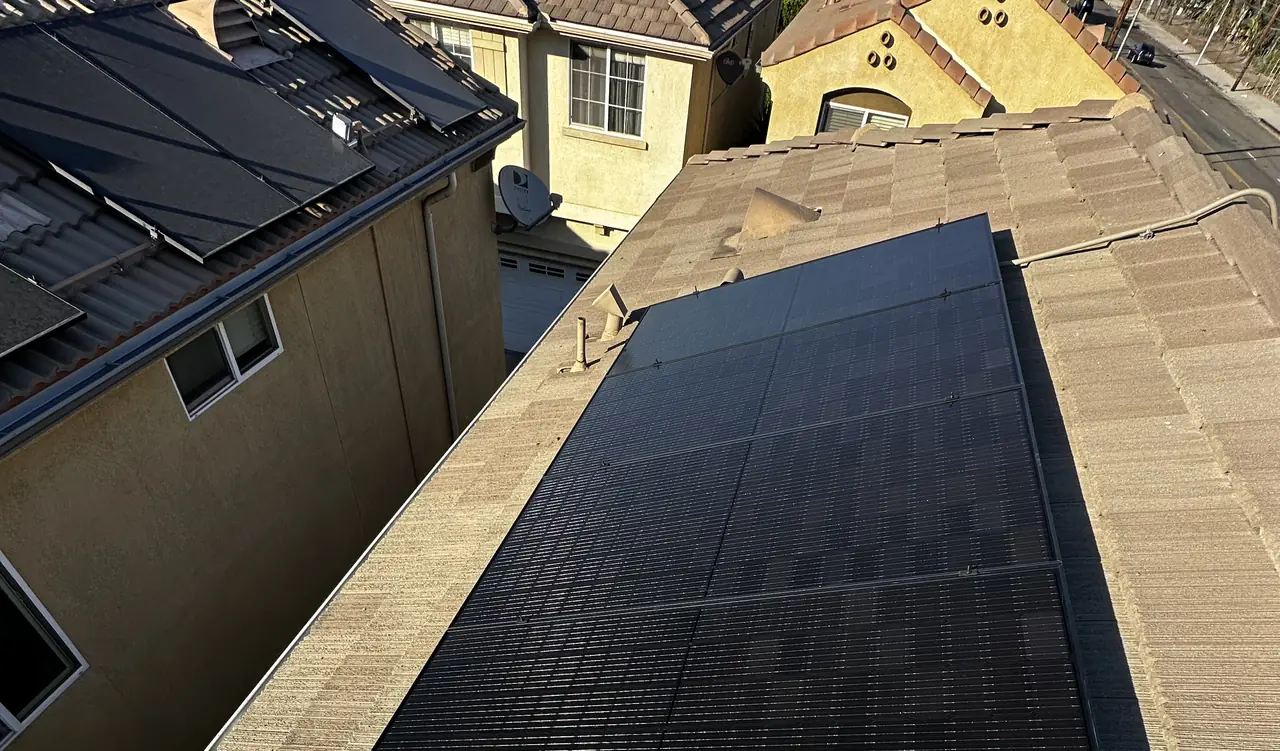
The second of two neighboring Pacoima houses. Composition shingle, one long plane, and a faster day's work than the tile roof next door.
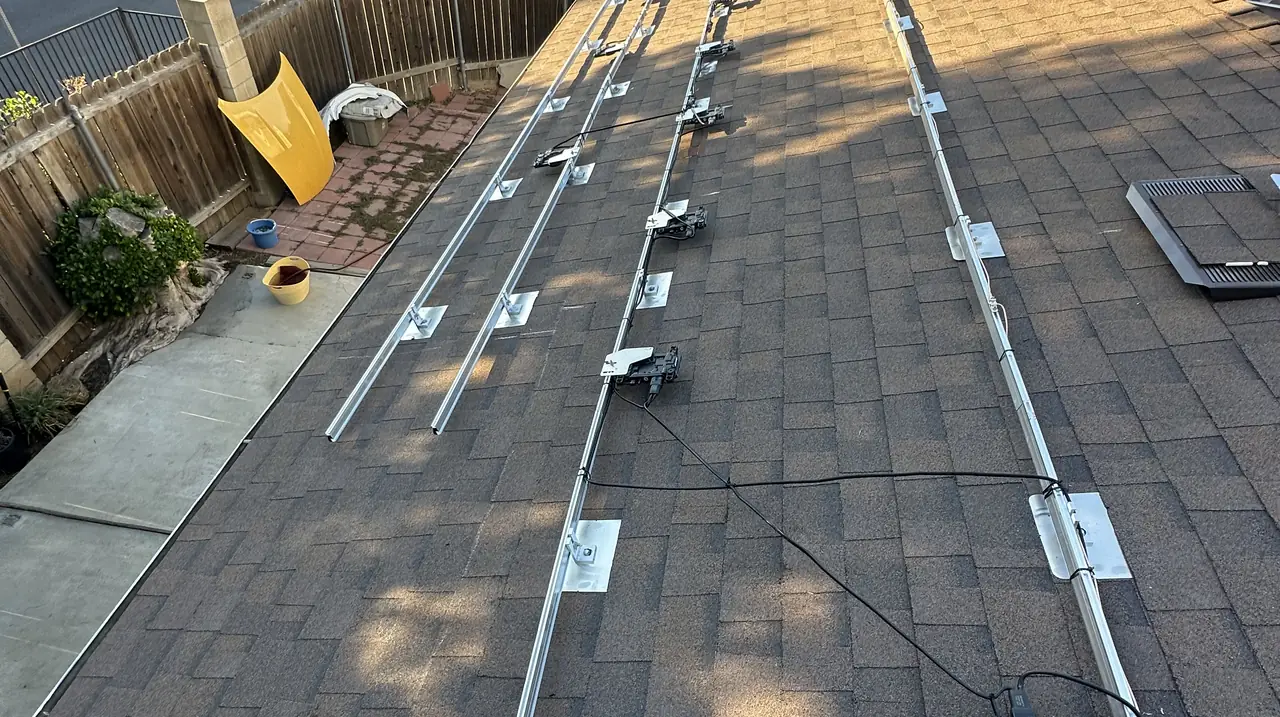
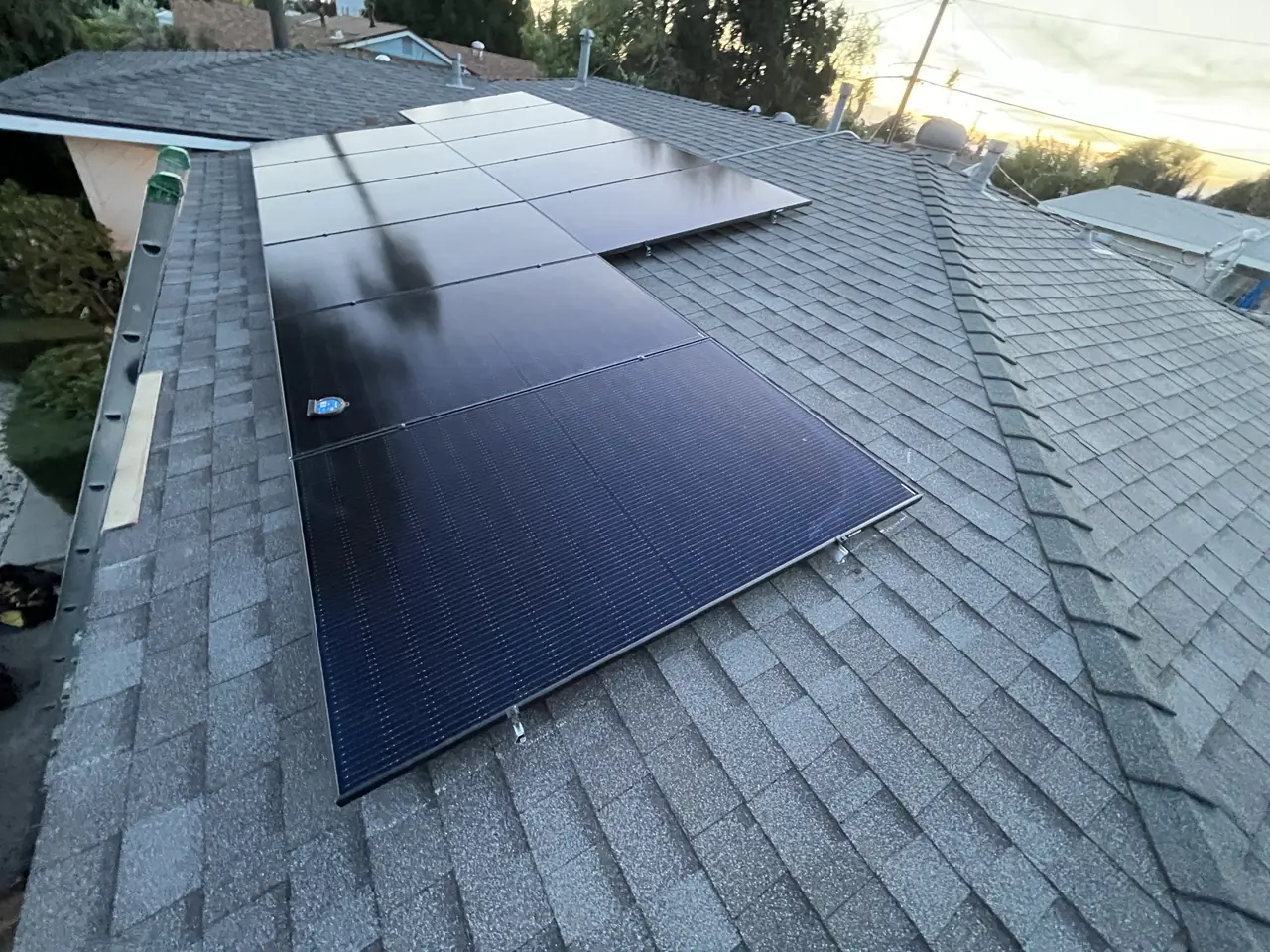
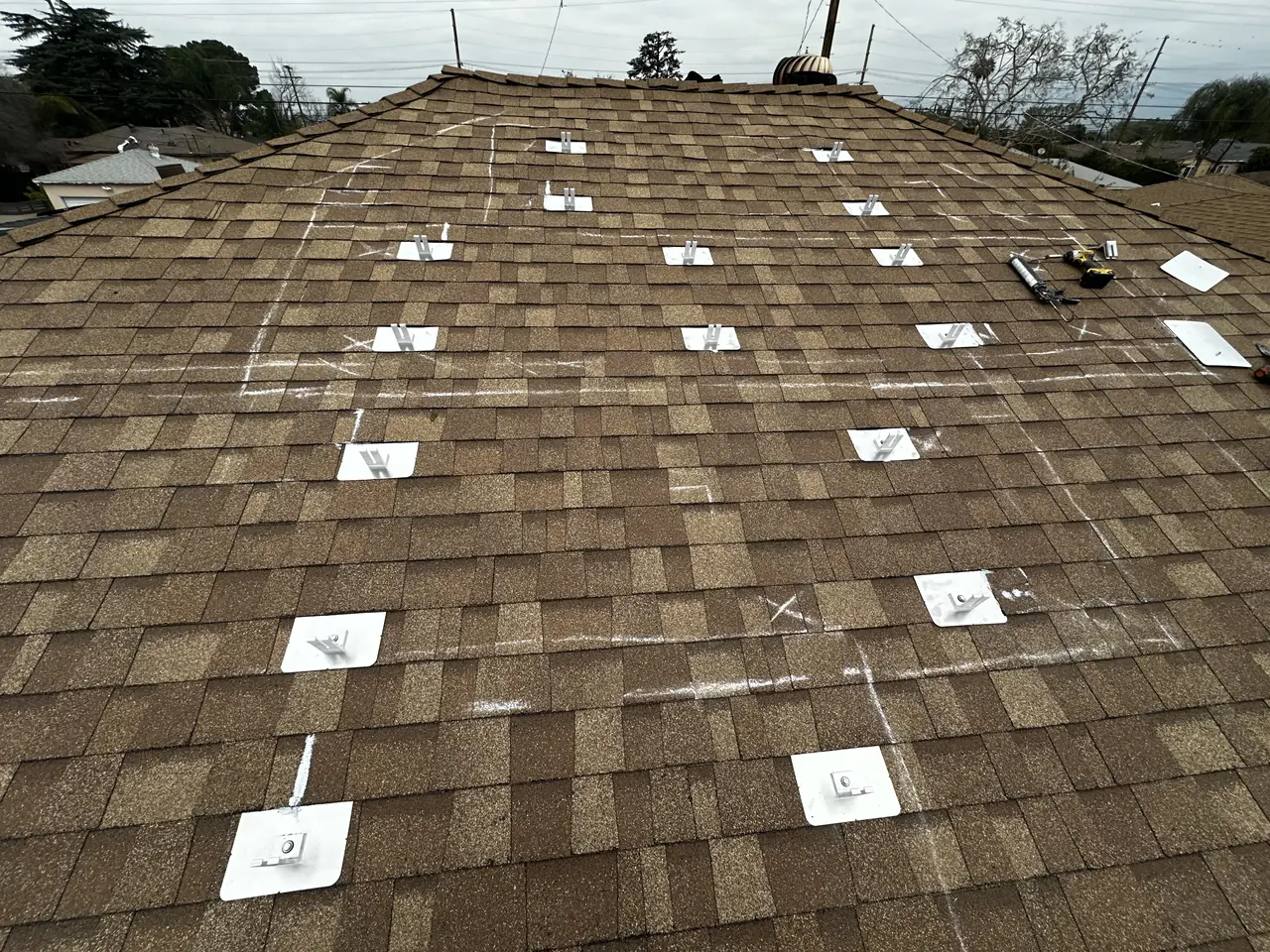
Composition shingle is the most straightforward covering to mount an array on. The attachment goes through the shingle into the rafter, a flashing plate goes under the course above it so that water runs over the flashing rather than into the hole, and the rail sits on top. There is no material to lift and reset and very little to break. On this Pacoima house the roof gave one long plane clear of obstructions, so Cali Energy ran the array as a single continuous block rather than breaking it into groups, and carried the LADBS permit and LADWP interconnection through to permission to operate.
At a glance
- Roof
- Composition shingle
- Installed
- August 2025
- Neighboring project
- Concrete tile, ten weeks earlier
- Layout
- One long plane, array in a single block
- Mounting
- Through-shingle attachments with flashing plates
- Utility / AHJ
- LADWP / LADBS
The story
This is the second of the two neighboring Pacoima houses, installed by Cali Energy ten weeks after the tile roof next door, as its own project with its own application. The covering is the thing that differs, and it changes almost everything about the day.
The covering here is composition shingle, and that makes the mounting method simple. A lag goes through the shingle into the rafter below. A metal flashing plate slides under the course of shingles above the penetration so that water coming down the roof runs over the flashing and past the hole rather than into it. The rail bolts to the standoff on top. Nothing is lifted and reset, and almost nothing breaks.
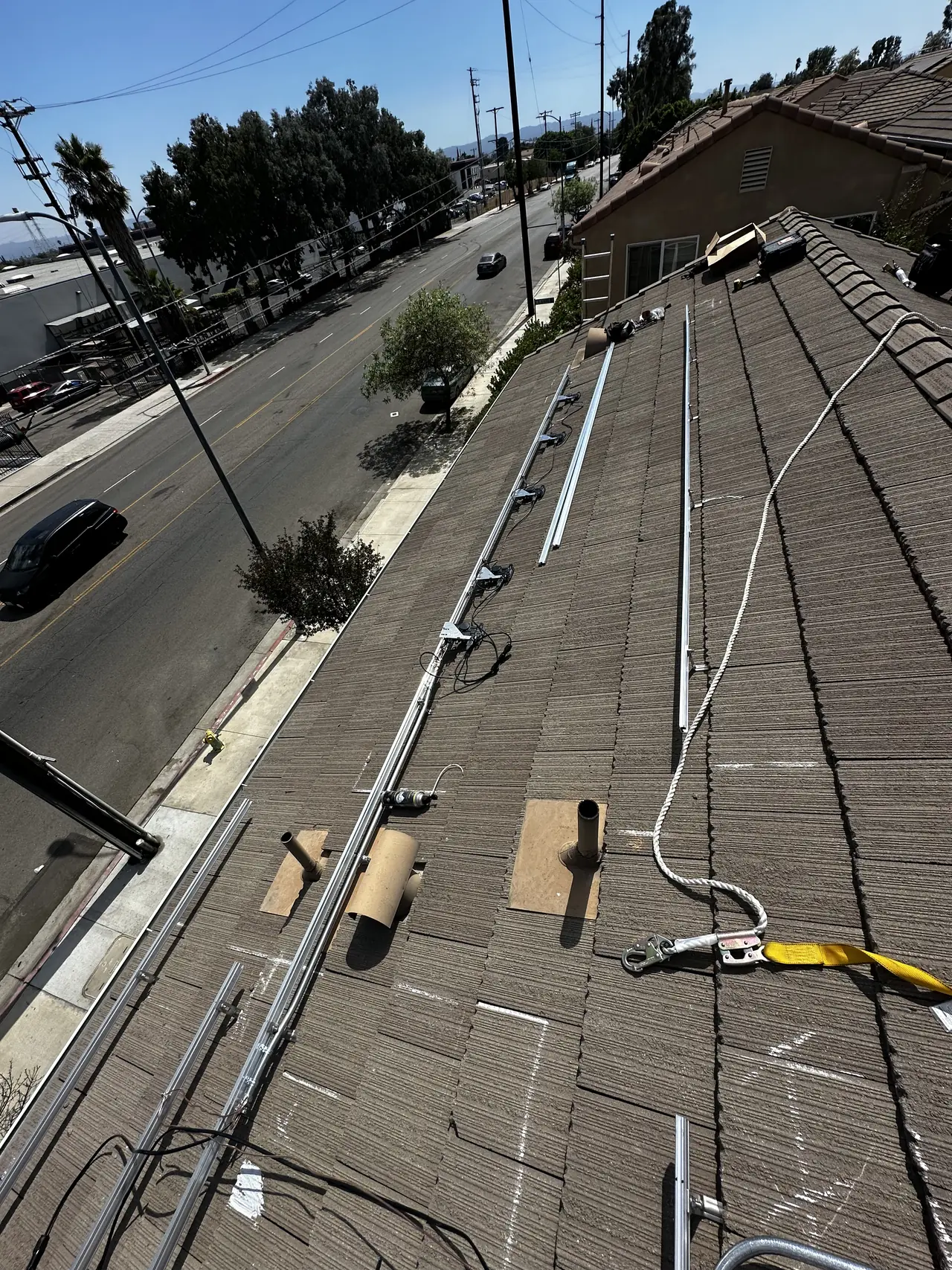
What the flashing does is worth understanding, because it is the part homeowners cannot see once the job is finished. The waterproofing is not a sealant around the bolt. It is the geometry: a metal plate tucked under the shingle course above, so that the roof's own drainage path carries water over the top of the penetration. Sealant is a secondary defense, not the primary one. A mount fixed through a shingle with a bead of caulk and nothing under the course above is a leak waiting for a wet winter.
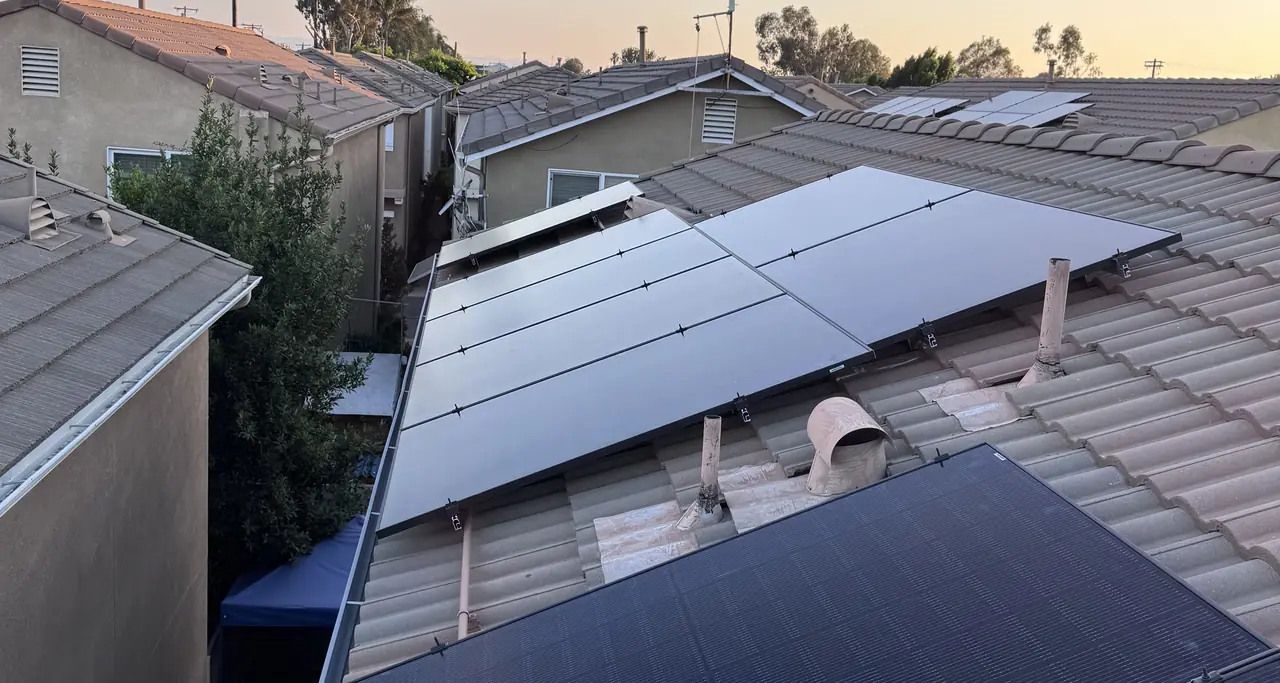
The roof gave one long plane facing the street, with the vent stack sitting clear of where the array had to go, which is close to the easiest thing a layout can be handed. The array runs as a single continuous block. Rails span the full run, the modules sit in one rectangle, and there are fewer rail ends, fewer splices and fewer penetrations than the same number of modules broken into groups would need.
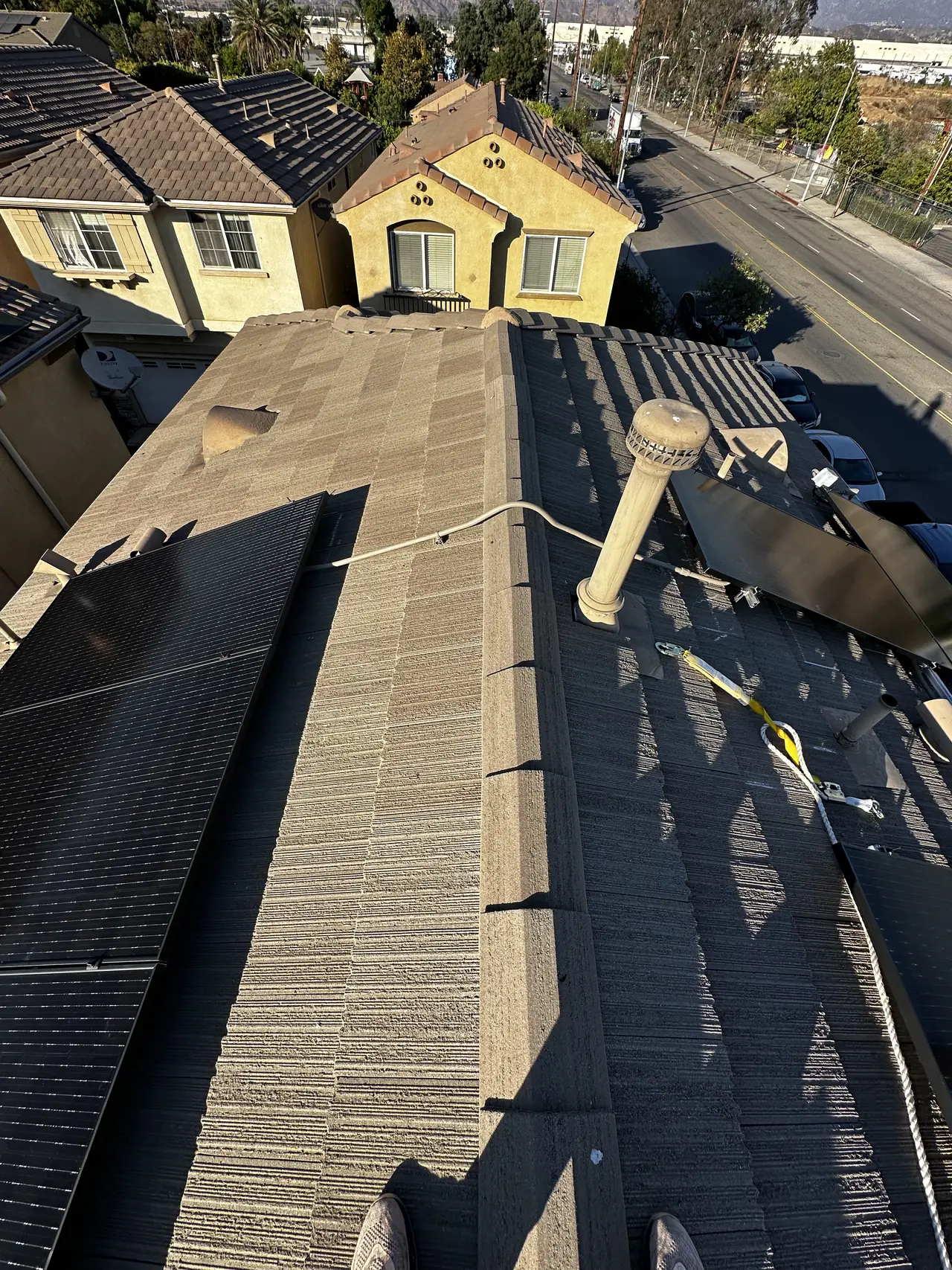
The rest followed the ordinary sequence: LADBS final inspection on the installation, then the utility's interconnection review, the net meter and permission to operate. Against the tile roof next door — same neighborhood, same utility, same building department, same size of house — the paperwork was identical and the day's work was genuinely different in method, pace and risk. When a neighbor tells you what their solar cost, the roof they have is a large part of the answer.
How it ran
| June 2025 | The neighboring house, on concrete tile, installed as a separate project |
|---|---|
| August 2025 | Array installed on composition shingle |
| August – September 2025 | LADBS final inspection, then utility interconnection review, net meter and permission to operate |
Two neighboring properties, ten weeks apart, with different roofs and separate applications. This timeline reflects these properties and this period.
What we did
- Fixed every attachment into a rafter rather than into decking alone (C-10).
- Slid a flashing plate under the shingle course above each penetration.
- Ran the array as one continuous block on a single plane, minimizing rail ends and splices.
- Kept the layout clear of vents and the roof edge setbacks.
- Ran the neighboring property as its own project with its own application.
System specifications
| Roof | Composition shingle |
|---|---|
| Mounting | Through-shingle lag into the rafter, flashing plate under the course above |
| Waterproofing | Flashing geometry; sealant as a secondary defense |
| Layout | One long plane, array in a single continuous block |
| Rail runs | Full-length, minimizing ends and splices |
| Neighboring project | Concrete tile, separate application |
| Utility / AHJ | LADWP / LADBS |
Is your project like this one?
- You have a composition shingle roof.
- You want to know how a roof penetration is actually waterproofed.
- A neighbor paid a different price and you want to know why.
- Your roof has one big clear plane and you are wondering if that helps.
- You have been quoted for mounts with sealant and no flashing.
Cali Energy in Pacoima
Pacoima is a City of Los Angeles neighborhood in the northeast San Fernando Valley, which means the permit goes through LADBS and the interconnection through LADWP. The housing is mostly post-war single story on modest services, and the ZIP it shares with Arleta turns up in the paperwork more often than anyone expects.
This installation is on the Pacoima projects page alongside the others, and what the work covers is set out on the Pacoima service area page.
- License and classifications: CSLB #1032379
- Official reference for this process: California Building Standards Commission — California Building Standards Code
- Official reference for this process: LADBS — inspections
Frequently asked questions
How is a solar mount waterproofed on a shingle roof?
By geometry, not by sealant. The lag goes through the shingle into the rafter, and a metal flashing plate is slid under the course of shingles above the penetration so that water running down the roof passes over the flashing and past the hole. Sealant is a secondary defense. A mount with caulk and no flashing under the course above is the common cause of leaks that appear in the first wet winter.
Is shingle cheaper to work on than tile?
Generally yes, in labor. Nothing has to be lifted and reset, almost nothing breaks, and the same number of modules goes up faster. That is one of the reasons two neighboring houses can get genuinely different quotes for what looks like the same job.
Does Cali Energy install solar in Pacoima?
Yes. Cali Energy works across Pacoima on both composition shingle and tile, through LADBS permits and LADWP interconnections, including two neighboring properties on this street in the same summer. Nine completed Pacoima projects are on our projects page. Our license is CSLB #1032379.
Is one long roof plane better than several small ones?
For a given number of modules, usually yes. A single plane means one continuous run of rail, fewer rail ends and splices, fewer penetrations and a simpler wiring path. Several small faces are workable and common, but they cost more in materials and labor for the same array.
What this would look like on your roof
Planning solar in Pacoima? Tell us your utility, your roof and what your bill looks like now, and we will model what a system like this would do on your house before you commit to anything.
Or call +1 (323) 844-7777 · Cali Energy, Northridge · CSLB #1032379 (B, C-10, C-39) — design, permits, install and electrical under one licensed contractor.
Related
This timeline reflects this property and this permitting path. Updated September 2026.