

Reseda, CA · September – November 2025 · LADWP / LADBS
The tile came off only where the panels go. Then it went back.
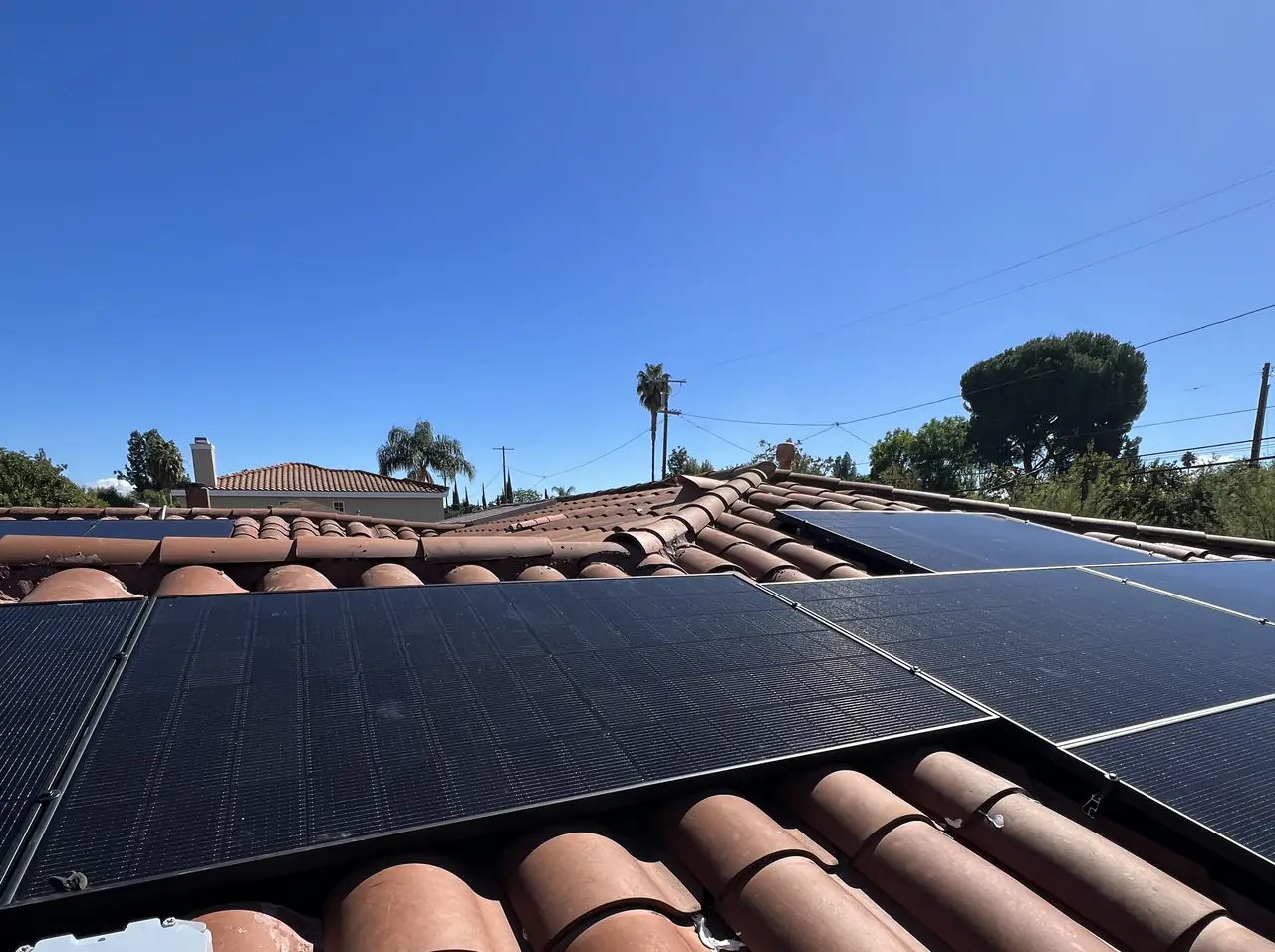
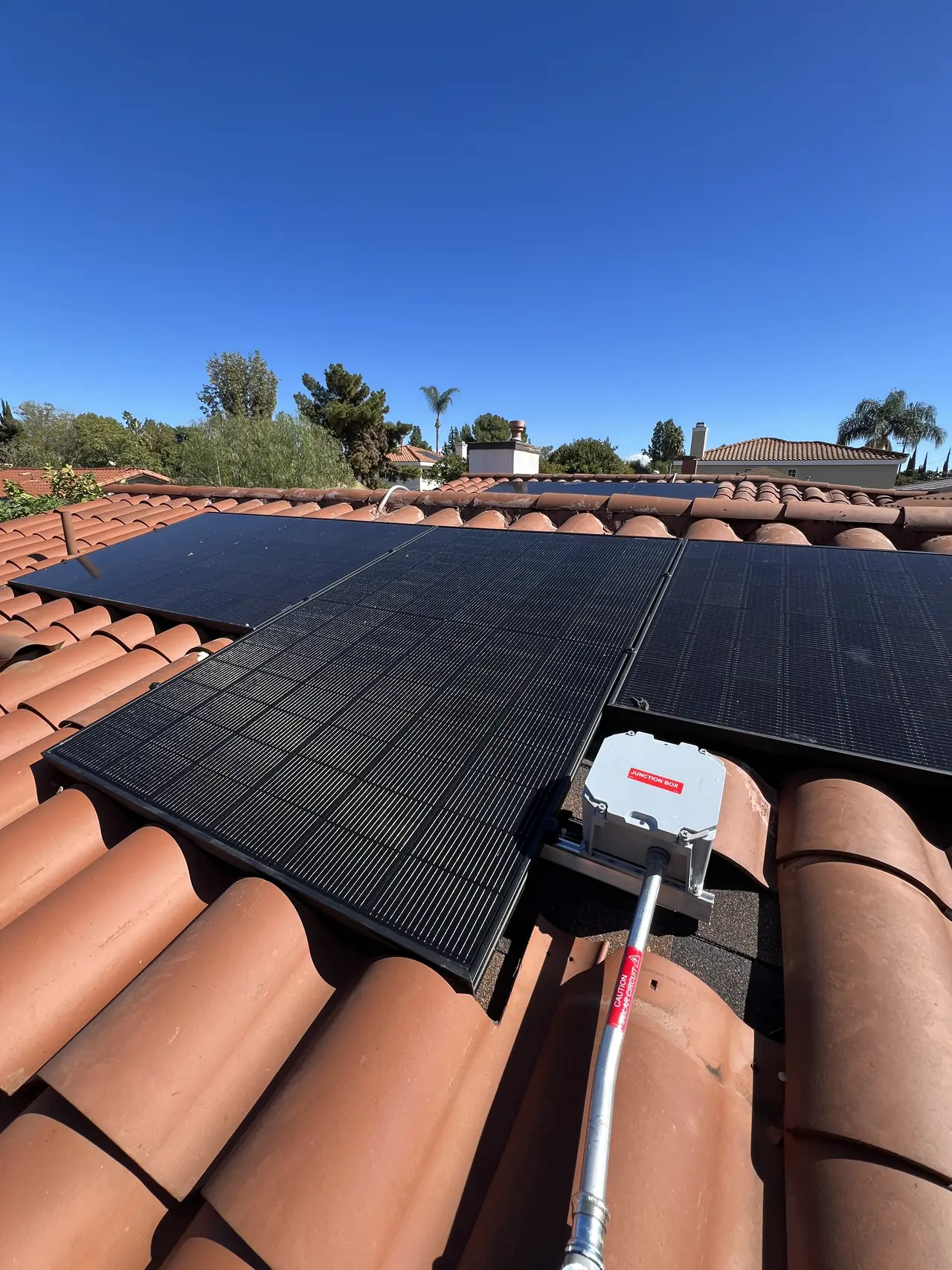
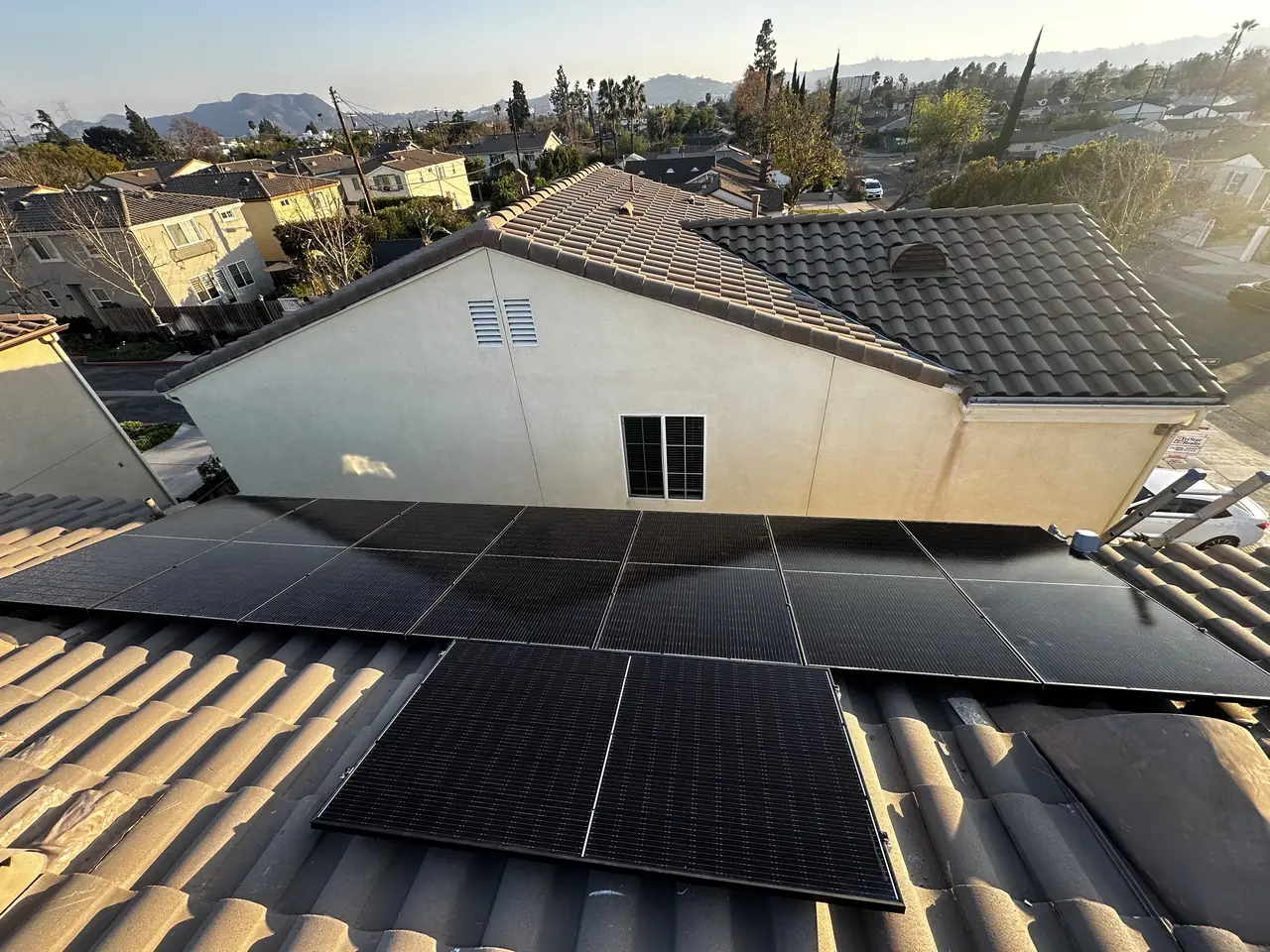
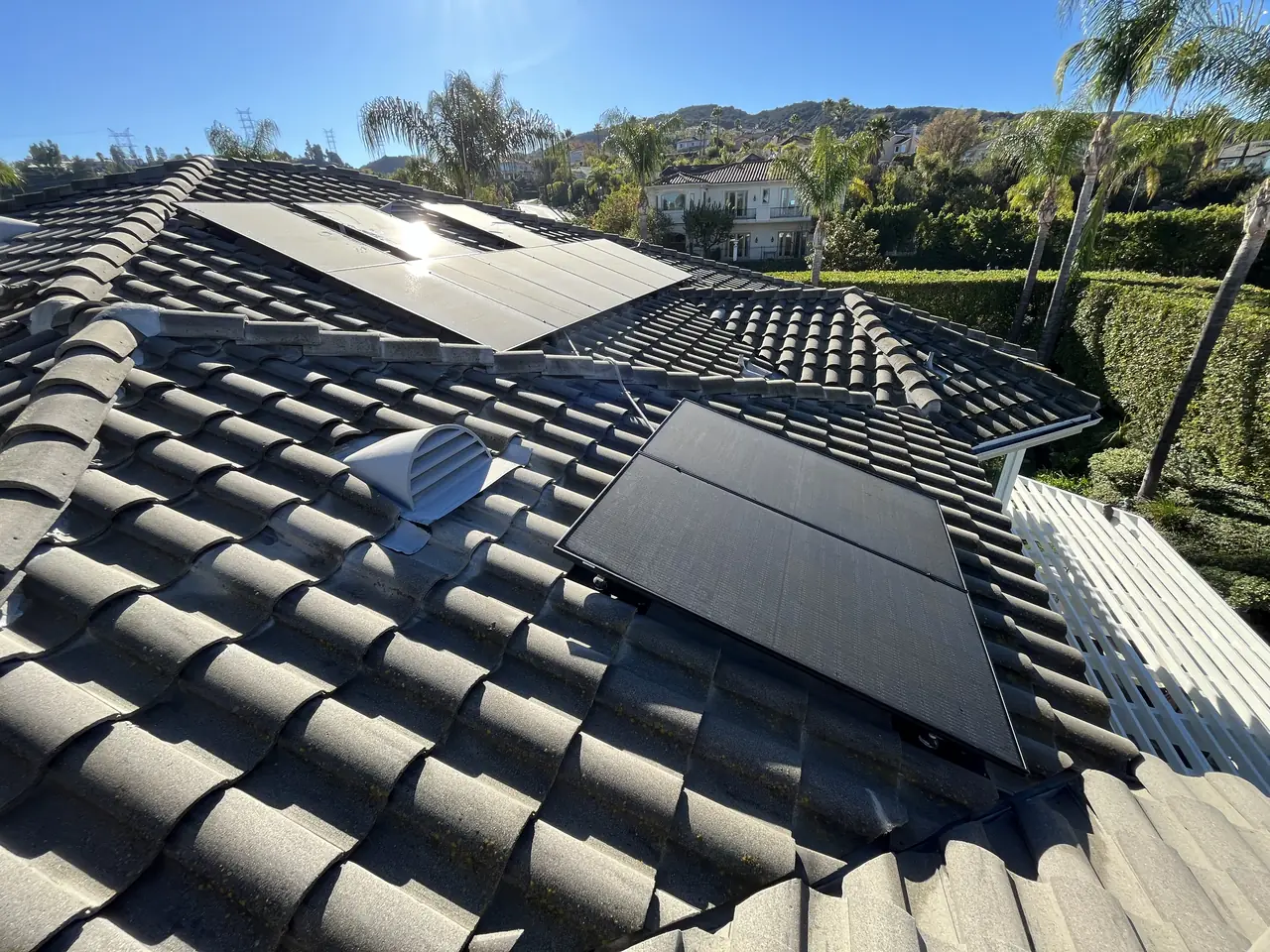
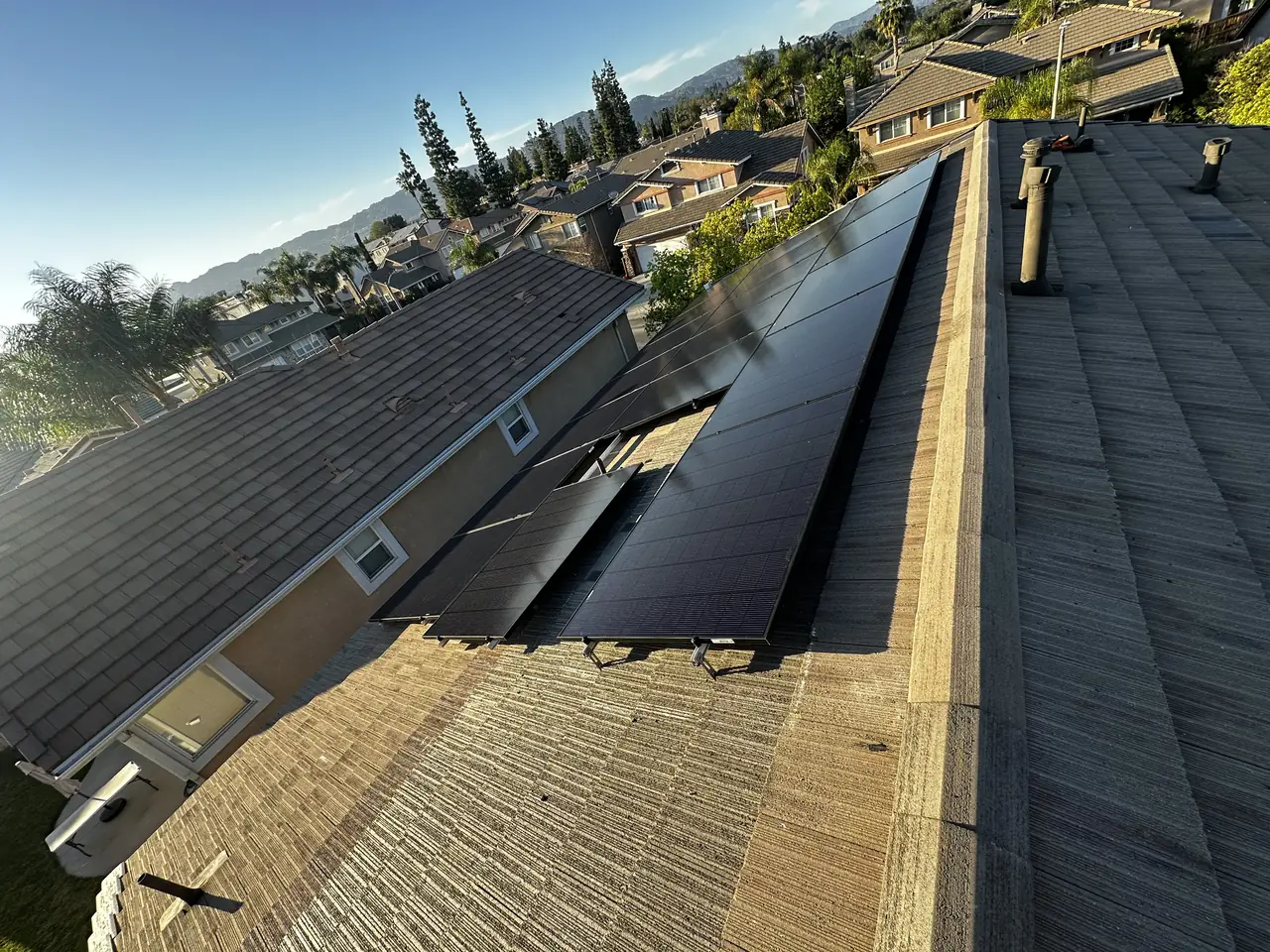
Seventeen modules on a clay tile house in Reseda, 7.34 kilowatts AC-CEC on LADWP. The house was not re-roofed. The tile was stripped inside the array footprint only, asphalt shingle was laid in that rectangle, the modules were mounted on the shingle, and the original tile was re-laid around the array so the patch does not read from the street.
Clay tile is not a mounting surface. The usual answers are to re-roof the whole house or to decline the job. There is a third: convert only the roof inside the array footprint to shingle, mount there, and re-lay the tile up to the array's edge. Cali Energy did that here, and the sequencing is what makes it work — the array layout has to be frozen before the roofer starts, because the layout is what defines the patch.
At a glance
- Recorded by the utility
- 7.34 kW AC-CEC
- Modules
- 17 × Canadian Solar 445 W
- Inverters
- Enphase microinverters, one per module
- Original roof
- Clay barrel tile
- Roof work
- Tile stripped and shingled inside the array footprint only
- Roofer
- Homeowner's own, working to a layout supplied by us
- Battery
- None
- Utility / AHJ
- LADWP / LADBS
The story
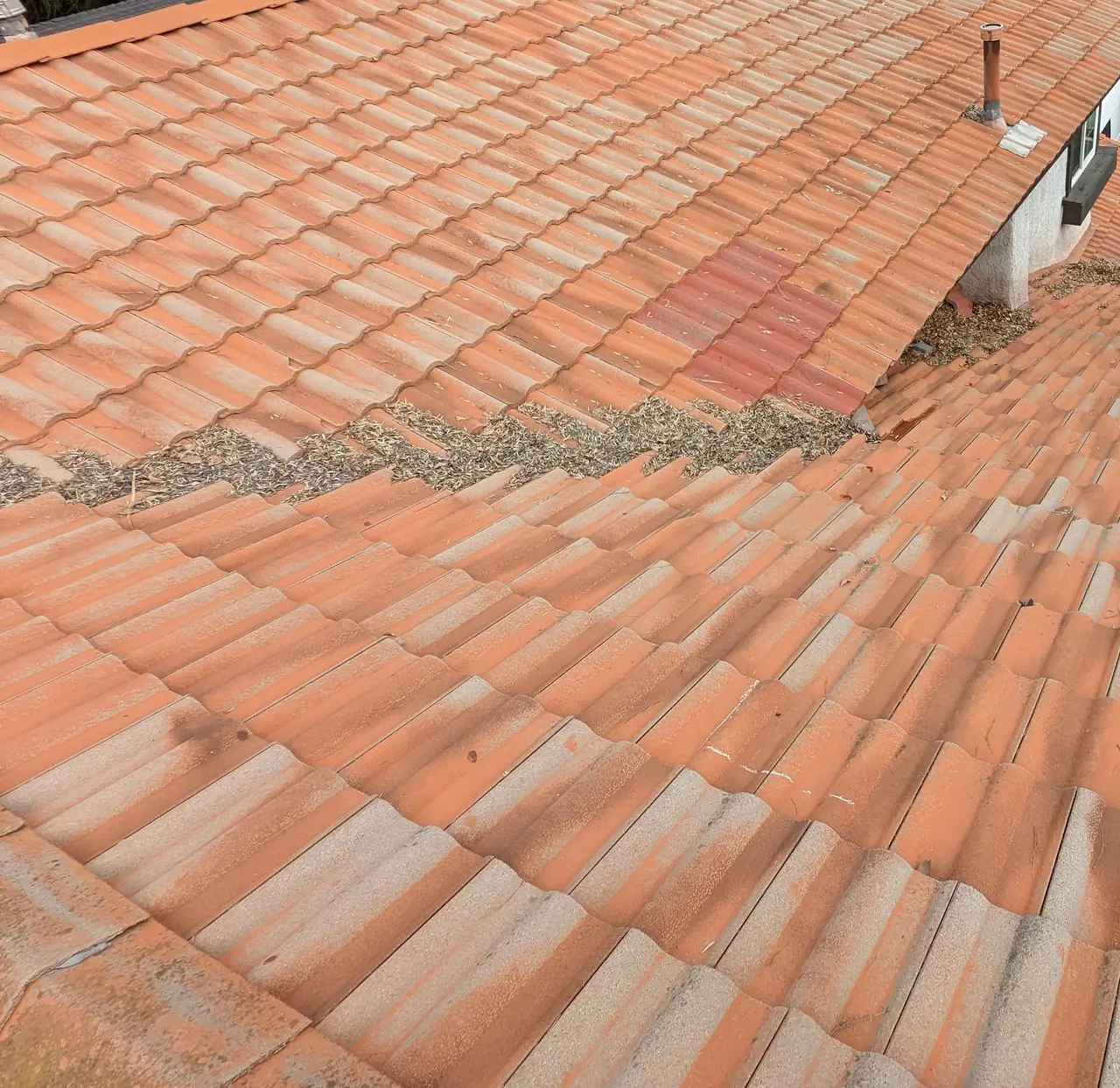
Clay tile is a good roof and a bad mounting surface. Tile hooks work, and on an S-profile roof with long clean planes they are the right answer. But on a roof where the array wants to sit across a wide field of barrel tile, every attachment means lifting tile, setting a hook, sealing, and setting the tile back, and the count runs away from you. The alternative usually offered is to re-roof the house in shingle, which is a large bill for a roof that is not worn out.
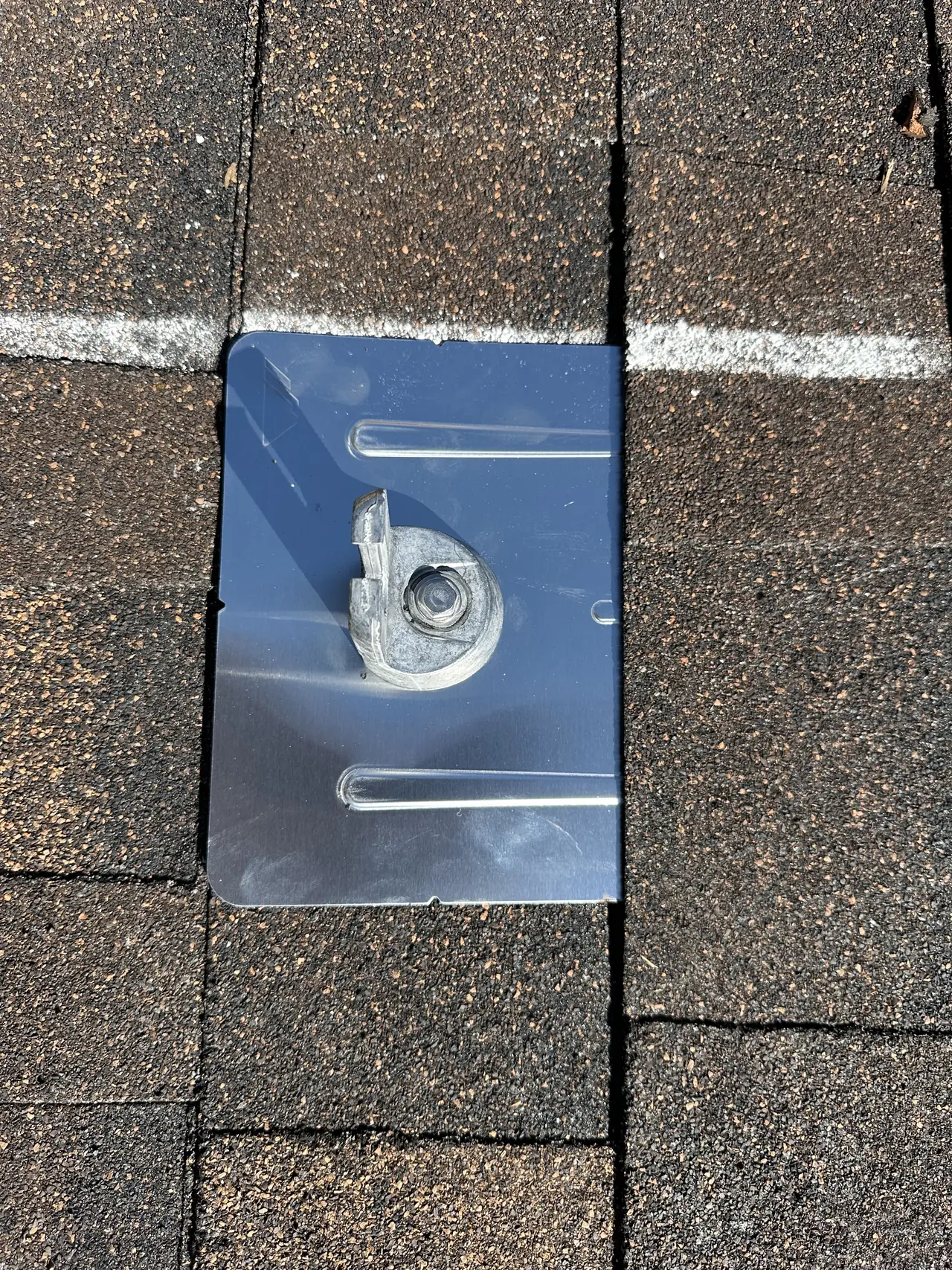
What happened here is the third option. The array footprint was drawn first. Inside that rectangle the tile was stripped off, asphalt shingle was laid, and the modules were mounted onto shingle in the ordinary way, on flashed attachments. Around the rectangle the original tile went back down, right up to the array's edge. From the street the roof is still a tile roof.
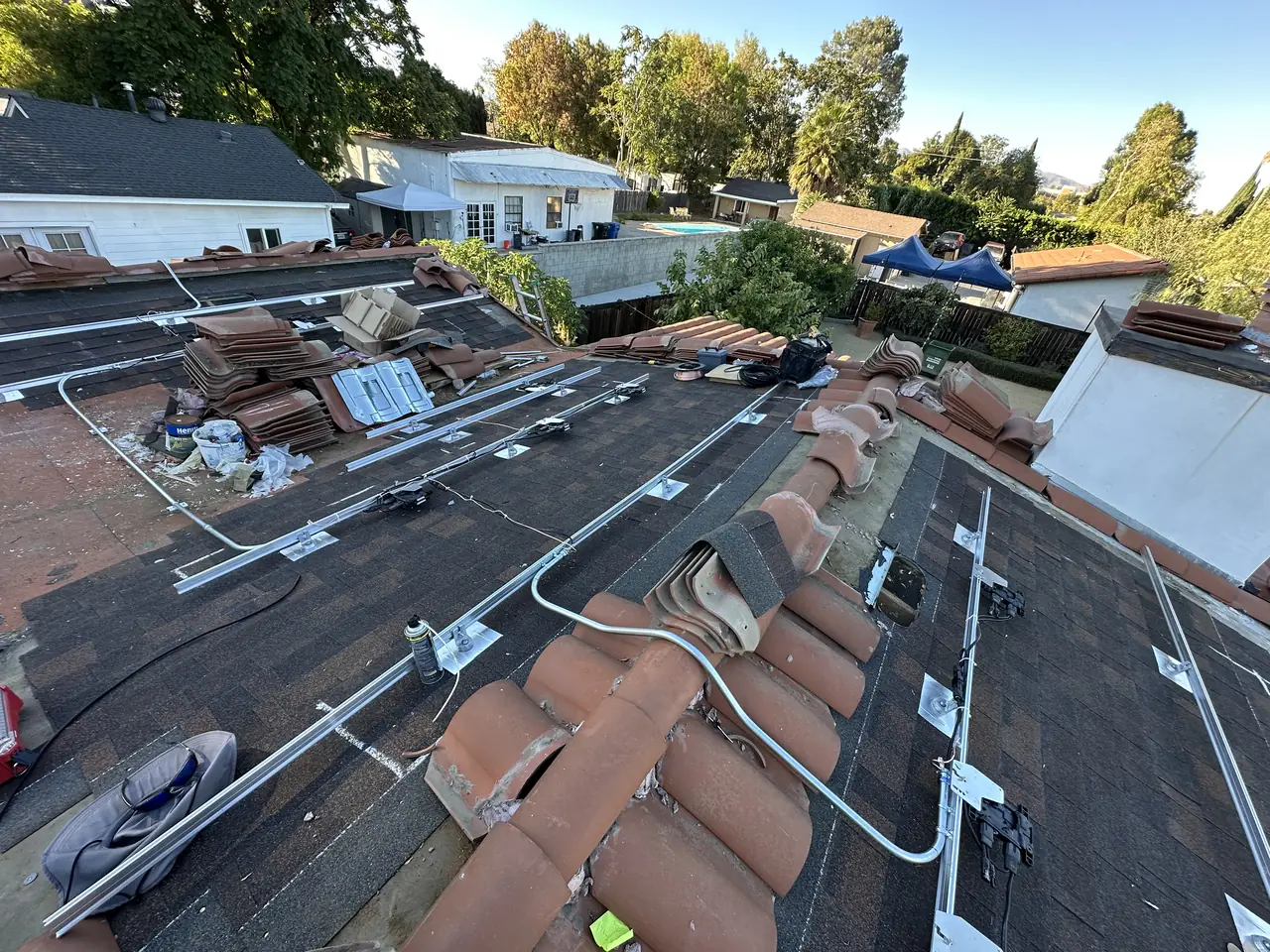
The order of operations is the whole mechanism, and it is what a reader should take away. The layout has to be final before the roofer climbs up, because the layout is the patch. Move a row after the shingle is down and you are either shingling twice or mounting on the tile you were trying to avoid.
The homeowner elected to use her own roofer rather than have us carry that scope. The estimate was reissued the same evening with the roofing line removed. What did not change is that her roofer had to build to our drawing: marked-up photographs of the exact roof planes to convert, the conduit route, and the module footprint of 70 by 45 inches so the patch could be scoped before a single panel arrived. Her roofer finished inside three days, and the array went up the day the roof was ready.
The system went in on Canadian Solar 445-watt modules, and the install date that had already been promised was kept. Seventeen of them went on, and the utility recorded the system at 7.34 kilowatts AC-CEC.
The calendar splits cleanly. From signature to the city's final inspection took nine days: the roof was converted, the array went up, the inspection request was filed, and the final passed. The building department's release reached the utility the next day and the meter order went out with it. The meter itself was set thirty-two days later. Cali Energy called the utility on day twenty-nine, was told the Valley meter crews were short-staffed and borrowing from other districts with rain forcing reschedules, asked for supervisor escalation, and told the homeowner all of it rather than leaving her guessing. The meter went in three days after that call, and permission to operate came with it on the seventeenth of November 2025.
So: nine days belonged to the contractor and thirty-two to the utility. That is the shape of most residential solar projects in this territory, and a quote that promises otherwise is quoting the part nobody controls.
How it ran
| 26 September 2025 | First estimate issued; roof re-composition priced, then removed at the homeowner's request the same evening |
|---|---|
| 3 October 2025 | Final layout issued with marked-up roof areas to convert and the conduit route |
| 6 October 2025 | Contract signed; module footprint confirmed to the roofer |
| 7 October 2025 | Module specification finalized on Canadian Solar 445 W |
| 9 October 2025 | Tile conversion complete; array installed |
| 10 October 2025 | Final inspection requested from LADBS |
| 14 October 2025 | Interconnection application confirmed at 7.34 kW AC-CEC |
| 15 October 2025 | LADBS final inspection passed; utility review completed the same morning |
| 16 October 2025 | Building department release received; net meter field order issued |
| 17 November 2025 | Net meter set; permission to operate; monitoring handed over |
This timeline reflects this property and this permitting path: a roof converted under the array footprint before installation, and a meter set thirty-two days after the field order.
What we did
- Froze the array layout before any roof work began, because the layout defines the patch.
- Issued the roofer a complete scope: marked-up photographs of the planes to convert, the conduit route and the module footprint (C-39, C-10).
- Mounted 17 modules on flashed attachments lapped into the new shingle courses.
- Kept the install date promised at signature.
- Took the project from signature to a passed city final inspection in nine days.
- Chased the utility when the meter was twenty-nine days overdue and kept the homeowner informed rather than silent.
System specifications
| Recorded by the utility | 7.34 kW AC-CEC |
|---|---|
| Modules | 17 × Canadian Solar 445 W |
| Inverters | Enphase microinverters, one per module |
| Original roof | Clay barrel tile |
| Converted area | Array footprint only — tile stripped, asphalt shingle laid |
| Attachments | Flashed, lapped into the new shingle courses |
| Tile | Original tile re-laid around the array perimeter |
| Module footprint | 70 × 45 in, specified to the roofer before ordering |
| Battery | None |
| Utility / AHJ | LADWP / LADBS |
Is your project like this one?
- Your roof is clay or concrete tile and you do not want to re-roof the whole house.
- You have been told tile means a much larger bill or no solar at all.
- You want to use your own roofer and need to know what to hand them.
- You want to know which part of the schedule the installer actually controls.
- Your Reseda property is served by LADWP, while permits are handled by LADBS.
Cali Energy in Reseda
Reseda is inside City of Los Angeles boundaries: permits run through LADBS, interconnection through LADWP.
Reseda is a neighborhood in the west San Fernando Valley, inside the City of Los Angeles. Barrel and S-profile clay tile is common on its older single-family streets, and a tile roof is the first thing a solar design here has to answer for.
This installation is on the Reseda projects page alongside the others, and what the work covers is set out on the Reseda service area page.
- License and classifications: CSLB #1032379
- Official reference for this process: LADBS — plan review and permitting
- Official reference for this process: LADWP interconnection requirements
Frequently asked questions
Can solar go on a clay tile roof without re-roofing the house?
Yes, by converting only the roof inside the array footprint. The tile is stripped from that area, asphalt shingle is laid in its place, the modules mount on the shingle on flashed attachments, and the original tile is re-laid around the array. The house keeps its tile roof everywhere the array is not, and the patch is not visible from the ground.
Why not just use tile hooks?
On some roofs that is the right answer, and it is how most tile installations are done. It becomes questionable when the array sits across a wide field of barrel tile and the attachment count climbs, because every attachment means lifting tile, fixing a hook to the rafter, sealing it and setting the tile back over it. Converting the footprint trades many tile penetrations for one straightforward shingle field.
Can I use my own roofer for the conversion?
Yes, and that is what happened here. What the roofer needs is not a description but a drawing: which roof planes convert, where the conduit runs, and the exact module footprint so the patch can be scoped before panels are ordered. Those went over as marked-up photographs, and the roofer finished inside three days.
Why did the meter take a month after the inspection passed?
Because the meter is the utility's work, not the installer's. The city final passed on the fifteenth of October and the release and field order both went out the next day. The crew set the meter on the seventeenth of November. The reason given on escalation was short-staffed Valley meter crews borrowing from other districts, with rain forcing reschedules.
Does Cali Energy install on clay tile roofs in Reseda?
Yes, and the method matters more than the willingness. Cali Energy does not mount on tile itself. The array footprint is stripped to the deck, composition shingle is laid inside that footprint only, and the original tile is re-laid tight to the edge of the array so the patch does not read from the street. The layout has to be frozen before the roofer starts, because the shingle area is cut to the array rather than the other way around.
What this would look like on your roof
Planning solar in Reseda? Tell us your utility, your roof and what your bill looks like now, and we will model what a system like this would do on your house before you commit to anything.
Or call +1 (323) 844-7777 · Cali Energy, Northridge · CSLB #1032379 (B, C-10, C-39) — design, permits, install and electrical under one licensed contractor.
Related
This timeline reflects this property and this permitting path. Updated September 2026.