

Pacoima, CA · March – April 2026 · LADWP / LADBS
Seven and a half weeks in Pacoima, every step dated.
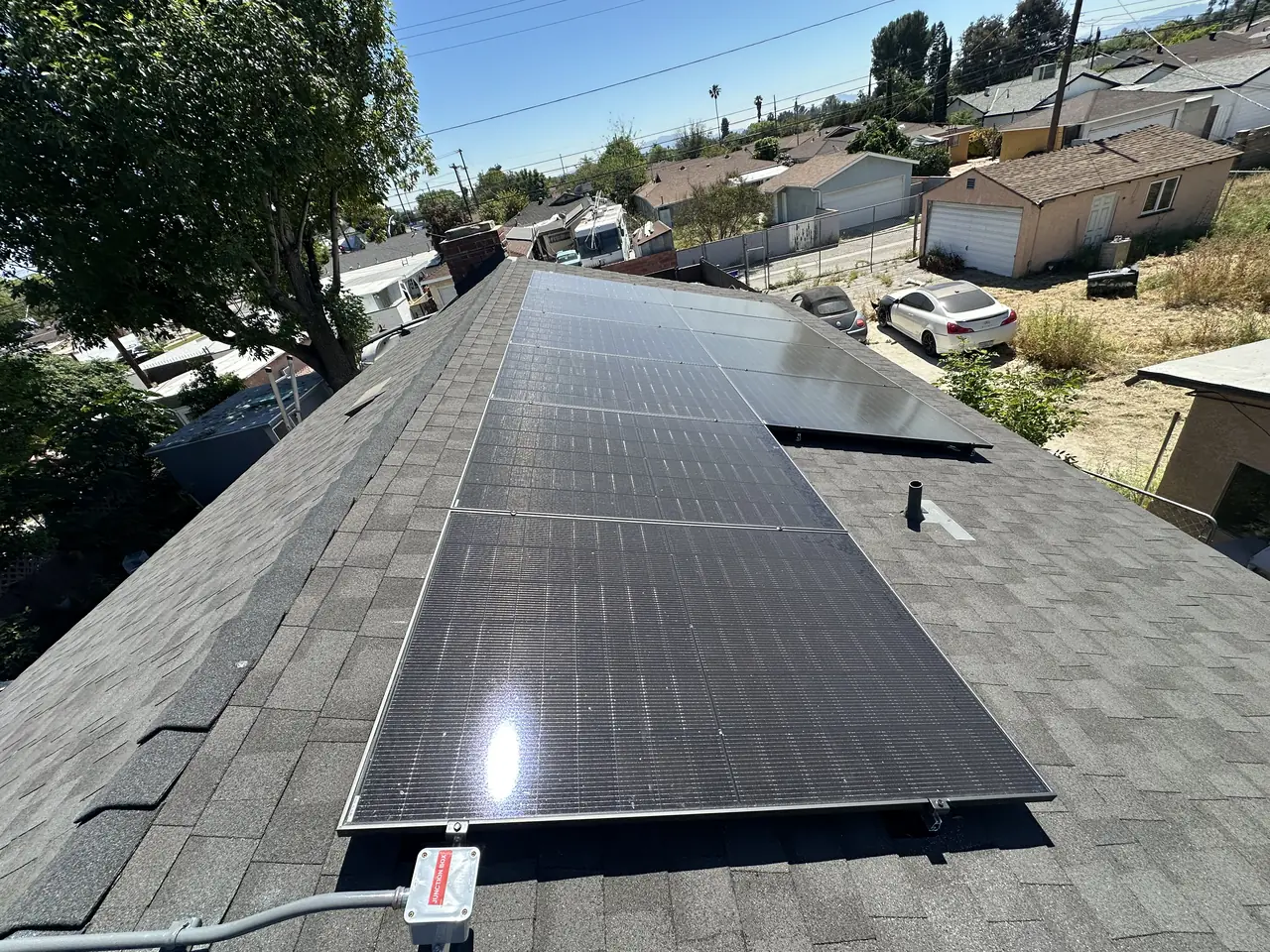
A three-and-a-half kilowatt array on composition shingle, with the whole calendar written down: contract, measurement, filing, install, release, permission.
A small residential solar project with no service work and no corrections runs on a calendar that is mostly waiting for other people. On this Pacoima project Cali Energy signed the contract on the second of March 2026, measured the roof two days later and filed the interconnection request the same day, installed the array on the nineteenth, took the building department release the following day, and permission to operate was issued on the twenty-third of April. Seven and a half weeks end to end, of which the installation itself was one day.
At a glance
- System
- 3.41 kW AC-CEC
- Roof
- Composition shingle, one long plane
- Contract signed
- 2 March 2026
- Roof measured and interconnection filed
- 4 March 2026
- Array installed
- 19 March 2026
- Building department release
- 20 March 2026
- Permission to operate
- 23 April 2026
- Utility / AHJ
- LADWP / LADBS
The story
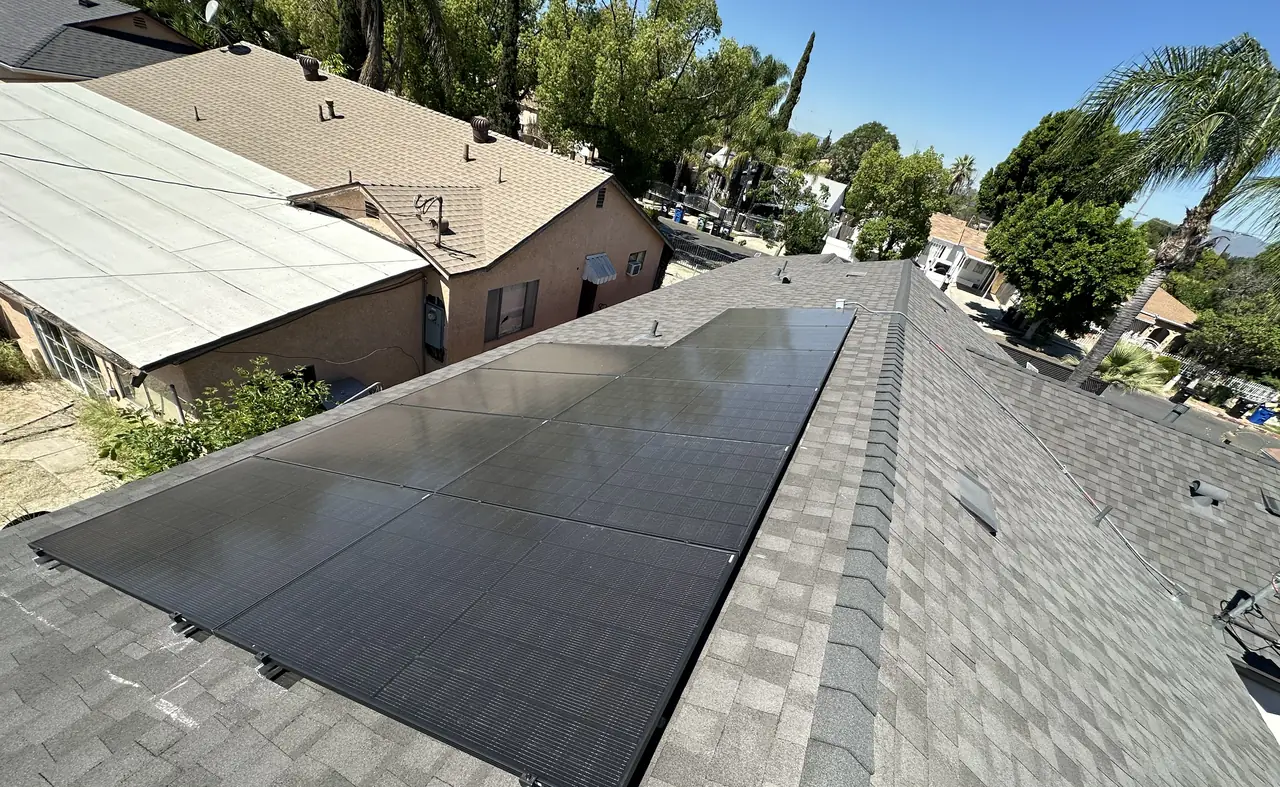
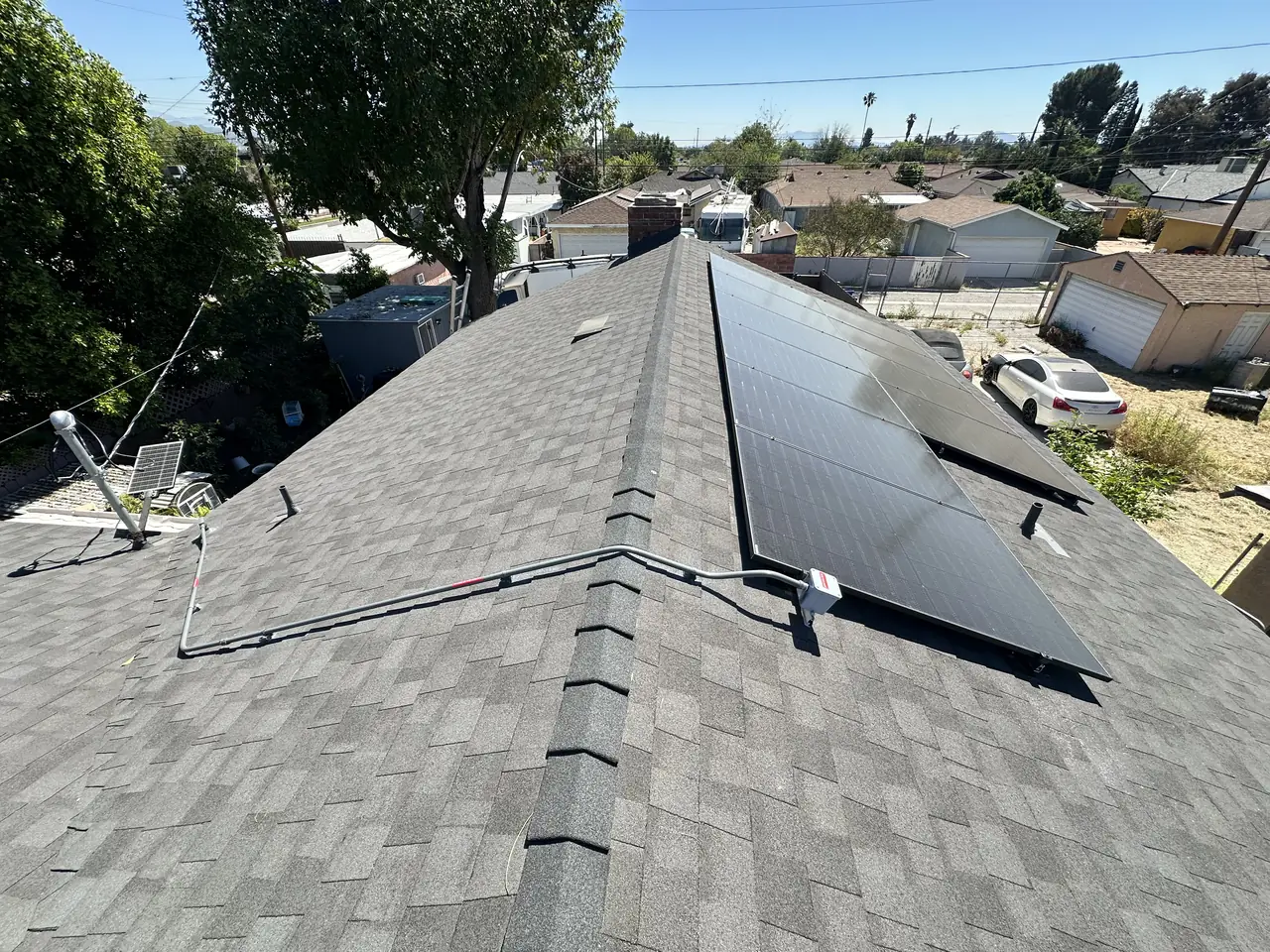
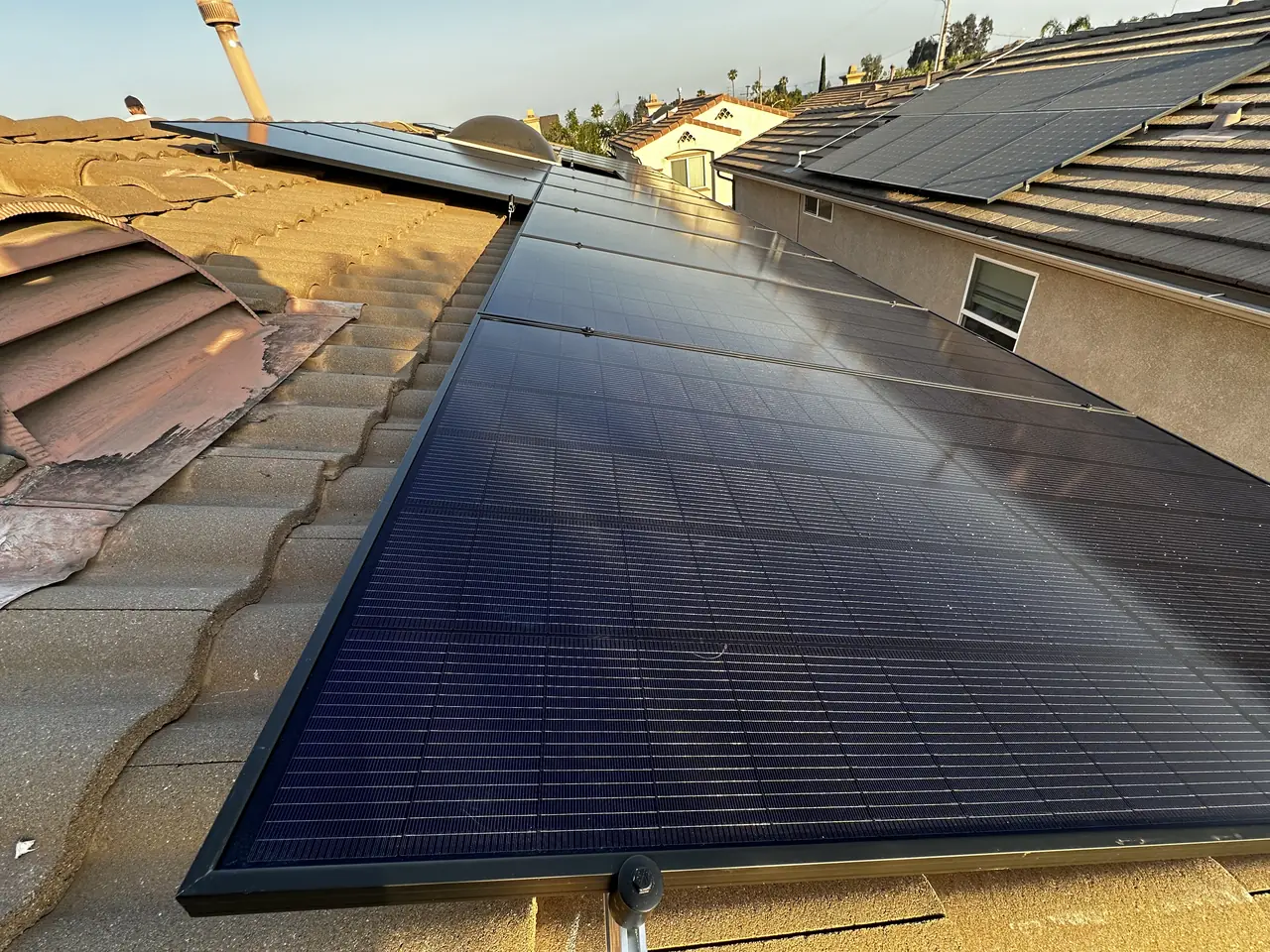
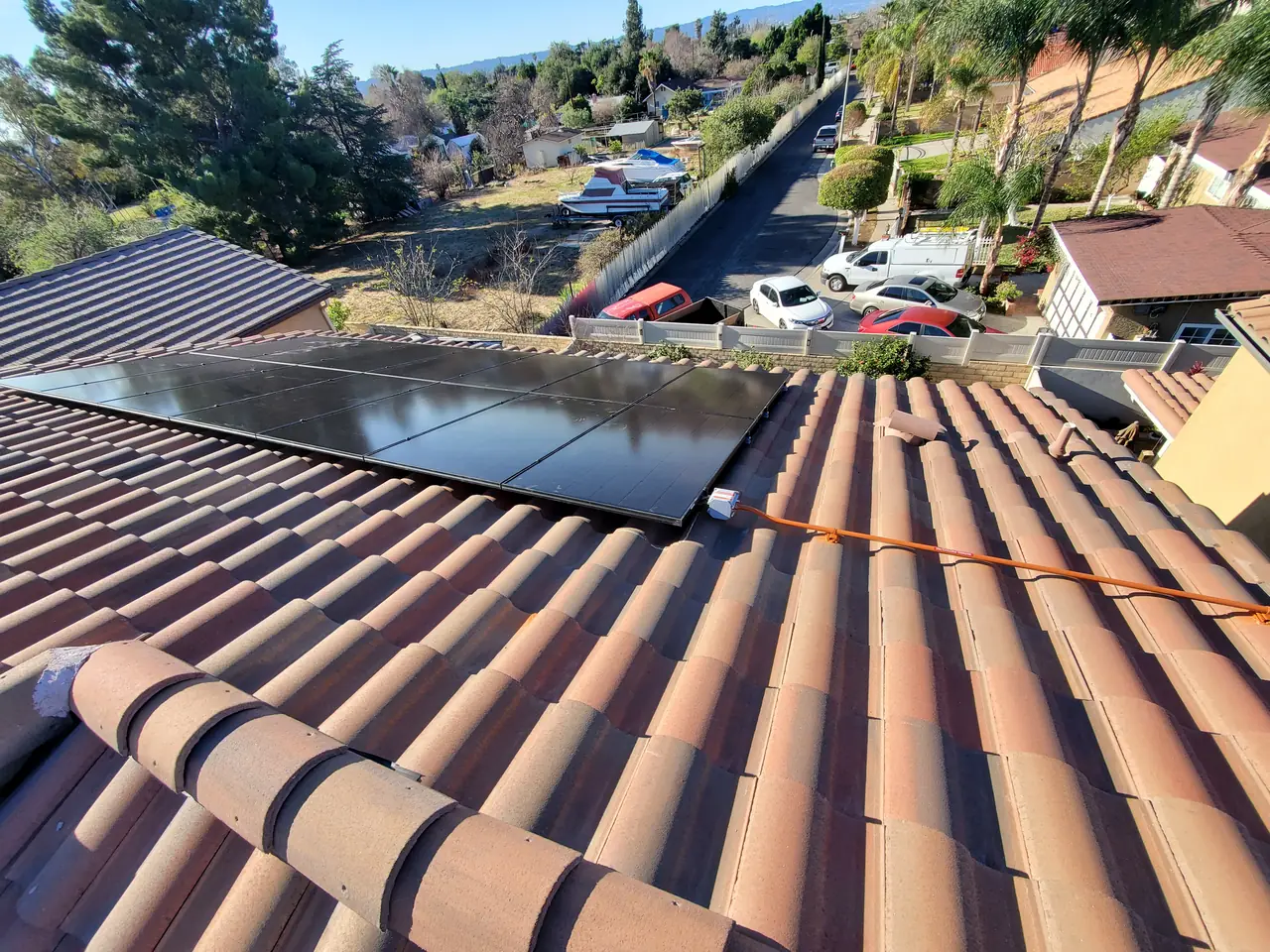
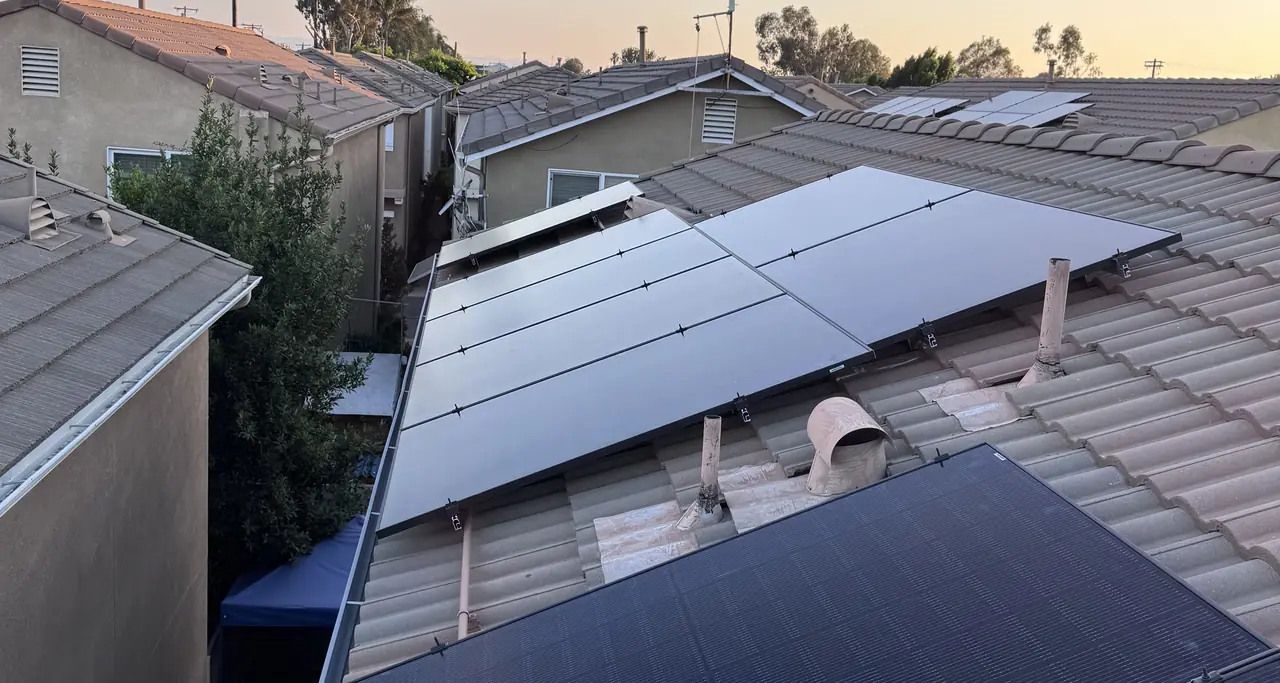
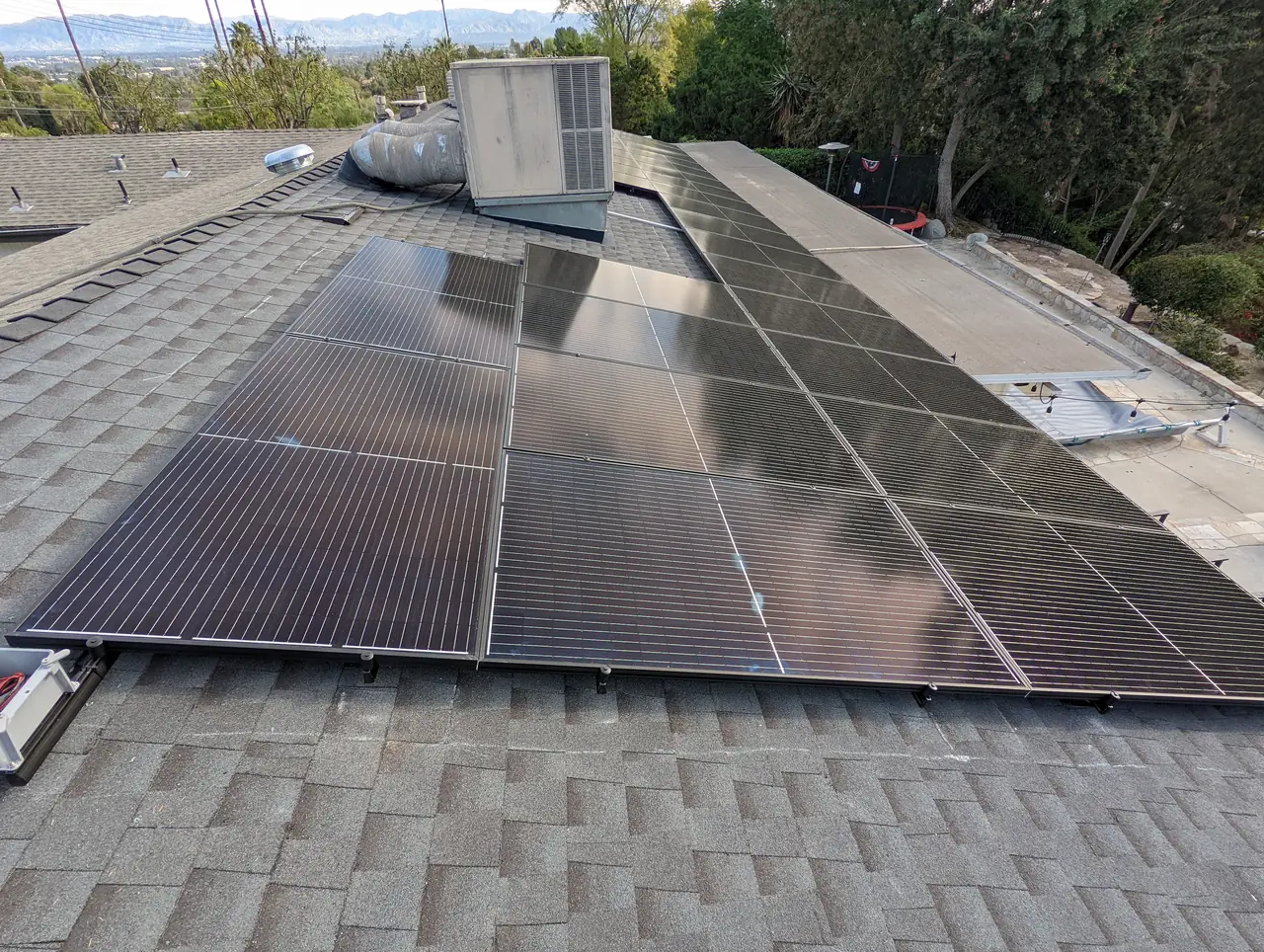
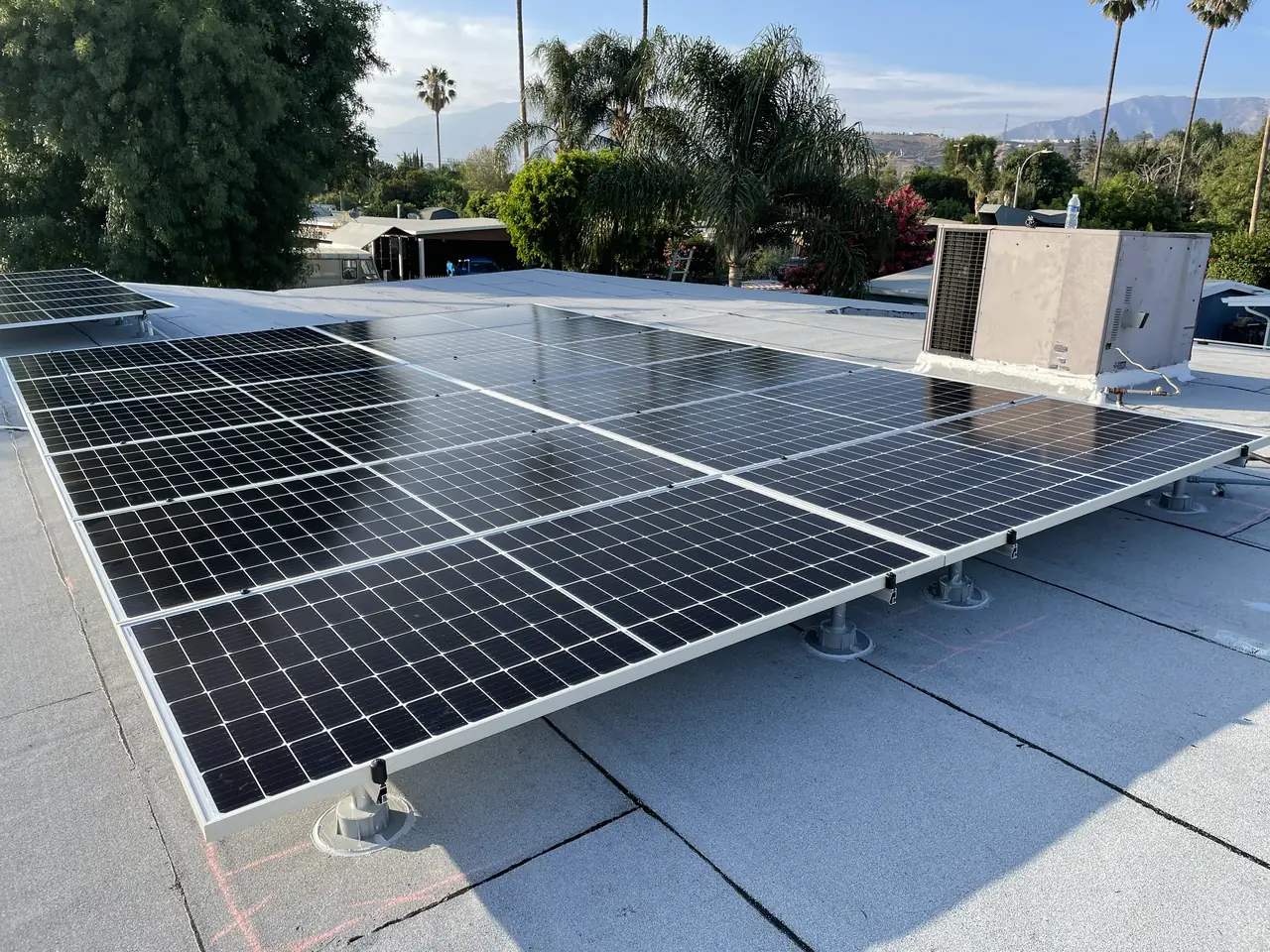
This is a small system and a clean calendar, which makes it a useful thing to measure other projects against. Three and a half kilowatts of all-black modules in one long run along a composition shingle plane, no service work and no corrections at any stage.
The contract was signed on the second of March. A Cali Energy technician came out two days later to measure the roof and the electrical panel — the homeowner did not need to be there, only to leave access to the roof and the panel. That visit is what turns a preliminary quote into a layout that will survive plan review, and it is why a serious quote comes after a measurement rather than from an aerial image alone.
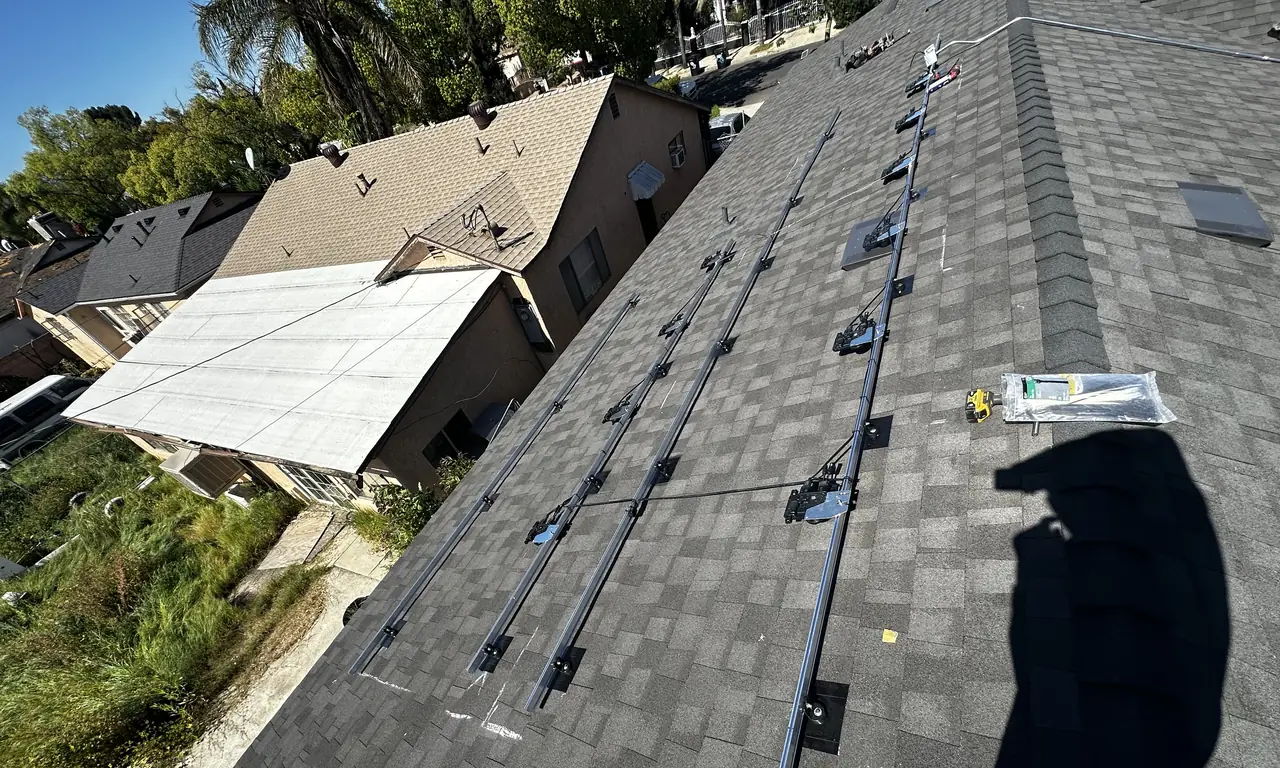
The interconnection request went to the utility that same day and the fees were paid with it. Progress notices came back within the week. The array itself went up on the nineteenth of March, two weeks after the measurement, in a single day.
The building department release arrived the next day and the utility marked the installation approved on the same date. Then came the step that takes the calendar time: permission to operate, issued on the twenty-third of April. Five weeks from an approved installation to a system that is allowed to run.
Written out, the seven and a half weeks break down in a way that surprises people. One day of installation. Two days from contract to measurement. Two weeks from measurement to install, which is the permit and the schedule. Then five weeks of utility process at the end, which is the longest single block and the one nobody can shorten by working harder.
This project ran in two languages, with the homeowner speaking Spanish and the coordination in English, and none of it slowed anything down. It is worth saying plainly: the paperwork is in English because the agencies require it, and that does not have to be the language you talk to your installer in.
How it ran
| 2 March 2026 | Contract signed |
|---|---|
| 4 March 2026 | Roof and panel measured for the layout |
| 4 March 2026 | Interconnection request filed and fees paid |
| 11 March 2026 | Utility progress notices returned |
| 19 March 2026 | Array installed in one day |
| 20 March 2026 | Building department release; installation approved |
| 23 April 2026 | Permission to operate issued |
Seven and a half weeks from signature to switch-on, five of them in the utility's final step. This timeline reflects this property and this period.
What we did
- Measured the roof and panel on site two days after the contract, rather than designing from an aerial image (C-10).
- Filed the interconnection request and paid the fees the same week.
- Installed the array as one continuous run on composition shingle in a single day.
- Carried the building department release through with no corrections.
- Followed the interconnection to permission to operate.
- Ran the project bilingually without adding time to the schedule.
System specifications
| Rated output | 3.41 kW AC-CEC |
|---|---|
| Roof | Composition shingle |
| Layout | One long run on a single plane |
| Modules | All-black |
| Service work | None |
| Corrections | None |
| Install duration | One day |
| Utility / AHJ | LADWP / LADBS |
Is your project like this one?
- You want a realistic calendar for a small residential system.
- You are wondering why the install is one day and the project is two months.
- You want to know what the site measurement visit is for.
- You have one long clear roof plane and want to know what fits on it.
- You would rather deal with your installer in Spanish.
Cali Energy in Pacoima
Pacoima is a City of Los Angeles neighborhood in the northeast San Fernando Valley, which means the permit goes through LADBS and the interconnection through LADWP. The housing is mostly post-war single story on modest services, and the ZIP it shares with Arleta turns up in the paperwork more often than anyone expects.
This installation is on the Pacoima projects page alongside the others, and what the work covers is set out on the Pacoima service area page.
- License and classifications: CSLB #1032379
- Official reference for this process: LADWP — interconnection process, types 1, 2 and 3
- Official reference for this process: LADBS — plan review and permitting
Frequently asked questions
How long does a small solar project take start to finish?
This Pacoima project ran seven and a half weeks from signature to permission to operate: two days to the site measurement, two weeks to installation, one day on the roof, and five weeks for the utility's final step. The installation is the shortest part of the calendar by a wide margin, and the utility step is the longest.
Why does an installer need to measure the roof if there are aerial images?
Because a layout has to survive plan review and an inspection, and that needs the real roof: actual plane dimensions, the condition of the covering, obstructions, and the electrical panel that the array will connect to. An aerial image is enough for a preliminary quote and not enough for a design. The visit takes an hour and does not need anyone home if there is access.
Does Cali Energy work with Spanish-speaking homeowners in Pacoima?
Yes. Cali Energy runs Pacoima projects bilingually, with coordination in whichever language suits the homeowner while the agency paperwork goes in English as required. On this project it added nothing to the schedule. Nine completed Pacoima projects are on our projects page. Our license is CSLB #1032379.
Is three and a half kilowatts worth installing?
It depends on the bill rather than on the size. A small array sized to actual usage covers what that household uses and costs proportionately less; a larger one on the same roof would export more than it offsets. The question to ask is what your annual consumption is, not how much roof you have.
What this would look like on your roof
Planning solar in Pacoima? Tell us your utility, your roof and what your bill looks like now, and we will model what a system like this would do on your house before you commit to anything.
Or call +1 (323) 844-7777 · Cali Energy, Northridge · CSLB #1032379 (B, C-10, C-39) — design, permits, install and electrical under one licensed contractor.
Related
This timeline reflects this property and this permitting path. Updated September 2026.