

Pacoima, CA · July 2021 – May 2022 · LADWP / LADBS
A Pacoima system that stops has a reason. Usually a dull one.
Two service visits to one Pacoima array ten months after it went up, and neither problem was in the modules on the roof.
When a solar system stops producing, the causes worth checking first are boring: a breaker that has been switched off, a breaker that has failed, a monitoring device that is not reporting. On this Pacoima system the first Cali Energy service visit found the array producing nothing because it had simply been switched off, and the technician switched it back on. When it went down again the second visit found the cause in the same place: the thirty-five amp AC breaker had burned at the busbar. It was replaced, the SolarEdge inverter firmware was updated, and normal production was confirmed. Neither fault was on the roof.
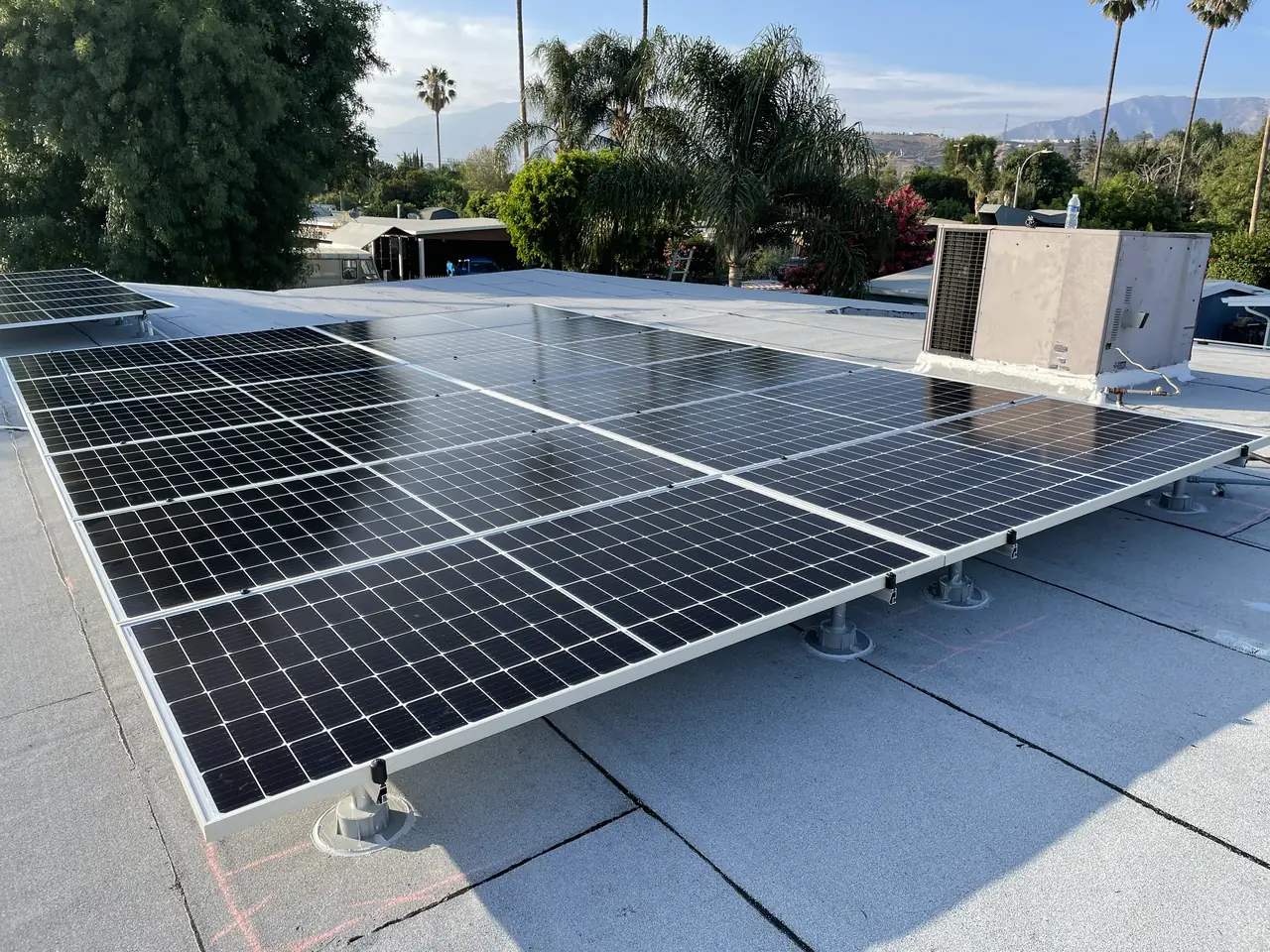
At a glance
- System
- 7.2 kW, SolarEdge inverter
- Roof
- Low slope, re-roofed before installation
- Installed
- July 2021
- Final inspection passed
- September 2021
- First service visit
- May 2022 — system found switched off
- Second service visit
- May 2022 — 35 A AC breaker burned at the busbar
- Resolved
- 2 June 2022 — breaker replaced, firmware updated, output normal
- Utility / AHJ
- LADWP / LADBS
The story
This array went up in July 2021 on a low-slope roof that had just been re-covered. Ten months later the system was reported as producing nothing, and what the service visits found is the useful part of the story.
The first visit found the system switched off. Not failed, not faulted — off. The Cali Energy technician switched it back on and it produced. That sounds like an anticlimax and it is the single most common finding on a service call for a system that has stopped. Breakers get switched during other work in the panel, during an outage, or by somebody checking something, and nothing about a solar system makes it switch itself back on afterwards.
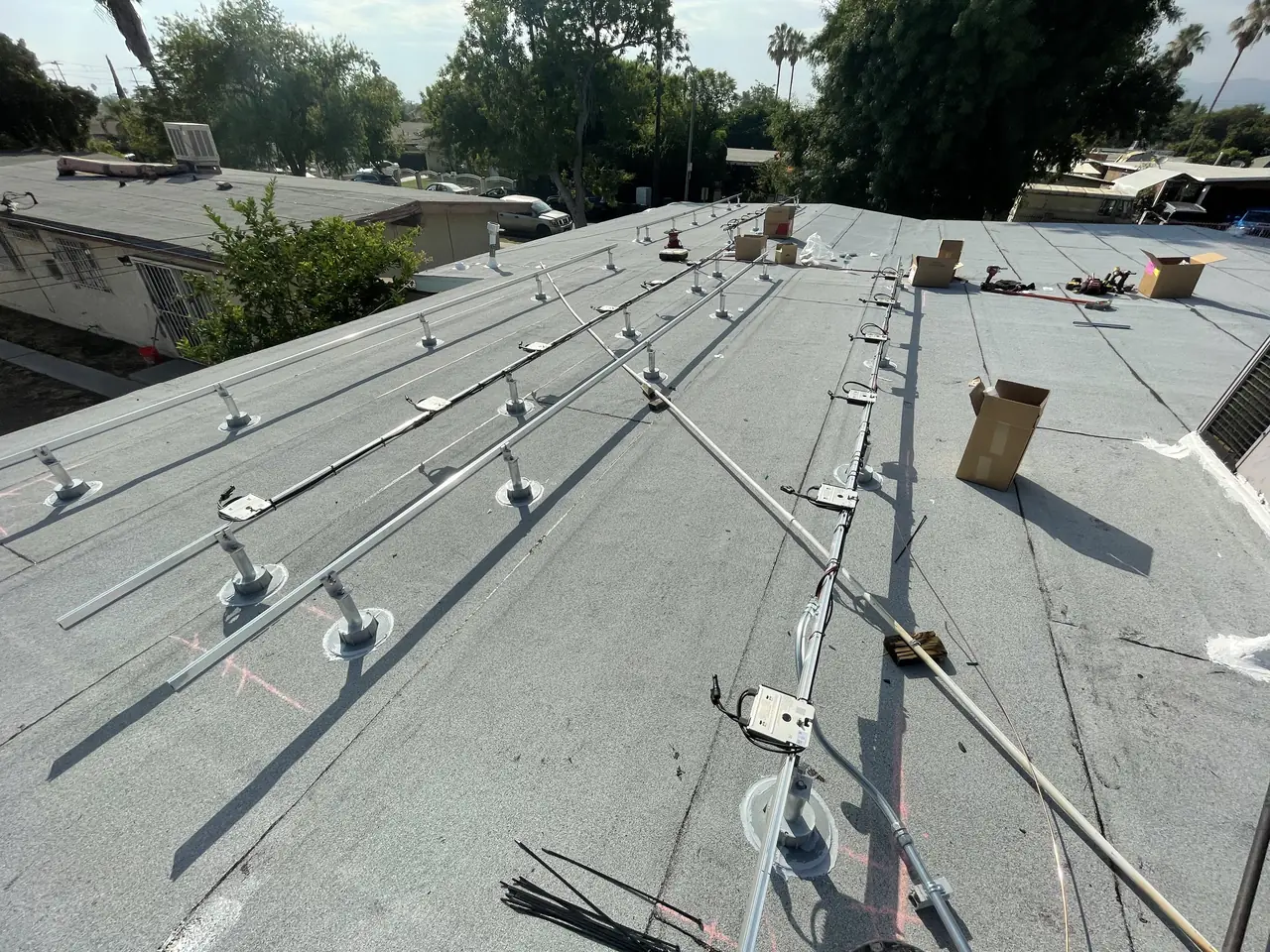
The same visit dealt with a separate report of a roof leak. The leak was traced to the roof covering rather than to anything the solar work had touched: the material had been laid without enough overlap, and water was finding the gap. That went back to the roofing trade to resolve. It is worth knowing that a leak appearing after a solar installation is not automatically a solar leak, and the way to tell is to look at where the water is actually entering rather than at what changed most recently.
Then the system went down again, and the second visit found the real fault. The thirty-five amp AC breaker feeding the system had burned at the busbar. It was replaced, the SolarEdge inverter's firmware was brought up to date at the same time, and the system returned to normal production, confirmed on the second of June. A breaker is a consumable protective device; it is supposed to fail rather than let something worse happen, and one that has failed will not reset — it has to be changed.
The breaker that burned was the correct thirty-five amp device for this system, failing at the busbar connection rather than being undersized — which is why the fix was a replacement and a firmware update rather than a redesign.
One more thing made the faults harder to diagnose from a distance. When the system was first reported as not communicating, in October 2021, it had no monitoring connection, and Cali Energy picked up a cellular kit to give it one.
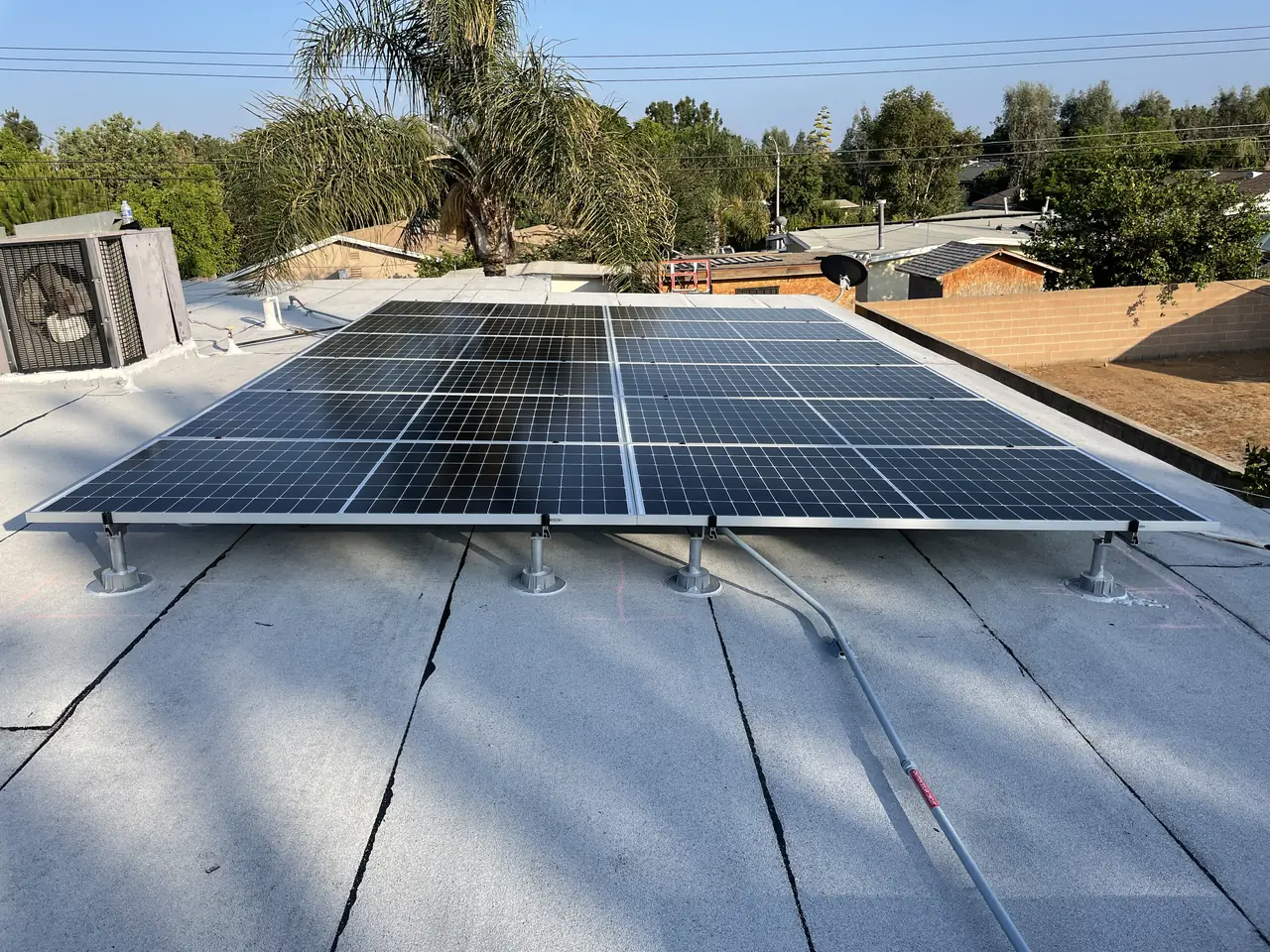
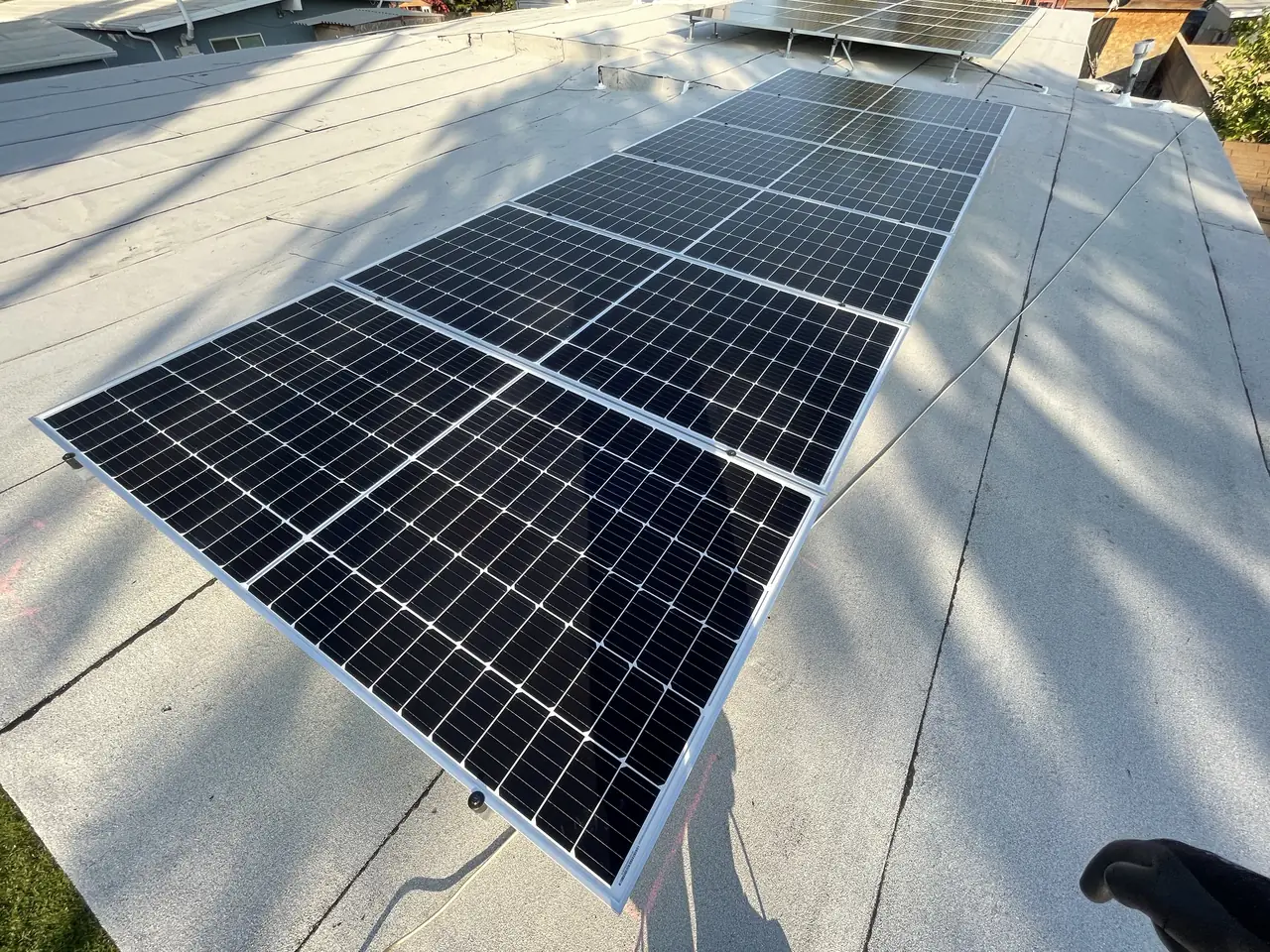
Monitoring is not decoration. Without it, a system that stops is discovered when somebody notices a bill, which can be two months later, and diagnosis starts from nothing. With it, a switched-off system and a failed breaker look different from each other on the first screen you open. On this Pacoima house normal production was confirmed on the second of June 2022, with the new breaker in the panel and the inverter's firmware up to date.
How it ran
| July 2021 | Roof re-covered, then the array installed |
|---|---|
| September 2021 | Final inspection passed |
| October 2021 | System reported as not communicating online; cellular monitoring kit picked up |
| May 2022 | First service visit: system found switched off and restarted; roof leak traced to the roof covering |
| 28 May 2022 | Second service visit: 35 A AC breaker found burned at the busbar and replaced |
| 2 June 2022 | Inverter firmware updated; normal production confirmed |
Ten months from installation to the first service call, and five weeks from that call to a confirmed fix. This timeline reflects this property and this period.
What we did
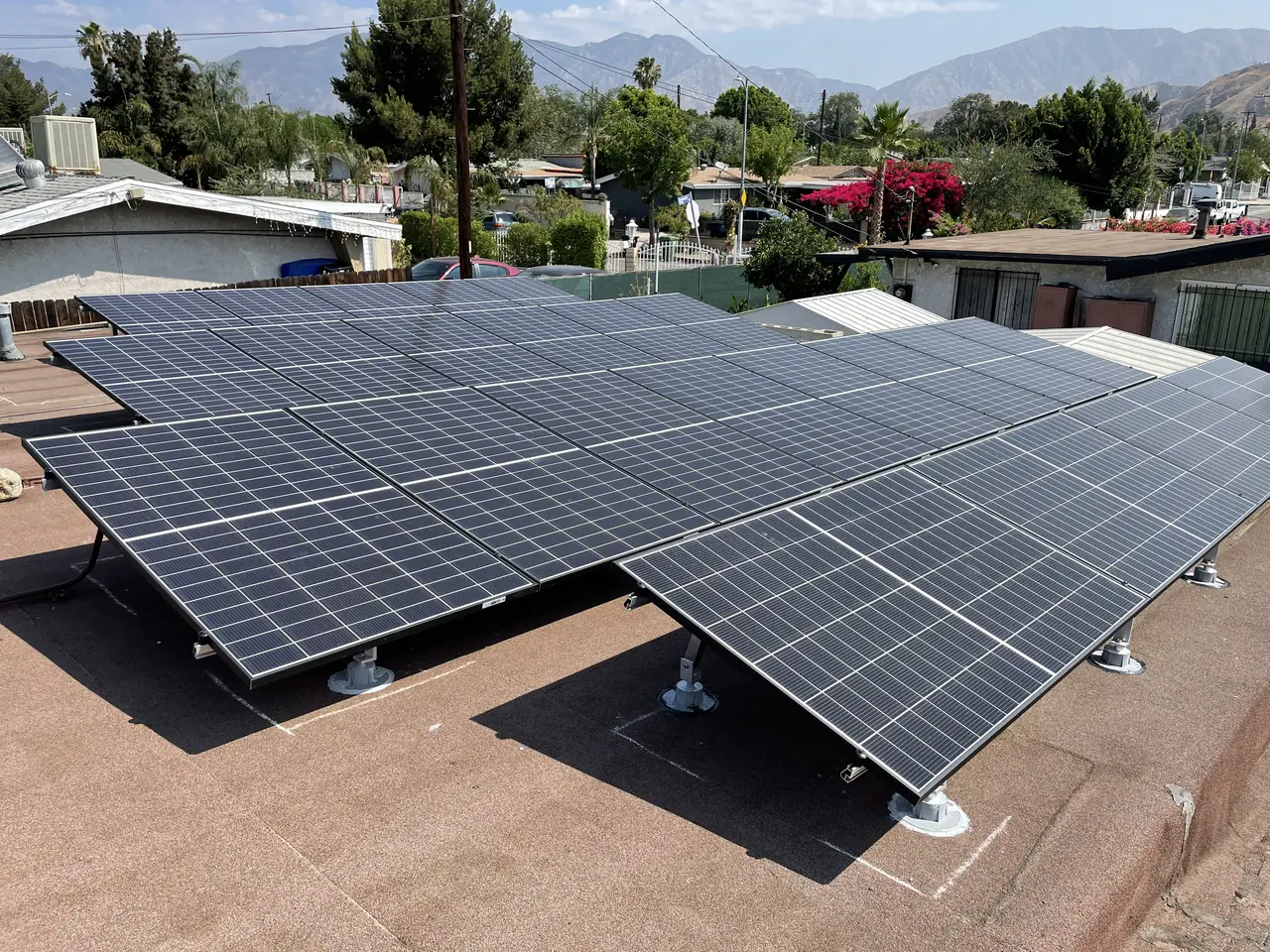
- Installed a 7.2 kW array over a newly re-covered low-slope roof (C-10).
- Carried the project to a passed final inspection.
- Attended on report of no production, found the system switched off and restarted it.
- Traced the reported leak to the roof covering rather than to the array, and documented it with photographs.
- Returned on a second report, found the 35 A AC breaker burned at the busbar and replaced it.
- Updated the SolarEdge inverter firmware and confirmed normal production.
- Picked up the cellular monitoring kit so the system could report online.
System specifications
| System | 7.2 kW |
|---|---|
| Inverter | SolarEdge |
| Roof | Low slope, re-covered before installation |
| First fault | System switched off at the breaker |
| Second fault | 35 A AC breaker burned at the busbar |
| Leak | Traced to the roof covering, not the array |
| Monitoring | Cellular kit |
| Utility / AHJ | LADWP / LADBS |
Is your project like this one?
- Your system has stopped producing and you do not know where to start.
- Your solar breaker will not stay on.
- A leak appeared after your solar was installed.
- Your system has never reported to a monitoring app.
- You want to know what a service call actually checks.
Cali Energy in Pacoima
Pacoima is a City of Los Angeles neighborhood in the northeast San Fernando Valley, which means the permit goes through LADBS and the interconnection through LADWP. The housing is mostly post-war single story on modest services, and the ZIP it shares with Arleta turns up in the paperwork more often than anyone expects.
This installation is on the Pacoima projects page alongside the others, and what the work covers is set out on the Pacoima service area page.
- License and classifications: CSLB #1032379
- Official reference for this process: LADBS — inspections
- Official reference for this process: California Energy Commission — solar equipment lists
Frequently asked questions
My solar system stopped producing. What gets checked first?
The breaker, then the monitoring, then the equipment. On this Pacoima system the first visit found it switched off at the breaker and simply restarted it, and the second visit found the thirty-five amp AC breaker burned at the busbar and replaced it, with a SolarEdge firmware update alongside. Neither fault was on the roof. Checking the dull causes first is not laziness, it is the order that finds most faults fastest.
Can a solar breaker fail?
Yes. A breaker is a protective device and failing is part of what it does — it is designed to open rather than let a fault continue. On this project it burned at the busbar connection and had to be replaced; a failed breaker will not reset. If yours trips repeatedly or will not stay on, that is a reason for a service visit rather than for repeatedly resetting it.
Does Cali Energy service systems it did not install?
Yes. Cali Energy takes service calls on existing systems in Pacoima and across the San Fernando Valley, including fault-finding on breakers and inverters, monitoring that never reported, and leaks reported after a solar installation. Nine completed Pacoima projects are on our projects page. Our license is CSLB #1032379.
Is a leak after solar installation always caused by the solar?
No, and assuming so wastes time. On this project the leak was traced to the roof covering, which had been laid without enough overlap, rather than to any penetration made for the array. The way to tell is to find where water is actually entering rather than to reason from what changed most recently.
What this would look like on your roof
Planning solar in Pacoima? Tell us your utility, your roof and what your bill looks like now, and we will model what a system like this would do on your house before you commit to anything.
Or call +1 (323) 844-7777 · Cali Energy, Northridge · CSLB #1032379 (B, C-10, C-39) — design, permits, install and electrical under one licensed contractor.
Related
This timeline reflects this property and this permitting path. Updated September 2026.