

Granada Hills, CA · Service call · LADWP / LADBS
A system that underproduces does not tell you which part is wrong.
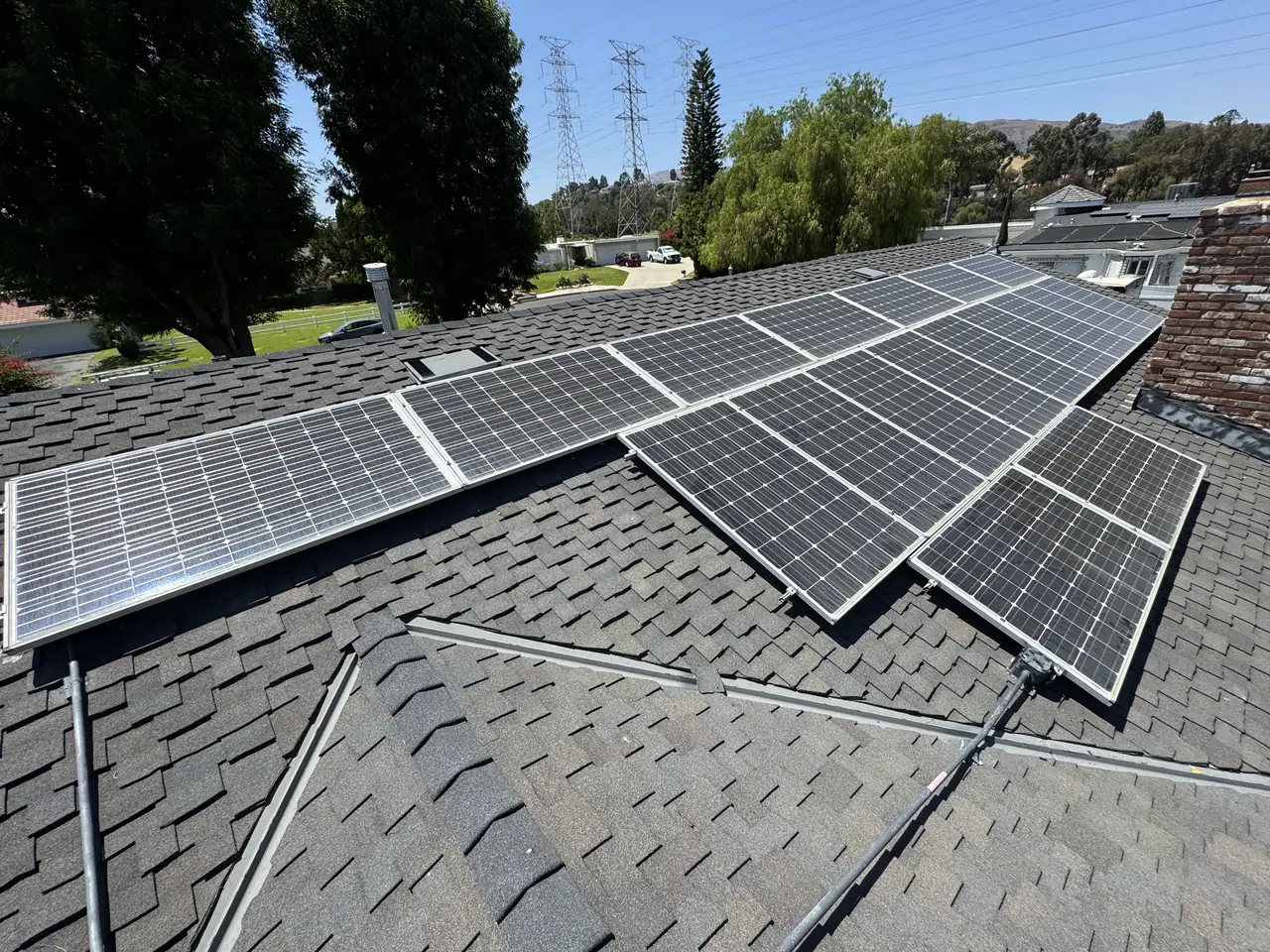
An array of 285-watt modules from a manufacturer that has since left this market, and a service visit that consisted almost entirely of taking readings.
When an array produces less than it should, the inverter tells you there is a problem and almost never tells you where. Finding it means going along the string with a meter and reading each device in turn — the same measurement, over and over, until one reading is not like the others. It is slow, it is not clever, and it is the only method that ends with an answer rather than a guess.
At a glance
- Modules
- 285 W, from a manufacturer no longer selling in this market
- Inverter
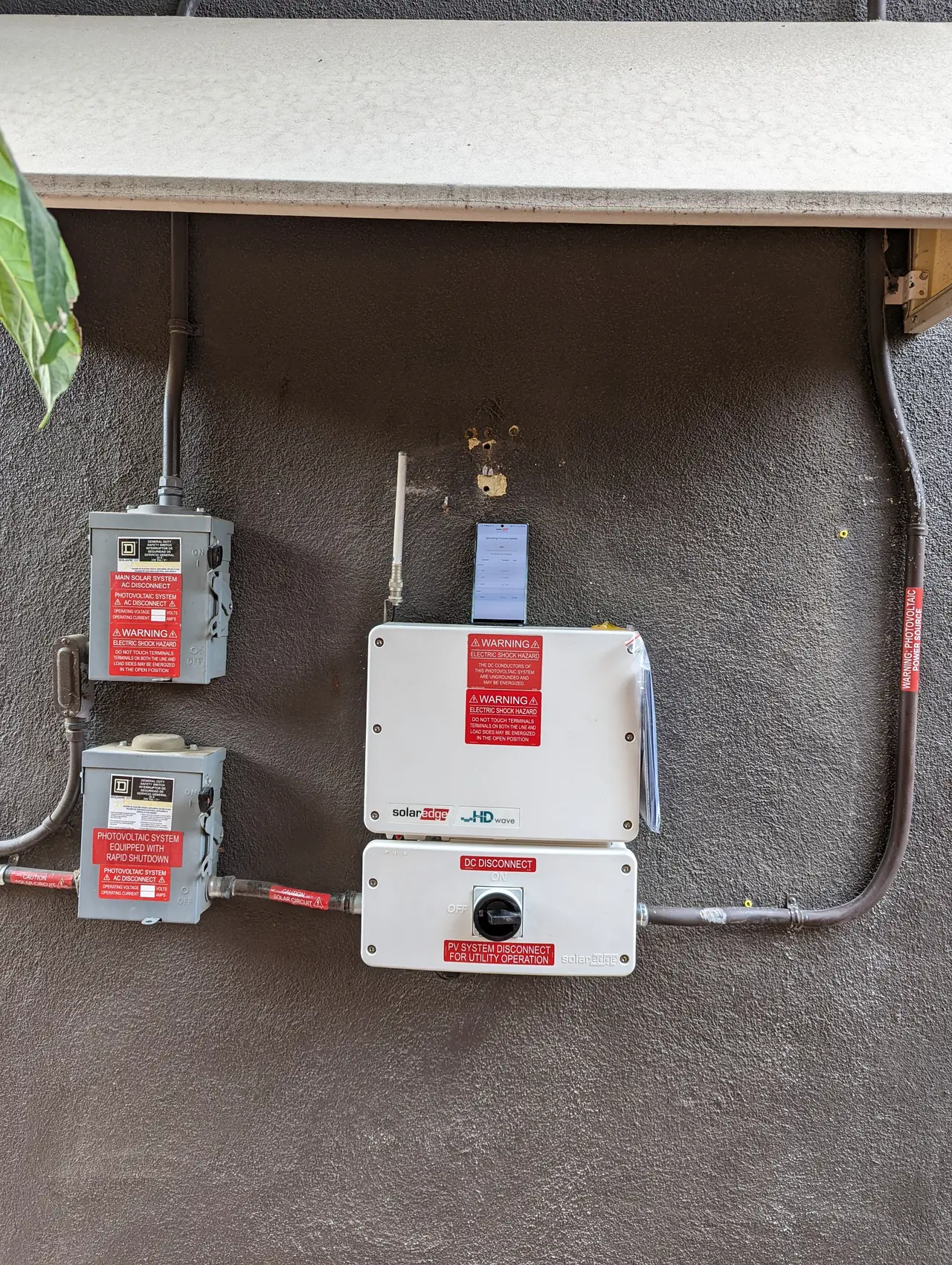
- SolarEdge, with an optimizer under each module
- Roof
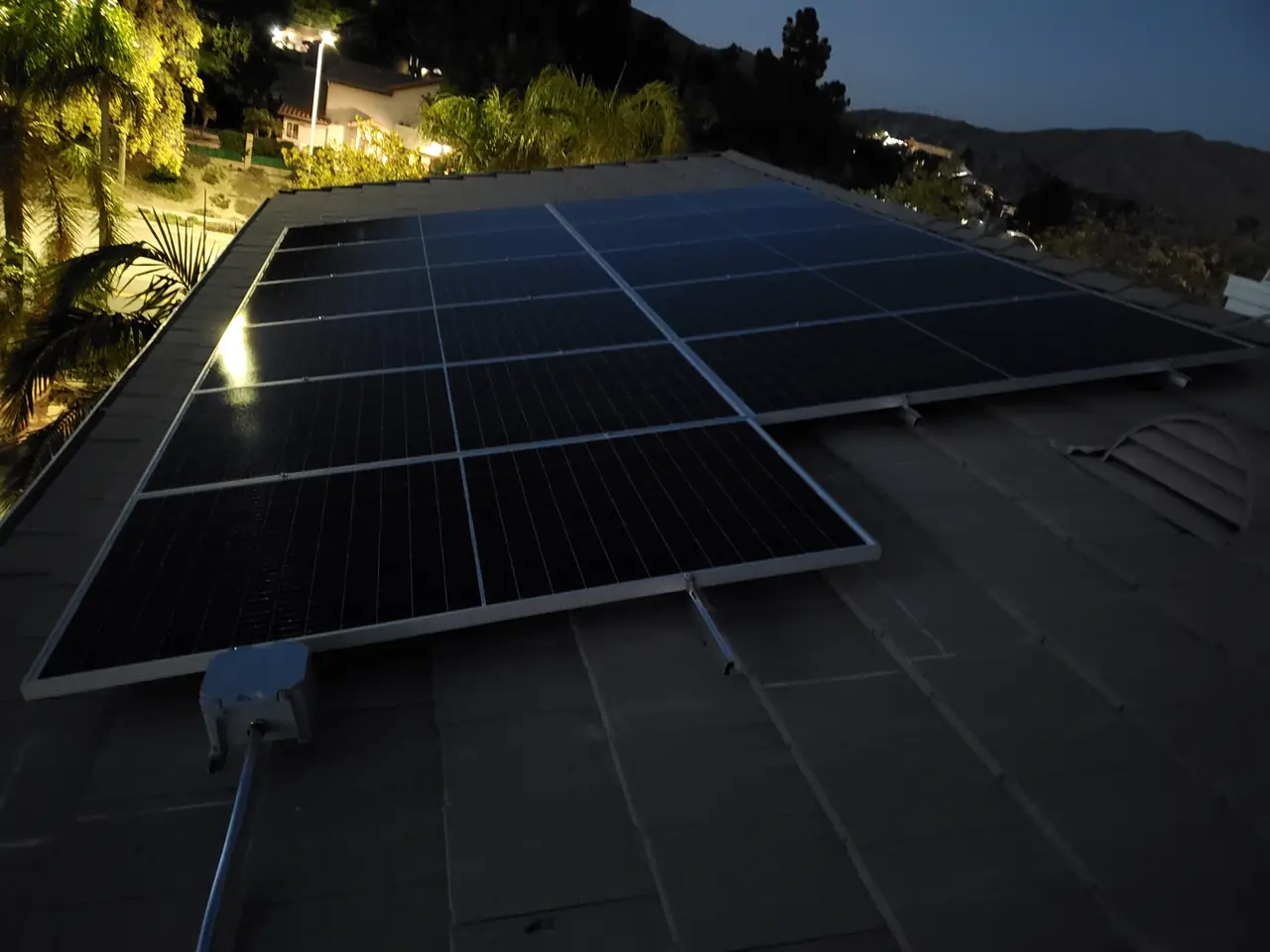
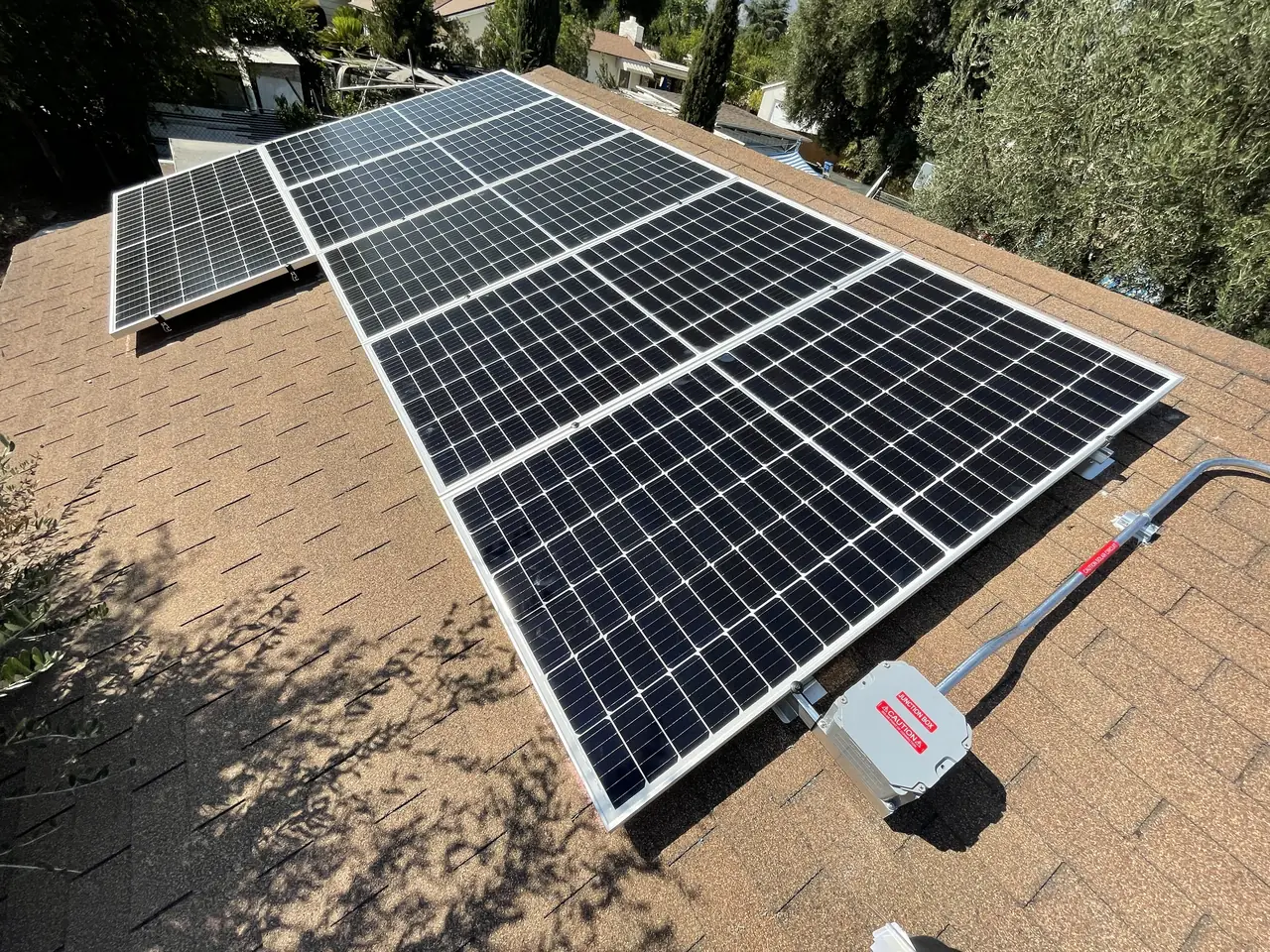
- Composition shingle, several planes
- Visit
- Device-by-device measurement along the string
- Instrument
- Clamp meter, readings taken at each connector
- Utility / AHJ
- LADWP / LADBS
The story
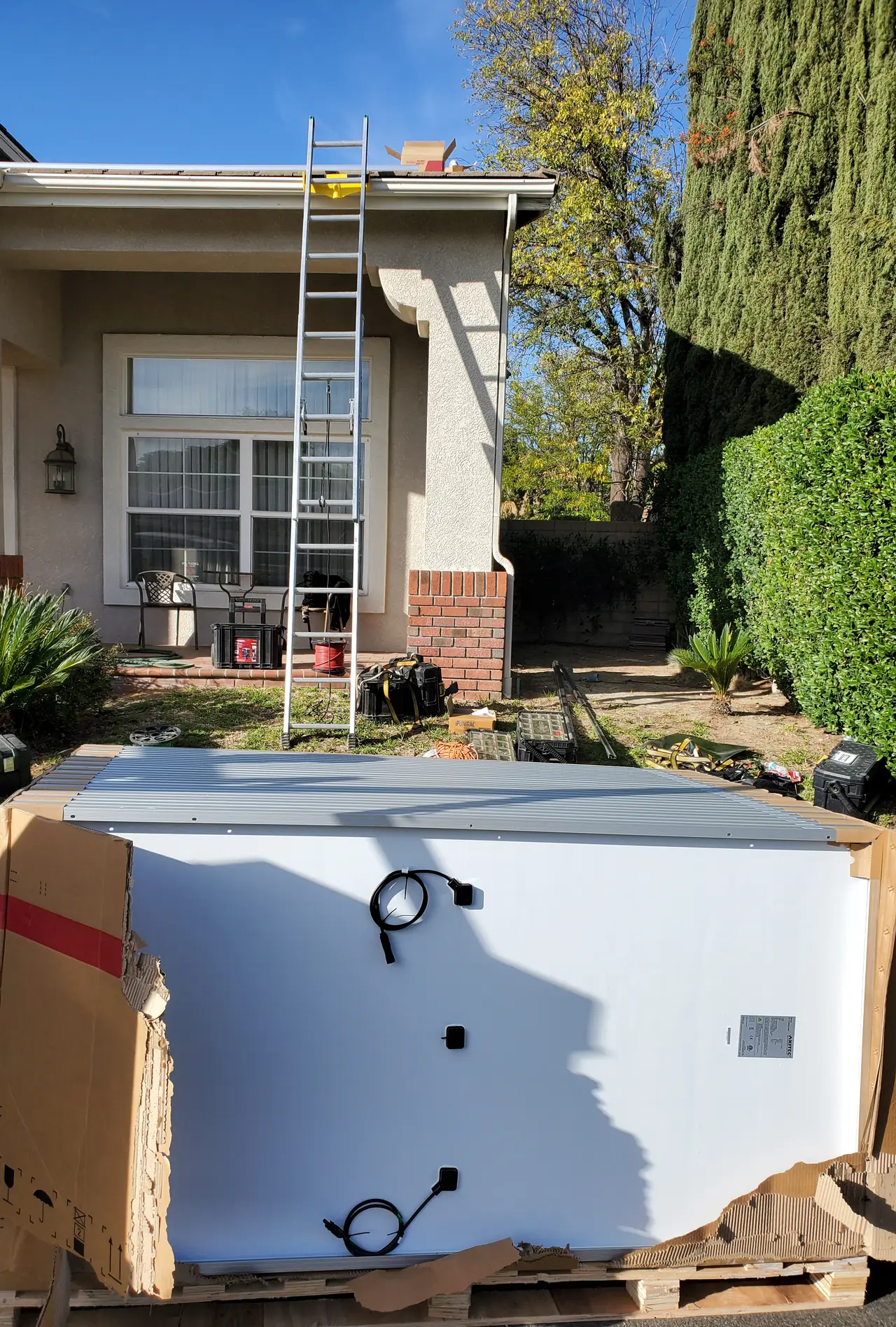
This system is old enough to be interesting. The modules are 285 watts each — a size that dates them immediately, against the 400 to 460 watts that is ordinary now — and they carry a brand that has since stopped selling into the United States market entirely.
Both of those matter when something goes wrong, and not in the way people assume. The modules themselves are usually fine; glass and silicon do not have much to break. What matters is that if one does need replacing, matching it is no longer a purchase, it is a search.
What brought us out was production. That is almost always what brings anybody out: the number in the app is lower than it was, or lower than it should be, and the system has not thrown anything dramatic enough to be obvious.
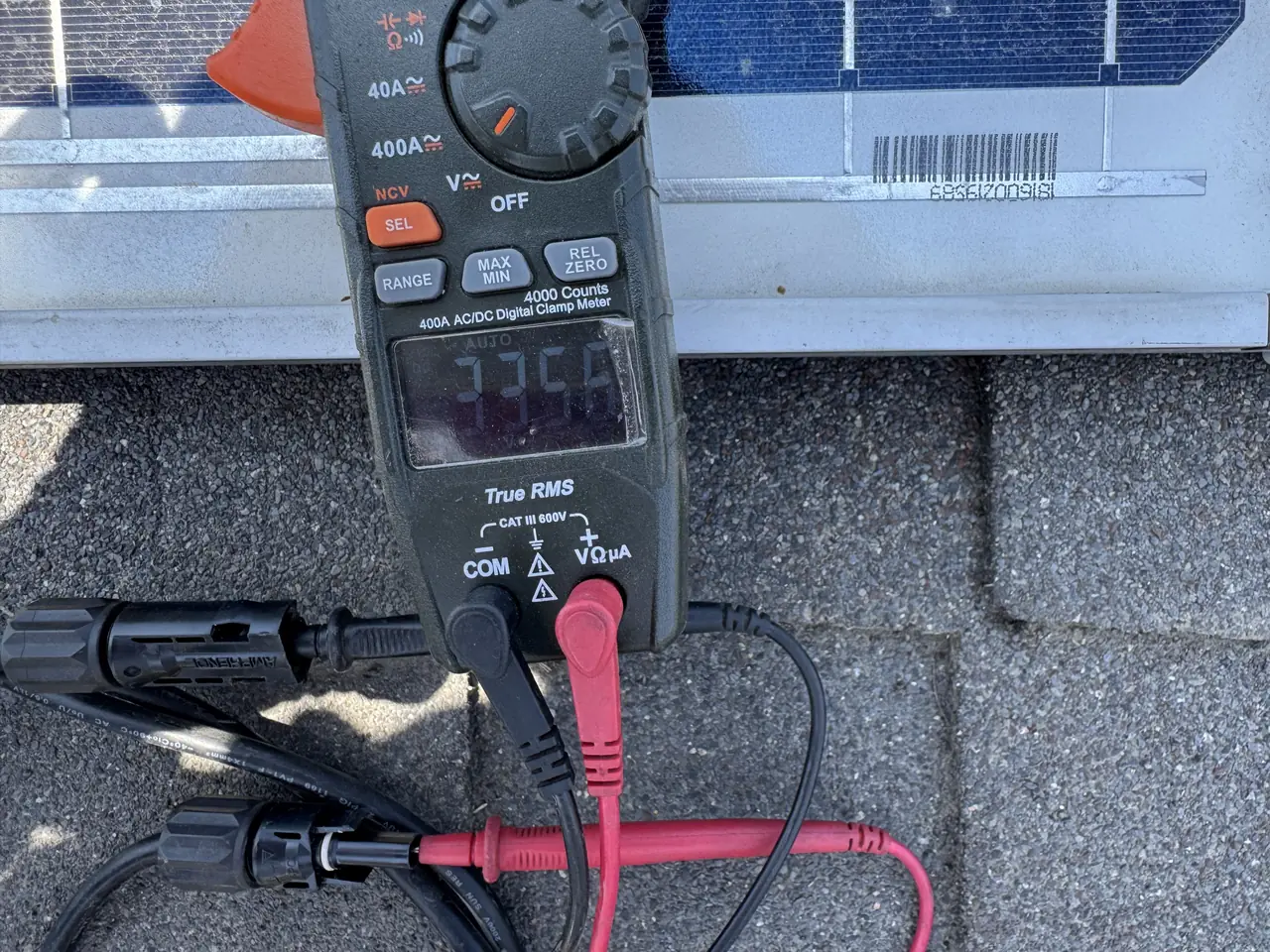
Here is what the visit actually consisted of. Going along the array, opening each connection in turn, putting a meter on it, reading the value, writing it down, moving to the next. Not looking at the array and forming an opinion. Not replacing the component that looks the usual suspect and seeing whether that fixed it. Measuring, in order, every device, until the readings stop agreeing with each other.
That method is worth insisting on, because the alternative is expensive in a way that is hard to see. Swapping a suspected part is a diagnosis that costs the price of the part whether or not it was right, and when it does not fix the problem you have learned almost nothing and paid for the lesson. A reading that is out of line with its neighbors tells you where the problem is, once, and it costs an hour of somebody's time.
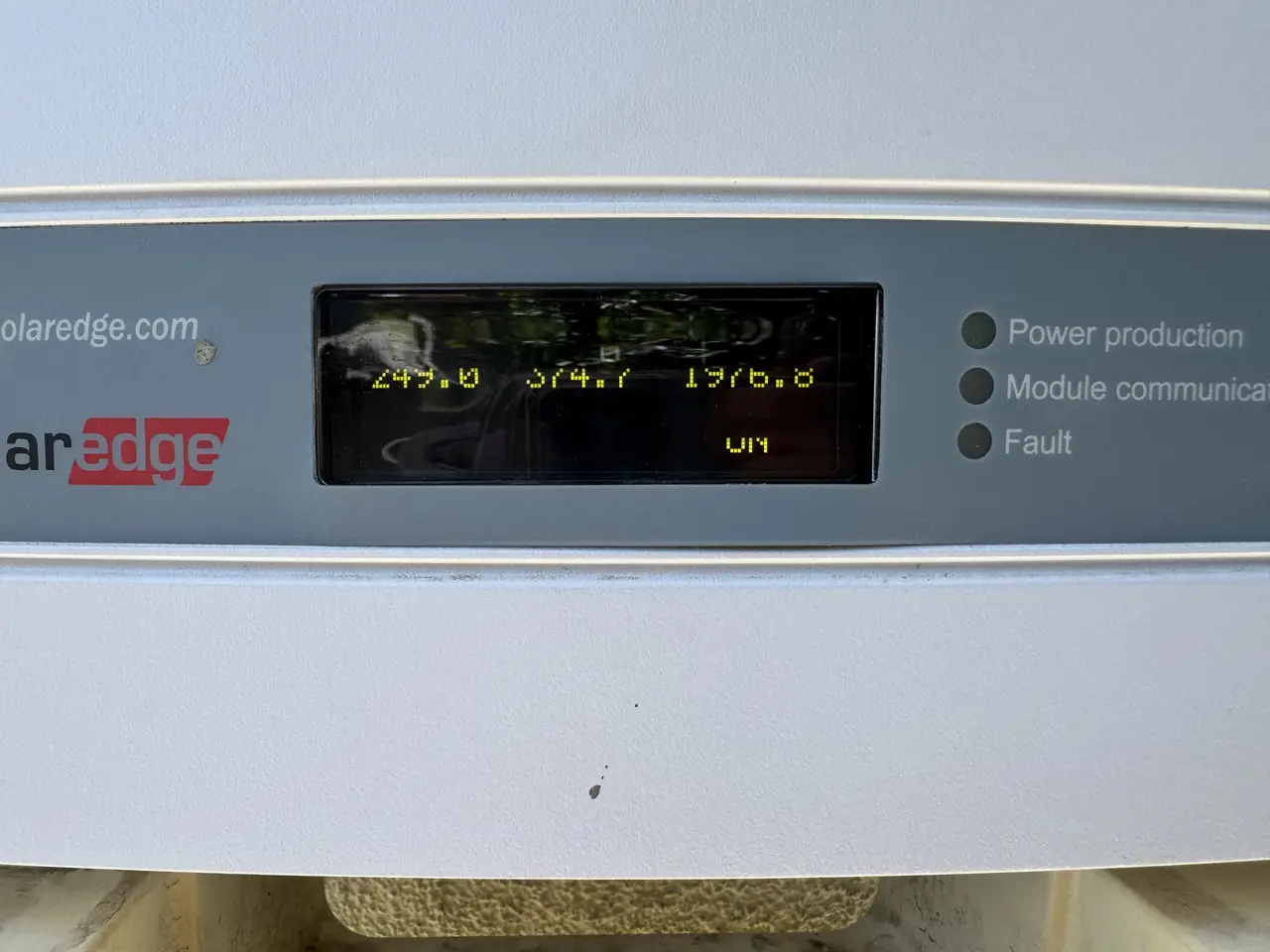
The inverter is part of the story rather than the answer to it. On a system with an optimizer under every module, the inverter knows a great deal about what each device is doing, and that data narrows the search considerably — but it narrows it to a region, not to a connector. The last few feet are done with a meter, on the roof.
One practical note for anyone with an array of this vintage. Get the module part number written down somewhere that is not the roof, now, while nobody needs it. When a module does eventually need replacing, the question is whether anything of the same electrical characteristics can be put in its place, and answering that starts with knowing exactly what is up there.
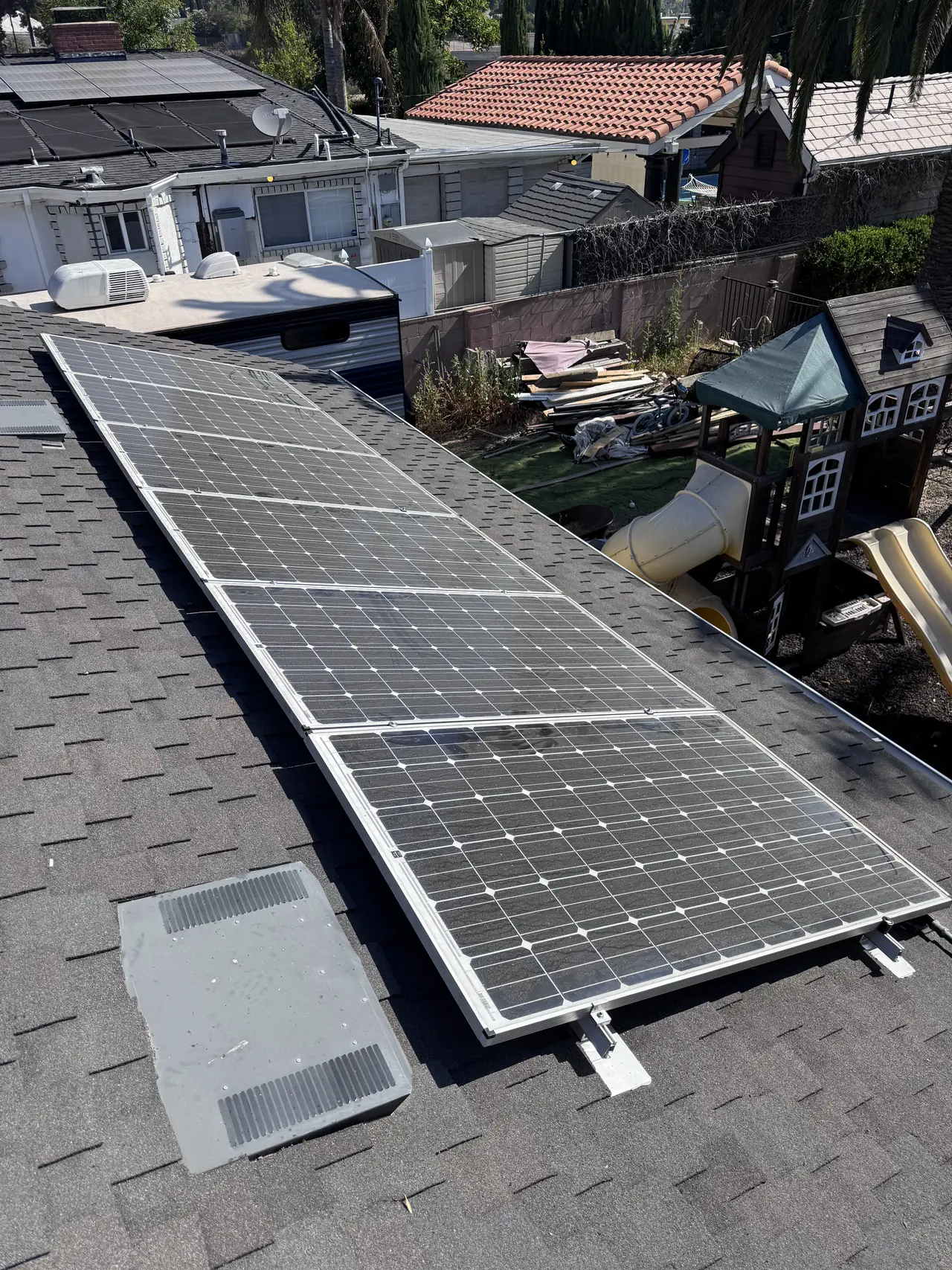
And the general version, which applies to any age of system. If somebody tells you what is wrong with your array without having been on the roof with an instrument, they are guessing. A good guess is still a guess, and you are the one paying for it to be wrong.
The device that was out of line was replaced, the string came back to the output it should have had, and the owner has had a working array since. Cali Energy diagnoses a Granada Hills fault with an instrument on the roof, one device at a time.
How it ran
| Service call | Reported underproduction |
|---|---|
| Same visit | Monitoring data used to narrow the search to a region of the array |
| Same visit | Device-by-device readings taken along the string with a clamp meter |
| Same visit | Readings recorded in order until one was out of line |
One instrument, many readings, one answer.
What we did
- Used the monitoring data to narrow the search before going on the roof.
- Took readings at each device in order rather than replacing a suspected part.
- Recorded the readings so the one that did not fit could be identified, not guessed.
- Worked on an array whose modules are no longer available new in this market.
System specifications
| Modules | 285 W each — a size that dates the installation |
|---|---|
| Manufacturer | No longer selling into this market |
| Inverter | SolarEdge with a power optimizer under each module |
| Roof | Composition shingle, array across several planes |
| Method | Monitoring narrows the region; a meter finds the device |
| Instrument | Clamp meter, readings at each connection in order |
| Utility / AHJ | LADWP / LADBS |
Is your project like this one?
- Your production is down and the app will not say why.
- Somebody has offered to replace a part to see whether that fixes it.
- Your array is ten years old or more.
- Your modules carry a brand you cannot find for sale any more.
- You want to know what a competent service visit actually looks like.
Cali Energy in Granada Hills
Granada Hills sits inside City of Los Angeles boundaries, so every project here is permitted through LADBS and interconnected through LADWP. Our work in Granada Hills runs from single-row arrays on accessory dwelling units to systems on underground services, on composition shingle and on concrete tile.
Some of the arrays here are old enough that the module brand on the back no longer sells in this country. Those systems still work, and when they stop, somebody has to find out where.
This installation is on the Granada Hills projects page alongside the others, and what the work covers is set out on the Granada Hills service area page.
- License and classifications: CSLB #1032379
- Official reference for this process: CSLB — check a contractor's license
Frequently asked questions
How is a fault found on a solar array?
By measurement, in order, along the string. Monitoring data narrows the search to a region of the array; from there somebody goes on the roof with a meter and reads each device until one reading does not match its neighbors. It is slow and it is the only method that ends with an answer.
Why not just replace the part that looks like the usual suspect?
Because that is a diagnosis you pay for whether or not it is correct, and when it is wrong you have learned nothing. A reading that is out of line identifies the device once, for the cost of an hour. Replacement should follow the measurement, not stand in for it.
Can old modules still be replaced?
Sometimes, and it is a search rather than a purchase. A module that is no longer made has to be matched on electrical characteristics rather than on part number, and that is a conversation worth having before you need it. Write down what is on your roof while nobody is under pressure.
Does an optimizer system make faults easier to find?
Considerably. With a device under every module the inverter knows what each one is doing, which narrows the search from an array to a handful of modules. It does not finish the job — the last stage is still a person on the roof with an instrument.
Does Cali Energy diagnose faults on Granada Hills arrays?
Yes, with an instrument on the roof rather than a guess from the driveway. The method is unglamorous: take readings device by device along the string, write each one down in order, and keep going until one is out of line with its neighbors. On this Granada Hills system that is exactly how the failed device was found, and replacing it brought the string back to its expected output.
What this would look like on your roof
Planning solar in Granada Hills? Tell us your utility, your roof and what your bill looks like now, and we will model what a system like this would do on your house before you commit to anything.
Or call +1 (323) 844-7777 · Cali Energy, Northridge · CSLB #1032379 (B, C-10, C-39) — design, permits, install and electrical under one licensed contractor.
Related
This timeline reflects this property and this permitting path. Updated September 2026.