

Pacoima, CA · May – August 2021 · LADWP / LADBS
In Pacoima, a panel upgrade decides which route you file on.
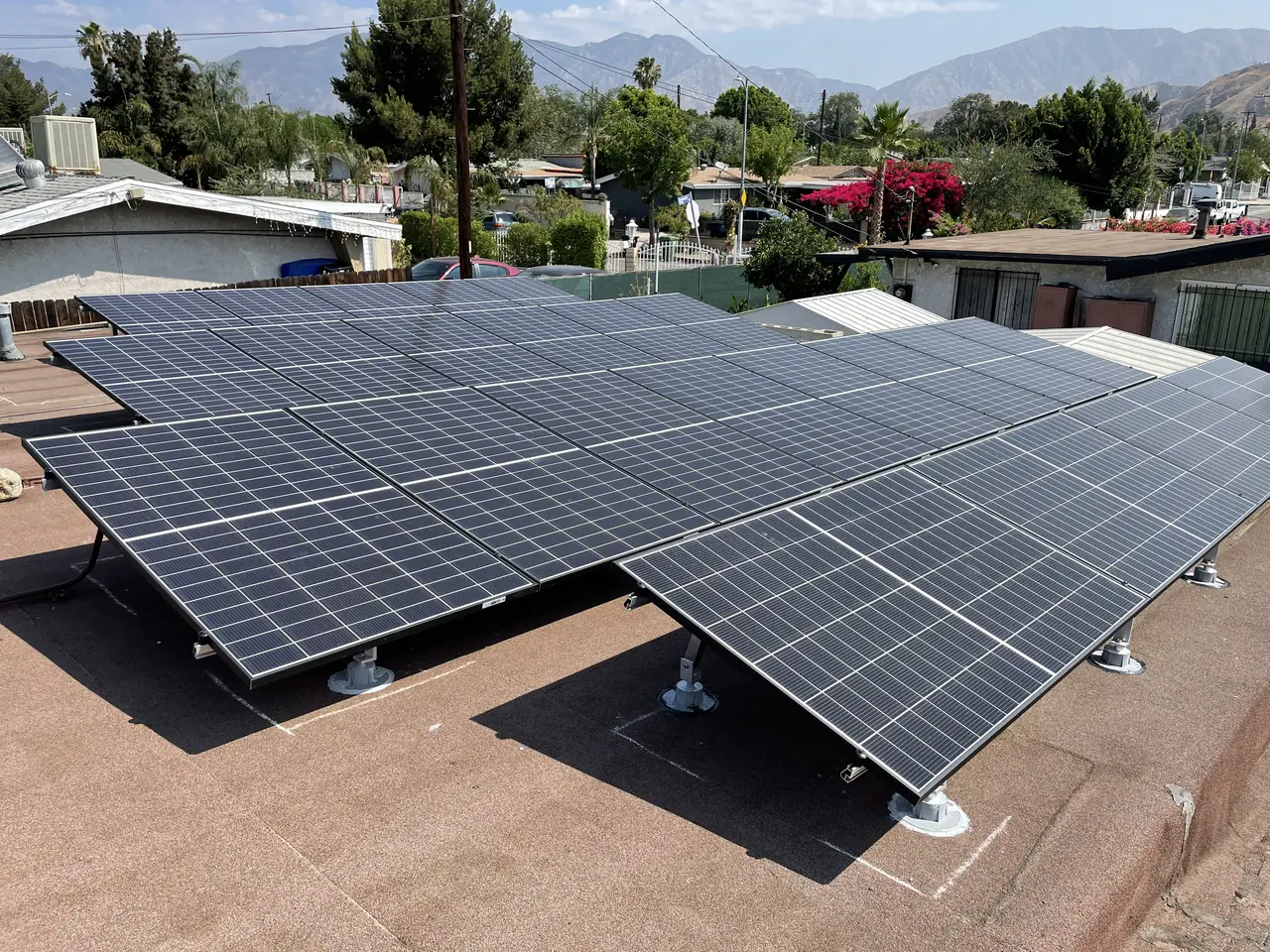
Nine kilowatts on a low-slope roof, a service panel that had to be replaced, and the one document that determines how the interconnection is filed.
The utility offers more than one interconnection route. The quick one is built for systems that connect to the service as it already exists; the standard one is what a project needs when the service itself changes, because only it produces a meter spot — the utility's written instruction on where new service equipment may go. On this Pacoima project the main panel was being replaced, so a meter spot was required. Cali Energy confirmed the scope to the utility's service planner the day he raised it, filed the photographs he asked for, and the request moved onto the standard process with the meter spot sheet issued nine days after filing.
At a glance
- System
- 9.3 kW AC-CEC
- Roof
- Low slope, tilt frames
- Service
- Main panel replaced as part of the project
- Interconnection filed
- 14 June 2021
- Meter spot issued
- 23 June 2021 — nine days later
- Final inspection
- 16 July 2021, solar and electrical permits
- Permission to operate
- 29 July 2021
- Utility / AHJ
- LADWP / LADBS
The story
The site visit on this house produced a quote with an item in it that homeowners do not enjoy reading: the main service panel had to be replaced before any solar could be connected. That was priced into the project as one number rather than presented later as a surprise, which is the only way to price it that survives the install.
That decision about the panel is what sets everything downstream, because it changes which interconnection route the project belongs on. The utility runs more than one. The quick route exists for systems that tie into the electrical service the way it already stands: fewer documents, a quicker review, no site planning work. It is the right route for a great many residential projects.
Replacing the main panel is service work, and service work needs a meter spot — the utility's written instruction on where the new equipment may be placed and under what conditions. Only the standard process produces one. That single document is the whole reason the routes are not interchangeable, and it is worth knowing before a request is filed rather than after.
The day after the request went in, the utility's service planner asked for photographs from the panel to the pole, and Cali Energy confirmed the scope the same day: a service upgrade, which belongs on the standard process.
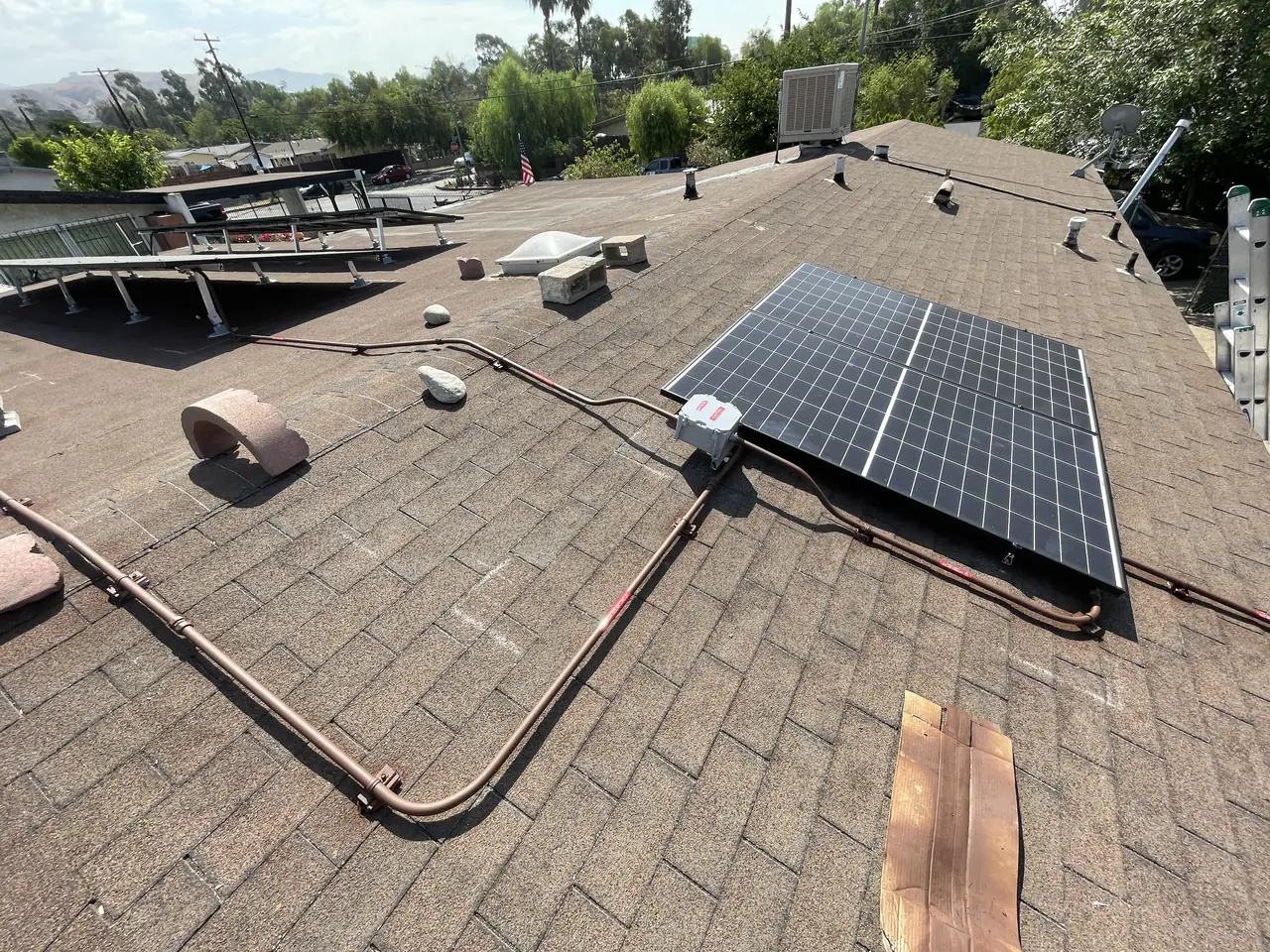
The photographs went in within two days, and the meter spot sheet came through on the twenty-third of June — nine days after the request was filed — with an instruction to send photographs of the completed installation once it was done.
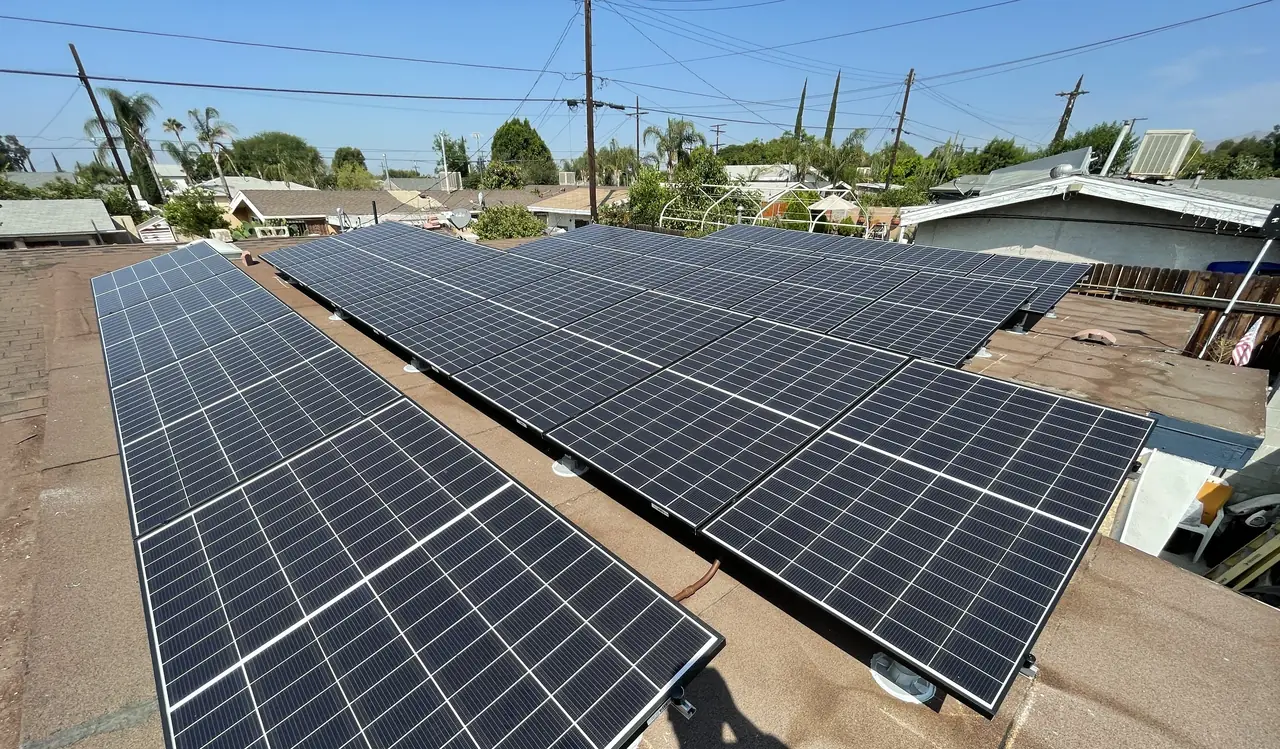
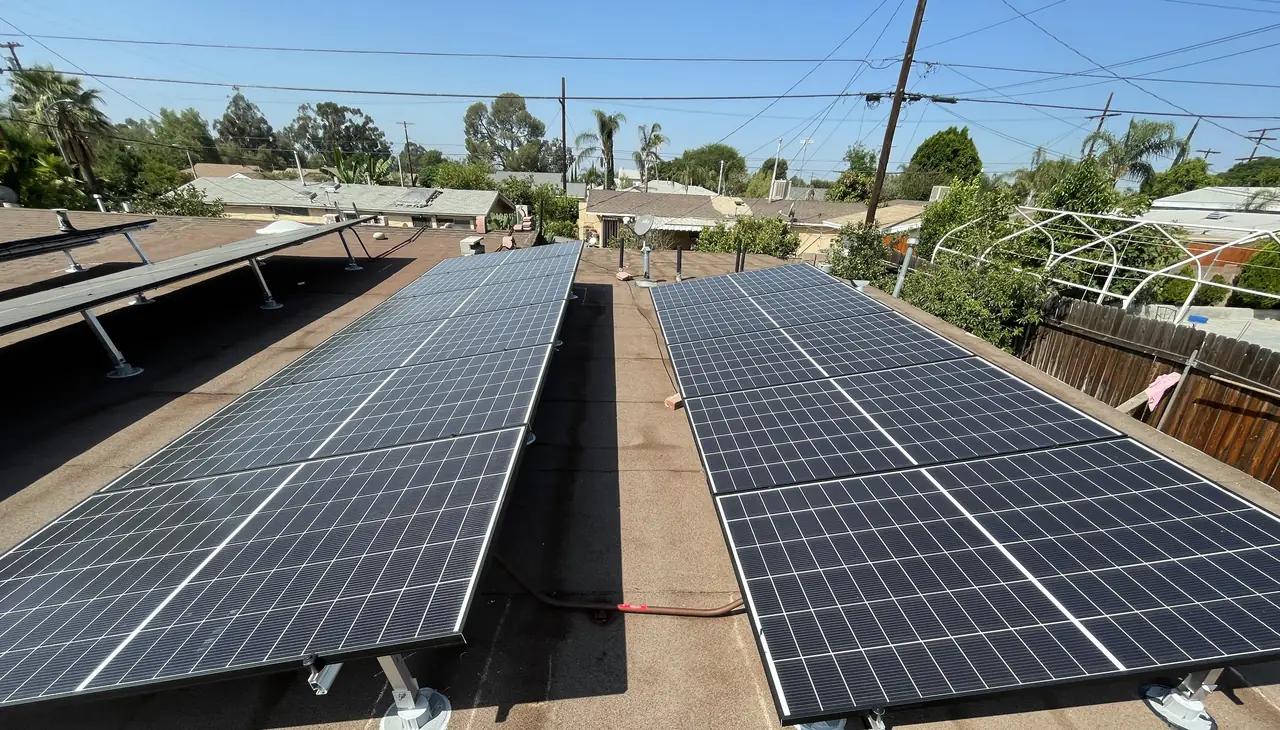
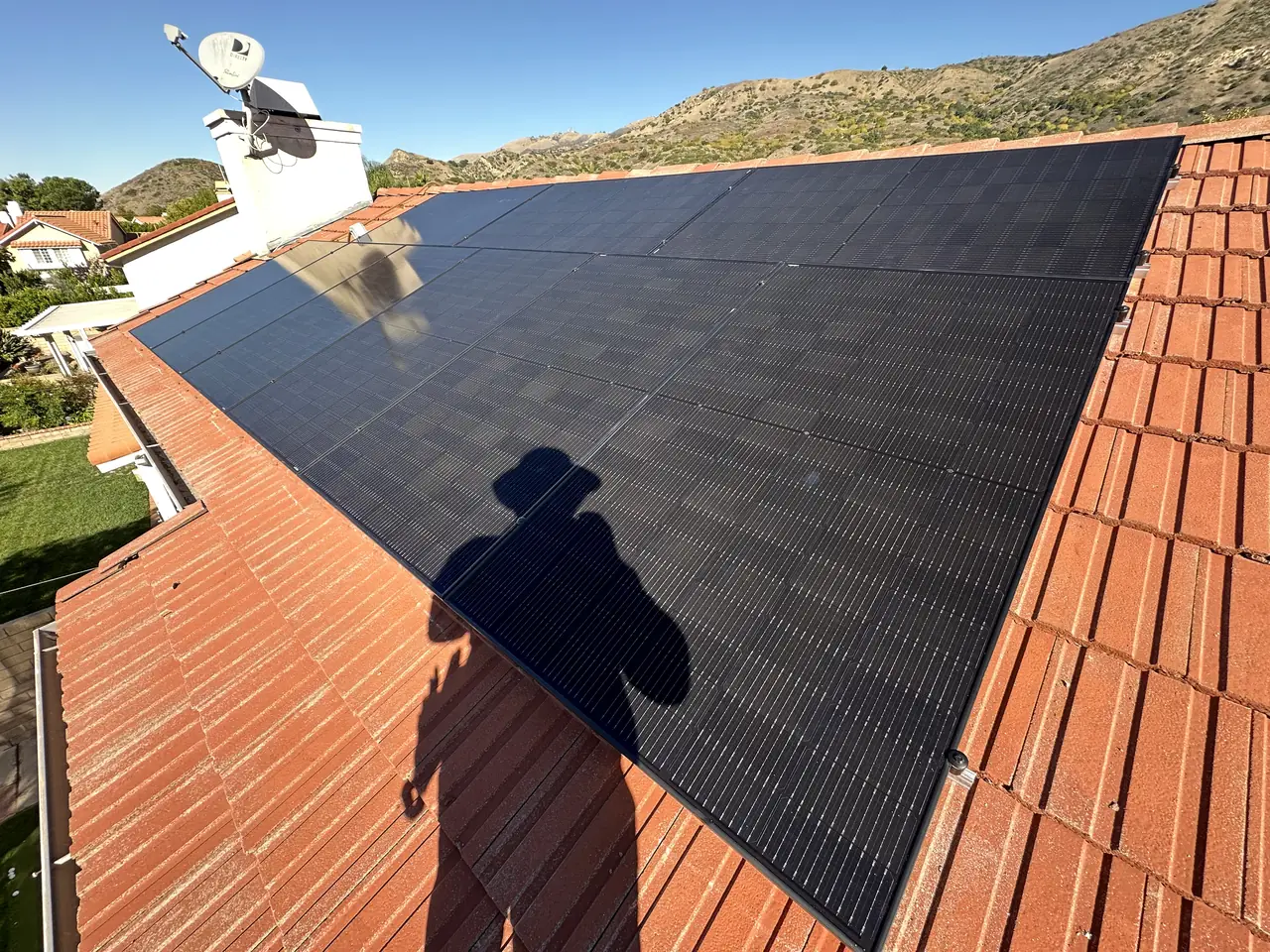
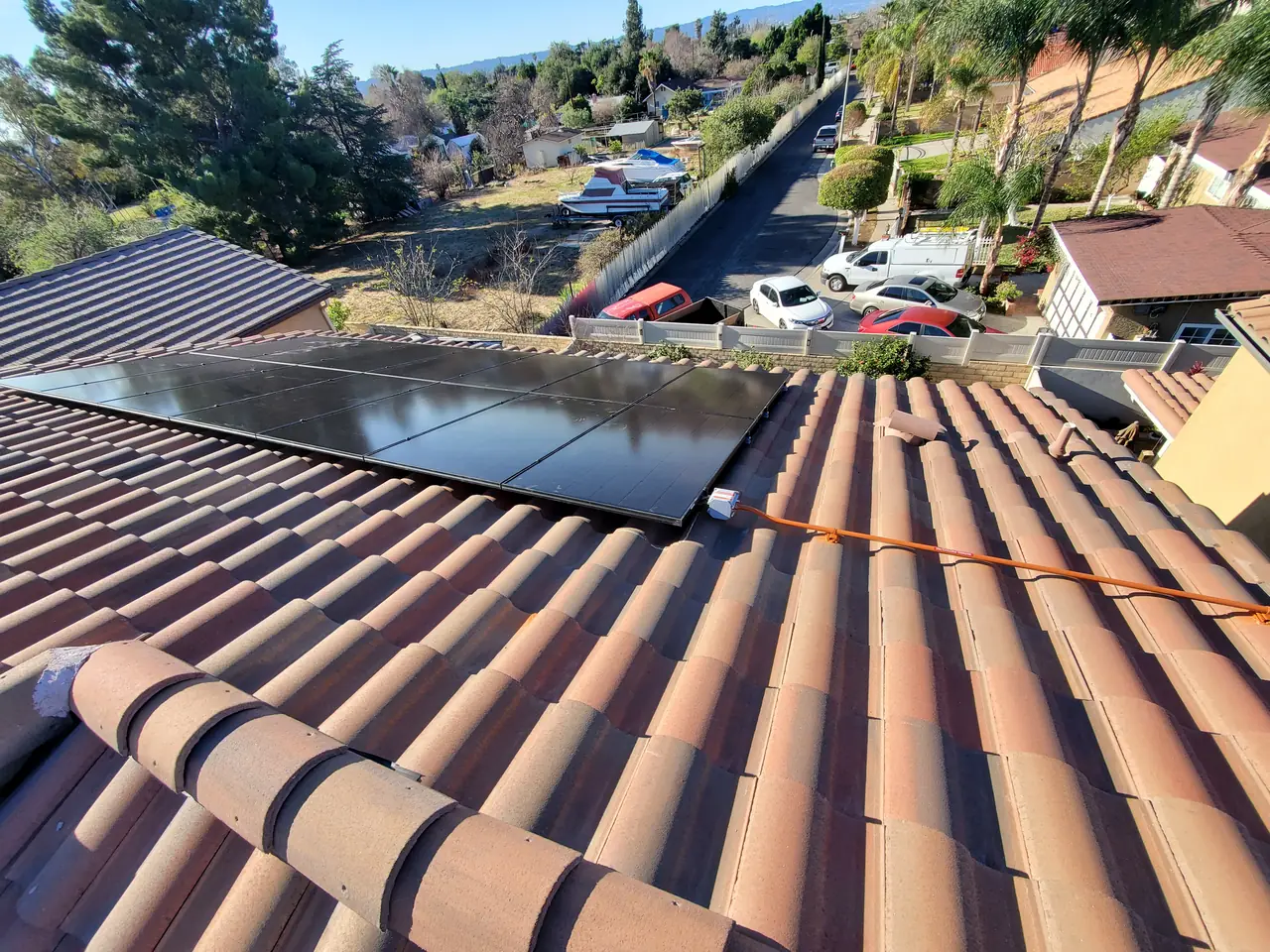
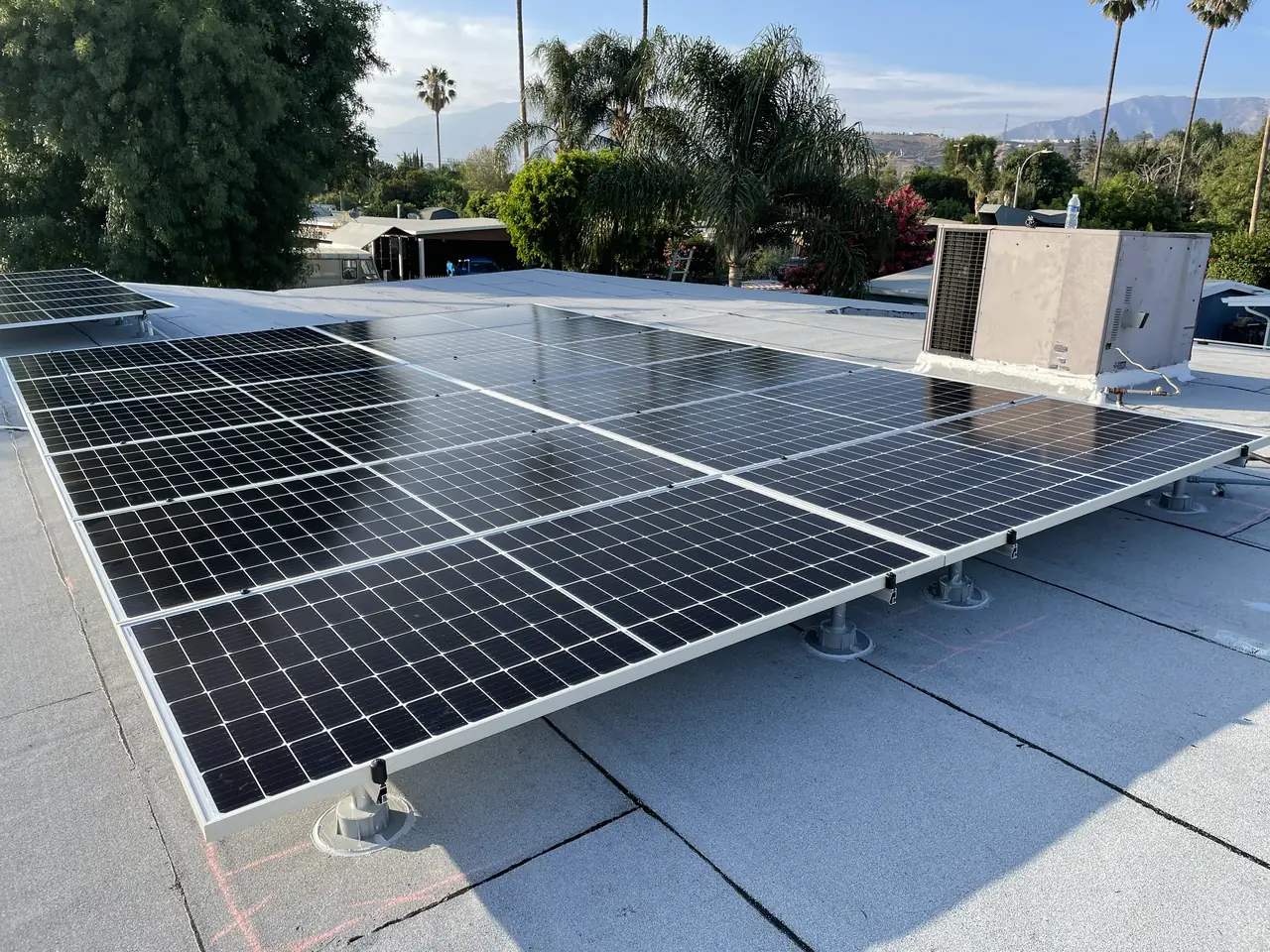
From there it ran in order. The array went on a low-slope roof on tilt frames, which is how a nine-kilowatt system fits and gets its pitch on a roof that has almost none. The final inspection on the sixteenth of July covered both permits — the solar and the electrical for the panel — and once both were cleared the utility marked the installation approved on the twenty-first of July, with permission to operate issued on the twenty-ninth.
The practical rule is simple: match the interconnection route to the scope. If the service is changing, the project needs a meter spot, and the meter spot is what decides the route. On this Pacoima house the system was registered on Enphase Enlighten on the fifth of August 2021, so the household could see production module by module, and it has run since.
How it ran
| 13 May 2021 | Quote issued after the site visit, including the panel upgrade |
|---|---|
| 2 June 2021 | Homeowner approves the scope |
| 7 June 2021 | Contract signed |
| 14 June 2021 | Interconnection request filed and fees paid |
| 15 June 2021 | Utility asks for panel-to-pole photographs; scope confirmed as a service upgrade |
| 17 June 2021 | Photographs filed |
| 23 June 2021 | Standard process confirmed; meter spot sheet issued |
| July 2021 | Array installed on tilt frames; main panel replaced |
| 16 July 2021 | Final inspection on both permits |
| 21 July 2021 | Utility marks the installation approved |
| 29 July 2021 | Permission to operate issued |
| 5 August 2021 | System registered on Enphase Enlighten |
Nine days from the interconnection filing to the meter spot, and six weeks from filing to permission to operate. This timeline reflects this property and this period.
What we did
- Quoted the required main panel upgrade inside the project price rather than after it (C-10).
- Confirmed the scope to the utility the same day its service planner raised it.
- Filed the panel-to-pole photographs the utility asked for within two days.
- Carried the interconnection on the standard process and obtained the meter spot sheet nine days after filing.
- Installed a nine-kilowatt array on tilt frames over a low-slope roof.
- Carried both permits through the final and the project to permission to operate on 29 July.
- Registered the system on Enphase Enlighten so the household could see production per module.
System specifications
| Rated output | 9.3 kW AC-CEC |
|---|---|
| Roof | Low slope |
| Mounting | Tilt frames |
| Service | Main service panel replaced |
| Interconnection route | Standard process, as a service upgrade requires |
| Permits | Two — solar and electrical |
| Monitoring | Enphase Enlighten, per-module production |
| Utility / AHJ | LADWP / LADBS |
Is your project like this one?
- Your project includes a main service panel upgrade.
- You have been told a quick-route filing will save you time.
- You want to know what a meter spot is and whether you need one.
- You have a low-slope roof and want to know how the array gets its pitch.
- Your project is carrying two permits and you expected one.
Cali Energy in Pacoima
Pacoima is a City of Los Angeles neighborhood in the northeast San Fernando Valley, which means the permit goes through LADBS and the interconnection through LADWP. The housing is mostly post-war single story on modest services, and the ZIP it shares with Arleta turns up in the paperwork more often than anyone expects.
This installation is on the Pacoima projects page alongside the others, and what the work covers is set out on the Pacoima service area page.
- License and classifications: CSLB #1032379
- Official reference for this process: LADWP — Electric Service Requirements Manual
- Official reference for this process: LADWP — interconnection process, types 1, 2 and 3
Frequently asked questions
What is a meter spot and when do you need one?
It is the utility's written instruction on where service equipment may be placed and under what conditions. You need one whenever the service itself changes — a new main panel, a relocated meter, a service upgrade. A solar system that connects to the service as it already stands usually does not need one, which is why the quick interconnection routes do not issue them.
Can an interconnection request be moved between routes?
Yes, and on this Pacoima project it took nine days end to end. The utility's service planner asked for panel-to-pole photographs and noted that the job looked like a service upgrade; the scope was confirmed the same day, the photographs went in within two days, and the meter spot sheet followed. There is no penalty for the move itself — the cost is only the time a mismatch sits unnoticed.
Does Cali Energy handle main panel upgrades with solar in Pacoima?
Yes. Cali Energy quotes the service work inside the project price when a panel has to be replaced, carries the meter spot request and runs both the solar and electrical permits through LADBS to a passed final. Nine completed Pacoima projects are on our projects page. Our license is CSLB #1032379.
Why does a project like this have two permits?
Because two different scopes of work are being inspected. The solar array is one permit and replacing the main service panel is another, and each is inspected on its own terms at the final.
What this would look like on your roof
Planning solar in Pacoima? Tell us your utility, your roof and what your bill looks like now, and we will model what a system like this would do on your house before you commit to anything.
Or call +1 (323) 844-7777 · Cali Energy, Northridge · CSLB #1032379 (B, C-10, C-39) — design, permits, install and electrical under one licensed contractor.
Related

This timeline reflects this property and this permitting path. Updated September 2026.