

Woodland Hills, CA · October 2019 – August 2026 · LADWP / LADBS
The portal said no production. The system was running fine.
A modest array put up at the end of 2019, two genuine inverter failures inside its first two years, and then, six and a half years in, eight days of silence that looked exactly like a third one. A service visit was on the calendar. It was canceled, and nobody paid for anything.
A monitoring portal reporting no production is not the same as a system that is not producing. The pattern that separates them is whether the site still shows as online with no critical error: a dead inverter raises a fault, while a communication problem leaves a healthy system reporting nothing. That distinction is worth real money after the first few years, because hardware warranties and labor warranties expire on different clocks, and a diagnostic visit outside the labor term is billable. On this Woodland Hills system Cali Energy said that plainly, then read the data again before dispatching anyone, and the visit was never needed.
At a glance
- Recorded by the utility
- 5.7 kW AC-CEC
- Inverter
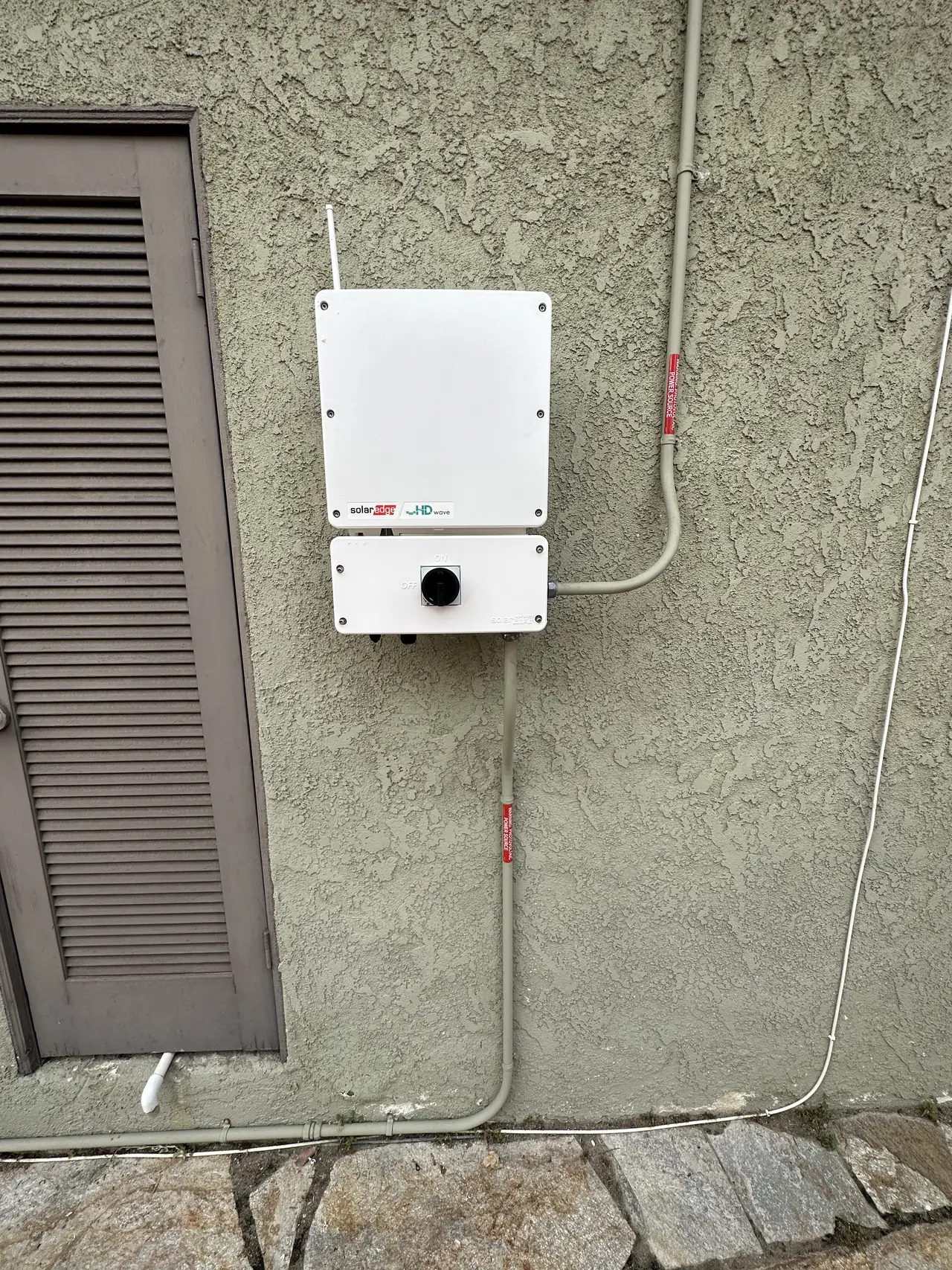
- SolarEdge string inverter
- Service
- Underground, meter work only; no service upgrade
- Meters on the property
- Two
- Battery
- None
- Warranty replacements
- Two inverters, both inside the first two years
- Years of service history
- Seven
- Utility / AHJ
- LADWP / LADBS
The story
The first useful thing on this project happened before anyone applied for anything. The drawing set came back with the meter configuration wrong on one sheet, because the property has two meters rather than one. It was corrected and reissued the same afternoon. A wrong meter count on a plan sheet is the kind of error that costs a plan check cycle if it goes out and costs an afternoon if it does not.
After that it was an ordinary job. Underground service, meter work only, no service upgrade, five point seven kilowatts as the utility recorded it. The interconnection was confirmed the day after Christmas, the city logged its inspection request in January, the utility approved in late February and set the net meter with permission to operate at the end of that month. Nothing that follows is about the installation.
What matters here is the six and a half years that followed.
In June 2021, sixteen months after the system came on, the inverter threw a hardware error. The manufacturer granted a warranty replacement and shipped it. In January 2022 the inverter failed again, a second warranty claim was granted, and this time the manufacturer sent a monitoring kit along with the replacement. A crew went out at the end of February and swapped it. Two hardware replacements inside two years is more than that generation of inverter should have needed, and both were granted and fitted without argument. What happened next is the point.
In August 2026 the portal showed no production for eight days.
Every instinct says the third inverter has died. The homeowner had already been walked through a power cycle with no change. A service visit was booked for the following Tuesday morning, and at the same time we said the thing nobody enjoys saying: at six and a half years the manufacturer might still replace the hardware under its own warranty, but our labor coverage had long expired, so this visit would be chargeable whatever we found. That is a real amount of money to spend on a guess.
So before the truck rolled, the data got read once more, properly.
Two things in it did not fit a dead inverter. The site was still reporting as online, and the portal showed no critical error at all. A failed inverter does not go quiet politely; it raises a fault. And the production figure had crept forward slightly, from one number to a marginally higher one, and then frozen. That is the signature of data that stopped arriving, not of generation that stopped happening. The questions that follow are not electrical: has the network at the house changed, have there been outages, is anything else in the house offline.
On the Sunday the answer came back. The cause was the home internet connection. Once it was working the portal began backfilling, and by that afternoon it was showing production for every day since the twelfth. The system had been generating the whole time and simply had no way to say so. The visit was stood down before anyone was dispatched, and the homeowner paid nothing.
Four days from first alarm to resolved, no hardware touched, no invoice.
If your monitoring goes dark, run this order before you book anyone. Check whether the portal still says the site is online and whether there is an actual fault code, because online and silent points at the connection rather than the equipment. Check whether the last production figure moved a little before it stopped, which is what stale data looks like. Check whether anything else in the house lost its network. And ask your installer, before the visit is booked, whether your labor warranty is still running, because the answer decides who pays for the diagnosis.
How it ran
| October 2019 | Plan set corrected before submission; a sheet had the wrong meter configuration for a two-meter property |
|---|---|
| December 2019 | Interconnection confirmed at 5.7 kW AC-CEC; permission to install granted |
| January 2020 | City inspection request logged |
| February 2020 | Utility completes its review; net meter set and permission to operate granted |
| June 2021 | Inverter hardware error; warranty replacement granted by the manufacturer |
| January 2022 | Second inverter failure; warranty replacement granted, shipped with a monitoring kit |
| February 2022 | Crew replaces the inverter |
| 20 August 2026 | Portal shows no production since the twelfth, with the site online and no fault raised |
| 21 August 2026 | Service visit booked and the labor warranty position stated plainly; the data is re-read and points at the connection |
| 23 August 2026 | Cause identified as the home internet; data backfills from the twelfth; visit stood down at no charge |
This timeline reflects one system followed over seven years. The 2026 episode is not a failure of the equipment and should not be read as one.
What we did
- Caught and corrected a drawing sheet that showed the wrong meter configuration for a two-meter property, before it reached plan check.
- Installed the array and carried the project through city inspection to permission to operate (C-10).
- Handled two manufacturer warranty claims on the inverter and sent a crew to perform the replacement.
- Stated the labor warranty position in writing before booking a chargeable visit, rather than after it.
- Re-read the monitoring evidence before dispatching anyone, identified the pattern as a reporting fault rather than a hardware fault, and stood the visit down.
System specifications
| Recorded by the utility | 5.7 kW AC-CEC |
|---|---|
| Inverter | SolarEdge string inverter |
| Service | Underground, meter work only |
| Meters on the property | Two |
| Battery | None |
| Warranty history | Two manufacturer inverter replacements, 2021 and 2022 |
| Utility / AHJ | LADWP / LADBS |
Is your project like this one?
- Your monitoring app shows no production and you are not sure whether to call anyone.
- Your system is out of its installation warranty but the equipment may still be covered.
- You have been quoted a service call to diagnose a system that may not be faulty.
- Your inverter has been replaced before and you are worried it has happened again.
- Your Woodland Hills system was installed years ago and you still need someone to answer for it.
Cali Energy in Woodland Hills
Woodland Hills is inside City of Los Angeles boundaries: permits run through LADBS, interconnection through LADWP.
Seven years is long enough for an installer, a manufacturer and a homeowner all to change what they remember about the same house. In LADWP territory the utility keeps its own dated record of every step, and that is the record we go back to.
This installation is on the Woodland Hills projects page alongside the others, and what the work covers is set out on the Woodland Hills service area page.
- License and classifications: CSLB #1032379
- Official reference for this process: CSLB — check a contractor's license
- Official reference for this process: LADWP — residential solar programs
Frequently asked questions
My app shows no production. Is my system broken?
Not necessarily, and there is a quick way to tell. Look at whether the site still reports as online and whether there is an actual fault code. A failed inverter raises an error; a healthy system with a broken connection reports nothing at all while looking perfectly well. Check too whether the last production figure inched up before it froze, which is what stale data looks like rather than a genuine stop.
How can the internet stop my solar from reporting?
Monitoring reaches the manufacturer's portal over your home network. If that path breaks, the inverter keeps generating and the house keeps using the power, but nothing is transmitted, so the portal shows a flat line. When the connection returns, most systems backfill the missing days from what they stored locally. On this system the portal filled in eight days of production within hours of the network coming back.
Does my warranty cover a service visit after six years?
Look at the two warranties separately, because they run on different clocks. The manufacturer's hardware warranty on an inverter commonly runs far longer than the installer's workmanship and labor cover. That means a part can still be replaced free while the visit to diagnose and fit it is chargeable. Ask which situation you are in before the appointment is made, not afterwards.
Two inverter failures in two years. Is that normal?
It is more than that generation of hardware should have needed. Both were granted as manufacturer warranty claims, the second arrived with a monitoring kit included, and the replacement has now run for more than four years without a hardware fault. What matters practically is that the claims were made, granted and fitted rather than argued about.
Will Cali Energy support a Woodland Hills system it installed years ago?
Yes. This one was installed at the end of 2019 and Cali Energy handled both warranty replacements and the 2026 diagnosis. The useful part of that support is not always a visit. Here it was telling the owner what a visit would cost while it was there was still time to avoid it, and then reading the evidence carefully enough to make the visit unnecessary. California contractor license number 1032379.
What this would look like on your roof
Planning solar in Woodland Hills? Tell us your utility, your roof and what your bill looks like now, and we will model what a system like this would do on your house before you commit to anything.
Or call +1 (323) 844-7777 · Cali Energy, Northridge · CSLB #1032379 (B, C-10, C-39) — design, permits, install and electrical under one licensed contractor.
Related
This timeline reflects this property and this permitting path. Updated September 2026.