

Glassell Park, CA · November 2021 – January 2022 · LADWP / LADBS
Glassell Park: the array waited on the roof's own final.
The roofers were done. That was not the thing the solar crew was waiting for.
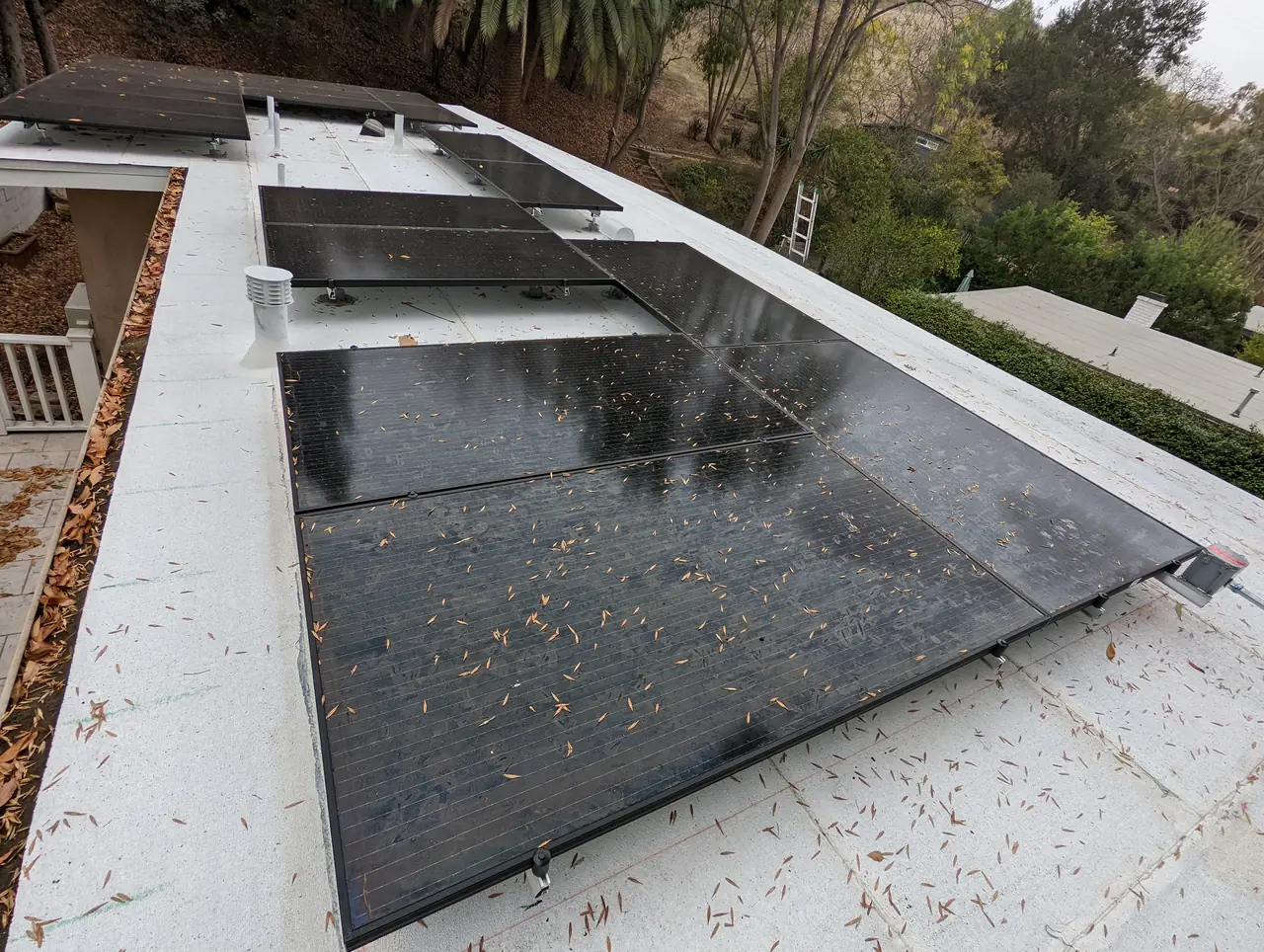
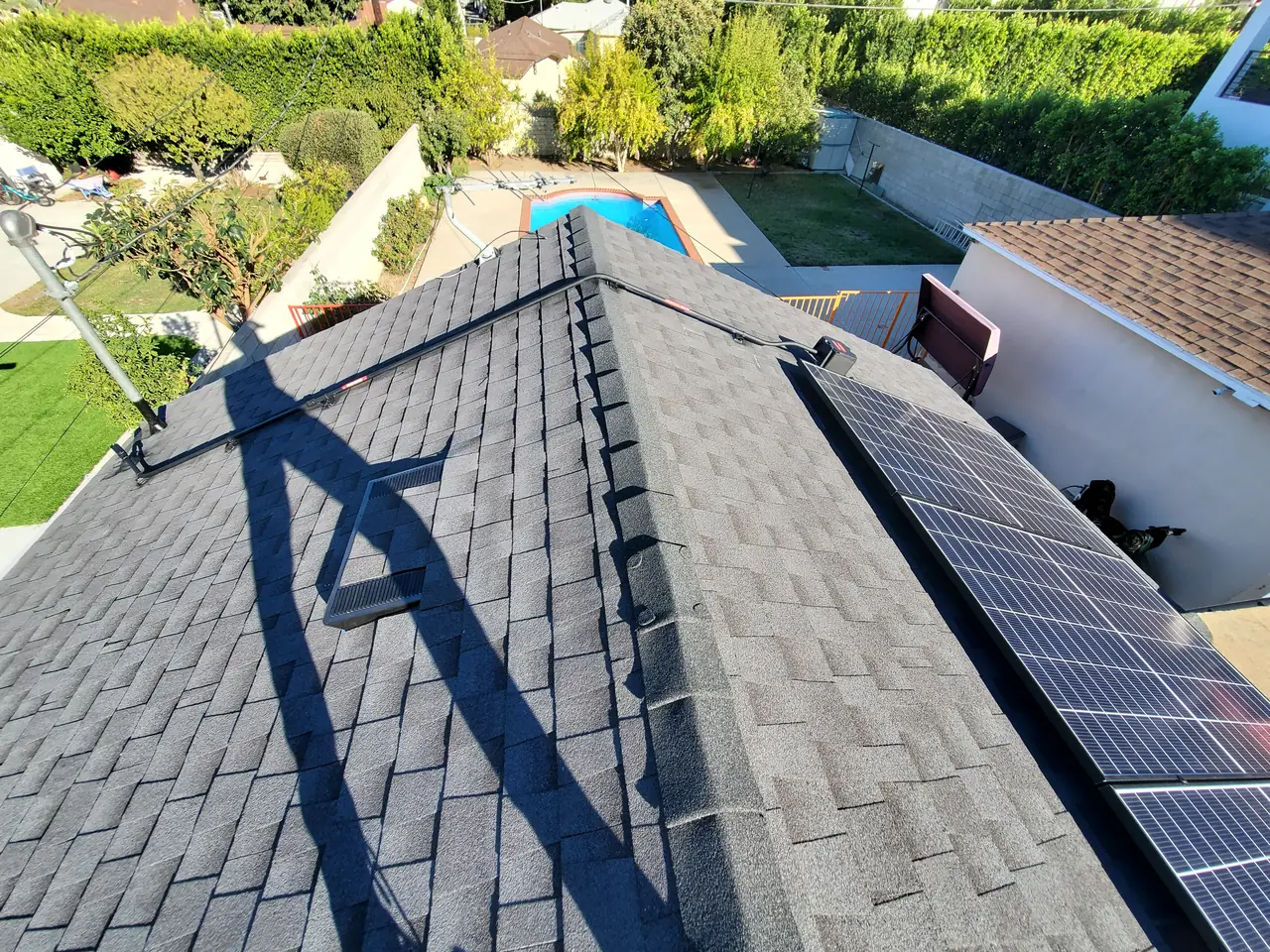
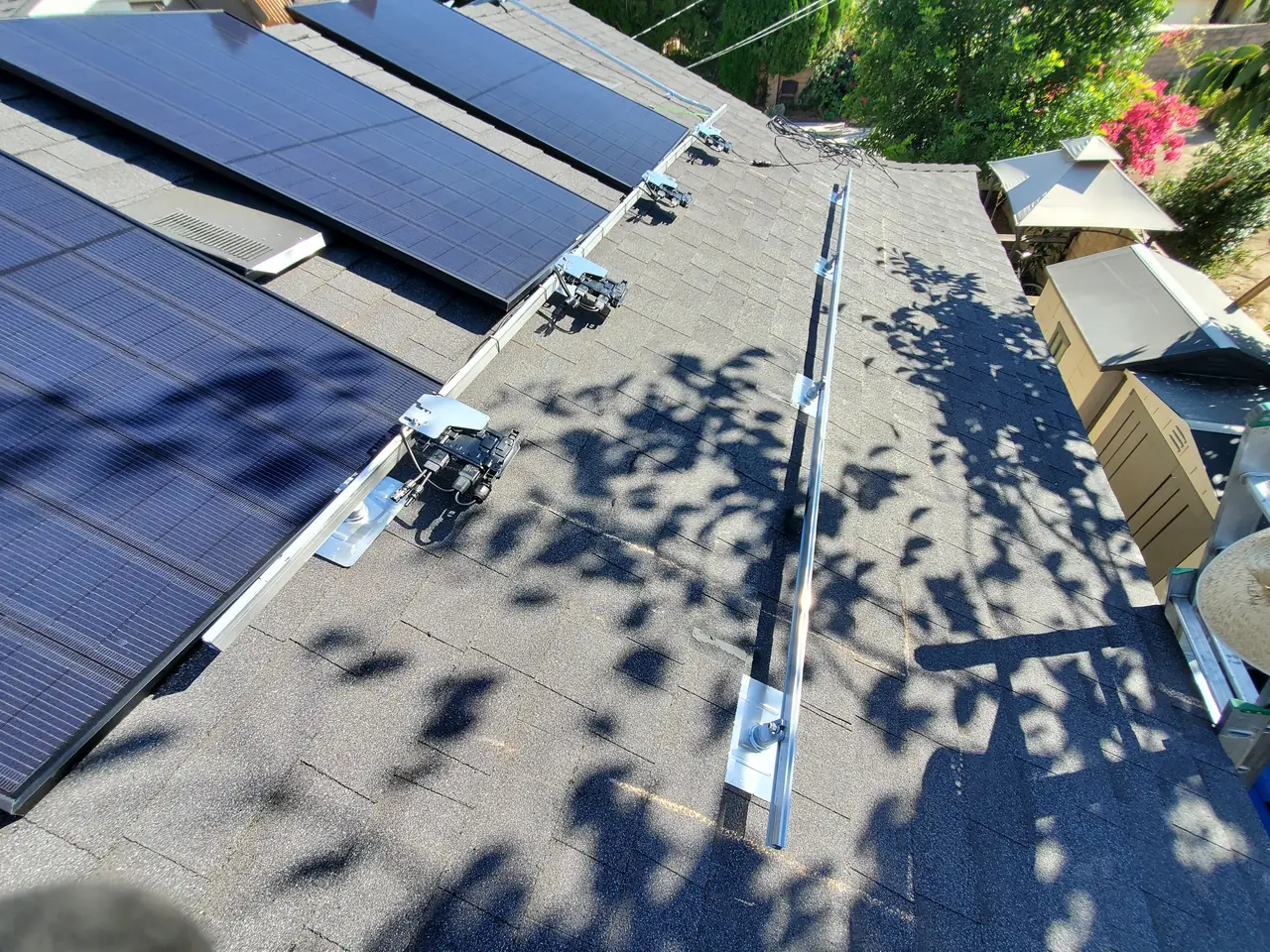
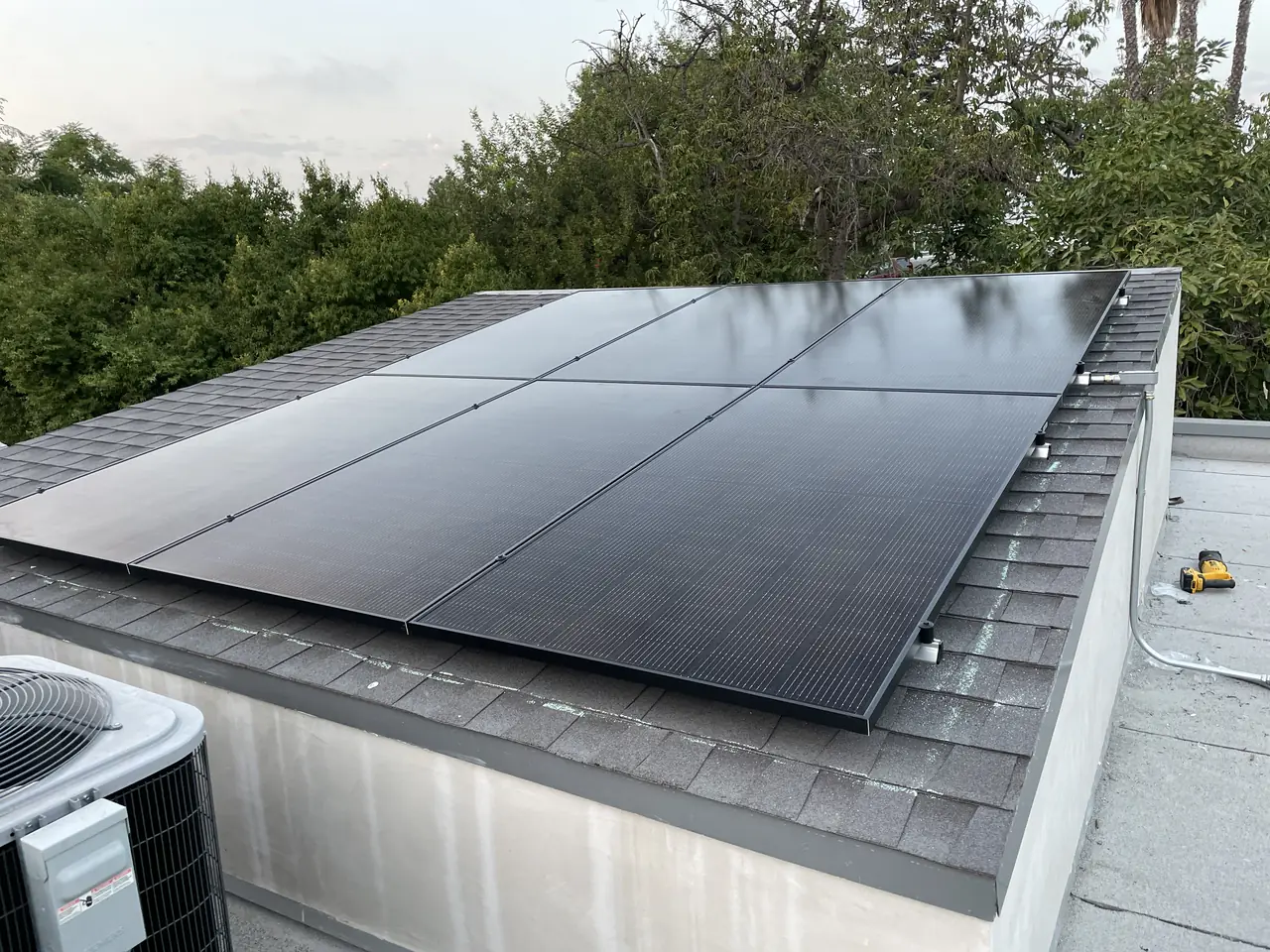
When a roof is replaced under its own permit, that permit carries its own final inspection, and an array laid over the new covering can stop the inspector seeing what they came to see. So the solar work waits for the roofing final rather than for the roofers to finish — two different dates, often a week apart. On this Glassell Park project the re-roof was signed off on a Saturday and Cali Energy set the array the following Tuesday.
At a glance
- Sequence
- Re-roof final, then the array
- Gap
- Three days
- Array installed
- 23 November
- Solar final
- Passed 4 December
- Five weeks later
- A string dropped offline
- Utility / AHJ
- LADWP / LADBS
The story
Everything this job needed was in hand by the middle of November — drawings, permit, materials list — and one line in it set the whole schedule: the re-roof had its own final inspection booked for the Saturday.
Most people reading that assume the array waits because wet or unfinished roofing cannot be walked on. That is not the reason, and the real one is more useful to know.
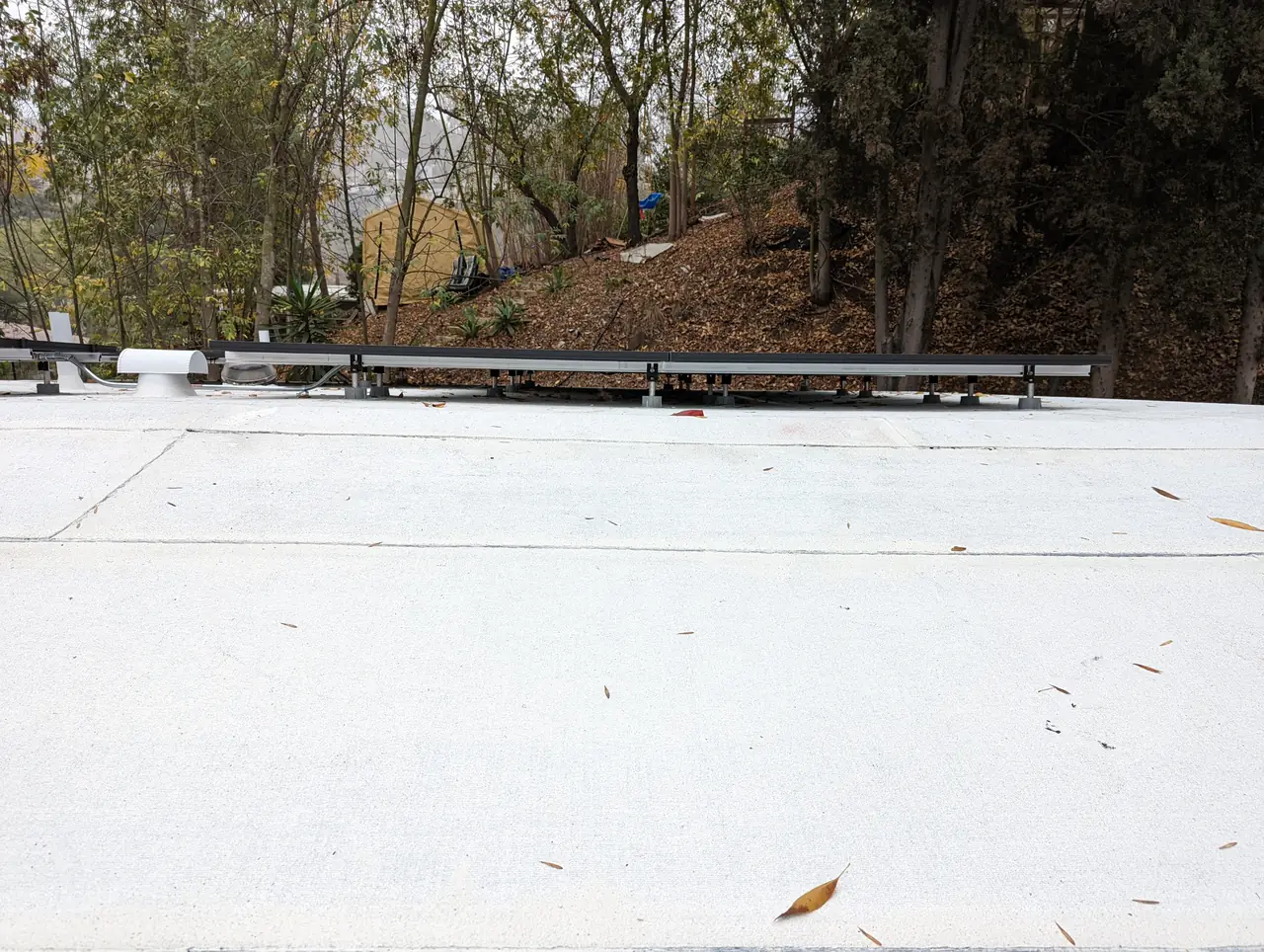
A roof replaced under its own permit has its own final inspection. An inspector comes to look at the covering, the flashing, the edges — the work that permit describes. Lay an array over part of it first and there is now a portion of that work they cannot see. Depending on where the modules sit and what the inspector needs, that is either an inconvenience or a correction requiring the modules to come off again.
So the gate is not the roofers finishing. It is the roofing permit being signed off, and those are two separate dates. Work can be complete for a week while the inspection sits in a queue, and the array cannot go on during it.
Here the roofing final fell on a Saturday and the crew went out the following Tuesday — three days, about as tight as that sequence gets.
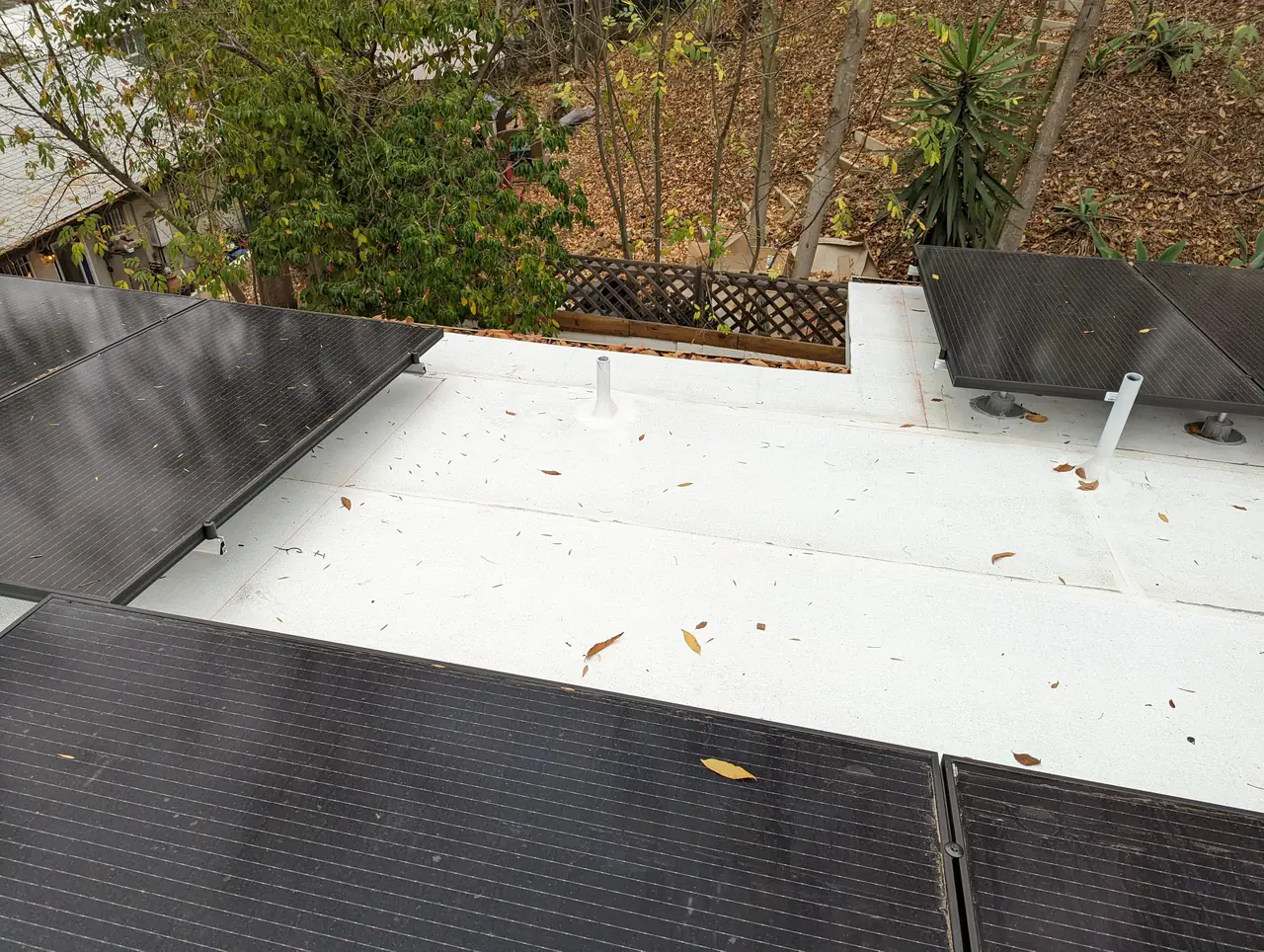
The solar final followed on the Saturday two weeks after that, and passed.
Then a second thing happened, five weeks later, and it is the other half of how a finished project behaves.
The system had its permission to operate and was running. In the middle of January one of its strings dropped offline.
A string is a group of modules wired in series, and the series is the point: current runs through every module in turn, so one failing connection anywhere in the group takes the whole group out. What that does to production is specific and easy to misread. The system does not stop. It loses the share of its output that string was carrying — a third, a half — and carries on looking, from the street and often from the app, like a working system.
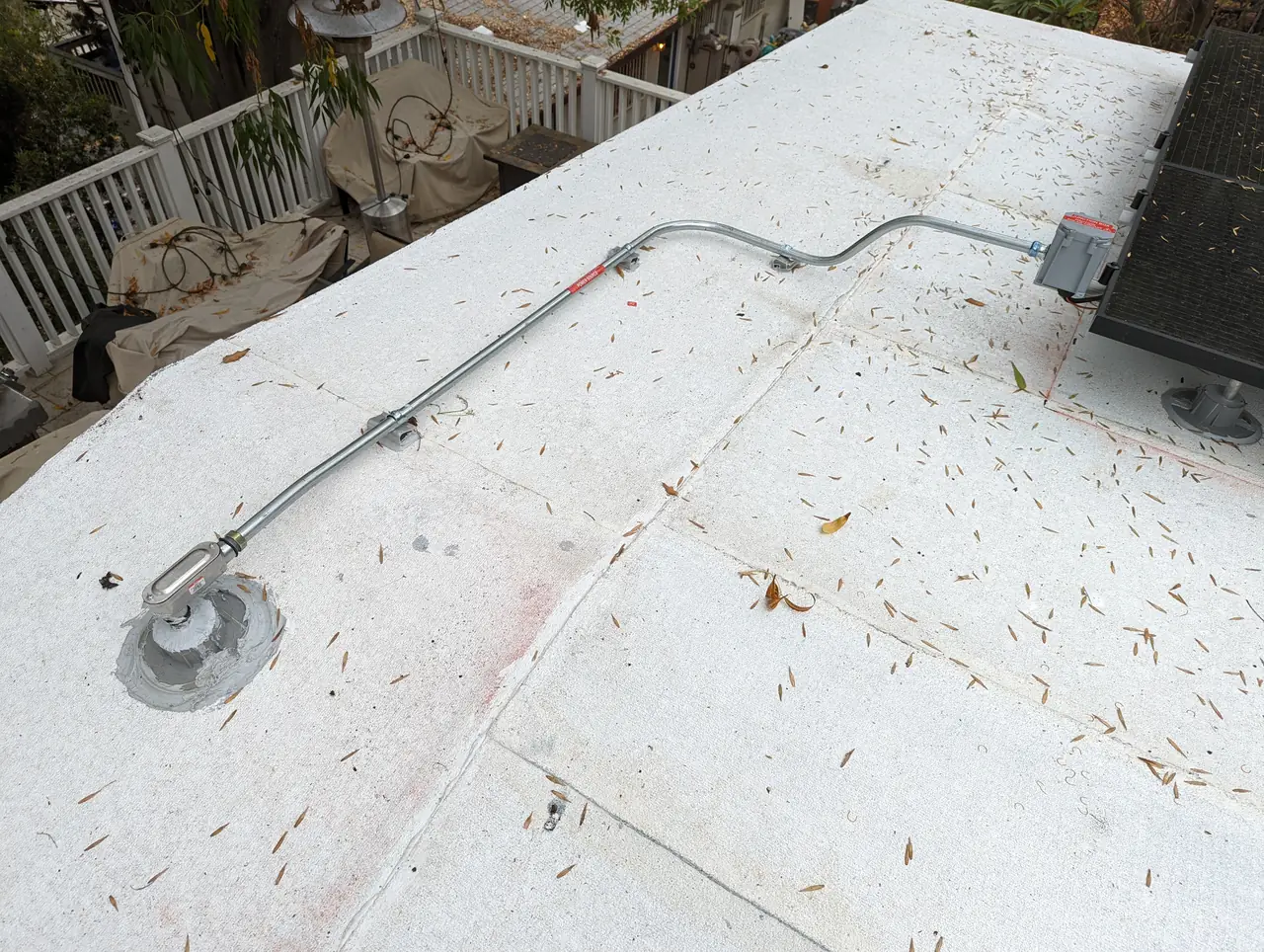
Which is why these go unnoticed. Nobody investigates a system that is still producing. The signal is a step down in output that does not correspond to weather, and it needs somebody comparing this month against the same month before it.
A technician went out on the report. The lesson for an owner is the comparison habit: production against the same season a year earlier, once, twice a year. A string that has quietly gone will not announce itself any other way.
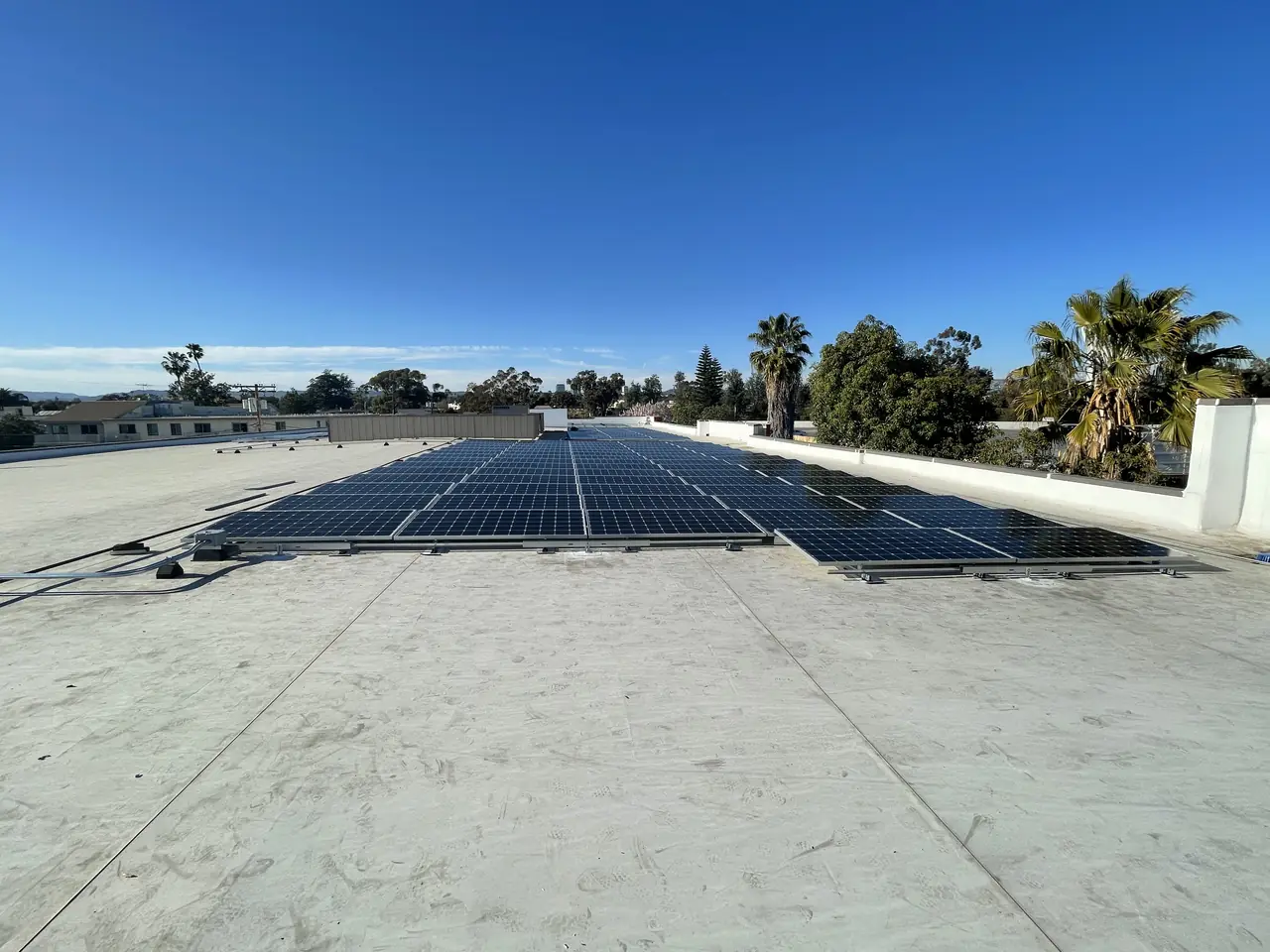
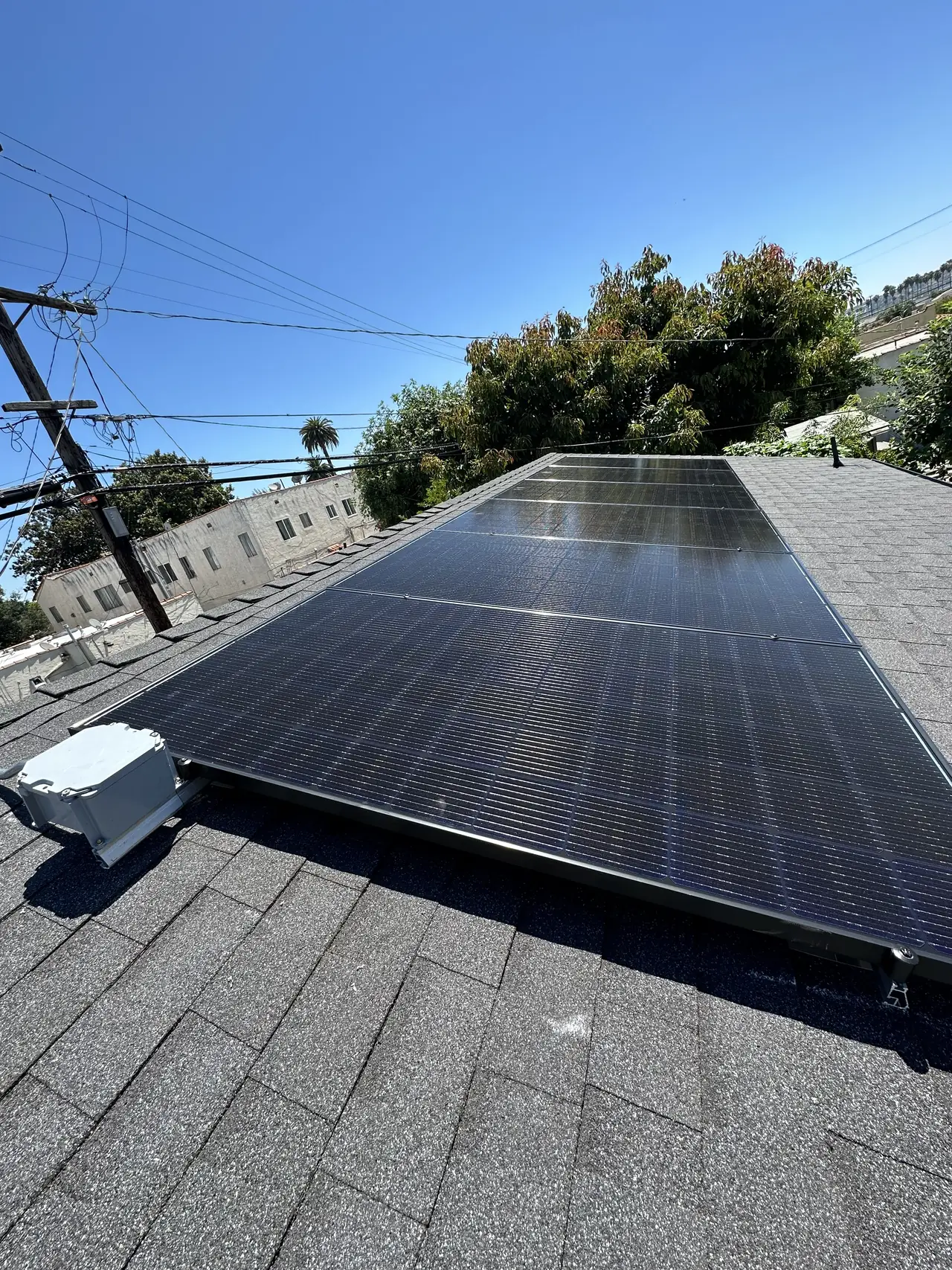
Cali Energy installed, finaled and serviced this array in Glassell Park, Los Angeles.
How it ran
| 17 November 2021 | Drawings, permit and materials list in hand; re-roof final booked for Saturday the 20th |
|---|---|
| 20 November 2021 | Re-roof passes its own final inspection |
| 23 November 2021 | Array installed |
| 1 December 2021 | Solar final booked for Saturday the 4th; job card issued |
| 4 December 2021 | Solar final passed |
| 12 January 2022 | A string reported offline; technician dispatched |
Two permits, two finals, three days between them — and a fault five weeks after the system was running.
What we did
- Held the array until the roofing permit was signed off, not until the roofers left.
- Installed three days after the roofing final.
- Carried the solar permit to its own final two weeks later.
- Attended when a string went offline five weeks after switch-on.
System specifications
| Array | Residential rooftop over a new covering |
|---|---|
| Gating step | The roofing permit's final inspection |
| Gap to install | Three days |
| Solar final | Passed 4 December 2021 |
| Later fault | One string offline |
| Utility / AHJ | LADWP / LADBS |
Is your project like this one?
- Your roof is being replaced and solar is booked behind it.
- The roofers have finished and the solar crew has not arrived.
- Your production has dropped a step and the system is still running.
- You want to know how to spot a fault that does not stop anything.
Cali Energy in Glassell Park
Glassell Park is City of Los Angeles in the northeast, permitted through LADBS and interconnected through LADWP. Older housing, which means a fair number of these projects arrive with a roof being replaced underneath them.
This installation is on the Los Angeles projects page alongside the others, and what the work covers is set out on the Los Angeles service area page.
- License and classifications: CSLB #1032379
- Official reference for this process: LADBS — inspection
- Official reference for this process: LADBS — plan review and permitting
Frequently asked questions
Why can't solar go on as soon as the roofers finish?
Because the roof has its own permit and its own final inspection, and an array laid over the new covering can hide the work the inspector came to look at. The gate is the roofing permit being signed off rather than the roofing being complete — two separate dates that can be a week or more apart.
What happens if the array goes on before the roofing final?
At best the inspector cannot see part of what the permit covers; at worst it becomes a correction and modules come off again. Neither is worth the days saved, which is why the sequence on this Glassell Park project was the roofing final on the Saturday and the array the following Tuesday.
What does it mean when a string goes offline?
A string is a group of modules wired in series, so current passes through each in turn and one failed connection anywhere takes the whole group out. The system keeps running on its remaining strings and simply produces less — which is exactly why the fault so often goes unnoticed.
How do I notice a fault that does not stop the system?
Compare production against the same season a year earlier rather than against last week. A lost string shows as a step down in output that does not track the weather. Doing that once or twice a year catches the class of fault that never announces itself.
Does Cali Energy install solar in Glassell Park, Los Angeles?
Yes, and on this kind of project the sequencing is part of the job. Glassell Park has older housing, so a good number of arrays here go over a roof being replaced at the same time. Projects are permitted through LADBS and interconnected through LADWP, and the roofing permit closes before the array goes up.
What this would look like on your roof
Planning solar in Glassell Park? Tell us your utility, your roof and what your bill looks like now, and we will model what a system like this would do on your house before you commit to anything.
Or call +1 (323) 844-7777 · Cali Energy, Northridge · CSLB #1032379 (B, C-10, C-39) — design, permits, install and electrical under one licensed contractor.
Related
This timeline reflects this property and this permitting path. Updated September 2026.