

Glassell Park, CA · August – November 2022 · LADWP / LADBS
Glassell Park: sized to the bill, not the roof.
The first design filled the roof and would have produced nearly twice what the house uses. The system that got built was half of it.
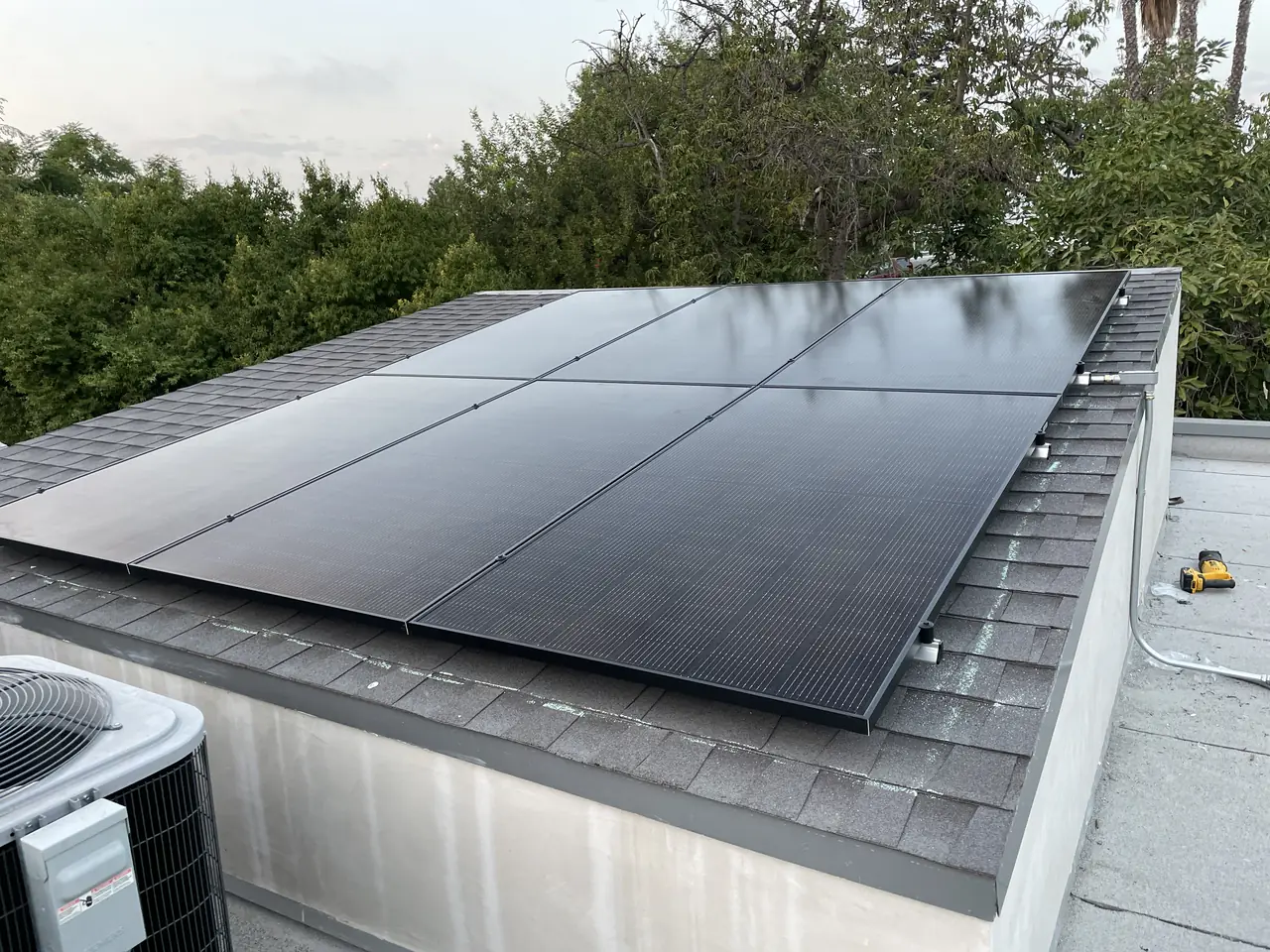
A residential solar system in Los Angeles is sized against the household's own annual consumption, not against how many modules the roof will hold. Production beyond what a house uses is credited at a lower value than the electricity it offsets, so an oversized array costs more and returns less per panel. On this Glassell Park project Cali Energy revised a twenty-six module, 10.4 kW design down to fourteen modules and 5.6 kW AC-CEC after the annual usage came in under 9,000 kWh, and the system reached permission to operate thirty days after filing.
At a glance
- System as built
- 5.6 kW AC-CEC
- Array
- 14 modules, 400 W each
- Inverters
- One microinverter per module
- First design
- 26 modules, 10.4 kW
- Household usage
- Under 9,000 kWh a year
- Filing to permission to operate
- Thirty days
The story
The first design for this hillside house was twenty-six modules at four hundred watts, one microinverter behind each, ten and a half kilowatts, with an estimated annual production near sixteen thousand kilowatt-hours. It fitted the roof and it would have been a good-looking installation.
Then the consumption came back. The household was using under nine thousand kilowatt-hours a year.
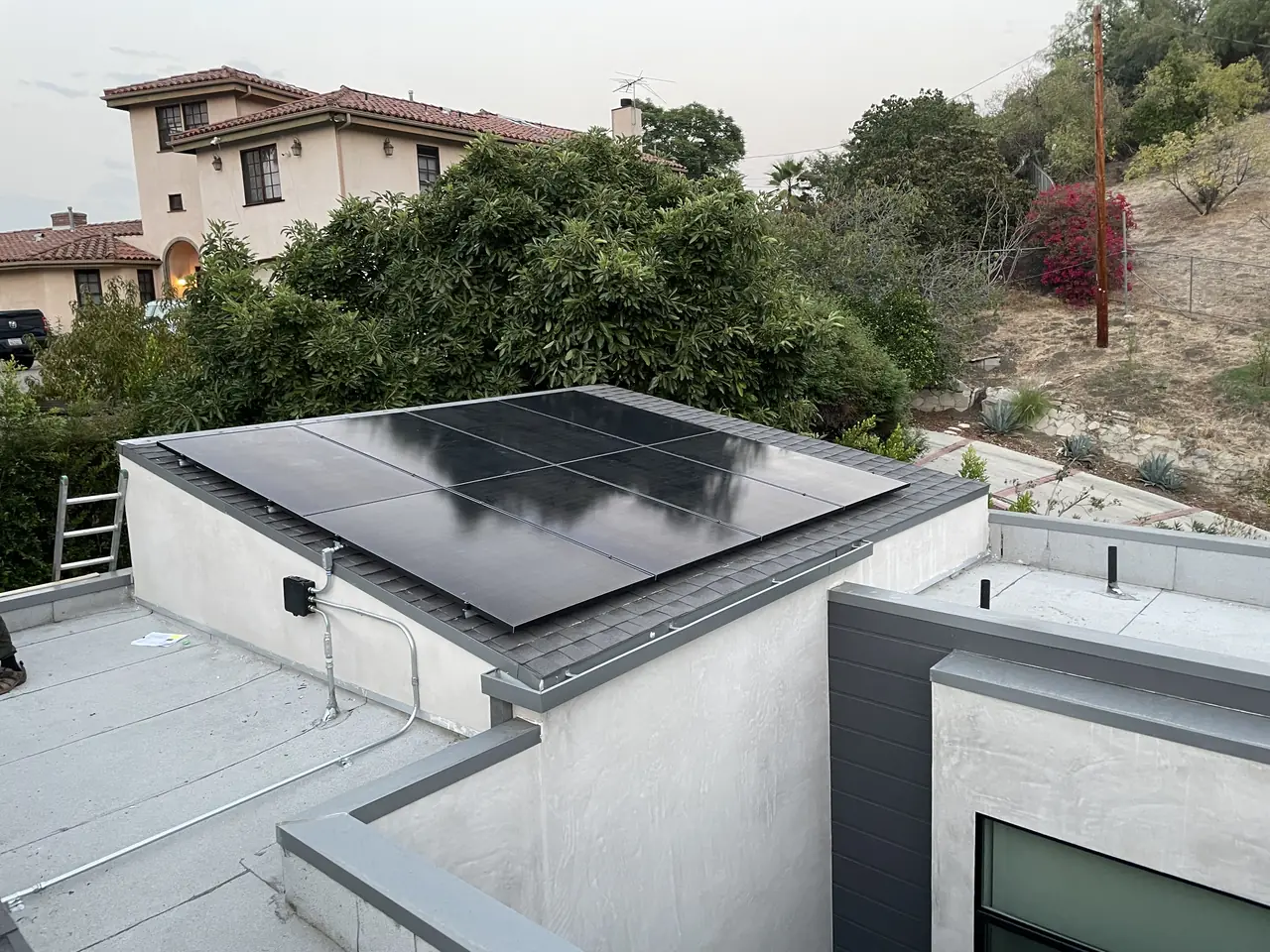
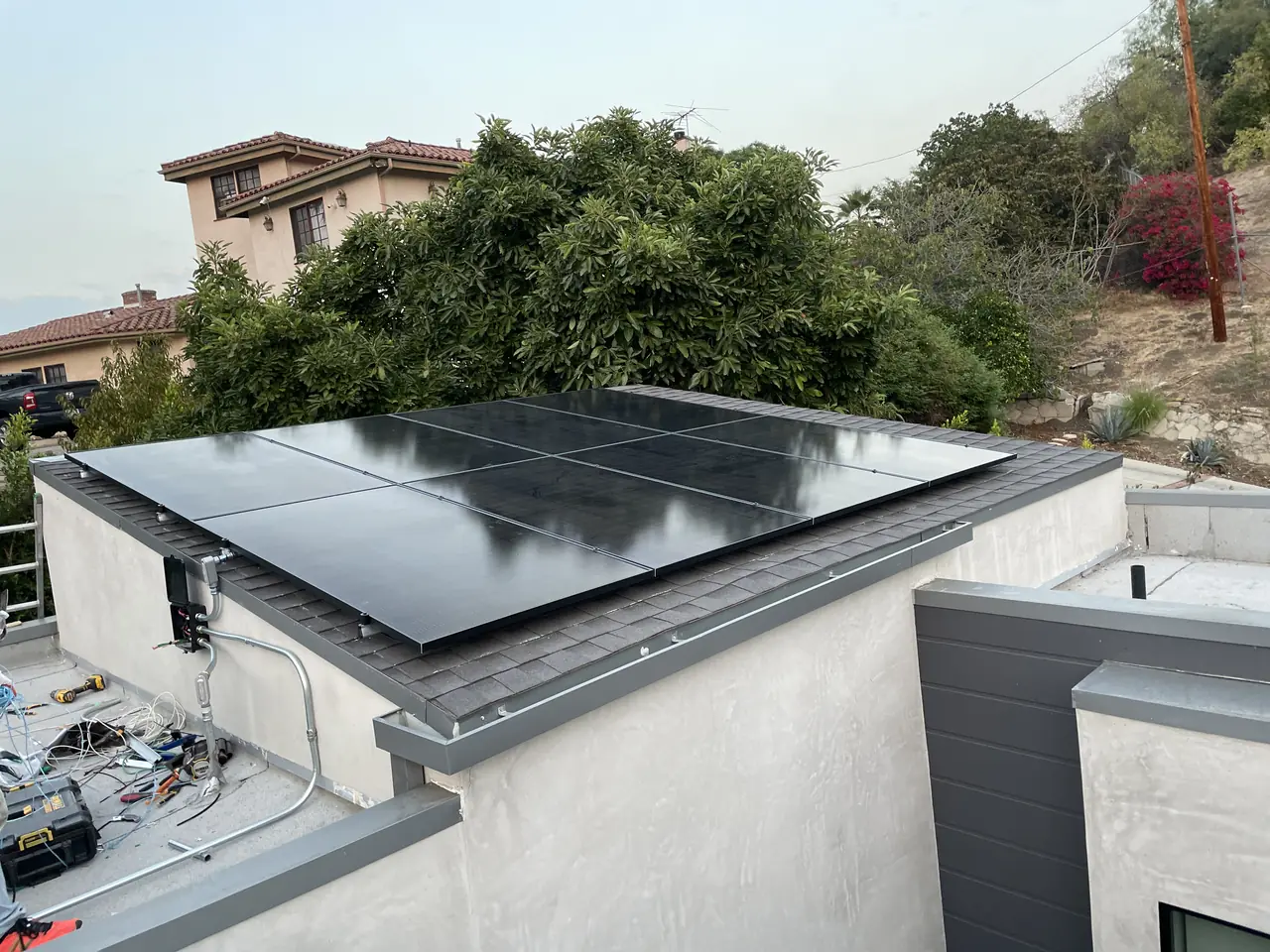
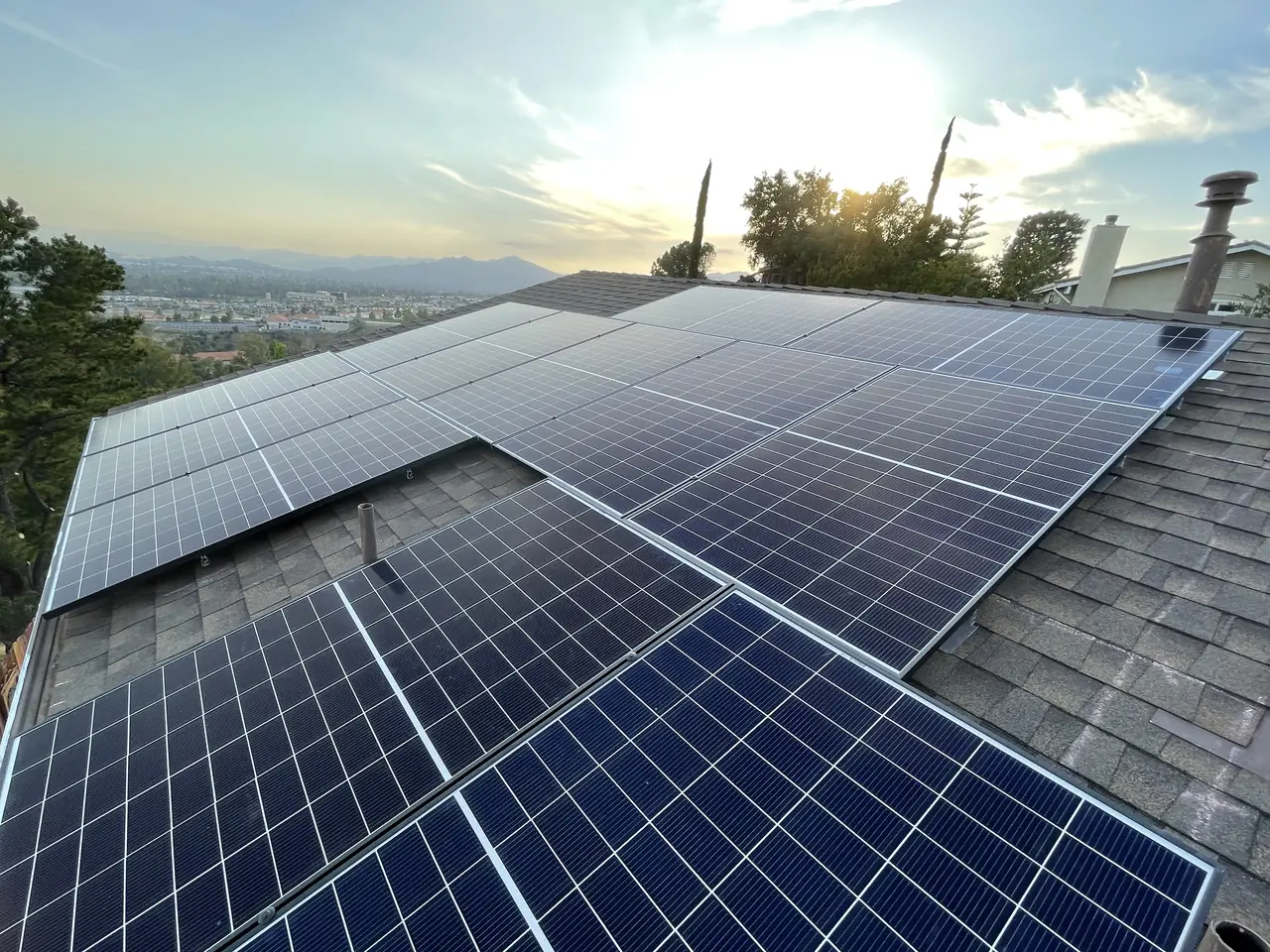
The design was cut to fourteen modules on the southwest face, at a five degree tilt, with an estimated production of about eight thousand seven hundred. Five point six kilowatts instead of ten and a half. Slightly more than half the array, sold at slightly more than half the price.
This is the part of a solar quote worth understanding, because the incentive runs the other way and everybody knows it.
Under net metering the electricity a system makes is worth the most when the house consumes it directly — it offsets power you would otherwise buy, at the full retail rate you would have paid. Production beyond what the house uses is exported, and export is credited at a lower value than the retail rate. That means every panel past the point where annual production matches annual consumption earns less than the panels before it, while costing the same to buy and install.
So the right first question is not how much roof there is. It is how many kilowatt-hours a year the house actually uses, and that number is on the bill. A proposal that has not been built against it is a proposal about a roof, not about a household.
There are legitimate reasons to size above current consumption, and they are worth naming so this does not read as a rule against big systems. A vehicle about to be charged at home. An air conditioner or heat pump going in. A household that is about to grow. What those have in common is that they are future load somebody has actually decided on — not a roof that happened to have space.
None of them applied here, so the array came down to size.
The rest ran quickly. The agreement was signed in the middle of September and the drawings were approved on the tenth of October. The interconnection request was confirmed the following day at 5.6 kW AC-CEC, with the first, second and fourth progress notices all recorded together — the acknowledgement, the confirmation of details, and the site assessment completed or waived. The utility charge cleared the next morning.
The installation was approved on the thirty-first of October and permission to operate came on the tenth of November. Thirty days from filing.
One thing to take away if you are holding two quotes. Ask each of them what your annual consumption is and where they got the figure. If one of them cannot tell you, the system it is proposing was sized by something other than your electricity use.
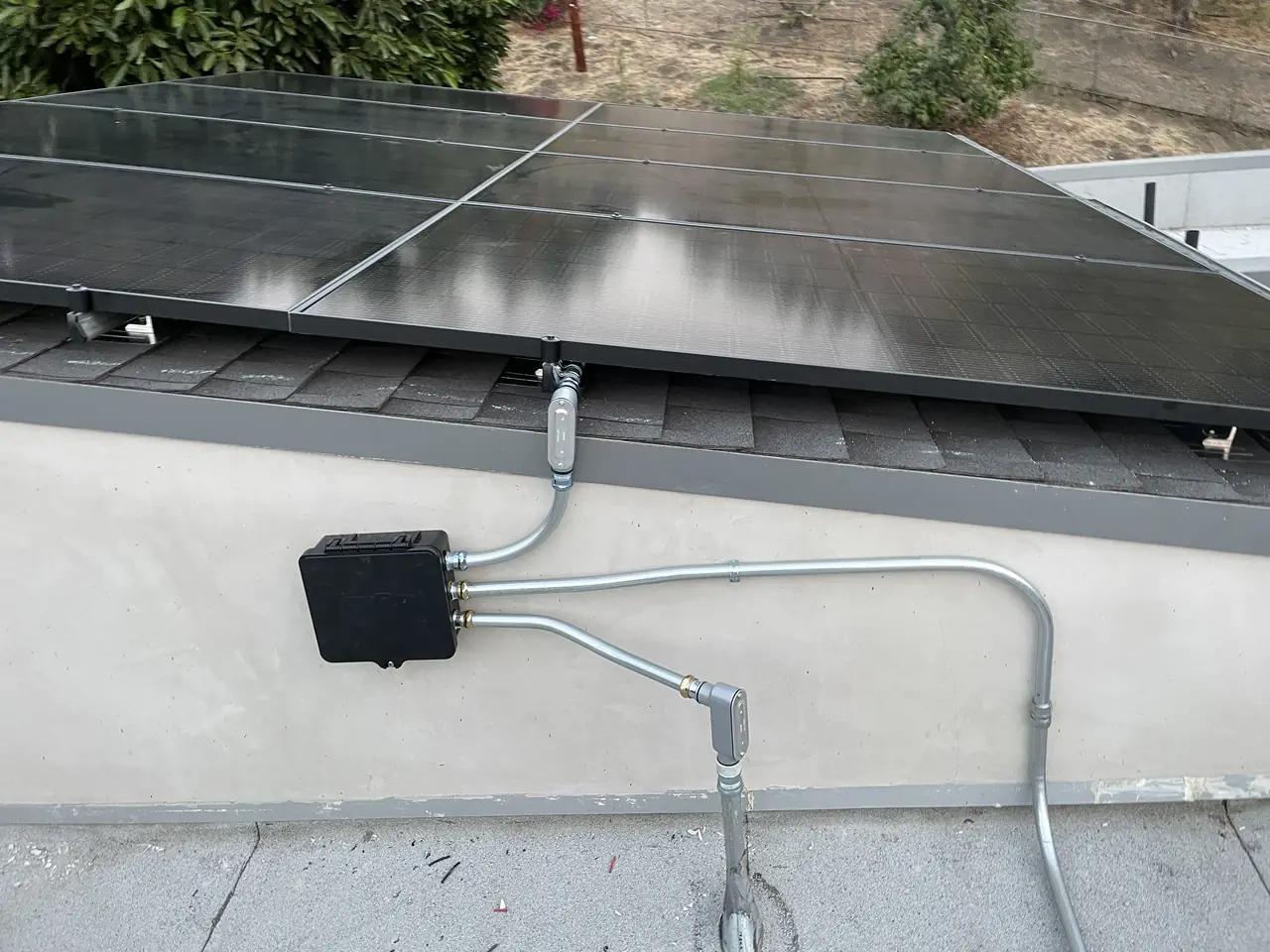
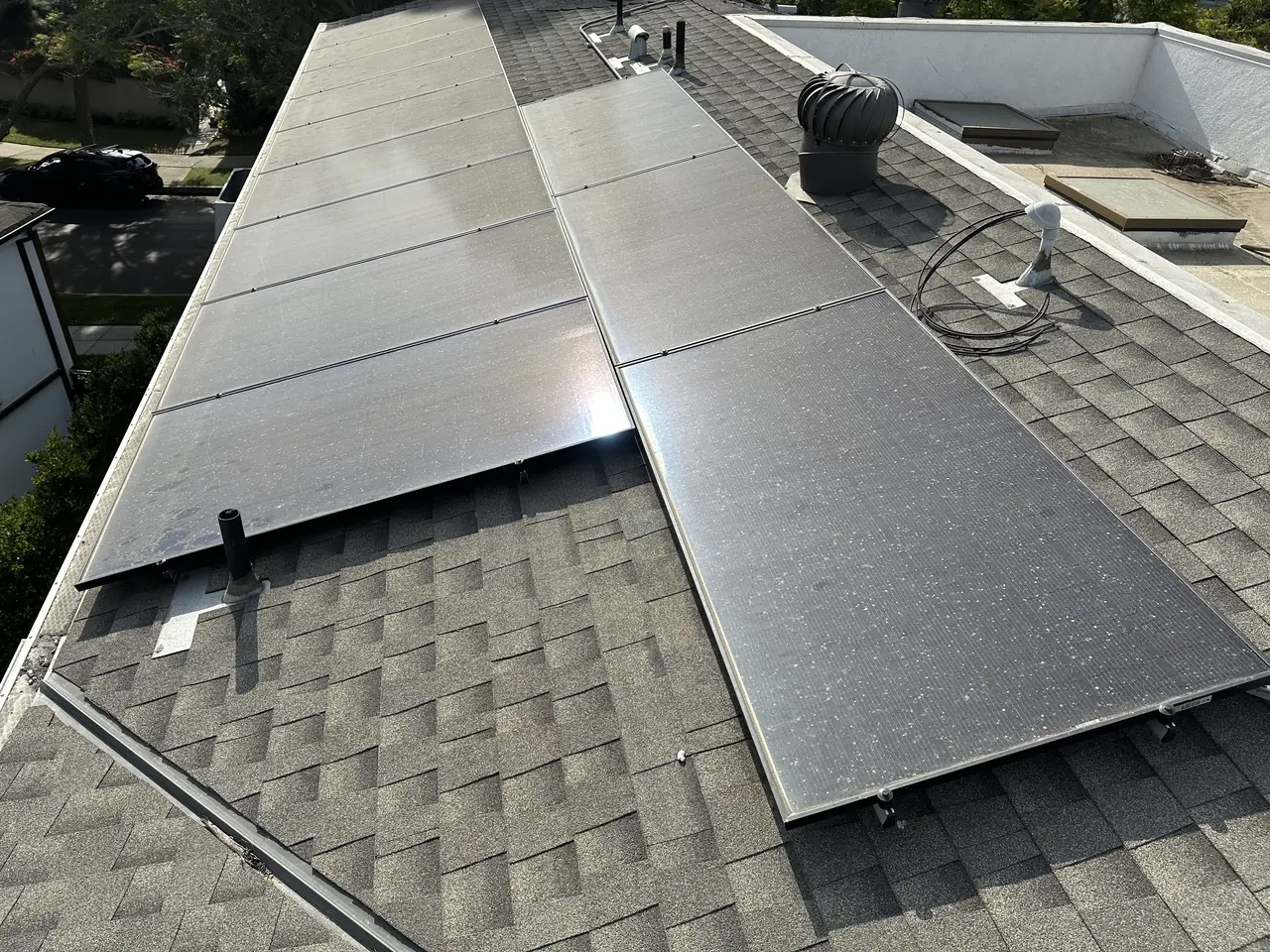
Cali Energy designed, permitted and interconnected this 5.6 kW array in Glassell Park, Los Angeles.
How it ran
| 18 August 2022 | Site inspection arranged |
|---|---|
| 23 August 2022 | First design — 26 modules, 10.4 kW, estimated 15,900 kWh a year |
| 24 August 2022 | Annual consumption comes in under 9,000 kWh; design revised to 14 modules on the southwest face at five degrees, about 8,700 kWh a year |
| 16 September 2022 | Agreement signed |
| 10 October 2022 | Drawings approved |
| 11 October 2022 | Interconnection request confirmed — 5.6 kW AC-CEC; first, second and fourth progress notices recorded together |
| 12 October 2022 | Utility charge processed |
| 31 October 2022 | Installation approved |
| 10 November 2022 | Permission to operate |
Thirty days from filing to permission to operate. The decision that shaped the project was taken eleven weeks earlier, off a consumption figure.
What we did
- Checked the household's annual consumption before finalizing the design.
- Cut the array from twenty-six modules to fourteen rather than filling the roof.
- Concentrated the smaller array on the southwest face at a five degree tilt.
- Filed the interconnection request the day after the drawings were approved.
- Closed filing to permission to operate in thirty days.
System specifications
| System | 5.6 kW AC-CEC |
|---|---|
| Modules | 14 × 400 W, all black |
| Inverters | One microinverter per module |
| Orientation | Southwest face, five degree tilt |
| Design revised from | 26 modules at 10.4 kW |
| Sized against | Annual household consumption under 9,000 kWh |
| Utility / AHJ | LADWP / LADBS |
Is your project like this one?
- You have a solar quote and nobody has mentioned your annual kilowatt-hours.
- Two proposals for your house differ by half the panel count.
- You want to know how big a system your house should actually have.
- You are weighing whether to size up for an electric vehicle or a heat pump.
Cali Energy in Glassell Park
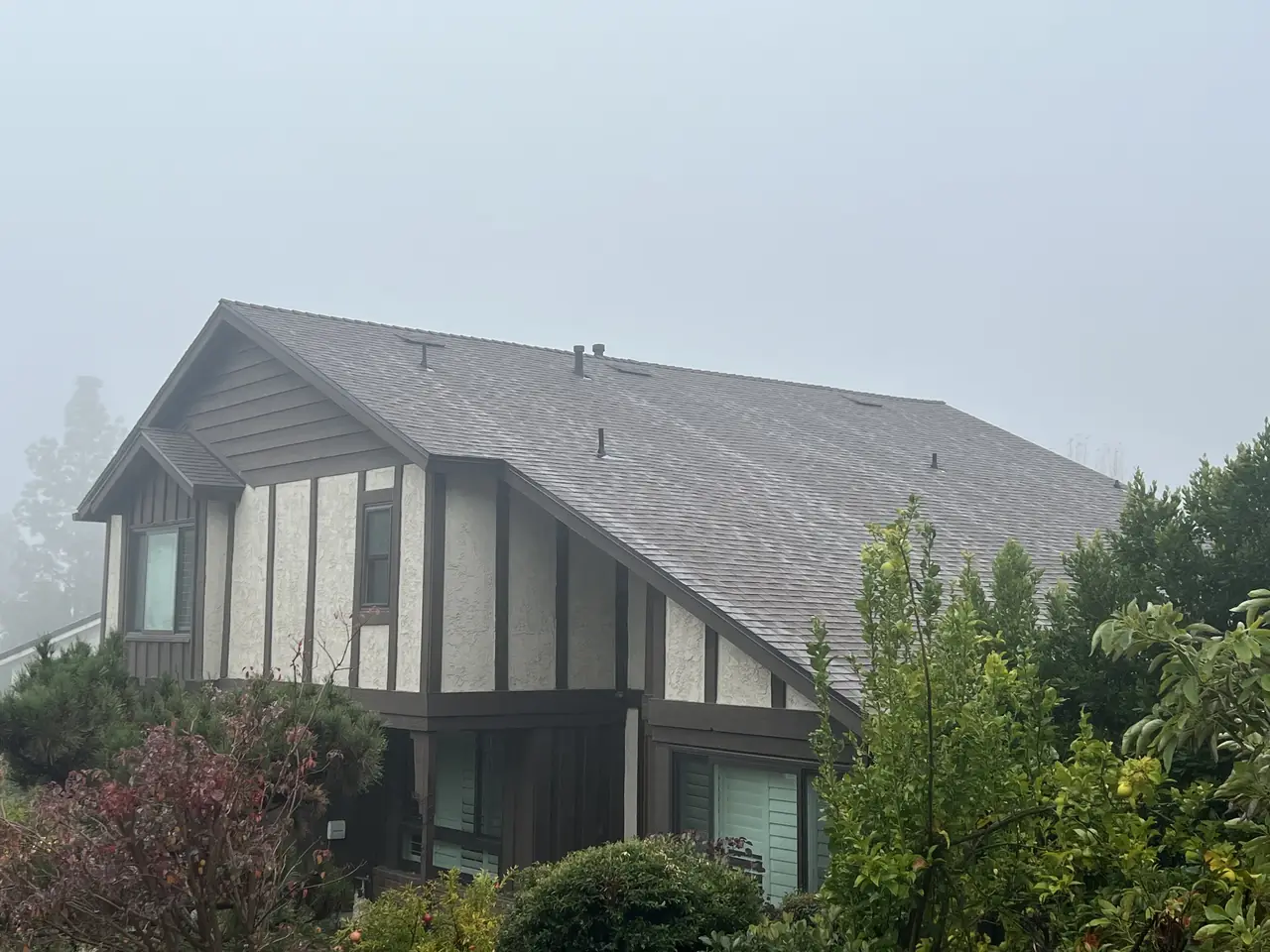
Glassell Park is a hillside neighborhood in northeast Los Angeles, inside city boundaries and therefore permitted through LADBS and interconnected through LADWP. The lots are small and the roofs are broken by slope, so the question of how much array a house should carry comes up earlier here than elsewhere.
This installation is on the Los Angeles projects page alongside the others, and what the work covers is set out on the Los Angeles service area page.
- License and classifications: CSLB #1032379
- Official reference for this process: CSLB — Solar Smart
- Official reference for this process: LADWP — interconnection requirements
Frequently asked questions
How big should my solar system be?
Sized against your annual kilowatt-hour consumption rather than against how many modules fit the roof. Under net metering, production the house consumes directly offsets power at the full retail rate, while production beyond that is exported and credited at a lower value. Panels past the match point cost the same and earn less than the ones before them.
Why would a solar company propose a smaller system?
Because the household's usage did not justify the larger one. On this Glassell Park project the first design was twenty-six modules at 10.4 kW with an estimated 15,900 kWh a year; the annual consumption came in under 9,000 kWh, so the array was cut to fourteen modules and 5.6 kW. The smaller system matches what the house actually uses.
When does it make sense to size above current consumption?
When there is future load somebody has actually decided on — an electric vehicle to be charged at home, an air conditioner or heat pump going in, a household about to grow. Those are reasons to build headroom. A roof that happens to have space left on it is not one, because the extra panels earn export credit rather than retail offset.
What should I ask a solar company about my quote?
Ask what your annual consumption is and where the figure came from. It is on your electricity bill, and the system size should be built from it. If a company proposing a system cannot tell you that number, the design was sized by something other than your electricity use — usually the available roof area.
Does Cali Energy install solar in Glassell Park, Los Angeles?
Yes. Glassell Park is inside city limits, so projects here are permitted through LADBS and interconnected through LADWP. The hillside lots break the roof into small faces, which makes the choice of which face to use — and how much array to put on it — a larger part of the design than on flatter ground.
What this would look like on your roof
Planning solar in Glassell Park? Tell us your utility, your roof and what your bill looks like now, and we will model what a system like this would do on your house before you commit to anything.
Or call +1 (323) 844-7777 · Cali Energy, Northridge · CSLB #1032379 (B, C-10, C-39) — design, permits, install and electrical under one licensed contractor.
Related

This timeline reflects this property and this permitting path. Updated September 2026.