

Encino, CA · September 2021 – November 2021 · LADWP / LADBS
The roof went on first, and that was the whole decision.
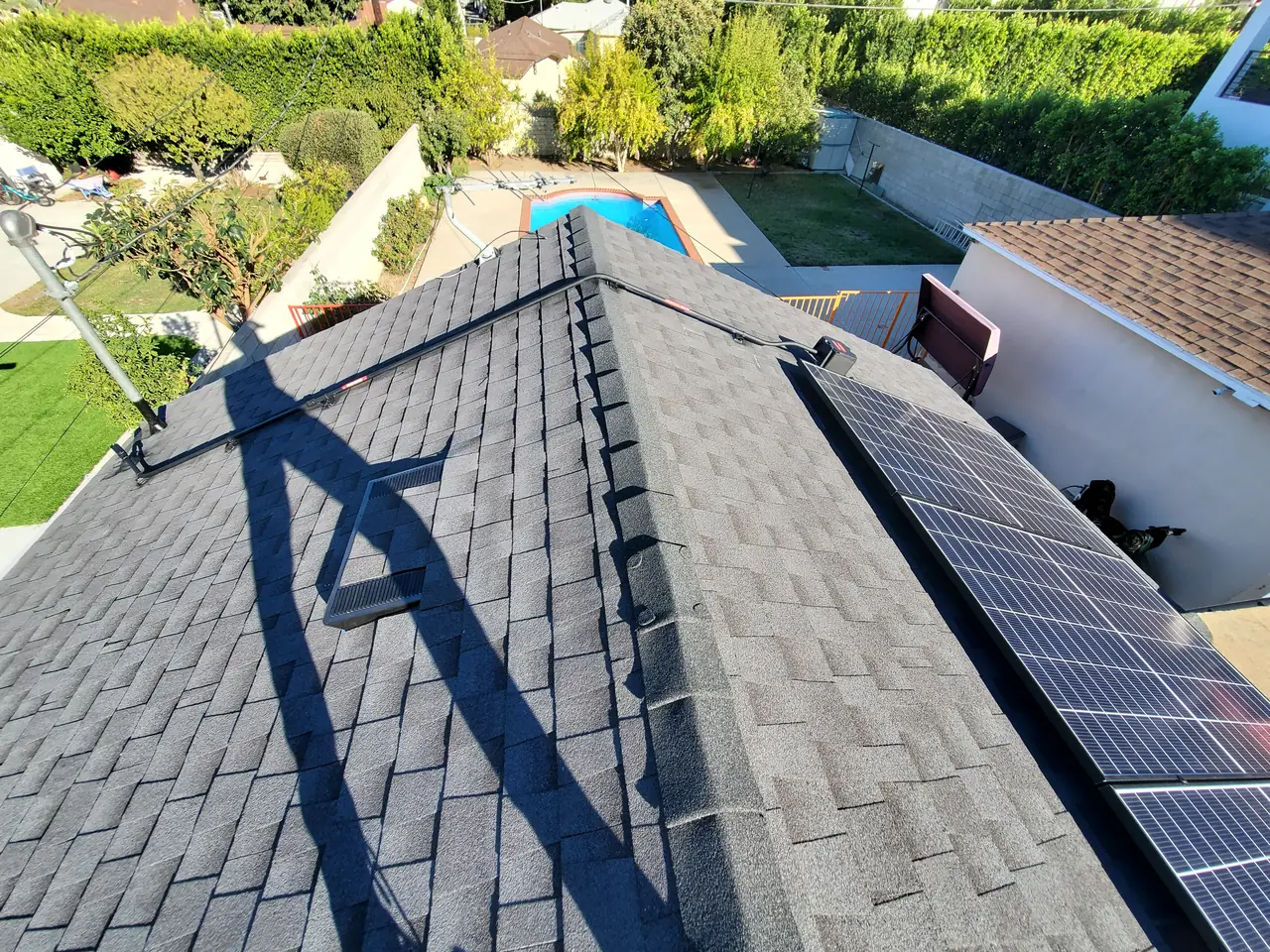
A single-story Encino house on a hip roof, re-roofed with composition shingle in September 2021 and carrying a 7.7 kilowatt array by November. Two permits, one contractor, and a sequence that decides what the next twenty years cost.
Modules last decades; a composition shingle roof does not. Putting an array on a covering with a few years left in it means paying twice — once to take the modules off when the roof is replaced, once to put them back, plus the flashing work at every mount. On this house the roofing permit was issued first, the material was ordered the next day, the inspection followed within the week, and the interconnection application went in once the new covering was on. The array has a roof under it that will outlive the equipment.
At a glance
- Array
- 7.7 kW AC-CEC recorded by the utility
- Inverter
- SolarEdge string inverter with module-level optimizers
- Roof
- Composition shingle, Class A, hip roof
- Roofing scope
- 20 squares over existing solid sheathing
- Sequence
- Roofing permit first, interconnection after
- Utility / AHJ
- LADWP / LADBS
- Permission to operate
- 10 November 2021
The story
The roofing permit came first, on the sixteenth of September. Material was ordered the next day. The inspection was called within the week. Only then did the interconnection application go to the utility, and the net meter was set on the tenth of November. The order of those steps is what makes the difference twenty years out.
A composition shingle roof in Los Angeles has a service life; an array does not care about it. If the modules go on a covering with five or eight years left, the roofing work that follows is not a roofing job — it is a solar removal, a roofing job, a solar reinstallation, and a fresh set of flashings at every attachment point. Homeowners meet that bill once and never forget it.
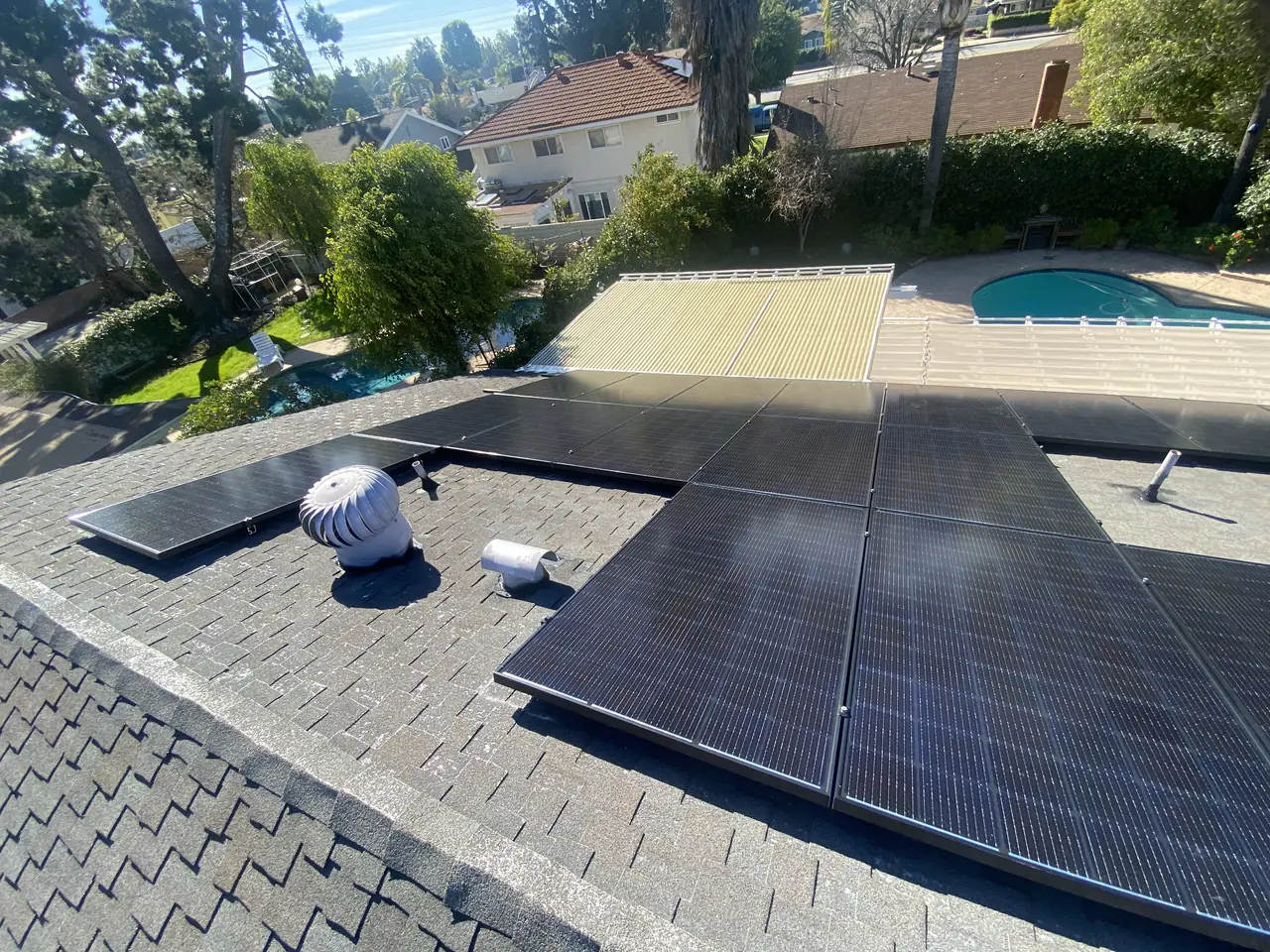
The roofing scope here was twenty squares of Class A composition shingle over the existing solid sheathing. A square is a hundred square feet, so twenty squares is two thousand square feet of covering — a modest single-story hip roof with its planes broken up by a chimney and an air conditioning unit. Over existing sheathing means the deck itself was sound and stayed: the old covering came off, the deck was inspected, and the new material went down on it.
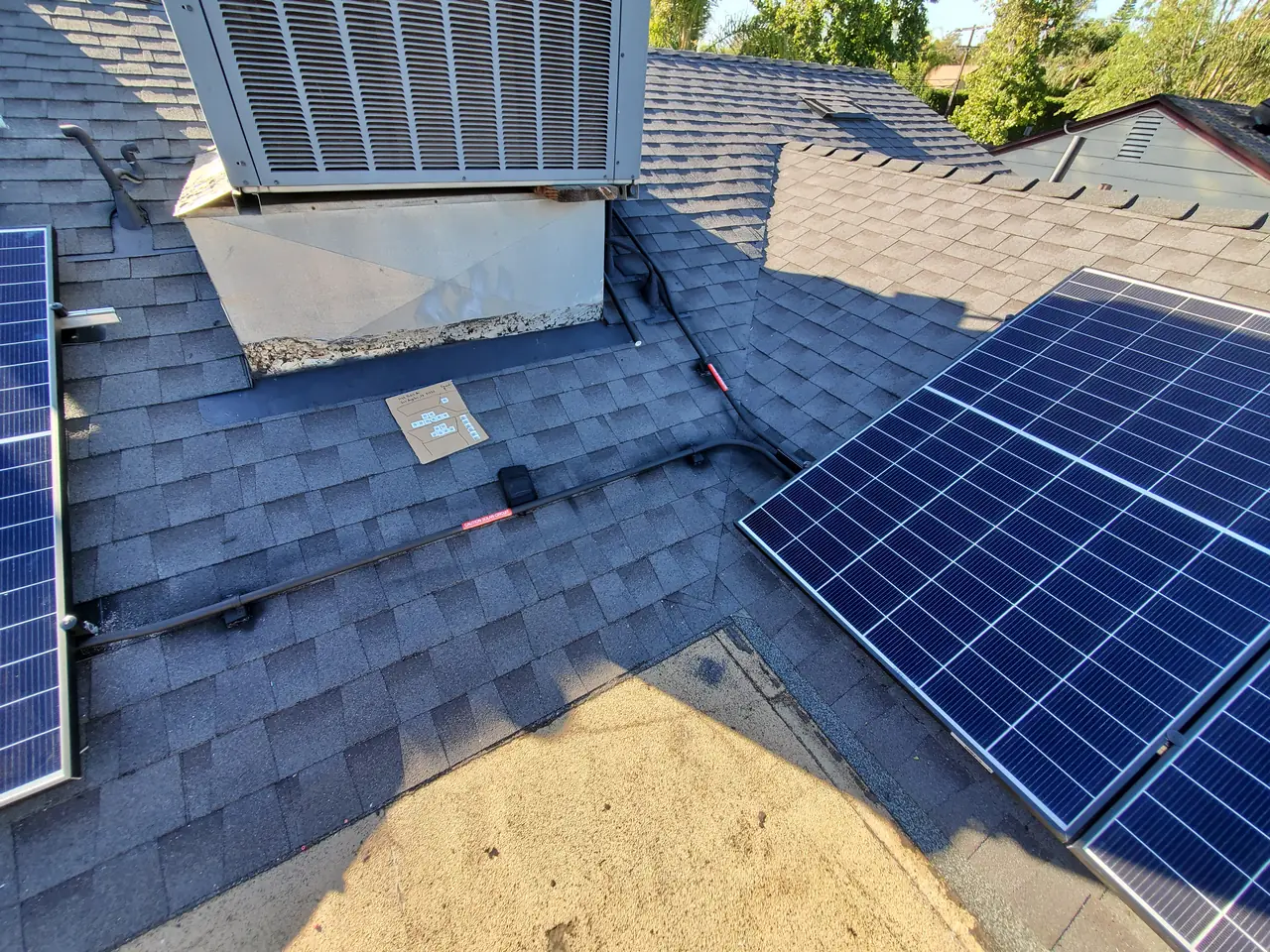
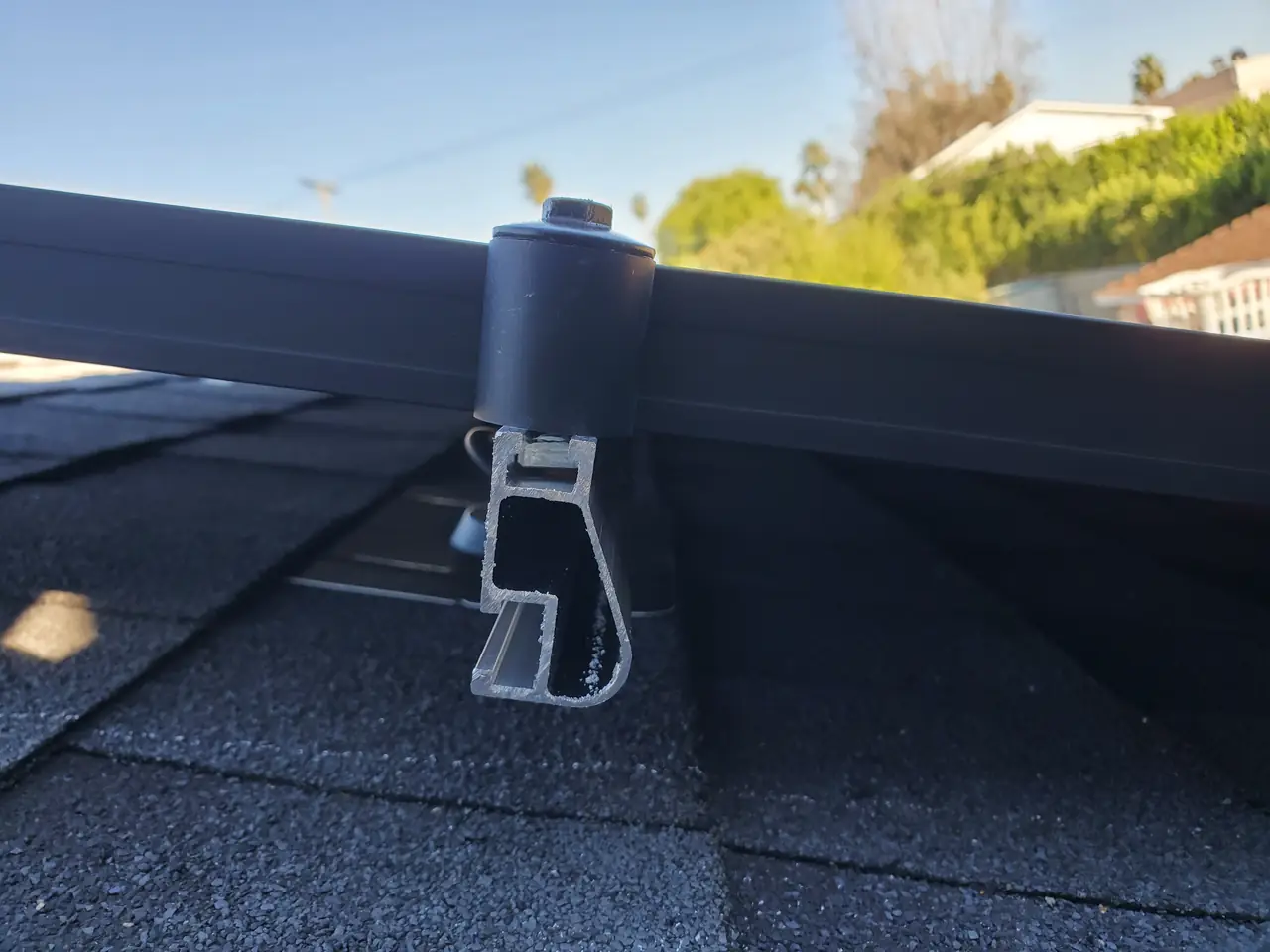
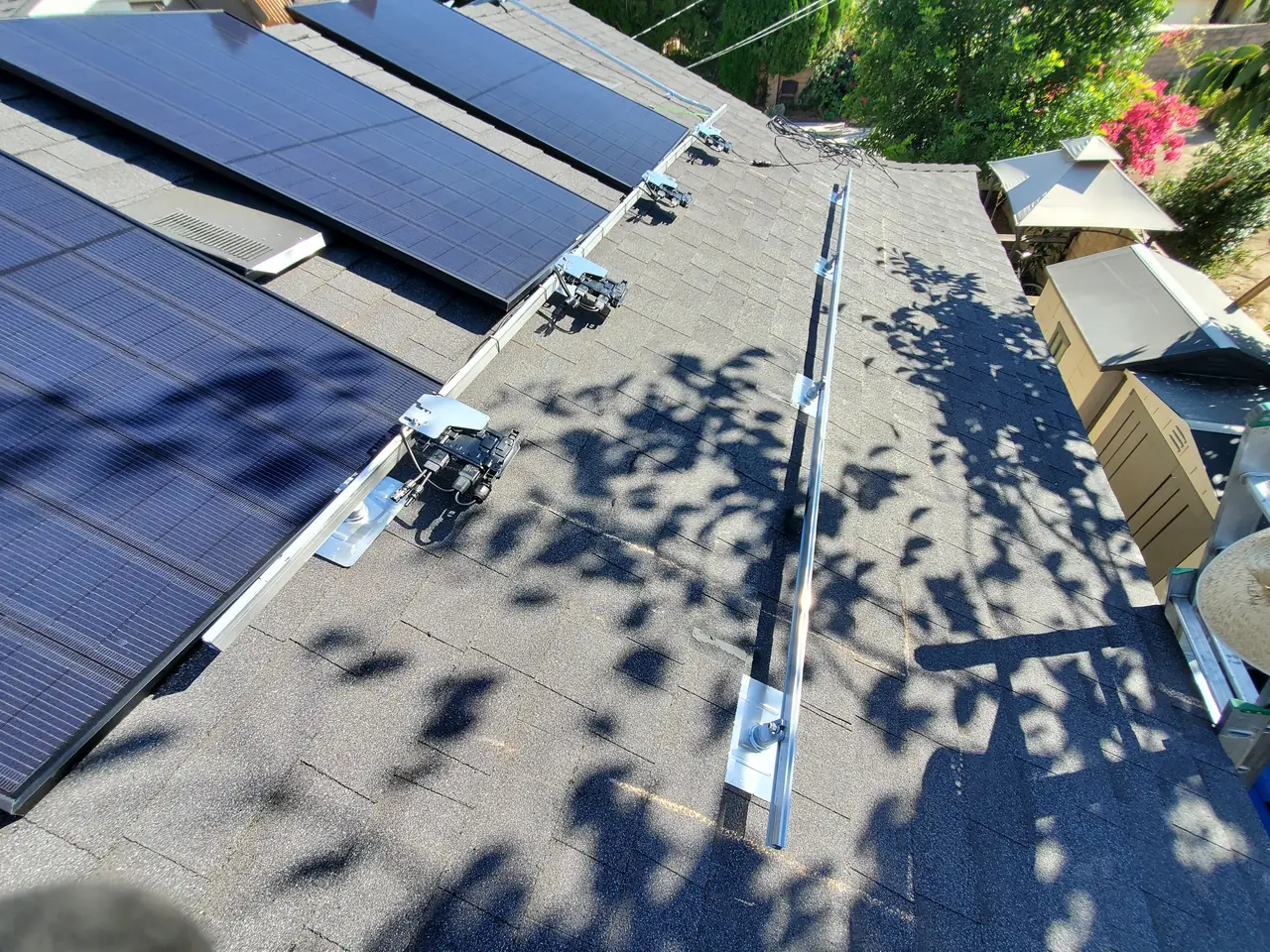
With a new deck covering underneath, the mounting is straightforward and permanent. Each attachment lands on a rafter, gets a flashing that tucks under the shingle course above it, and carries a standoff that lifts the rail clear of the roof surface. The array sits above the covering with air underneath; nothing traps water against the shingle, and nothing is fixed through a patch of roofing that is already tired.
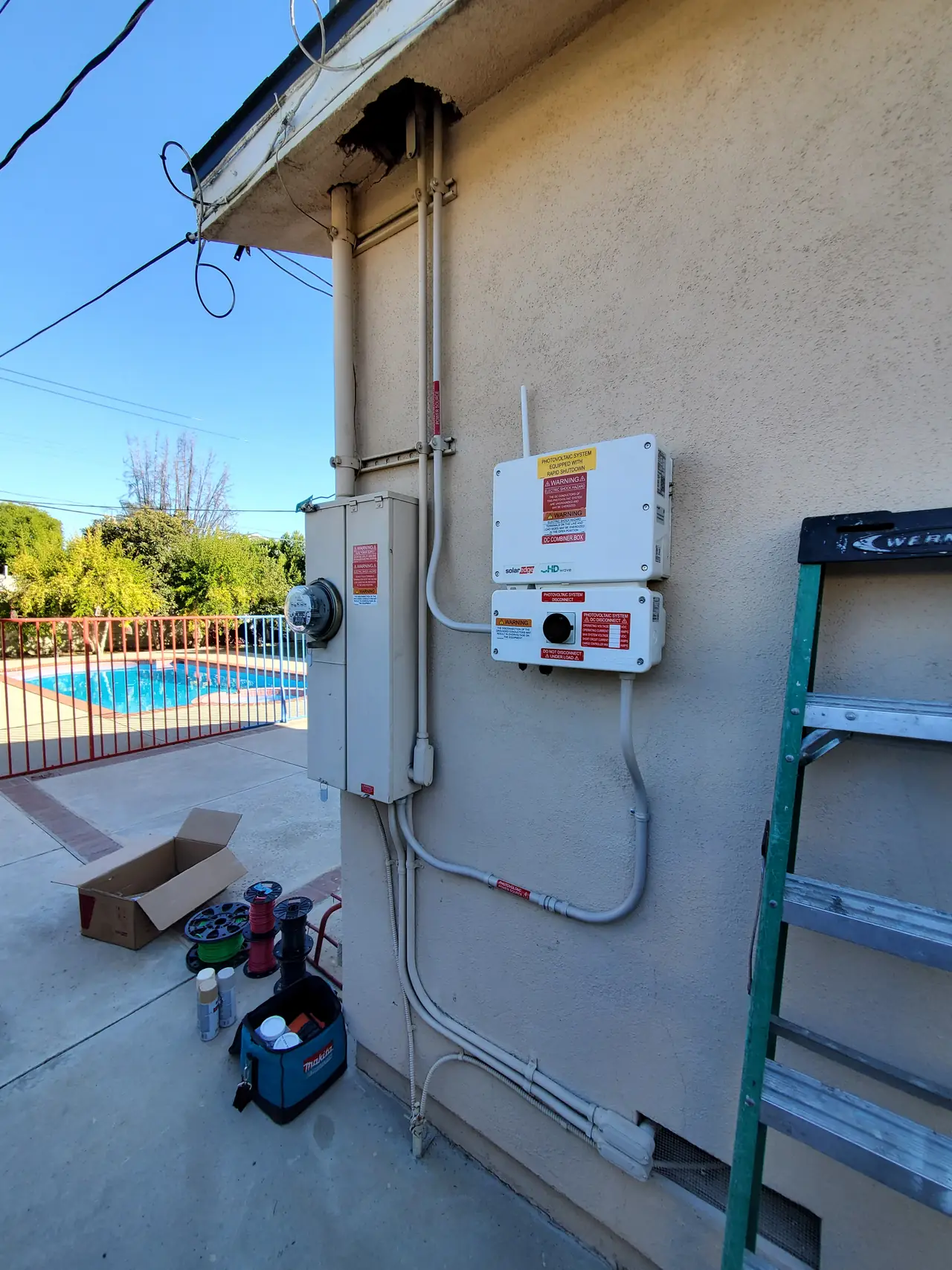
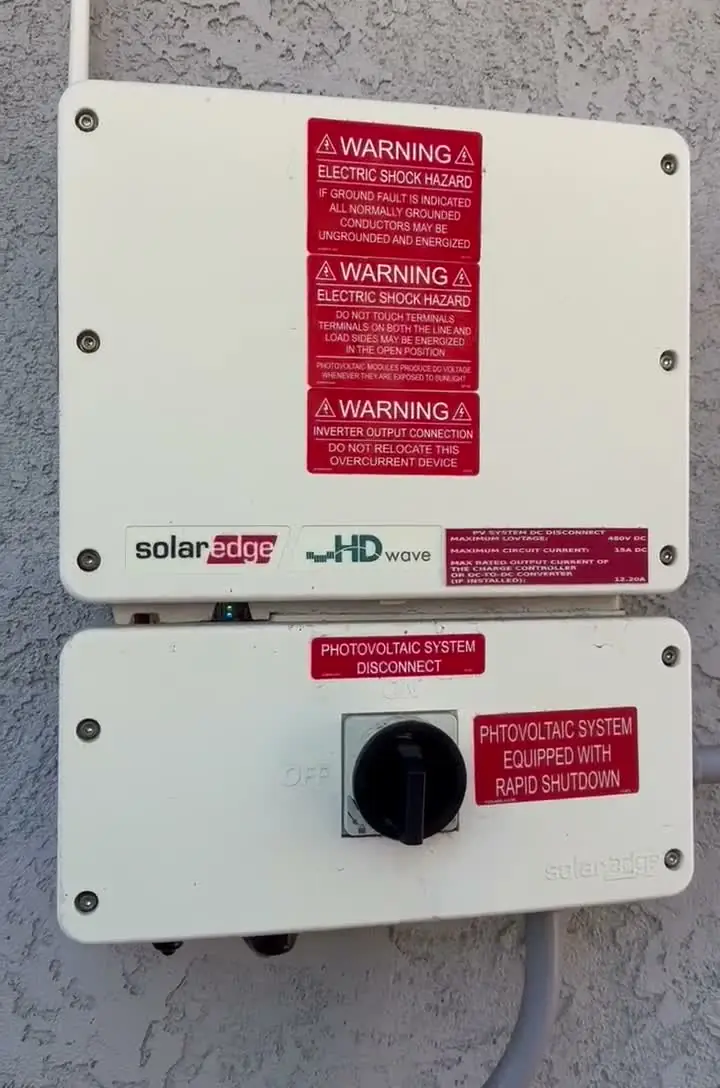
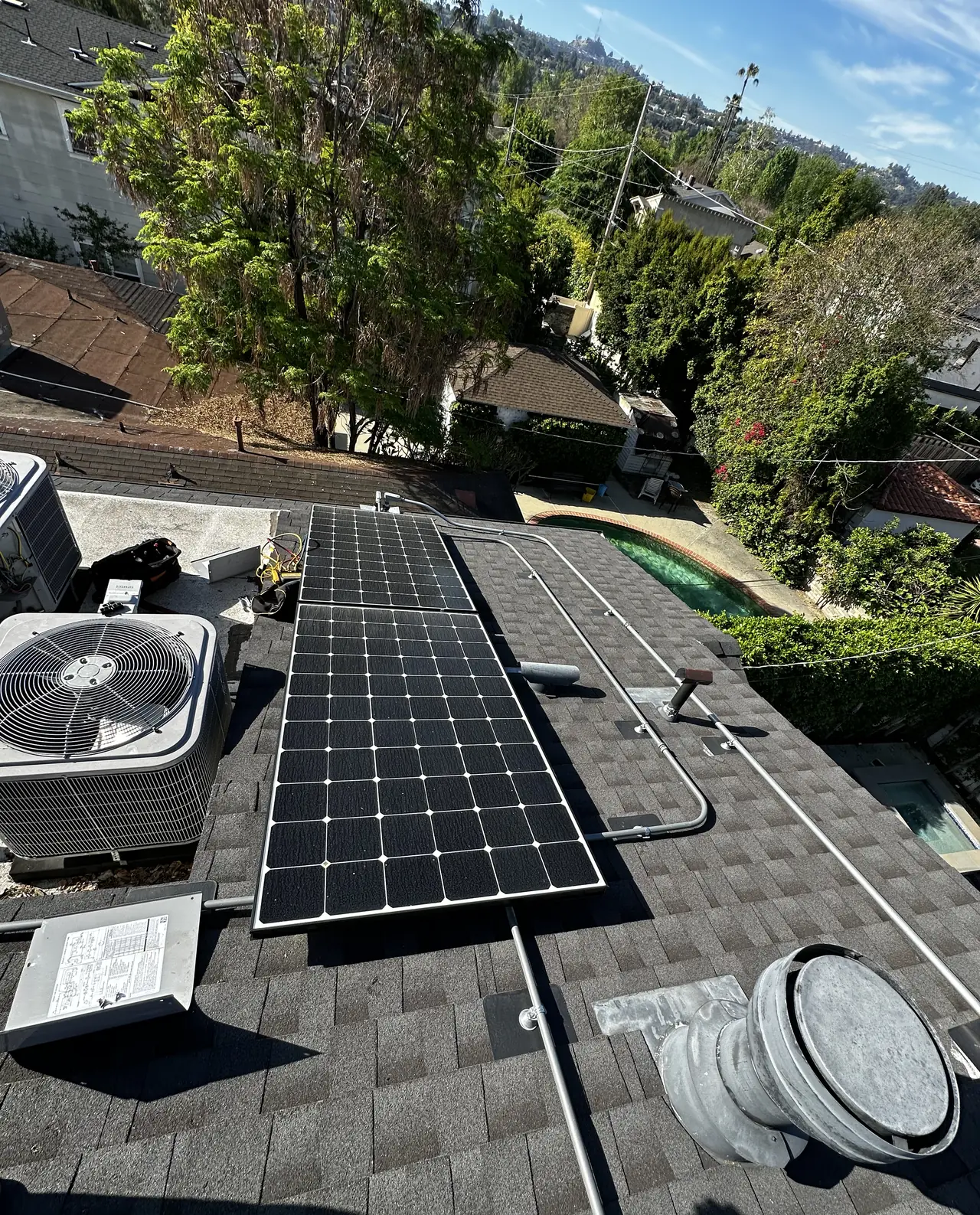
The electrical side used a SolarEdge string inverter with module-level optimizers, which is the other common architecture next to microinverters. The inverter and the DC safety switch live on the side wall by the service equipment, the conduit runs up the wall and along the roof to the array, and each module carries its own optimizer so that shading on one does not drag down a whole string.
Then the part of the schedule that belongs to nobody on site. The utility completed its interconnection review on the fifteenth of October, and the meter did not arrive for another three and a half weeks. Reviews and meter crews are different departments with different queues, and no contractor controls the second one. What a contractor can do is keep the submission complete so nothing bounces, chase the field order when the queue stalls — the order went out to the district on the fourth of November — and make sure the crew can actually reach the meter when they come.
That last one is not a joke. The property is gated. A meter crew that arrives to a locked gate does not wait; the visit is recorded as attempted and the job goes back into the queue. Cali Energy arranged access in advance, the meter went on the tenth of November, and permission to operate came with it.
Two caveats worth stating about doing roofing and solar together. It is one price but two permits, two inspections and two trades, so ask which classifications the contractor holds for each half. And the roofing tail is longer than the solar tail: if the deck opens up with rot underneath, that is a change to the roofing scope which nobody can quote before the old covering is off.
The question worth asking before any array goes on an older roof: how many years does the covering under these modules have left, and what does it cost to take them off and put them back when it runs out?
How it ran
| 16 September 2021 | Roofing permit issued — 20 squares, composition shingle |
|---|---|
| 17 September 2021 | Roofing material ordered |
| 23 September 2021 | Roofing inspection requested |
| 12 October 2021 | Interconnection application filed |
| 14 October 2021 | Application reviewed; site evaluation complete |
| 15 October 2021 | Interconnection review complete |
| 4 November 2021 | Field order issued to the district crew |
| 10 November 2021 | Net meter set — permission to operate |
Fifty-five days from the roofing permit to permission to operate, with the roof replaced inside that window. This timeline reflects this property and this permitting path.
What we did
- Pulled the roofing permit before any solar work was scheduled (B, C-39).
- Stripped the old covering, inspected the deck and laid 20 squares of Class A composition shingle over the existing sheathing.
- Set rafter-fixed standoffs with flashing tucked under the course above, so every penetration is a roofing detail.
- Laid out the array across two planes around the rooftop air conditioning unit.
- Installed a SolarEdge string inverter with module-level optimizers and ran the conduit in a single line up the side wall (C-10).
- Filed the interconnection application once the new covering was on.
- Chased the meter field order through the construction district and arranged gated access for the crew.
System specifications
| Roof covering | Composition shingle, Class A, less than 6 lb per sq ft |
|---|---|
| Roofing scope | 20 squares over existing solid sheathing |
| Roof form | Hip, single story, rooftop air conditioning unit |
| Attachment | Rafter-fixed standoffs with flashing under the course above |
| Inverter | SolarEdge string inverter with module-level optimizers |
| Array size | 7.7 kW AC-CEC recorded by the utility |
| Utility / AHJ | LADWP / LADBS |
Is your project like this one?
- Your roof is fifteen years old or older and solar is on the table.
- You have been quoted solar by one company and roofing by another.
- Your roof is a hip with several small planes rather than one big slope.
- There is an air conditioning unit or a chimney in the middle of the best slope.
- Your property is gated and utility crews need arranged access.
Cali Energy in Encino
Encino sits inside City of Los Angeles boundaries: permits run through LADBS, interconnection through LADWP.
Encino's post-war tracts are on their second or third roof, and the covering under an array outlives nothing: it decides when the array comes off again. Twelve completed Encino projects are documented on our projects page, and several of them were roofing jobs first.
This installation is on the Encino projects page alongside the others, and what the work covers is set out on the Encino service area page.
- License and classifications: CSLB #1032379
- Official reference for this process: LADBS — plan review and permitting
- Official reference for this process: LADBS — inspections
Frequently asked questions
Does Cali Energy do roofing and solar together in Encino?
Yes. Cali Energy holds the roofing and electrical classifications alongside the general one, so the re-roof and the array run under one contract with two permits and two inspections. On this Encino house the roofing permit was issued in September and the meter was set in November. Twelve completed Encino projects are documented on our projects page; our license is CSLB #1032379.
Should I replace the roof before installing solar?
If the covering has less than about ten years left, yes. Taking an array off, re-roofing and putting the array back is three jobs instead of one, with new flashing at every attachment. Doing the roof first also means the mounts land on fresh material and the whole assembly ages together. On this house the roofing permit was issued in September and the array followed the same season.
What does 20 squares mean on a roofing permit?
A square is one hundred square feet of roof covering, so twenty squares is two thousand square feet — a typical single-story house. The permit also records the class of the material and that it went over existing solid sheathing, which means the deck was sound and stayed in place while the covering was replaced.
Why was there a month between utility approval and the meter?
Because they are different queues. The interconnection review finished on the fifteenth of October; the field order for the meter went to the construction district on the fourth of November and the meter was set on the tenth. A contractor cannot shorten that queue. Keeping the submission complete, chasing the field order and arranging access for the crew is what is actually in anyone's control.
Can the modules be taken off and reinstalled later?
Yes, and it is routine work — but it is not free. The array comes down, the roofing goes on, the array goes back with new flashings at every mount, and the system is recommissioned. That is the cost you avoid by replacing a tired covering before the modules go up rather than a few years after.
What this would look like on your roof
Planning solar in Encino? Tell us your utility, your roof and what your bill looks like now, and we will model what a system like this would do on your house before you commit to anything.
Or call +1 (323) 844-7777 · Cali Energy, Northridge · CSLB #1032379 (B, C-10, C-39) — design, permits, install and electrical under one licensed contractor.
Related
This timeline reflects this property and this permitting path. Updated September 2026.